


 Скачать презентацию Future energy EXPO 2017 Prepared Dzhamalova G Group
Future energy.pptx
- Количество слайдов: 18
 Future energy EXPO 2017 Prepared: Dzhamalova G. Group: Cht 14 -4 ra Accepted: Taubaeva A.
 ESCO is an exhibition of technical achievements. The Kazakhstani platform was no exception. • Countries secretly compete not only in hospitality and attracting tourists, but also in scientific discoveries. At EXPO-2017, the main exhibits are the development of renewable energy sources, so that in future humankind will not depend on limited resources. "Smart" technology, "smart" houses and even "smart" shoes - this is, in the opinion of scientists, waiting for us very soon. Some specimens are still in development, and some are already used in everyday life.
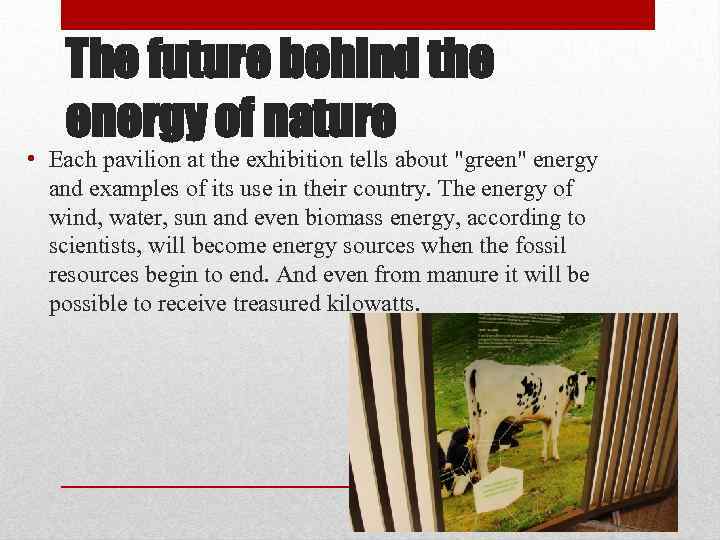 The future behind the energy of nature • Each pavilion at the exhibition tells about "green" energy and examples of its use in their country. The energy of wind, water, sun and even biomass energy, according to scientists, will become energy sources when the fossil resources begin to end. And even from manure it will be possible to receive treasured kilowatts.
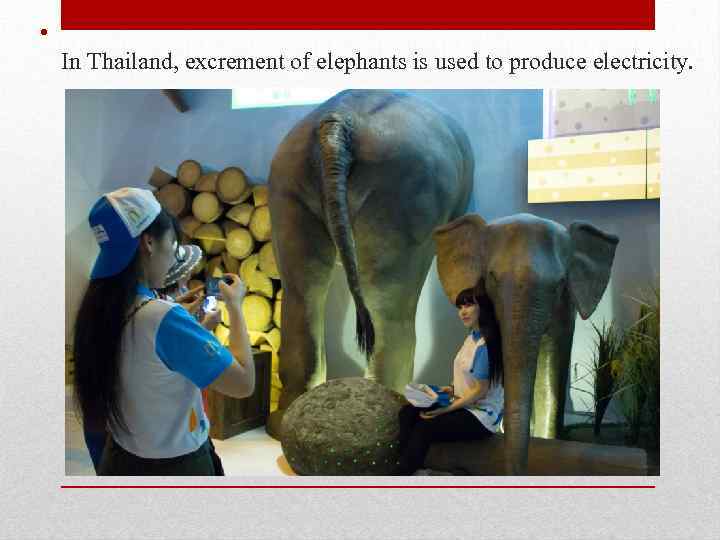 • In Thailand, excrement of elephants is used to produce electricity.
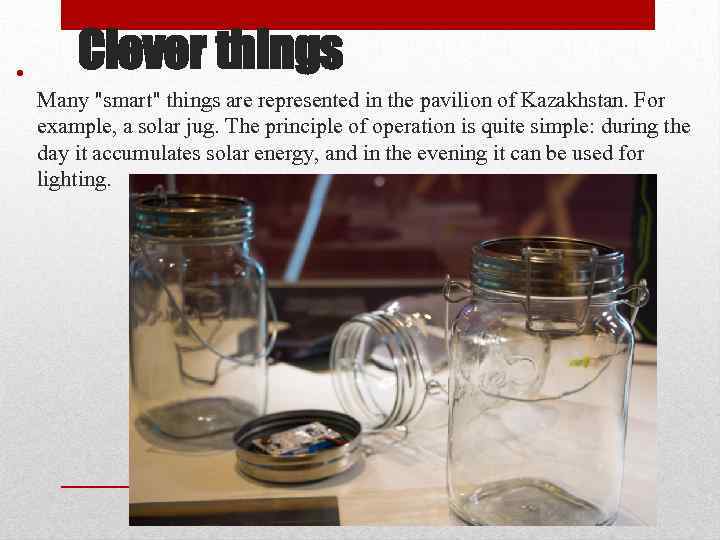 • Clever things Many "smart" things are represented in the pavilion of Kazakhstan. For example, a solar jug. The principle of operation is quite simple: during the day it accumulates solar energy, and in the evening it can be used for lighting.
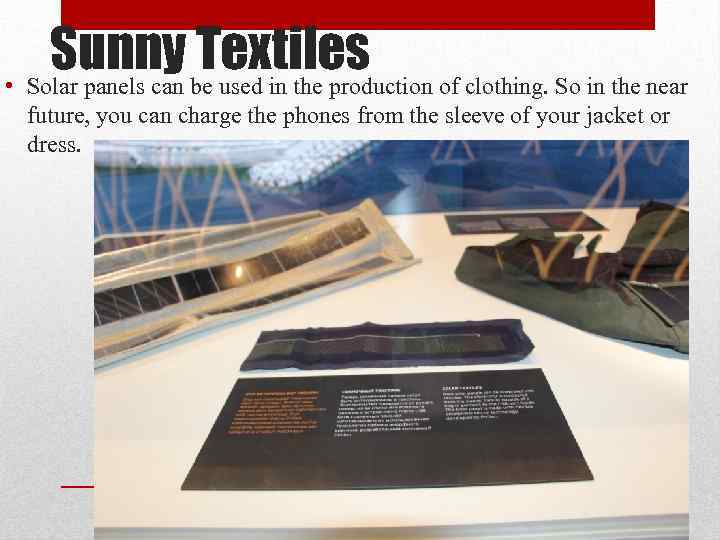 Sunny Textiles • Solar panels can be used in the production of clothing. So in the near future, you can charge the phones from the sleeve of your jacket or dress.
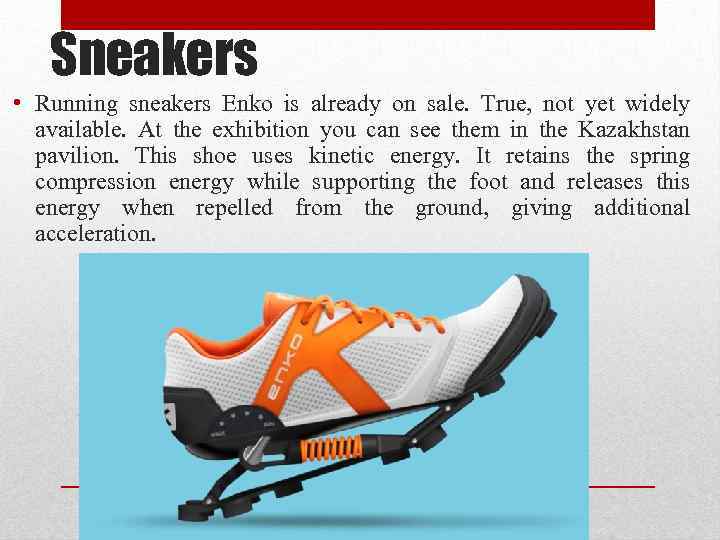 Sneakers • Running sneakers Enko is already on sale. True, not yet widely available. At the exhibition you can see them in the Kazakhstan pavilion. This shoe uses kinetic energy. It retains the spring compression energy while supporting the foot and releases this energy when repelled from the ground, giving additional acceleration.
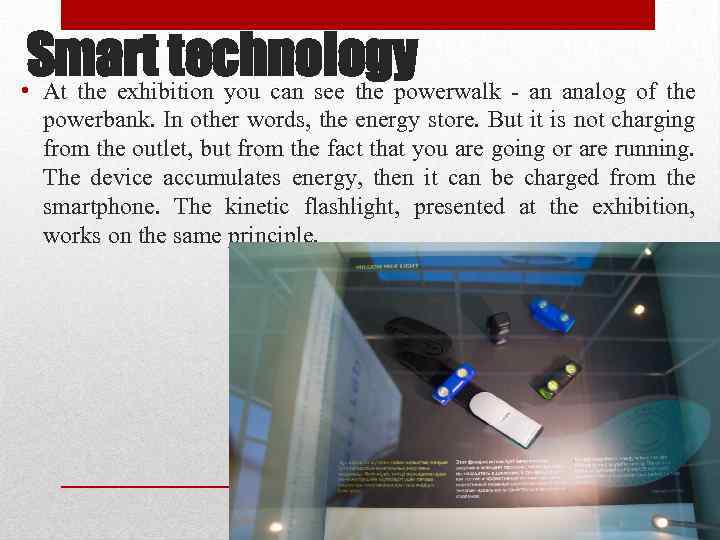 Smart technology • At the exhibition you can see the powerwalk - an analog of the powerbank. In other words, the energy store. But it is not charging from the outlet, but from the fact that you are going or are running. The device accumulates energy, then it can be charged from the smartphone. The kinetic flashlight, presented at the exhibition, works on the same principle.
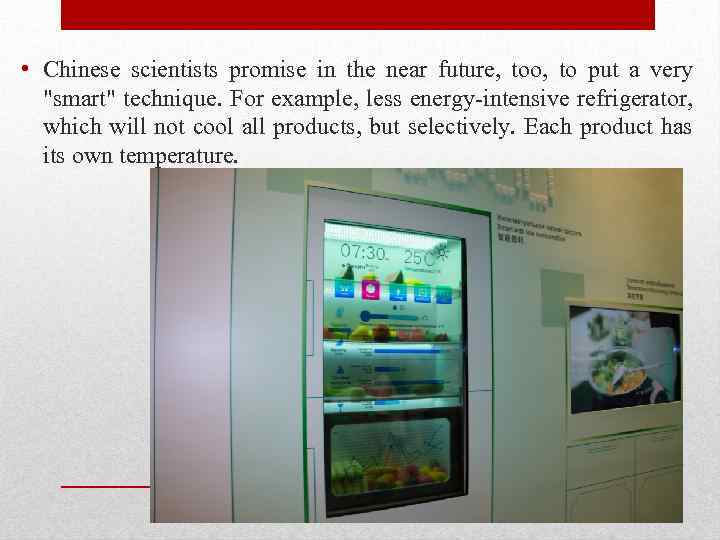 • Chinese scientists promise in the near future, too, to put a very "smart" technique. For example, less energy-intensive refrigerator, which will not cool all products, but selectively. Each product has its own temperature.
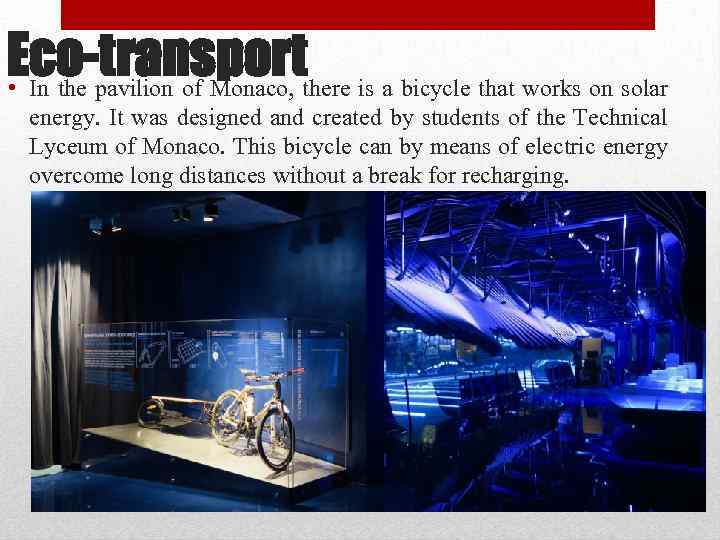 Eco-transport • In the pavilion of Monaco, there is a bicycle that works on solar energy. It was designed and created by students of the Technical Lyceum of Monaco. This bicycle can by means of electric energy overcome long distances without a break for recharging.
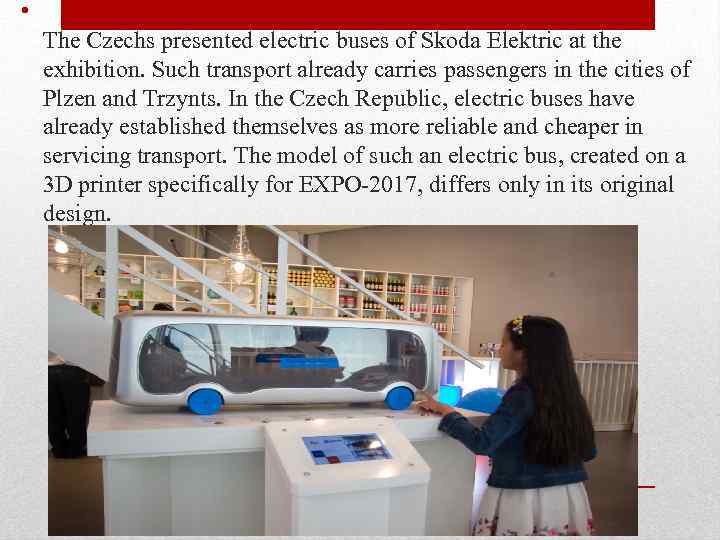 • The Czechs presented electric buses of Skoda Elektric at the exhibition. Such transport already carries passengers in the cities of Plzen and Trzynts. In the Czech Republic, electric buses have already established themselves as more reliable and cheaper in servicing transport. The model of such an electric bus, created on a 3 D printer specifically for EXPO-2017, differs only in its original design.
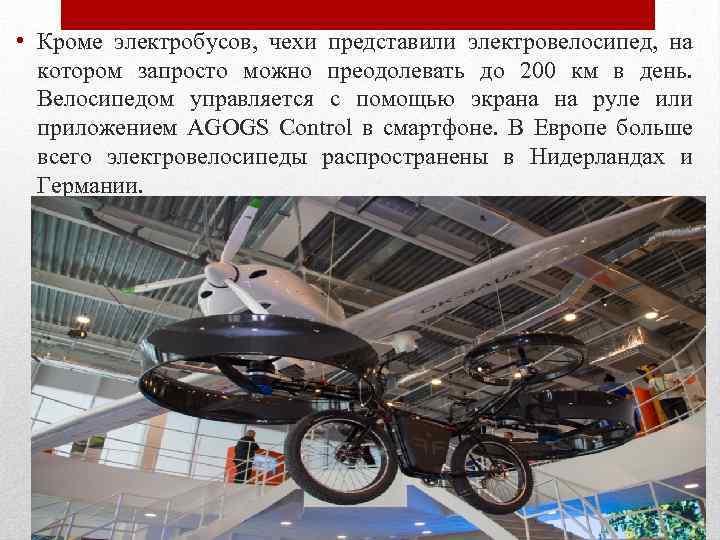 • Кроме электробусов, чехи представили электровелосипед, на котором запросто можно преодолевать до 200 км в день. Велосипедом управляется с помощью экрана на руле или приложением AGOGS Control в смартфоне. В Европе больше всего электровелосипеды распространены в Нидерландах и Германии.
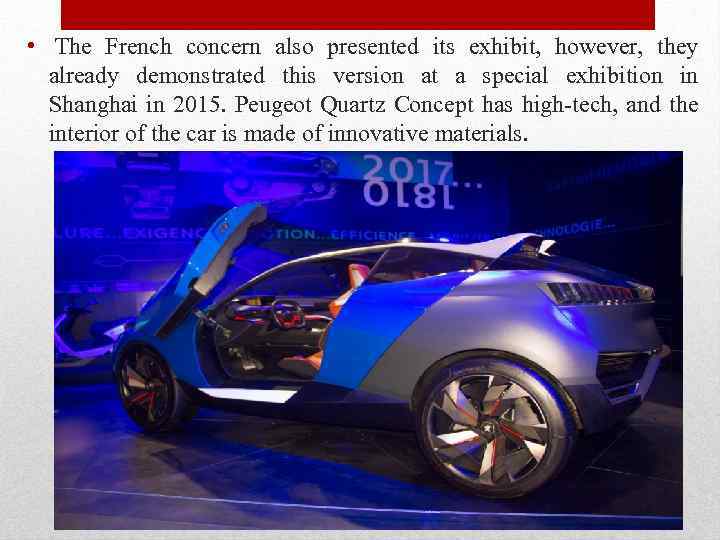 • The French concern also presented its exhibit, however, they already demonstrated this version at a special exhibition in Shanghai in 2015. Peugeot Quartz Concept has high-tech, and the interior of the car is made of innovative materials.
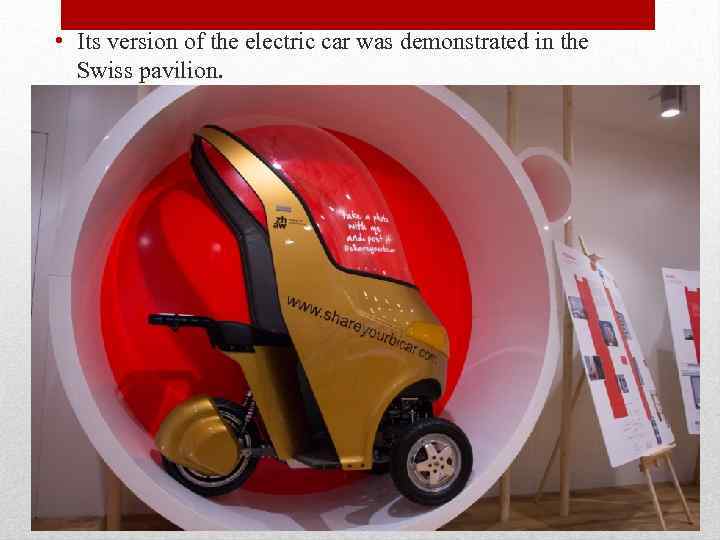 • Its version of the electric car was demonstrated in the Swiss pavilion.
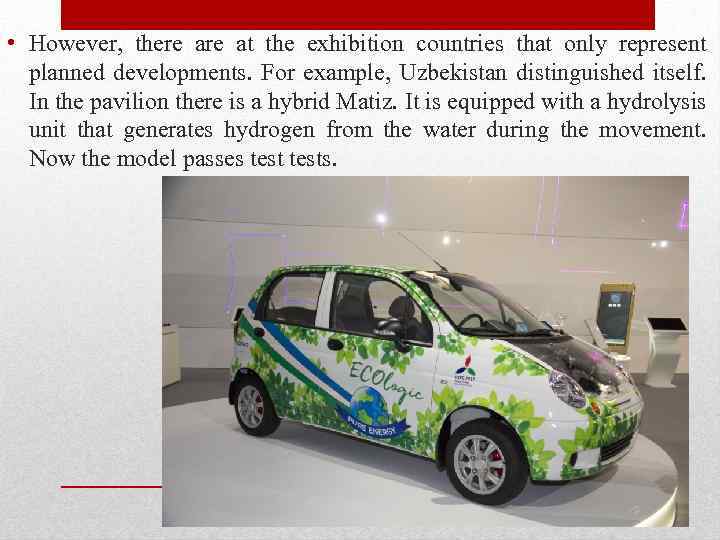 • However, there at the exhibition countries that only represent planned developments. For example, Uzbekistan distinguished itself. In the pavilion there is a hybrid Matiz. It is equipped with a hydrolysis unit that generates hydrogen from the water during the movement. Now the model passes tests.
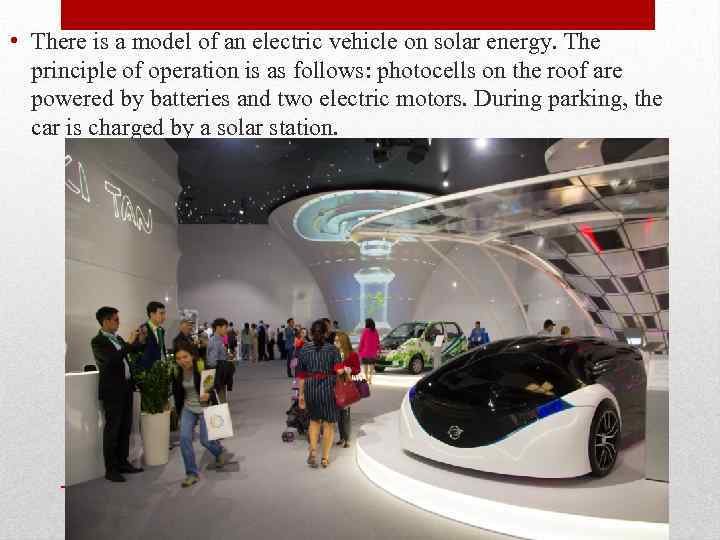 • There is a model of an electric vehicle on solar energy. The principle of operation is as follows: photocells on the roof are powered by batteries and two electric motors. During parking, the car is charged by a solar station.
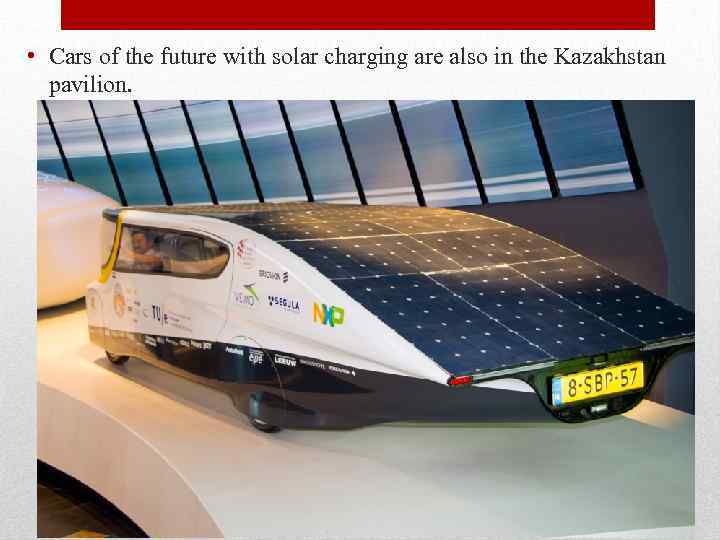 • Cars of the future with solar charging are also in the Kazakhstan pavilion.
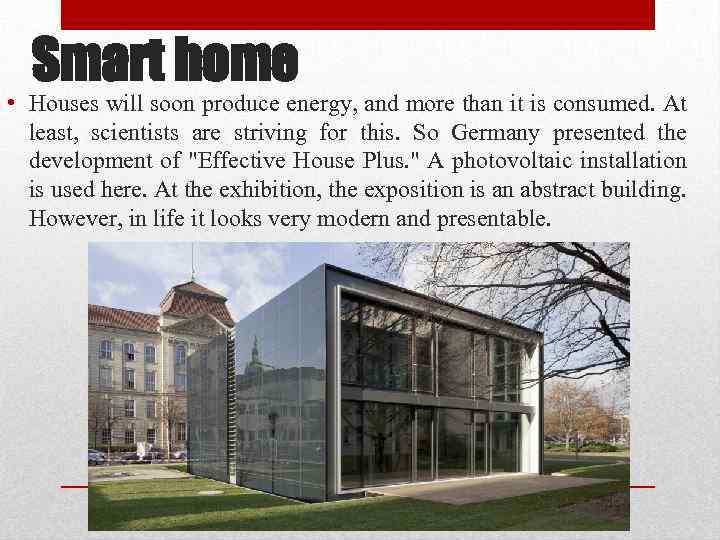 Smart home • Houses will soon produce energy, and more than it is consumed. At least, scientists are striving for this. So Germany presented the development of "Effective House Plus. " A photovoltaic installation is used here. At the exhibition, the exposition is an abstract building. However, in life it looks very modern and presentable.