


 Скачать презентацию Fundamentals University of Kansas Center for Research on
3e2fd4fc35ea36b40902eb2e64737933.ppt
- Количество слайдов: 73
 Fundamentals University of Kansas Center for Research on Learning 2002 1
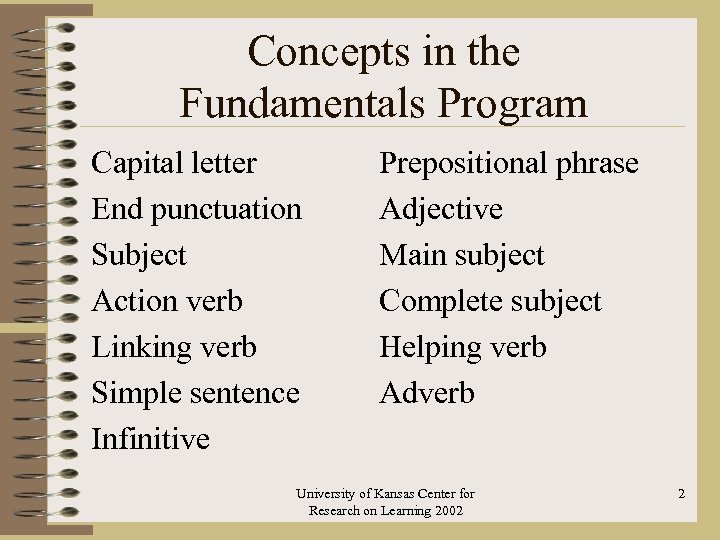 Concepts in the Fundamentals Program Capital letter End punctuation Subject Action verb Linking verb Simple sentence Infinitive Prepositional phrase Adjective Main subject Complete subject Helping verb Adverb University of Kansas Center for Research on Learning 2002 2
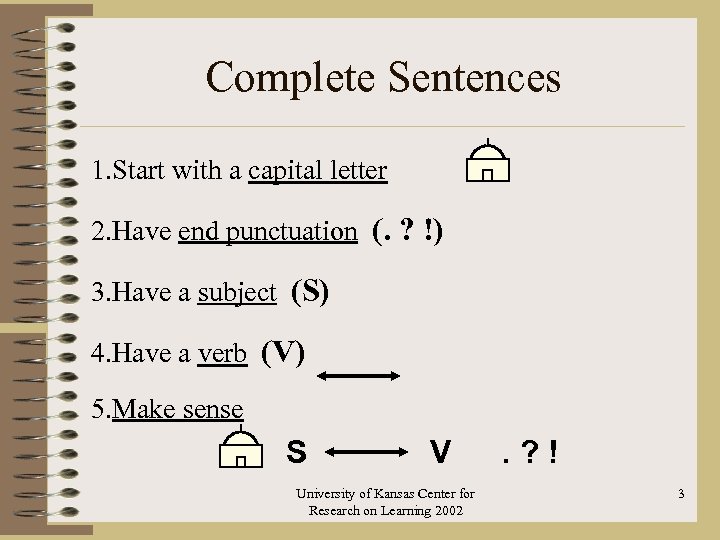 Complete Sentences 1. Start with a capital letter 2. Have end punctuation (. ? !) 3. Have a subject (S) 4. Have a verb (V) 5. Make sense S V University of Kansas Center for Research on Learning 2002 . ? ! 3
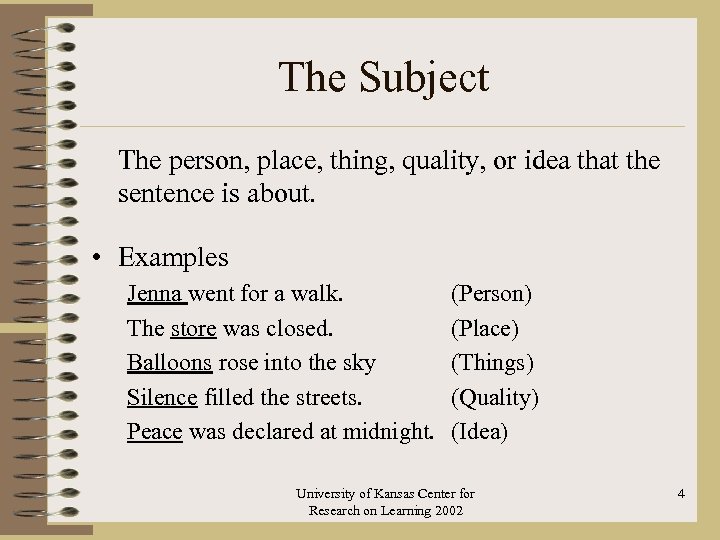 The Subject The person, place, thing, quality, or idea that the sentence is about. • Examples Jenna went for a walk. The store was closed. Balloons rose into the sky Silence filled the streets. Peace was declared at midnight. (Person) (Place) (Things) (Quality) (Idea) University of Kansas Center for Research on Learning 2002 4
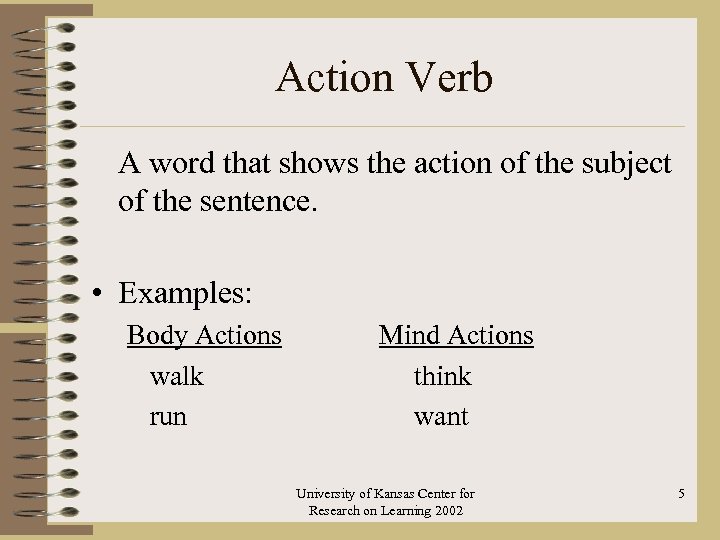 Action Verb A word that shows the action of the subject of the sentence. • Examples: Body Actions walk run Mind Actions think want University of Kansas Center for Research on Learning 2002 5
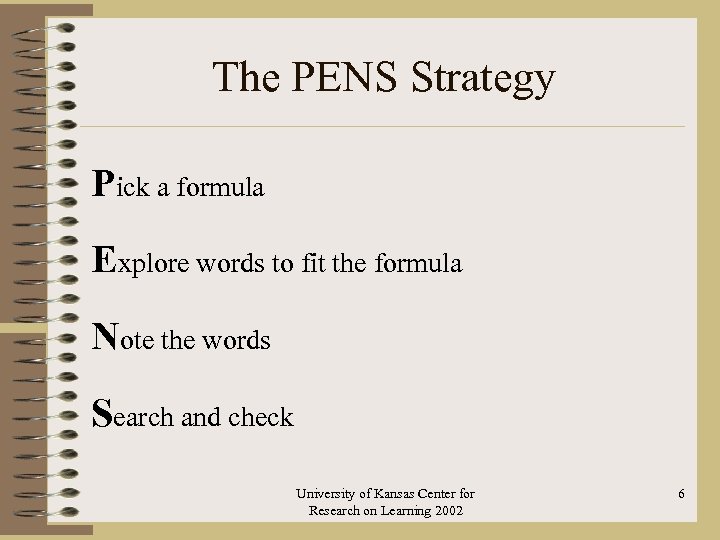 The PENS Strategy Pick a formula Explore words to fit the formula Note the words Search and check University of Kansas Center for Research on Learning 2002 6
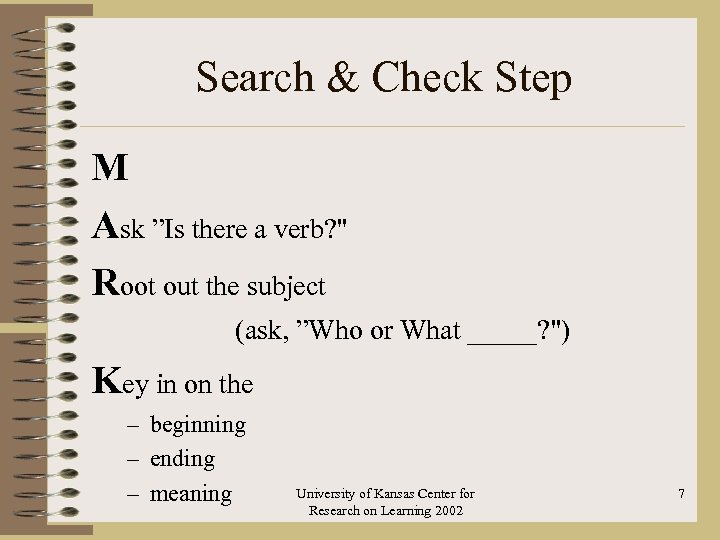 Search & Check Step M Ask ”Is there a verb? " Root out the subject (ask, ”Who or What _____? ") Key in on the – beginning – ending – meaning University of Kansas Center for Research on Learning 2002 7
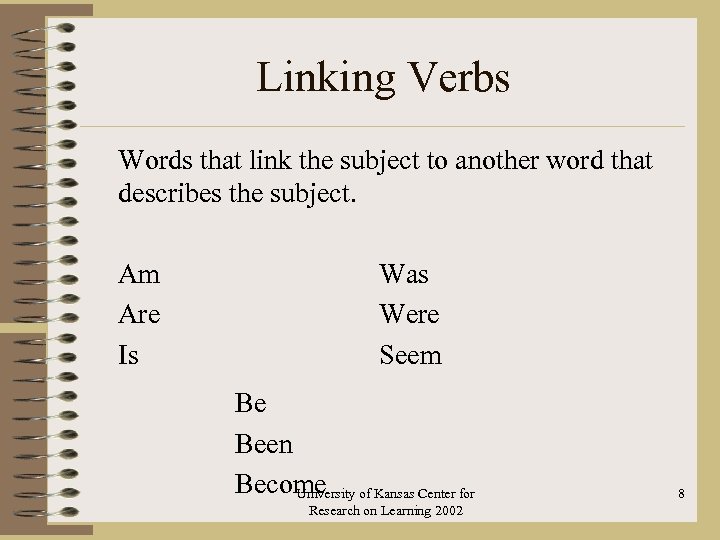 Linking Verbs Words that link the subject to another word that describes the subject. Am Are Is Was Were Seem Be Been Become of Kansas Center for University Research on Learning 2002 8
 Infinitives • There is not a cue card for infinitives. • It is important to make one. Jessica has one. University of Kansas Center for Research on Learning 2002 9
 Search & Check Step Mark out imposters – infinitives – prepositional phrases Ask “Is there a verb? ” Root out the subject (“Who or What _____? ”) Key in on the – beginning – ending – meaning University of Kansas Center for Research on Learning 2002 10
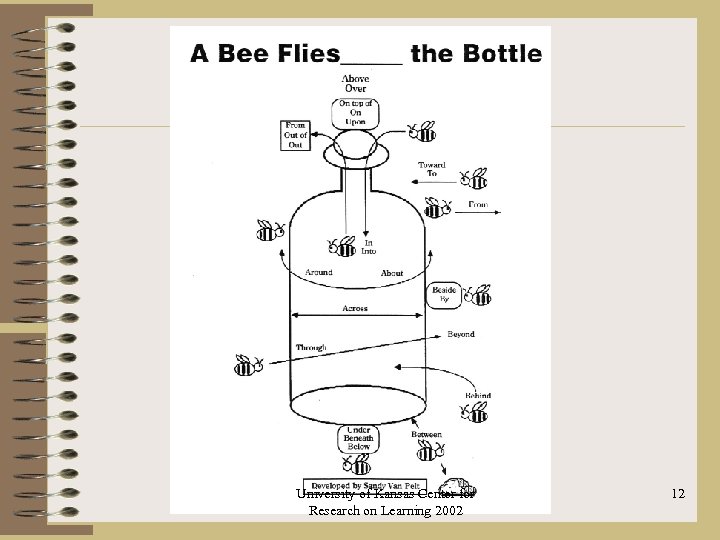
 Prepositions • There is no definition cue card for prepositions. You might want them to take some sort of notes other than just the words. University of Kansas Center for Research on Learning 2002 11
 University of Kansas Center for Research on Learning 2002 12
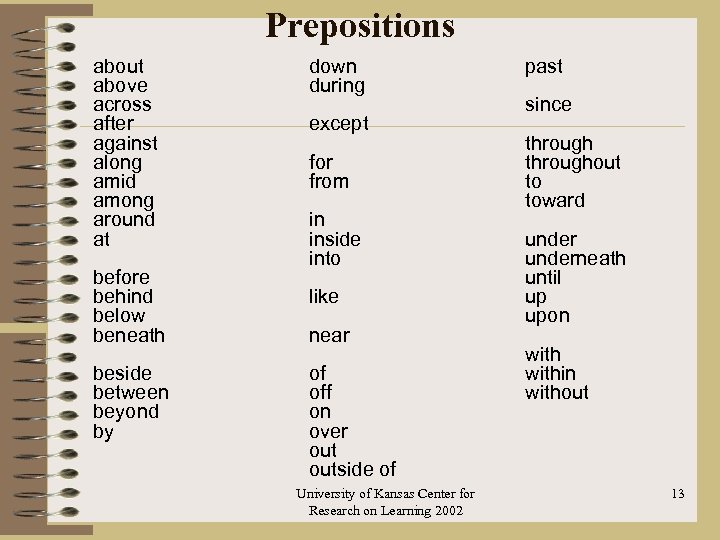 Prepositions about above across after against along amid among around at before behind below beneath beside between beyond by down during except for from in inside into like near of off on over outside of University of Kansas Center for Research on Learning 2002 past since throughout to toward underneath until up upon within without 13
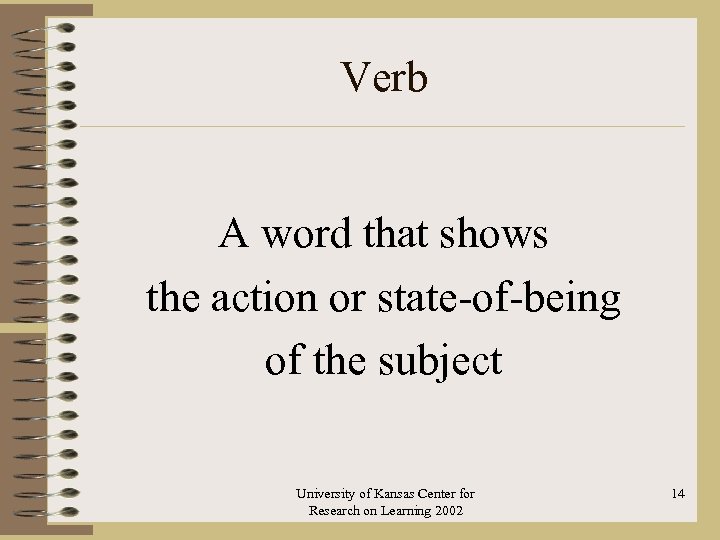 Verb A word that shows the action or state-of-being of the subject University of Kansas Center for Research on Learning 2002 14
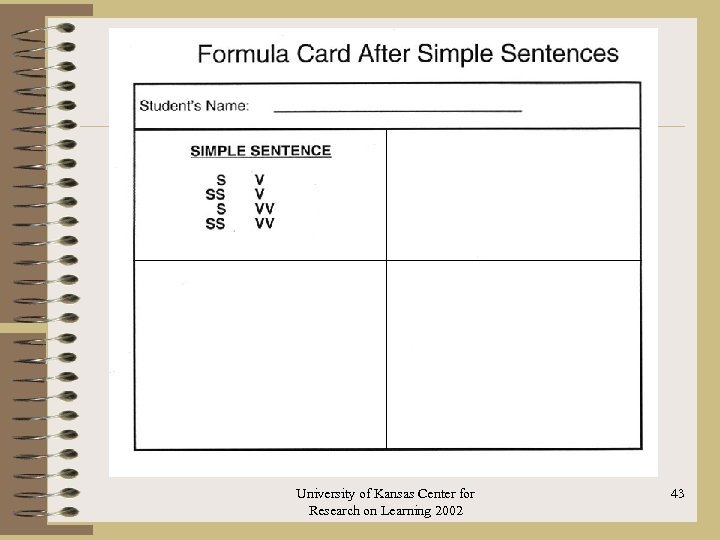
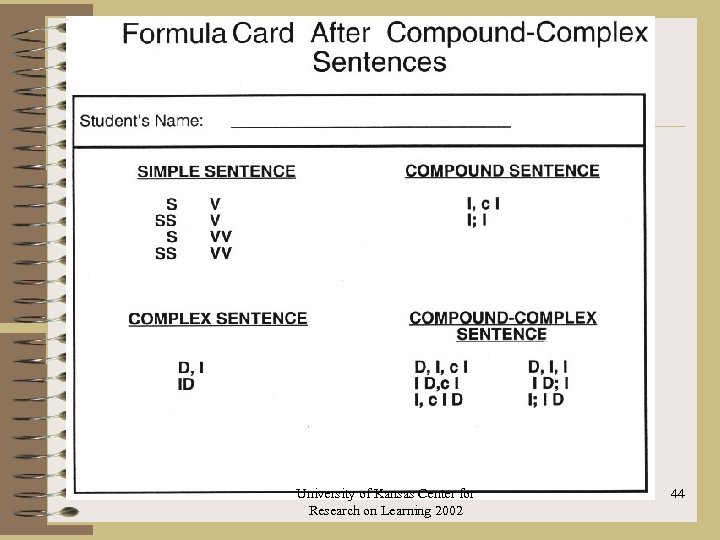
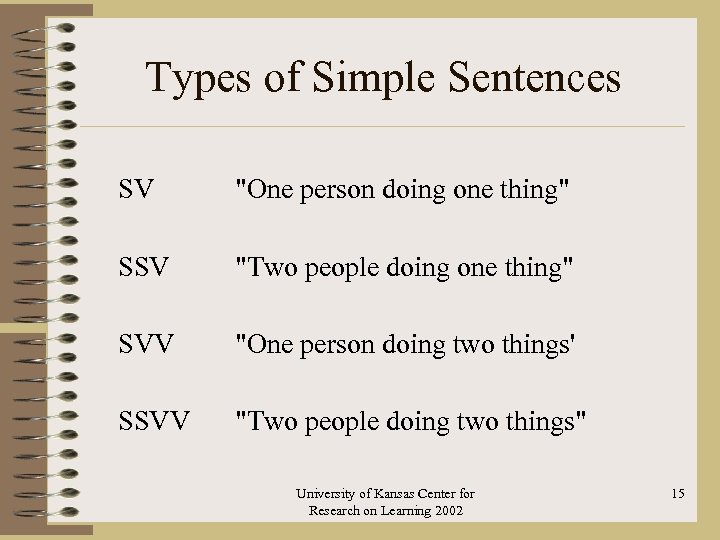 Types of Simple Sentences SV "One person doing one thing" SSV "Two people doing one thing" SVV "One person doing two things' SSVV "Two people doing two things" University of Kansas Center for Research on Learning 2002 15
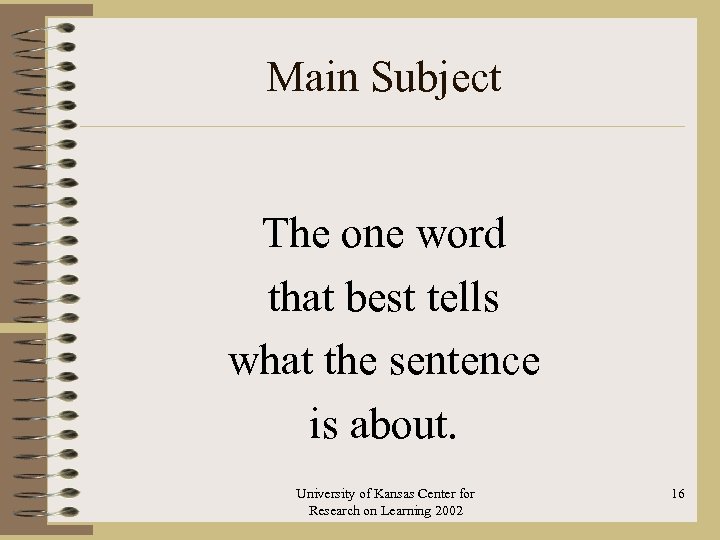 Main Subject The one word that best tells what the sentence is about. University of Kansas Center for Research on Learning 2002 16
 Adjective A word that describes a noun. University of Kansas Center for Research on Learning 2002 17
 Helping Verbs Words that help the main verb show the action in a sentence. University of Kansas Center for Research on Learning 2002 18
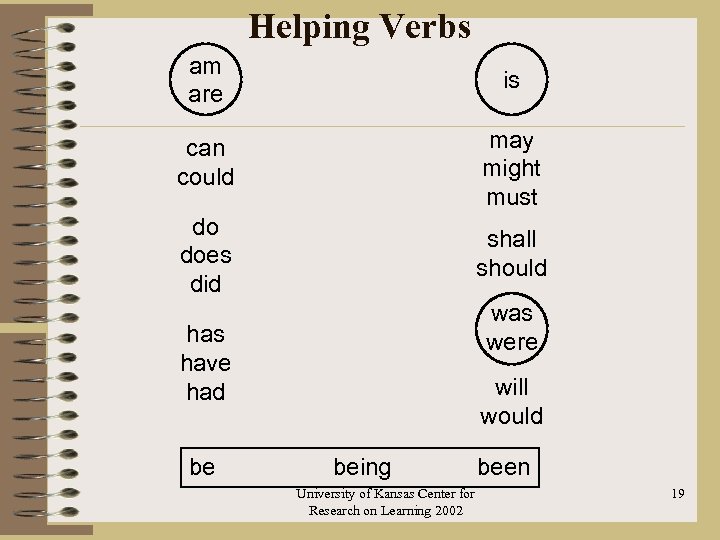 Helping Verbs am are is can could may might must do does did shall should was were has have had be will would being University of Kansas Center for Research on Learning 2002 been 19
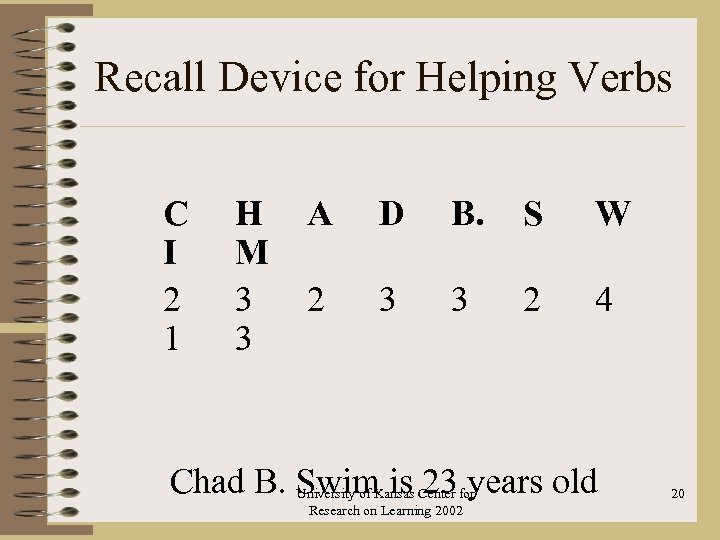 Recall Device for Helping Verbs C I 2 1 H M 3 3 A D B. S W 2 3 3 2 4 Chad B. Swim is 23 years old University of Kansas Center for Research on Learning 2002 20
 Adverbs Words that add information about the action of the subject of the sentence. They show: – when – where – how – to what extent (how often, how much) the action takes place University of Kansas Center for Research on Learning 2002 21
 Proficiency University of Kansas Center for Research on Learning 2002 22
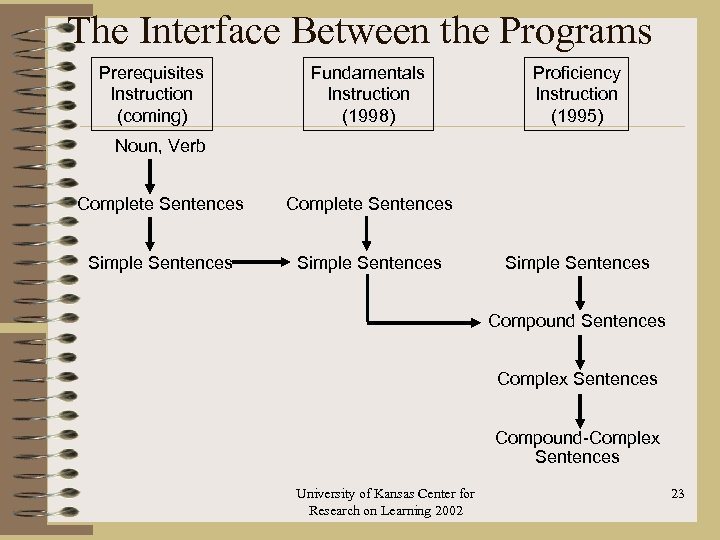 The Interface Between the Programs Prerequisites Instruction (coming) Fundamentals Instruction (1998) Proficiency Instruction (1995) Noun, Verb Complete Sentences Simple Sentences Compound Sentences Complex Sentences Compound-Complex Sentences University of Kansas Center for Research on Learning 2002 23
 Proficiency in the Sentence Writing Strategy • A strategy for writing and checking sentences ("PENS") • Four types of sentences – Simple – Compound – Complex – Compound-complex University of Kansas Center for Research on Learning 2002 24
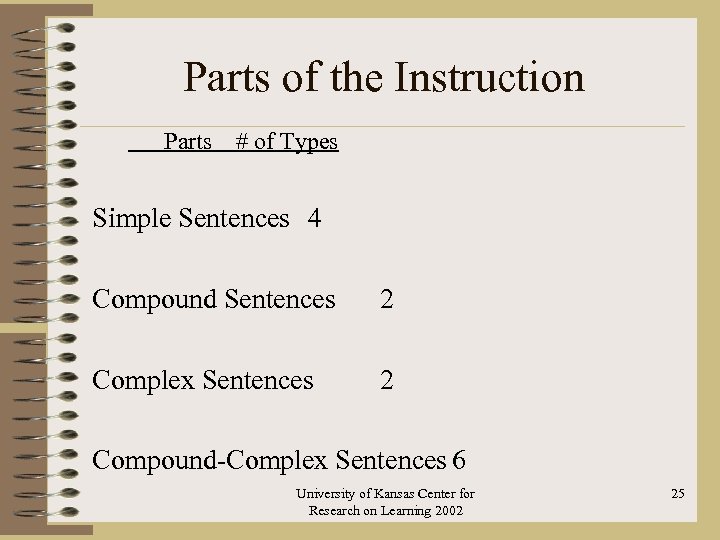 Parts of the Instruction Parts # of Types Simple Sentences 4 Compound Sentences 2 Complex Sentences 2 Compound-Complex Sentences 6 University of Kansas Center for Research on Learning 2002 25
 SIMPLE SENTENCES University of Kansas Center for Research on Learning 2002 26
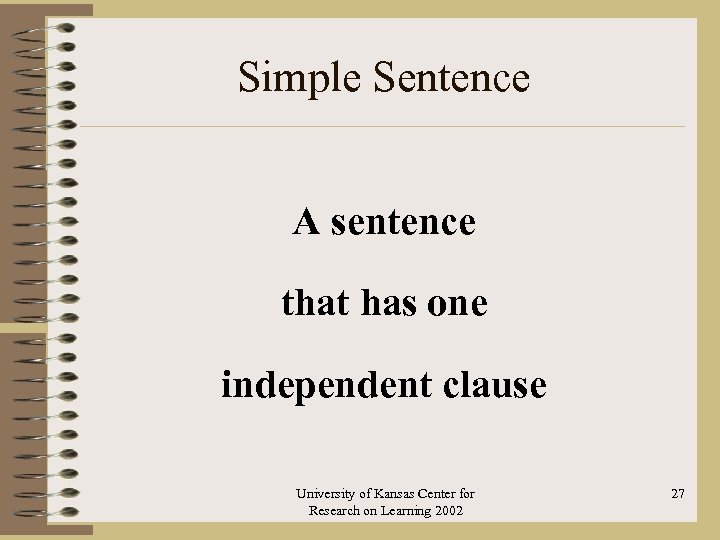 Simple Sentence A sentence that has one independent clause University of Kansas Center for Research on Learning 2002 27
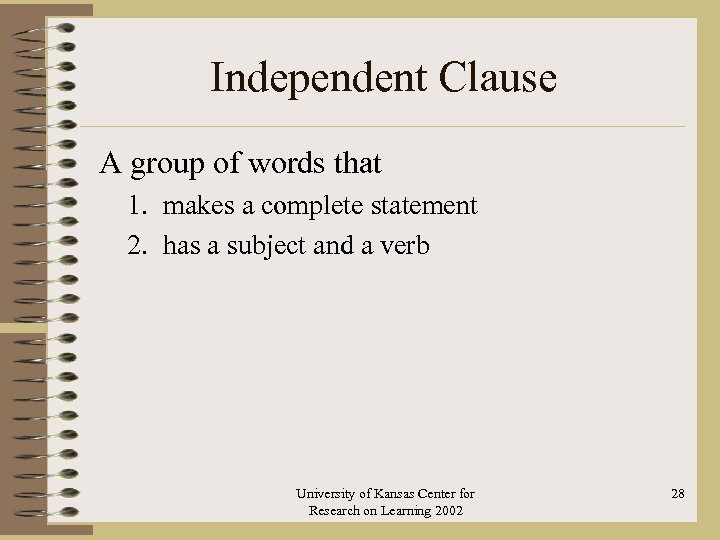 Independent Clause A group of words that 1. makes a complete statement 2. has a subject and a verb University of Kansas Center for Research on Learning 2002 28
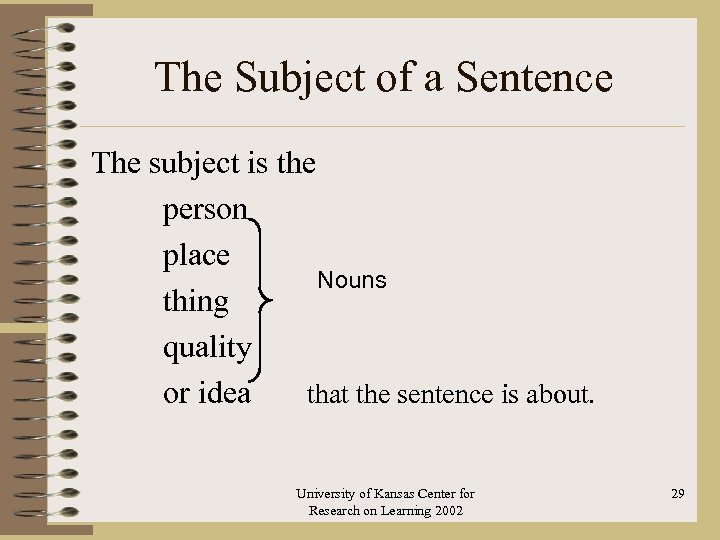 The Subject of a Sentence The subject is the person place Nouns thing quality or idea that the sentence is about. University of Kansas Center for Research on Learning 2002 29
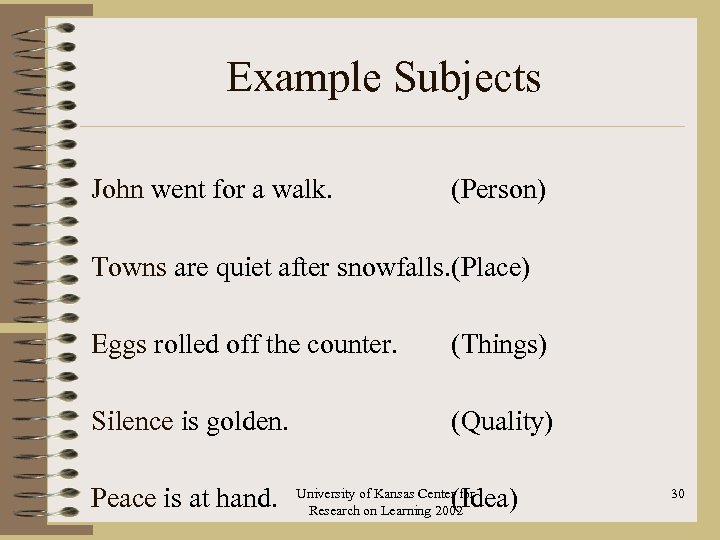 Example Subjects John went for a walk. (Person) Towns are quiet after snowfalls. (Place) Eggs rolled off the counter. (Things) Silence is golden. (Quality) Peace is at hand. (Idea) University of Kansas Center for Research on Learning 2002 30
 Verbs A verb is a word that shows the state of being or action of the subject of the sentence. University of Kansas Center for Research on Learning 2002 31
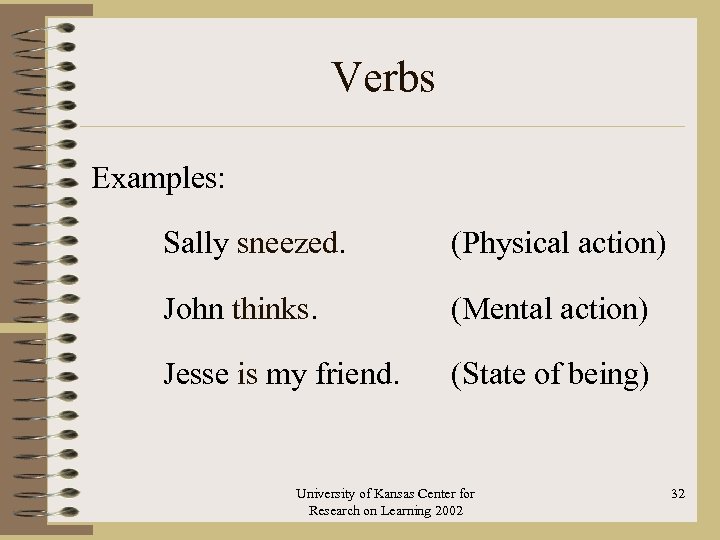 Verbs Examples: Sally sneezed. (Physical action) John thinks. (Mental action) Jesse is my friend. (State of being) University of Kansas Center for Research on Learning 2002 32
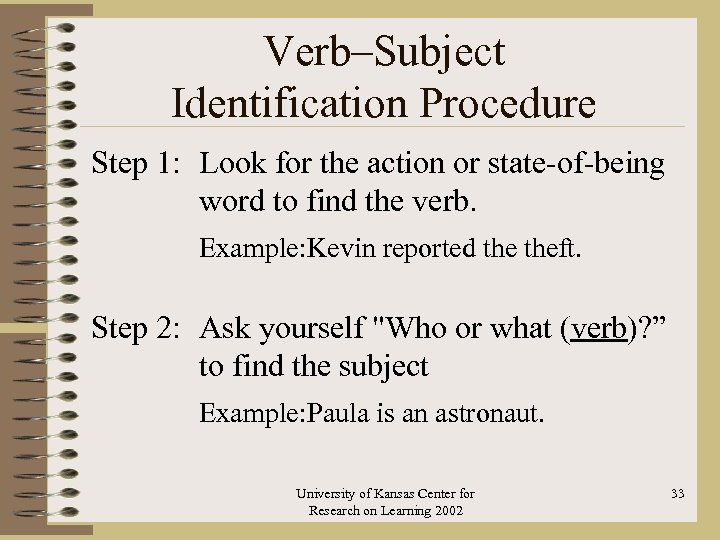 Verb–Subject Identification Procedure Step 1: Look for the action or state-of-being word to find the verb. Example: Kevin reported theft. Step 2: Ask yourself "Who or what (verb)? ” to find the subject Example: Paula is an astronaut. University of Kansas Center for Research on Learning 2002 33
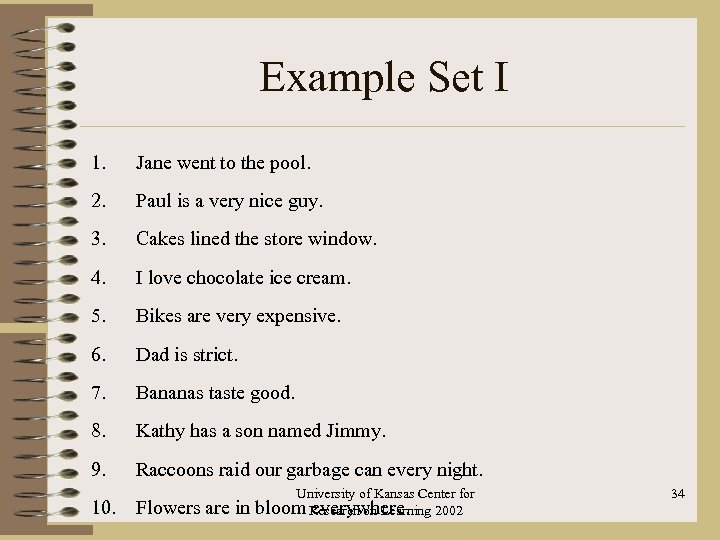 Example Set I 1. Jane went to the pool. 2. Paul is a very nice guy. 3. Cakes lined the store window. 4. I love chocolate ice cream. 5. Bikes are very expensive. 6. Dad is strict. 7. Bananas taste good. 8. Kathy has a son named Jimmy. 9. Raccoons raid our garbage can every night. 10. Flowers are in University of Kansas Center for bloom Research on Learning 2002 everywhere. 34
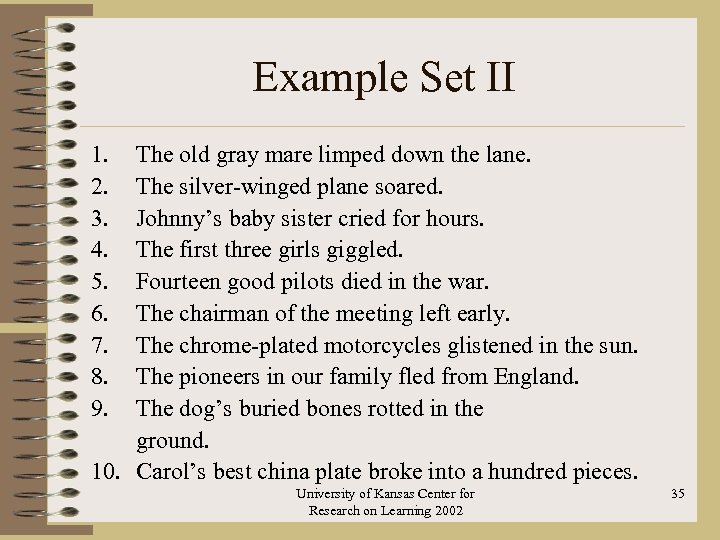 Example Set II 1. 2. 3. 4. 5. 6. 7. 8. 9. The old gray mare limped down the lane. The silver-winged plane soared. Johnny’s baby sister cried for hours. The first three girls giggled. Fourteen good pilots died in the war. The chairman of the meeting left early. The chrome-plated motorcycles glistened in the sun. The pioneers in our family fled from England. The dog’s buried bones rotted in the ground. 10. Carol’s best china plate broke into a hundred pieces. University of Kansas Center for Research on Learning 2002 35
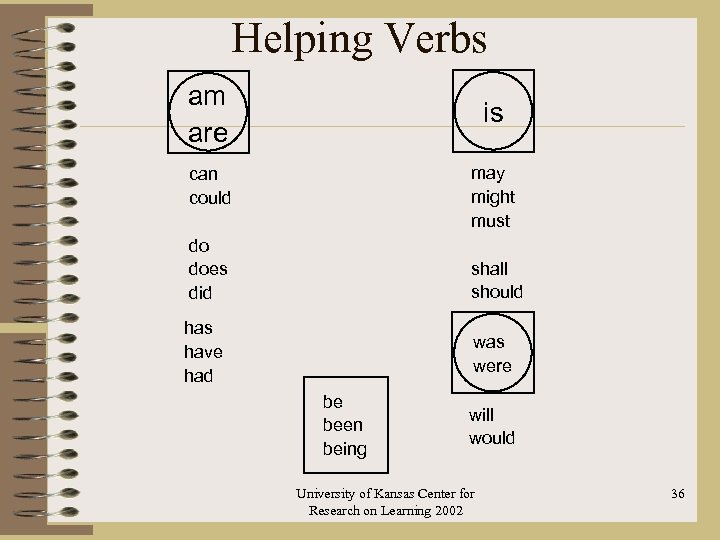 Helping Verbs am are is may might must can could do does did shall should has have had was were be been being will would University of Kansas Center for Research on Learning 2002 36
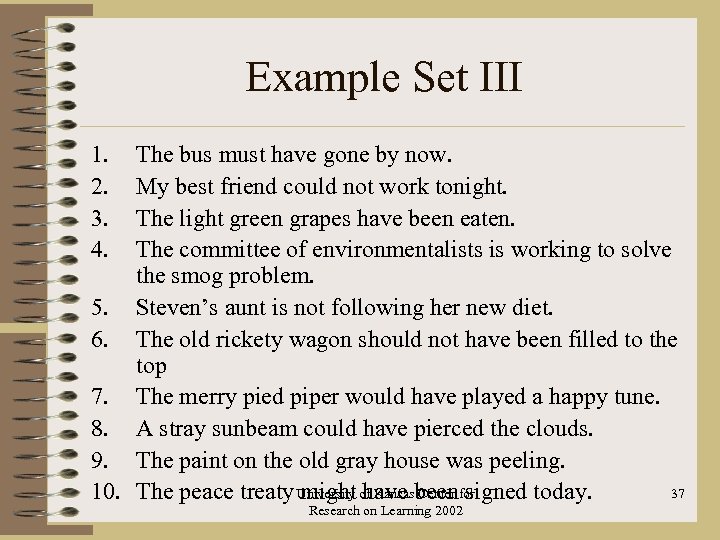 Example Set III 1. 2. 3. 4. The bus must have gone by now. My best friend could not work tonight. The light green grapes have been eaten. The committee of environmentalists is working to solve the smog problem. 5. Steven’s aunt is not following her new diet. 6. The old rickety wagon should not have been filled to the top 7. The merry pied piper would have played a happy tune. 8. A stray sunbeam could have pierced the clouds. 9. The paint on the old gray house was peeling. 37 10. The peace treaty University of Kansasbeenfor might have Center signed today. Research on Learning 2002
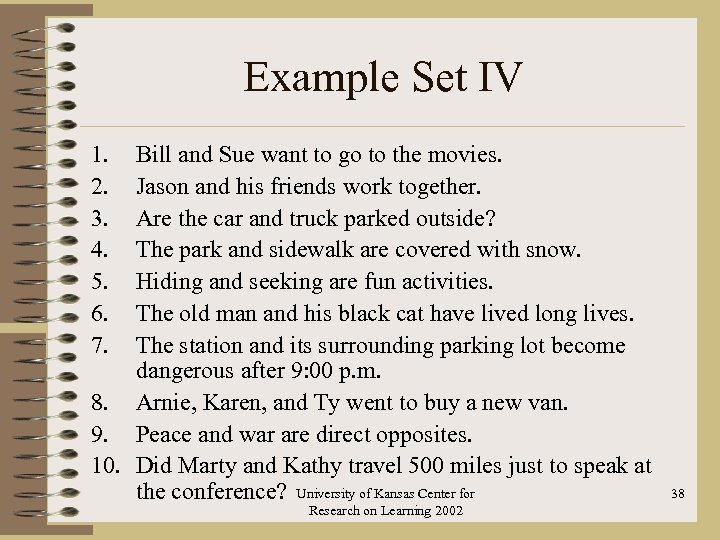 Example Set IV 1. 2. 3. 4. 5. 6. 7. Bill and Sue want to go to the movies. Jason and his friends work together. Are the car and truck parked outside? The park and sidewalk are covered with snow. Hiding and seeking are fun activities. The old man and his black cat have lived long lives. The station and its surrounding parking lot become dangerous after 9: 00 p. m. 8. Arnie, Karen, and Ty went to buy a new van. 9. Peace and war are direct opposites. 10. Did Marty and Kathy travel 500 miles just to speak at the conference? University of Kansas Center for Research on Learning 2002 38
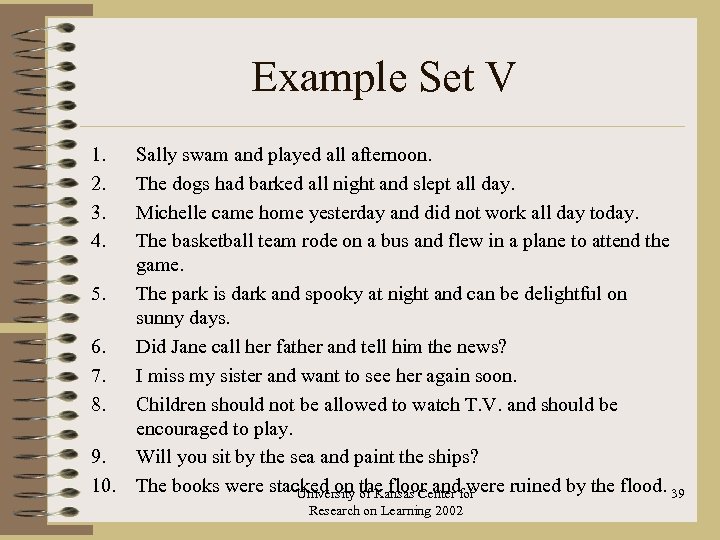 Example Set V 1. 2. 3. 4. Sally swam and played all afternoon. The dogs had barked all night and slept all day. Michelle came home yesterday and did not work all day today. The basketball team rode on a bus and flew in a plane to attend the game. 5. The park is dark and spooky at night and can be delightful on sunny days. 6. Did Jane call her father and tell him the news? 7. I miss my sister and want to see her again soon. 8. Children should not be allowed to watch T. V. and should be encouraged to play. 9. Will you sit by the sea and paint the ships? 10. The books were stacked on the floor andfor University of Kansas Center were ruined by the flood. 39 Research on Learning 2002
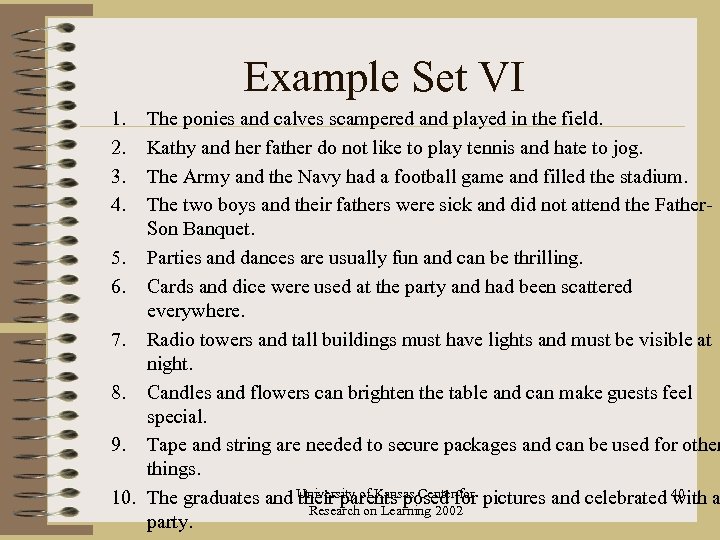 Example Set VI 1. 2. 3. 4. The ponies and calves scampered and played in the field. Kathy and her father do not like to play tennis and hate to jog. The Army and the Navy had a football game and filled the stadium. The two boys and their fathers were sick and did not attend the Father. Son Banquet. 5. Parties and dances are usually fun and can be thrilling. 6. Cards and dice were used at the party and had been scattered everywhere. 7. Radio towers and tall buildings must have lights and must be visible at night. 8. Candles and flowers can brighten the table and can make guests feel special. 9. Tape and string are needed to secure packages and can be used for other things. 10. The graduates and University of Kansas Centerfor pictures and celebrated 40 a their parents posed for with Research on Learning 2002 party.
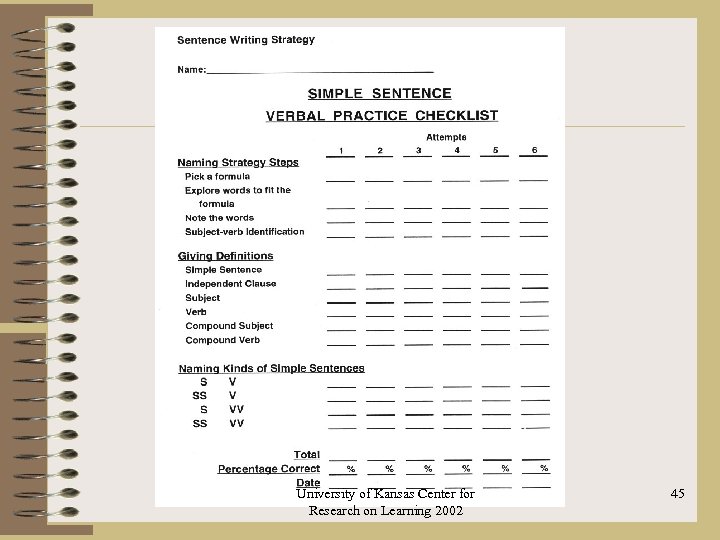
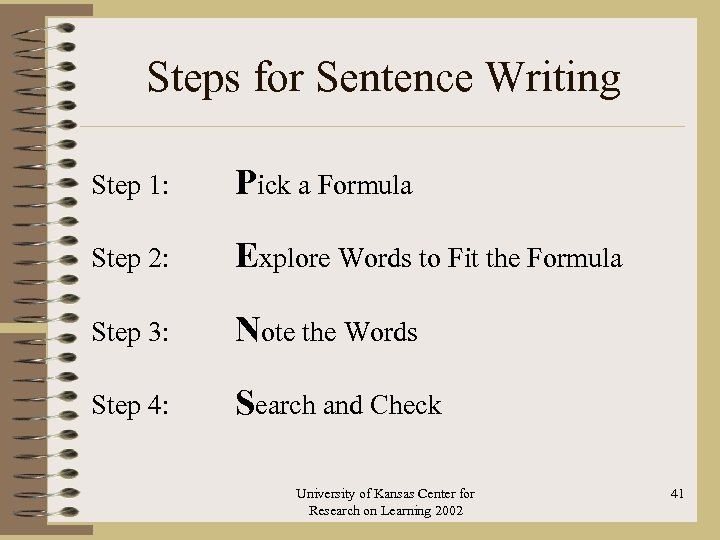 Steps for Sentence Writing Step 1: Pick a Formula Step 2: Explore Words to Fit the Formula Step 3: Note the Words Step 4: Search and Check University of Kansas Center for Research on Learning 2002 41
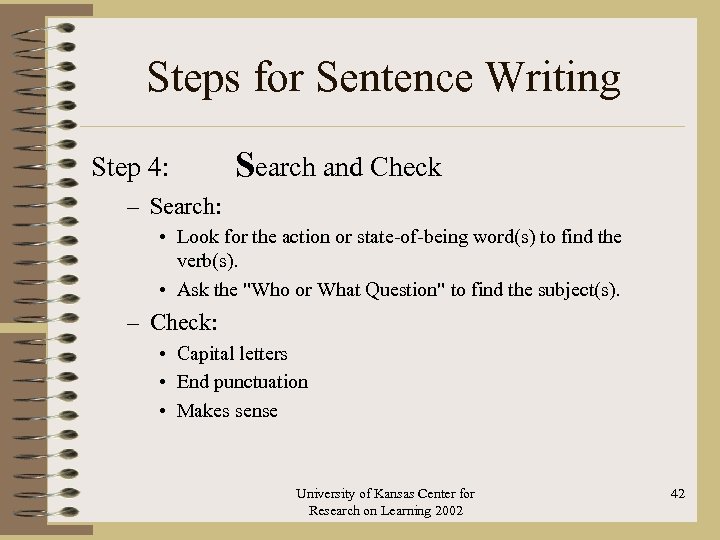 Steps for Sentence Writing Step 4: Search and Check – Search: • Look for the action or state-of-being word(s) to find the verb(s). • Ask the "Who or What Question" to find the subject(s). – Check: • Capital letters • End punctuation • Makes sense University of Kansas Center for Research on Learning 2002 42
 University of Kansas Center for Research on Learning 2002 43
 University of Kansas Center for Research on Learning 2002 44
 University of Kansas Center for Research on Learning 2002 45
 COMPOUND SENTENCES University of Kansas Center for Research on Learning 2002 46
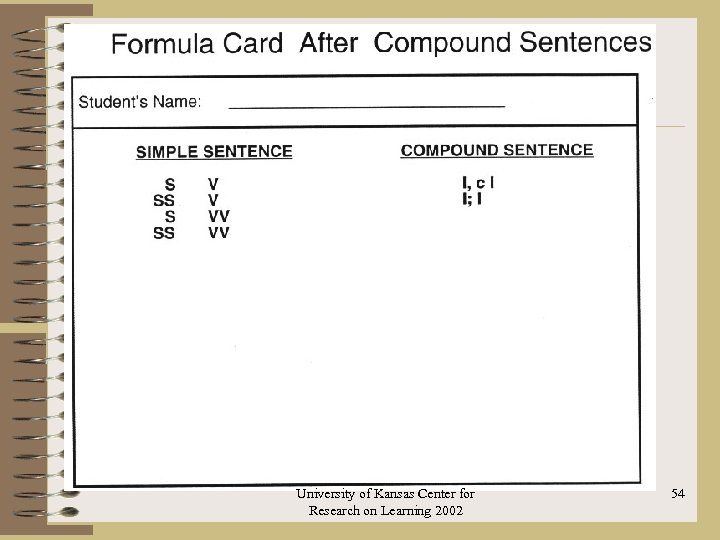
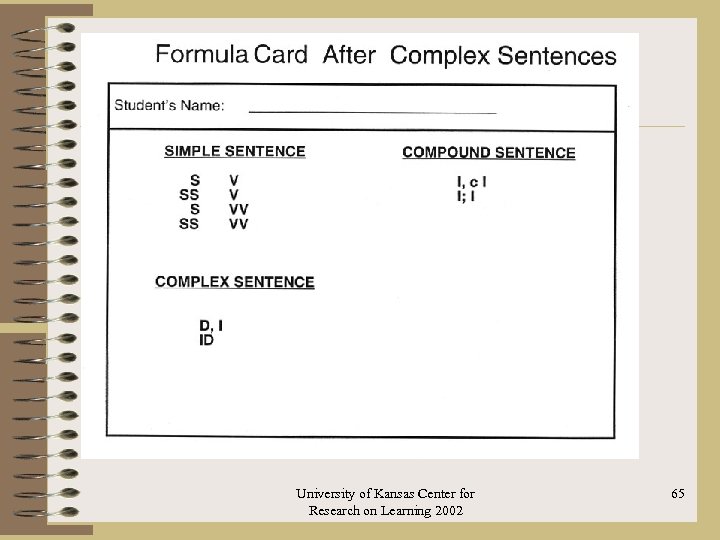
 Compound Sentence A compound sentence has two or more independent clauses. Examples: – The students finished class, and they went to lunch. – Kevin did not want to hurt Kathy's feelings, so he said nothing about her mistake. – I want to see my sister soon, for she has been in Switzerland for two years. University of Kansas Center for Research on Learning 2002 47
 Comparing Compound Sentences to Simple Sentences with Compound Subjects and Compound Verbs Simple Sentence: The men and women met at the station and went to dinner. Compound Sentence: The men met at the station, and the women went to dinner. University of Kansas Center for Research on Learning 2002 48
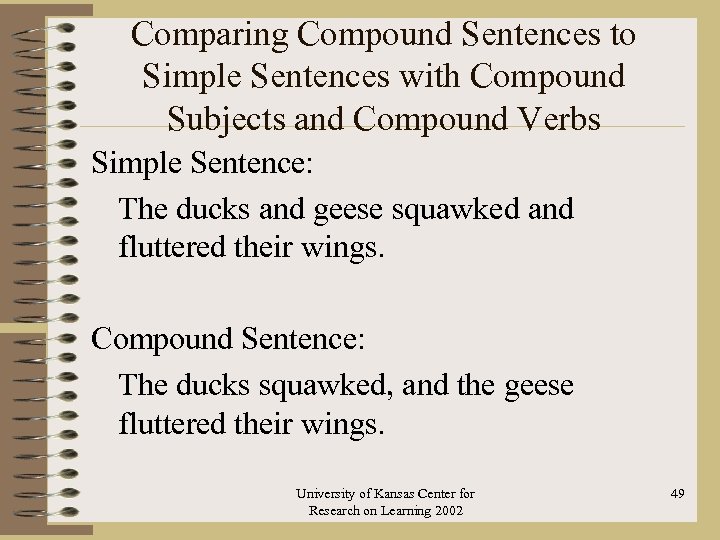 Comparing Compound Sentences to Simple Sentences with Compound Subjects and Compound Verbs Simple Sentence: The ducks and geese squawked and fluttered their wings. Compound Sentence: The ducks squawked, and the geese fluttered their wings. University of Kansas Center for Research on Learning 2002 49
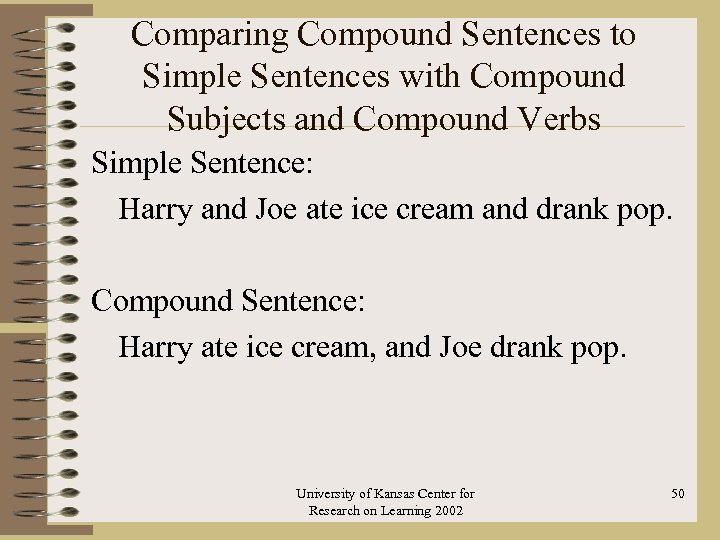 Comparing Compound Sentences to Simple Sentences with Compound Subjects and Compound Verbs Simple Sentence: Harry and Joe ate ice cream and drank pop. Compound Sentence: Harry ate ice cream, and Joe drank pop. University of Kansas Center for Research on Learning 2002 50
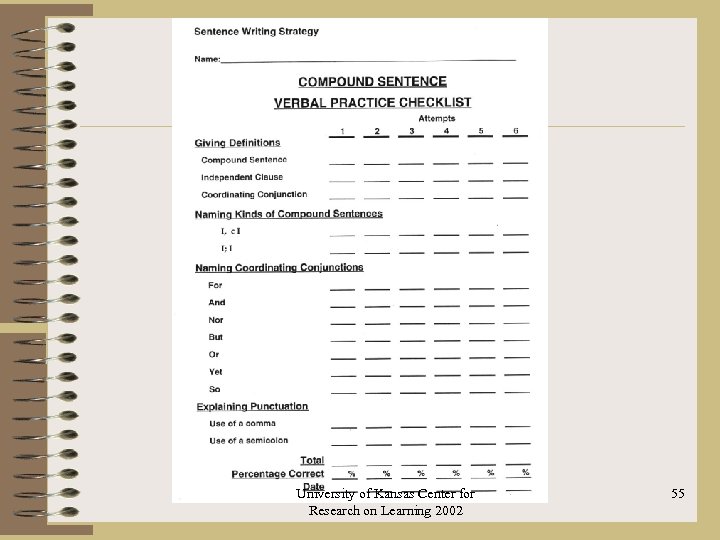
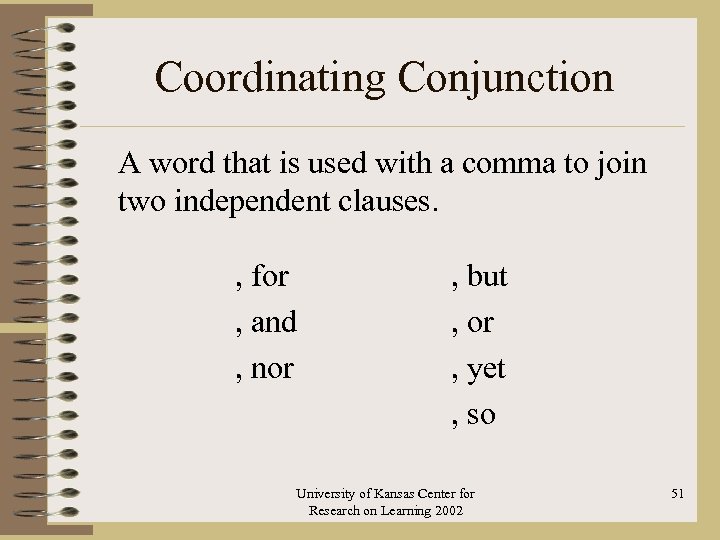 Coordinating Conjunction A word that is used with a comma to join two independent clauses. , for , and , nor , but , or , yet , so University of Kansas Center for Research on Learning 2002 51
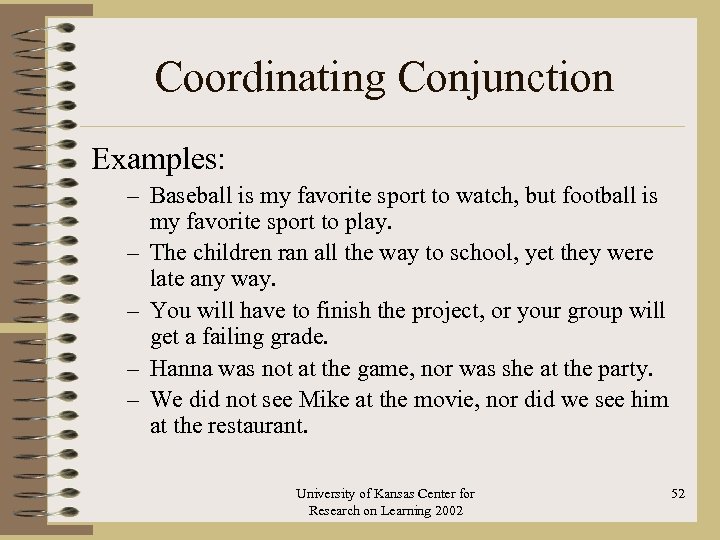 Coordinating Conjunction Examples: – Baseball is my favorite sport to watch, but football is my favorite sport to play. – The children ran all the way to school, yet they were late any way. – You will have to finish the project, or your group will get a failing grade. – Hanna was not at the game, nor was she at the party. – We did not see Mike at the movie, nor did we see him at the restaurant. University of Kansas Center for Research on Learning 2002 52
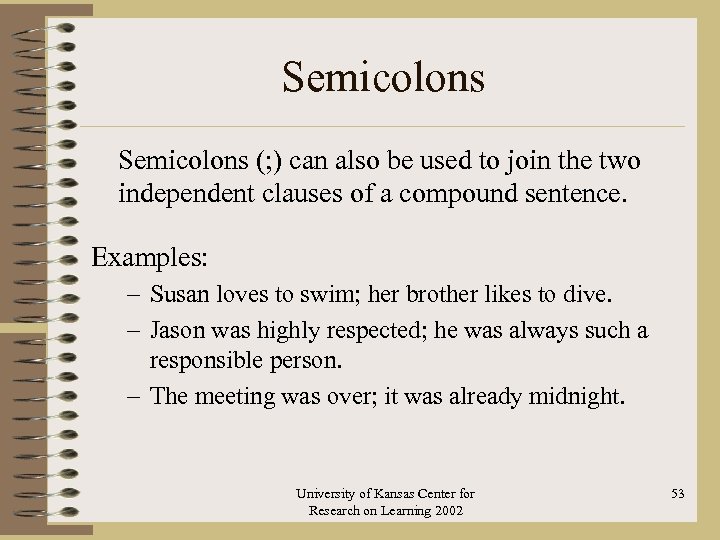 Semicolons (; ) can also be used to join the two independent clauses of a compound sentence. Examples: – Susan loves to swim; her brother likes to dive. – Jason was highly respected; he was always such a responsible person. – The meeting was over; it was already midnight. University of Kansas Center for Research on Learning 2002 53
 University of Kansas Center for Research on Learning 2002 54
 University of Kansas Center for Research on Learning 2002 55
 COMPLEX SENTENCES University of Kansas Center for Research on Learning 2002 56
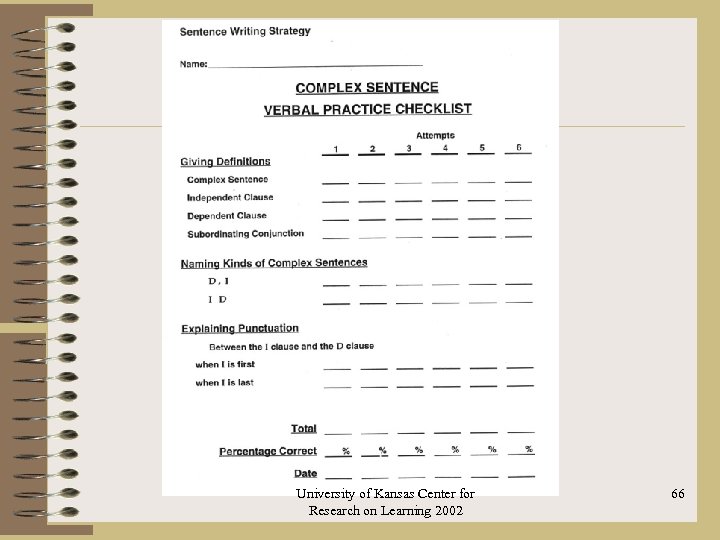
 Complex Sentence A complex sentence has one independent clause and one or more dependent clauses. University of Kansas Center for Research on Learning 2002 57
 Dependent Clause A dependent clause is a group of words with a subject and verb that cannot stand alone. Examples: I like Sally because she is funny. Kathy will be late for dinner since the meeting is still in progress. The game will end when one team scores. University of Kansas Center for Research on Learning 2002 58
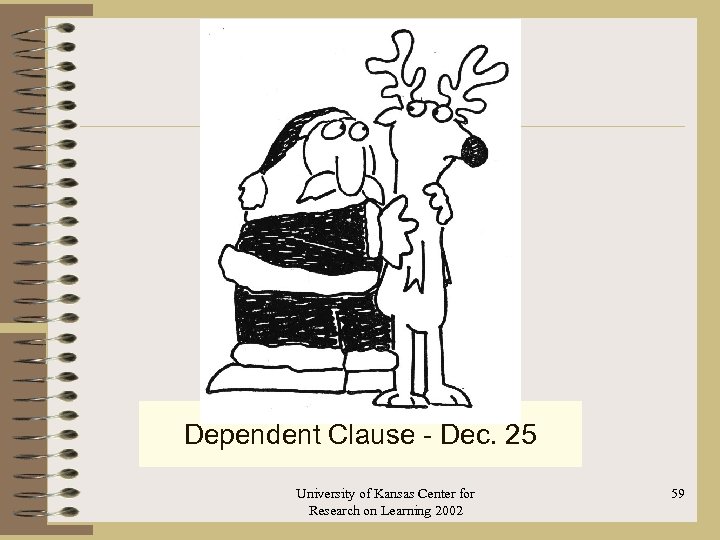 Dependent Clause - Dec. 25 University of Kansas Center for Research on Learning 2002 59
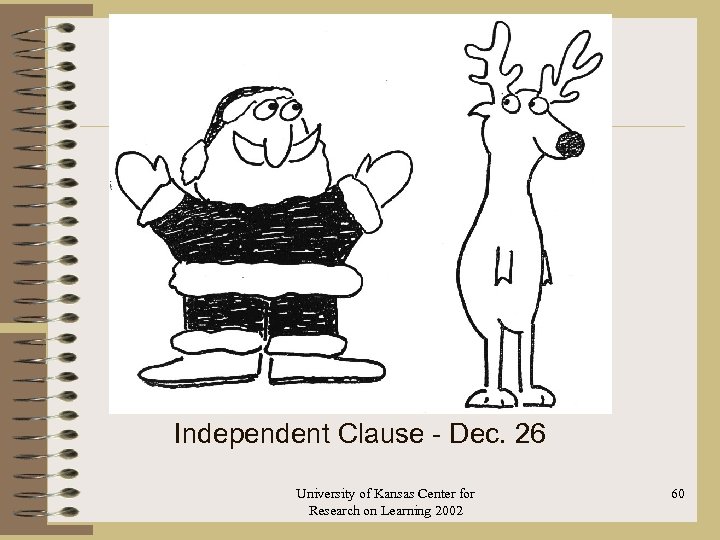 Independent Clause - Dec. 26 University of Kansas Center for Research on Learning 2002 60
 Subordinating Conjunctions Subordinating conjunctions are words that show the relationship of the dependent clause to the independent clause. University of Kansas Center for Research on Learning 2002 61
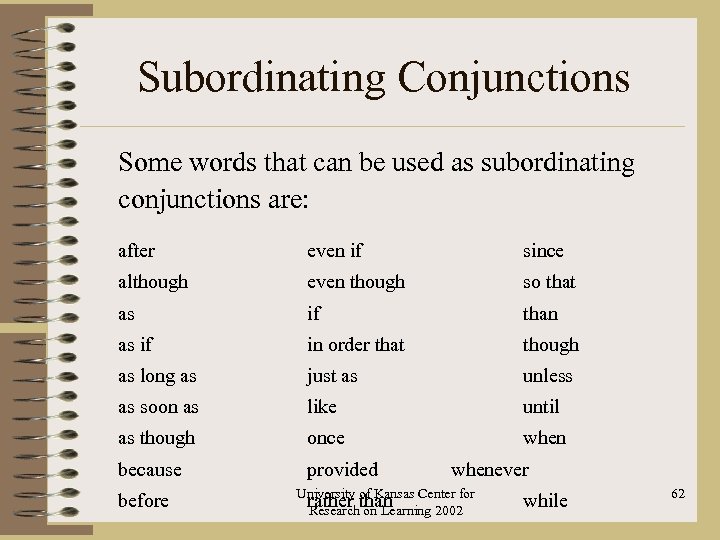 Subordinating Conjunctions Some words that can be used as subordinating conjunctions are: after even if since although even though so that as if than as if in order that though as long as just as unless as soon as like until as though once when because provided before whenever University of Kansas Center for rather than Research on Learning 2002 while 62
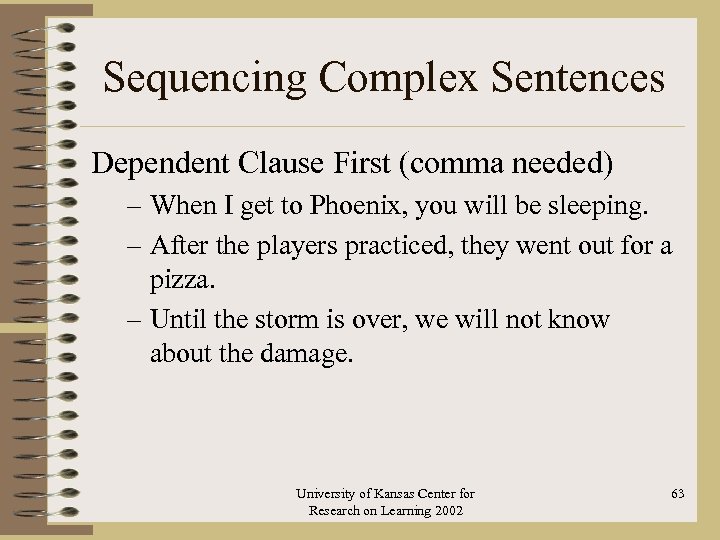 Sequencing Complex Sentences Dependent Clause First (comma needed) – When I get to Phoenix, you will be sleeping. – After the players practiced, they went out for a pizza. – Until the storm is over, we will not know about the damage. University of Kansas Center for Research on Learning 2002 63
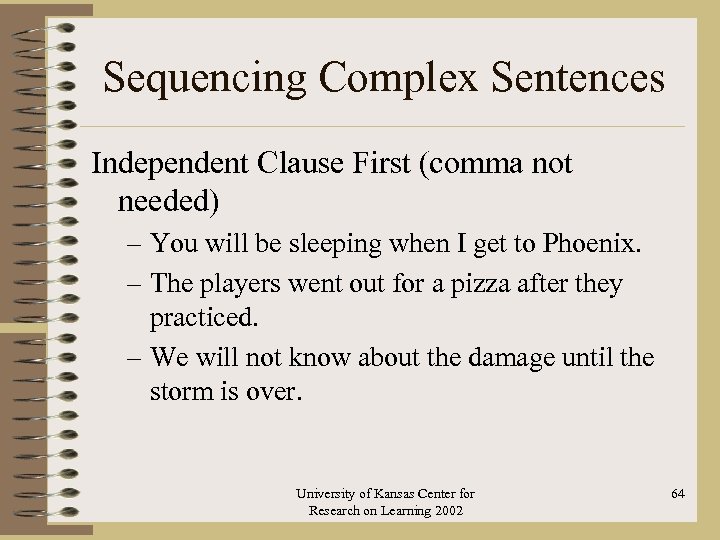 Sequencing Complex Sentences Independent Clause First (comma not needed) – You will be sleeping when I get to Phoenix. – The players went out for a pizza after they practiced. – We will not know about the damage until the storm is over. University of Kansas Center for Research on Learning 2002 64
 University of Kansas Center for Research on Learning 2002 65
 University of Kansas Center for Research on Learning 2002 66
 COMPOUND-COMPLEX SENTENCES University of Kansas Center for Research on Learning 2002 67
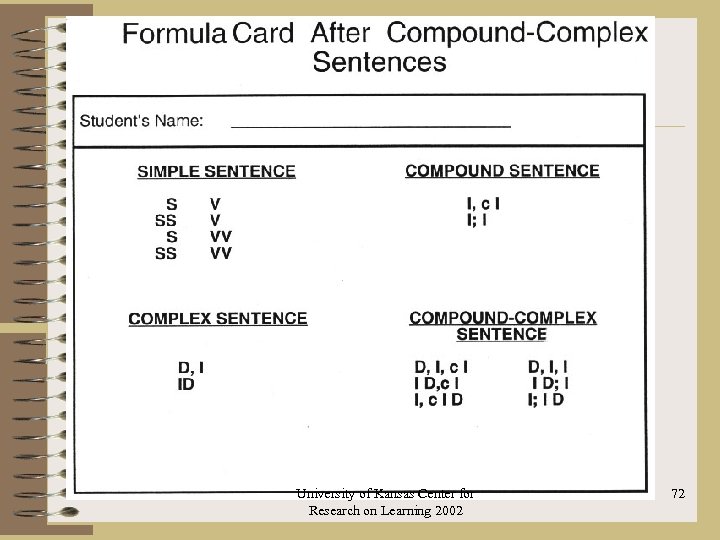
 Compound-Complex Sentence A compound-complex sentence has two or more independent clauses and at least one dependent clause. Examples: – When you are ready, I will call the store, and we can talk to Reed. – Before the trick-or-treaters came, Jill made candied apples; they were delicious. University of Kansas Center for Research on Learning 2002 68
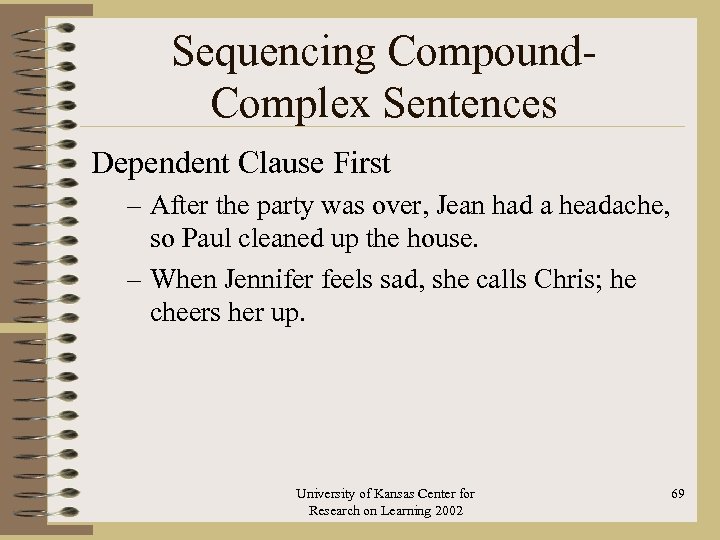 Sequencing Compound. Complex Sentences Dependent Clause First – After the party was over, Jean had a headache, so Paul cleaned up the house. – When Jennifer feels sad, she calls Chris; he cheers her up. University of Kansas Center for Research on Learning 2002 69
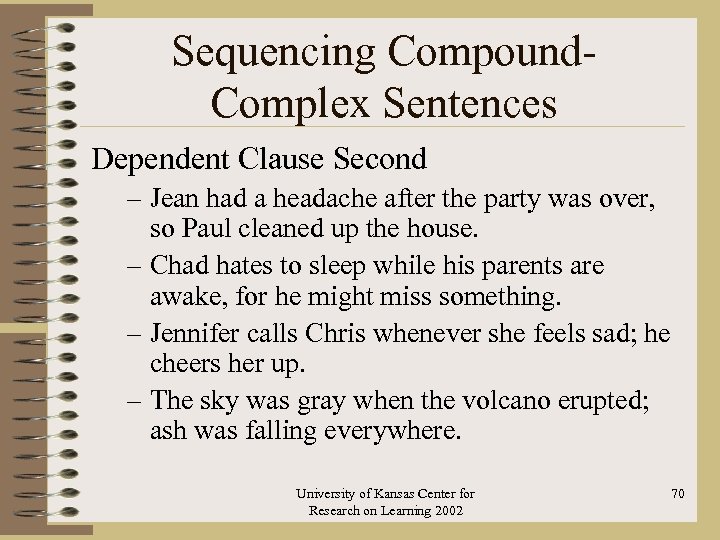 Sequencing Compound. Complex Sentences Dependent Clause Second – Jean had a headache after the party was over, so Paul cleaned up the house. – Chad hates to sleep while his parents are awake, for he might miss something. – Jennifer calls Chris whenever she feels sad; he cheers her up. – The sky was gray when the volcano erupted; ash was falling everywhere. University of Kansas Center for Research on Learning 2002 70
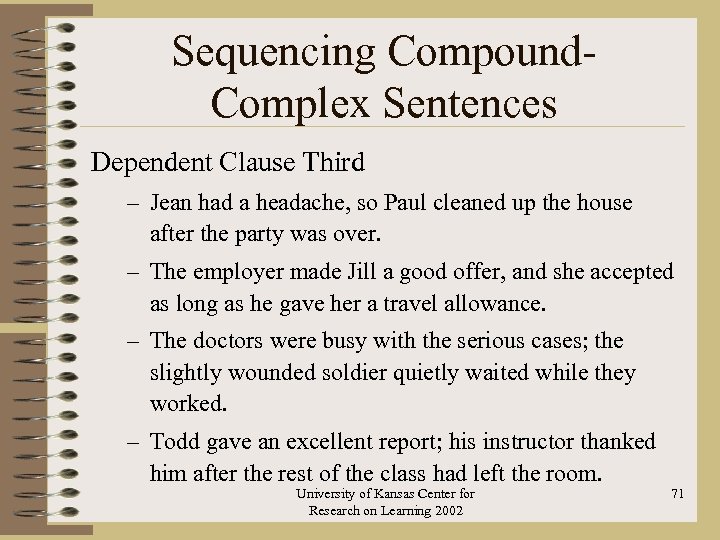 Sequencing Compound. Complex Sentences Dependent Clause Third – Jean had a headache, so Paul cleaned up the house after the party was over. – The employer made Jill a good offer, and she accepted as long as he gave her a travel allowance. – The doctors were busy with the serious cases; the slightly wounded soldier quietly waited while they worked. – Todd gave an excellent report; his instructor thanked him after the rest of the class had left the room. University of Kansas Center for Research on Learning 2002 71
 University of Kansas Center for Research on Learning 2002 72
 University of Kansas Center for Research on Learning 2002 73