 Скачать презентацию Fundamentals of Building Green G PRO Welcome
f4c5934793de6318c54d85059d6e73f2.ppt
- Количество слайдов: 53




Fundamentals of Building Green G|PRO

Welcome & Introductions G|PRO
What is GPRO? G|PRO
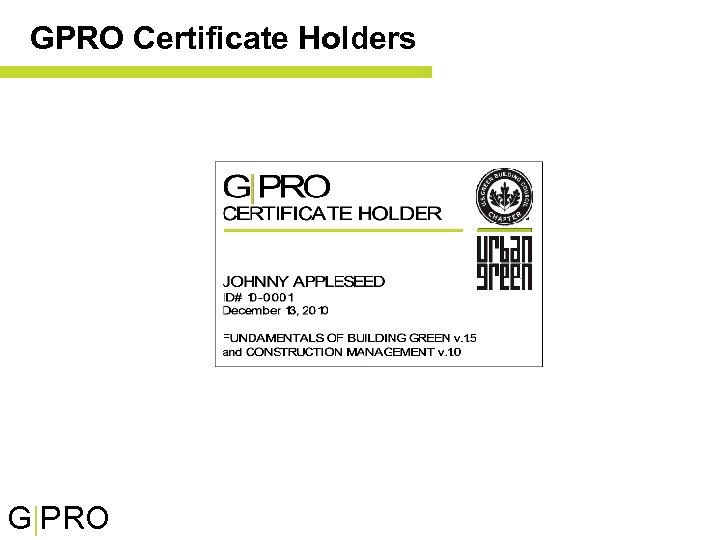
GPRO Certificate Holders G|PRO
Important Note About the Manual The new manual is under construction. The current version flows differently than the presentation but page numbers are listed on the bottom right hand corner of each slide. G|PRO Section Page #
Agenda Part A: 2 Hours Part B: 2 Hours • Sustainability & green building • Environmental challenges in the construction industry • Climate change • Large scale policy solutions • Green building strategies • Green work practices G|PRO
Part A G|PRO Page 4
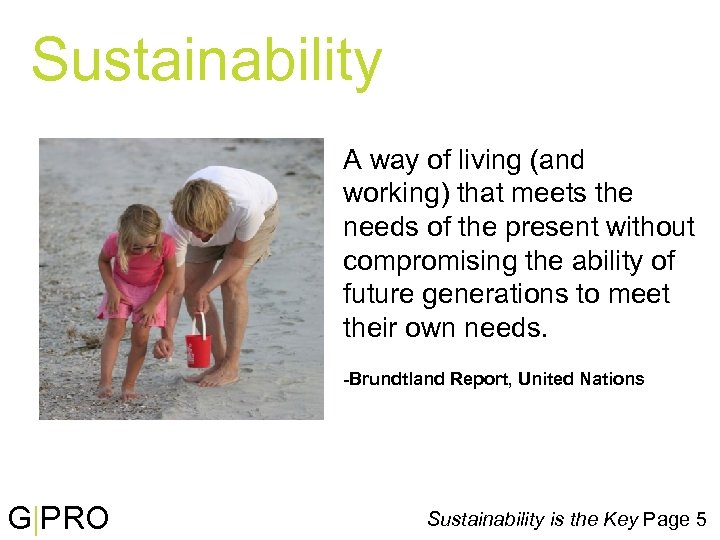
Sustainability A way of living (and working) that meets the needs of the present without compromising the ability of future generations to meet their own needs. -Brundtland Report, United Nations G|PRO Sustainability is the Key Page 5
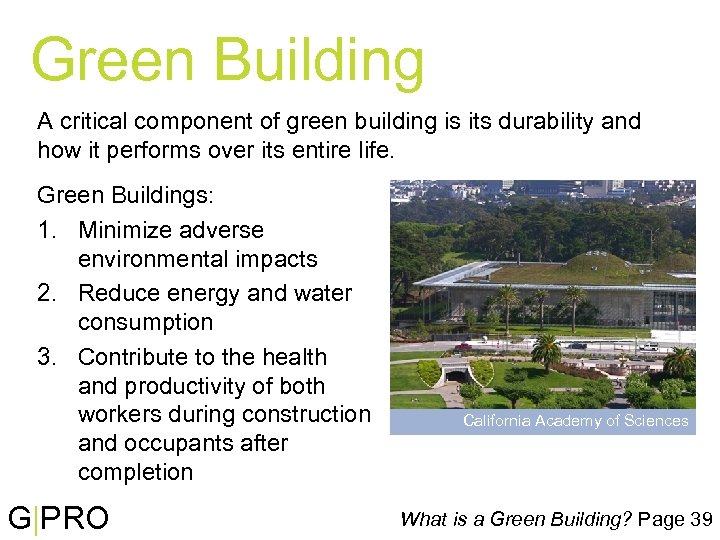
Green Building A critical component of green building is its durability and how it performs over its entire life. Green Buildings: 1. Minimize adverse environmental impacts 2. Reduce energy and water consumption 3. Contribute to the health and productivity of both workers during construction and occupants after completion G|PRO California Academy of Sciences What is a Green Building? Page 39
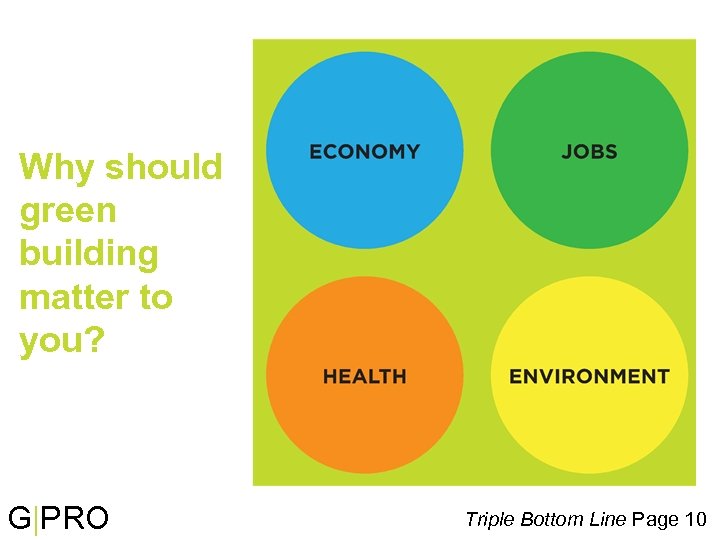
Why should green building matter to you? G|PRO Triple Bottom Line Page 10
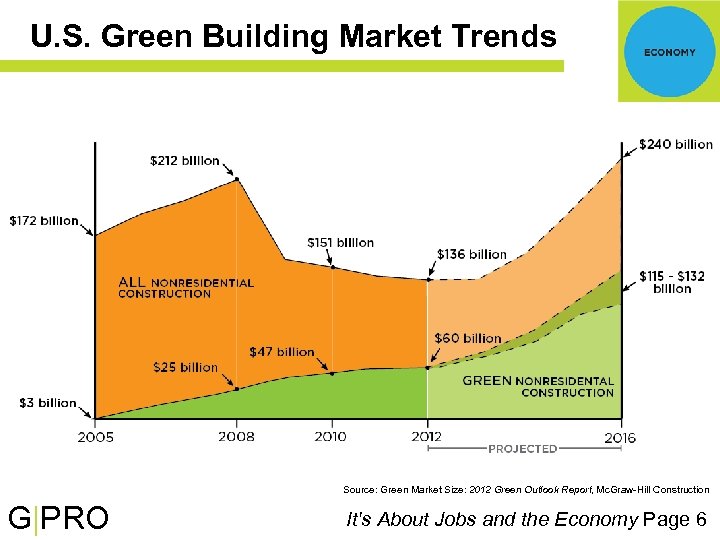
U. S. Green Building Market Trends Source: Green Market Size: 2012 Green Outlook Report, Mc. Graw-Hill Construction G|PRO It's About Jobs and the Economy Page 6
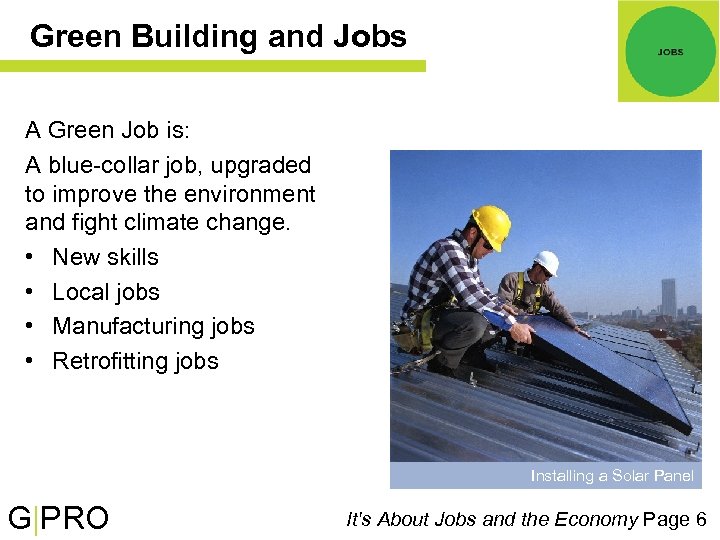
Green Building and Jobs A Green Job is: A blue-collar job, upgraded to improve the environment and fight climate change. • New skills • Local jobs • Manufacturing jobs • Retrofitting jobs Installing a Solar Panel G|PRO It's About Jobs and the Economy Page 6
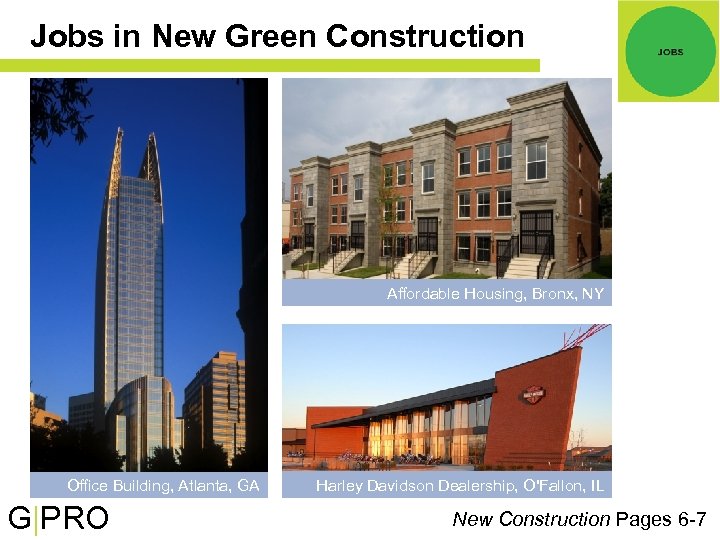
Jobs in New Green Construction Affordable Housing, Bronx, NY Office Building, Atlanta, GA G|PRO Harley Davidson Dealership, O'Fallon, IL New Construction Pages 6 -7
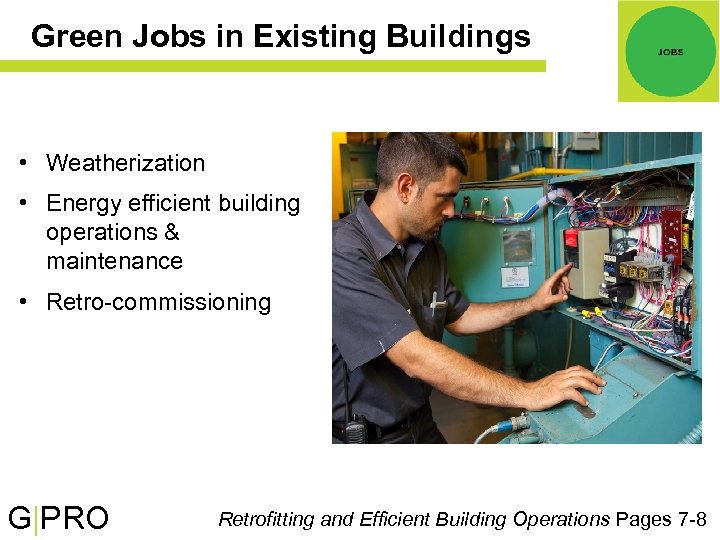
Green Jobs in Existing Buildings • Weatherization • Energy efficient building operations & maintenance • Retro-commissioning G|PRO Retrofitting and Efficient Building Operations Pages 7 -8
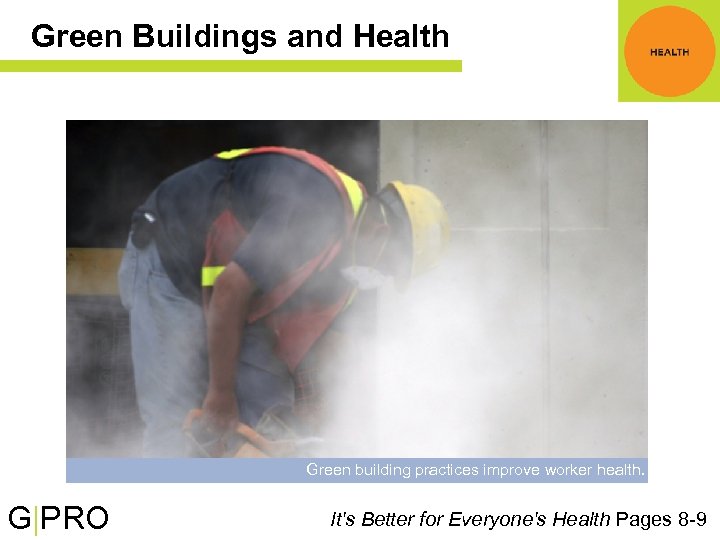
Green Buildings and Health Green building practices improve worker health. G|PRO It's Better for Everyone's Health Pages 8 -9
How do construction practices affect the environment? G|PRO Our Natural Resources: Sustainability Challenges Page 17
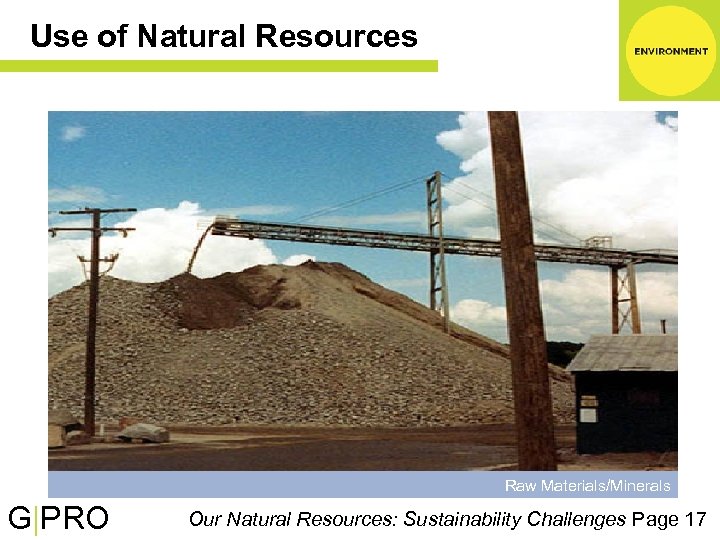
Use of Natural Resources Raw Materials/Minerals G|PRO Our Natural Resources: Sustainability Challenges Page 17
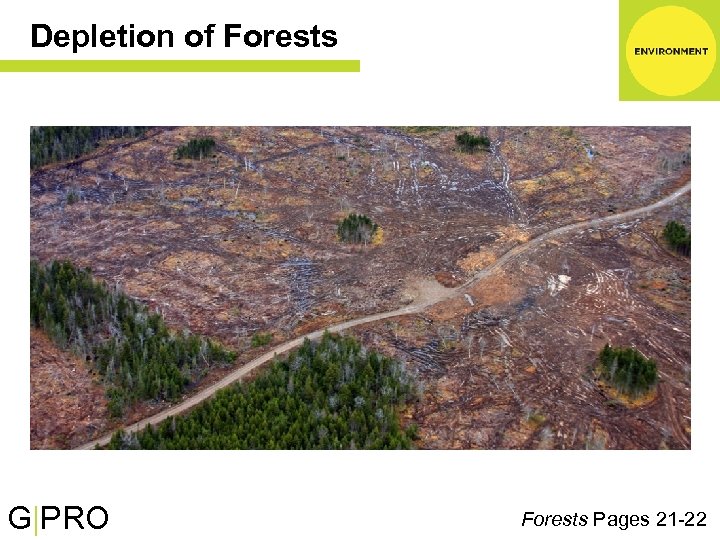
Depletion of Forests G|PRO Forests Pages 21 -22
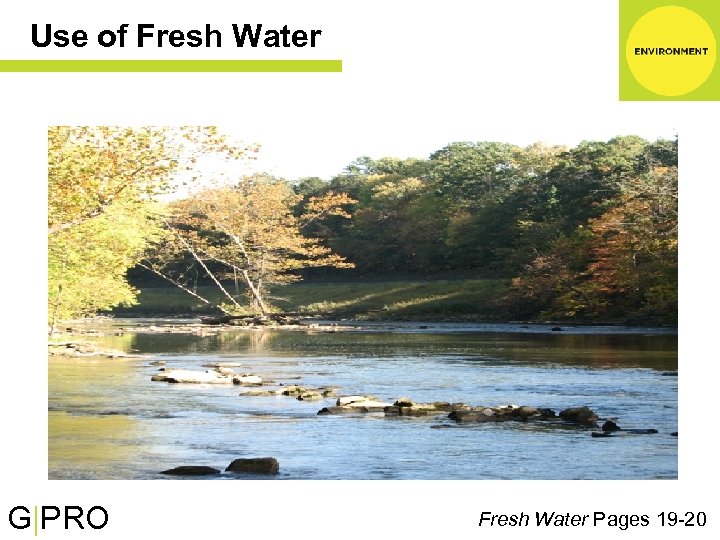
Use of Fresh Water G|PRO Fresh Water Pages 19 -20
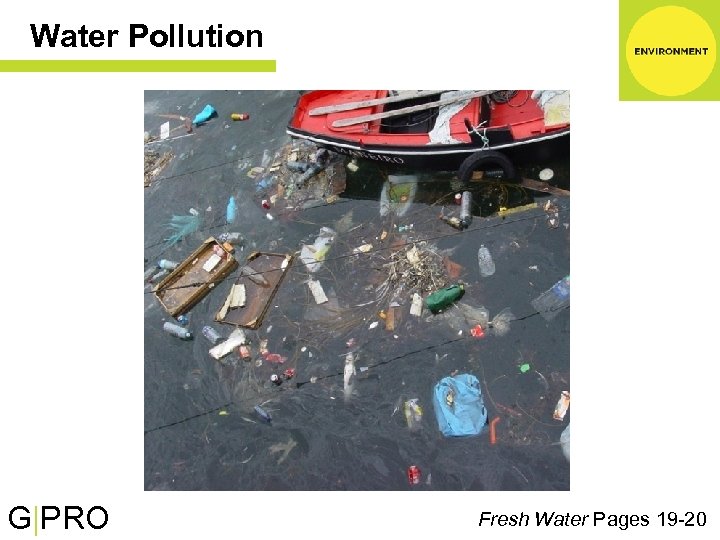
Water Pollution G|PRO Fresh Water Pages 19 -20
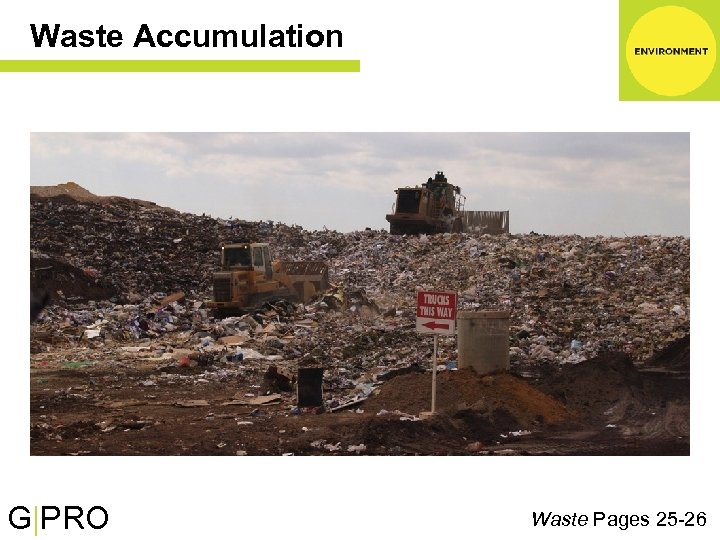
Waste Accumulation G|PRO Waste Pages 25 -26
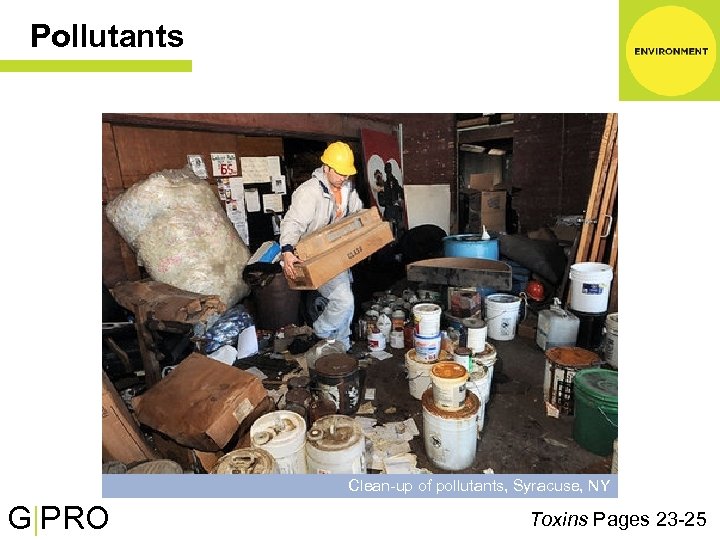
Pollutants Clean-up of pollutants, Syracuse, NY G|PRO Toxins Pages 23 -25
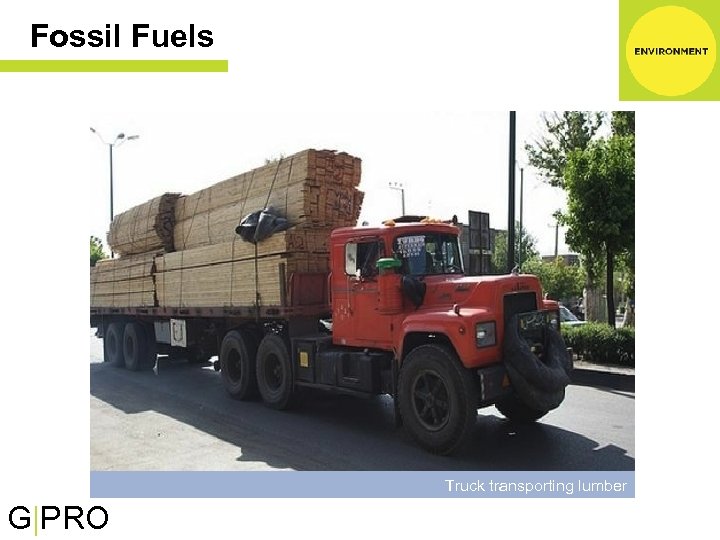
Fossil Fuels Truck transporting lumber G|PRO
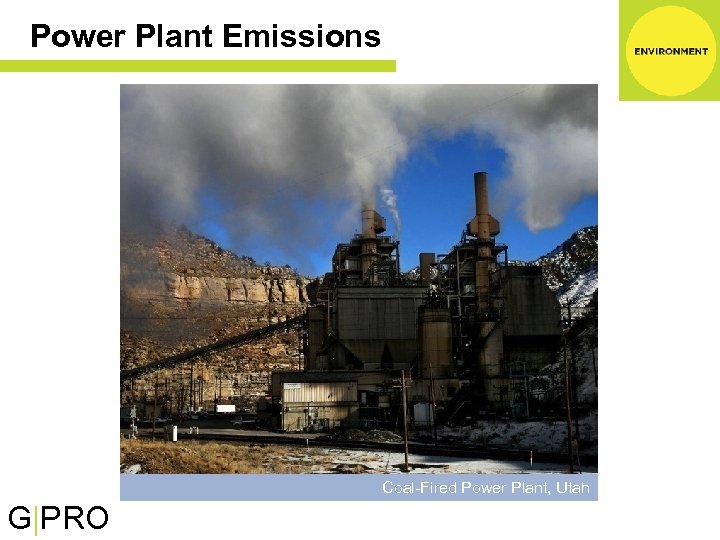
Power Plant Emissions Coal-Fired Power Plant, Utah G|PRO
CLIMATE CHANGE: CAUSES G|PRO Climate Change: Causes and Impacts Page 11
Weather vs. Climate Weather is the everyday state of the atmosphere – a combination of temperature, rainfall, humidity, cloudiness, and wind. Climate is the average weather pattern of one place over a period of time. The status of daily or weekly weather does not necessarily reflect climate trends. G|PRO
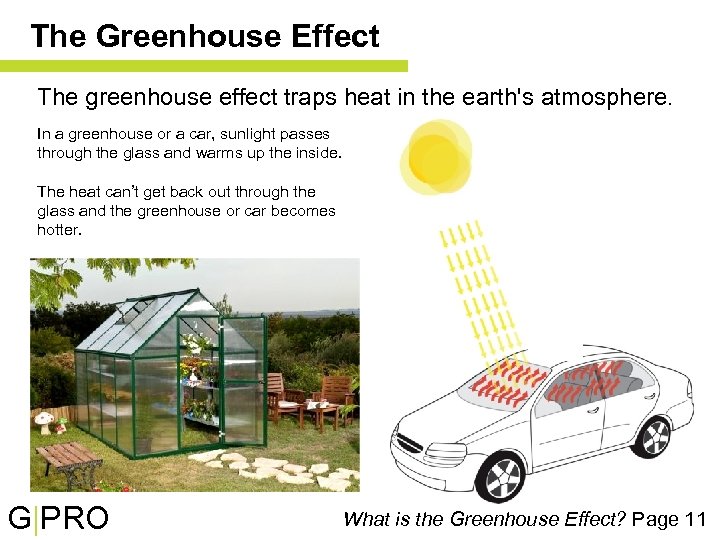
The Greenhouse Effect The greenhouse effect traps heat in the earth's atmosphere. In a greenhouse or a car, sunlight passes through the glass and warms up the inside. The heat can’t get back out through the glass and the greenhouse or car becomes hotter. G|PRO What is the Greenhouse Effect? Page 11
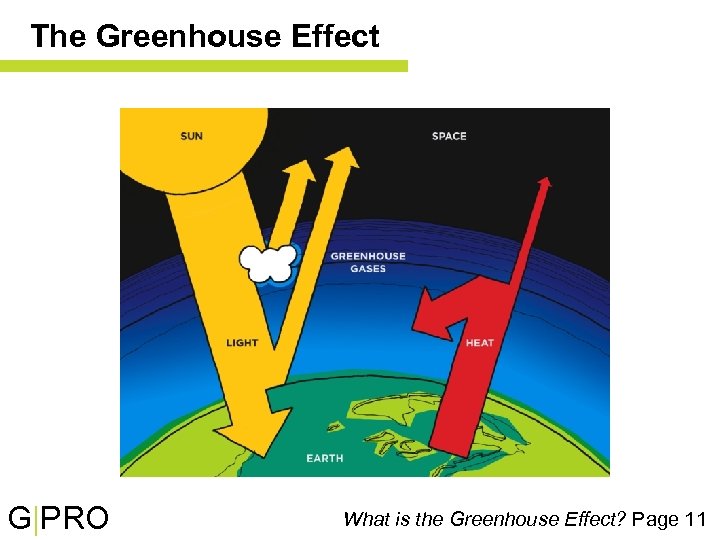
The Greenhouse Effect G|PRO What is the Greenhouse Effect? Page 11
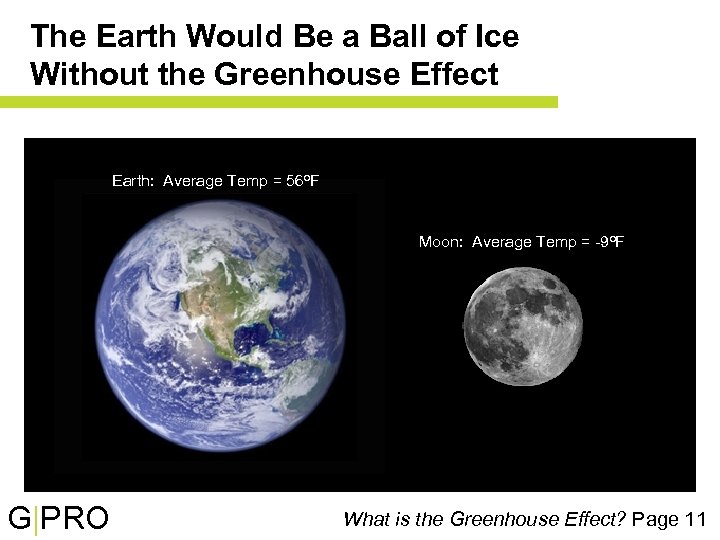
The Earth Would Be a Ball of Ice Without the Greenhouse Effect Earth: Average Temp = 56 o. F Moon: Average Temp = -9 o. F G|PRO What is the Greenhouse Effect? Page 11
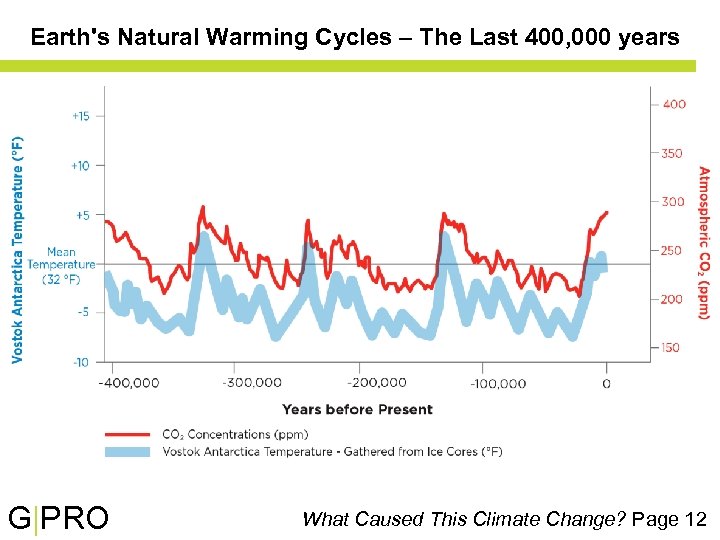
Earth's Natural Warming Cycles – The Last 400, 000 years G|PRO What Caused This Climate Change? Page 12
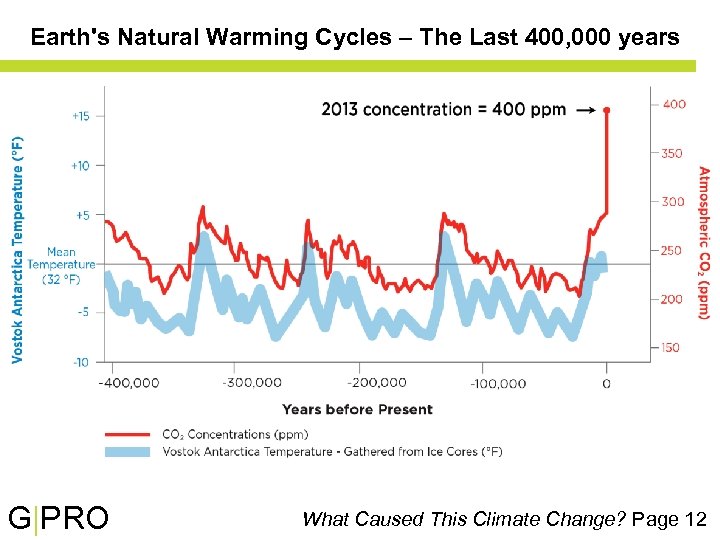
Earth's Natural Warming Cycles – The Last 400, 000 years G|PRO What Caused This Climate Change? Page 12
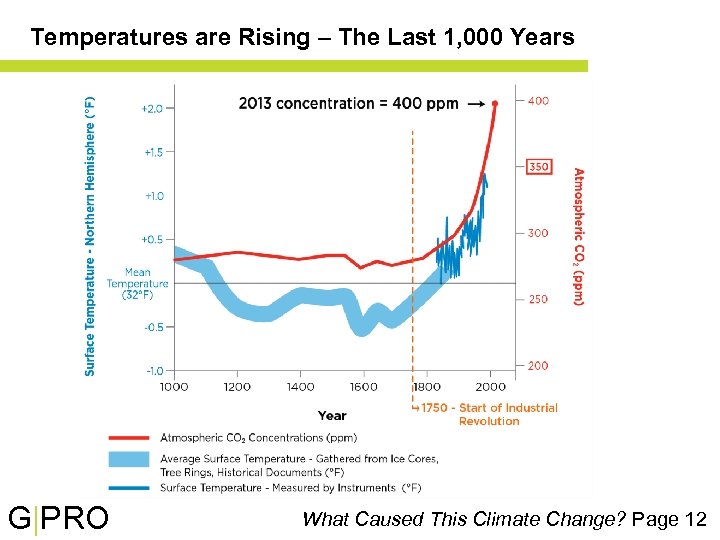
Temperatures are Rising – The Last 1, 000 Years G|PRO What Caused This Climate Change? Page 12
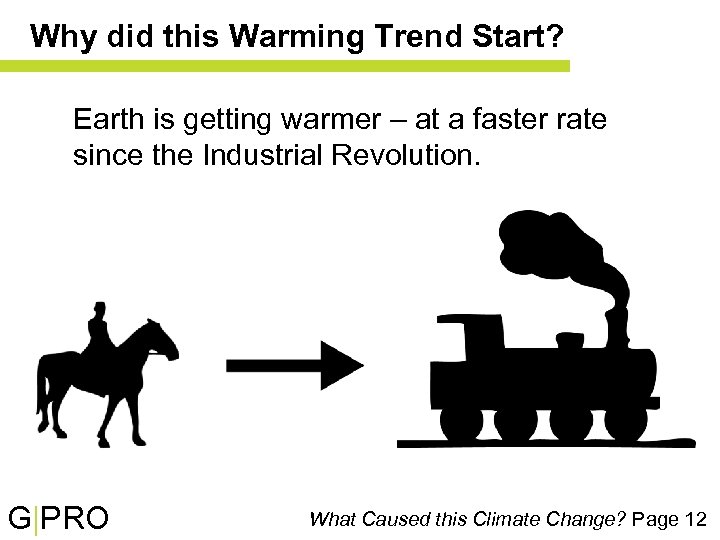
Why did this Warming Trend Start? Earth is getting warmer – at a faster rate since the Industrial Revolution. G|PRO What Caused this Climate Change? Page 12
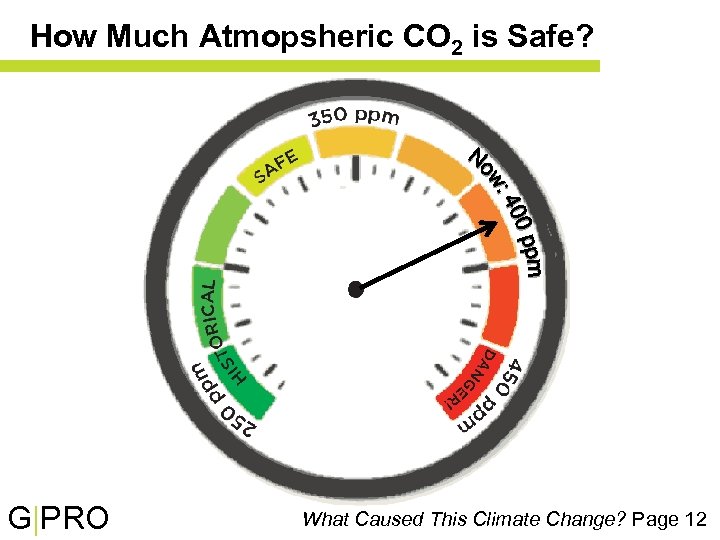
How Much Atmopsheric CO 2 is Safe? G|PRO What Caused This Climate Change? Page 12
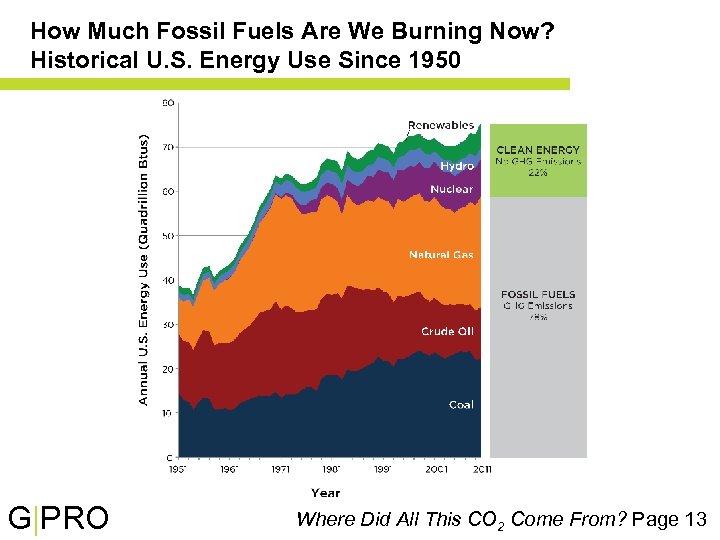
How Much Fossil Fuels Are We Burning Now? Historical U. S. Energy Use Since 1950 G|PRO Where Did All This CO 2 Come From? Page 13
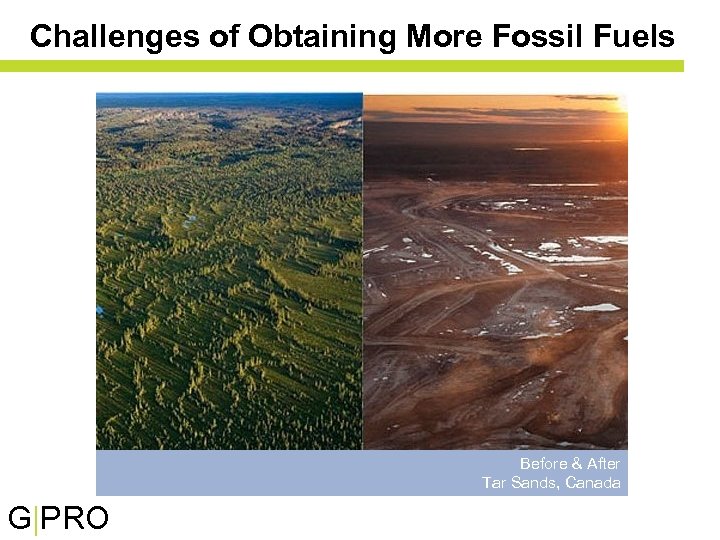
Challenges of Obtaining More Fossil Fuels Before & After Tar Sands, Canada G|PRO
CLIMATE CHANGE: IMPACTS G|PRO Climate Change: Causes and Impacts Page 11
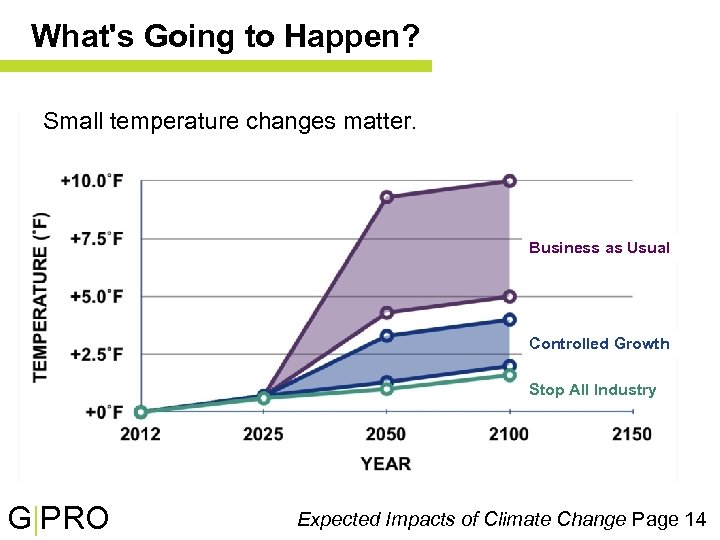
What's Going to Happen? Small temperature changes matter. Business as Usual Controlled Growth Stop All Industry G|PRO Expected Impacts of Climate Change Page 14
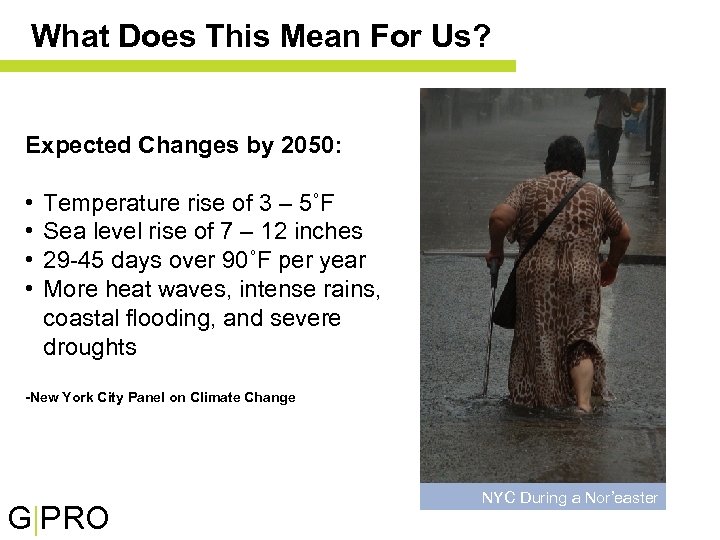
What Does This Mean For Us? Expected Changes by 2050: • • Temperature rise of 3 – 5˚F Sea level rise of 7 – 12 inches 29 -45 days over 90˚F per year More heat waves, intense rains, coastal flooding, and severe droughts -New York City Panel on Climate Change G|PRO NYC During a Nor’easter
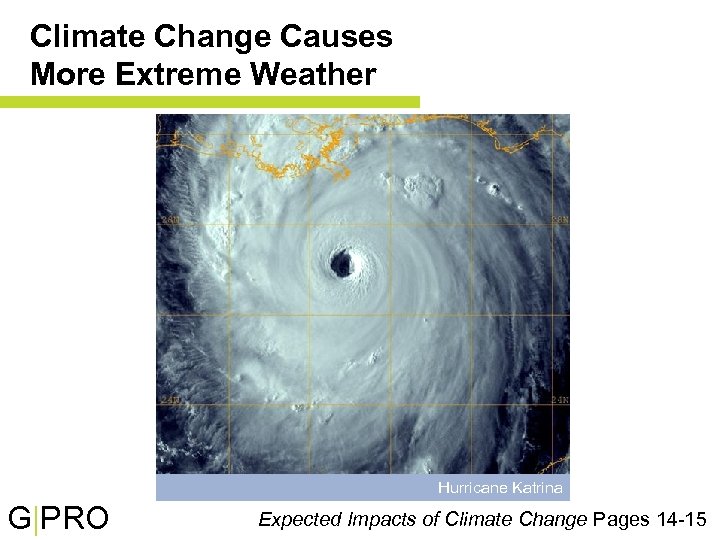
Climate Change Causes More Extreme Weather Hurricane Katrina G|PRO Expected Impacts of Climate Change Pages 14 -15
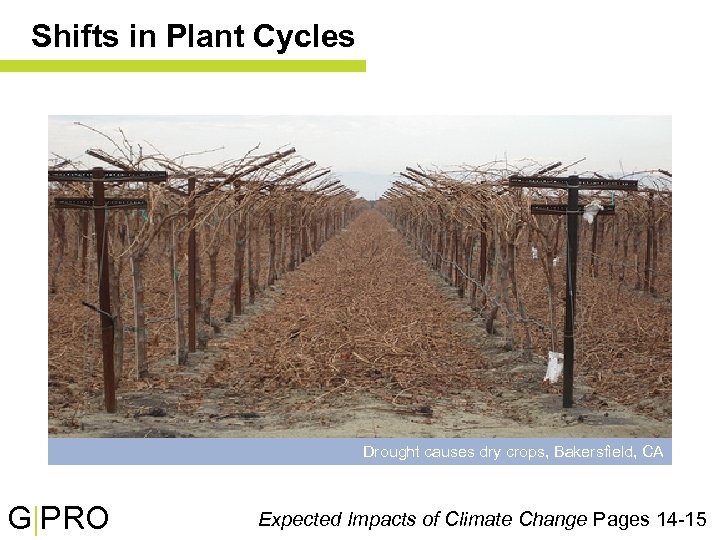
Shifts in Plant Cycles Drought causes dry crops, Bakersfield, CA G|PRO Expected Impacts of Climate Change Pages 14 -15
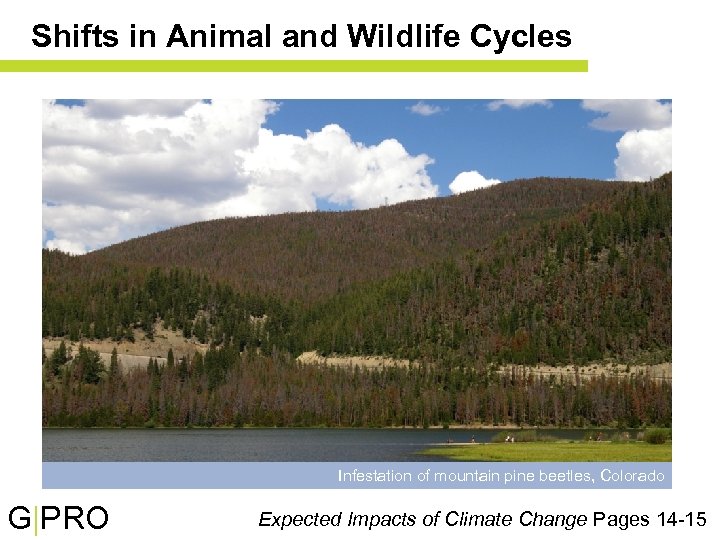
Shifts in Animal and Wildlife Cycles Infestation of mountain pine beetles, Colorado G|PRO Expected Impacts of Climate Change Pages 14 -15
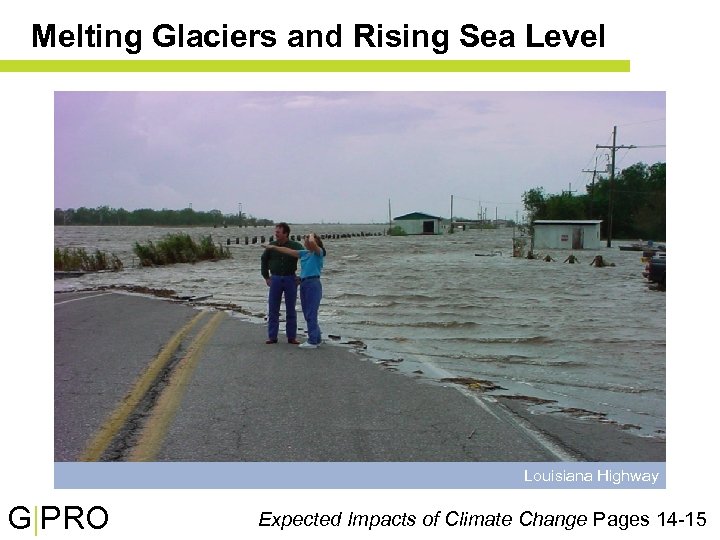
Melting Glaciers and Rising Sea Level Louisiana Highway G|PRO Expected Impacts of Climate Change Pages 14 -15
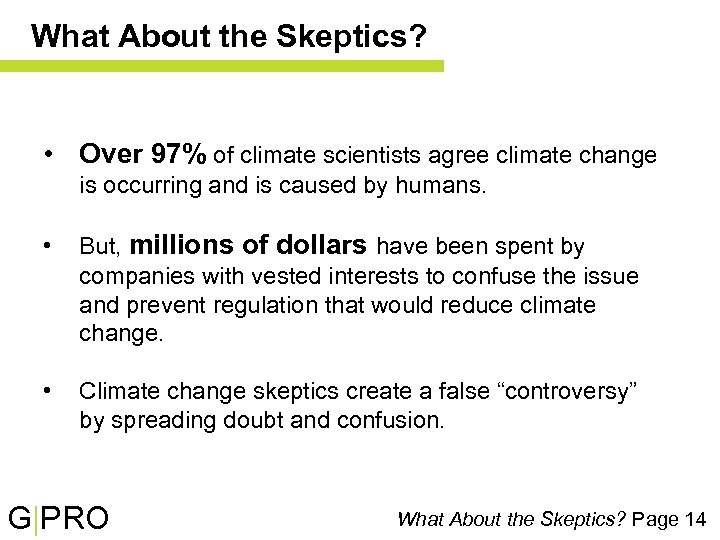
What About the Skeptics? • Over 97% of climate scientists agree climate change is occurring and is caused by humans. • But, millions of dollars have been spent by companies with vested interests to confuse the issue and prevent regulation that would reduce climate change. • Climate change skeptics create a false “controversy” by spreading doubt and confusion. G|PRO What About the Skeptics? Page 14
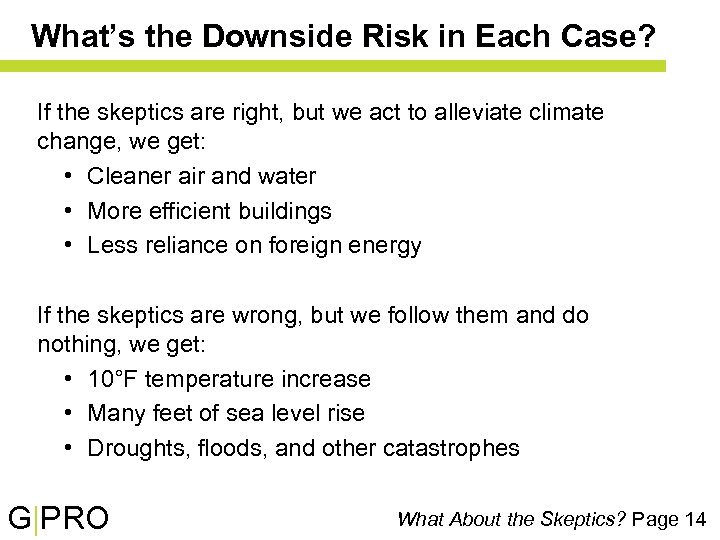
What’s the Downside Risk in Each Case? If the skeptics are right, but we act to alleviate climate change, we get: • Cleaner air and water • More efficient buildings • Less reliance on foreign energy If the skeptics are wrong, but we follow them and do nothing, we get: • 10°F temperature increase • Many feet of sea level rise • Droughts, floods, and other catastrophes G|PRO What About the Skeptics? Page 14
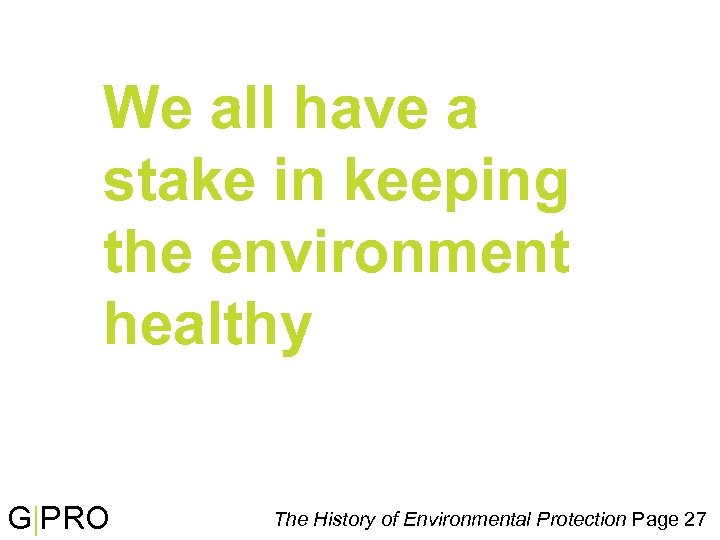
We all have a stake in keeping the environment healthy G|PRO The History of Environmental Protection Page 27
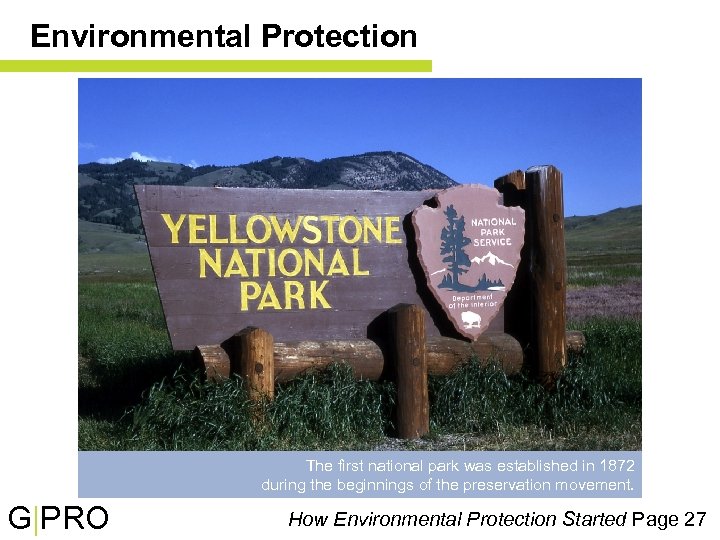
Environmental Protection The first national park was established in 1872 during the beginnings of the preservation movement. G|PRO How Environmental Protection Started Page 27
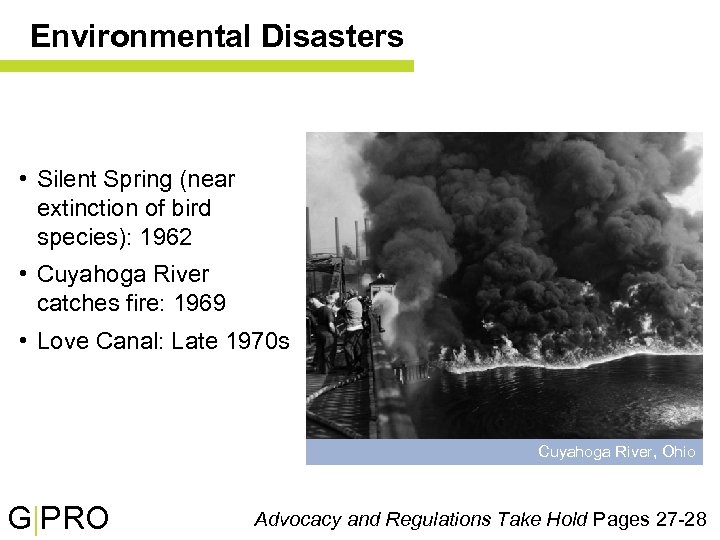
Environmental Disasters • Silent Spring (near extinction of bird species): 1962 • Cuyahoga River catches fire: 1969 • Love Canal: Late 1970 s Cuyahoga River, Ohio G|PRO Advocacy and Regulations Take Hold Pages 27 -28
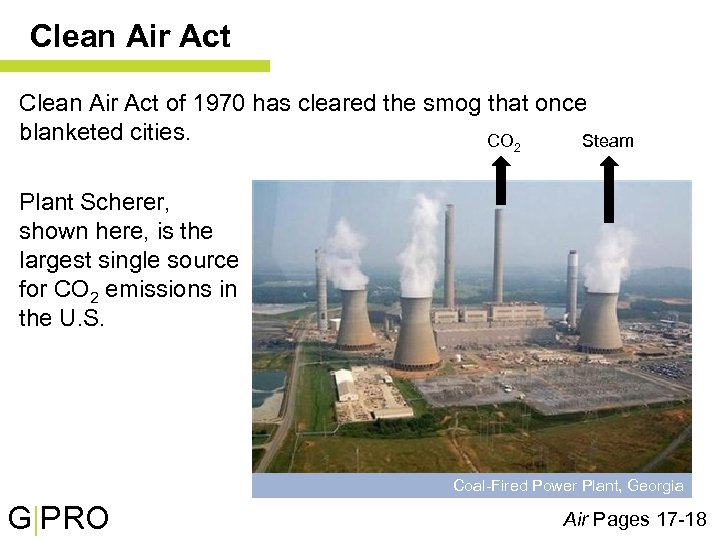
Clean Air Act of 1970 has cleared the smog that once blanketed cities. CO 2 Steam Plant Scherer, shown here, is the largest single source for CO 2 emissions in the U. S. Coal-Fired Power Plant, Georgia G|PRO Air Pages 17 -18
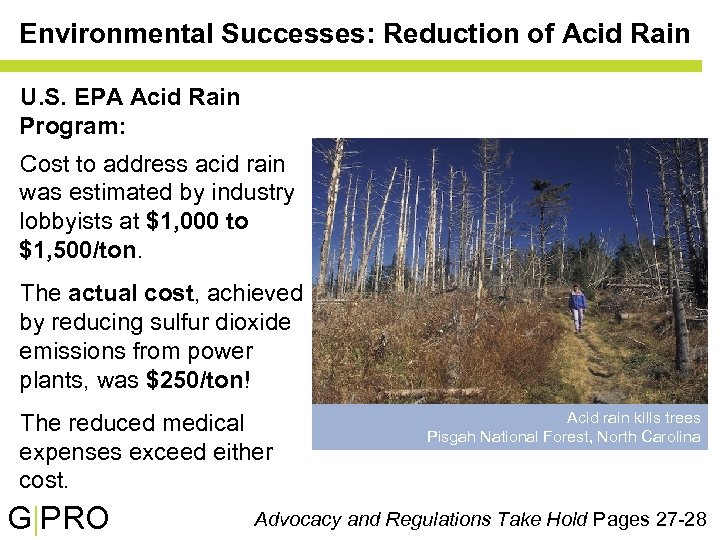
Environmental Successes: Reduction of Acid Rain U. S. EPA Acid Rain Program: Cost to address acid rain was estimated by industry lobbyists at $1, 000 to $1, 500/ton. The actual cost, achieved by reducing sulfur dioxide emissions from power plants, was $250/ton! The reduced medical expenses exceed either cost. G|PRO Acid rain kills trees Pisgah National Forest, North Carolina Advocacy and Regulations Take Hold Pages 27 -28
We Can Solve It! • Large steps include regulations like the Clean Air Act: • Cap and trade limits on CO 2 emissions • National standards for building energy codes (now underway) • Improved mileage standards for cars and trucks (now underway) • Small steps, such as GPRO training, can be taken by individuals, companies, or municipalities: • Sustainable work practices • Efficient design pays for itself in savings • Training staff leads to safer, cleaner, more efficient operations G|PRO Don’t Wait for the Silver Bullet! Page 35
TEST YOURSELF: 1. What is the definition of sustainability? 2. Why is the design and operation of buildings so important in relation to sustainability? 3. What is global climate change, and how do greenhouse gases affect it? 4. What are the primary everyday threats to clean air? 5. What does the history of environmental laws tell us about the cost of cleaning up our emissions? G|PRO

LET'S TAKE A BREAK! G|PRO
Скачать презентацию Fundamentals of Building Green G PRO Welcome
f4c5934793de6318c54d85059d6e73f2.ppt