 Скачать презентацию Fundamental Aspects of Bioenergy Emanuele Scoditti Renewable Sources
1e4ba8591653f42fe994e87e3e27ab6f.ppt
- Количество слайдов: 65



Fundamental Aspects of Bioenergy Emanuele Scoditti Renewable Sources and Innovative Energetic Cycles C. R. CASACCIA – VIA ANGUILLARESE, 301 TEL. 06 30484042 00060 S. MARIA DI GALERIA FAX 06 30486486 ROMA E-Mail: scoditti@casaccia. enea. it
Objectives & Content • Objectives – Provide basic information and criteria to evaluate the feasibility of a biomass plant. – Provide economical and technical evaluation of different plants • Content – – – Introduction to biomass Different sources of biomass Technologies for the use of biomass Economical aspects: investment, maintenance, efficiency Environmental Impact Applications & Best Practices
Preface 1 The social awareness of harmful effects derived from the increasing use of fossil fuel energy is leading institutions and industries to look for alternative solutions for the “energy problem”. Today’s used energy comes most of all (90%) from the combustion of fossil fuel. This process produces carbon oxides (COx), nitrogen oxides (NOx), sulphur oxides (SOx), hydrocarbons (HC), chlorine-fluorine-carbides (CFC), lead and mercury that, mixed with gases and substances deriving from human activities, are among the causes of the greenhouse effect.
Preface 2 Cars emissions, industrial waste and heating systems emission (present in high industrialized and developed areas) are the main examples of noxious emissions. The increase of the concentration of greenhouse gas in the atmosphere raises the average temperature of the planet, causing progressive melting of glaciers and, consequently, a raising of the average level of the seas. All this would lead to an expected 0. 3 -0. 5 m raising of the level of waters and a 0. 2 -2. 5 °C rise of oceanic surface temperature.
Preface 3 So, from an ecological and economical point of view, a good strategy should lead to an increase of renewable sources of energy and to a rational use of energy. The environmental issue, linked mainly to the reduction of greenhouse gases, needs an international political engagement and an improvement of common and individual awareness. It will be necessary to invest in technologies able to exploit the potential of these resources, especially in the same area of production.
Preface 4 These goals will need a stimulating policy and adequate sensitiveness considering the long term benefits concerning the diffusion of new technologies, the efficiency of energy performances and the prevention of damages to the environment. Besides, this policy should estimate the occupational benefits for the liberalization of energy and the positive repercussions on the national economies as regards the international markets instability.
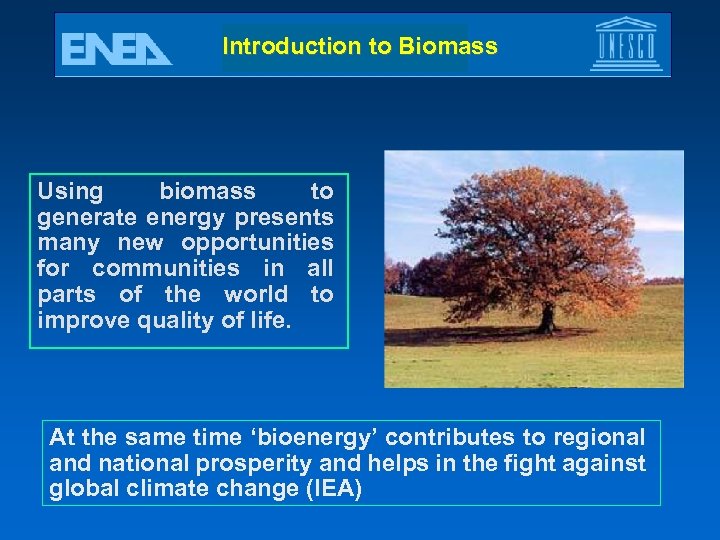
Introduction to Biomass Using biomass to generate energy presents many new opportunities for communities in all parts of the world to improve quality of life. At the same time ‘bioenergy’ contributes to regional and national prosperity and helps in the fight against global climate change (IEA)
What is Biomass ? 1 Biomass is any organic substance of recent biological origin, in a non fossil form, which derives from photosynthesis. The vegetables, which represent almost the whole of biomass present on earth, use sunbeams to turn carbon dioxide and water into the complex molecules that compose them or appear in their vital processes: carbohydrates, lignin, proteins, lipids and other secondary elements. Biomass is a renewable raw material that, besides to supply food to mankind, fibres and manure can be utilised to produce energy releasing the solar energy and CO 2 through thermal treatments.
What is Biomass ? 2 Judging from the literature and the many proposed schemes, great expectations exist regarding the recovery of useful items from the carbonaceous residues. A residues is any material remaining after the desired portions of the plant have been removed. What is a quite small fraction when related to the needs of the nation as a whole, it becomes significantly large one when related to a single community. The reality is that if all organic residues were converted into energy, the resulting output would fulfil a good percentage of a nation’s total energy requirements.
Interest to Biomass The interest towards the biomass exploitation is mainly due to: energy production strongly weak: every country imports a large portion of its primary energy needs; presence of by-products and agricultural, agro-industrial and forest residues, estimated in several Mt of dry matter per year to be disposed in correct and ecological way; surplus of agricultural areas dedicated to food cultivations, to be utilised for energy and/or industrial cultivations;
Interest to Biomass 2 abandoned agricultural lands, estimated in several Mha, with high desertification risk and hydro-geological accident; necessity of intervention of maintenance and forest patrimony recovery, evaluated in several Mha between forest tree and coppice tree, i. e. carrying out targeted actions on the Mha of coppice tree; depopulation of the mountainous areas; high unemployment rate.
Conditions for Biomass Use 1 It depends on: Specifications of available fuel : quantity, distance and seasonality of some biomass fuel; Specifications of energy needs: competition with other biomass plant installed in relatively close areas; Socio-economic conditions: strong dynamism of the biomass on market; improvement of demand competition with other sectors (i. e. : panel board industry).
Conditions for Biomass Use 2 The use of biomass for energy purposes can be advantageous when this is concentrated in the space and is available with sufficient continuity along the whole year, while an eccessive dispersion on the territory and a too concentrated crop harvesting seasonality make more difficult and expensive its collection, transport and storage. The biomass energy use presents also an unquestionable environmental relevance: besides the positive effects on the atmospheric CO 2 containment, its use represents often a good solution to the problems of the residues management which otherwise would be left or burnt on the field.
Biomass Collection & Supply Biomass supply represents, without doubts, the most critical problem in the bioenergy chain. The principal reasons, here summarised, are found in: seasonality of some products that are available only in limited periods; strong market dynamism of products; demand increase and competition with other sectors (i. e. : panelboard industry); increase of biomass power station number in relatively close areas. Forest Residues Agricultural Residues WHICH BIOMASS Agro-industrial Residues Dedicated Cultivations Municipal Solid Waste (organic phase) Cattle Manure
Forest Residues The energy exploitation of these areas is possible only if we consider the whole system, and, in doing so, act responsibly. Besides the environmental benefits, a proper management and the maintenance of the forests can provide several socio-economical advantages. It has been proved that a proper management of woods can reduce fires and damages from floods. Besides, they can also create new jobs in the forest areas and help slowing the depopulation of countryside down. The annual accumulation of wood in the forest cannot be read in positive terms as an “increase of the woody material produced”, but rather as effect of cutting areas reduction with subsequent fragility of woods.
Forest Residues 2 Biomass can be considered as renewable sources, provided it is used in a proper way. Forestry residues include wood and bark residues which accumulate at primary wood manufacturing operations during the production of lumber and other wood products, bark from pulp mills processing roundwood, and slash left on the forest floor after logging operations. Biomass feedstock generated in lumbering and related industries can be classified: forestry residues (annual litter fall, dead trees, forest-fire remain and logging residues; manufacturing residues (bark and hogged fuel from wood products and pulp and paper industries.
Agricultural Residues At first sight, crop residues seem to be an attractive energy source and with good reason. They are primarily cellulosic (carbonaceous) in composition. They are relatively amenable to most energy-conversion processes. They are abundant. They pose grave disposal problems. Due to the wide dispersion on the territory of any country, for this kind of biomass (straw, corn stover, fruit tree pruning, etc. ) it is very difficult to get precise data about the quantity, its use and consumption.
Agricultural Residues 2 As a consequence, the estimate on the quantities of residues which are potentially usable for the production of energy is a very complex operation. Crop residues are classified more or less into two major categories: Residues left on or in the soil after harvesting (wheat, corn stoker, etc. ) Residues collected and removed from the field as a part of or along with the harvested crop (rice hulls, fruit peeling, non edible roots, etc. )
Agricultural Residues 3 Economical problems together with a competition for use as an animal feedstuff takes away from the attractiveness of energy recovery through methane production, or any other method. Two types of residues constitute exceptions: waste seed of peaches, nectarines, plums, apricots, olives and cherries, and shells of almonds, walnuts, and other nuts; bagasse (the product of the sugar cane extraction process, it represents about 30% weight of the raw cane.
Agricultural Residues 4 Proximate & Ultimate analysis of some biomass species Usually, crop residues are fairly homogeneous in composition. Important characteristics are particle size, moisture and ash content, and bulk density. The heating values of crop residues for the most part fall within the range of 11, 500 -18, 600 k. J/kg. To characterize the biomass are carried out the so called "Proximate and Ultimate analyses". The "proximate" analysis gives moisture content, volatile content (at 950 °C), the free carbon remaining at that point, the ash (mineral) in the sample and the high heating value (HHV). The "ultimate" analysis" gives the composition of the biomass in wt% of carbon, hydrogen and oxygen (the major components) as well as sulfur and nitrogen (if any).
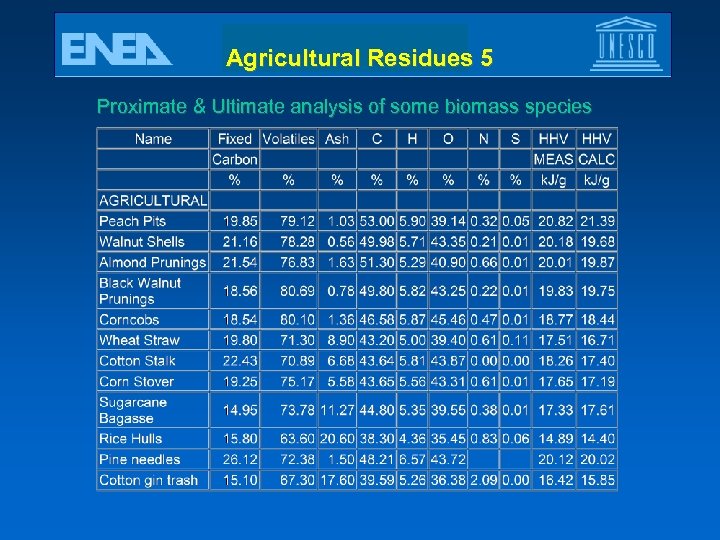
Agricultural Residues 5 Proximate & Ultimate analysis of some biomass species
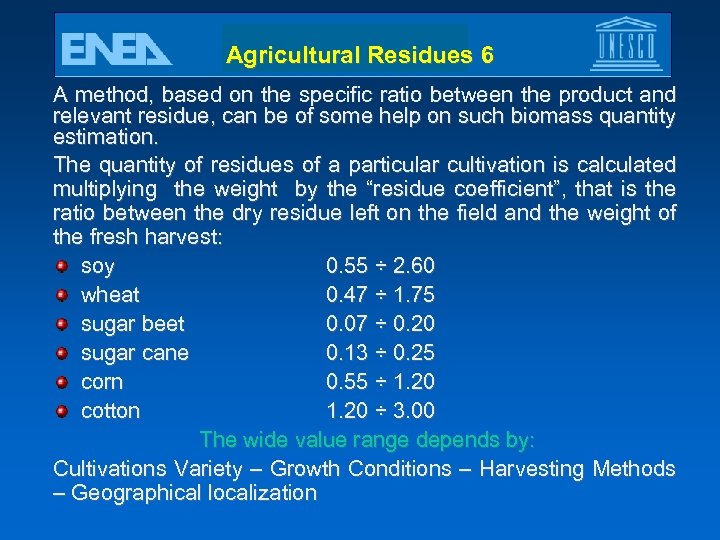
Agricultural Residues 6 A method, based on the specific ratio between the product and relevant residue, can be of some help on such biomass quantity estimation. The quantity of residues of a particular cultivation is calculated multiplying the weight by the “residue coefficient”, that is the ratio between the dry residue left on the field and the weight of the fresh harvest: soy 0. 55 ÷ 2. 60 wheat 0. 47 ÷ 1. 75 sugar beet 0. 07 ÷ 0. 20 sugar cane 0. 13 ÷ 0. 25 corn 0. 55 ÷ 1. 20 cotton 1. 20 ÷ 3. 00 The wide value range depends by: Cultivations Variety – Growth Conditions – Harvesting Methods – Geographical localization
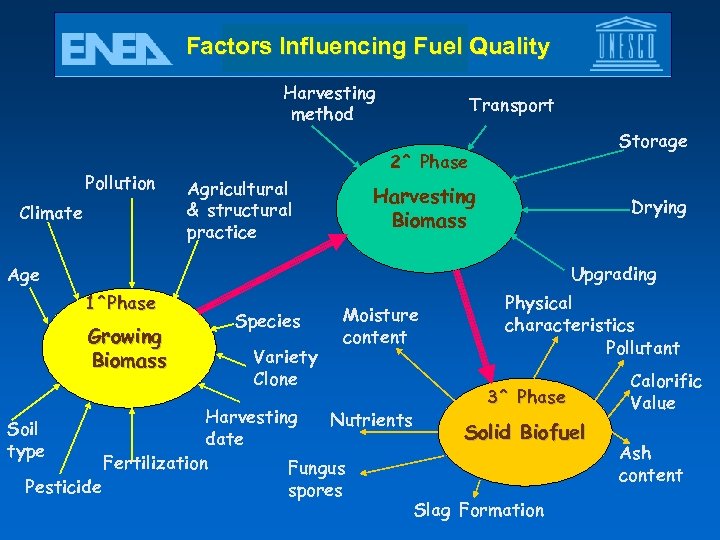
Factors Influencing Fuel Quality Harvesting method Pollution Climate Transport Storage 2^ Phase Agricultural & structural practice Harvesting Biomass Drying Upgrading Age 1^Phase Growing Biomass Species Variety Clone Moisture content Harvesting Nutrients date Fertilization Fungus Pesticide spores Soil type Physical characteristics Pollutant 3^ Phase Solid Biofuel Slag Formation Calorific Value Ash content
Agro-Industrial Residues Typical Biomass Every alimentary process produces different residues, most of them are solid but dispersed into slurries, cakes with high moisture content. Very often, for economical problems, it is preferred to utilize such residues for animal feeding rather that for the production of energy through the production of methane. A typical agro-industrial residue is represented by the exhausted olive cake which is the by-product of the olive oil production factory. The olive oil can be produced through two principal processes: Discontinuous Process by Pressing Continuous Process by Centrifugation
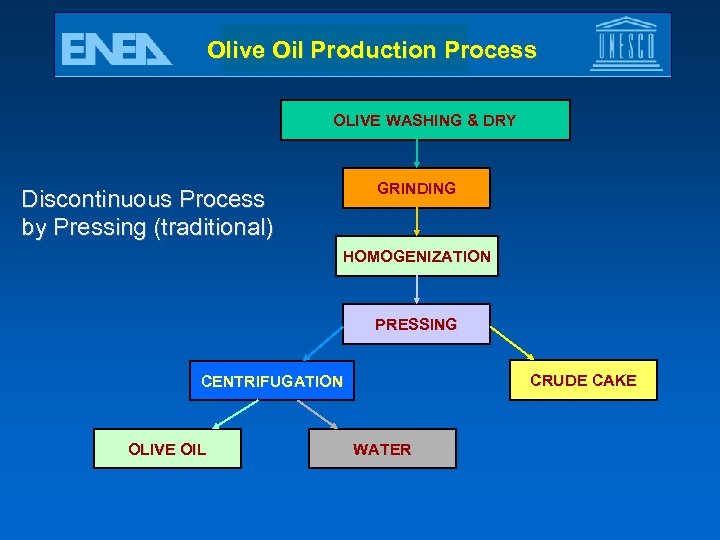
Olive Oil Production Process OLIVE WASHING & DRY GRINDING Discontinuous Process by Pressing (traditional) HOMOGENIZATION PRESSING CRUDE CAKE CENTRIFUGATION OLIVE OIL WATER
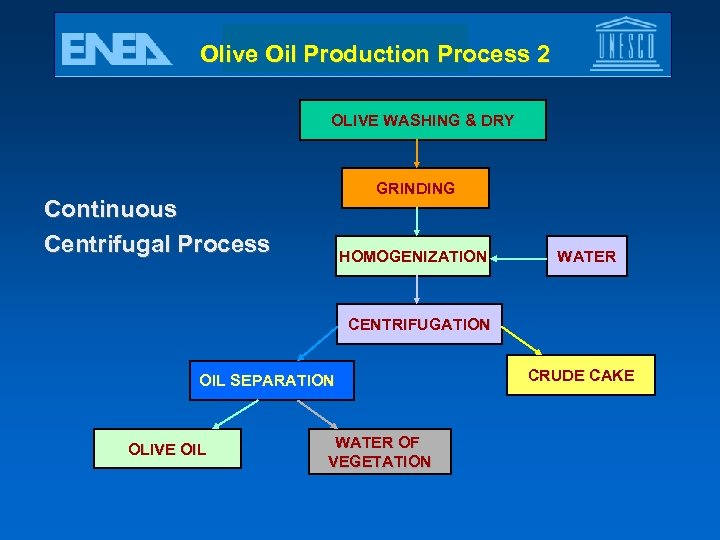
Olive Oil Production Process 2 OLIVE WASHING & DRY GRINDING Continuous Centrifugal Process HOMOGENIZATION WATER CENTRIFUGATION OIL SEPARATION OLIVE OIL WATER OF VEGETATION CRUDE CAKE
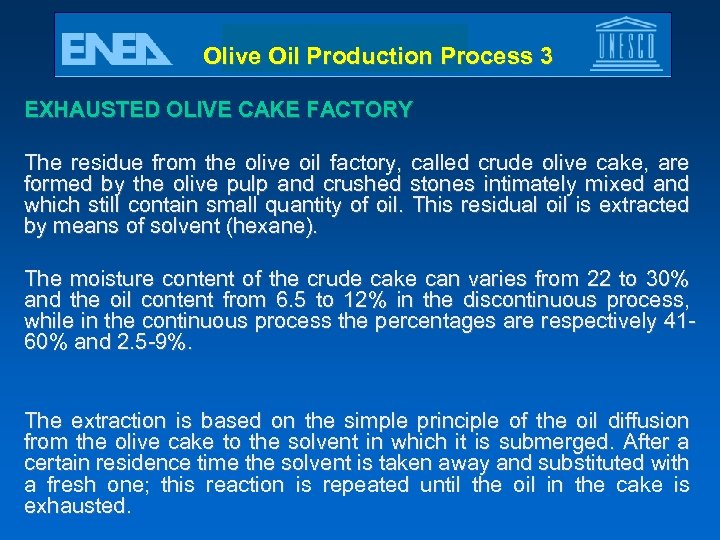
Olive Oil Production Process 3 EXHAUSTED OLIVE CAKE FACTORY The residue from the olive oil factory, called crude olive cake, are formed by the olive pulp and crushed stones intimately mixed and which still contain small quantity of oil. This residual oil is extracted by means of solvent (hexane). The moisture content of the crude cake can varies from 22 to 30% and the oil content from 6. 5 to 12% in the discontinuous process, while in the continuous process the percentages are respectively 4160% and 2. 5 -9%. The extraction is based on the simple principle of the oil diffusion from the olive cake to the solvent in which it is submerged. After a certain residence time the solvent is taken away and substituted with a fresh one; this reaction is repeated until the oil in the cake is exhausted.
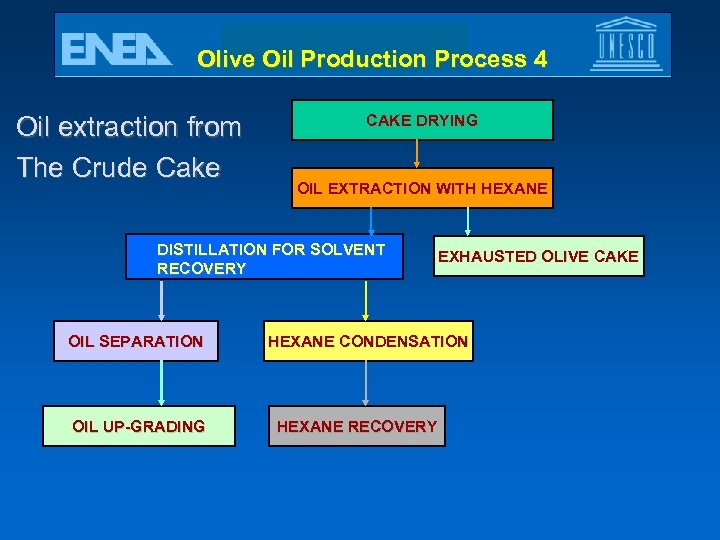
Olive Oil Production Process 4 Oil extraction from The Crude Cake CAKE DRYING OIL EXTRACTION WITH HEXANE DISTILLATION FOR SOLVENT RECOVERY OIL SEPARATION OIL UP-GRADING EXHAUSTED OLIVE CAKE HEXANE CONDENSATION HEXANE RECOVERY
Olive Oil Production Process 5 Exhausted Olive Cake Use: FUEL ANIMAL FEEDING (without stones fragments) ORGANIC FERTILIZER LIME (with clay) CHEMICALS (Furfural) Total production in the Mediterranean countries amounts to several tons per year (Italy > 500, 000 t/a).
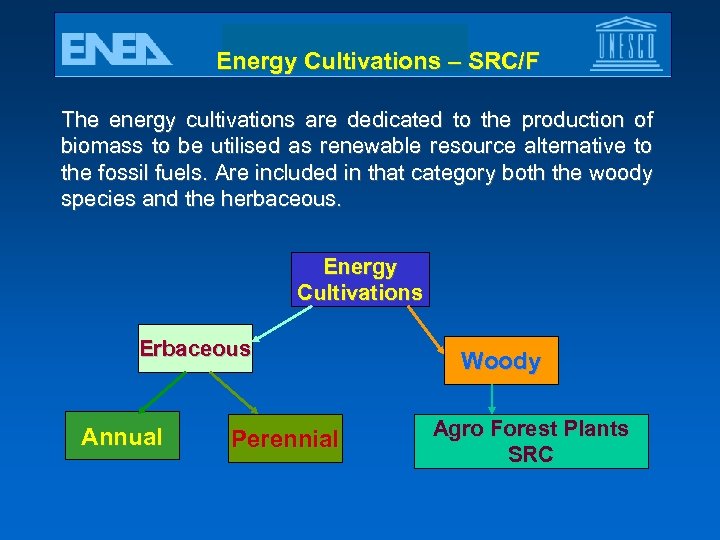
Energy Cultivations – SRC/F The energy cultivations are dedicated to the production of biomass to be utilised as renewable resource alternative to the fossil fuels. Are included in that category both the woody species and the herbaceous. Energy Cultivations Erbaceous Annual Perennial Woody Agro Forest Plants SRC
Energy Cultivations – SRC/F 2 The concepts of “COPPICING” Wood Cutting and collection always from the same plants The first harvest takes place usually after 3 -4 years from the tree plantation and then following cycles of 2 -3 years (SRC). Site selection Thickness of the soil 30 cm p. H neither too high for willow nor too low for poplar It is preferable a land suitable for automatic implantation and harvesting (flat)
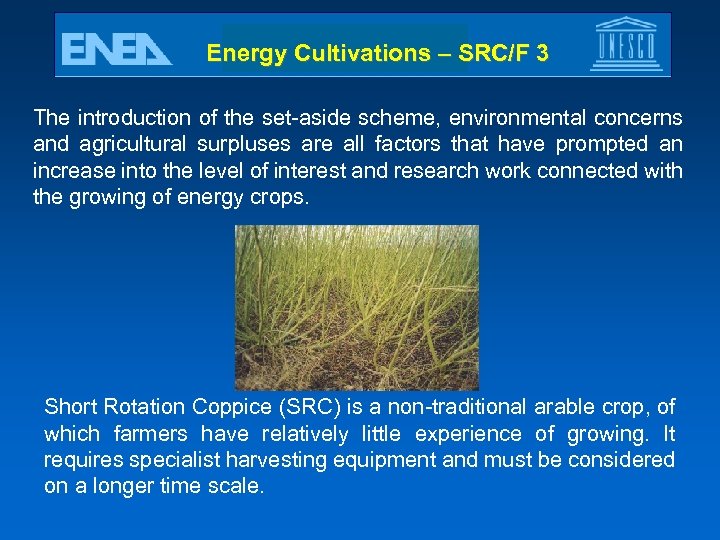
Energy Cultivations – SRC/F 3 The introduction of the set-aside scheme, environmental concerns and agricultural surpluses are all factors that have prompted an increase into the level of interest and research work connected with the growing of energy crops. Short Rotation Coppice (SRC) is a non-traditional arable crop, of which farmers have relatively little experience of growing. It requires specialist harvesting equipment and must be considered on a longer time scale.
Energy Cultivations – SRC/F 4 The research activities related to the production of lignocellulosic biomass for energy purposes include: identification and study of the specifications and of the potentialities of the agricultural and marginal territories (i. e. about 3 Mha in South Italy) selection and collection of the essences usable (woody or herbaceous) in function of the soil specifications above defined determination of the most appropriate cultural techniques
Energy Cultivations – SRC/F 5 1. tests on the field to evaluate the yield of production, consumption of fertilizers and pesticides, water, energy balances, costs, etc. 2. modalities and costs of the (micro) propagation 3. mechanisation of the agricultural activities complex 4. consequences on biodiversity following the installation of plants for energy on a wide territorial scale
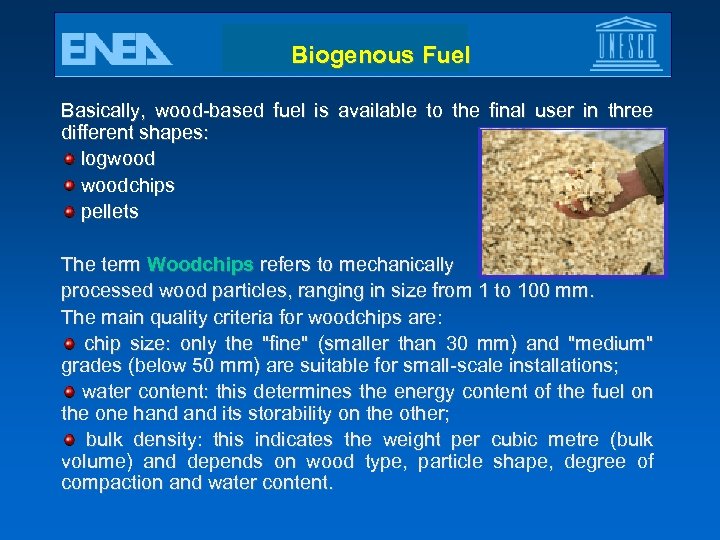
Biogenous Fuel Basically, wood-based fuel is available to the final user in three different shapes: logwoodchips pellets The term Woodchips refers to mechanically processed wood particles, ranging in size from 1 to 100 mm. The main quality criteria for woodchips are: chip size: only the "fine" (smaller than 30 mm) and "medium" grades (below 50 mm) are suitable for small-scale installations; water content: this determines the energy content of the fuel on the one hand its storability on the other; bulk density: this indicates the weight per cubic metre (bulk volume) and depends on wood type, particle shape, degree of compaction and water content.
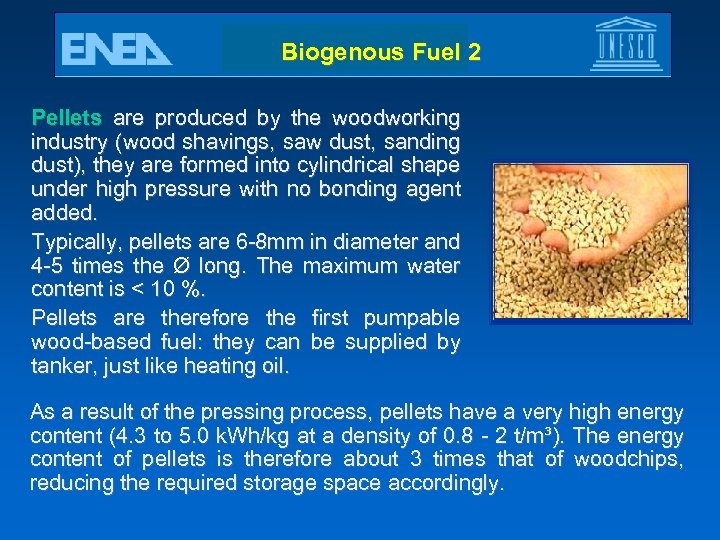
Biogenous Fuel 2 Pellets are produced by the woodworking industry (wood shavings, saw dust, sanding dust), they are formed into cylindrical shape under high pressure with no bonding agent added. Typically, pellets are 6 -8 mm in diameter and 4 -5 times the Ø long. The maximum water content is < 10 %. Pellets are therefore the first pumpable wood-based fuel: they can be supplied by tanker, just like heating oil. As a result of the pressing process, pellets have a very high energy content (4. 3 to 5. 0 k. Wh/kg at a density of 0. 8 - 2 t/m³). The energy content of pellets is therefore about 3 times that of woodchips, reducing the required storage space accordingly.
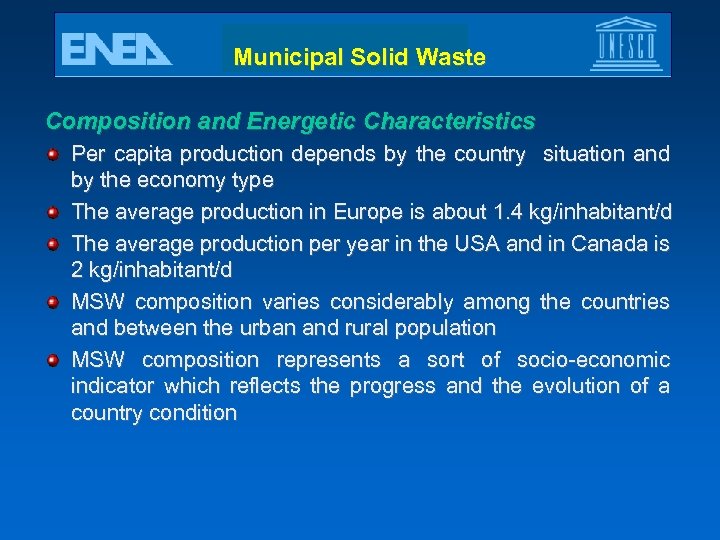
Municipal Solid Waste Composition and Energetic Characteristics Per capita production depends by the country situation and by the economy type The average production in Europe is about 1. 4 kg/inhabitant/d The average production per year in the USA and in Canada is 2 kg/inhabitant/d MSW composition varies considerably among the countries and between the urban and rural population MSW composition represents a sort of socio-economic indicator which reflects the progress and the evolution of a country condition
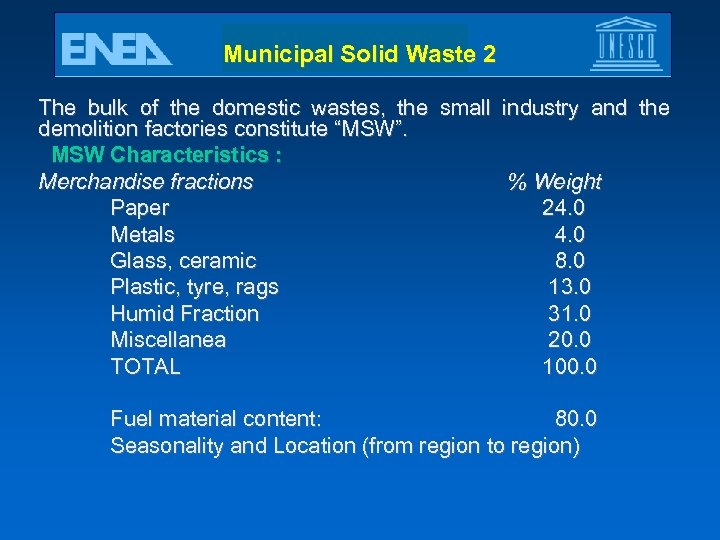
Municipal Solid Waste 2 The bulk of the domestic wastes, the small industry and the demolition factories constitute “MSW”. MSW Characteristics : Merchandise fractions % Weight Paper 24. 0 Metals 4. 0 Glass, ceramic 8. 0 Plastic, tyre, rags 13. 0 Humid Fraction 31. 0 Miscellanea 20. 0 TOTAL 100. 0 Fuel material content: 80. 0 Seasonality and Location (from region to region)
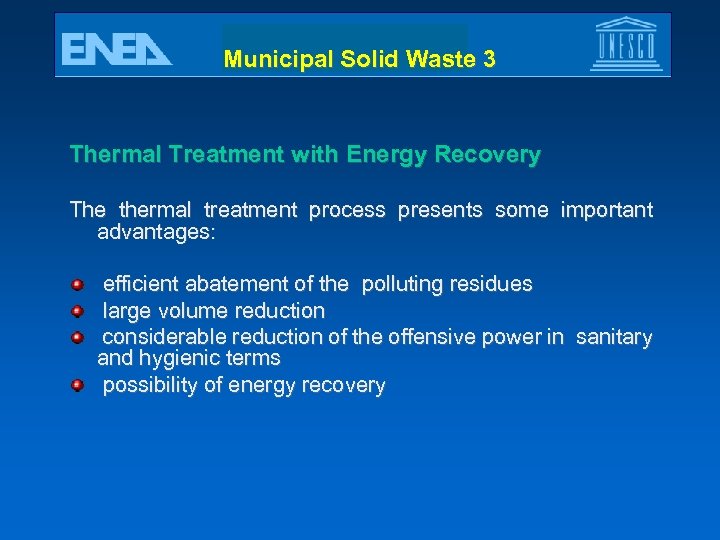
Municipal Solid Waste 3 Thermal Treatment with Energy Recovery The thermal treatment process presents some important advantages: efficient abatement of the polluting residues large volume reduction considerable reduction of the offensive power in sanitary and hygienic terms possibility of energy recovery
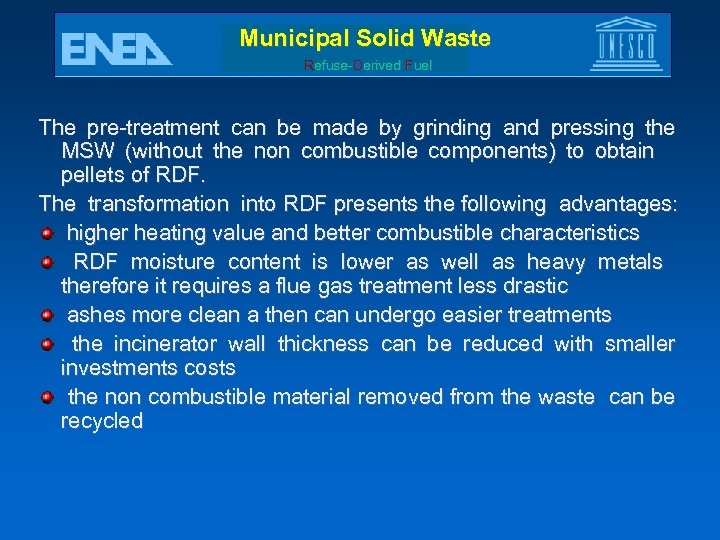
Municipal Solid Waste Refuse-Derived Fuel The pre-treatment can be made by grinding and pressing the MSW (without the non combustible components) to obtain pellets of RDF. The transformation into RDF presents the following advantages: higher heating value and better combustible characteristics RDF moisture content is lower as well as heavy metals therefore it requires a flue gas treatment less drastic ashes more clean a then can undergo easier treatments the incinerator wall thickness can be reduced with smaller investments costs the non combustible material removed from the waste can be recycled
The Energy Content of Biomass The calorific value of a fuel is usually expressed as Higher Heating Value (HHV) and/or Lower Heating Value (LHV). The difference is caused by the heat of evaporation of the water formed from the hydrogen in the material and the moisture. The HHV correspond, roughly, to the maximum potential energy released during complete oxidation of a unit of fuel. Note that the difference between the two heating values depends on the chemical composition of the fuel.
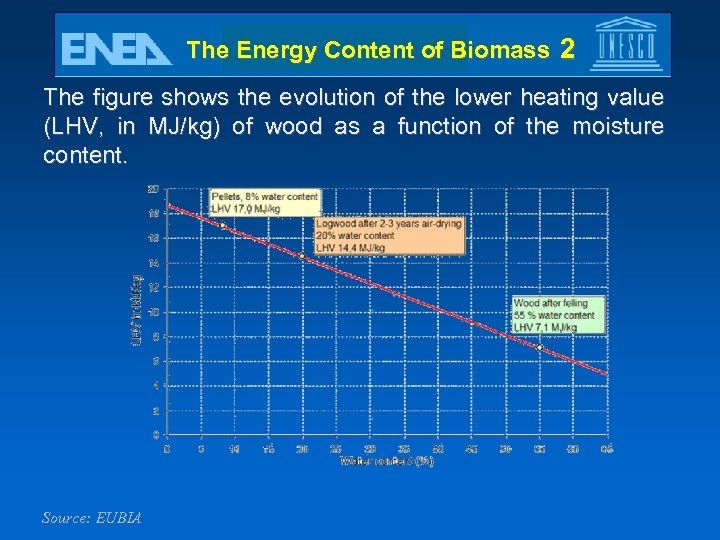
The Energy Content of Biomass 2 The figure shows the evolution of the lower heating value (LHV, in MJ/kg) of wood as a function of the moisture content. Source: EUBIA
Bioenergy Selection Criteria 1 The Biomass Row Various conditions have to be satisfied at the same time: raw material production harvest transport eventual treatment storage suitable plants possibility of connection to the electric a/o heat grid
Bioenergy Selection Criteria 2 Opportunity of Sustainability Market improvement and more opportunities for enterprises in the sectors of design, production, installation and maintenance Activation of the biomass production and transport row with consequent positive effects on occupation Contribution to the development of the economies on the mountainous areas and to the functional cure of the territory, and recovery of the marginal areas Valorisation of the residues coming from the agricultural, zootechnic, industrial and civil productions Possibility of by-products reutilisation
Bioenergy Selection Criteria 3 Requirement of Environmental Sustainability …. . . To acquire positive effects on the environment Any project must take into consideration the productive and territorial contest according to a logic in which the biomass is available for the plants operation at least for the length of the pay back period Increase of the energy production in function of the use, in particular for devices so far characterised by a low efficiency the realisation must foresee the development and the realisation of opportunities for the local population due to activities accessories to the intervention
Bioenergy Selection Criteria 4 Environmental Risks Possible pollutants emissions (dust; NOX; CH 4; NH 3; aerosol) Potential impacts on the eco-system, above all in areas characterised by high sensibility for the nature and the landscape Possible uncontrolled biomass collection from the local natural patrimony Arising of social impact due to the acceptance of plants usually assimilated to waste combustion plants
Bioenergy Selection Criteria 5 Information needed to verify the requirement of environmental sustainability Adequate analysis on the economy of the territory regarding the production and handling of the biomass (collection, transport to the plant, pre-treatment) Perform when required the valuation of the environmental impact, on the contrary, put in evidence the definition criteria for the localisation and eventual possible alternative for installation sites, alternative sources of biomass and the study performed for the insertion in the landscape Will be rewarded prpjects with lower environmental impact and project realised in industrial areas fully served
Economic Considerations The principal economic advantage of biomass‑burning systems is that wood fuel is usually less expensive than the competing fossil fuels. Even though the price of wood for use as fuel can be extremely variable. Sometimes when surplus supplies of wood residues are available at nearby forest products manufacturing plants or municipal solid‑waste handling facilities, the cost can be very low or even negative. Transportation for delivering from the supply site to the wood combustion or wood‑processing unit is the primary expense of wood fuel.
Economic Considerations 2 In other cases, mostly dependent on the distance and capacity of the wood burning plant, the cost of biomass fuel can be really high because large volumes of fuel are needed to have a consistent supply of wood fuel both for thermal and electric energy generation. Because the market for wood biomass energy may be uncertain or uncommon in a particular area, potential wood biomass users may want to do a brief, informal feasibility study before undertaking a rigorous economic analysis. A full life‑cycle cost analysis can be used to compare the costs of a biomass burning system with a fossil fuel system.
Enviromental & Social Benefits of Using Biomass systems that exist have been developed because they are perceived to offer benefits sufficiently valued by society (e. g, improved national security; greenhouse gas mitigation; local economic development; waste reduction) to offset their economic disadvantages. Policy makers considering biomass energy policy must balance the benefits and the costs of these energy systems. To effectively compare different biomass energy systems with each other and with alternative energy systems (e. g. , fossil fuel), economic and environmental benefits, costs, and tradeoffs associated with each system must be identified and their social welfare value (worth to society) estimated.
Enviromental & Social Benefits of Using Biomass 2 This kind of evaluations are of some difficulty, no one has satisfactorily found ways to weight the relative costs and benefits of economic and environmental impacts. How does one compare reduction in erosion with improvement in air quality? Or the quantity of jobs with the quality of jobs? The social valuation of economic and environmental tradeoffs is complicated by the fact that the values placed on economic and environmental benefits and costs will differ at each scale of analysis. Thus, social valuation will differ by individual, community, or nation and by firm or industry.
Enviromental & Social Benefits of Using Biomass 3 Scales The scales relevant to evaluating the economic and environmental tradeoffs associated with dedicated biomass energy systems are: (1) the individual firm level (i. e. , the farm and the conversion facility); (2) the community level (i. e. , the interaction of aggregate farms and a conversion facility, their associated goods and service providers, inpacts on local infrastructure, institutions); (3) the national level (the interaction of all firms and consumers resulting from the production and use of bioenergy and interactions and affects on national institutions). These scales coincide well with the scales at which economic or political decisions are made.
Enviromental & Social Benefits of Using Biomass 4 The three scales will face decisions regarding the environmental and economic benefits, costs, and tradeoffs of dedicated bioenergy systems. The ability to quantify those tradeoffs differs by scale. Environmental benefits, costs and tradeoffs of using bioenergy rather than fossil fuels is probably better understood than anything else. The potential economic benefits to the firm (farm or conversion facility) can be readily quantified. Additionally, models exist that with sufficient adjustments could be used to determine national income and employment changes and government expenditures resulting from bioenergy system development.
Barriers to Bioenergy • • potential, supply and costs of resources costs of biomass technologies lack of an organised row in fuel supply structures local land-use and environmental aspects in the developing countries • all the externalities included in the cost calculations affect strongly the competitiveness • administrative (permits) and legislative bottlenecks.
Suggestions to Overcome the Barriers • improving the cost-effectiveness of conversion technologies trhough incentives; • developing and implementing modern, integrated bioenergy systems • foster research in improving energy crop productivity by dedicated cultivations • establishing bioenergy markets and developing bioenergy logistics (transport and delivery bioenergy resources and products • valuing of the environmental benefits for society e. g. on carbon
Incentives to Bioenergy The Green Certificates The new production and import of electric energy (3. 5%/year) from plants that are powered by renewable energy sources gives the producer the right to receive, for the first eight years after the test and start up period, “Green Certificates” for the KWh produced. The “Green Certificates” attests to the production of energy from renewable sources and this is quantified in multiples of 50 MWh, the minimum certifiable quantity. The “GC” is issued by the National Electricity Network Management Organization on the basis of annual production. There is a free market in the trading of “GC” between holders and obligated producers/importers.
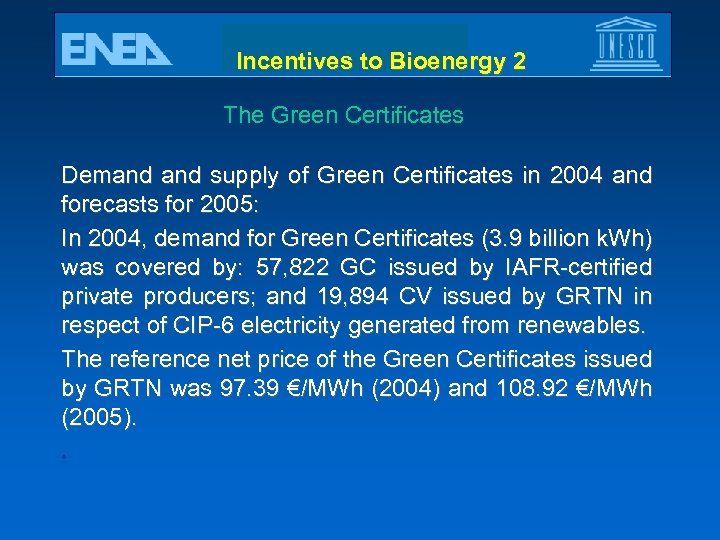
Incentives to Bioenergy 2 The Green Certificates Demand supply of Green Certificates in 2004 and forecasts for 2005: In 2004, demand for Green Certificates (3. 9 billion k. Wh) was covered by: 57, 822 GC issued by IAFR-certified private producers; and 19, 894 CV issued by GRTN in respect of CIP-6 electricity generated from renewables. The reference net price of the Green Certificates issued by GRTN was 97. 39 €/MWh (2004) and 108. 92 €/MWh (2005). .
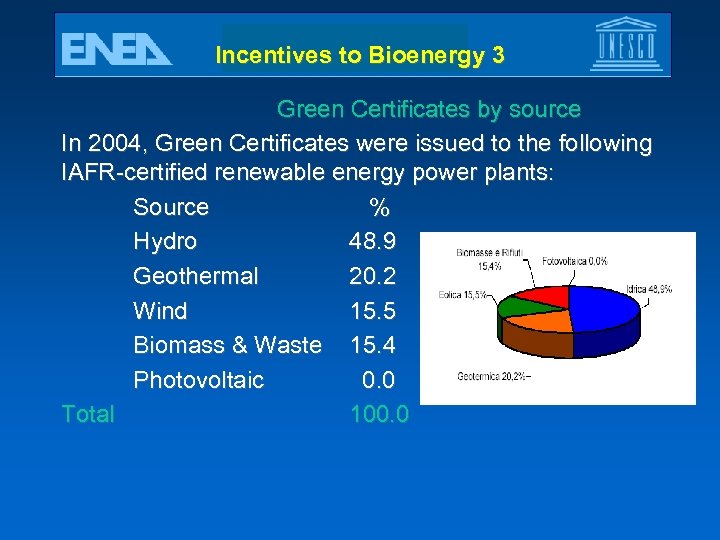
Incentives to Bioenergy 3 Green Certificates by source In 2004, Green Certificates were issued to the following IAFR-certified renewable energy power plants: Source % Hydro 48. 9 Geothermal 20. 2 Wind 15. 5 Biomass & Waste 15. 4 Photovoltaic 0. 0 Total 100. 0
Incentives to Bioenergy 4 The hite Certificates The energy efficiency titles or white certificates are issued by the electricity market operator (GME), at the Authority's request, in favour of the subjects (distributors, companies controlled by the distributors and companies which operate in the sector of energy services) following an inspection process ensuring that the projects have actually been realized in accordance with the decrees and the Authority's rules. The aim of the decrees is for Italy to save 2. 9 million tons of oil equivalent (Mtoe) per year by the end of the first five-year period 2005 -2009.
Incentives to Bioenergy 5 Type of energy efficiency titles that can be issued: type I, attesting the acquisition of primary energy savings through interventions addressed to the reduction of electric energy consumption; type II, attesting the acquisition of primary energy savings through interventions addressed to the reduction of natural gas consumption; type III, attesting the acquisition of primary energy savings through various interventions.
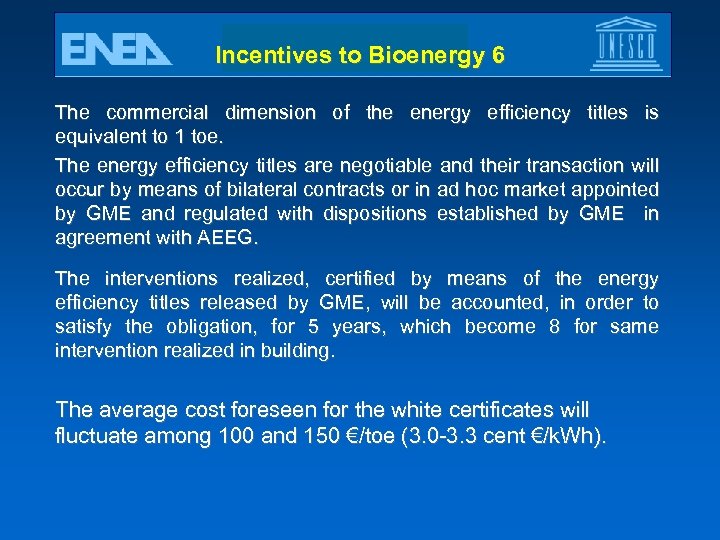
Incentives to Bioenergy 6 The commercial dimension of the energy efficiency titles is equivalent to 1 toe. The energy efficiency titles are negotiable and their transaction will occur by means of bilateral contracts or in ad hoc market appointed by GME and regulated with dispositions established by GME in agreement with AEEG. The interventions realized, certified by means of the energy efficiency titles released by GME, will be accounted, in order to satisfy the obligation, for 5 years, which become 8 for same intervention realized in building. The average cost foreseen for the white certificates will fluctuate among 100 and 150 €/toe (3. 0 -3. 3 cent €/k. Wh).
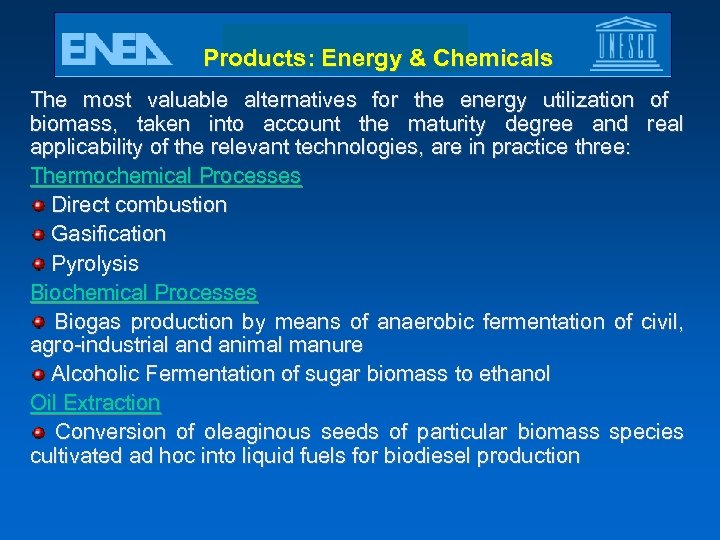
Products: Energy & Chemicals The most valuable alternatives for the energy utilization of biomass, taken into account the maturity degree and real applicability of the relevant technologies, are in practice three: Thermochemical Processes Direct combustion Gasification Pyrolysis Biochemical Processes Biogas production by means of anaerobic fermentation of civil, agro-industrial and animal manure Alcoholic Fermentation of sugar biomass to ethanol Oil Extraction Conversion of oleaginous seeds of particular biomass species cultivated ad hoc into liquid fuels for biodiesel production
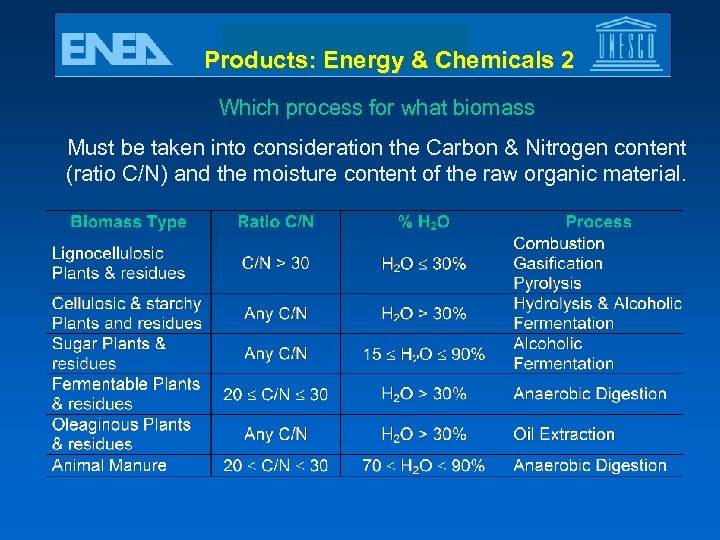
Products: Energy & Chemicals 2 Which process for what biomass Must be taken into consideration the Carbon & Nitrogen content (ratio C/N) and the moisture content of the raw organic material.
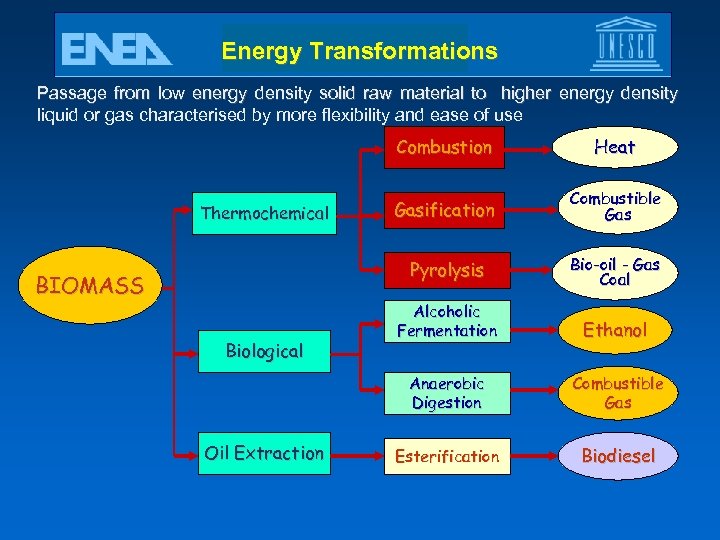
Energy Transformations Passage from low energy density solid raw material to higher energy density liquid or gas characterised by more flexibility and ease of use Combustion BIOMASS Gasification Combustible Gas Pyrolysis Thermochemical Heat Bio-oil - Gas Coal Oil Extraction Ethanol Anaerobic Digestion Biological Alcoholic Fermentation Combustible Gas Esterification Biodiesel

Fundamental Aspects of Bioenergy Thanks for your attention Emanuele Scoditti
Скачать презентацию Fundamental Aspects of Bioenergy Emanuele Scoditti Renewable Sources
1e4ba8591653f42fe994e87e3e27ab6f.ppt