 Скачать презентацию Full-Scale Patron-Driven Acquisition of E-Books in Practice Wellesley
853e341daaf33c51726199a4e10615ac.ppt
- Количество слайдов: 30



Full-Scale, Patron-Driven Acquisition of E-Books in Practice Wellesley College Brooke Henderson, Art Librarian Deborah Lenares, Manager Acquisitions and ILL Raymond Schmidt, Manager Cataloging and Metadata Steve Smith, Manager Library Collections and Preservation
Overview n n n n Who we are – Who are you? Making the decision and getting buy-in Selecting a vendor Setup and operation Funding Collection management Public services implications
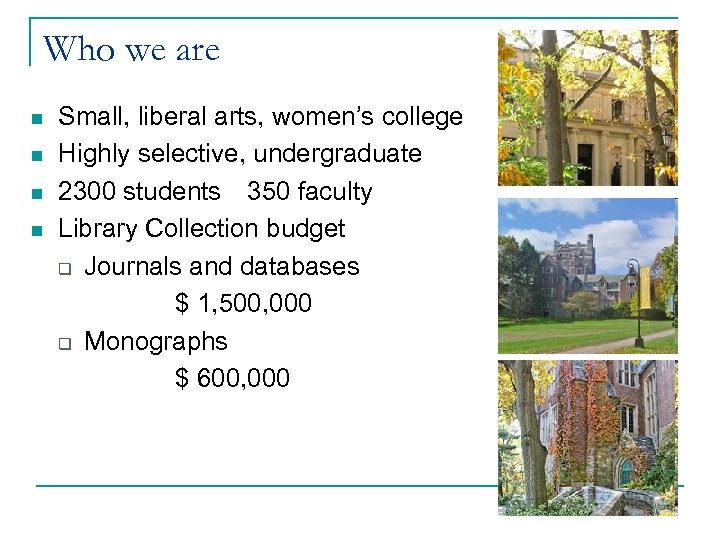
Who we are n n Small, liberal arts, women’s college Highly selective, undergraduate 2300 students 350 faculty Library Collection budget q Journals and databases $ 1, 500, 000 q Monographs $ 600, 000
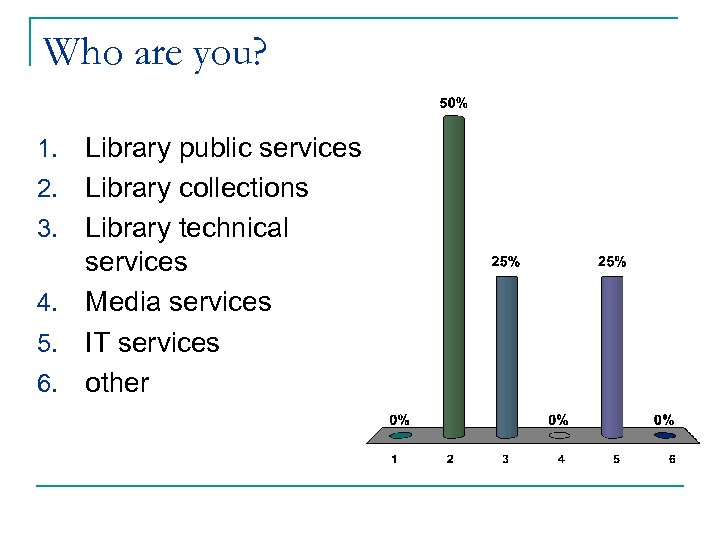
Who are you? 1. 2. 3. 4. 5. 6. Library public services Library collections Library technical services Media services IT services other
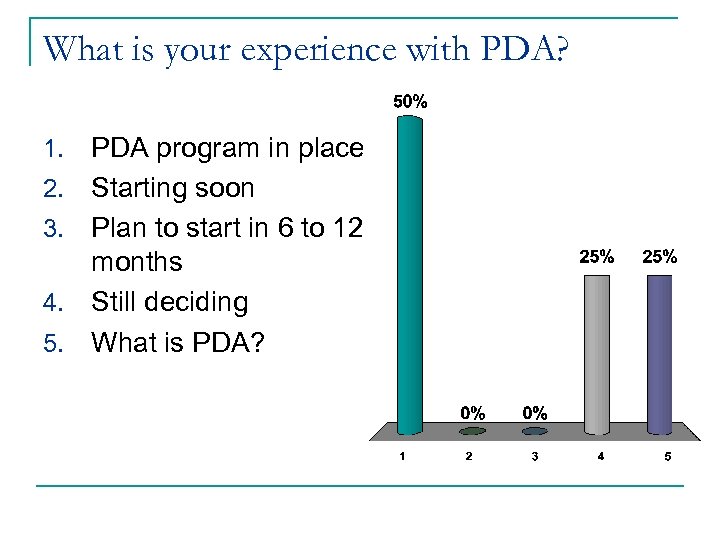
What is your experience with PDA? 1. 2. 3. 4. 5. PDA program in place Starting soon Plan to start in 6 to 12 months Still deciding What is PDA?
What is Patron Driven Acquisition (PDA) q q q E-books purchased by patron at time of use Immediate access to content Books found through the library catalog Paid through an institutional account User is not aware if the book is owned or not
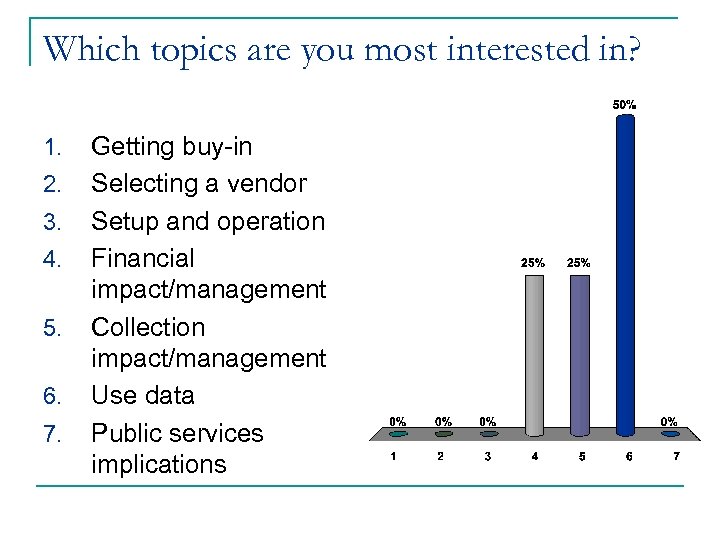
Which topics are you most interested in? 1. 2. 3. 4. 5. 6. 7. Getting buy-in Selecting a vendor Setup and operation Financial impact/management Collection impact/management Use data Public services implications
Deciding to do PDA: * Advantages n “Return on Investment” – Only buying what is used n Immediate access to resources n Access to much broader collection n Building collections in new areas n Ability to see what users want * PDA survey and presentation April 2010 http: //bit. ly/PDAebooks
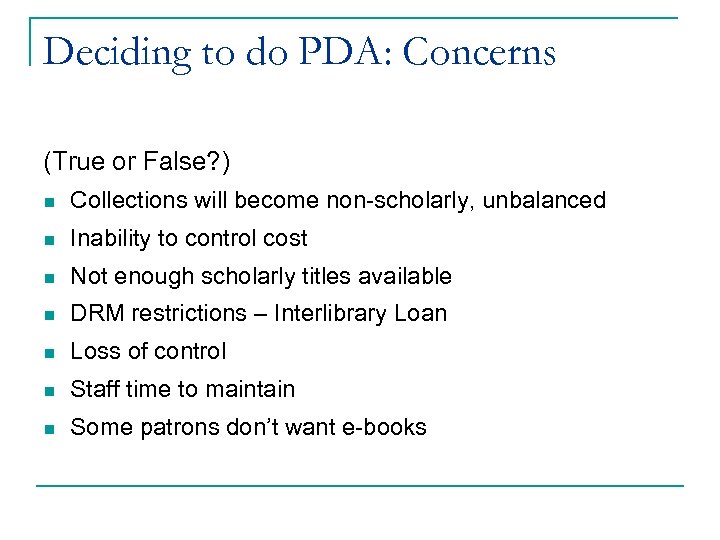
Deciding to do PDA: Concerns (True or False? ) n Collections will become non-scholarly, unbalanced n Inability to control cost n Not enough scholarly titles available n DRM restrictions – Interlibrary Loan n Loss of control n Staff time to maintain n Some patrons don’t want e-books
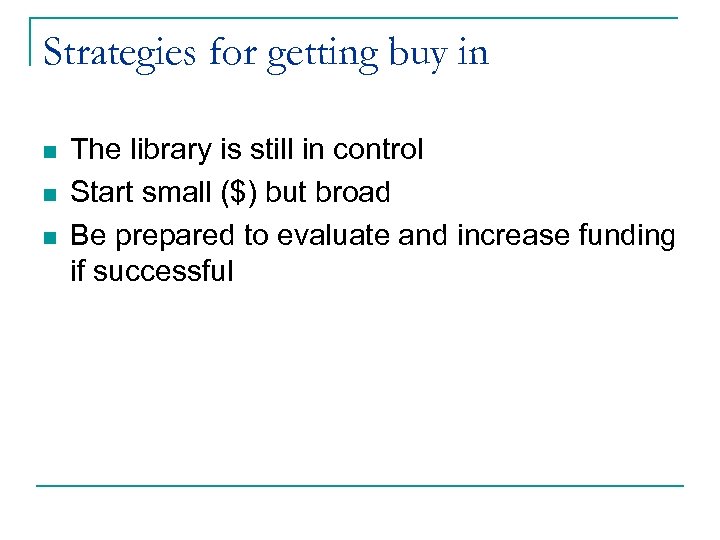
Strategies for getting buy in n The library is still in control Start small ($) but broad Be prepared to evaluate and increase funding if successful
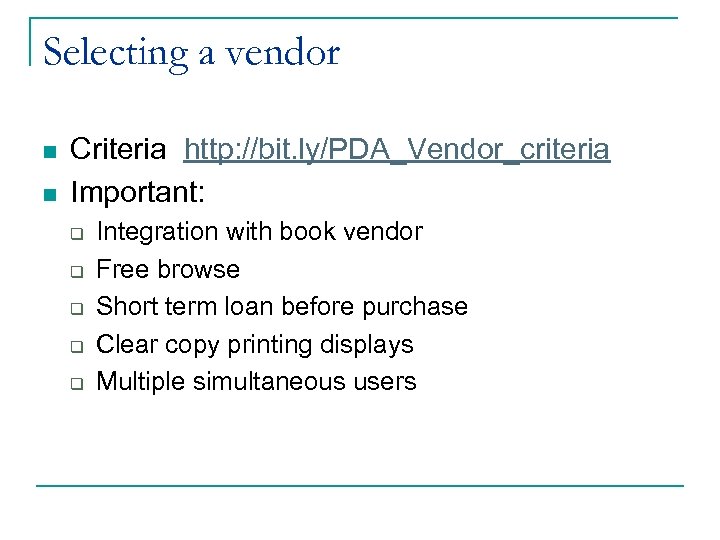
Selecting a vendor n n Criteria http: //bit. ly/PDA_Vendor_criteria Important: q q q Integration with book vendor Free browse Short term loan before purchase Clear copy printing displays Multiple simultaneous users
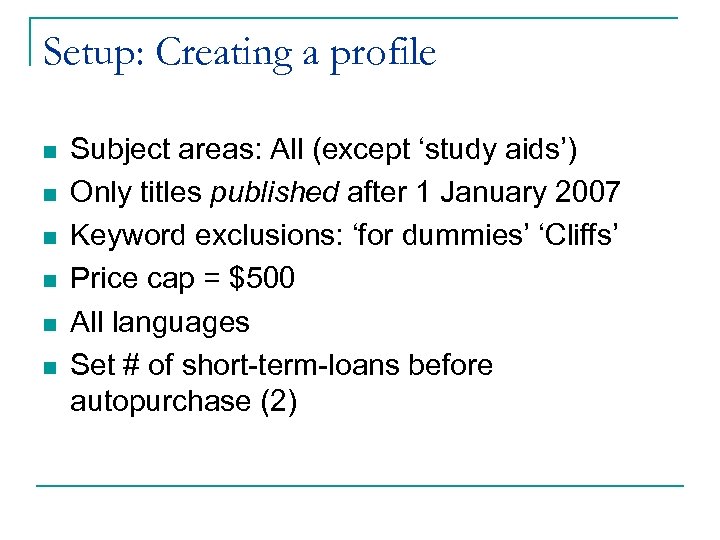
Setup: Creating a profile n n n Subject areas: All (except ‘study aids’) Only titles published after 1 January 2007 Keyword exclusions: ‘for dummies’ ‘Cliffs’ Price cap = $500 All languages Set # of short-term-loans before autopurchase (2)
Setup: Creating a profile (cont. ) n Publishers: q q n n n Included all publishers on our AP (book & slip) Expanded to include as many relevant academic publishers as possible De-duped against our ebrary subscription collection Chose not to de-dupe against our print holdings Original load ~25, 000 titles; now ~45, 000
Profile modifications n n Add publishers as they become available (almost monthly) More keyword exclusions Constantly adding and deleting specific titles Have not de-duped against ebrary since the beginning; probably should
Cataloging Issues n Deciding on source of records q q q n Quality of records Existing workflows Ease of maintenance (additions, deletions) Establishing a workflow
Cataloging: Source of records n n n Publisher (EBL) MARC record vendor (Serials Solutions) Do it yourself?
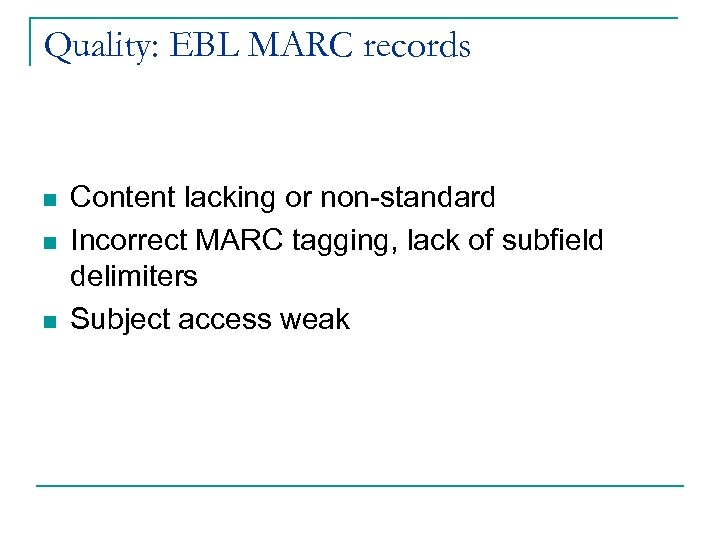
Quality: EBL MARC records n n n Content lacking or non-standard Incorrect MARC tagging, lack of subfield delimiters Subject access weak
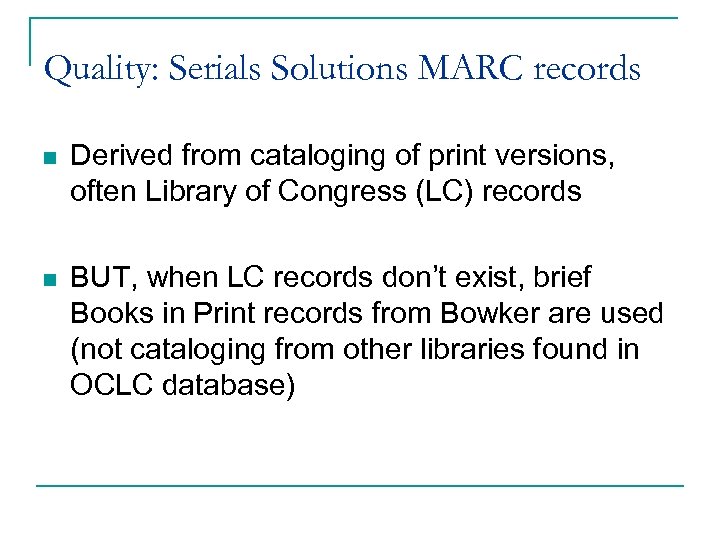
Quality: Serials Solutions MARC records n Derived from cataloging of print versions, often Library of Congress (LC) records n BUT, when LC records don’t exist, brief Books in Print records from Bowker are used (not cataloging from other libraries found in OCLC database)
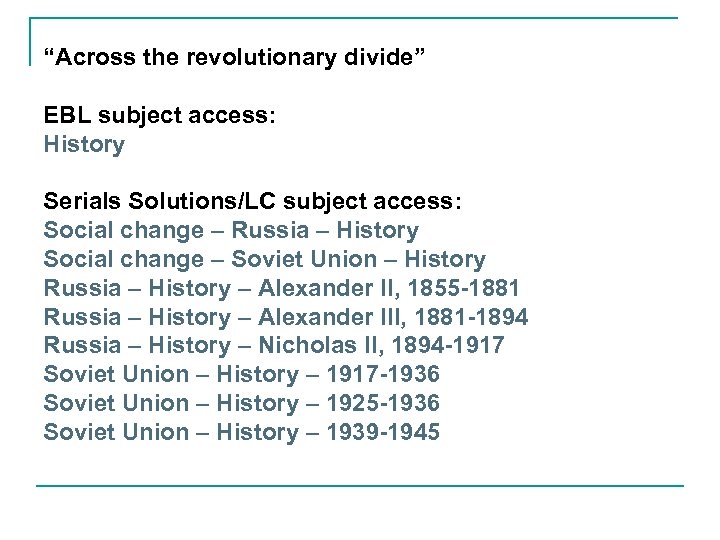
“Across the revolutionary divide” EBL subject access: History Serials Solutions/LC subject access: Social change – Russia – History Social change – Soviet Union – History Russia – History – Alexander II, 1855 -1881 Russia – History – Alexander III, 1881 -1894 Russia – History – Nicholas II, 1894 -1917 Soviet Union – History – 1917 -1936 Soviet Union – History – 1925 -1936 Soviet Union – History – 1939 -1945
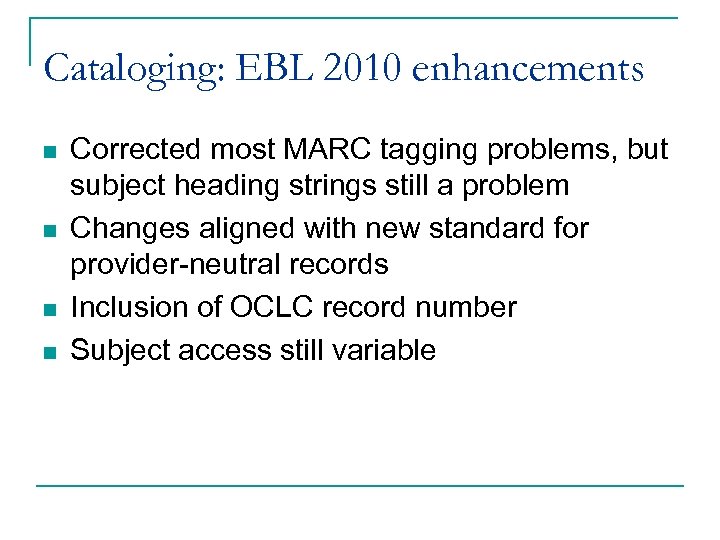
Cataloging: EBL 2010 enhancements n n Corrected most MARC tagging problems, but subject heading strings still a problem Changes aligned with new standard for provider-neutral records Inclusion of OCLC record number Subject access still variable
Cataloging Workflow: “a kind of reverse cataloging” n n n Ideally, publishers and MARC record vendors work together Monthly updates: consider best way to handle deletions as well as additions Ensure purchased titles are not deleted
Selection and Acquisition n Acquisitions q Autopurchased get order record n q n Order type = patron driven Firm e-book orders through Gobi Selection q q Avoiding firm ordering duplicates of e-books When and why firm ordering a PDA e-book makes sense
Funding to date n Sept 2009 to Feb 2011 = $38, 500 q q STL = $20, 000 Autopurchases = $18, 500 n n n 35% humanities, 26% science, 39% social sciences Does not include firm EBL orders (done through YBP) Average transaction cost q q $8 per COUNTER use $18 per combined STL/AP charges
Funding into the future n n PDA is successful and therefore a priority Will fund from monograph lines q q n Correspond to HUM/SCI/SOC usage Estimate FY 12 usage based on FY 11, with ? % increase to cover additional content Should de-dupe against ebrary subscription collection annually
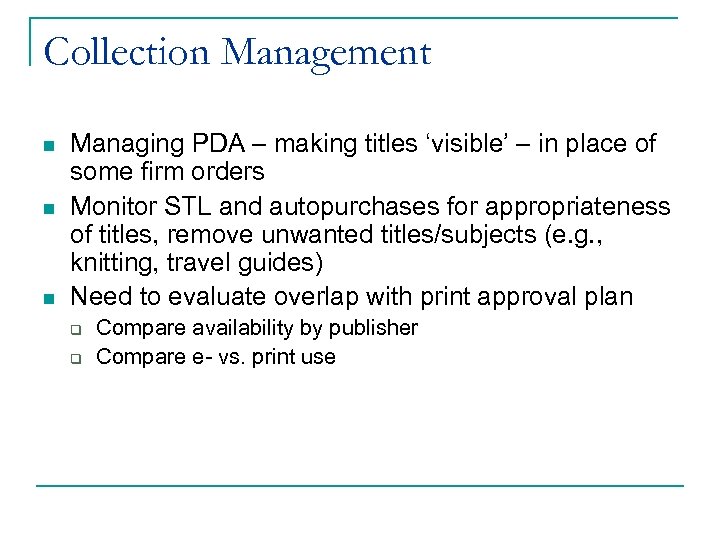
Collection Management n n n Managing PDA – making titles ‘visible’ – in place of some firm orders Monitor STL and autopurchases for appropriateness of titles, remove unwanted titles/subjects (e. g. , knitting, travel guides) Need to evaluate overlap with print approval plan q q Compare availability by publisher Compare e- vs. print use
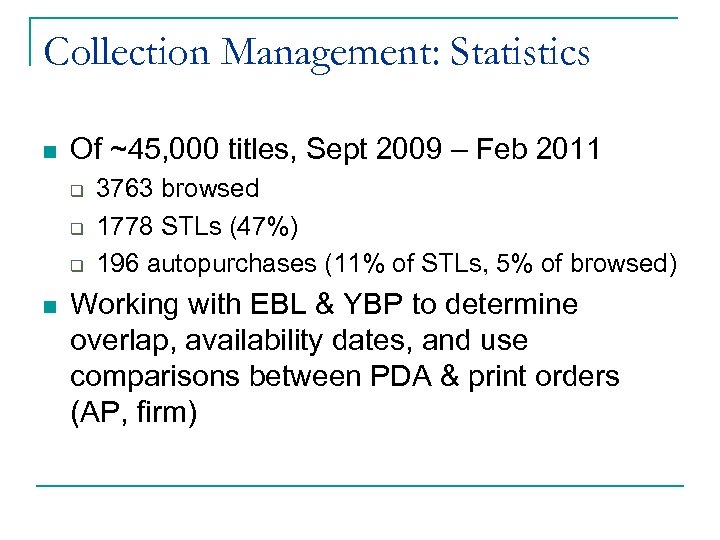
Collection Management: Statistics n Of ~45, 000 titles, Sept 2009 – Feb 2011 q q q n 3763 browsed 1778 STLs (47%) 196 autopurchases (11% of STLs, 5% of browsed) Working with EBL & YBP to determine overlap, availability dates, and use comparisons between PDA & print orders (AP, firm)
Public Services Implications n Marketing: We didn’t! n Why not? q q q Patrons just don’t need to know Nervous about running up costs from patrons’ curiosity Some patrons don’t want responsibility of spending library $$
Public Services Implications: Benefits n Noticeable increase in content q n n n ex/ use as discovery tool Full-text keyword searching across e-book collection Ability to make titles immediately visible Often satisfies the ‘library should have this’ issue
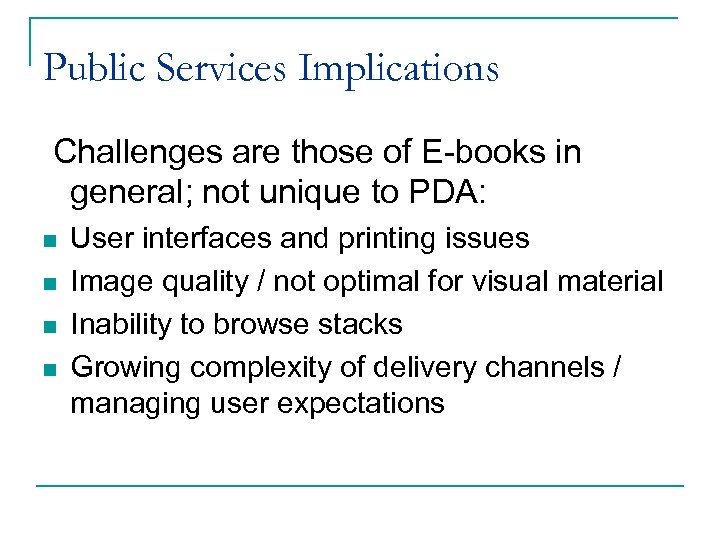
Public Services Implications Challenges are those of E-books in general; not unique to PDA: n n User interfaces and printing issues Image quality / not optimal for visual material Inability to browse stacks Growing complexity of delivery channels / managing user expectations
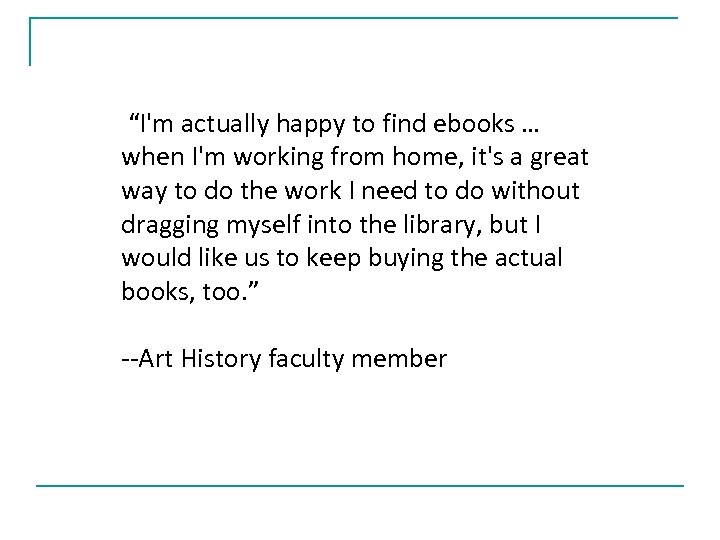
“I'm actually happy to find ebooks … when I'm working from home, it's a great way to do the work I need to do without dragging myself into the library, but I would like us to keep buying the actual books, too. ” --Art History faculty member
Скачать презентацию Full-Scale Patron-Driven Acquisition of E-Books in Practice Wellesley
853e341daaf33c51726199a4e10615ac.ppt