

fulfilled: Miroshnichenko Andrey 1162 Presentation «Brain» Brain —

fulfilled: Miroshnichenko Andrey 1162 Presentation "Brain"
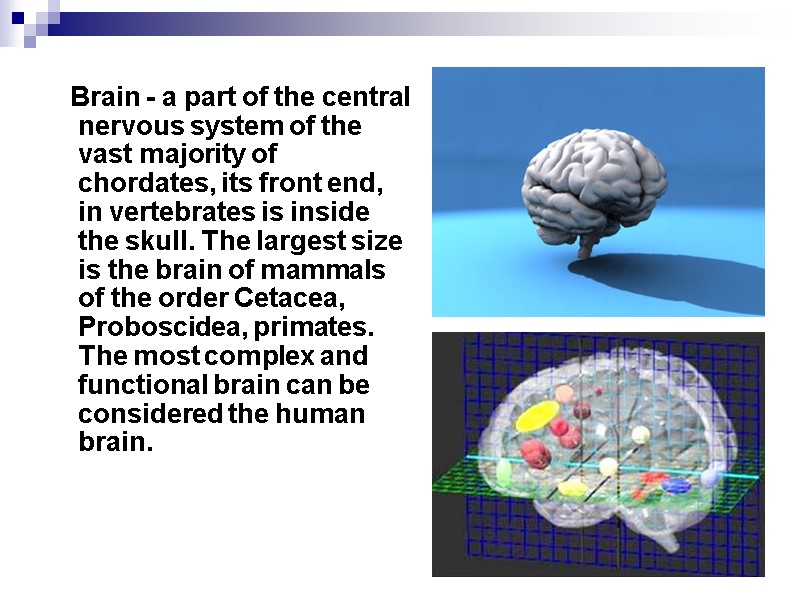
Brain - a part of the central nervous system of the vast majority of chordates, its front end, in vertebrates is inside the skull. The largest size is the brain of mammals of the order Cetacea, Proboscidea, primates. The most complex and functional brain can be considered the human brain.
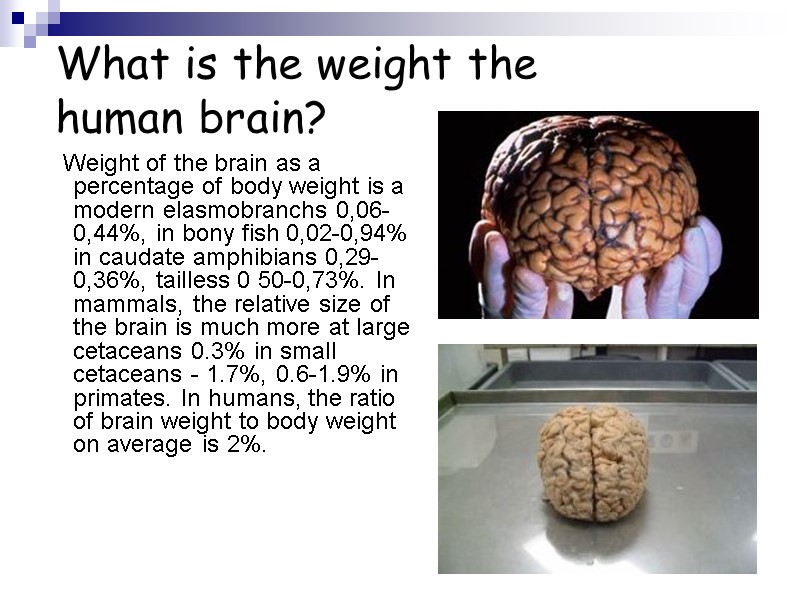
What is the weight the human brain? Weight of the brain as a percentage of body weight is a modern elasmobranchs 0,06-0,44%, in bony fish 0,02-0,94% in caudate amphibians 0,29-0,36%, tailless 0 50-0,73%. In mammals, the relative size of the brain is much more at large cetaceans 0.3% in small cetaceans - 1.7%, 0.6-1.9% in primates. In humans, the ratio of brain weight to body weight on average is 2%.
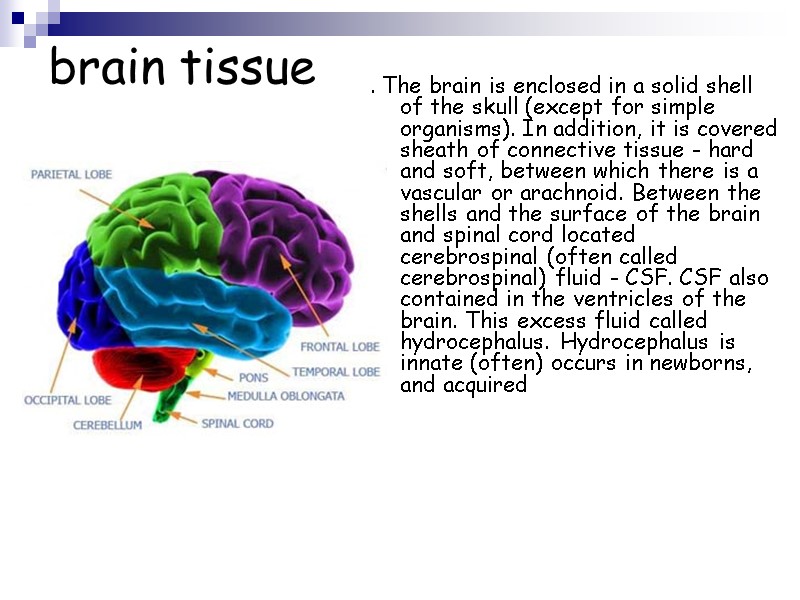
brain tissue . The brain is enclosed in a solid shell of the skull (except for simple organisms). In addition, it is covered sheath of connective tissue - hard and soft, between which there is a vascular or arachnoid. Between the shells and the surface of the brain and spinal cord located cerebrospinal (often called cerebrospinal) fluid - CSF. CSF also contained in the ventricles of the brain. This excess fluid called hydrocephalus. Hydrocephalus is innate (often) occurs in newborns, and acquired
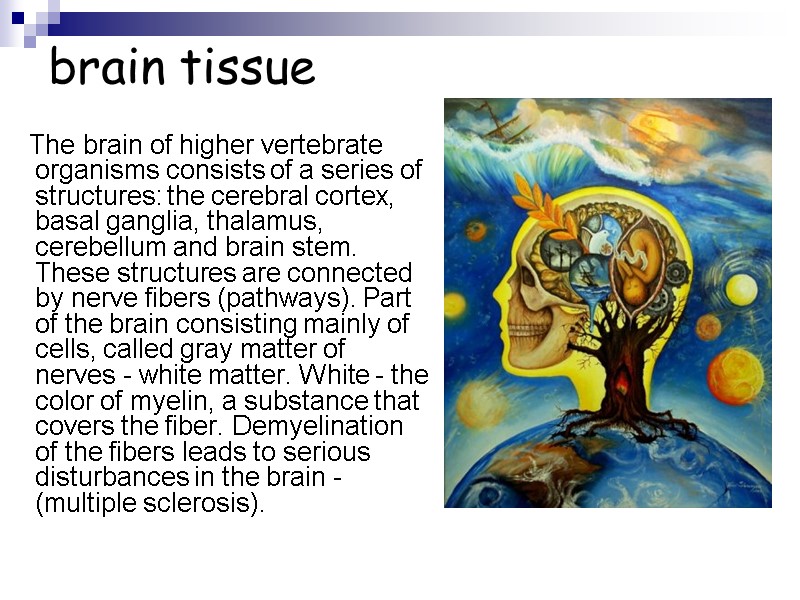
brain tissue The brain of higher vertebrate organisms consists of a series of structures: the cerebral cortex, basal ganglia, thalamus, cerebellum and brain stem. These structures are connected by nerve fibers (pathways). Part of the brain consisting mainly of cells, called gray matter of nerves - white matter. White - the color of myelin, a substance that covers the fiber. Demyelination of the fibers leads to serious disturbances in the brain - (multiple sclerosis).
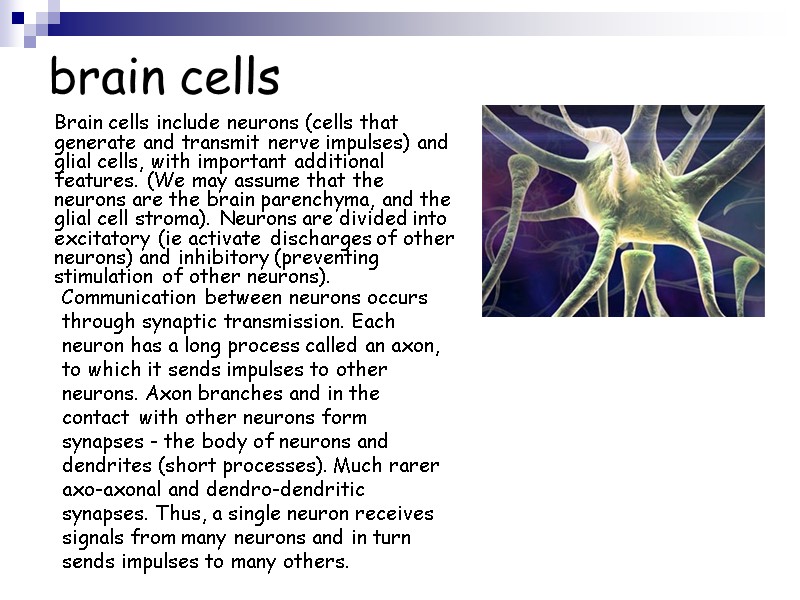
brain cells Brain cells include neurons (cells that generate and transmit nerve impulses) and glial cells, with important additional features. (We may assume that the neurons are the brain parenchyma, and the glial cell stroma). Neurons are divided into excitatory (ie activate discharges of other neurons) and inhibitory (preventing stimulation of other neurons). Communication between neurons occurs through synaptic transmission. Each neuron has a long process called an axon, to which it sends impulses to other neurons. Axon branches and in the contact with other neurons form synapses - the body of neurons and dendrites (short processes). Much rarer axo-axonal and dendro-dendritic synapses. Thus, a single neuron receives signals from many neurons and in turn sends impulses to many others.
circulation . Between blood and brain tissue has blood-brain barrier, which provides selective permeability of substances being in the bloodstream to the brain tissue. In some parts of the brain that barrier is absent (hypothalamic region) or different from the other parts, due to the presence of specific receptors and neuroendocrine structures. This barrier protects the brain from many types of infections. At the same time, many drugs that are effective in other organs, can not penetrate into the brain through the barrier
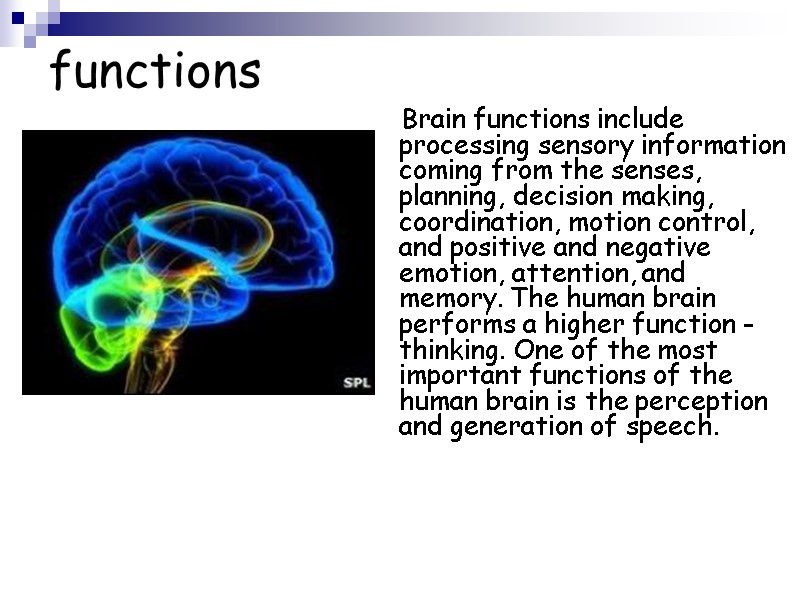
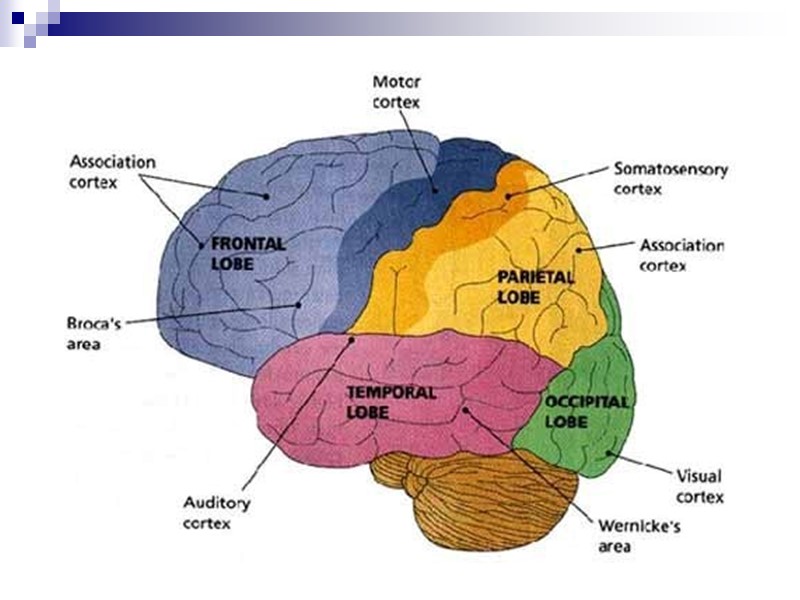
functions Brain functions include processing sensory information coming from the senses, planning, decision making, coordination, motion control, and positive and negative emotion, attention, and memory. The human brain performs a higher function - thinking. One of the most important functions of the human brain is the perception and generation of speech.
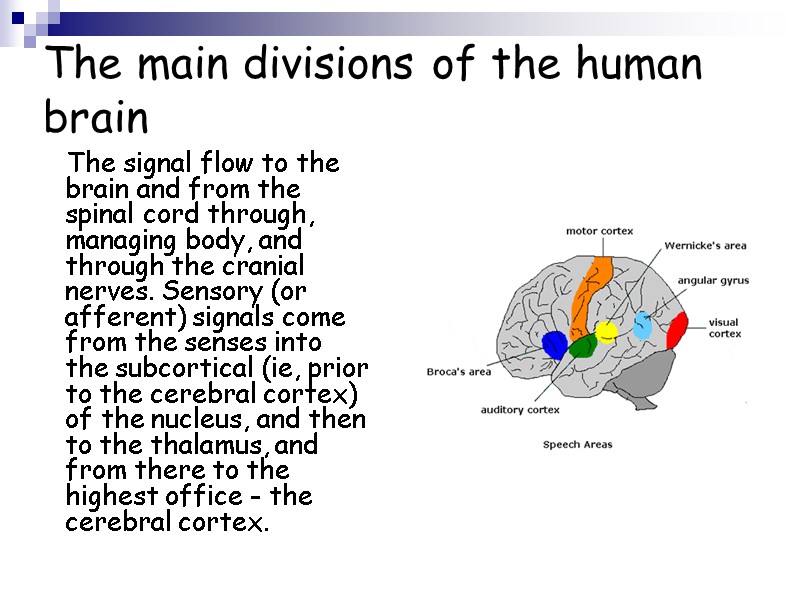
The main divisions of the human brain The signal flow to the brain and from the spinal cord through, managing body, and through the cranial nerves. Sensory (or afferent) signals come from the senses into the subcortical (ie, prior to the cerebral cortex) of the nucleus, and then to the thalamus, and from there to the highest office - the cerebral cortex.
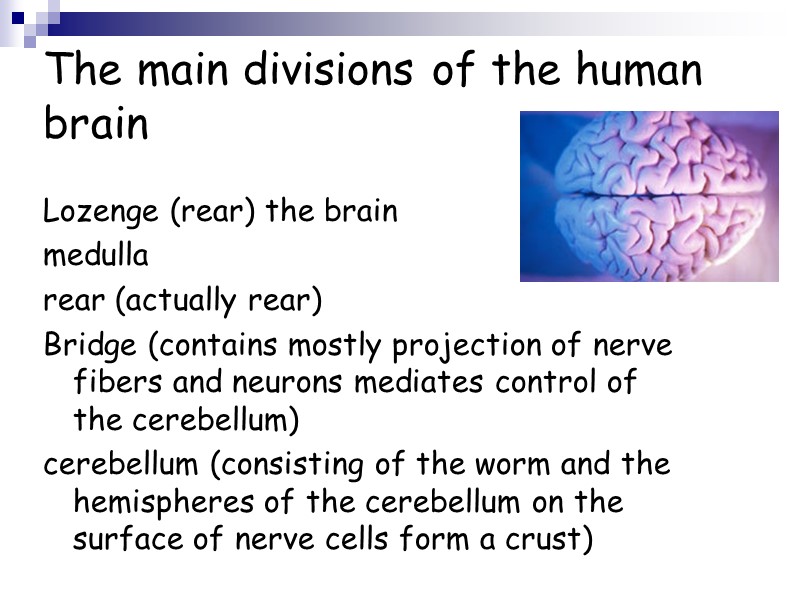
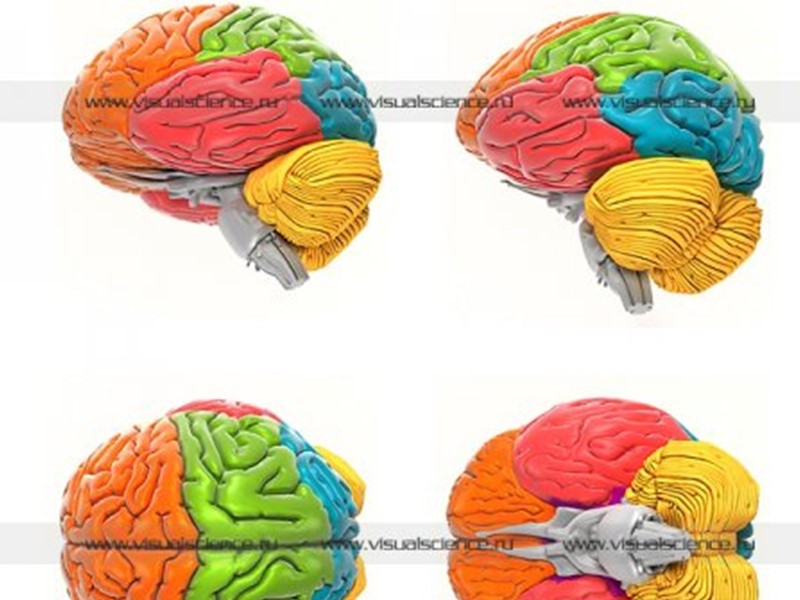
The main divisions of the human brain Lozenge (rear) the brain medulla rear (actually rear) Bridge (contains mostly projection of nerve fibers and neurons mediates control of the cerebellum) cerebellum (consisting of the worm and the hemispheres of the cerebellum on the surface of nerve cells form a crust)
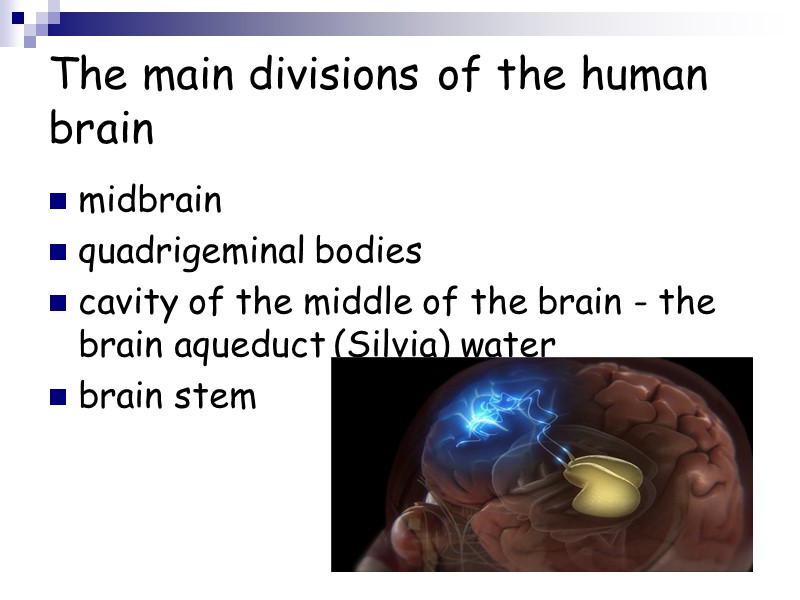
The main divisions of the human brain midbrain quadrigeminal bodies cavity of the middle of the brain - the brain aqueduct (Silvia) water brain stem
The main divisions of the human brain forebrain consists of intermediate and final brain. intermediate (in this department will switch all the information that comes from the parts of the brain in nizhlezhaschih hemispheres). Cavity of the diencephalon is the III ventricle. thalamus epithalamus epiphysis lead gray stripe hypothalamus (the center of the autonomic nervous system) pituitary funnel pituitary gray hillock mammillary bodies
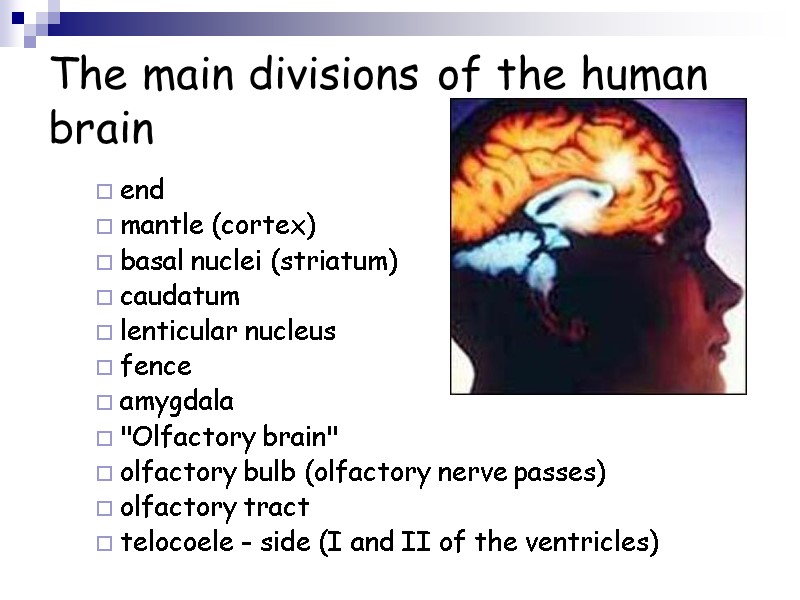
The main divisions of the human brain end mantle (cortex) basal nuclei (striatum) caudatum lenticular nucleus fence amygdala "Olfactory brain" olfactory bulb (olfactory nerve passes) olfactory tract telocoele - side (I and II of the ventricles)
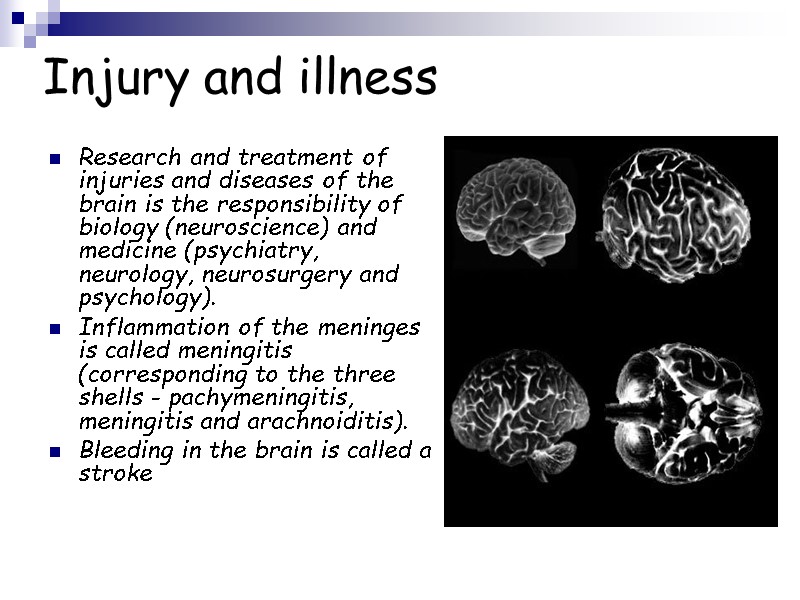
Injury and illness Research and treatment of injuries and diseases of the brain is the responsibility of biology (neuroscience) and medicine (psychiatry, neurology, neurosurgery and psychology). Inflammation of the meninges is called meningitis (corresponding to the three shells - pachymeningitis, meningitis and arachnoiditis). Bleeding in the brain is called a stroke
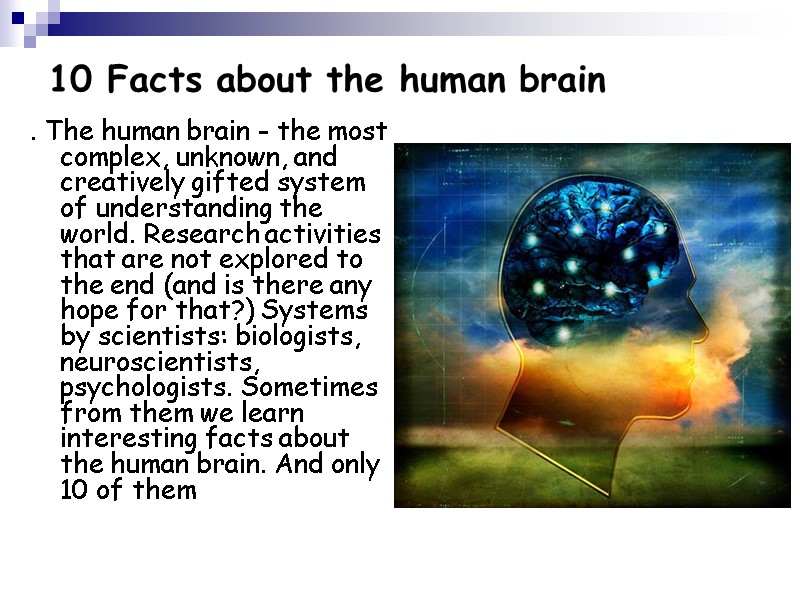
10 Facts about the human brain . The human brain - the most complex, unknown, and creatively gifted system of understanding the world. Research activities that are not explored to the end (and is there any hope for that?) Systems by scientists: biologists, neuroscientists, psychologists. Sometimes from them we learn interesting facts about the human brain. And only 10 of them
1. Our short-term memory can store only seven sites simultaneously.? Humans have three types of memory: sensory, short-term and long-term. Short-term memory can hold simultaneously in the brain, only five - nine objects. The average person can simultaneously hold seven objects in memory. However, the person can be trained to handle more items than nine, if you teach him to combine objects into groups. By the way, most of the phone numbers are 7 digits. 2. Chartreuse - the most visible color? Yellowish green, chartreuse, is clearly visible in the middle of the frequency spectrum. But the brain does not receive information about the colors, it gets information about the difference of light and dark, and the information about the difference between colors. As a result, the brain receptors easier to "see" exactly the color chartreuse. By the way, the color is often used by psychologists, psychics, artists, as a sedative and simultaneously the most visible to humans.
3. Your subconscious mind is smarter than you? Or, at least, more powerful. In one of the studies demonstrated a complex picture people. People had to immediately, without thinking, to point out that the researchers had in mind. Most of the participants coped with the problem immediately. Another group was offered to first think and it deliberately point to the appropriate sector in the figure. So what? Complete failure, despite the fact that the solution to the problem was given a few hours. 4. Mental work is easy on the brain? Found that the blood flowing through the brain unchanged for its active work, no matter how much she continued. In this case, the blood that is taken from the veins of a man who worked all day, contains a certain percentage of "fatigue toxins". Psychiatrists found that the feeling of fatigue is caused by the brain to our mental and emotional state.
5. Prayer has beneficial effects on the brain? During prayer the perception of human information is bypassing the thought processes and analysis, ie people from reality. In this state (as in meditation) in the brain occur delta waves, which are usually fixed in infants in the first six months of his life. Perhaps it was this fact influences that people who regularly to worship, get sick less often and recover faster. 6. The regular work of the brain can prevent disease? Studies show that regular brain activity can prevent the development of severe disease - Alzheimer's. Intellectual activity is the production of extra fabric that compensates ailing. The study of something new, like classes unusual activity - the best way to develop the brain. Also have a beneficial effect on the activity of the brain communicate with those who are superior to you in intelligence.
7. The human brain perceives our shadows as the natural continuation of bodies? Brain, determining the position of the body in space and its interaction with the environment, using visual cues that it receives not only the limbs, but also from the shadows. Drop Shadow gives additional information on the situation of the body in relation to objects, and is perceived by our brain, as its continuation. 8. To complete the work of the brain need to drink plenty of fluids? Brain, like the rest of our body is about 75% water. So in order to keep it healthy and in good condition, you need to drink the allotted amount of water your body. Those who are trying to lose weight with pills and tea, expel water from the body, we must be prepared for the fact that along with the loss of weight they lose and efficiency of the brain. Therefore, they should do as it should be - to take any pills prescribed by a doctor.
9. The brain wakes longer body? Intellectual abilities immediately after waking up is lower than after a sleepless night, or in a state of moderate intoxication. 10. The brain is easier to understand speech men than women? Male and female voices are on different parts of the brain. Women's voices - more music, sound at higher frequencies, frequency range with wider than male voices. The human brain has to "decode" the meaning of what the woman said, using their additional resources. By the way, people with auditory hallucinations, most often hear is male speech.
 Скачать презентацию fulfilled: Miroshnichenko Andrey 1162 Presentation «Brain» Brain —
35964-andrey_miroshnichenko.ppt
- Количество слайдов: 22