


 Скачать презентацию From rules to reasons and other little tweaks
540431e916bc499d3b5ce594f31421bb.ppt
- Количество слайдов: 32
 From rules to reasons and other little tweaks Danny Norrington-Davies International House London/King’s College London ETP Live! 2017
 Ideal scenarios • Giving the learners what they need at their point of need • Helping learners to pay attention to salient features of the language whilst and after being engaged in meaning focused activities (Masuhura, H. 2017) • Opportunities for meaningful language use
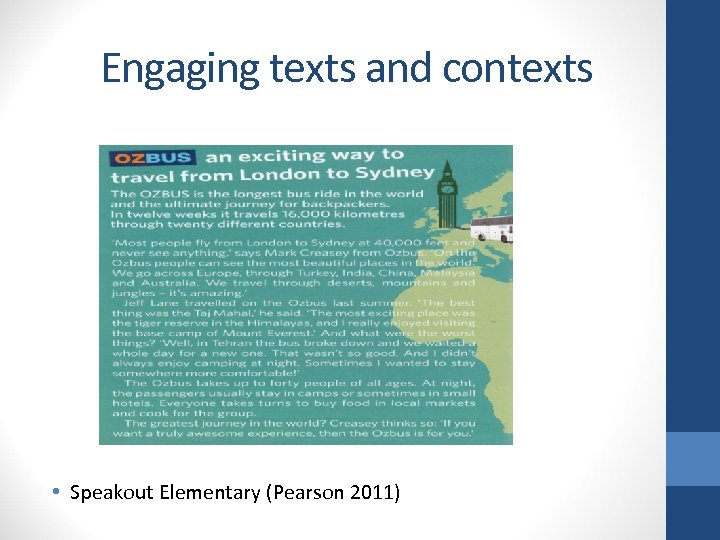 Engaging texts and contexts • Speakout Elementary (Pearson 2011)
 Potential blocks on this scenario Comprehension questions Rule discovery activities/a linear approach Controlled practice activities
 Comprehension questions • Questions that test comprehension are not particularly cognitively demanding (Mishan 2014) • Comprehension questions often only focus on parts of the text chosen by the writer (Roberts 2014) • …noticing is most salient when a learner has been engaged in a text affectively and cognitively and then returns to it to investigate language use (Tomlinson 2009)
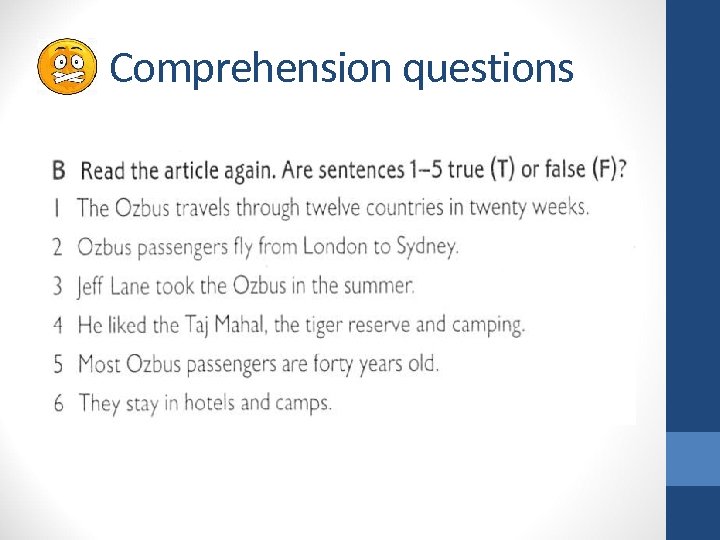 Comprehension questions
 Rule discovery “Knowledge which is gained by one’s own efforts is much more likely to stick and to be used than knowledge which is handed over on a plate” (Willis, D. 2000: 8) “Consciousness-raising tasks cater for discovery learning through problem solving, in accordance with the general principle that what learners can find out for themselves is better remembered than what they are simply told” (Ellis, R. 2003: 163)
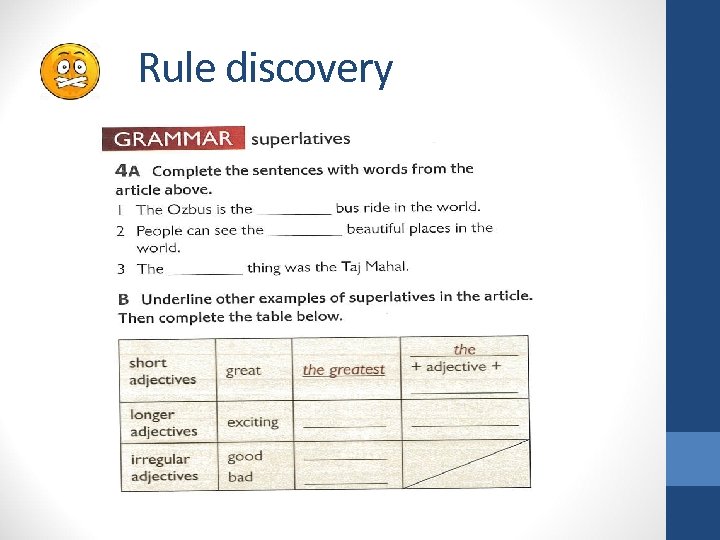 Rule discovery
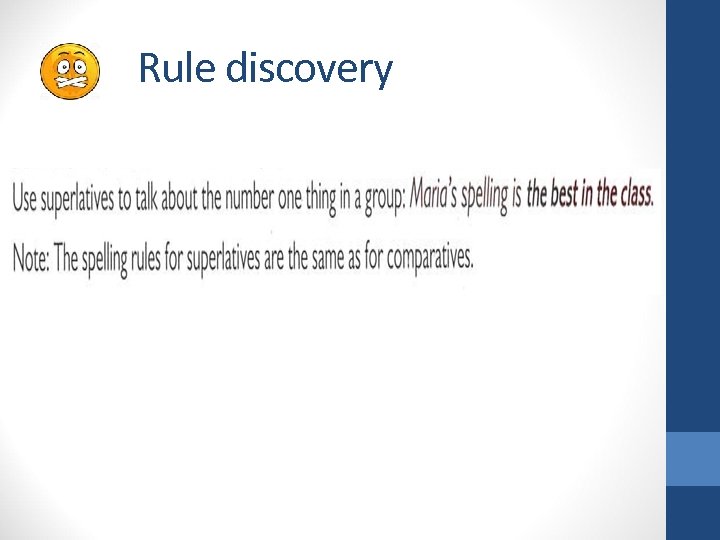 Rule discovery
 A linear approach “It is simply not the case that language learners acquire target items perfectly, one at a time” (Nunan, 1998: 101) “Teachers may teach one grammar structure at a time, and students may focus on one at a time, but students do not master one at a time before going on to learn another”. (Larsen-Freeman 1997)
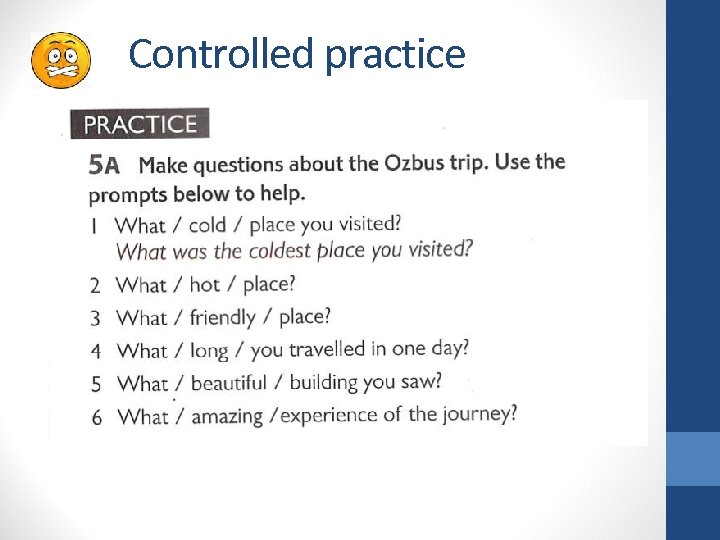
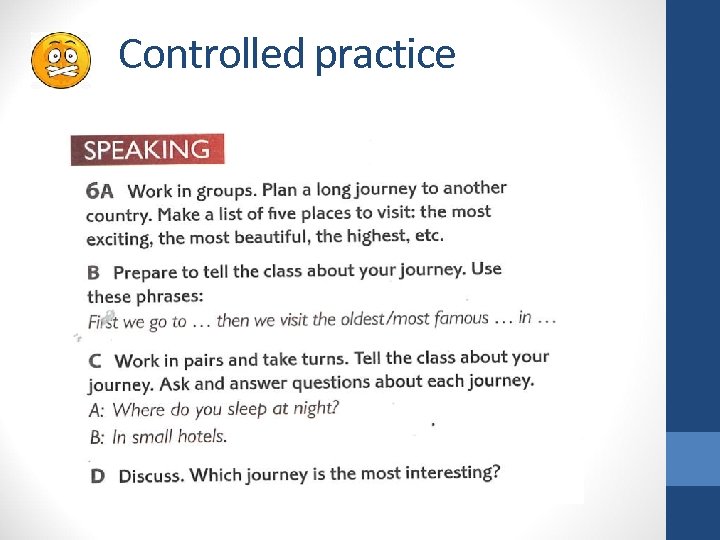
 Controlled practice • repetition should be meaningful and relevant to the learners …. . and not merely (or entirely) a mechanical parroting of structures (Swain, M. & R. Lapkin 2008) • Using language productively means going beyond the kind of language display required by many controlled practice activities (Willis, J. 1996)
 Controlled practice “If we want to examine what a piece of language is intended to do we cannot avoid thinking in terms of choice. Clearly, speakers do not go round producing decontextualized grammatically correct sentences: they have reasons for saying something, and for saying it the way they do” (Thompson, 2004: 8)
 Controlled practice
 Controlled practice
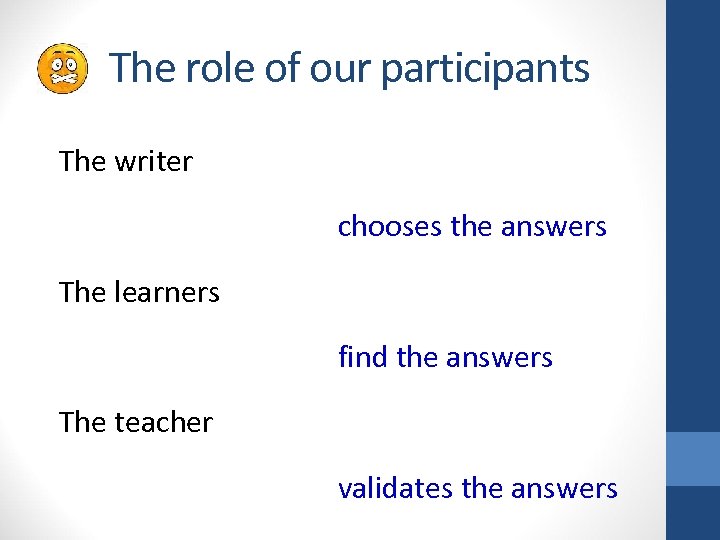 The role of our participants The writer chooses the answers The learners find the answers The teacher validates the answers
 Lower levels “When teaching lower levels there may be fewer opportunities to improvise or engage in dialogic talk than with higher proficiency learners” (Richards, 2017)
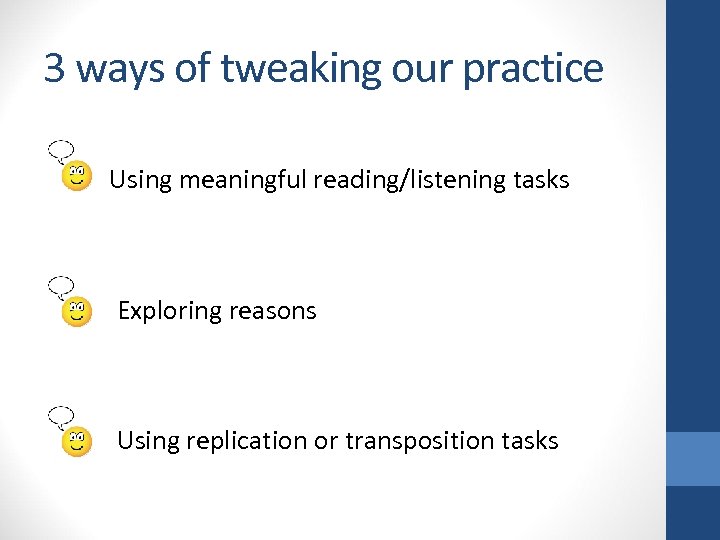 3 ways of tweaking our practice Using meaningful reading/listening tasks Exploring reasons Using replication or transposition tasks
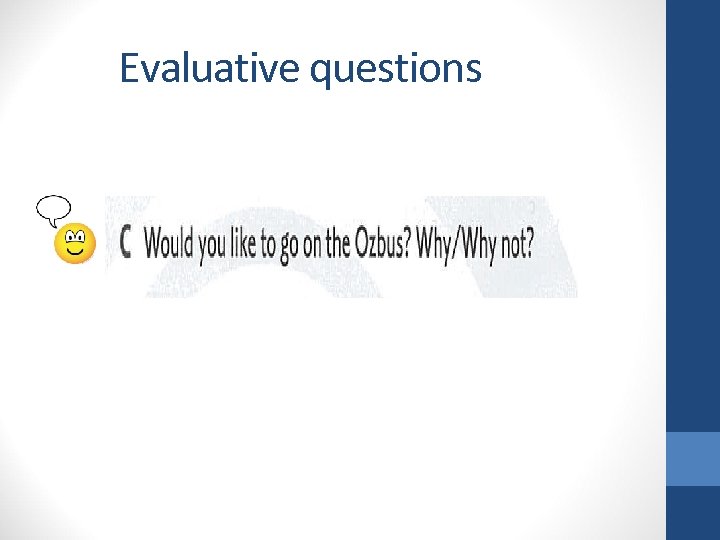 Evaluative questions
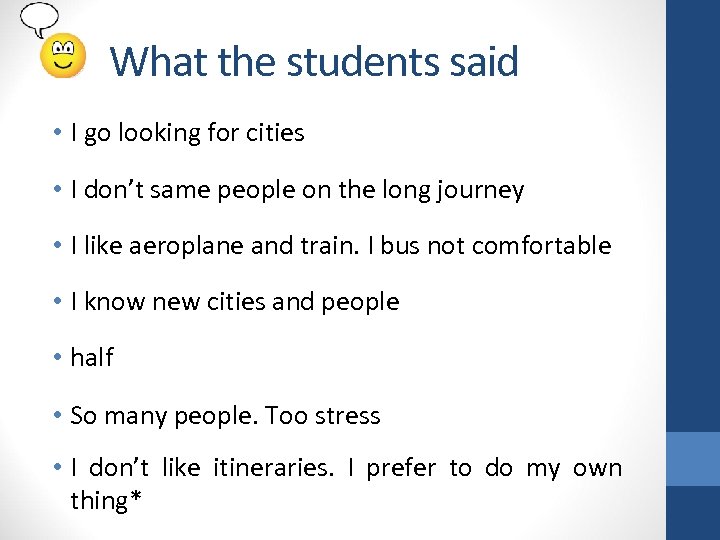 What the students said • I go looking for cities • I don’t same people on the long journey • I like aeroplane and train. I bus not comfortable • I know new cities and people • half • So many people. Too stress • I don’t like itineraries. I prefer to do my own thing*
 From rules to reasons • Why are we using ‘would’?
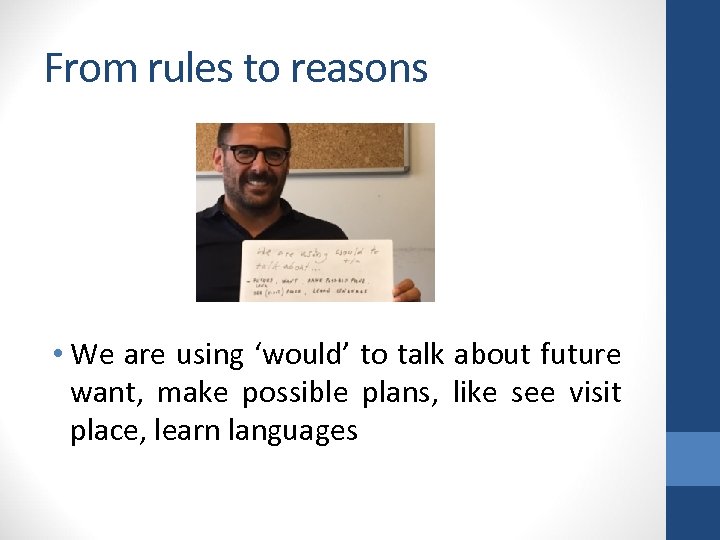 From rules to reasons • We are using ‘would’ to talk about future want, make possible plans, like see visit place, learn languages
 From rules to reasons • The OZ bus is the longest bus ride in the world • On the OZ bus people can see the most beautiful places in the world • It travels 16, 000 km through twenty countries • In Tehran the bus broke down
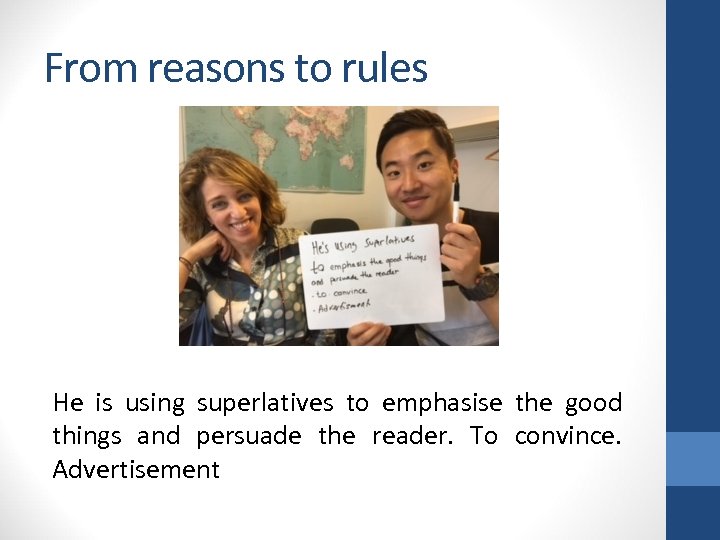 From reasons to rules He is using superlatives to emphasise the good things and persuade the reader. To convince. Advertisement
 From rules to reasons • There are many options. This trip is the best option. It is unique (superlatives) • He’s using superlatives to persuade/convince the reader/customer • Present simple is the itinerary • Can is possibility. It explains to customers the travel
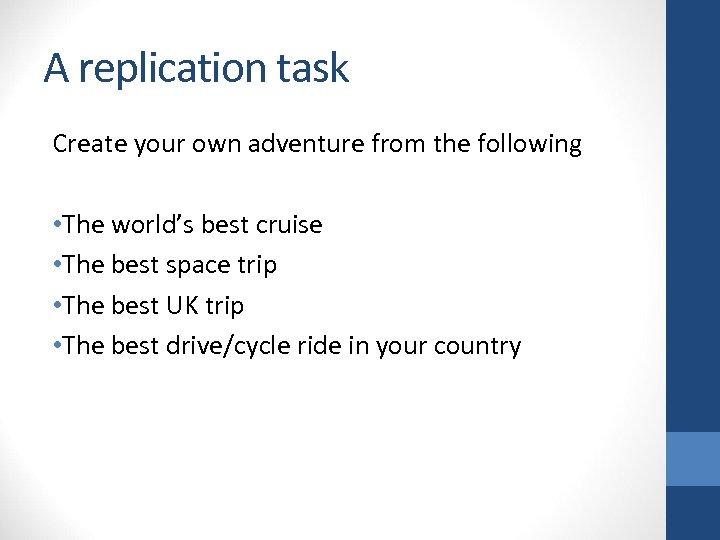 A replication task Create your own adventure from the following • The world’s best cruise • The best space trip • The best UK trip • The best drive/cycle ride in your country
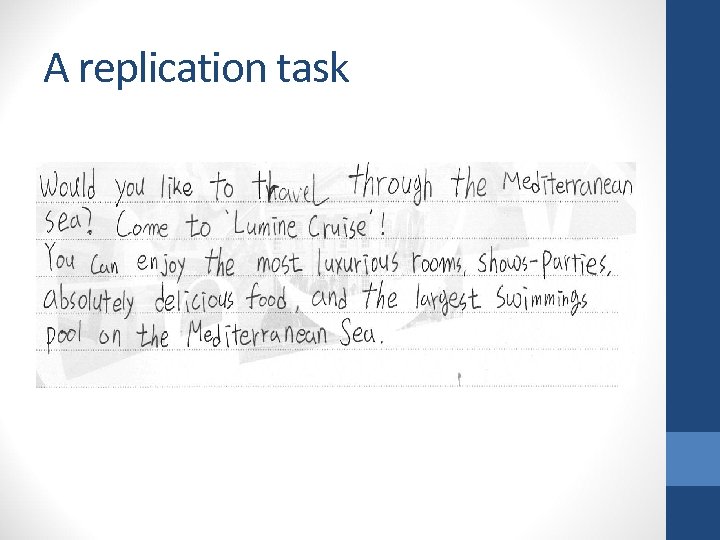 A replication task
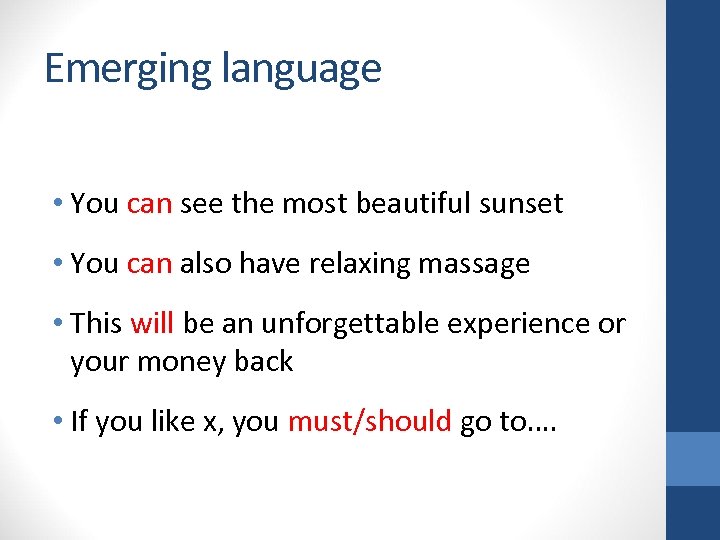 Emerging language • You can see the most beautiful sunset • You can also have relaxing massage • This will be an unforgettable experience or your money back • If you like x, you must/should go to….
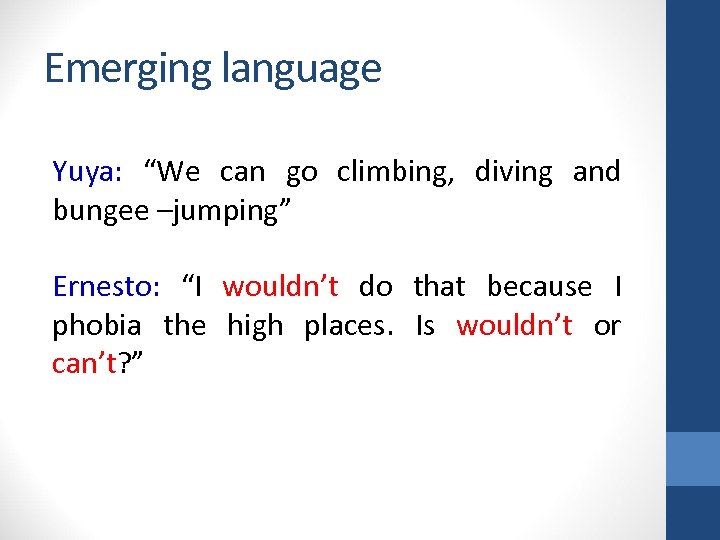 Emerging language Yuya: “We can go climbing, diving and bungee –jumping” Ernesto: “I wouldn’t do that because I phobia the high places. Is wouldn’t or can’t? ”
 A transposition task Imagine you went on the OZ bus. Interview your partner using the questions on the handout
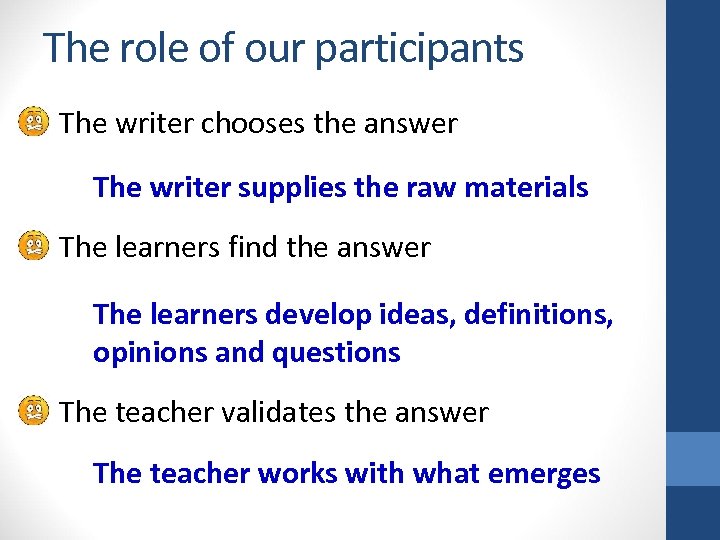 The role of our participants The writer chooses the answer The writer supplies the raw materials The learners find the answer The learners develop ideas, definitions, opinions and questions The teacher validates the answer The teacher works with what emerges
 danny. norrington-davies@ihlondon. com https: //dannynorringtondavies. wordpress. co m/conference-presentations/
 Bibliography • Ellis, R. (2003) Task-based language learning and teaching. Cambridge: CUP • Larsen-Freeman, D. (1997). Grammar and its teaching: challenging the myths. Washington, D. C. : ERIC Clearinghouse on Languages and Linguistics. [ERIC Digest. ] • Masuhara, H. (2017) Helping Learners Pay Attention to Form in Meaning Focused Activities. Presented at the MATSDA conference. Tilburg, the Netherlands • Mishan, F. & I. Timmis (2015) Materials Development for TESOL. Edinburgh: Edinburgh University Press. • Norrington-Davies, D. (2016) Teaching grammar: from rules to reasons. Pavilion Publishing • Nunan, D. (1998) Teaching Grammar in Context. ELTJ 52/2: 101 -109 • Richards, J. (2017) Teaching English through English: Proficiency, Pedagogy and Performance. RELC Journal. 48(1), 1 -24 • Roberts, R. (2014) Do something different with your course-book. ETP issue 90 • Swain, M. , and S. Lapkin (2008) Lexical learning through a multitask activity: The role of repetition. Bilingual Education and Bilingualism. Volume 66 • Tomlinson, B. (2009) "Principles and Procedures of Materials Development for Language Teaching” Folio sample material • Thompson, G. (2004) Introducing Functional Grammar. New York: Hodder Arnold • Willis, J. (1996) A framework for Task-Based learning. London: Longman • Willis, D. (2000) Grammar – a textual approach. ETP issue 17