


 Скачать презентацию From little things How small changes can
d1c0d3d9aaa5cf7edebcf8db82dc8723.ppt
- Количество слайдов: 23
 From little things…. . How small changes can make a big difference when introducing KM initiatives Presentation to Information Awareness Month seminar - KM 101 Paulette Paterson IP Australia 25 May 2007
 My presentation • • • KM and me Selling the KM value proposition – why is it so hard in public sector agencies? Agricultural KM - an organic approach to implementing KM initiatives Case study 1: A small change to work practices in the Parliamentary Library Case study 2: The IP Australia wiki How you can sow the KM seed in your organisation
 3 KM and me • How I fell into KM • My personal KM philosophy – the twin thing • A rose by any other name….
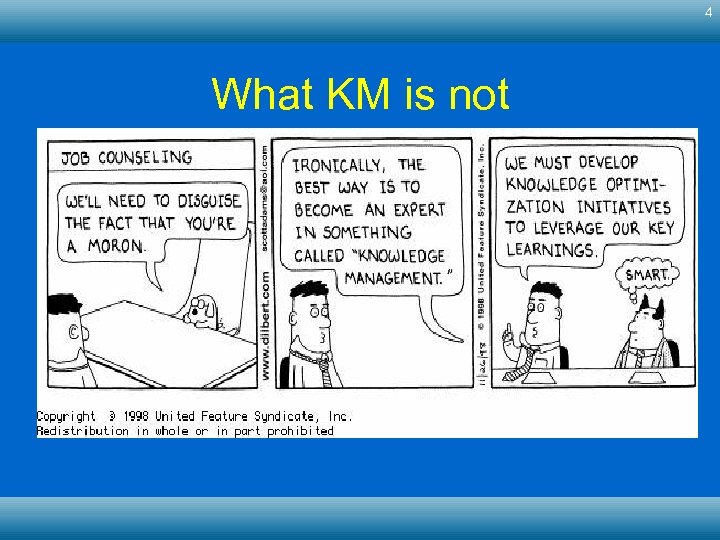 4 What KM is not
 5 A rose by any other name…. • • • Business process re-engineering E-business Organisational learning Information management Intelligent systems Reflective practice(? ) Competitive intelligence Futures Workforce planning SNA, narrative, sense-making, predictive markets, complexity, valuenets The list goes on …. .
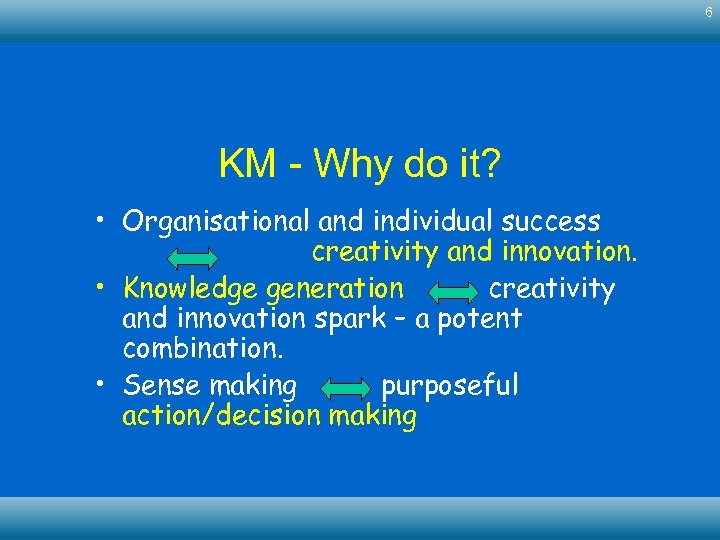 6 KM - Why do it? • Organisational and individual success creativity and innovation. • Knowledge generation creativity and innovation spark – a potent combination. • Sense making purposeful action/decision making
 7 The value proposition for business or why successful commercial enterprises ‘get’ KM • • • “The ability to learn faster than your competitors may be the only sustainable competitive advantage. ” (Attributed to Arie de Geus, former Head of Planning for Royal Dutch Shell) The sum of the company is greater than the individual knowledge of each employee. They need to close the knowledge gap to gain a competitive advantage/execute a strategy Closing the knowledge gap can cut costs, enhance product quality, and speed time-to-market An individual’s worth is not only based on what he or she knows but how easily and successfully he/she shares it. Knowledge is a non-rival” good
 8 The value proposition in a public sector agency ? • Why the K word is rarely uttered – is it a fad? • Knowledge and power are hard to separate in government • Pedantry – matters of nomenclature • Where does KM fit? • Ability to pick customers/partners • Evidence vs knowledge • The glare of accountability
 9 But what’s in it for me ? • • Knowledge is power Knowledge sharing is time consuming Knowledge sharing is relationship-dependent Domains of interest – what is the point in sharing outside of these? • The water cooler effect • Collaboration is voluntary • Focus on short-term goals comes more naturally
 10 An organic approach/KM by stealth – more suitable for government? • Preparing the ground – dig deep, one forkful at a time • Sowing the seed of an idea • Watching it grow and “self-seed/multiply” behaviours • Making it (almost) self-sufficient • Harvesting the benefits • To every thing there is a season…
 11 Parliamentary Library • Industry: Information, analysis and advice for Senators and Members since 1901 – the parliamentary “think tank” • Employees: 185 (2003) – almost 100 researchers and research librarians • Key products and services: Analysis and advice on contemporary public policy issues; In-house publications such as research papers, audio briefs and Bills Digests; Electronic media monitoring service; 13 databases on the Parl. Info parliamentary network; Seminars, training programs, contact officer program for new Senators, Members and staff; Traditional lending collection; ALERT service; It’s New service; Ongoing training and orientation
 12 The shared data repository initiative • Preparing the ground – the wastes around duplicated work raised early and often • Sowing the seed of an idea – the consultancy recommendation that made sense to senior executives • Watching it grow and “self-seed/multiply” because it becomes their idea • Making it (almost) self-sufficient, particularly with newer leaders • Harvesting the benefits • To every thing there is a season… success does have its drawbacks
 13 IP Australia • the Australian Government agency responsible for administering proprietary intellectual property rights for patents, trade marks, designs and Plant Breeder’s Rights. • does not include copyright (administered by Attorney. General • incorporates the Patent, Designs, Trade Marks and Plant Breeder’s Rights (PBR) Offices. • a prescribed agency within the Department of Industry, Tourism and Resources (ITR) but operates independently and reports directly to the Minister. • role is to provide a strong intellectual property system which promotes innovation, investment and trade • 97% self-funded with about 1, 000 employees, mainly in Canberra • actively positioning itself in the international IP environment • has existed in one form or another since 1904. •
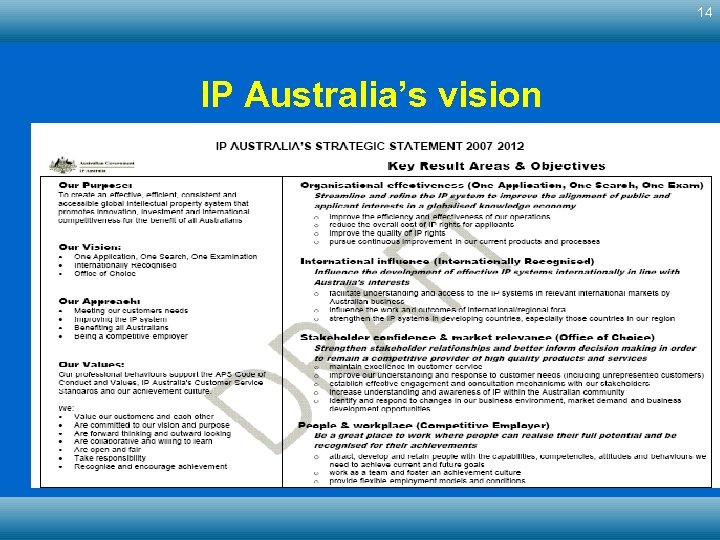 14 IP Australia’s vision
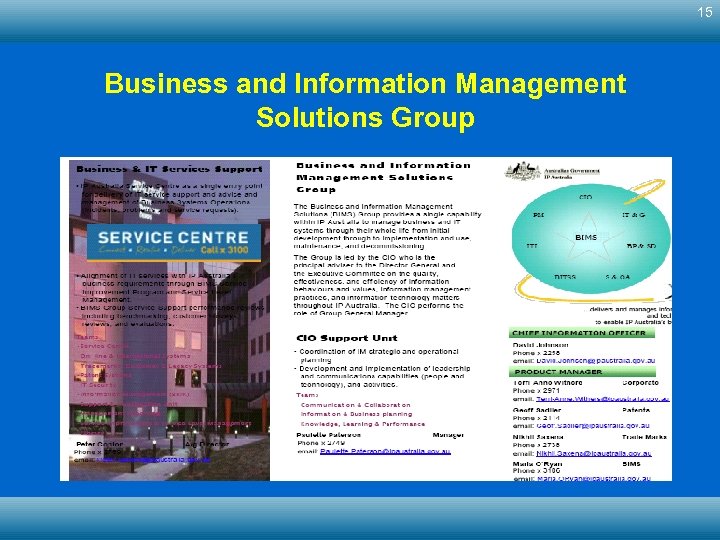 15 Business and Information Management Solutions Group
 16 Business and Information Management Solutions Group (BIMS) • • BIMS seen as an overhead. BIMS doing lots of work around improving its alignment with business including: – Project management - to improve delivery and communication of its very large program of “build” work – Portfolio management - to maximize IT investments, align priorities w/business, and control workloads – Business process management - to optimise and automate business processes – Enterprise architecture - to align technology with corporate goals and strategies
 17 Wiki drivers • inadequacy of work group drives/rigidity of e-records management • encourages affilitiation out ofpersonal choice • the ability of users to create and edit pages directly and independently; • a bottom-up approach to site structure and navigation; • reduced governance can improve “time to market” • small group work – ability to opt in • under the radar • simple templating and markup language; and • voluntary workflow or approval steps – a light touch.
 18 Wiki implementation • Preparing the ground – the frustrations with other collaborative work spaces • Sowing the seed of an idea – the under the radar approach of early adopters • “Self-seed/multiply” effect as leaders see value and it becomes their idea • Harvesting the benefits/dealing with “weeds” • To every thing there is a season… success does have its drawbacks
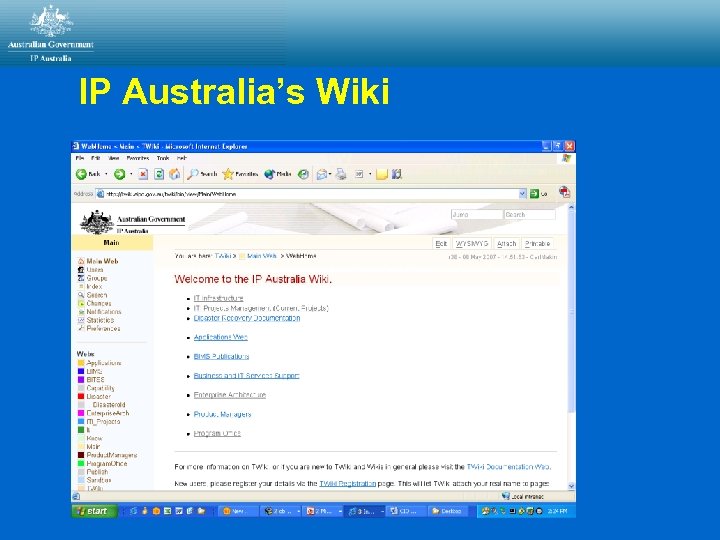 IP Australia’s Wiki
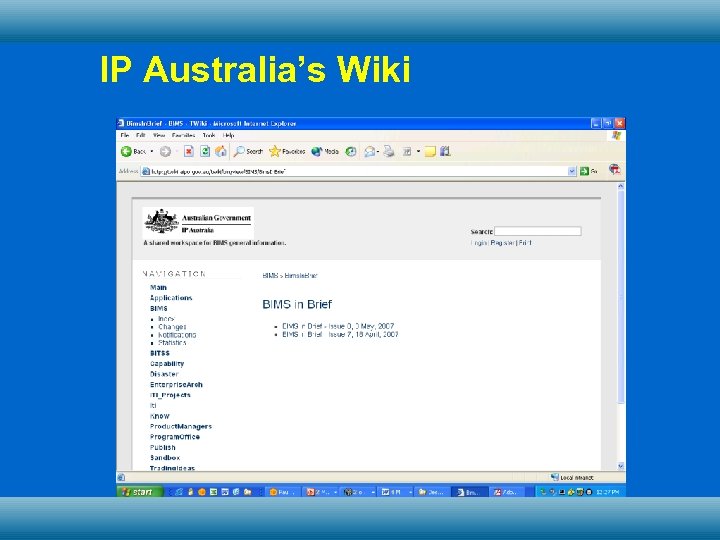 IP Australia’s Wiki
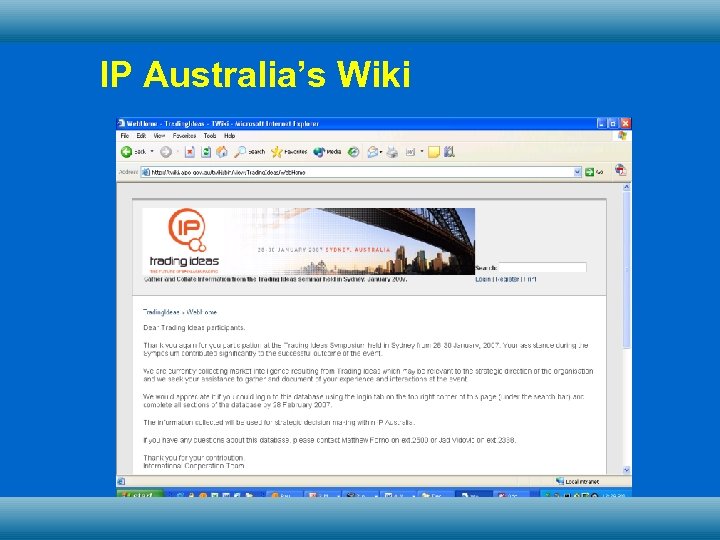 IP Australia’s Wiki
 IP Australia’s Wiki – will the seed bear fruit? – – – What is the value proposition? Should BIMS bow to the inevitable and lead the way with developing the opportunity? What mix of governance is required? Horses for courses? Where is the wiki appropriate? Will it run interference against IP Australia’s information management strategic direction? Will silos of knowledge be enabled?
 Some guiding principles for KM implementers • • • Remember that knowledge workers are assets, not “head count” (as Catbert would have it) Make the changes as self-sufficient as you can in these droughtridden times Manage expectations/language – many initiatives promise too much and sound faddish One idea at a time Harvest the benefits and keep scanning the horizon for new oportunities to innovate The smallest, simplest solutions are often the best Do it by stealth if you have to but just do it! Initiatives must be sponsored from the top – even if you have to let your bosses think it was their idea all along KM initiatives are intrinsically linked to human behaviour Success goes hand in had with personal responsibility for knowledge sharing