


 Скачать презентацию From imagination to impact High Impact Research
98400acede051df44f4c10963740de31.ppt
- Количество слайдов: 49
 From imagination to impact
 High Impact Research Directions David Skellern CEO
 Presentation overview • About NICTA • NICTA’s Research Directions – Themes and business areas – NICTA’s approach to research • Some examples • Strategic planning at NICTA • Why strategic planning is important
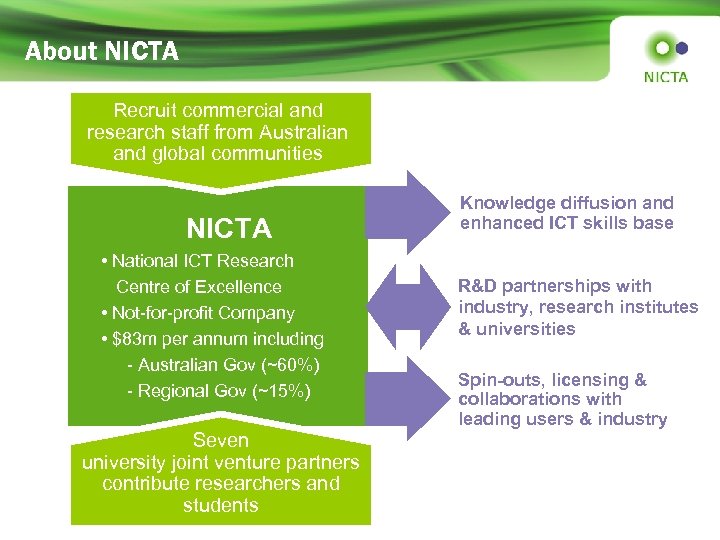 About NICTA Recruit commercial and research staff from Australian and global communities NICTA • National ICT Research Centre of Excellence • Not-for-profit Company • $83 m per annum including - Australian Gov (~60%) - Regional Gov (~15%) Seven university joint venture partners contribute researchers and students Knowledge diffusion and enhanced ICT skills base R&D partnerships with industry, research institutes & universities Spin-outs, licensing & collaborations with leading users & industry
 NICTA Founders & Partners (2002) (2003) (2004) (2005)
 NICTA Vision and Mission Our Vision is that our imaginative research drives Australia’s ICT future Our Mission is to be an enduring world-class information and communications technology research institute that generates national benefit
 NICTA Objectives Our People objective is to bring together world-class researchers and professional staff, enhance their skills and build a culture of entrepreneurship and achievement in use-inspired basic research, enhancing Australia’s ICT capacity and capability. Our Research objective is to carry out research that advances knowledge, is recognised for its excellence and generates breakthrough, userfocused technologies. Our Education objective is to work with universities to provide Australia with ICT researchers who have deep technical expertise supported by strong professional and entrepreneurial skills. Our Linkages objective is to increase our impact and results by working with targeted research, government, education, industry and domain partners. Our Commercialisation objective is to facilitate technology transfer and create channels to market for NICTA research.
 What Will Success Look Like? National benefit from NICTA research outcomes Measurable industry growth & competitiveness from NICTA research outcomes National benefit through a stronger ICT Skills base Stronger ICT skill base – NICTA alumni Research expertise and scale One of the world’s top 10 ICT research centres by 2020
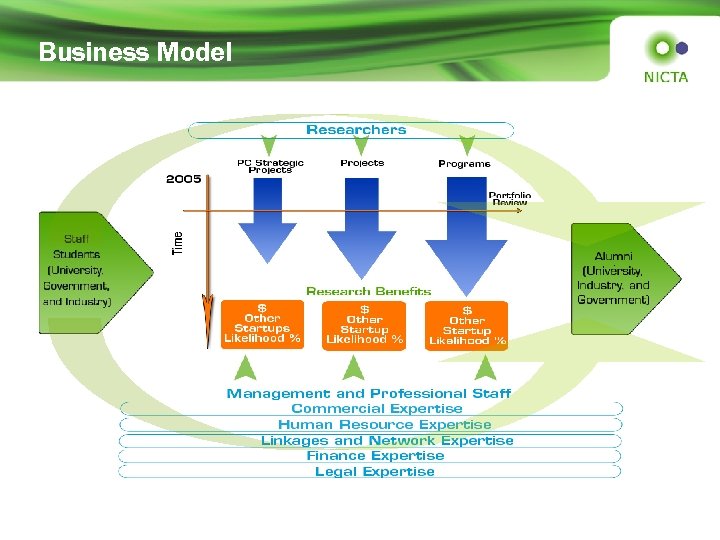 Business Model
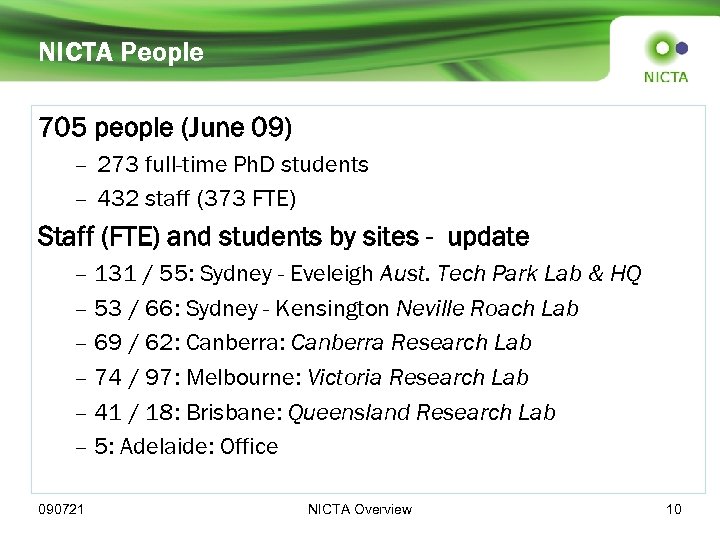 NICTA People 705 people (June 09) – 273 full-time Ph. D students – 432 staff (373 FTE) Staff (FTE) and students by sites - update – 131 / 55: Sydney - Eveleigh Aust. Tech Park Lab & HQ – 53 / 66: Sydney - Kensington Neville Roach Lab – 69 / 62: Canberra Research Lab – 74 / 97: Melbourne: Victoria Research Lab – 41 / 18: Brisbane: Queensland Research Lab – 5: Adelaide: Office 090721 NICTA Overview 10
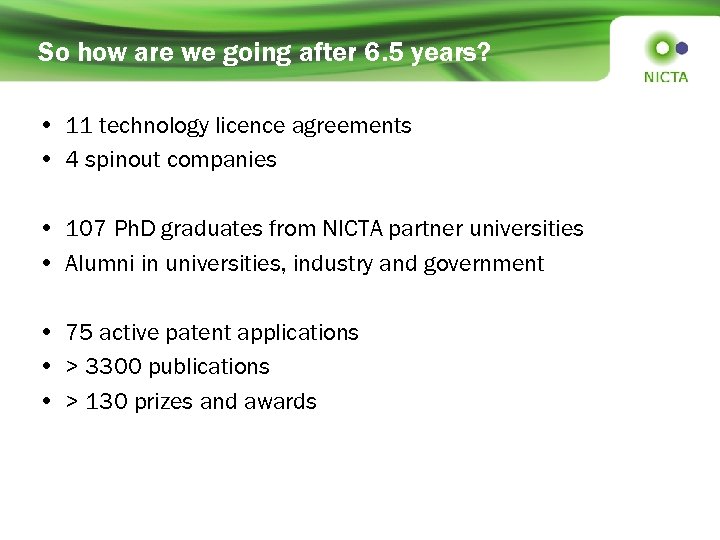 So how are we going after 6. 5 years? • 11 technology licence agreements • 4 spinout companies • 107 Ph. D graduates from NICTA partner universities • Alumni in universities, industry and government • 75 active patent applications • > 3300 publications • > 130 prizes and awards
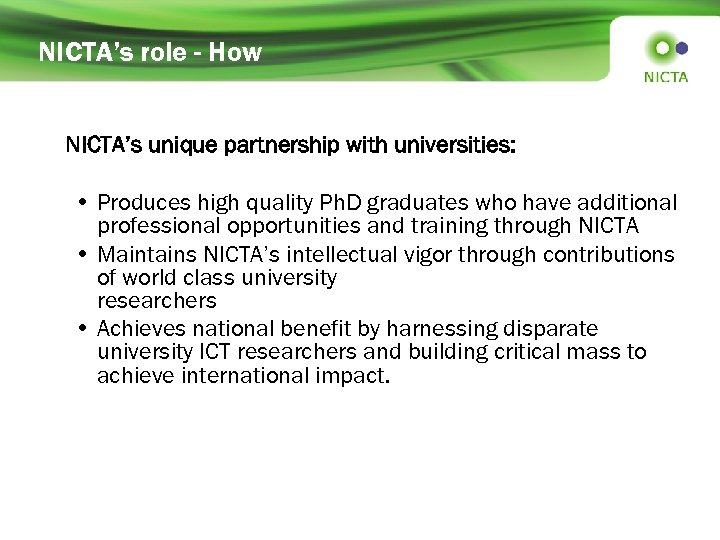 NICTA’s role - How NICTA’s unique partnership with universities: • Produces high quality Ph. D graduates who have additional professional opportunities and training through NICTA • Maintains NICTA’s intellectual vigor through contributions of world class university researchers • Achieves national benefit by harnessing disparate university ICT researchers and building critical mass to achieve international impact.
 NICTA’s role - How NICTA has a systemic approach to achieving significant national outcomes from its research: • Our use-inspired basic research approach ensures that research is undertaken only after competitor and market analysis confirm good prospects for impact. • Our aim is to make step changes in knowledge that are embodied in technology platforms to allow the research to be more readily transferred into use across the economy. • Commercial considerations are imbedded into our projects at the outset and ongoing entrepreneurial support works to transfer research outcomes into commercial results.
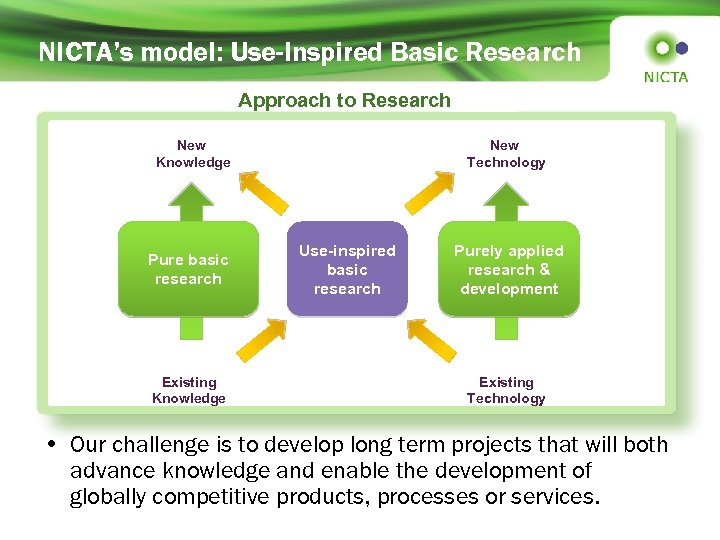 NICTA’s model: Use-Inspired Basic Research Approach to Research New Knowledge Pure basic research Existing Knowledge New Technology Use-inspired basic research Purely applied research & development Existing Technology • Our challenge is to develop long term projects that will both advance knowledge and enable the development of globally competitive products, processes or services.
 ICT Capability Themes Researchers are grouped across the company by Theme: Embedded Systems – developing ‘smart’ products Networked Systems – technology that connects ‘smart’ products to form ‘smart’ networks Making Sense of Data – making sense of large amounts of data created by ICT systems Managing Complexity - designing ICT systems that are fit for purpose, cost effective and don’t have nasty side effects
 Themes • What they are – Larger collections of research capability – The line management structure of our research – A good level of aggregation for joint strategic planning with partner universities • Why we have them – A vehicle for long range (10 years) strategic planning. . . –. . . Which will hopefully engender larger, riskier higher payoff projects – A home for Lab staff • Who we encourage (insist!) they have around 30% unstructured unmanaged time for research • Great ideas start in a single person’s head. . .
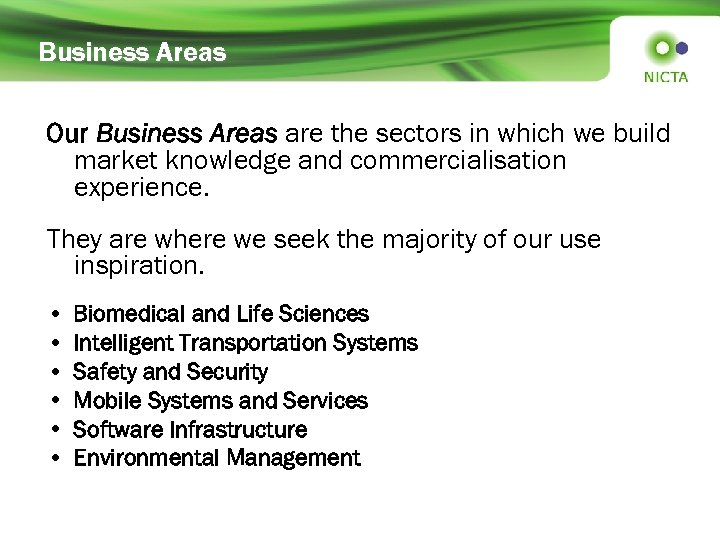 Business Areas Our Business Areas are the sectors in which we build market knowledge and commercialisation experience. They are where we seek the majority of our use inspiration. • • • Biomedical and Life Sciences Intelligent Transportation Systems Safety and Security Mobile Systems and Services Software Infrastructure Environmental Management
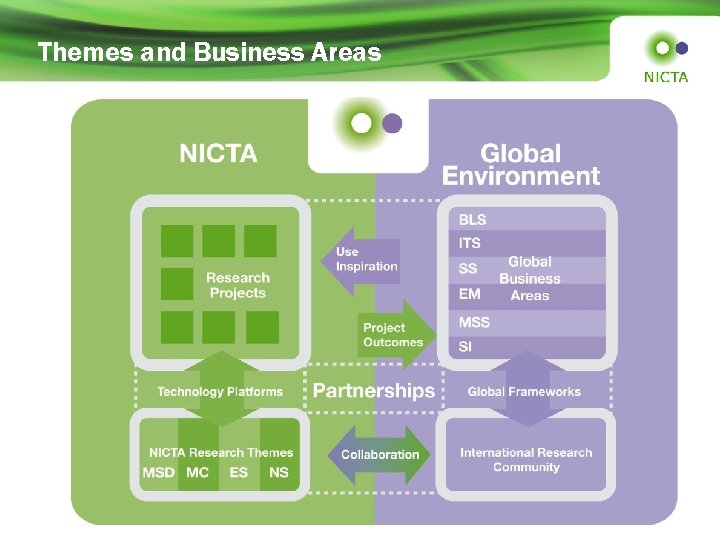 Themes and Business Areas
 NICTA’s Research Directions a selection!
 Embedded Systems Research Areas 1 Embedded Systems Engineering • GOAL: Model-driven process for fitting architectures and designs to problems. • Challenge: Combine with “Design by Composition” approach for re-use. • Virtual System Prototyping
 Embedded Systems Research Areas 2 Secure, Reliable, Trustworthy Embedded Software • GOAL: De-facto standard for vendors of embedded systems. • Trustworthy microkernel-based operating systems • Component-based systems constructed upon microkernel. • System services to higher-level layers, such as a secure GUI. • Distributed Systems & Multi-Core
 Embedded Systems Research Areas 3 Dynamic Scene Understanding on Visual Sensor Networks • GOAL: World-leading computer vision systems for dynamic scene understanding. • Smart networked cameras with reconfigurable architectures • Computer Vision processing for bionic eye • Combination of geometric and statistical methods =>Moving Cameras + Moving Objects
 Embedded Systems Research Areas 4 Wireless systems and Sensors on-a-Chip • GOAL: Pervasive wireless systems and sensors. • Single Chip WPAN in CMOS at 60 GHz – Integrated radio transceiver with phased antenna array – Digital baseband, MAC processing – Wireless. HD, 802. 11. AD (Wi. Gig) • Sensor technologies & applications – Body Area Networking – Implanted devices
 Embedded Systems Research Areas 5 Reconfigurable Systems • GOAL: Systems that adapt to changing requirements. • Reconfigurable systems with HW/SW agents. Integrate 3 rd party components. • Breakthrough scalable architecure
 Solving real problems creates impact Impact comes from applying ICT to real world problems! • Making the digital economy more accessible to Australians. • Help maximise the efficiency of Australia’s infrastructure and logistics through advanced systems which speed-up and simplify traffic, freight, port and airport operations and will also assist streamlined delivery of emergency services • Maximising farm yield by developing and deploying ICT systems which minimise the use of scarce water resources
 Strategic issues for NICTA – future outcomes 4. Safer food produced more efficiently for Australians and as exports. 5. Computer technologies for enhanced health and wellbeing, including bionic eye and improved cancer treatment. 6. Gain without the pain: effective service delivery to government and business without the implementation and cost 7. Hybrid vehicle control development in Australia driving competitive global green vehicle manufacturing
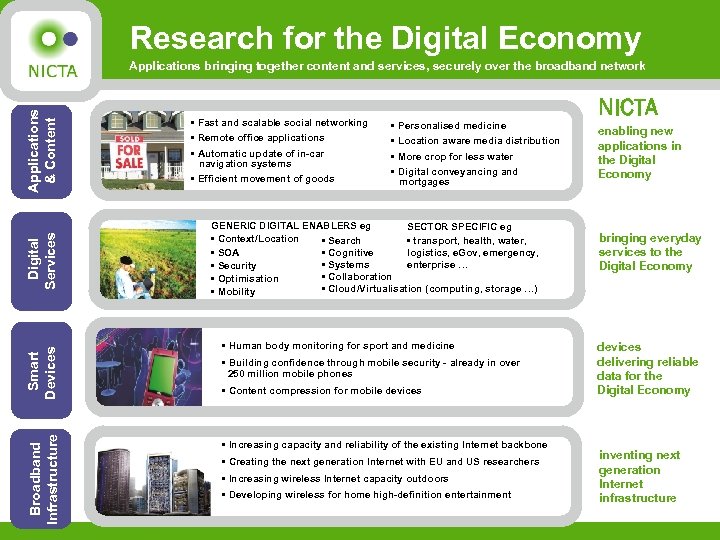 Research for the Digital Economy Broadband Infrastructure Smart Devices Digital Services Applications & Content Applications bringing together content and services, securely over the broadband network § Fast and scalable social networking § Remote office applications § Automatic update of in-car navigation systems § Efficient movement of goods § Personalised medicine § Location aware media distribution § More crop for less water § Digital conveyancing and mortgages GENERIC DIGITAL ENABLERS eg SECTOR SPECIFIC eg • Context/Location • Search • transport, health, water, • Cognitive logistics, e. Gov, emergency, • SOA • Systems enterprise … • Security • Collaboration • Optimisation • Cloud/Virtualisation (computing, storage …) • Mobility • Human body monitoring for sport and medicine • Building confidence through mobile security - already in over 250 million mobile phones • Content compression for mobile devices • Increasing capacity and reliability of the existing Internet backbone • Creating the next generation Internet with EU and US researchers • Increasing wireless Internet capacity outdoors • Developing wireless for home high-definition entertainment NICTA enabling new applications in the Digital Economy bringing everyday services to the Digital Economy devices delivering reliable data for the Digital Economy inventing next generation Internet infrastructure
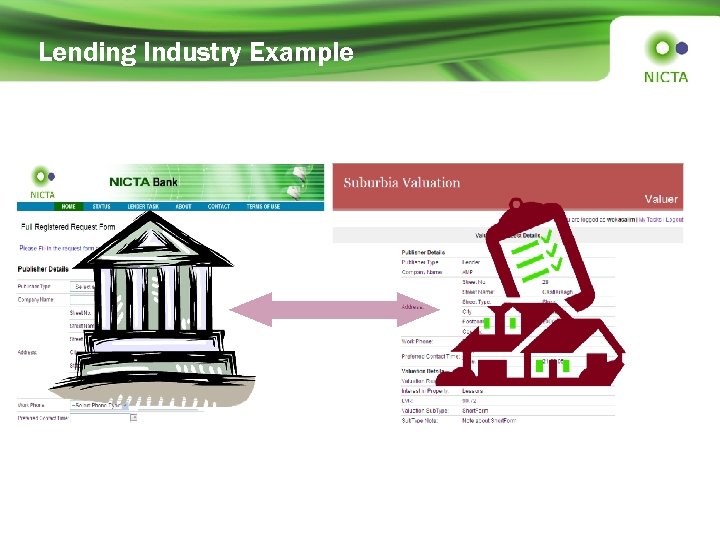 Lending Industry Example
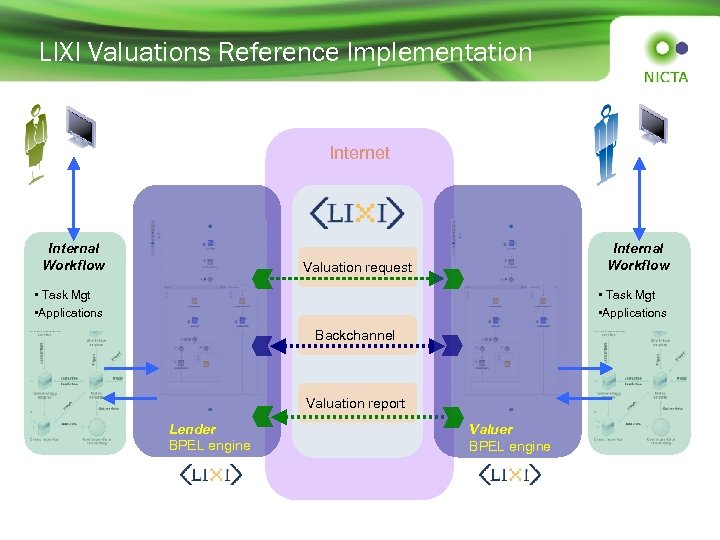 LIXI Valuations Reference Implementation Internet Internal Workflow Valuation request • Task Mgt • Applications Backchannel Valuation report Lender BPEL engine Valuer BPEL engine
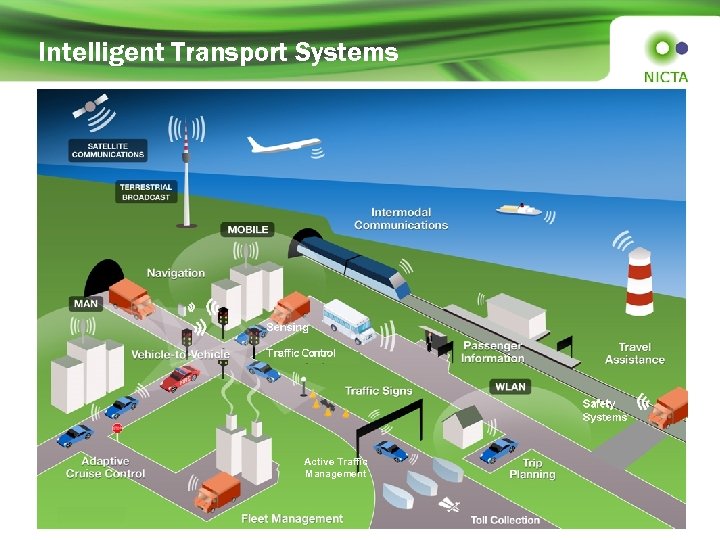 Intelligent Transport Systems Active Traffic Management
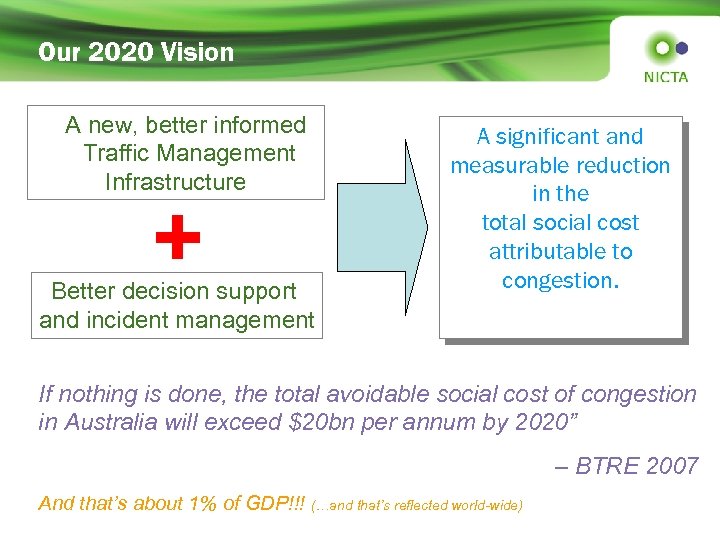 Our 2020 Vision A new, better informed Traffic Management Infrastructure + Better decision support and incident management A significant and measurable reduction in the total social cost attributable to congestion. If nothing is done, the total avoidable social cost of congestion in Australia will exceed $20 bn per annum by 2020” – BTRE 2007 And that’s about 1% of GDP!!! (…and that’s reflected world-wide)
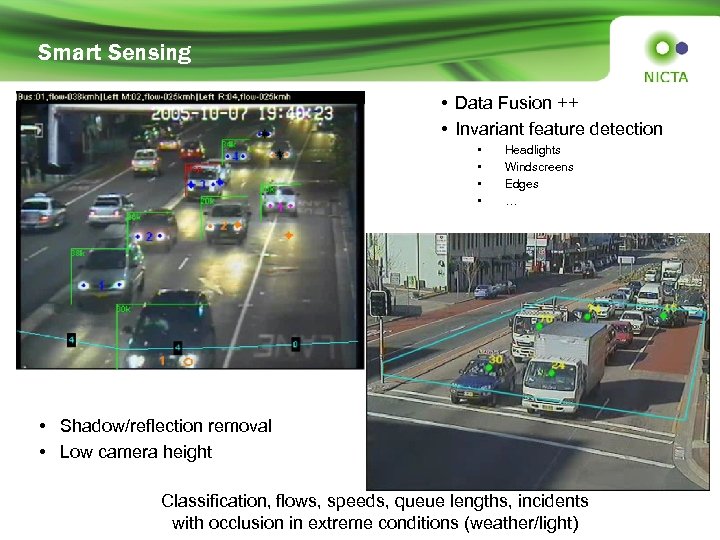 Smart Sensing • Data Fusion ++ • Invariant feature detection • • Headlights Windscreens Edges … • Shadow/reflection removal • Low camera height Classification, flows, speeds, queue lengths, incidents with occlusion in extreme conditions (weather/light)
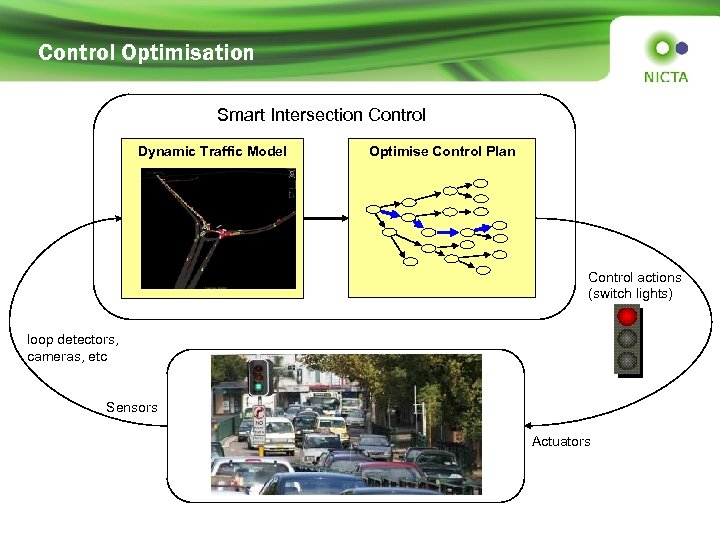 Control Optimisation Smart Intersection Control Dynamic Traffic Model Optimise Control Plan Control actions (switch lights) loop detectors, cameras, etc Sensors Actuators
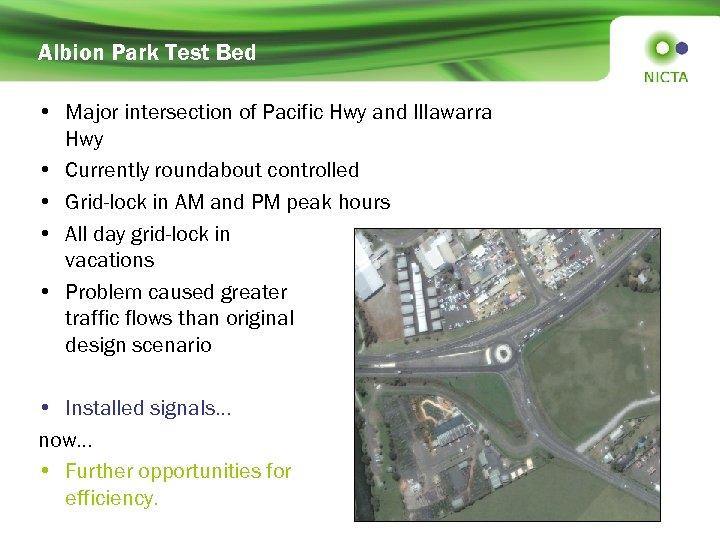 Albion Park Test Bed • Major intersection of Pacific Hwy and Illawarra Hwy • Currently roundabout controlled • Grid-lock in AM and PM peak hours • All day grid-lock in vacations • Problem caused greater traffic flows than original design scenario • Installed signals… now… • Further opportunities for efficiency.
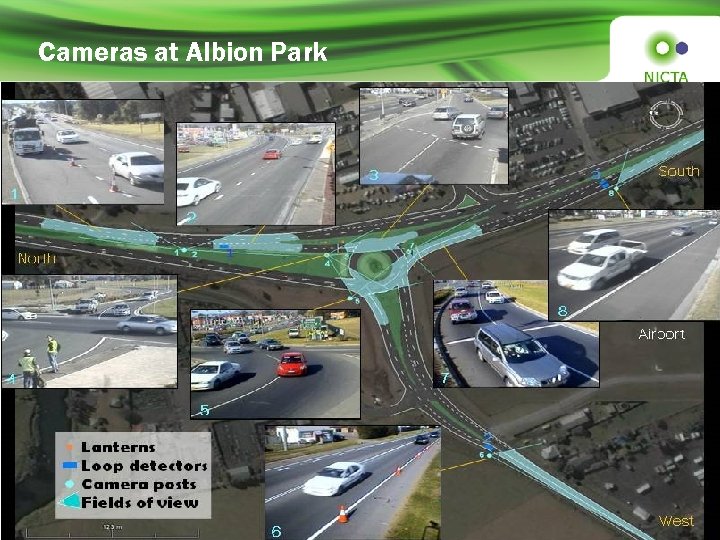 Cameras at Albion Park
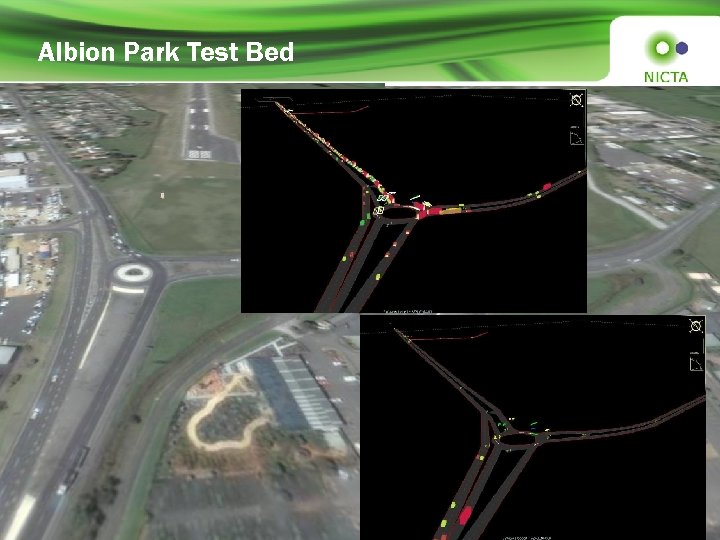 Albion Park Test Bed
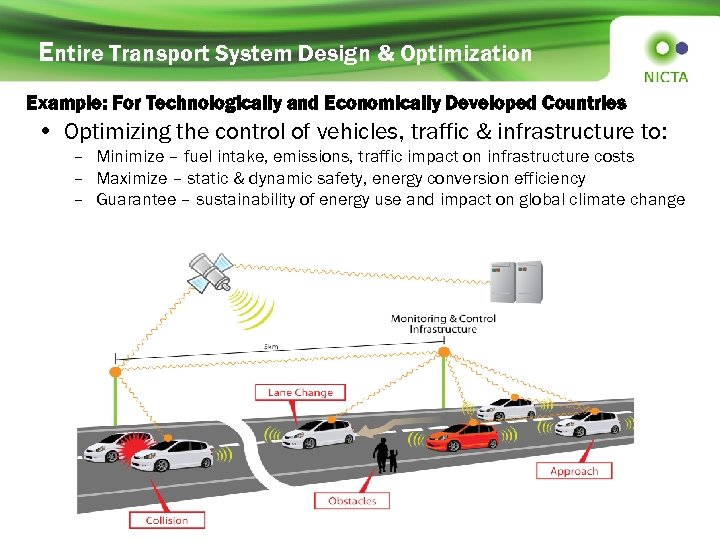 Entire Transport System Design & Optimization Example: For Technologically and Economically Developed Countries • Optimizing the control of vehicles, traffic & infrastructure to: – Minimize – fuel intake, emissions, traffic impact on infrastructure costs – Maximize – static & dynamic safety, energy conversion efficiency – Guarantee – sustainability of energy use and impact on global climate change
 Strategic Planning at NICTA
 Strategic planning at NICTA • Important for ensuring outcomes for our research • Strategic planning occurs at three levels: – NICTA Corporate Strategic Plan 2007 -2011 – Research Theme Strategic Plans – Project Strategic Plans
 Theme Strategic Plans • What – 10 -20 page high-level 10 year research visions • Why? – To develop longer range, higher risk, step-change projects – Useful for relations with universities and other strategic linkages – Connection with international linkage strategies • Status – Beginning to have some influence – Fair to say its a hard sell – But we are convinced it is the right thing to try
 Why Strategic Planning is Important
 Why strategic planning is important Dr Michael Spence, Vice Chancellor University of Sydney Talk of a “mission statement” in a university and many of our colleagues will roll their eyes. Others will hardly be so polite. But however difficult it may be to articulate the primary purpose of an institution so complex and diverse as ours, the process can be very helpful. It helps to know our goals, and while they may never be fully realised, and measurement is difficult, to know how well we are doing in achieving them.
 Why strategic planning is important Strategic planning gives direction and establishes co-ordinated effort. It also minimises wasted effort and redundancy. • • Arenas: where will we be active? Vehicles: how will we get there? Differentiators: how will we win in the market place? Staging: what will be our speed and sequence of moves? • Economic logic: how will we obtain our returns?
 Why strategic planning is important NICTA’s Theme Strategic Plans: • Specify the research areas where we want to achieve impact • Specify our goals within those areas • How we will get there • Provides a clear direction for our researchers. • Ensures co-ordinated research effort • Minimises wasted effort.
 Why strategic planning is important Strategic planning sets standards of success and performance • How will you achieve your objectives? • How will you know when you’ve got there? • What measures or targets will you use? • Who are your competitors, and what is your differentiator, or ‘edge’?
 Why strategic planning is important Strategic planning empowers people to make decisions and take initiatives. • Collective purpose and shared research direction • ‘Buy-in’ from team members • Maintaining flexible parameters to empower researchers Strategic plans also play an important role for people outside the organisation or team.
 Questions?
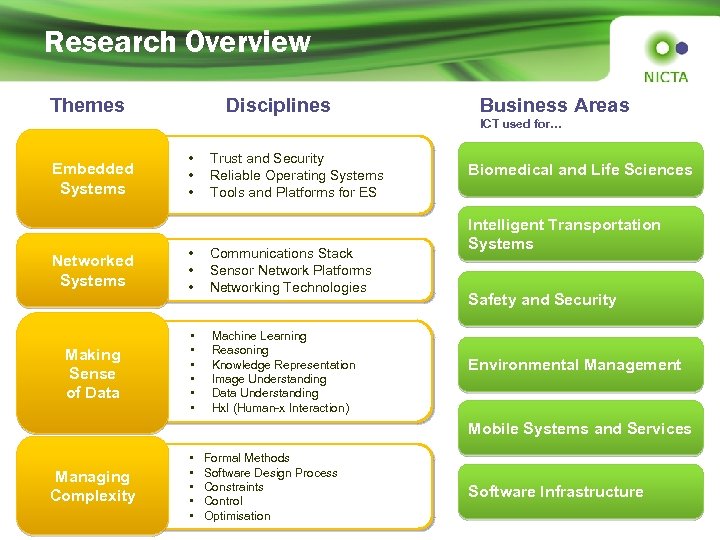 Research Overview Themes Disciplines Business Areas ICT used for… Embedded Systems Networked Systems Making Sense of Data • • • Trust and Security Reliable Operating Systems Tools and Platforms for ES • • • Communications Stack Sensor Network Platforms Networking Technologies • • • Machine Learning Reasoning Knowledge Representation Image Understanding Data Understanding Hx. I (Human-x Interaction) Biomedical and Life Sciences Intelligent Transportation Systems Safety and Security Environmental Management Mobile Systems and Services Managing Complexity • • • Formal Methods Software Design Process Constraints Control Optimisation Software Infrastructure
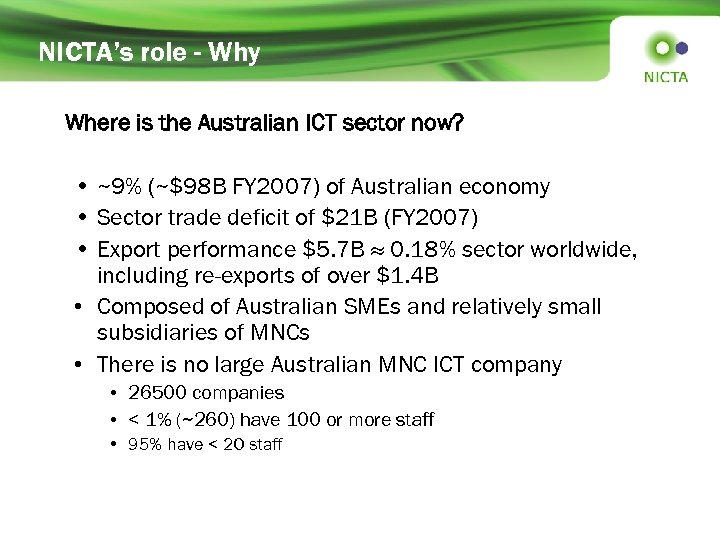 NICTA’s role - Why Where is the Australian ICT sector now? • ~9% (~$98 B FY 2007) of Australian economy • Sector trade deficit of $21 B (FY 2007) • Export performance $5. 7 B 0. 18% sector worldwide, including re-exports of over $1. 4 B • Composed of Australian SMEs and relatively small subsidiaries of MNCs • There is no large Australian MNC ICT company • 26500 companies • < 1% (~260) have 100 or more staff • 95% have < 20 staff