


 Скачать презентацию From Ideas to Reality Implementing ACRL s Information Literacy
64498f1bbbf41cced89209df69309195.ppt
- Количество слайдов: 24
 From Ideas to Reality: Implementing ACRL’s Information Literacy Framework Dr. Lesley Farmer California State University Long Beach Lesley. Farmer@csulb. edu
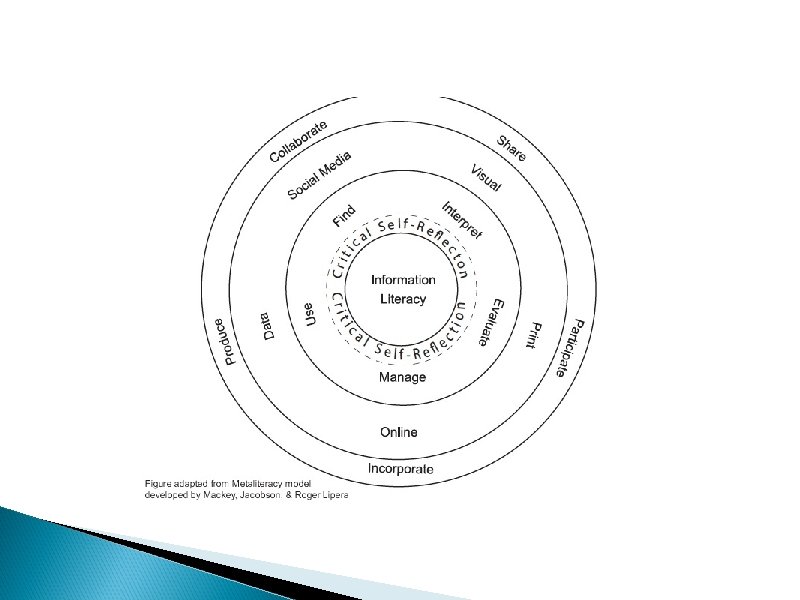
 2015 Information Literacy Framework Shifts in higher education: increased student participation, technology, interdisciplinarity/ context, affective domain Information literacy expansion from skills to complex information ecosystems Move to participatory metacognitive strategies and critical reflection (metaliteracy, self-assessments) Core understandings, knowledge practices, dispositions
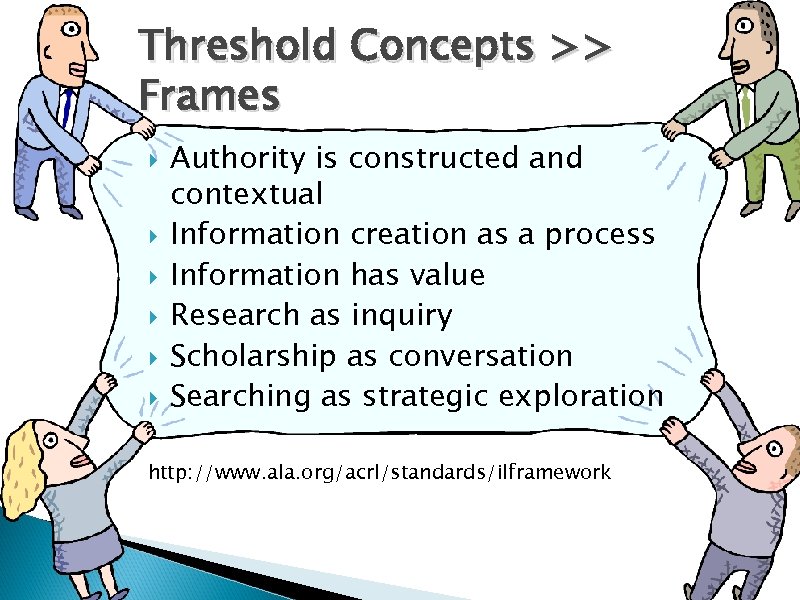 Threshold Concepts >> Frames Authority is constructed and contextual Information creation as a process Information has value Research as inquiry Scholarship as conversation Searching as strategic exploration http: //www. ala. org/acrl/standards/ilframework
 Issues Challenge of change Comprehension and communication Framework versus standards Standardized versus localized Buy-in by stakeholders Self-contained versus collaboration Who “owns” the framework and curriculum? Time to develop and implement curriculum Assessment Need for research
 Parallel Efforts Grants administration University standards AASL learning standards for the 21 st century
 Pre-Planning Read and reflect Identify what you’re doing now Build scenarios Discuss with other librarians Find out what’s happening in the field Identify structures and support
 Ways to Start Incorporating Information Literacy Share curriculum and standards Share student work Share students’ information needs Identify learning modules: databases, primary sources, Internet searching, citation style, consuming research Share research-based practices and processes Collaborate with librarians Focus on student success
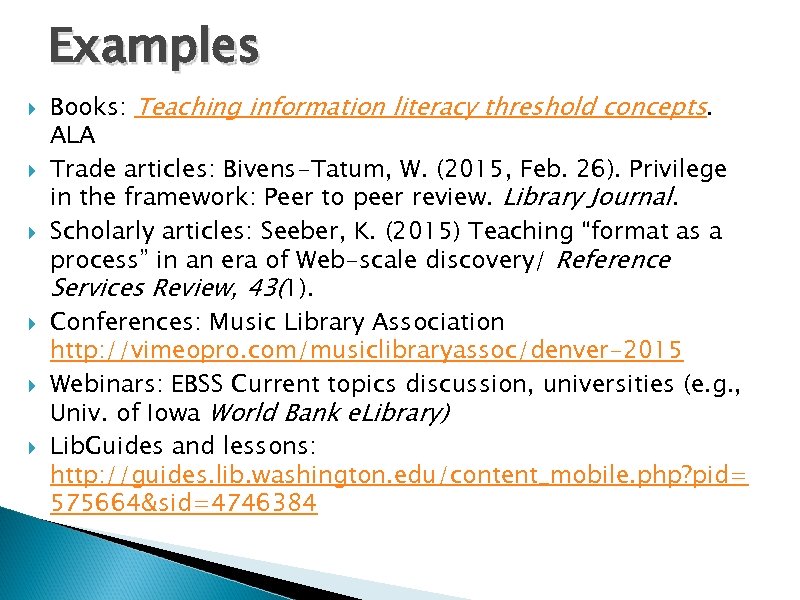 Examples Books: Teaching information literacy threshold concepts. ALA Trade articles: Bivens-Tatum, W. (2015, Feb. 26). Privilege in the framework: Peer to peer review. Library Journal. Scholarly articles: Seeber, K. (2015) Teaching “format as a process” in an era of Web-scale discovery/ Reference Services Review, 43(1). Conferences: Music Library Association http: //vimeopro. com/musiclibraryassoc/denver-2015 Webinars: EBSS Current topics discussion, universities (e. g. , Univ. of Iowa World Bank e. Library) Lib. Guides and lessons: http: //guides. lib. washington. edu/content_mobile. php? pid= 575664&sid=4746384
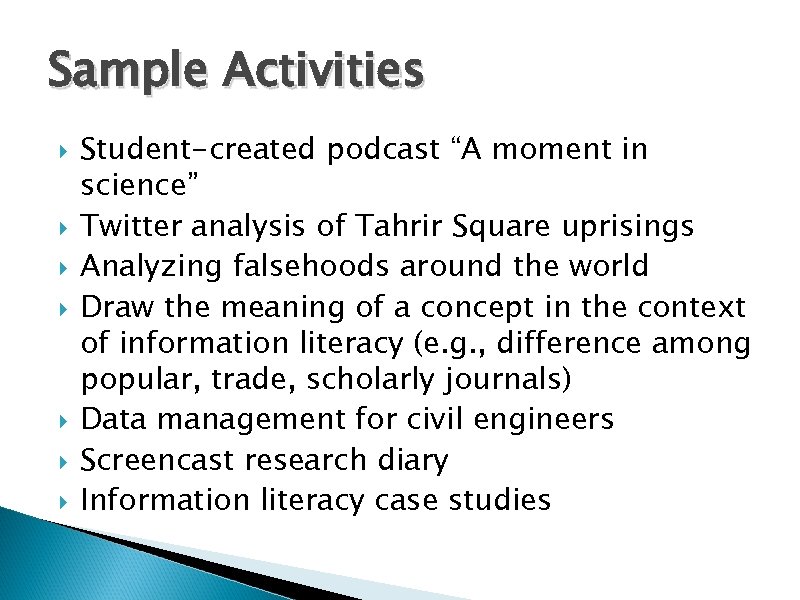 Sample Activities Student-created podcast “A moment in science” Twitter analysis of Tahrir Square uprisings Analyzing falsehoods around the world Draw the meaning of a concept in the context of information literacy (e. g. , difference among popular, trade, scholarly journals) Data management for civil engineers Screencast research diary Information literacy case studies
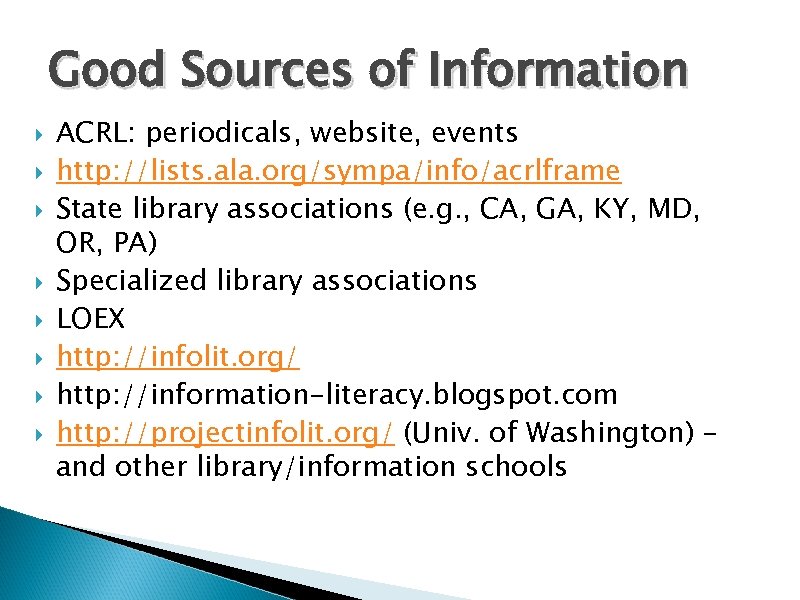 Good Sources of Information ACRL: periodicals, website, events http: //lists. ala. org/sympa/info/acrlframe State library associations (e. g. , CA, GA, KY, MD, OR, PA) Specialized library associations LOEX http: //infolit. org/ http: //information-literacy. blogspot. com http: //projectinfolit. org/ (Univ. of Washington) – and other library/information schools
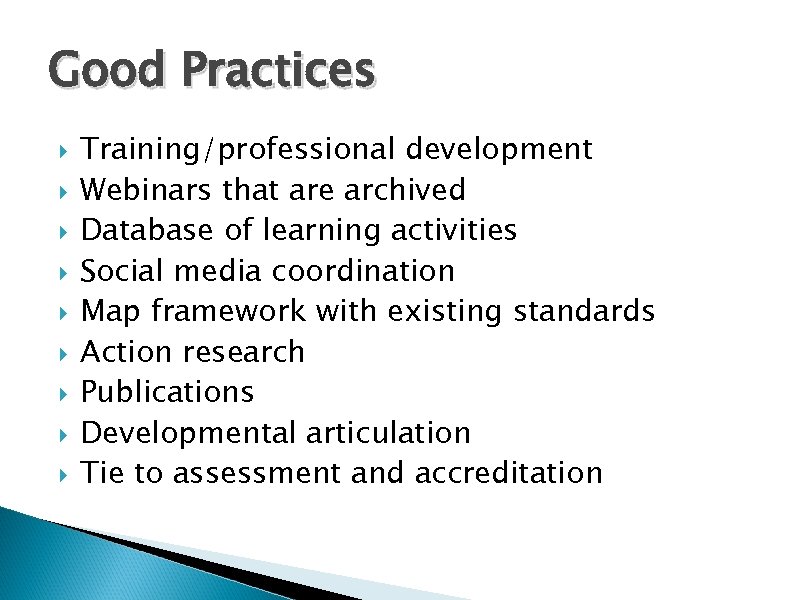 Good Practices Training/professional development Webinars that are archived Database of learning activities Social media coordination Map framework with existing standards Action research Publications Developmental articulation Tie to assessment and accreditation
 More samples https: //laurenwallis. wordpress. com/2015/01 /15/scholarly-conversation-maps/ http: //libguides. usu. edu/faculty http: //www. ee. ucl. ac. uk/~mflanaga/threshol ds. html
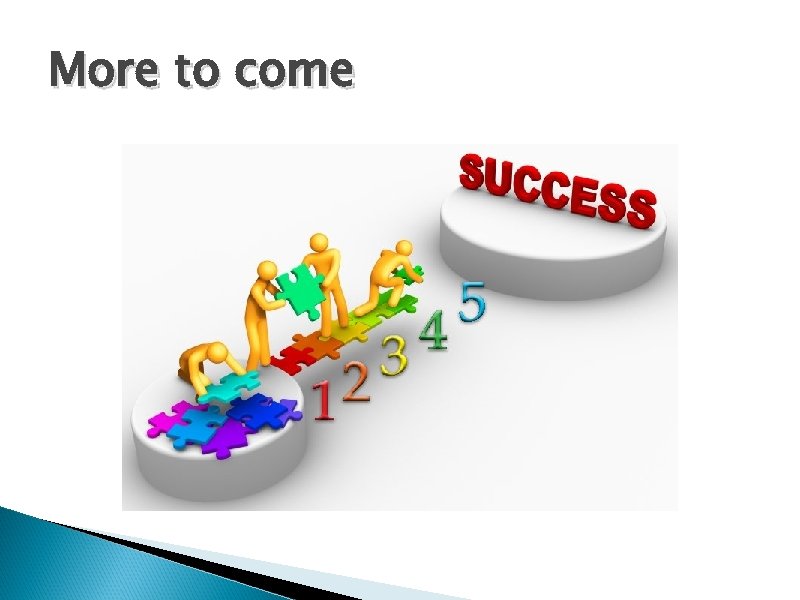 More to come
 Interested in sharing? Contribute to http: //www. MERLOT. org
 Authority is constructed and contextual Information resources reflect their creators’ expertise and credibility, and are evaluated based on the information need and the context in which the information will be used. Authority is constructed in that various communities may recognize different types of authority. It is contextual in that the information need may help to determine the level of authority required.
 Information Creation as a Process Information in any format is produced intentionally to convey a message and is shared via a selected delivery method. The iterative processes of researching, creating, revising, and disseminating information vary, and the resulting product reflects these differences.
 Information has value Information possesses several dimensions of value, including as a commodity, as a means of education, as a means to influence, and as a means of negotiating and understanding the world. Legal and socioeconomic interests influence information production and dissemination.
 Research as inquiry Research is iterative and depends upon asking increasingly complex or new questions whose answers in turn develop additional questions or lines of inquiry in any field.
 Scholarship as Conversation Communities of scholars, researchers, or professionals engage in sustained discourse with new insights and discoveries occurring over time as a result of varied perspectives and interpretations.
 Searching As Strategic Exploration Searching for information is often nonlinear and iterative, requiring the evaluation of a broad range of information sources and the mental flexibility to pursue alternate avenues as new understanding is developed.
 Information creation as a process The information creation process could result in a range of information formats and modes of delivery so experts look beyond format when selecting resources to use. The unique capabilities and constraints of each creation process as well as the specific information need determine how the product is used. Experts recognize that information creations are valued differently in different contexts, such as academia or the workplace. Elements that affect or reflect on the creation, such as a pre- or post-publication editing or reviewing process, may be indicators of quality. The dynamic nature of information creation and dissemination requires ongoing attention to understand evolving creation processes. Recognizing the nature of information creation, experts look to the underlying processes of creation as well as the final product to critically evaluate the usefulness of the information. Novice learners begin to recognize the significance of the creation process, leading them to increasingly sophisticated choices when matching information products with their information needs.
 Information creation as a process Knowledge Practices Learners who are developing their information-literate abilities articulate the capabilities and constraints of information developed through various creation processes; assess the fit between an information product’s creation process and a particular information need; articulate the traditional and emerging processes of information creation and dissemination in a particular discipline; recognize that information may be perceived differently based on the format in which it is packaged; recognize the implications of information formats that contain static or dynamic information; monitor the value that is placed upon different types of information products in varying contexts; transfer knowledge of capabilities and constraints to new types of information products; and develop, in their own creation processes, an understanding that their choices impact the purposes for which the information product will be used and the message it conveys.
 Information creation is a process Dispositions Learners who are developing their information-literate abilities are inclined to seek out characteristics of information products that indicate the underlying creation process; value the process of matching an information need with an appropriate product; accept that the creation of information may begin initially through communicating in a range of formats or modes; accept the ambiguity surrounding the potential value of information creation expressed in emerging formats or modes; resist the tendency to equate format with the underlying creation process; and understand that different methods of information dissemination with different purposes are available for their use.