


 Скачать презентацию From Genetics to Neuroethics Is Imaging Visualizing Human
b0afb1ae4a4790812f28825009e3ad7a.ppt
- Количество слайдов: 45
 From Genetics to Neuroethics: Is Imaging “Visualizing” Human Thought? Judy Illes, Ph. D. Program in Neuroethics Stanford Center for Biomedical Ethics and Department of Pediatrics, Medical Genetics Stanford University EMBO/EMBL Heidelberg, Germany November 2006
 Outline • Definitions and key questions • Imaging capabilities and state of the art • Tackling some key questions • Conclusions
 Neuroethics Adina Roskies, Neuron, 2002 • Ethics of neuroscience; neuroscience of ethics William Safire, The Dana Foundation, 2002: • “… the examination of what is right and wrong and good and bad about the treatment of, perfection of, or unwelcome invasion of and worrisome manipulation of the human brain […] It deals with our consciousness – our sense of self – and as such is central to our being. ” Michael Gazzaniga, The Ethical Brain, 2005: • “… the examination of how we want to deal with the social issues of disease, normality, mortality, lifestyle, and the philosophy of living informed by our understanding of underlying brain mechanisms. ” Judy Illes, Society for Neuroscience, 2006: • A discipline that aligns the exploration and discovery of neurobiological knowledge with human value systems.
 Key Questions Does imaging visualize human thought? Why is neuroethics interested in the question of thought visualization? How does neuroethics interact with this question?
 Outline • Definition and key questions • Imaging capabilities and the state of the art • Tackling the key questions • Conclusions
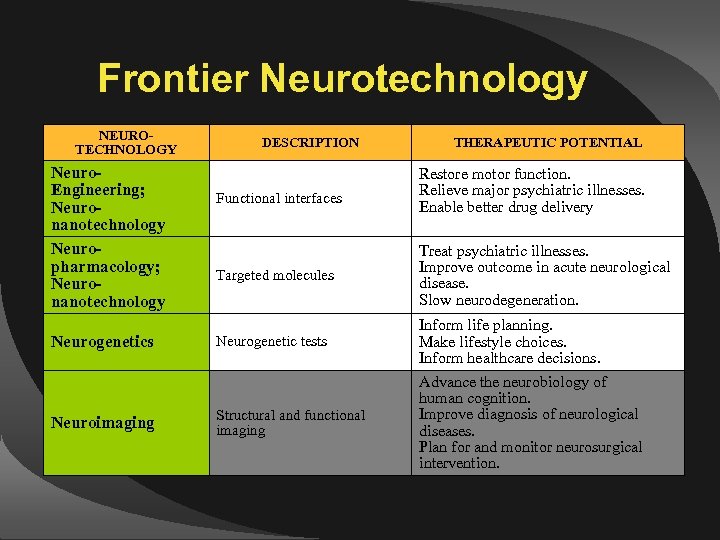 Frontier Neurotechnology NEUROTECHNOLOGY Neuro. Engineering; Neuronanotechnology Neuropharmacology; Neuronanotechnology DESCRIPTION Functional interfaces Targeted molecules Neurogenetic tests Neuroimaging Structural and functional imaging THERAPEUTIC POTENTIAL Restore motor function. Relieve major psychiatric illnesses. Enable better drug delivery Treat psychiatric illnesses. Improve outcome in acute neurological disease. Slow neurodegeneration. Inform life planning. Make lifestyle choices. Inform healthcare decisions. Advance the neurobiology of human cognition. Improve diagnosis of neurological diseases. Plan for and monitor neurosurgical intervention.
 From Antiquity to Present
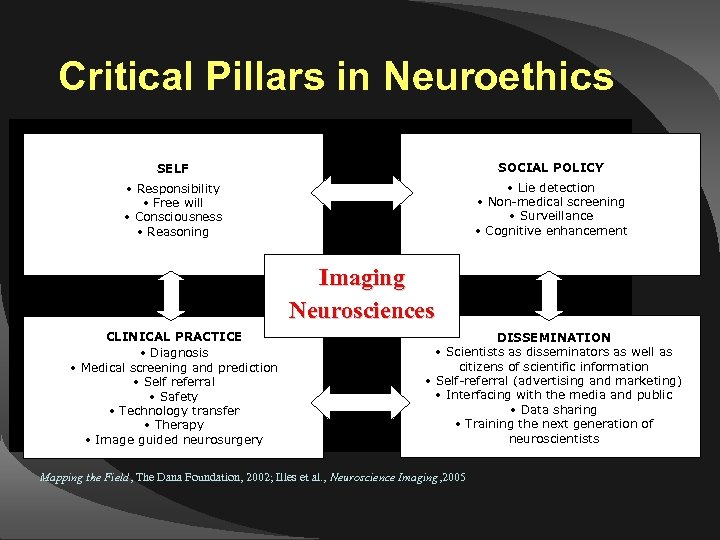 Critical Pillars in Neuroethics SELF SOCIAL POLICY • Responsibility • Free will • Consciousness • Reasoning • Lie detection • Non-medical screening • Surveillance • Cognitive enhancement Imaging Neurosciences CLINICAL PRACTICE • Diagnosis • Medical screening and prediction • Self referral • Safety • Technology transfer • Therapy • Image guided neurosurgery DISSEMINATION • Scientists as disseminators as well as citizens of scientific information • Self-referral (advertising and marketing) • Interfacing with the media and public • Data sharing • Training the next generation of neuroscientists Mapping the Field, The Dana Foundation, 2002; Illes et al. , Neuroscience Imaging, 2005
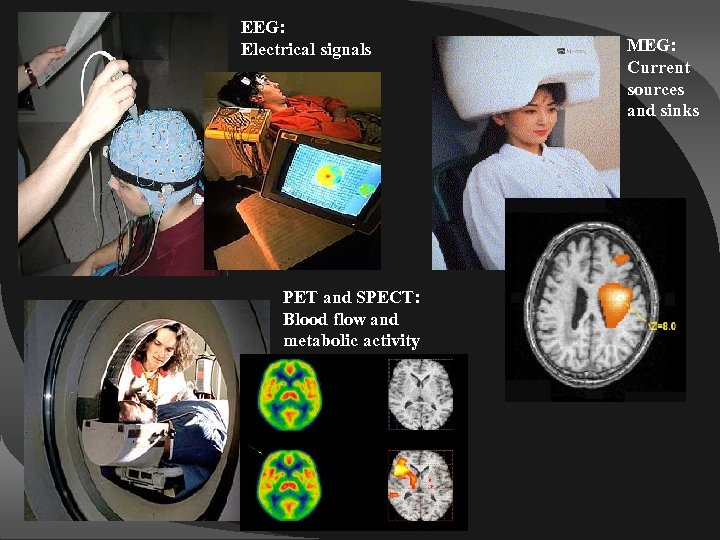 EEG: Electrical signals PET and SPECT: Blood flow and metabolic activity MEG: Current sources and sinks
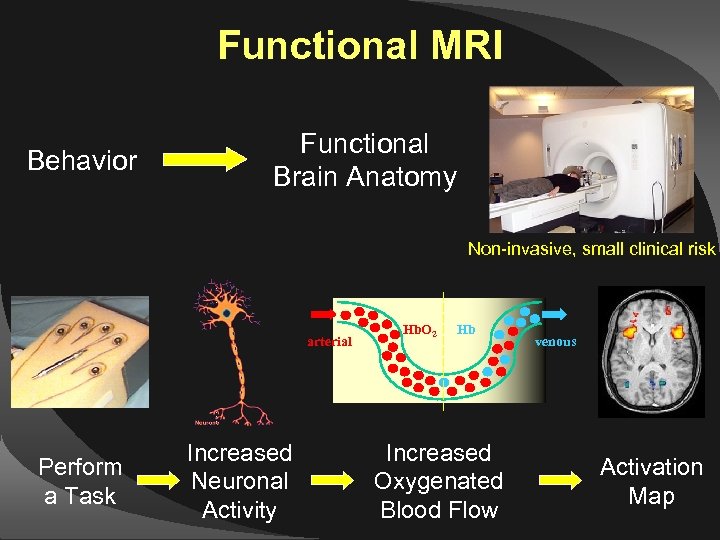 Functional MRI Behavior Functional Brain Anatomy Non-invasive, small clinical risk arterial Perform a Task Increased Neuronal Activity Hb. O 2 Hb Increased Oxygenated Blood Flow venous Activation Map
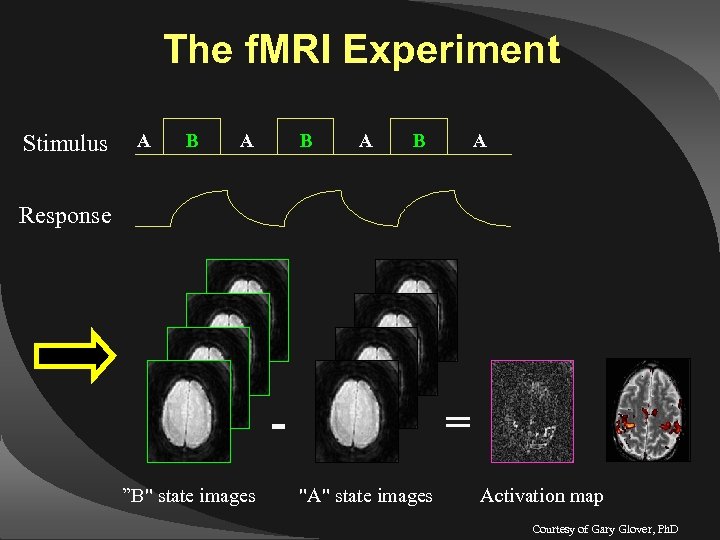 The f. MRI Experiment Stimulus A B A B A Response ”B" state images = "A" state images Activation map Courtesy of Gary Glover, Ph. D
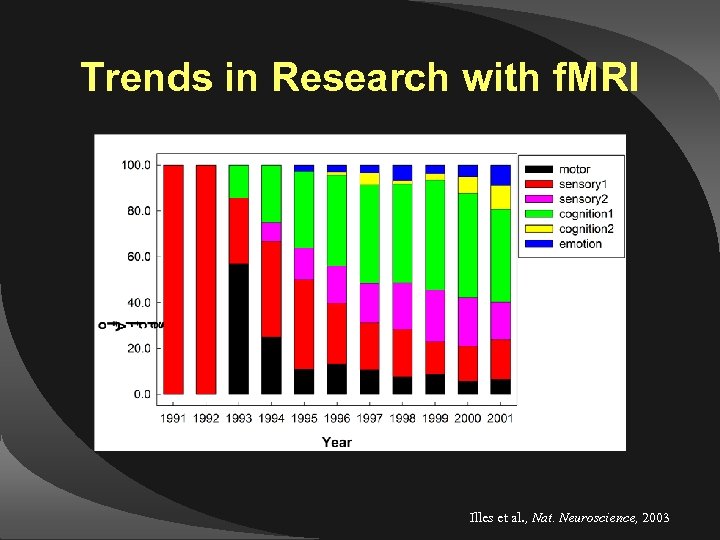 Trends in Research with f. MRI Illes et al. , Nat. Neuroscience, 2003
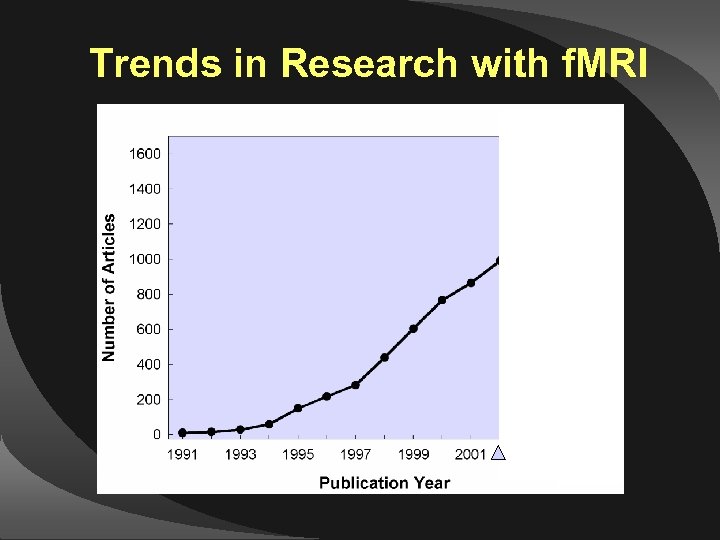 Trends in Research with f. MRI
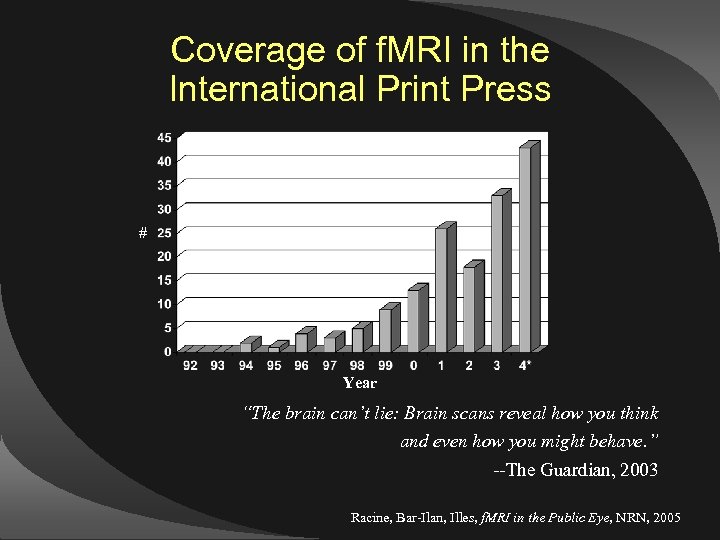 Coverage of f. MRI in the International Print Press # Year “The brain can’t lie: Brain scans reveal how you think and even how you might behave. ” --The Guardian, 2003 Racine, Bar-Ilan, Illes, f. MRI in the Public Eye, NRN, 2005
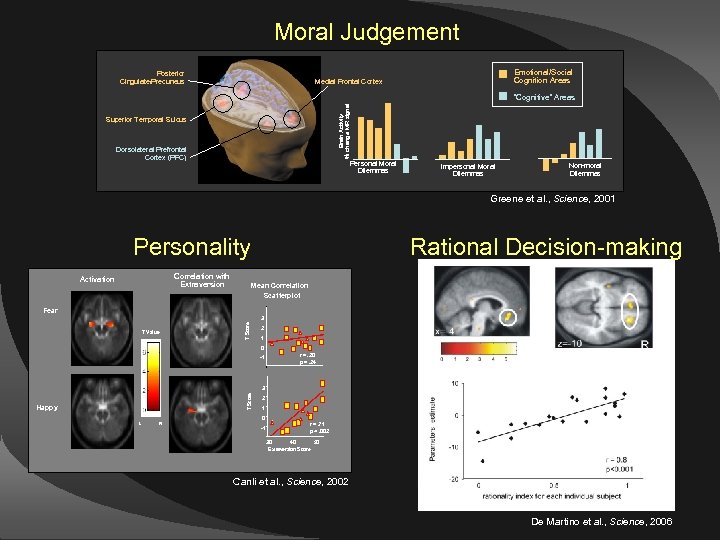 Moral Judgement Posterior Cingulate/Precuneus Emotional/Social Cognition Areas Medial Frontal Cortex Brain Activity % change MR signal “Cognitive” Areas Superior Temporal Sulcus Dorsolateral Prefrontal Cortex (PFC) Personal Moral Dilemmas Impersonal Moral Dilemmas Non-moral Dilemmas Greene et al. , Science, 2001 Rational Decision-making Personality Correlation with Extraversion Activation Mean Correlation Scatterplot Fear T Value T Score 3 2 1 0 -1 r =. 20 p =. 24 T Score 3 Happy L R 2 1 0 -1 r =. 71 p <. 002 30 40 50 Extraversion Score Canli et al. , Science, 2002 De Martino et al. , Science, 2006
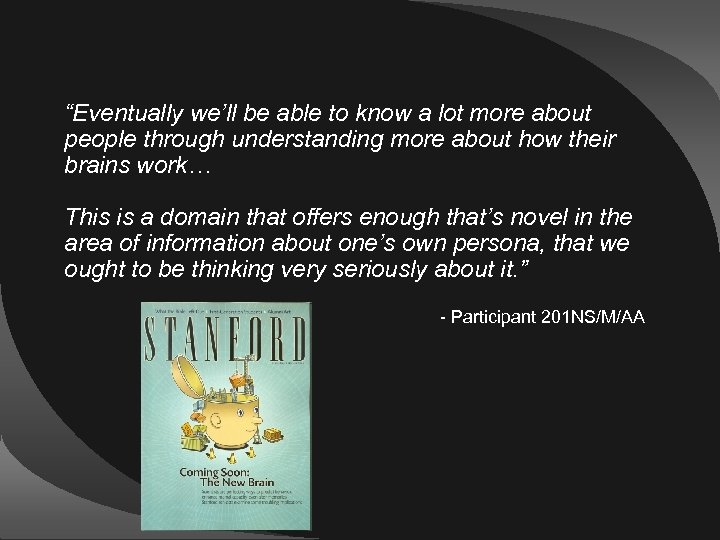 “Eventually we’ll be able to know a lot more about people through understanding more about how their brains work… This is a domain that offers enough that’s novel in the area of information about one’s own persona, that we ought to be thinking very seriously about it. ” - Participant 201 NS/M/AA
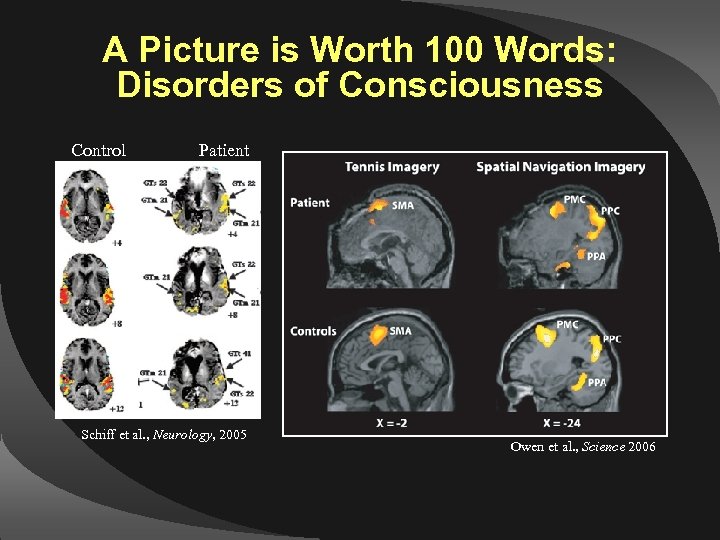 A Picture is Worth 100 Words: Disorders of Consciousness Control Patient Schiff et al. , Neurology, 2005 Owen et al. , Science 2006
 “These results confirm that despite fulfilling the clinical criteria for a diagnosis of vegetative state, this patient retained the ability to understand spoken commands and to respond to them through her brain activity rather than through speech or movement. Moreover, her decision to cooperate with the authors by imagining particular tasks when asked to do so represents a clear act of intention. ” Owen et al. , Science, 2006
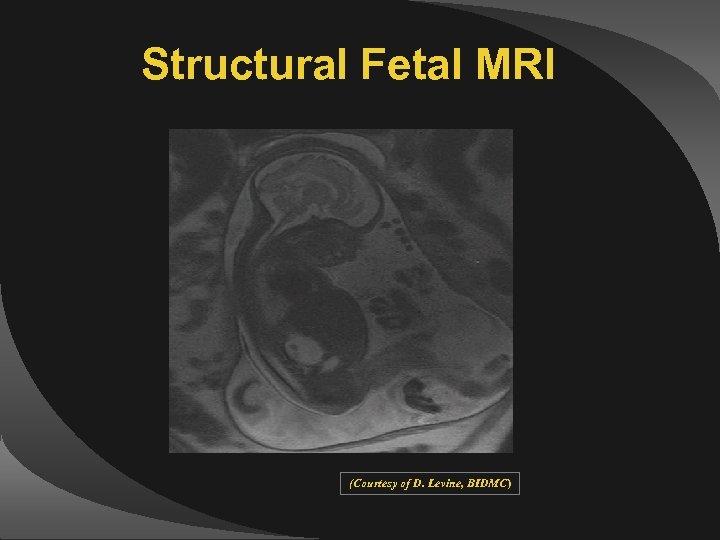 Structural Fetal MRI (Courtesy of D. Levine, BIDMC)
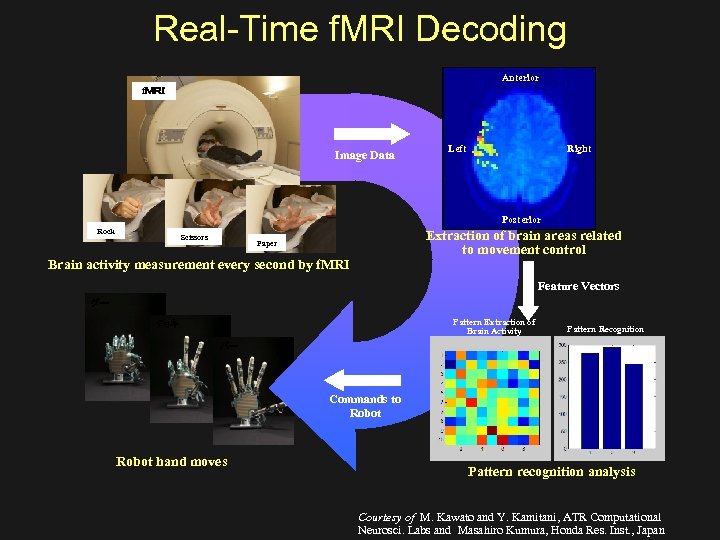 Real-Time f. MRI Decoding Anterior fMRI Image Data Left Right Posterior Rock Scissors Extraction of brain areas related to movement control Paper Brain activity measurement every second by f. MRI Feature Vectors グー Pattern Extraction of Brain Activity チョキ Pattern Recognition パー Commands to Robot hand moves Pattern recognition analysis Courtesy of M. Kawato and Y. Kamitani, ATR Computational Neurosci. Labs and Masahiro Kumura, Honda Res. Inst. , Japan
 Outline • Definitions and key questions • Imaging capabilities and state of the art • Tackling the key questions • Conclusions
 Does imaging visualize human thought?
 Visualizing Human Thought No: Thought is a composite of cognitive functions involving - information processing, - the disposition of an individual to information, and - individual methods of integrating information into an internal schema and responding to it. Imaging does, however, visualize correlates of the cognitive functions that humans harness to create thought.
 Why is neuroethics interested in the question of thought visualization?
 “Far more than our genomes, our brains are us, collectively defining us as human, and individually marking out the special character of our personal capacities, emotions and convictions. ” - Kennedy, Society for Neuroscience, 2003
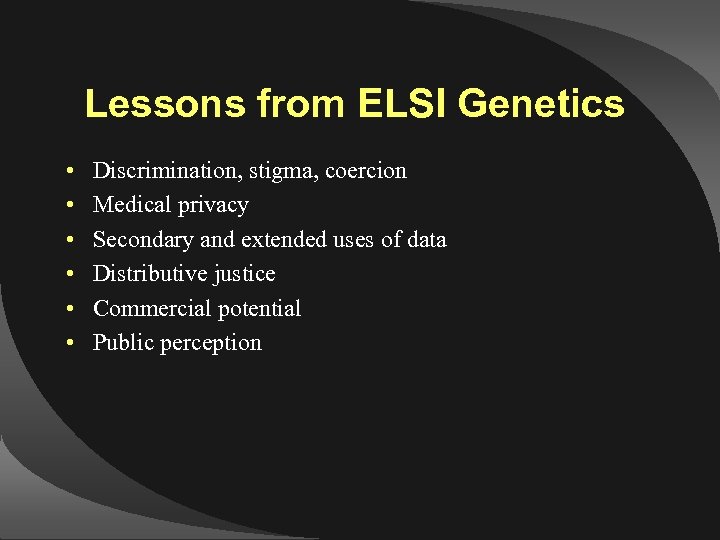 Lessons from ELSI Genetics • • • Discrimination, stigma, coercion Medical privacy Secondary and extended uses of data Distributive justice Commercial potential Public perception
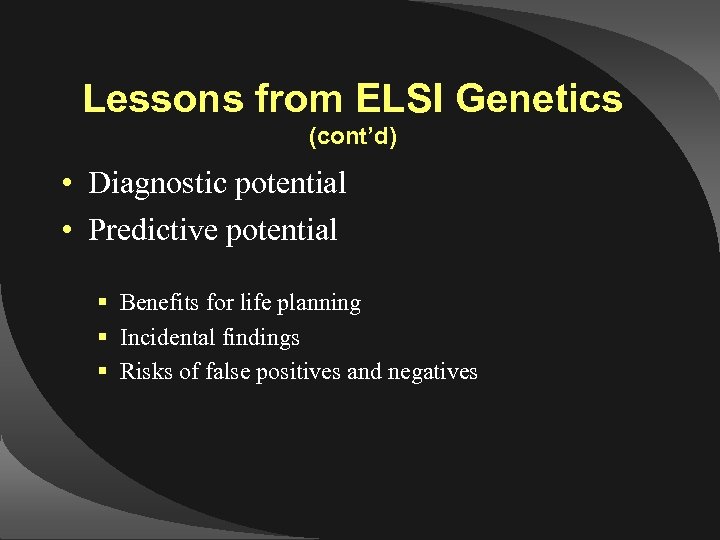 Lessons from ELSI Genetics (cont’d) • Diagnostic potential • Predictive potential § Benefits for life planning § Incidental findings § Risks of false positives and negatives
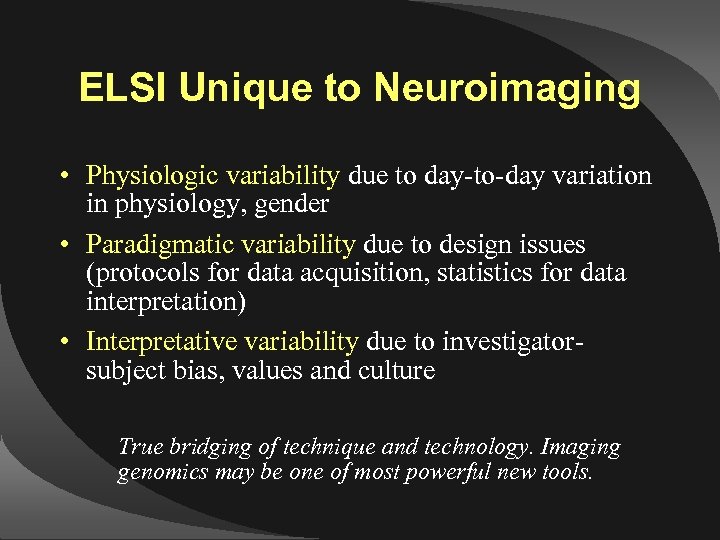 ELSI Unique to Neuroimaging • Physiologic variability due to day-to-day variation in physiology, gender • Paradigmatic variability due to design issues (protocols for data acquisition, statistics for data interpretation) • Interpretative variability due to investigatorsubject bias, values and culture True bridging of technique and technology. Imaging genomics may be one of most powerful new tools.
 ELSI Unique to Neuroimaging (cont’d) • Decision and discovery in that brain is both the seat of ethical decision-making and the target of ethics discovery • Experience of brain health and brain disease is different than the experience of health and disease of other organ systems § Chimeras § Tissue engineering
 Source of Neuroethics Interest in Neuroimaging Unique neuro ethical, legal and social implications.
 How does neuroethics interact with the question of thought visualization with imaging?
 Interaction of Neuroethics and Neuroimaging • Identify pragmatic starting points for imaging and alternatives for resolution of difficult ethical challenges through a negotiated scientific-social process • Empower, not encumber the scientific process
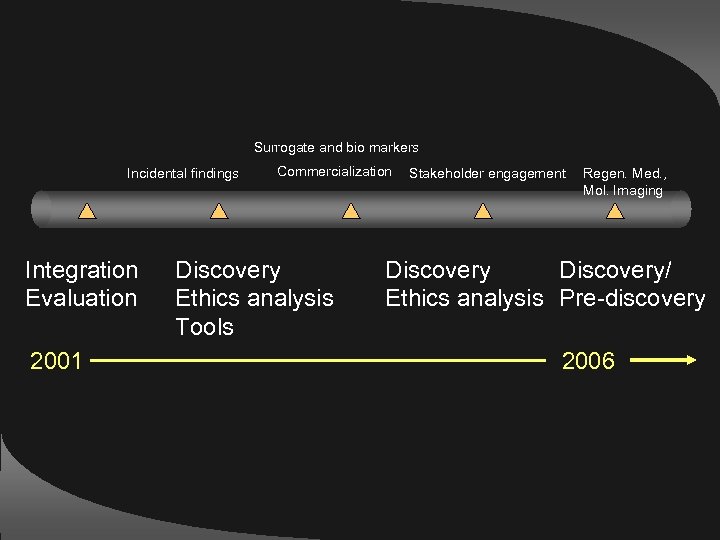 Surrogate and bio markers Incidental findings Integration Evaluation 2001 Commercialization Discovery Ethics analysis Tools Stakeholder engagement Regen. Med. , Mol. Imaging Discovery/ Ethics analysis Pre-discovery 2006
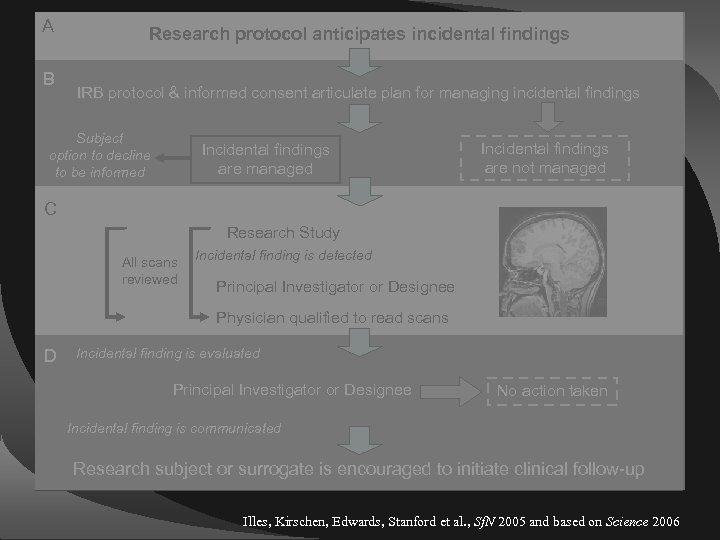 A B Research protocol anticipates incidental findings IRB protocol & informed consent articulate plan for managing incidental findings Subject option to decline to be informed Incidental findings are managed Incidental findings are not managed C Research Study All scans reviewed Incidental finding is detected Principal Investigator or Designee Physician qualified to read scans D Incidental finding is evaluated Principal Investigator or Designee No action taken Incidental finding is communicated Research subject or surrogate is encouraged to initiate clinical follow-up Illes, Kirschen, Edwards, Stanford et al. , Sf. N 2005 and based on Science 2006
 Interaction of Neuroethics and Neuroimaging (cont’d) Proactively engage deliberation from multiple stakeholders at multiple junctures Improve science literacy and communication
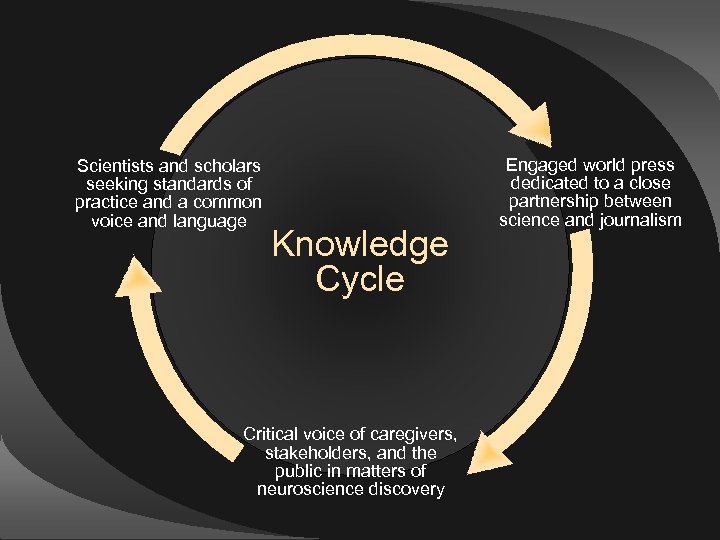 Scientists and scholars seeking standards of practice and a common voice and language Knowledge Cycle Critical voice of caregivers, stakeholders, and the public in matters of neuroscience discovery Engaged world press dedicated to a close partnership between science and journalism
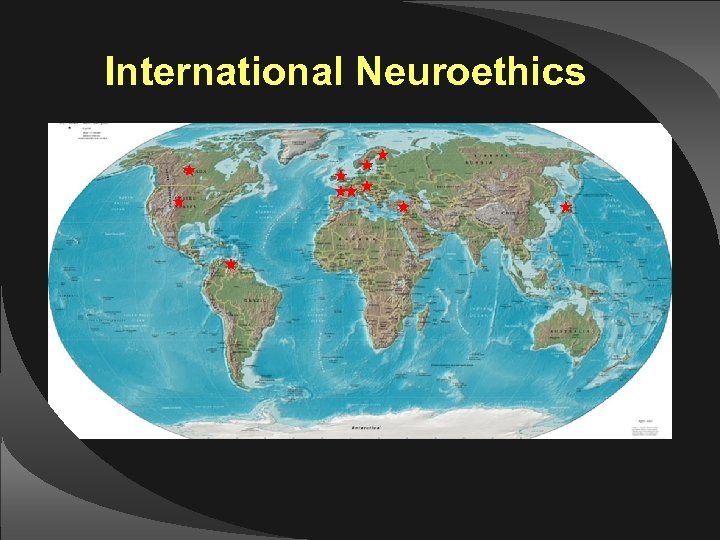 International Neuroethics
 International Neuroethics Network an arm of the Neuroethics Society To foster international collaboration in neuroethics through the identification of common priorities and joint funding opportunities.
 Outline • Definitions and key questions • Imaging capabilities and the state-of-theart • Tackling the key questions • Conclusions
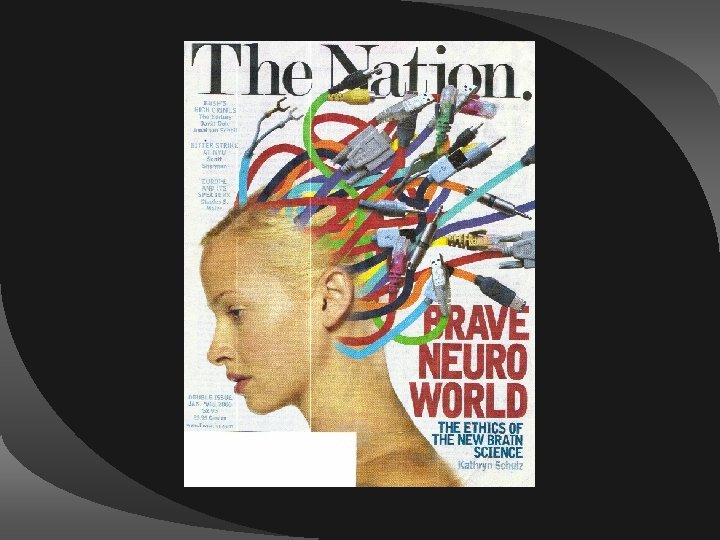
 Conclusions There are compelling reasons for anticipating neuroethical issues at the bench, at the bedside, and in the public domain.
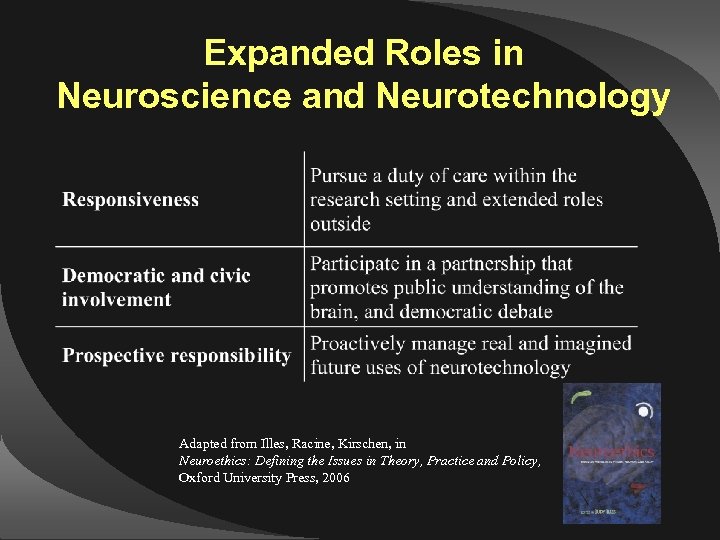 Expanded Roles in Neuroscience and Neurotechnology Adapted from Illes, Racine, Kirschen, in Neuroethics: Defining the Issues in Theory, Practice and Policy, Oxford University Press, 2006
 Roles for Neuroethicists • Draw upon history of bioethics, genetics and other disciplines to inform the unique challenges that are raised by the opportunity to study and probe the brain. • Keep up with the pulse of neuroscience and pursue an ethically coherent agenda based on the needs of the neuroscience community and its interface with society. • Bridge cultural, linguistic and disciplinary barriers • Develop capacity on an internationally relevant scale. • Develop research, resource and reference tools that are flexible, practical and useful.
 Acknowledgements Bruce Arnow Vivian Chin Mildred Cho Pamela S. -Desmond Ray De Vries Margaret Eaton Martha Farah Agnieszka Jaworska Gary Glover Mike Grecius Henry T. (Hank) Greely Katrina Karkazis Matthew P. Kirschen Sophia Lombera NIH RO 1 #NS 045831 & #CSI 8 -17 -04 Allyson Mackey The National Science Foundation The Dana Foundation Gladys Maestre The Greenwall Foundation David Magnus The Henry J. Kaiser Foundation Eric Racine The New York Academy of Sciences Allyson Rosen The Children’s Health Initiative at Stanford Jennifer Singh Jane Stewart HFM Van der Loos Adri, Kiah Van der Loos RO 1 Advisory Board Many others collaborators http: //neuroethics. stanford. edu