


 Скачать презентацию From Farmers to Merchants Voluntary Conversions and Diaspora
dd0f38930da22c446dee16b183950fb0.ppt
- Количество слайдов: 34
 From Farmers to Merchants, Voluntary Conversions, and Diaspora: A Human Capital Interpretation of Jewish History Maristella Botticini Boston University, Universita’ di Torino CEPR & Zvi Eckstein Tel Aviv University, U. of Minnesota, Federal Reserve Bank of Minneapolis CEPR 1
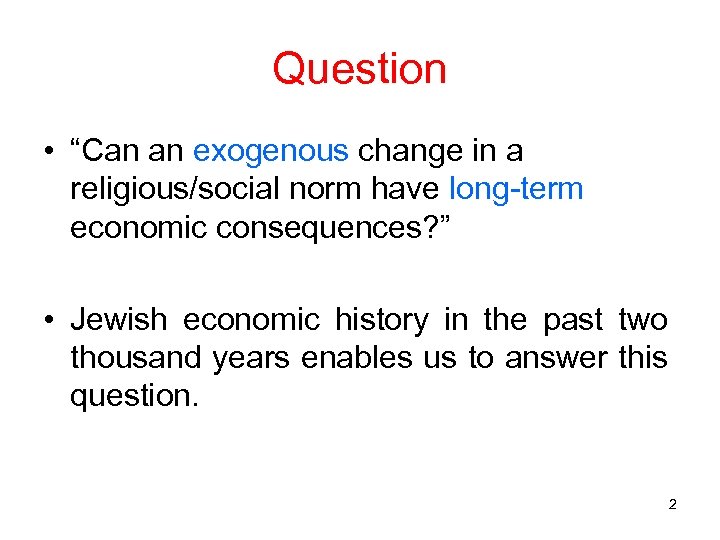 Question • “Can an exogenous change in a religious/social norm have long-term economic consequences? ” • Jewish economic history in the past two thousand years enables us to answer this question. 2
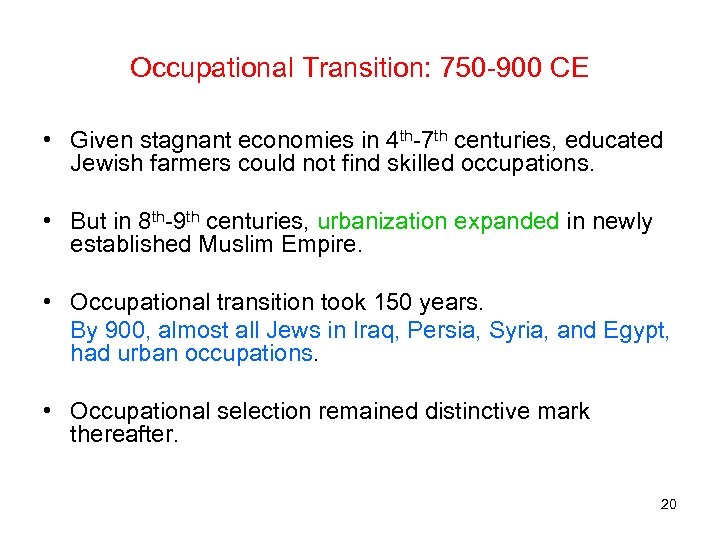
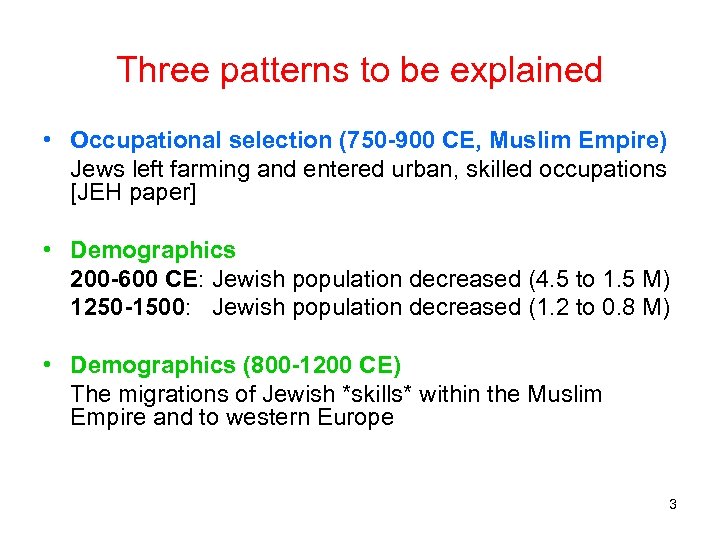 Three patterns to be explained • Occupational selection (750 -900 CE, Muslim Empire) Jews left farming and entered urban, skilled occupations [JEH paper] • Demographics 200 -600 CE: Jewish population decreased (4. 5 to 1. 5 M) 1250 -1500: Jewish population decreased (1. 2 to 0. 8 M) • Demographics (800 -1200 CE) The migrations of Jewish *skills* within the Muslim Empire and to western Europe 3
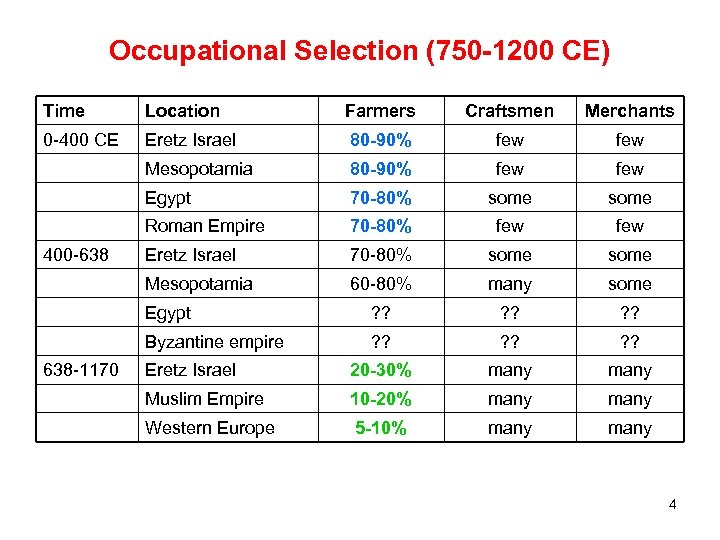 Occupational Selection (750 -1200 CE) Time Location Farmers Craftsmen Merchants 0 -400 CE Eretz Israel 80 -90% few Mesopotamia 80 -90% few Egypt 70 -80% some Roman Empire 70 -80% few Eretz Israel 70 -80% some Mesopotamia 60 -80% many some Egypt ? ? Byzantine empire ? ? Eretz Israel 20 -30% many Muslim Empire 10 -20% many Western Europe 5 -10% many 400 -638 638 -1170 4
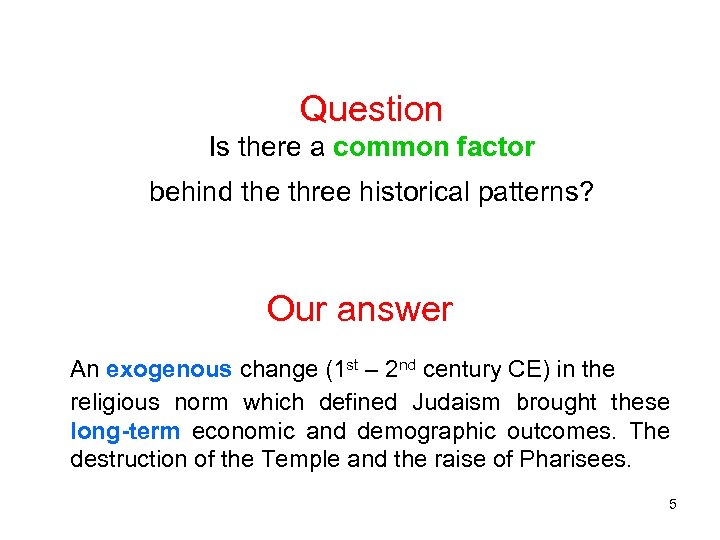 Question Is there a common factor behind the three historical patterns? Our answer An exogenous change (1 st – 2 nd century CE) in the religious norm which defined Judaism brought these long-term economic and demographic outcomes. The destruction of the Temple and the raise of Pharisees. 5
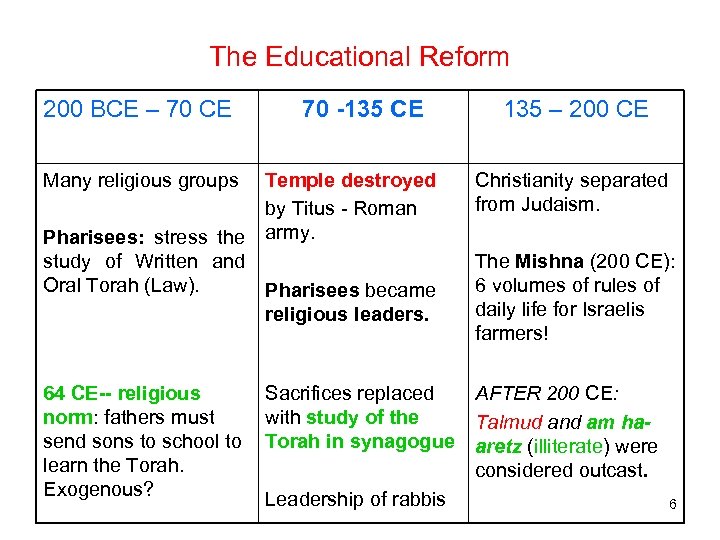 The Educational Reform 200 BCE – 70 CE 70 -135 CE Many religious groups 135 – 200 CE Temple destroyed by Titus - Roman Pharisees: stress the army. study of Written and Oral Torah (Law). Pharisees became religious leaders. Christianity separated from Judaism. 64 CE-- religious norm: fathers must send sons to school to learn the Torah. Exogenous? AFTER 200 CE: Talmud and am haaretz (illiterate) were considered outcast. Sacrifices replaced with study of the Torah in synagogue Leadership of rabbis The Mishna (200 CE): 6 volumes of rules of daily life for Israelis farmers! 6
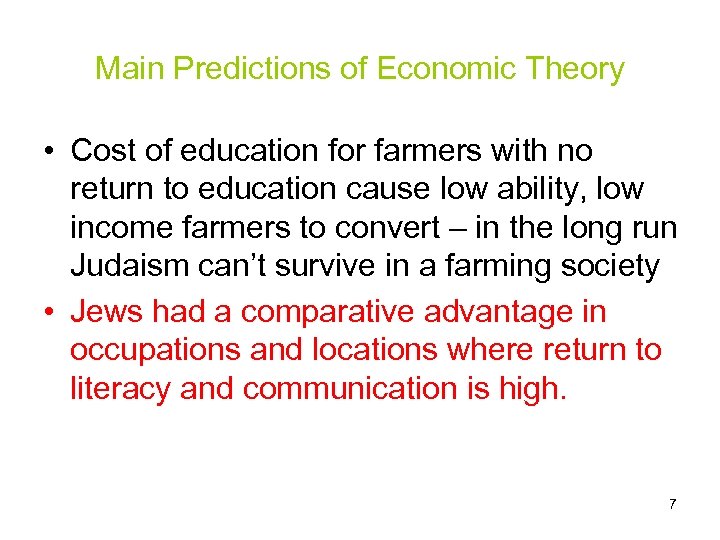 Main Predictions of Economic Theory • Cost of education for farmers with no return to education cause low ability, low income farmers to convert – in the long run Judaism can’t survive in a farming society • Jews had a comparative advantage in occupations and locations where return to literacy and communication is high. 7
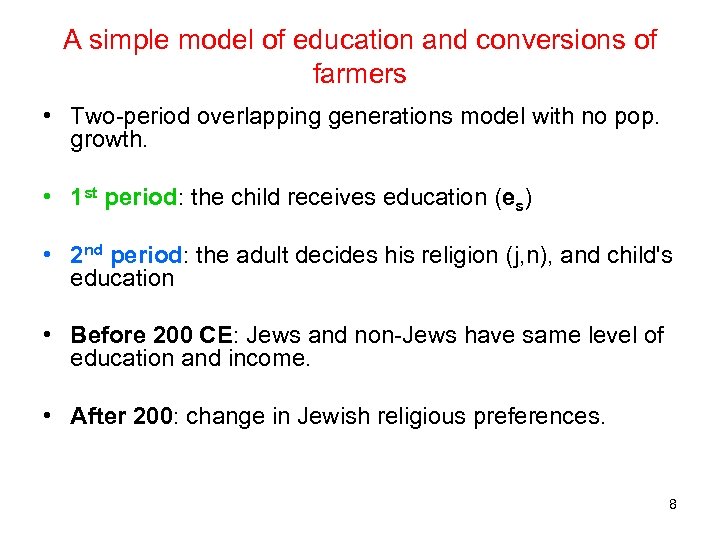 A simple model of education and conversions of farmers • Two-period overlapping generations model with no pop. growth. • 1 st period: the child receives education (es) • 2 nd period: the adult decides his religion (j, n), and child's education • Before 200 CE: Jews and non-Jews have same level of education and income. • After 200: change in Jewish religious preferences. 8
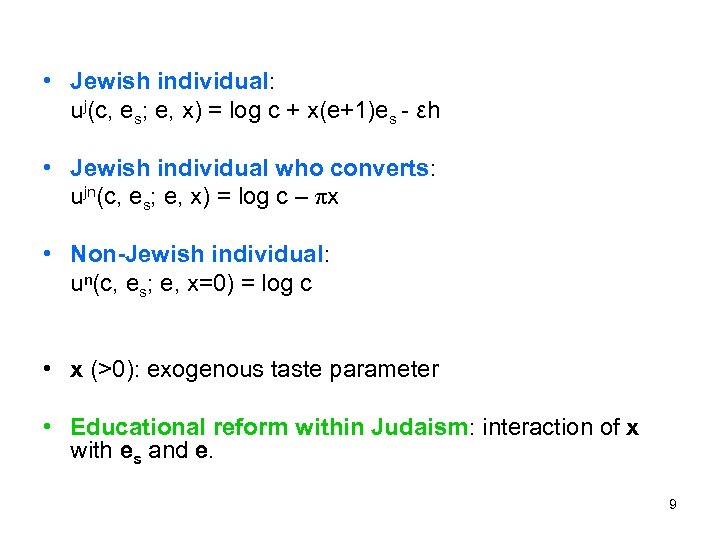 • Jewish individual: uj(c, es; e, x) = log c + x(e+1)es - εh • Jewish individual who converts: ujn(c, es; e, x) = log c – πx • Non-Jewish individual: uⁿ(c, es; e, x=0) = log c • x (>0): exogenous taste parameter • Educational reform within Judaism: interaction of x with es and e. 9
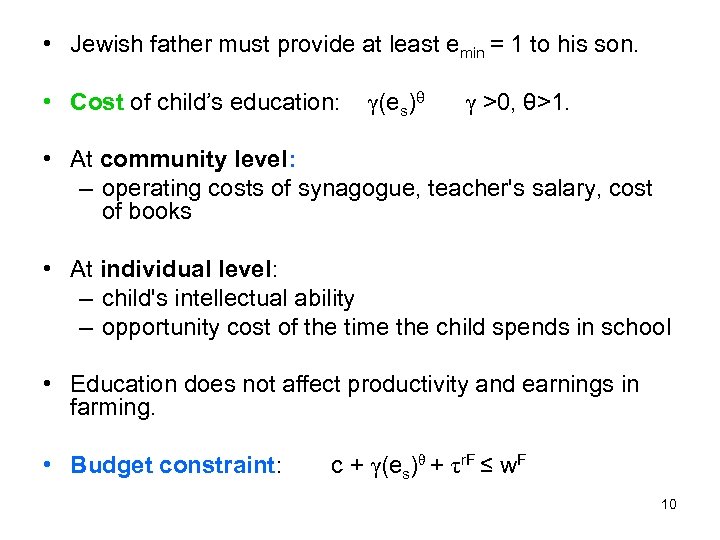 • Jewish father must provide at least emin = 1 to his son. • Cost of child’s education: γ(es)θ γ >0, θ>1. • At community level: – operating costs of synagogue, teacher's salary, cost of books • At individual level: – child's intellectual ability – opportunity cost of the time the child spends in school • Education does not affect productivity and earnings in farming. • Budget constraint: c + γ(es)θ + τr. F ≤ w. F 10
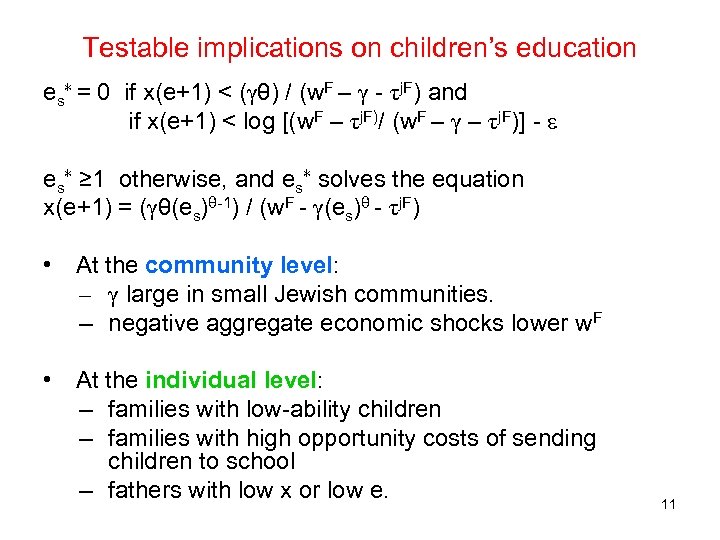 Testable implications on children’s education es∗ = 0 if x(e+1) < (γθ) / (w. F – γ - τj. F) and if x(e+1) < log [(w. F – τj. F)/ (w. F – γ – τj. F)] - es∗ ≥ 1 otherwise, and es∗ solves the equation x(e+1) = (γθ(es)θ-1) / (w. F - γ(es)θ - τj. F) • At the community level: – γ large in small Jewish communities. – negative aggregate economic shocks lower w. F • At the individual level: – families with low-ability children – families with high opportunity costs of sending children to school – fathers with low x or low e. 11
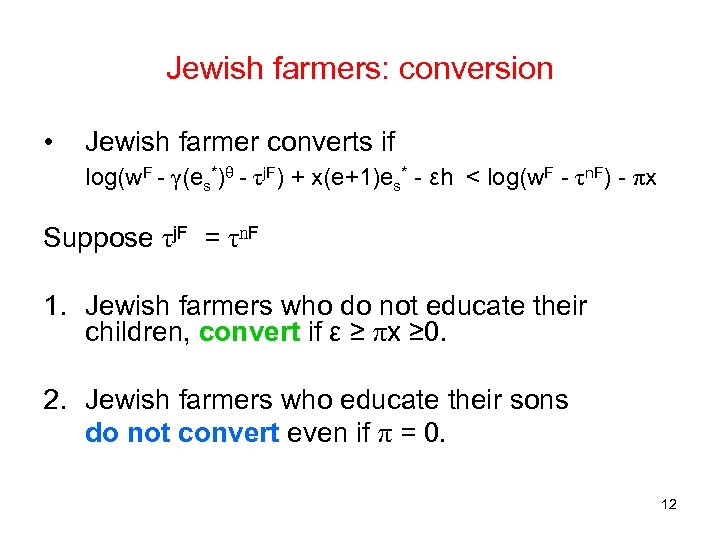 Jewish farmers: conversion • Jewish farmer converts if log(w. F - γ(es*)θ - τj. F) + x(e+1)es* - εh < log(w. F - τn. F) - πx Suppose τj. F = τn. F 1. Jewish farmers who do not educate their children, convert if ε ≥ πx ≥ 0. 2. Jewish farmers who educate their sons do not convert even if π = 0. 12
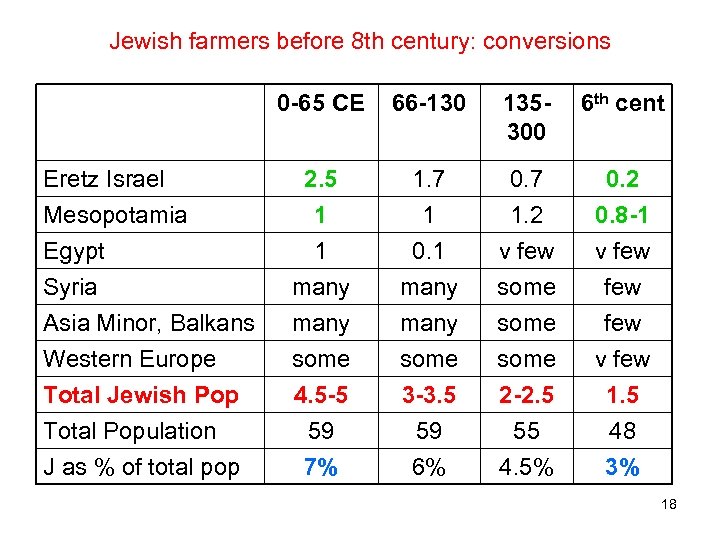
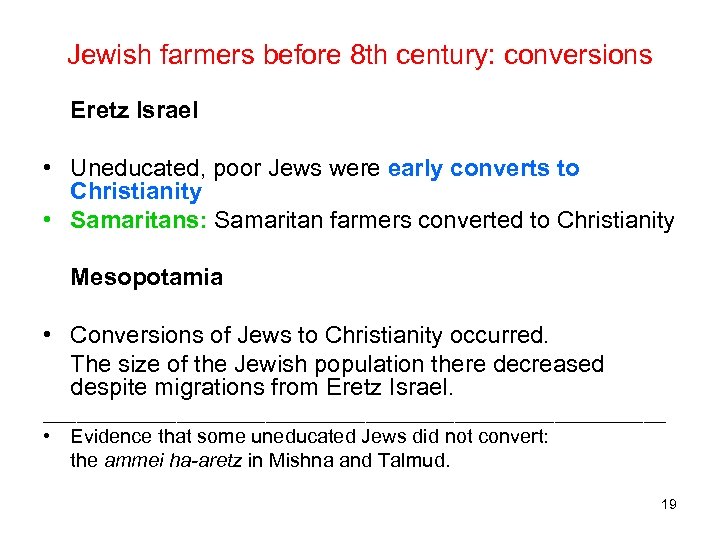
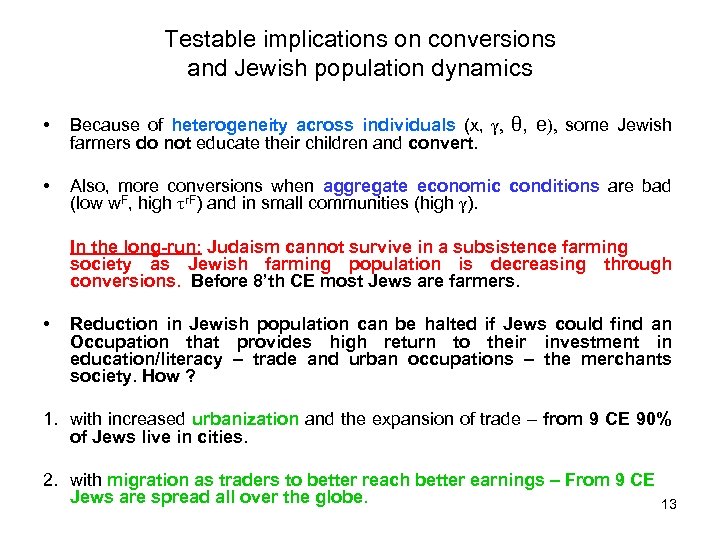 Testable implications on conversions and Jewish population dynamics • Because of heterogeneity across individuals (x, γ, θ, e), some Jewish farmers do not educate their children and convert. • Also, more conversions when aggregate economic conditions are bad (low w. F, high τr. F) and in small communities (high γ). In the long-run: Judaism cannot survive in a subsistence farming society as Jewish farming population is decreasing through conversions. Before 8’th CE most Jews are farmers. • Reduction in Jewish population can be halted if Jews could find an Occupation that provides high return to their investment in education/literacy – trade and urban occupations – the merchants society. How ? 1. with increased urbanization and the expansion of trade – from 9 CE 90% of Jews live in cities. 2. with migration as traders to better reach better earnings – From 9 CE Jews are spread all over the globe. 13
 Jewish farmers before 8 th century: children’s education • In a subsistence farming economy, the investment in children's education is a religious sacrifice with no economic return. • Safrai (1994): in Roman Palestine – food expenses amounted to about 40 -50 percent of a family's total expenses. – taxes took an additional 30 percent – little was left to buy other items such as clothing, books, and paying for the teacher's salary. 14
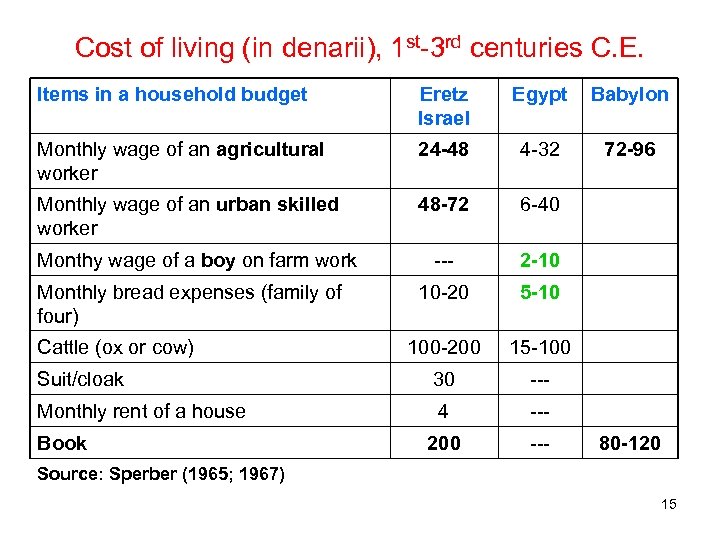 Cost of living (in denarii), 1 st-3 rd centuries C. E. Items in a household budget Eretz Israel Egypt Babylon Monthly wage of an agricultural worker 24 -48 4 -32 72 -96 Monthly wage of an urban skilled worker 48 -72 6 -40 --- 2 -10 10 -20 5 -10 100 -200 15 -100 Suit/cloak 30 --- Monthly rent of a house 4 --- 200 --- Monthy wage of a boy on farm work Monthly bread expenses (family of four) Cattle (ox or cow) Book 80 -120 Source: Sperber (1965; 1967) 15
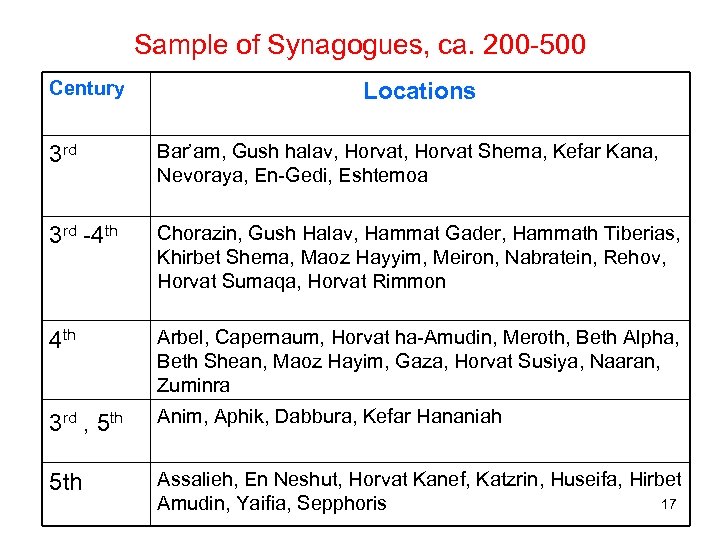
 • Despite being very costly, primary education became widespread in the Jewish communities from 3 rd to 7 th century. • EVIDENCE? • Many rulings and discussions in Talmud (see our JEH paper). Yarchi-kalaa in Babylon. • The wealth of archeological synagogues (new HERE). findings on 16
 Sample of Synagogues, ca. 200 -500 Century Locations 3 rd Bar’am, Gush halav, Horvat Shema, Kefar Kana, Nevoraya, En-Gedi, Eshtemoa 3 rd -4 th Chorazin, Gush Halav, Hammat Gader, Hammath Tiberias, Khirbet Shema, Maoz Hayyim, Meiron, Nabratein, Rehov, Horvat Sumaqa, Horvat Rimmon 4 th Arbel, Capernaum, Horvat ha-Amudin, Meroth, Beth Alpha, Beth Shean, Maoz Hayim, Gaza, Horvat Susiya, Naaran, Zuminra 3 rd , 5 th Anim, Aphik, Dabbura, Kefar Hananiah 5 th Assalieh, En Neshut, Horvat Kanef, Katzrin, Huseifa, Hirbet 17 Amudin, Yaifia, Sepphoris
 Jewish farmers before 8 th century: conversions 0 -65 CE Eretz Israel Mesopotamia Egypt Syria Asia Minor, Balkans Western Europe Total Jewish Pop Total Population J as % of total pop 66 -130 135300 6 th cent 2. 5 1 1. 7 1 0. 7 1. 2 0. 8 -1 1 many some 4. 5 -5 59 7% 0. 1 many some 3 -3. 5 59 6% v few some 2 -2. 5 55 4. 5% v few few v few 1. 5 48 3% 18
 Jewish farmers before 8 th century: conversions Eretz Israel • Uneducated, poor Jews were early converts to Christianity • Samaritans: Samaritan farmers converted to Christianity Mesopotamia • Conversions of Jews to Christianity occurred. The size of the Jewish population there decreased despite migrations from Eretz Israel. ____________________________ • Evidence that some uneducated Jews did not convert: the ammei ha-aretz in Mishna and Talmud. 19
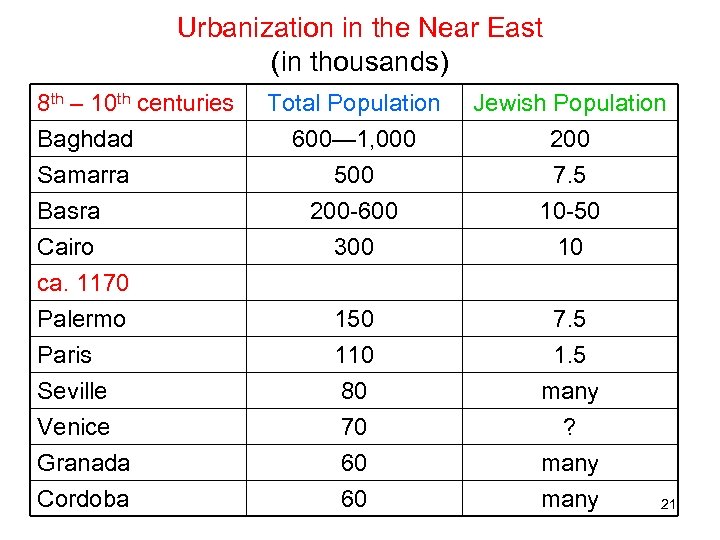
 Occupational Transition: 750 -900 CE • Given stagnant economies in 4 th-7 th centuries, educated Jewish farmers could not find skilled occupations. • But in 8 th-9 th centuries, urbanization expanded in newly established Muslim Empire. • Occupational transition took 150 years. By 900, almost all Jews in Iraq, Persia, Syria, and Egypt, had urban occupations. • Occupational selection remained distinctive mark thereafter. 20
 Urbanization in the Near East (in thousands) 8 th – 10 th centuries Baghdad Samarra Basra Cairo ca. 1170 Palermo Paris Seville Venice Granada Cordoba Total Population 600— 1, 000 500 200 -600 Jewish Population 200 7. 5 10 -50 300 10 150 110 80 70 60 60 7. 5 1. 5 many ? many 21
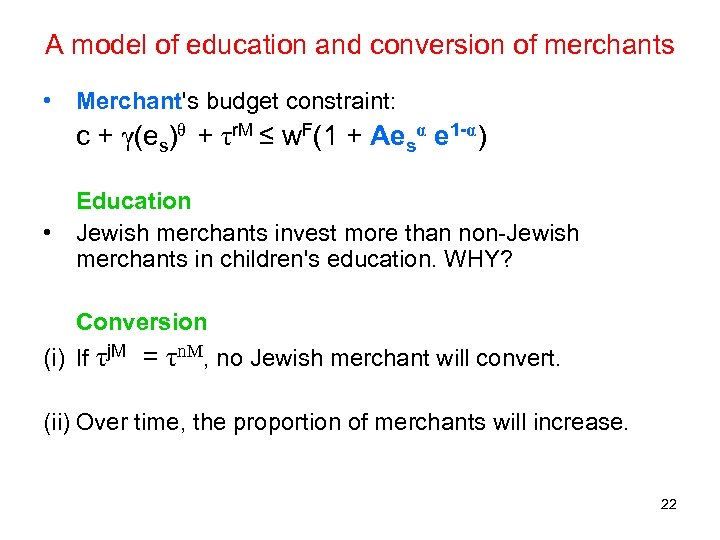 A model of education and conversion of merchants • Merchant's budget constraint: c + γ(es)θ + τr. M ≤ w. F(1 + Aesα e 1 -α) Education • Jewish merchants invest more than non-Jewish merchants in children's education. WHY? Conversion (i) If τj. M = τn. M, no Jewish merchant will convert. (ii) Over time, the proportion of merchants will increase. 22
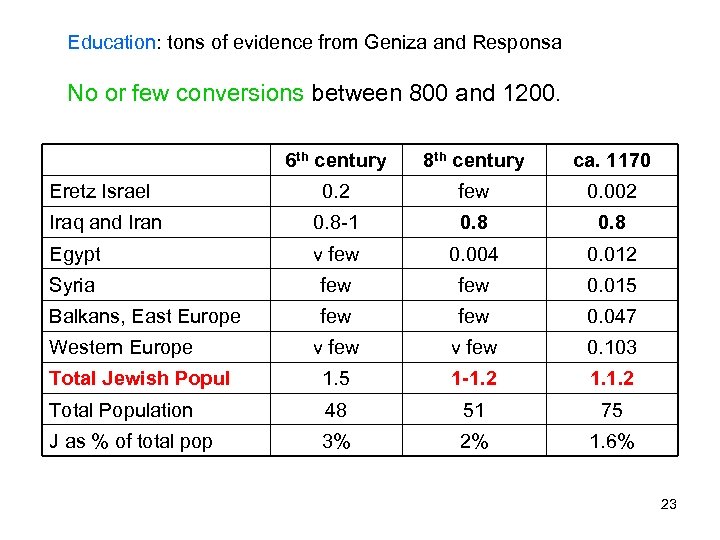 Education: tons of evidence from Geniza and Responsa No or few conversions between 800 and 1200. 6 th century 8 th century ca. 1170 0. 2 few 0. 002 Iraq and Iran 0. 8 -1 0. 8 Egypt v few 0. 004 0. 012 Syria few 0. 015 Balkans, East Europe few 0. 047 v few 0. 103 Total Jewish Popul 1. 5 1 -1. 2 1. 1. 2 Total Population 48 51 75 J as % of total pop 3% 2% 1. 6% Eretz Israel Western Europe 23
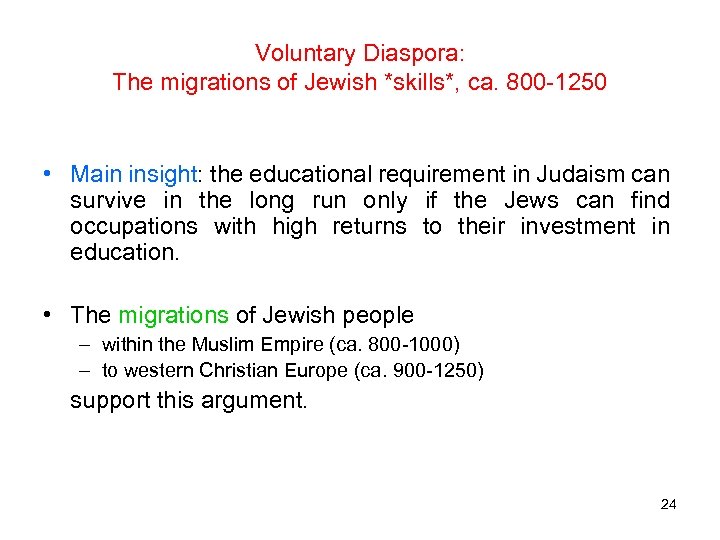 Voluntary Diaspora: The migrations of Jewish *skills*, ca. 800 -1250 • Main insight: the educational requirement in Judaism can survive in the long run only if the Jews can find occupations with high returns to their investment in education. • The migrations of Jewish people – within the Muslim Empire (ca. 800 -1000) – to western Christian Europe (ca. 900 -1250) support this argument. 24
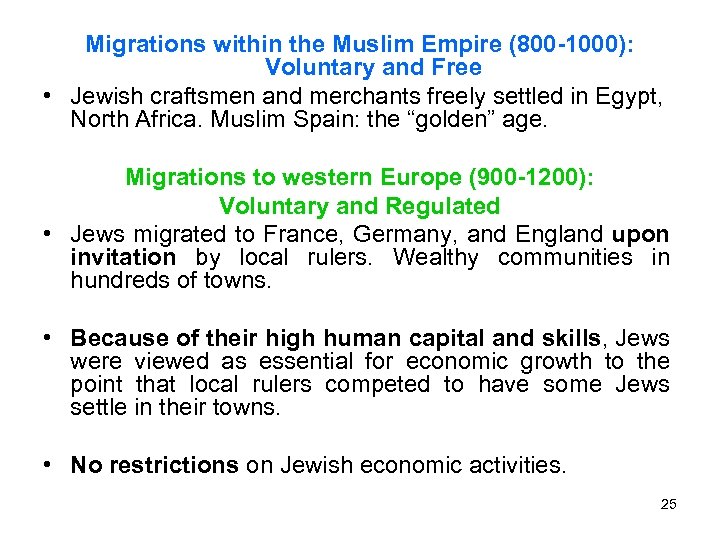 Migrations within the Muslim Empire (800 -1000): Voluntary and Free • Jewish craftsmen and merchants freely settled in Egypt, North Africa. Muslim Spain: the “golden” age. Migrations to western Europe (900 -1200): Voluntary and Regulated • Jews migrated to France, Germany, and England upon invitation by local rulers. Wealthy communities in hundreds of towns. • Because of their high human capital and skills, Jews were viewed as essential for economic growth to the point that local rulers competed to have some Jews settle in their towns. • No restrictions on Jewish economic activities. 25
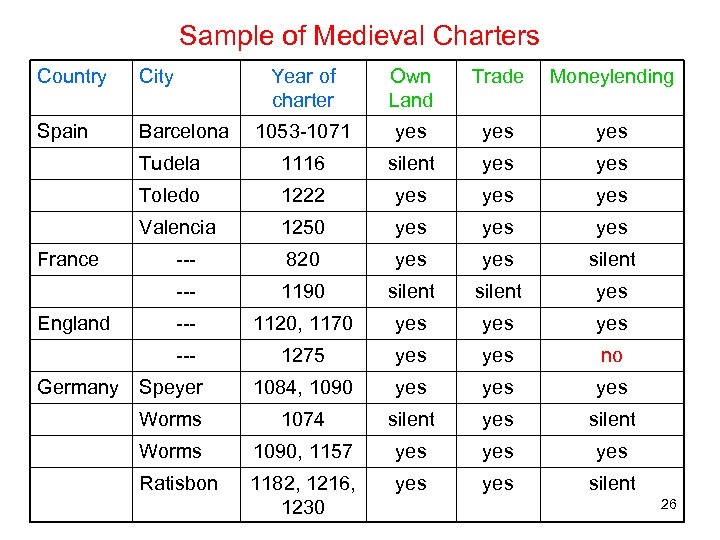 Sample of Medieval Charters Country City Spain Barcelona Trade Moneylending 1053 -1071 yes yes 1116 silent yes Toledo 1222 yes yes Valencia 1250 yes yes --- 820 yes silent --- 1190 silent yes --- 1120, 1170 yes yes --- England Own Land Tudela France Year of charter 1275 yes no 1084, 1090 yes yes Worms 1074 silent yes silent Worms 1090, 1157 yes yes Ratisbon 1182, 1216, 1230 yes silent Germany Speyer 26
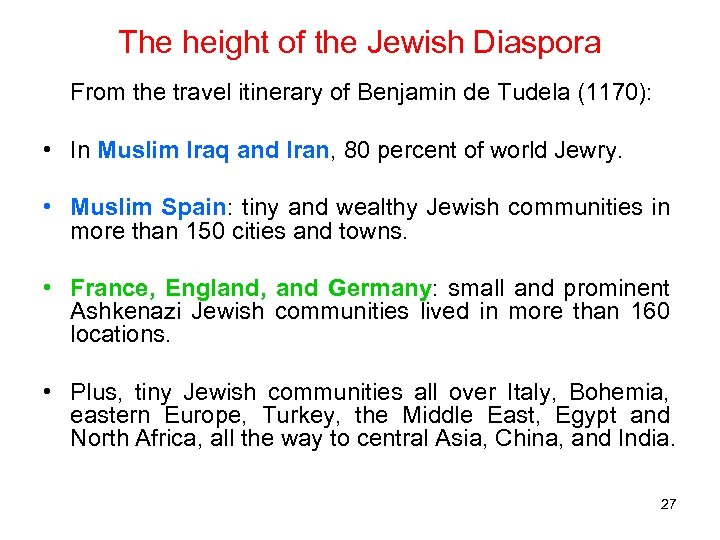 The height of the Jewish Diaspora From the travel itinerary of Benjamin de Tudela (1170): • In Muslim Iraq and Iran, 80 percent of world Jewry. • Muslim Spain: tiny and wealthy Jewish communities in more than 150 cities and towns. • France, England, and Germany: small and prominent Ashkenazi Jewish communities lived in more than 160 locations. • Plus, tiny Jewish communities all over Italy, Bohemia, eastern Europe, Turkey, the Middle East, Egypt and North Africa, all the way to central Asia, China, and India. 27
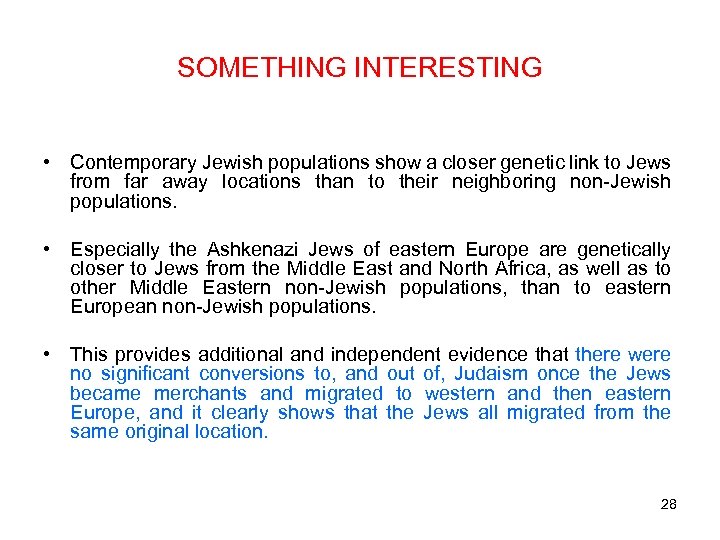 SOMETHING INTERESTING • Contemporary Jewish populations show a closer genetic link to Jews from far away locations than to their neighboring non-Jewish populations. • Especially the Ashkenazi Jews of eastern Europe are genetically closer to Jews from the Middle East and North Africa, as well as to other Middle Eastern non-Jewish populations, than to eastern European non-Jewish populations. • This provides additional and independent evidence that there were no significant conversions to, and out of, Judaism once the Jews became merchants and migrated to western and then eastern Europe, and it clearly shows that the Jews all migrated from the same original location. 28
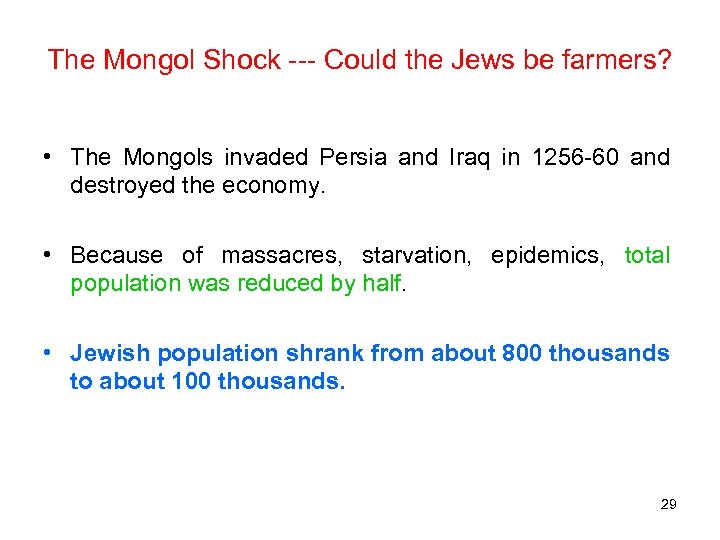 The Mongol Shock --- Could the Jews be farmers? • The Mongols invaded Persia and Iraq in 1256 -60 and destroyed the economy. • Because of massacres, starvation, epidemics, total population was reduced by half. • Jewish population shrank from about 800 thousands to about 100 thousands. 29
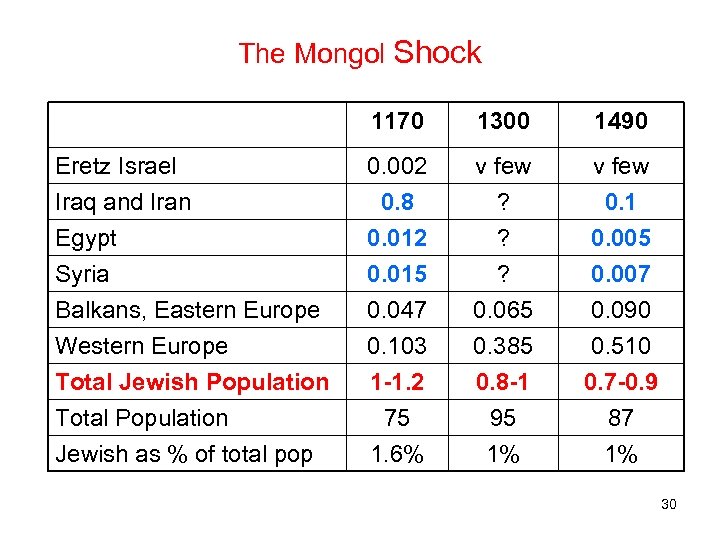 The Mongol Shock 1170 1300 1490 Eretz Israel Iraq and Iran Egypt 0. 002 0. 8 0. 012 v few ? ? v few 0. 1 0. 005 Syria Balkans, Eastern Europe Western Europe Total Jewish Population Total Population Jewish as % of total pop 0. 015 0. 047 0. 103 1 -1. 2 75 1. 6% ? 0. 065 0. 385 0. 8 -1 95 1% 0. 007 0. 090 0. 510 0. 7 -0. 9 87 1% 30
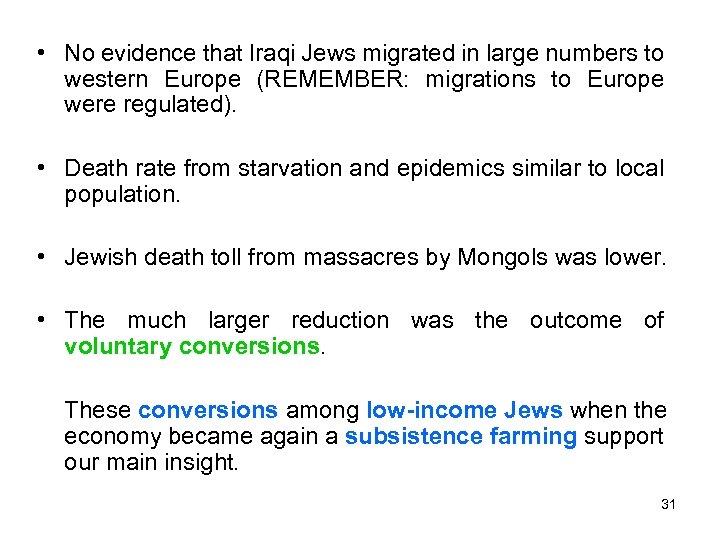 • No evidence that Iraqi Jews migrated in large numbers to western Europe (REMEMBER: migrations to Europe were regulated). • Death rate from starvation and epidemics similar to local population. • Jewish death toll from massacres by Mongols was lower. • The much larger reduction was the outcome of voluntary conversions. These conversions among low-income Jews when the economy became again a subsistence farming support our main insight. 31
 Why do we work on this topic? • Because it is fun (and we were too curious to know…) • What’s next? • From merchants to moneylenders in medieval Europe …. . Restrictions on Christians? NO! 32
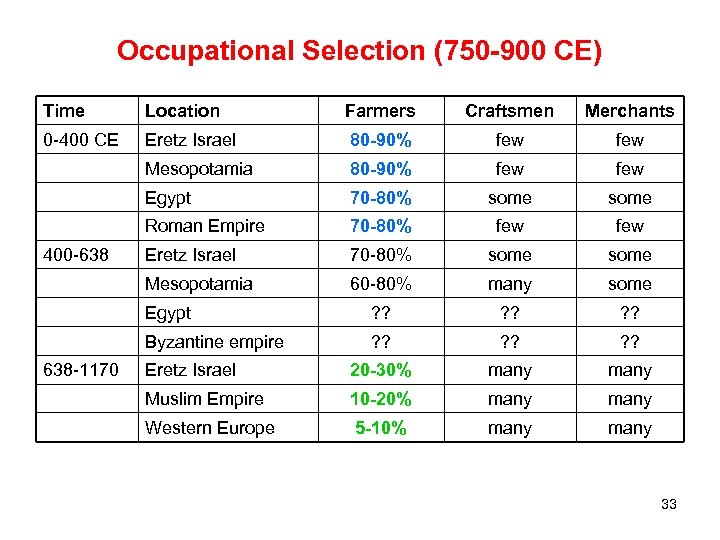 Occupational Selection (750 -900 CE) Time Location Farmers Craftsmen Merchants 0 -400 CE Eretz Israel 80 -90% few Mesopotamia 80 -90% few Egypt 70 -80% some Roman Empire 70 -80% few Eretz Israel 70 -80% some Mesopotamia 60 -80% many some Egypt ? ? Byzantine empire ? ? Eretz Israel 20 -30% many Muslim Empire 10 -20% many Western Europe 5 -10% many 400 -638 638 -1170 33
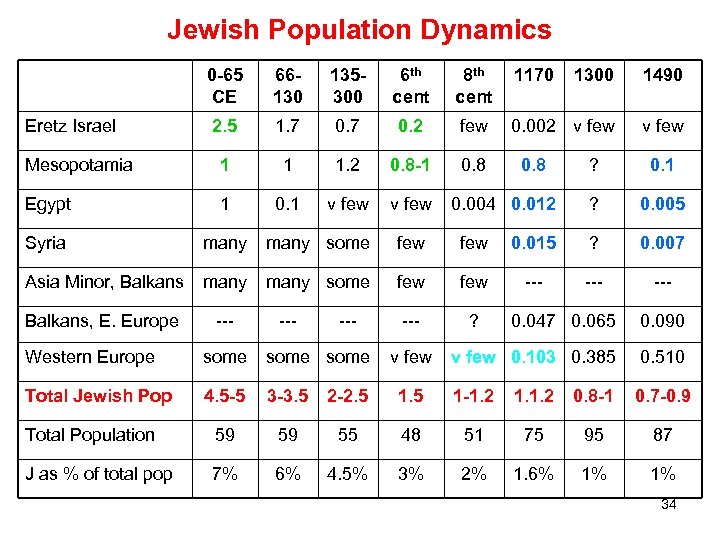 Jewish Population Dynamics 0 -65 CE 66130 135300 6 th cent 8 th cent 1170 1300 1490 2. 5 1. 7 0. 2 few 0. 002 v few Mesopotamia 1 1 1. 2 0. 8 -1 0. 8 Egypt 1 0. 1 v few Syria many some few Asia Minor, Balkans many some few Balkans, E. Europe --- ? Eretz Israel --- v few 0. 8 ? 0. 1 ? 0. 005 0. 015 ? 0. 007 --- --- 0. 004 0. 012 0. 047 0. 065 0. 090 v few 0. 103 0. 385 0. 510 Western Europe some Total Jewish Pop 4. 5 -5 3 -3. 5 2 -2. 5 1 -1. 2 1. 1. 2 0. 8 -1 0. 7 -0. 9 Total Population 59 59 55 48 51 75 95 87 J as % of total pop 7% 6% 4. 5% 3% 2% 1. 6% 1% 1% 34