


 Скачать презентацию From DNA to Proteins Chapter 13 Central
6d2b591f259c659a3b1c1ce64ff9d4ca.ppt
- Количество слайдов: 33
 From DNA to Proteins Chapter 13
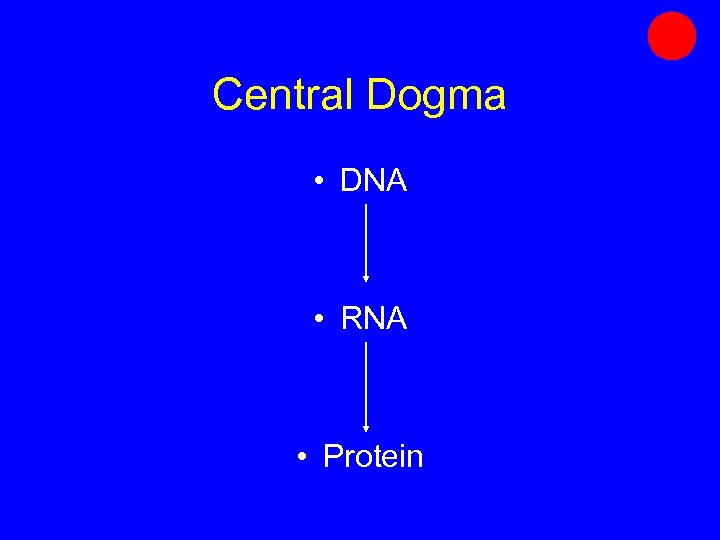 Central Dogma • DNA • RNA • Protein
 Steps from DNA to Proteins Same two steps produce all proteins: 1) DNA is transcribed to form RNA – Occurs in the nucleus – RNA moves into cytoplasm 2) RNA is translated to form polypeptide chains, which fold to form proteins
 Three Classes of RNAs • Messenger RNA (m. RNA) – Carries protein-building instruction • Ribosomal RNA (r. RNA) – Major component of ribosomes • Transfer RNA (t. RNA) – Delivers amino acids to ribosomes
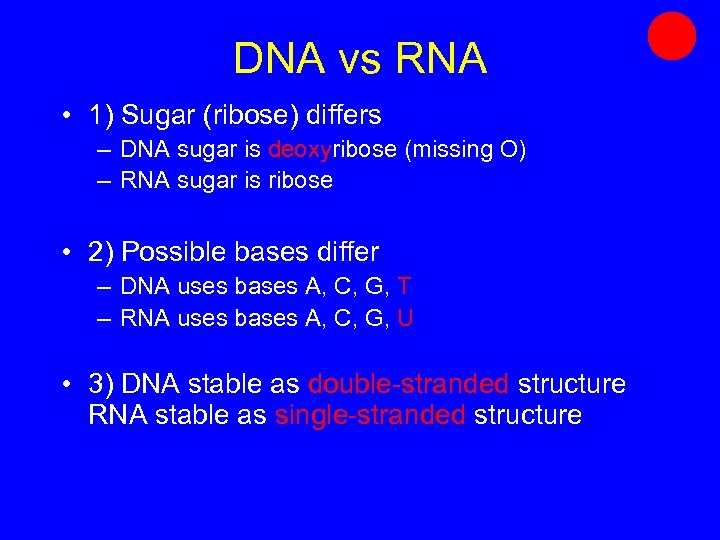 DNA vs RNA • 1) Sugar (ribose) differs – DNA sugar is deoxyribose (missing O) – RNA sugar is ribose • 2) Possible bases differ – DNA uses bases A, C, G, T – RNA uses bases A, C, G, U • 3) DNA stable as double-stranded structure RNA stable as single-stranded structure
 A Nucleotide Subunit of RNA
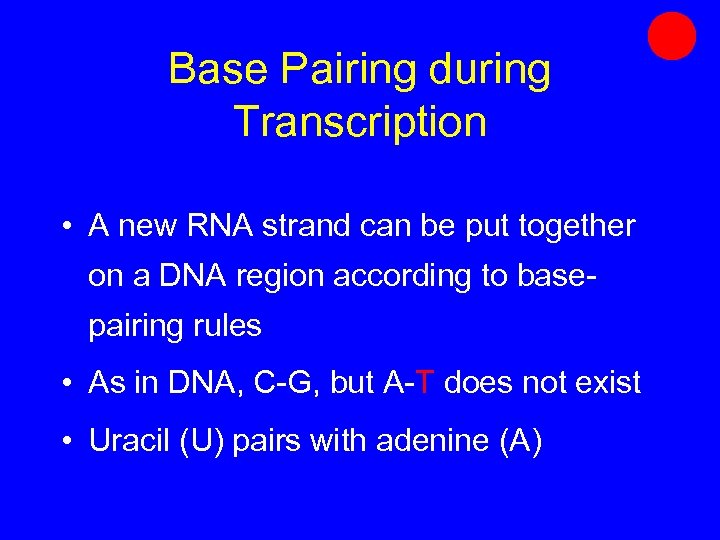 Base Pairing during Transcription • A new RNA strand can be put together on a DNA region according to basepairing rules • As in DNA, C-G, but A-T does not exist • Uracil (U) pairs with adenine (A)
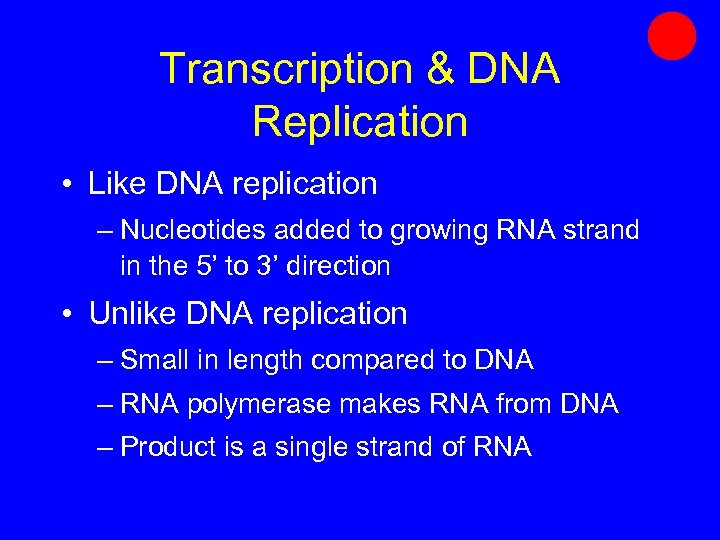 Transcription & DNA Replication • Like DNA replication – Nucleotides added to growing RNA strand in the 5’ to 3’ direction • Unlike DNA replication – Small in length compared to DNA – RNA polymerase makes RNA from DNA – Product is a single strand of RNA
 Base Pairing Compared
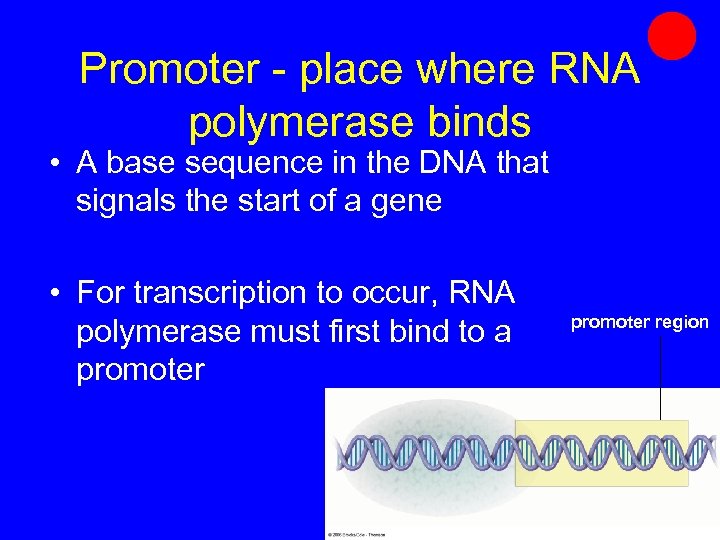 Promoter - place where RNA polymerase binds • A base sequence in the DNA that signals the start of a gene • For transcription to occur, RNA polymerase must first bind to a promoter region
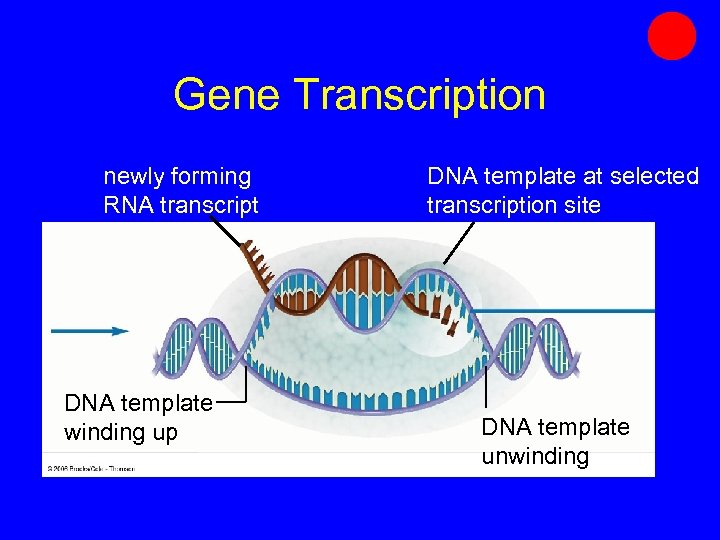 Gene Transcription newly forming RNA transcript DNA template winding up DNA template at selected transcription site DNA template unwinding
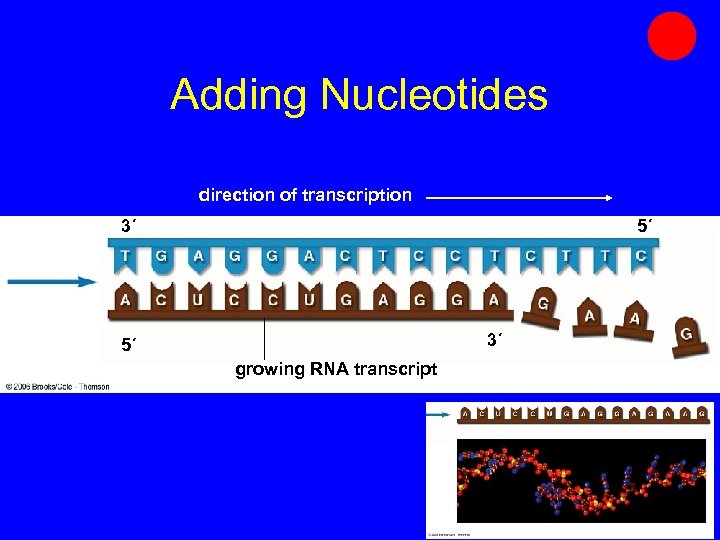 Adding Nucleotides direction of transcription 3´ 5´ growing RNA transcript
 Transcript Modification
 Genetic Code • Set of 64 base triplets • Codons – Nucleotide bases read in blocks of three • 61 specify amino acids • 3 stop translation
 Code Is Redundant • Twenty (20) kinds of amino acids are specified by 61 codons • Most amino acids can be specified by more than one codon • i. e. six codons specify leucine – UUA, UUG, CUU, CUC, CUA, CUG
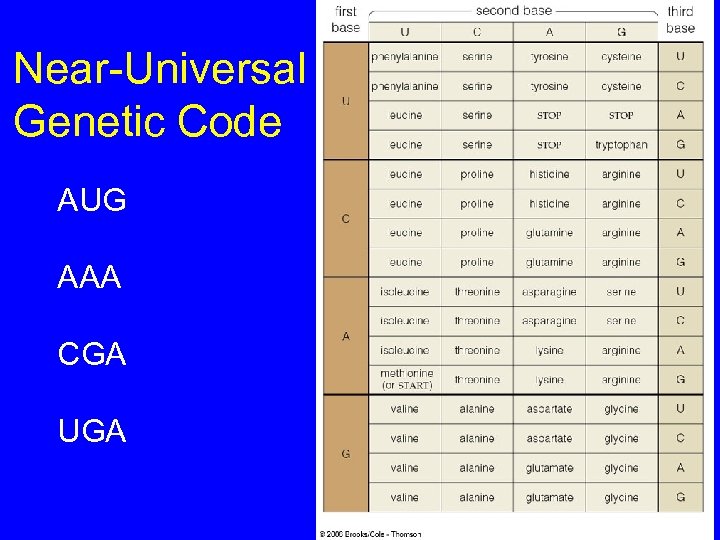 Near-Universal Genetic Code AUG AAA CGA UGA
 t. RNA Structure - brings 20 different amino acids to ribosome There at least 20 different populations of t. RNAs inside the cytoplasm of the cell.
 Ribosomes - structures where proteins are made
 Three Stages of Translation Initiation Elongation Termination
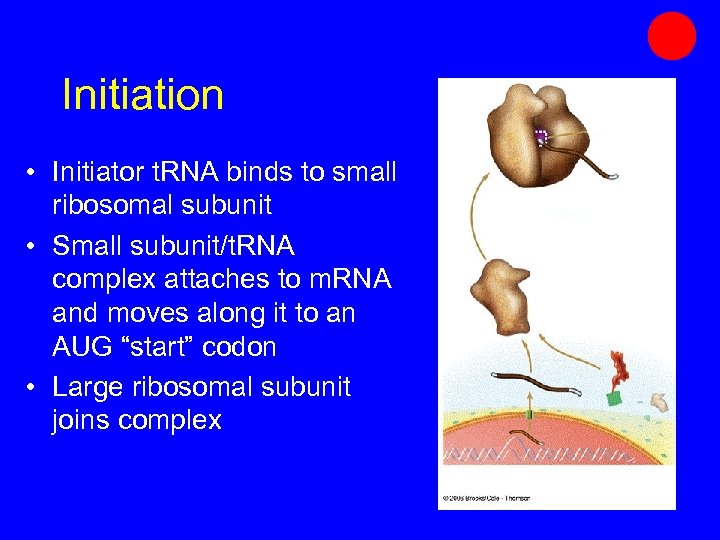 Initiation • Initiator t. RNA binds to small ribosomal subunit • Small subunit/t. RNA complex attaches to m. RNA and moves along it to an AUG “start” codon • Large ribosomal subunit joins complex
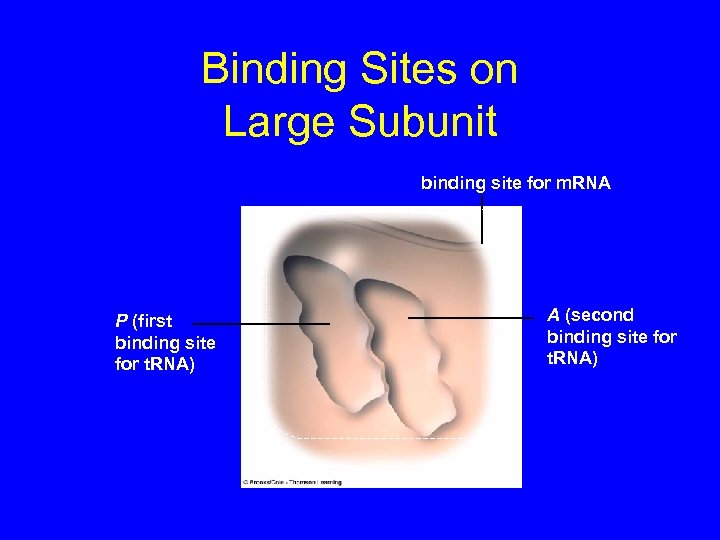 Binding Sites on Large Subunit binding site for m. RNA P (first binding site for t. RNA) A (second binding site for t. RNA)
 Elongation • m. RNA passes through ribosomal subunits • t. RNAs deliver amino acids to the ribosomal binding site in the order specified by the m. RNA • Peptide bonds form between the amino acids and the polypeptide chain grows
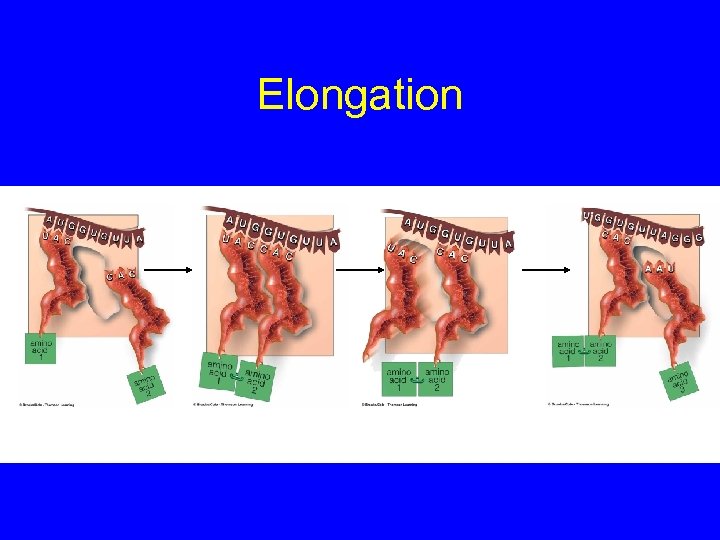 Elongation
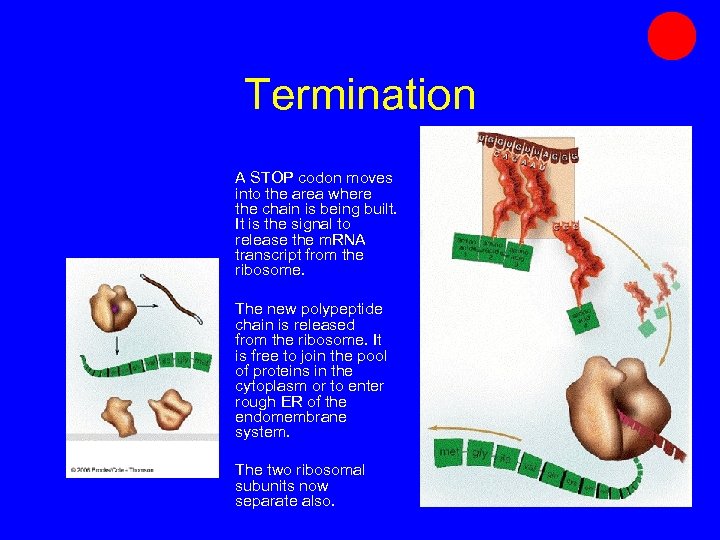 Termination A STOP codon moves into the area where the chain is being built. It is the signal to release the m. RNA transcript from the ribosome. The new polypeptide chain is released from the ribosome. It is free to join the pool of proteins in the cytoplasm or to enter rough ER of the endomembrane system. The two ribosomal subunits now separate also.
 Polysome - a lot of ribosomes • A cluster of many ribosomes translating one m. RNA transcript • Transcript threads through the multiple ribosomes like thread of bead necklace • Why? - Allows rapid synthesis of proteins
 What Happens to the New Polypeptides (proteins)? • Some just enter the cytoplasm • Many enter the endoplasmic reticulum and move through the cytomembrane system where they are modified
 Overview
 Gene Mutations Base-Pair Substitutions (small) Insertions (small or large) Deletions (small or large)
 Frameshift Mutations • Insertion – Extra base added into gene region • Deletion – Base removed from gene region • Both shift the reading frame • Result in many wrong amino acids
 Mutations in Genes - example of substitution & deletion
 Transposons - naughty things! • DNA segments that move spontaneously about the genome • When they insert into a gene region, they usually inactivate that gene
 Mutation Rates • Each gene has a characteristic mutation rate • Average rate for eukaryotes is between 10 -4 and 10 -6 per generation • Only mutations that arise in germ cells can be passed on to next generation
 Causes of Mutations • Exposure to harmful radiation and chemicals in the environment can cause DNA mutations • Genetic defects to genes that repair mutations leave mutations behind in large numbers.