 Скачать презентацию FROM COMPETITION AT HOME TO COMPETING ABROAD A
d17dc029cb3ac4101ced8f87382aa0be.ppt
- Количество слайдов: 28



FROM COMPETITION AT HOME TO COMPETING ABROAD: A CASE STUDY OF INDIA’S HORTICULTURE Aaditya Mattoo, Deepak Mishra, Ashish Narain THE WORLD BANK
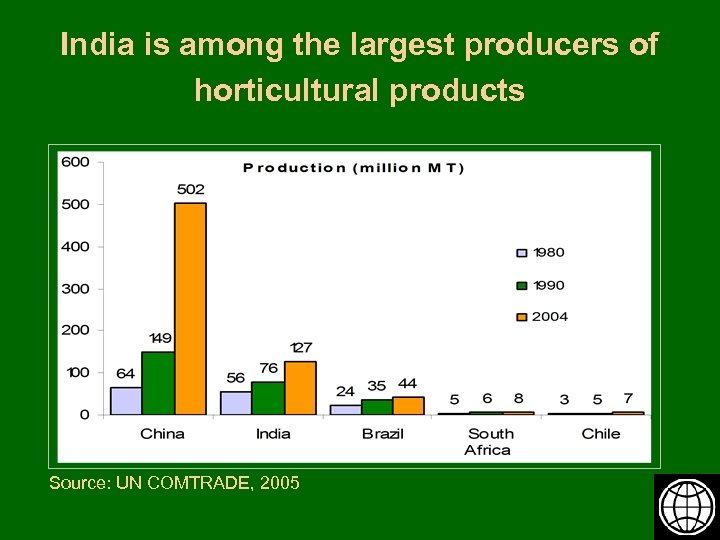
India is among the largest producers of horticultural products Source: UN COMTRADE, 2005
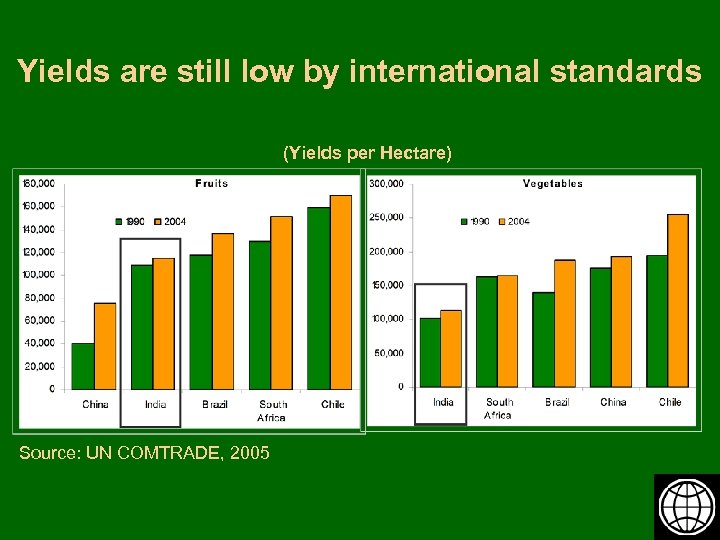
Yields are still low by international standards (Yields per Hectare) Source: UN COMTRADE, 2005
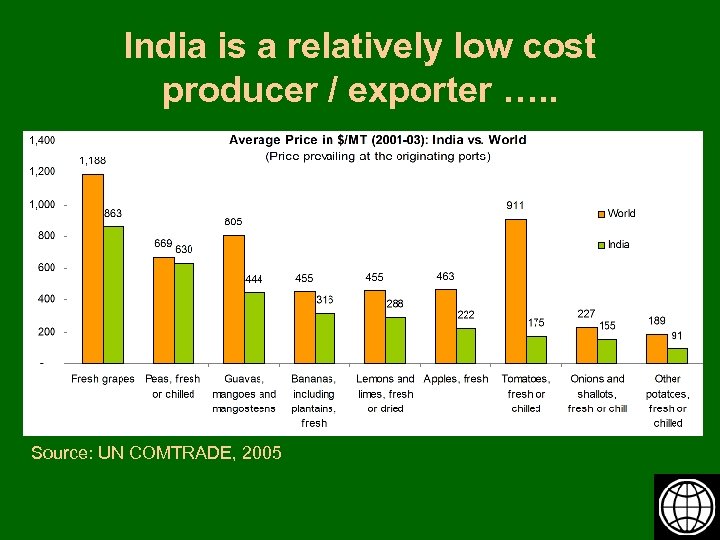
India is a relatively low cost producer / exporter …. . Source: UN COMTRADE, 2005
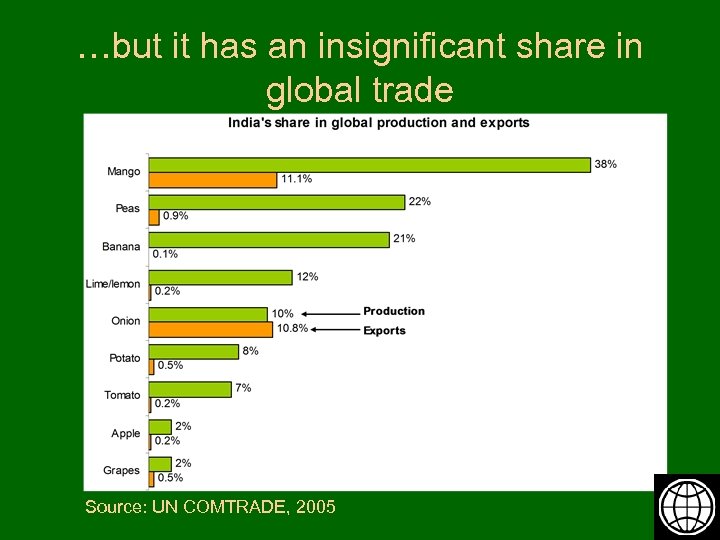
…but it has an insignificant share in global trade Source: UN COMTRADE, 2005
Methodology • Supply chain analysis of 10 horticultural products from farm to retail • Based on primary surveys that covered 1400 farmers, 200 commission agents, 65 exporters across 16 major Indian states • Detailed interviews with major stakeholders
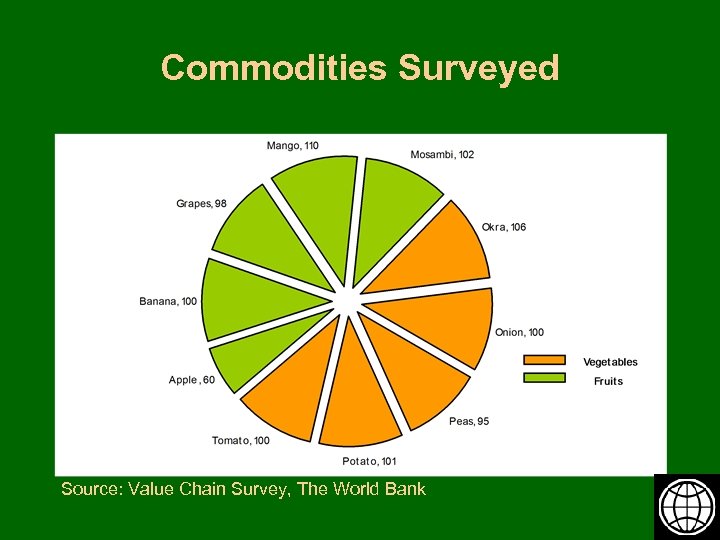
Commodities Surveyed Source: Value Chain Survey, The World Bank
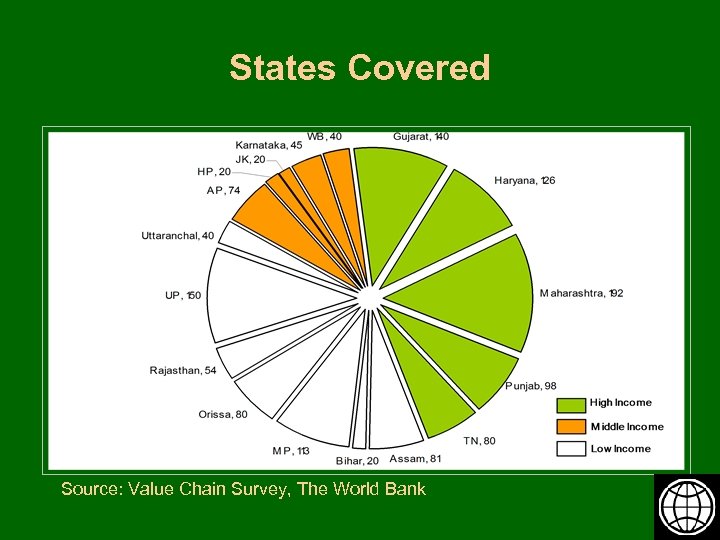
States Covered Source: Value Chain Survey, The World Bank
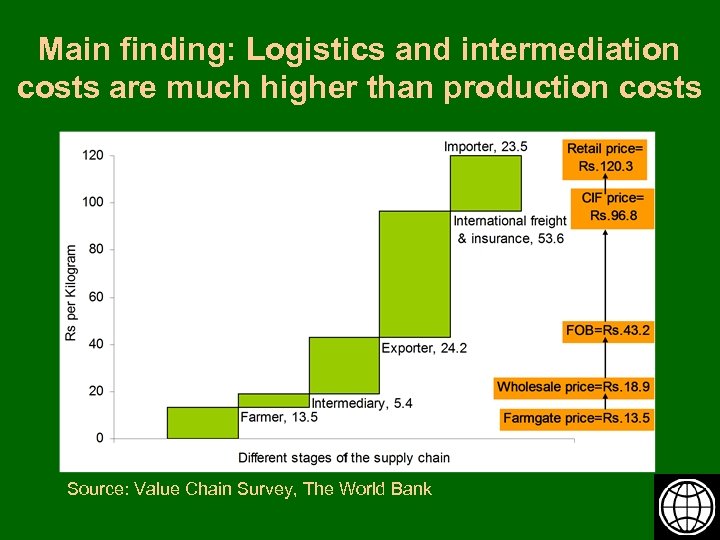
Main finding: Logistics and intermediation costs are much higher than production costs Source: Value Chain Survey, The World Bank
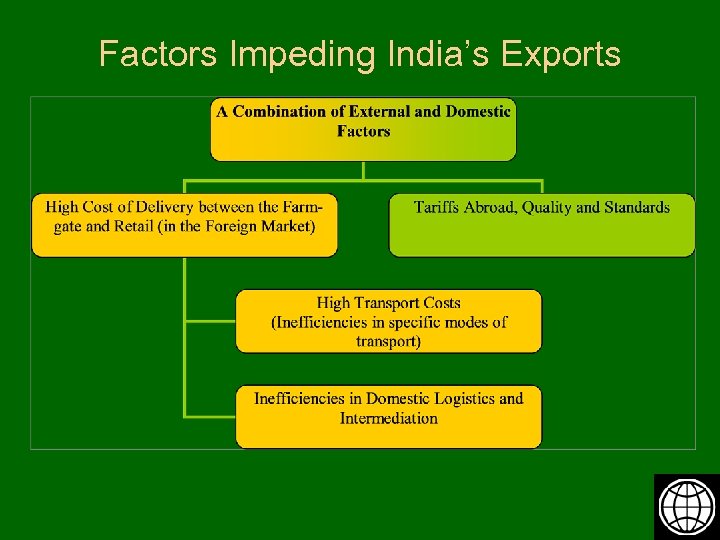
Factors Impeding India’s Exports
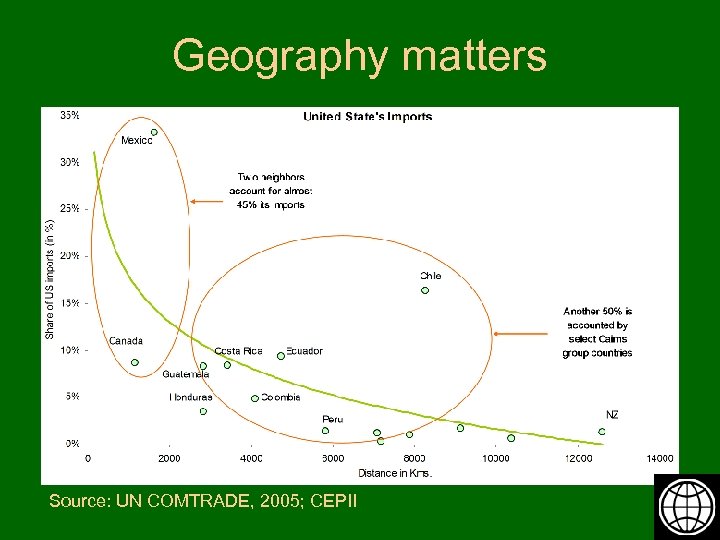
Geography matters Source: UN COMTRADE, 2005; CEPII
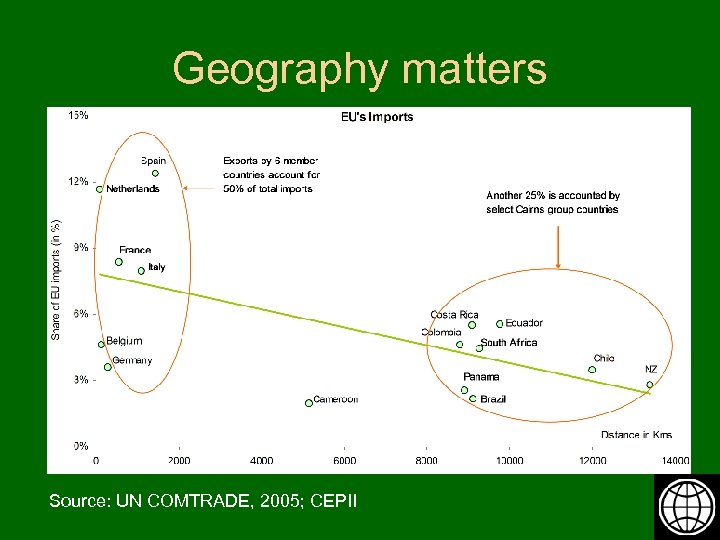
Geography matters Source: UN COMTRADE, 2005; CEPII
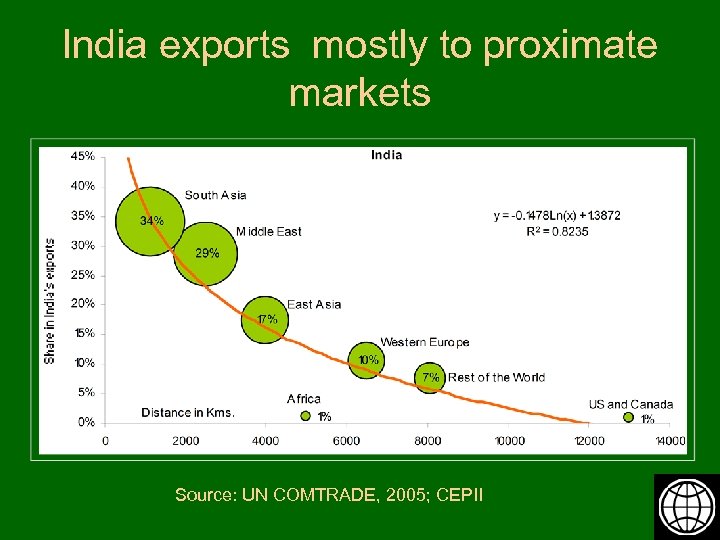
India exports mostly to proximate markets Source: UN COMTRADE, 2005; CEPII
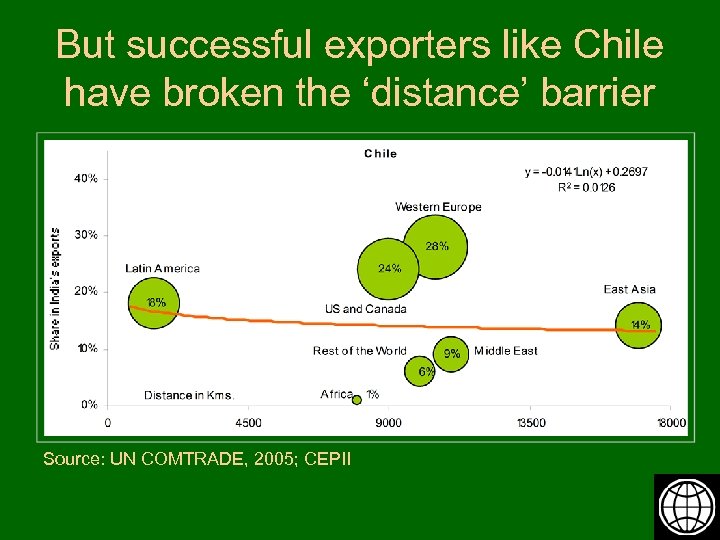
But successful exporters like Chile have broken the ‘distance’ barrier Source: UN COMTRADE, 2005; CEPII
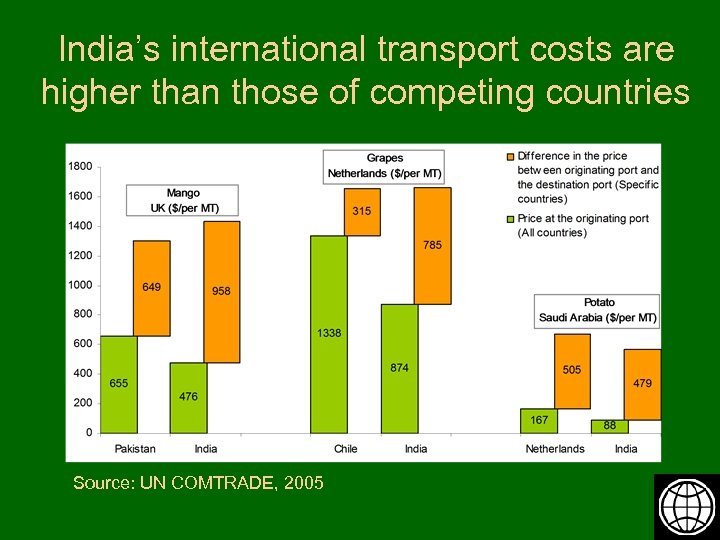
India’s international transport costs are higher than those of competing countries Source: UN COMTRADE, 2005
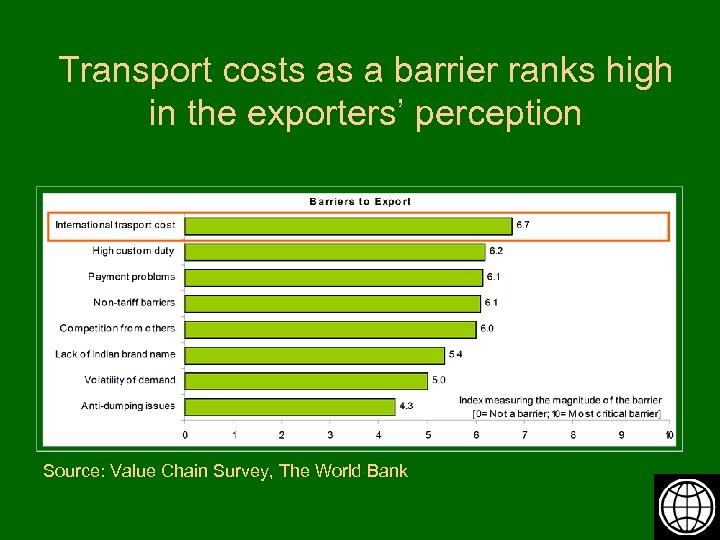
Transport costs as a barrier ranks high in the exporters’ perception Source: Value Chain Survey, The World Bank
Air Transport • Costs are high because of – Excessively high taxes on fuel and airport charges – Restrictions on ownership and entry – Inadequate and under-utilized infrastructure (A Road Map for the Civil Aviation Sector, Go. I) • Imbalances between exports and imports (to Europe and North America)
Maritime Trade • Inefficiency of ports is a bigger problem than inadequate capacity • Maritime sector faces the following challenges to improving performance (10 th Five Year Plan, Go. I): – Delays in project implementation – Inflexible functioning of major ports – Lack of multi-modal transport – Cost-plus tariff policy
Surface Transport • Road transport – Cost is not high in nominal terms but is high in effective terms (including wastage, storage, and handling) – Travel speeds are low (only about 200 -400 km per day) – Movement of containers on the Indian roadways is limited – Refrigerated trucks are few and expensive • Rail rates in India are very high in relation to costs
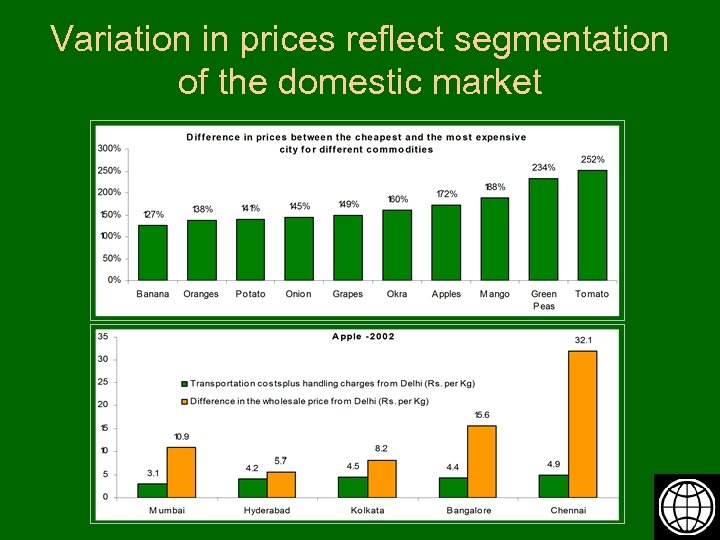
Variation in prices reflect segmentation of the domestic market
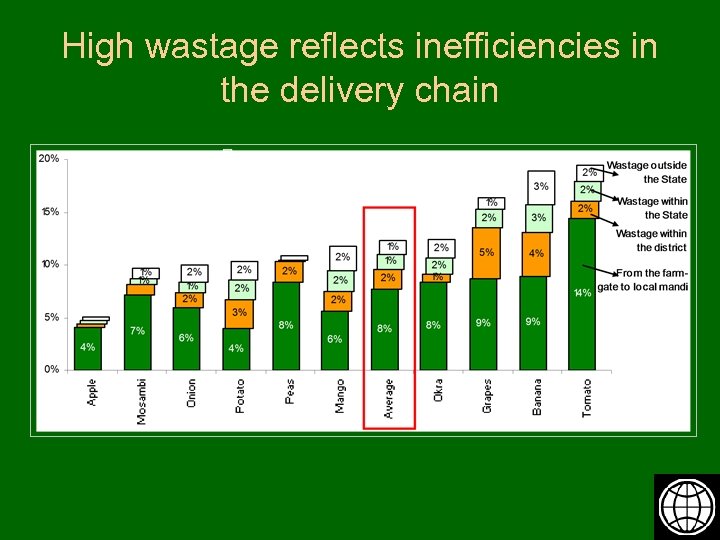
High wastage reflects inefficiencies in the delivery chain
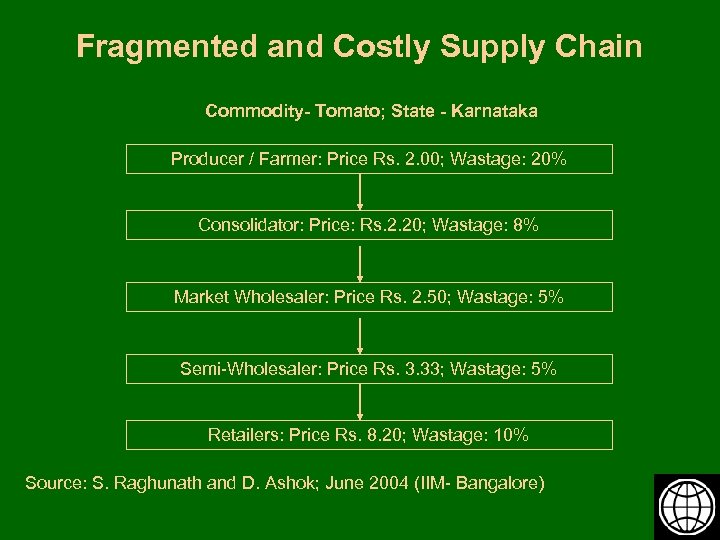
Fragmented and Costly Supply Chain Commodity- Tomato; State - Karnataka Producer / Farmer: Price Rs. 2. 00; Wastage: 20% Consolidator: Price: Rs. 2. 20; Wastage: 8% Market Wholesaler: Price Rs. 2. 50; Wastage: 5% Semi-Wholesaler: Price Rs. 3. 33; Wastage: 5% Retailers: Price Rs. 8. 20; Wastage: 10% Source: S. Raghunath and D. Ashok; June 2004 (IIM- Bangalore)
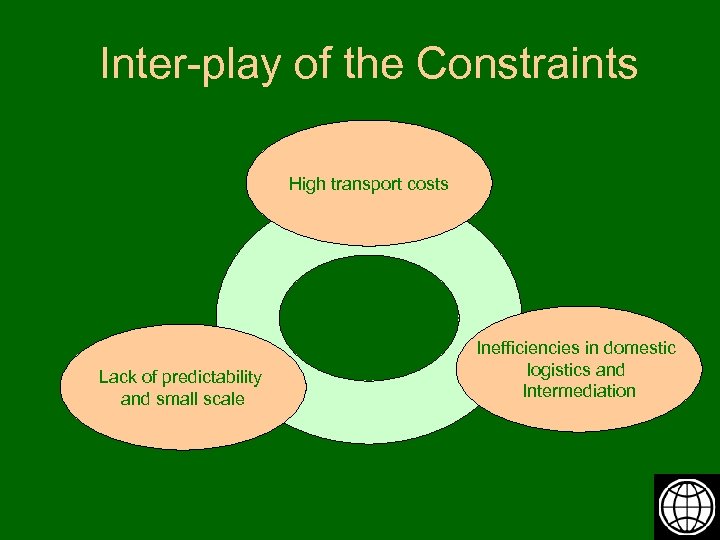
Inter-play of the Constraints High transport costs Lack of predictability and small scale Inefficiencies in domestic logistics and Intermediation
Ongoing and Prospective Reforms • Create contestable markets where it is possible to exploit economies of scale in transport, marketing and distribution • Eliminate barriers to entry and competition at all stages –APMC Act • Eliminate barriers to attainment of efficient scale –Small scale reservation on cold storage –Restriction on multi-state cooperative –Impediments to large-scale retail
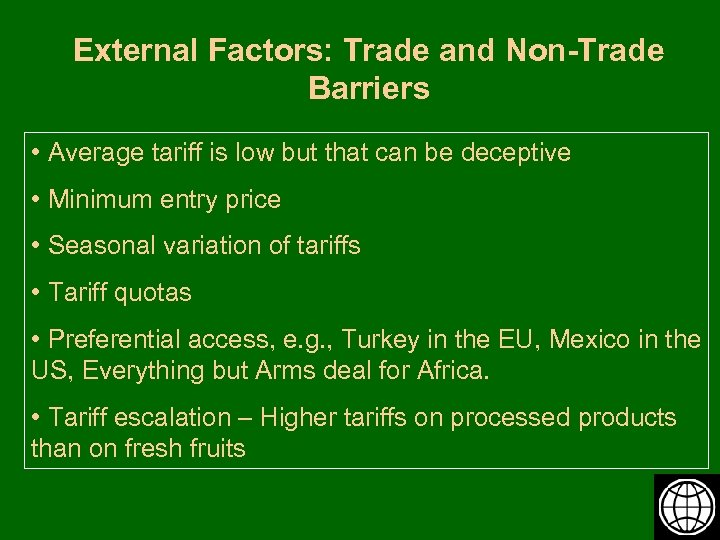
External Factors: Trade and Non-Trade Barriers • Average tariff is low but that can be deceptive • Minimum entry price • Seasonal variation of tariffs • Tariff quotas • Preferential access, e. g. , Turkey in the EU, Mexico in the US, Everything but Arms deal for Africa. • Tariff escalation – Higher tariffs on processed products than on fresh fruits
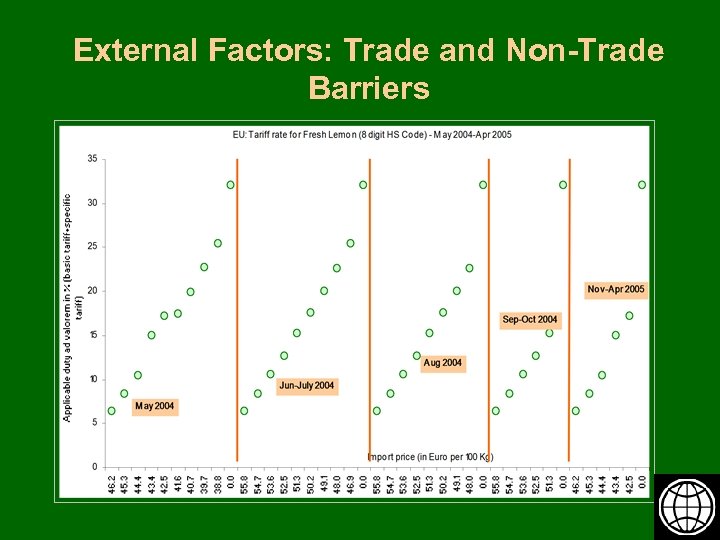
External Factors: Trade and Non-Trade Barriers
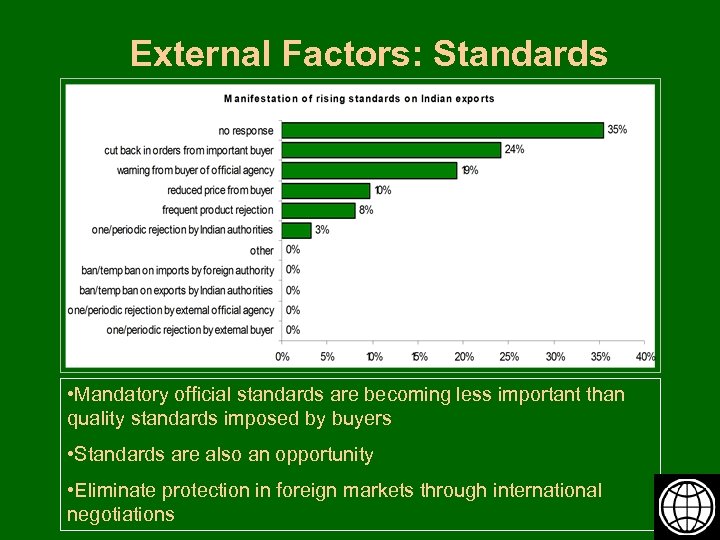
External Factors: Standards • Mandatory official standards are becoming less important than quality standards imposed by buyers • Standards are also an opportunity • Eliminate protection in foreign markets through international negotiations
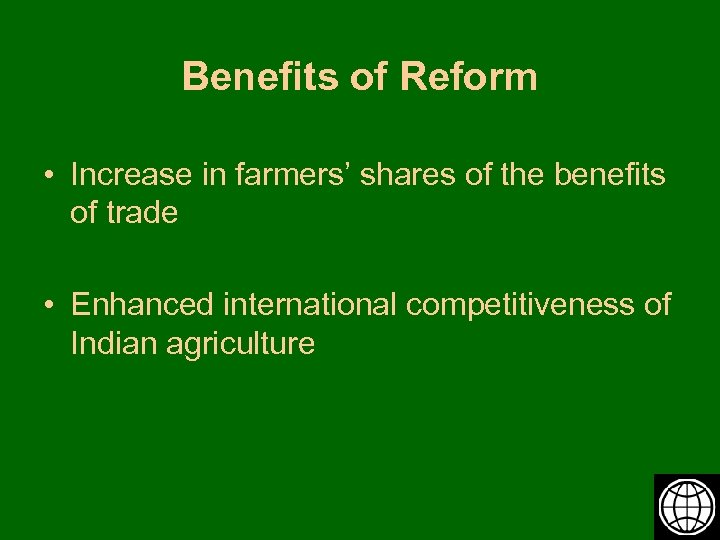
Benefits of Reform • Increase in farmers’ shares of the benefits of trade • Enhanced international competitiveness of Indian agriculture
Скачать презентацию FROM COMPETITION AT HOME TO COMPETING ABROAD A
d17dc029cb3ac4101ced8f87382aa0be.ppt