 Скачать презентацию From chicken to Commission Salmonella infection in table
8a1bafa256c50c93045c1719680d2fc4.ppt
- Количество слайдов: 16



From chicken to Commission Salmonella infection in table egg production Rob Davies, Juan Carrique-Mas VLA Weybridge Acknowledgements: Defra and EC Funding
Agenda § § § Surveillance trends Consideration of VLA projects: Improved sampling for better detection Decontamination of persistently infected farms Salmonella vaccination Translating findings into policy
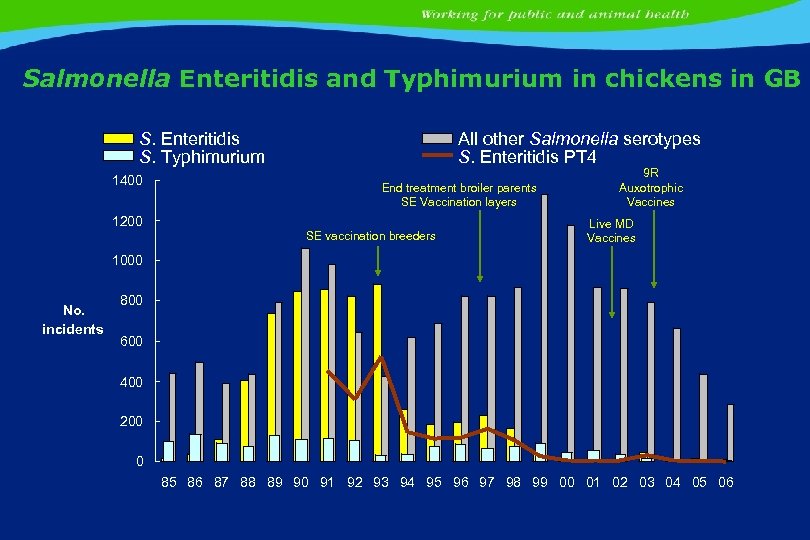
Salmonella Enteritidis and Typhimurium in chickens in GB S. Enteritidis S. Typhimurium 1400 All other Salmonella serotypes S. Enteritidis PT 4 End treatment broiler parents SE Vaccination layers 1200 SE vaccination breeders 9 R Auxotrophic Vaccines Live MD Vaccines 1000 No. incidents 800 600 400 200 0 85 86 87 88 89 90 91 92 93 94 95 96 97 98 99 00 01 02 03 04 05 06
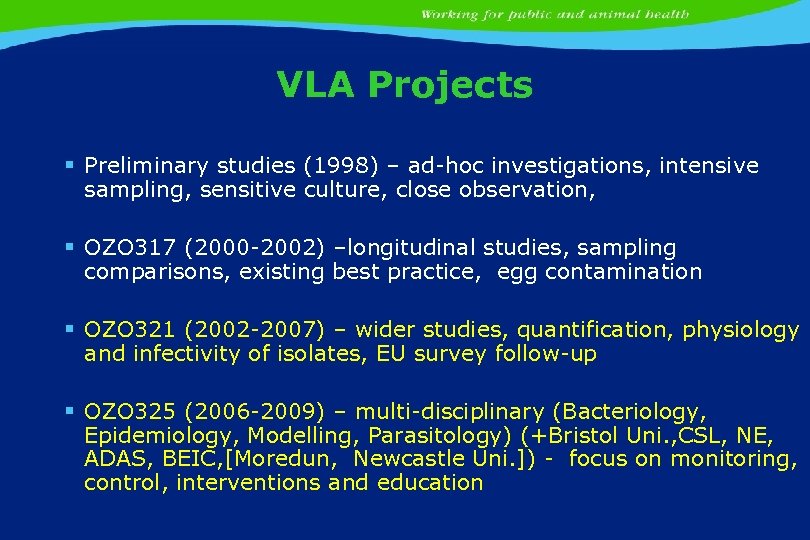
VLA Projects § Preliminary studies (1998) – ad-hoc investigations, intensive sampling, sensitive culture, close observation, § OZO 317 (2000 -2002) –longitudinal studies, sampling comparisons, existing best practice, egg contamination § OZO 321 (2002 -2007) – wider studies, quantification, physiology and infectivity of isolates, EU survey follow-up § OZO 325 (2006 -2009) – multi-disciplinary (Bacteriology, Epidemiology, Modelling, Parasitology) (+Bristol Uni. , CSL, NE, ADAS, BEIC, [Moredun, Newcastle Uni. ]) - focus on monitoring, control, interventions and education
Main Findings - OZO 321 § SE quantification - high numbers in rodent faeces, flies, feeding systems, drinkers § Live vaccines did not reduce SE persistence § Uni. Bristol challenge exposure confirmed drinkers as high risk – despite vaccination § No difference in physiology or virulence genes according to persistence § EU survey follow-up investigations showed similar problems in cage and worse in non-cage than original cohort § Multiple flock infection per holding suggested 20% underestimate of holding prevalence by EU survey
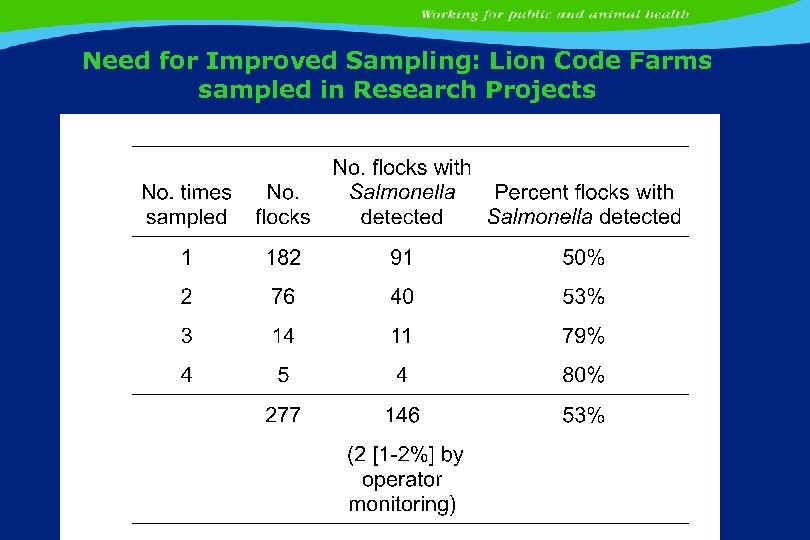
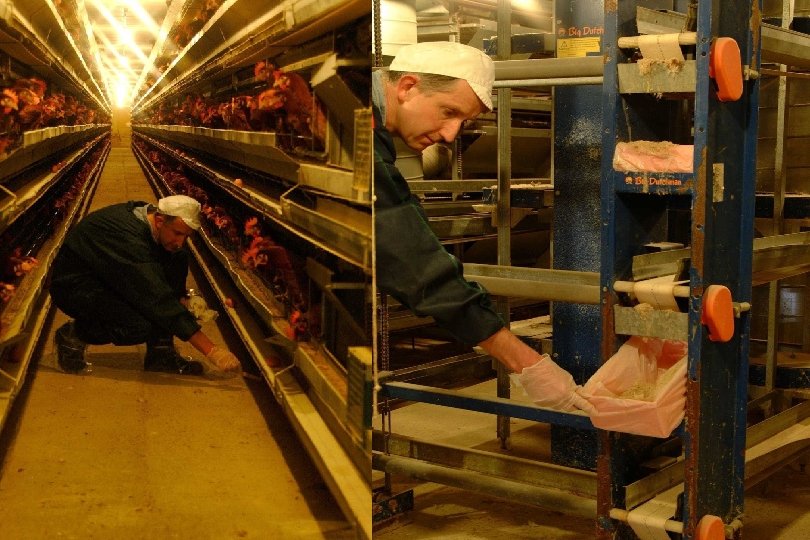
Need for Improved Sampling: Lion Code Farms sampled in Research Projects
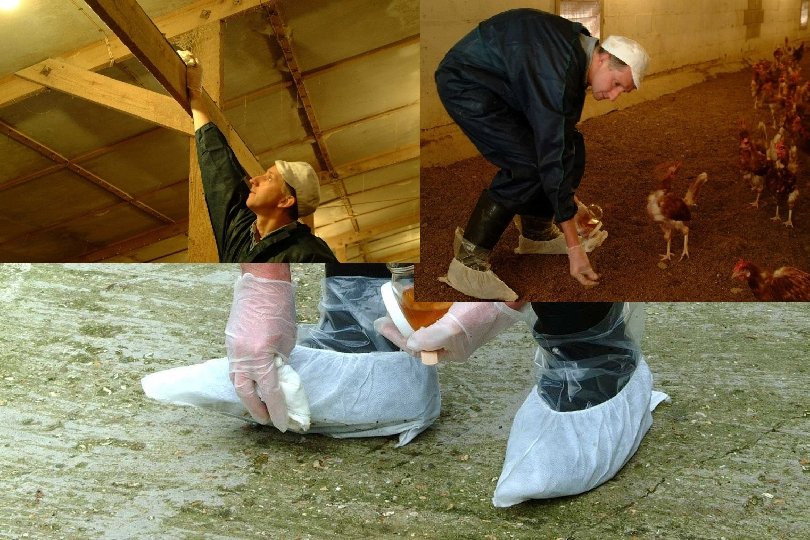
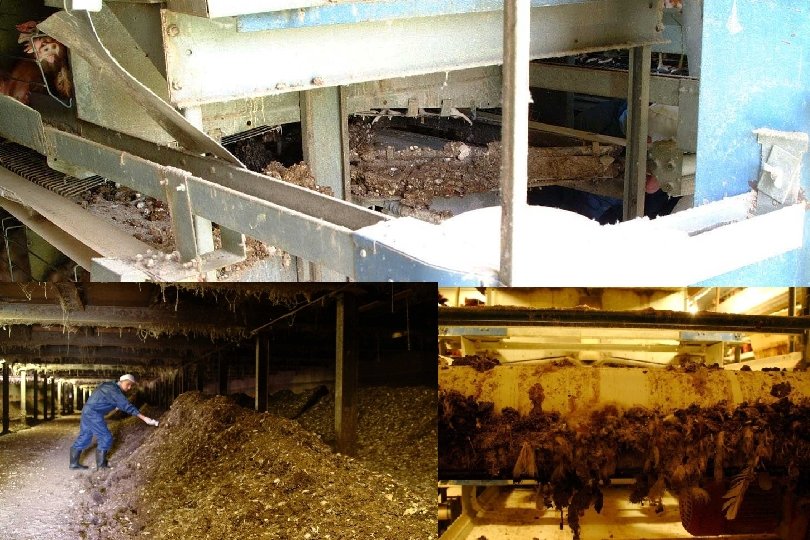
Main Findings so far - OZO 325 § VLA sampling > EU survey> EU monitoring § Pooling eggs in 40 s retains sensitivity – no advantage of Ferrioxamine E § Heat treatment insufficient for red mites § Fly treatments usually too late § Formalin disinfection by specialist very successful § Chlorcresol/F. G. Q. combination good farmer option § Infected rodents undermine any control programme § Effective rodent control – undetectable infection in flocks
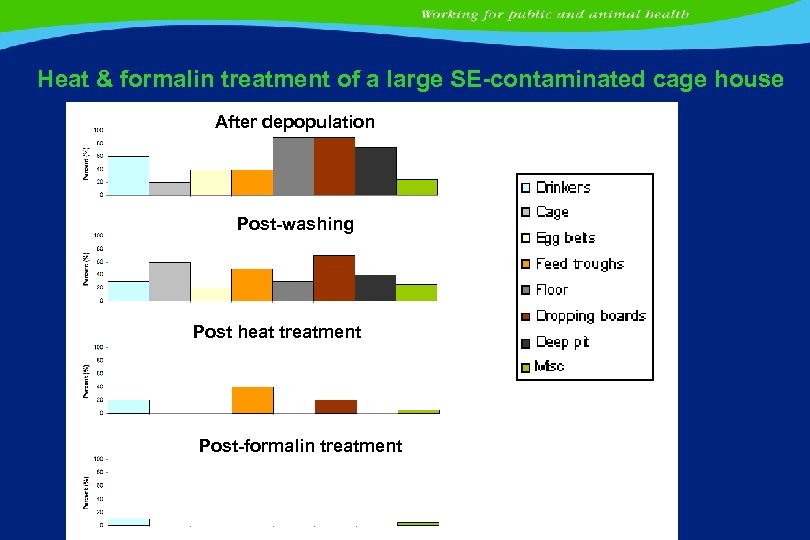
Heat & formalin treatment of a large SE-contaminated cage house After depopulation Post-washing Post heat treatment Post-formalin treatment
OZO 325 cont. § 300 -bird PMs may be negative from positive flocks § Significant contamination of eggs – especially small and non-cage § Different response to various vaccination programmes in field and controlled challenge studies § Multiple vaccine administration errors identified – but ? significance § Serological tests for killed vaccine OK § Bacteriological tests for live vaccine in water OK § Problems with assessing 2 (of 3) live vaccines in faeces § Cumulative findings consistent, support international literature and risk factors from EU survey
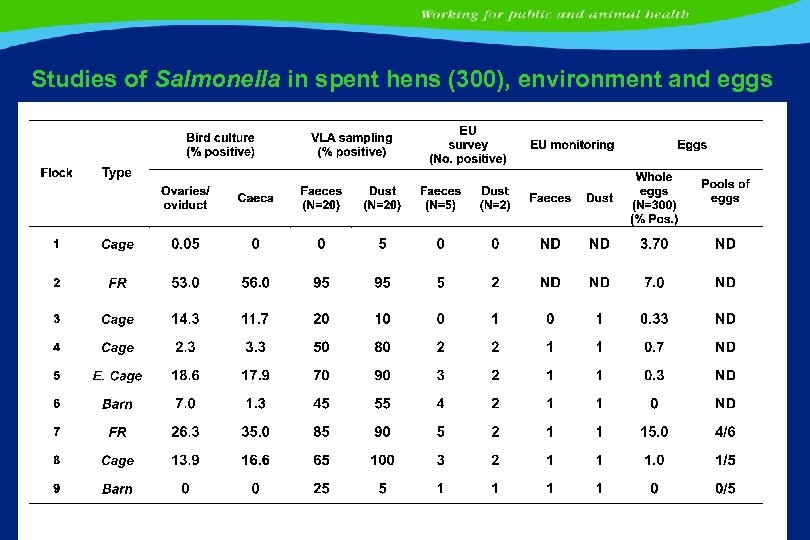
Studies of Salmonella in spent hens (300), environment and eggs
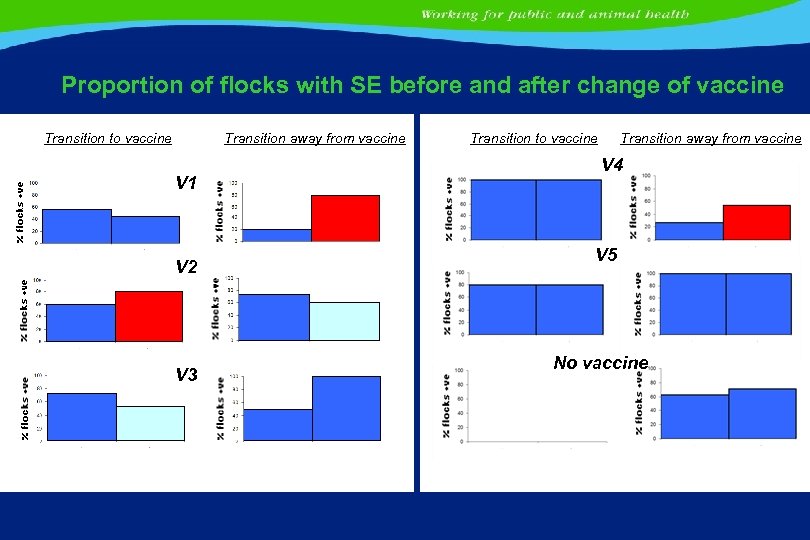
Proportion of flocks with SE before and after change of vaccine Transition to vaccine Transition away from vaccine V 1 V 2 V 3 Transition to vaccine Transition away from vaccine V 4 V 5 No vaccine
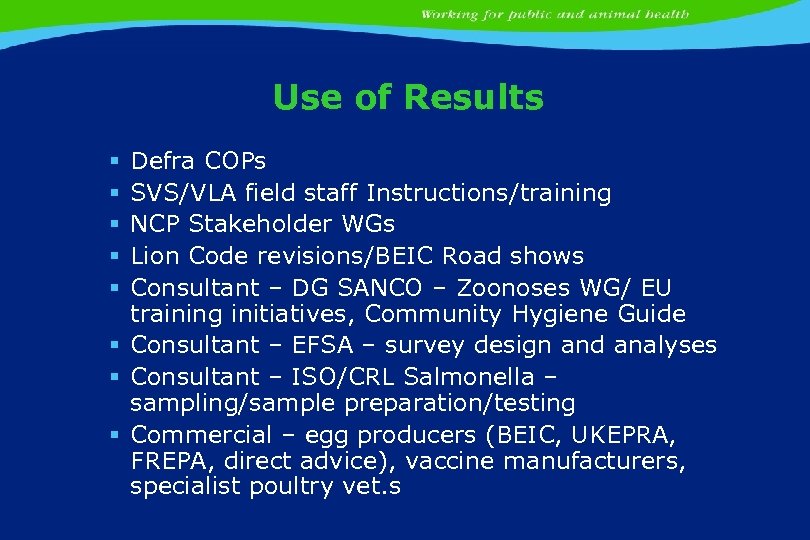
Use of Results Defra COPs SVS/VLA field staff Instructions/training NCP Stakeholder WGs Lion Code revisions/BEIC Road shows Consultant – DG SANCO – Zoonoses WG/ EU training initiatives, Community Hygiene Guide § Consultant – EFSA – survey design and analyses § Consultant – ISO/CRL Salmonella – sampling/sample preparation/testing § Commercial – egg producers (BEIC, UKEPRA, FREPA, direct advice), vaccine manufacturers, specialist poultry vet. s § § §
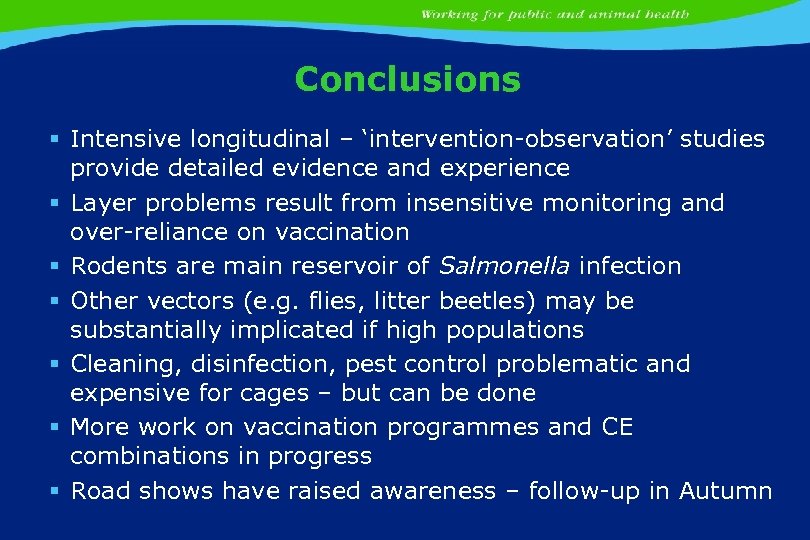
Conclusions § Intensive longitudinal – ‘intervention-observation’ studies provide detailed evidence and experience § Layer problems result from insensitive monitoring and over-reliance on vaccination § Rodents are main reservoir of Salmonella infection § Other vectors (e. g. flies, litter beetles) may be substantially implicated if high populations § Cleaning, disinfection, pest control problematic and expensive for cages – but can be done § More work on vaccination programmes and CE combinations in progress § Road shows have raised awareness – follow-up in Autumn
Скачать презентацию From chicken to Commission Salmonella infection in table
8a1bafa256c50c93045c1719680d2fc4.ppt