


 Скачать презентацию Free Talk Four Generations Camel Xiangzi Lao She
bda72b9cd6d5a7d55cc67b7b7cfca003.ppt
- Количество слайдов: 28
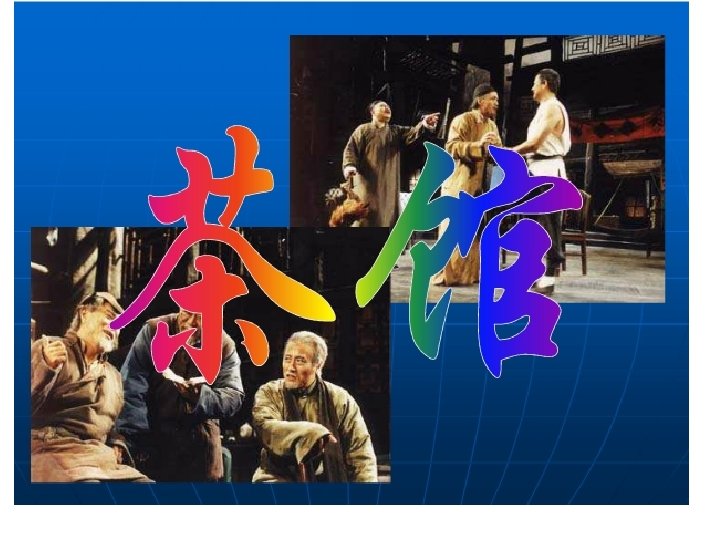
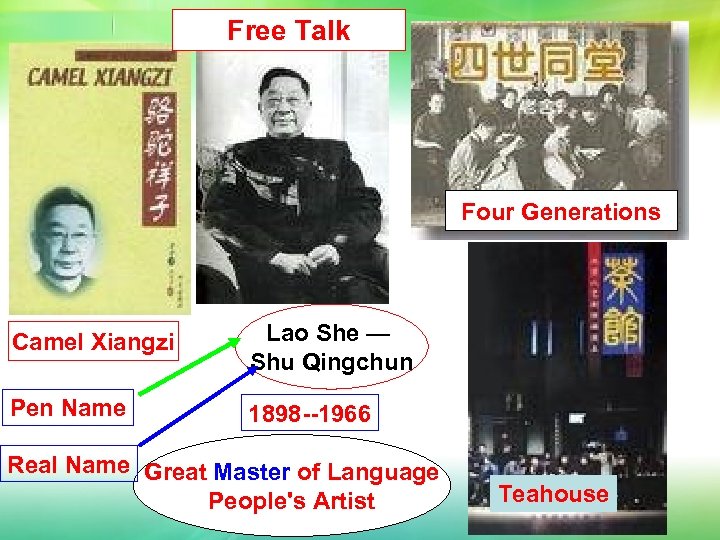 Free Talk Four Generations Camel Xiangzi Lao She — Shu Qingchun Pen Name 1898 --1966 Real Name Great Master of Language People's Artist Teahouse
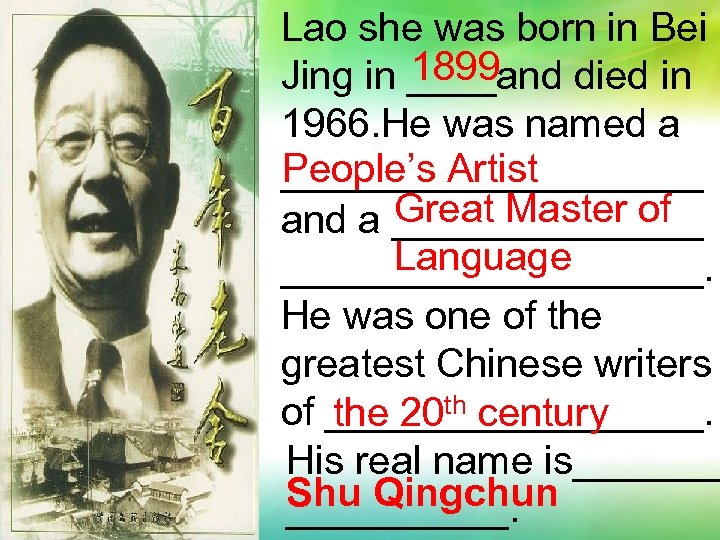 Lao she was born in Bei 1899 Jing in ____and died in 1966. He was named a People’s Artist __________ Great Master of and a _______ Language __________. He was one of the greatest Chinese writers of _________. the 20 th century His real name is_______ Shu Qingchun _____.
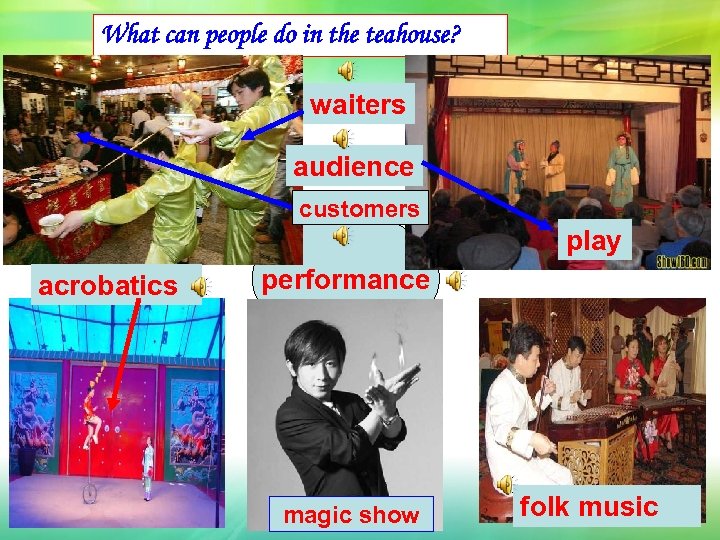 What can people do in the teahouse? waiters audience customers play acrobatics performance magic show folk music
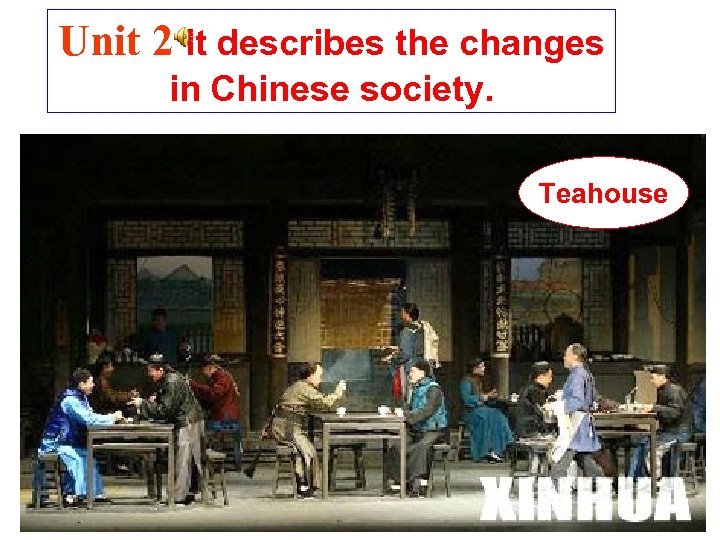 Unit 2 It describes the changes in Chinese society. Teahouse
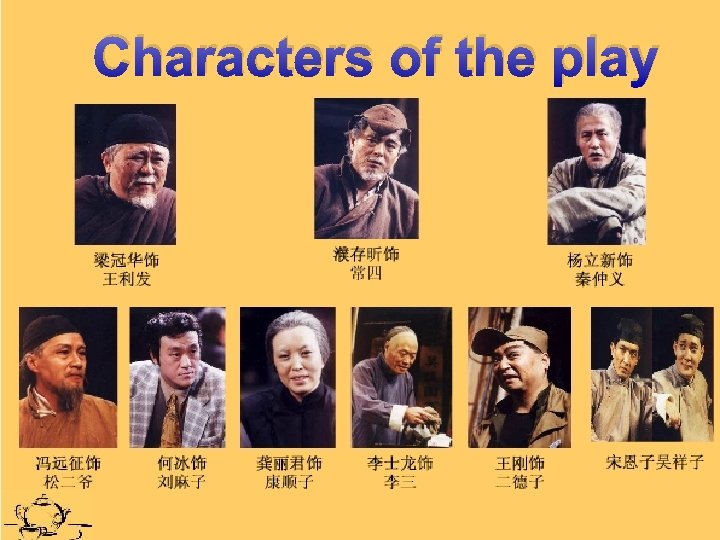 Characters of the play
 The title, the pictures , the headings and the first sentence of each paragraph can help you understand.
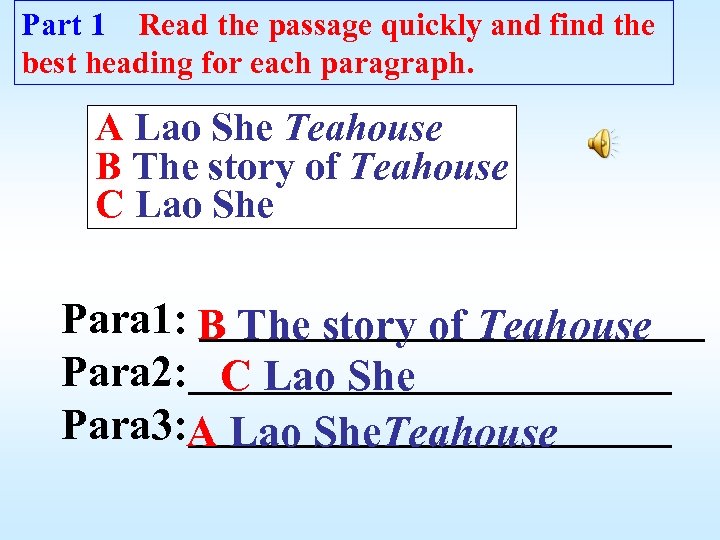 Part 1 Read the passage quickly and find the best heading for each paragraph. A Lao She Teahouse B The story of Teahouse C Lao She Para 1: B The story of Teahouse ____________ Para 2: ___________ C Lao She Para 3: ___________ A Lao She. Teahouse
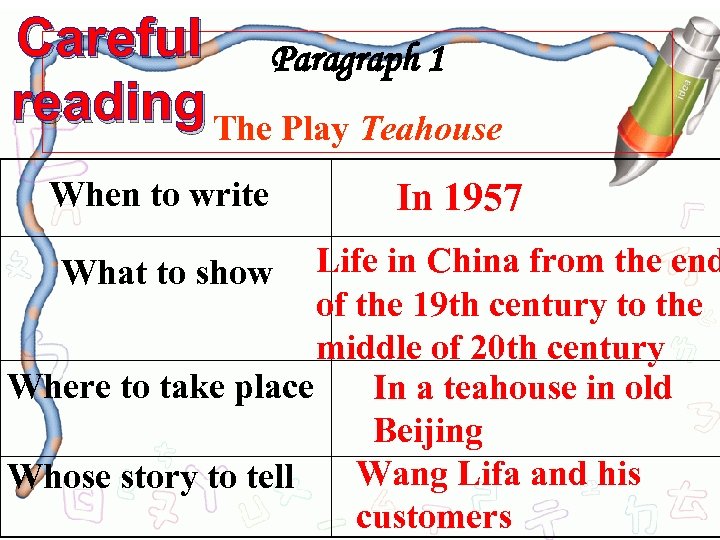 Careful Paragraph 1 reading The Play Teahouse When to write In 1957 Life in China from the end of the 19 th century to the middle of 20 th century Where to take place In a teahouse in old Beijing Wang Lifa and his Whose story to tell customers What to show
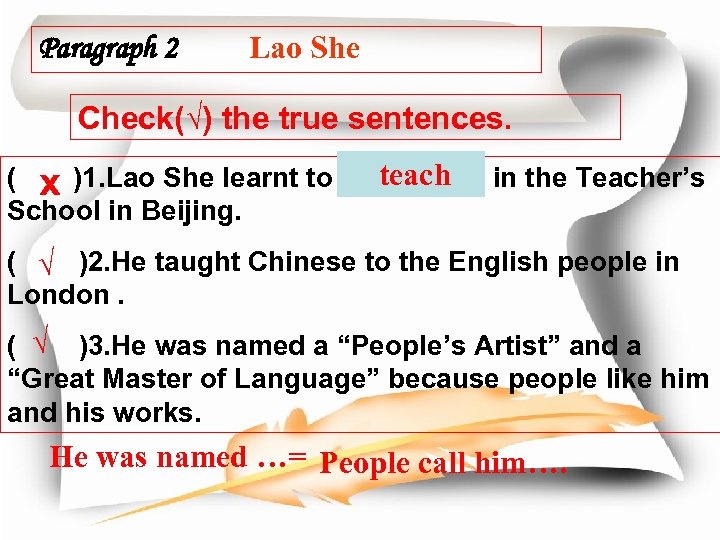 Paragraph 2 Lao She Check(√) the true sentences. teach ( ⅹ )1. Lao She learnt to write plays in the Teacher’s School in Beijing. ( √ )2. He taught Chinese to the English people in London. ( √ )3. He was named a “People’s Artist” and a “Great Master of Language” because people like him and his works. He was named …= People call him….
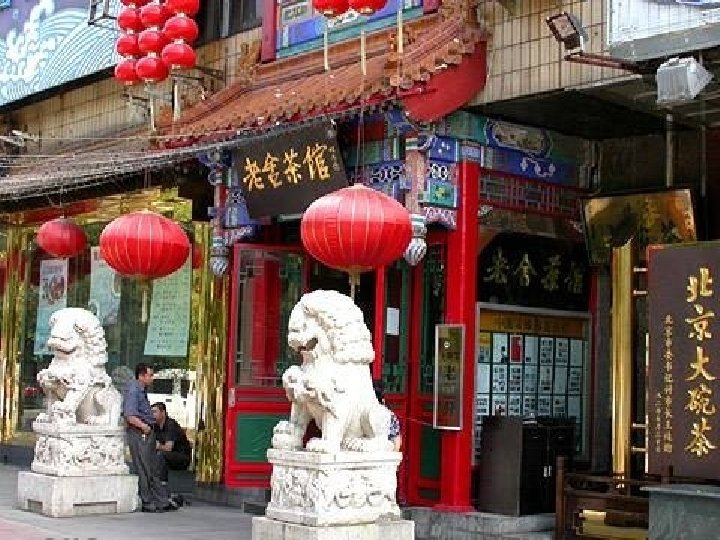
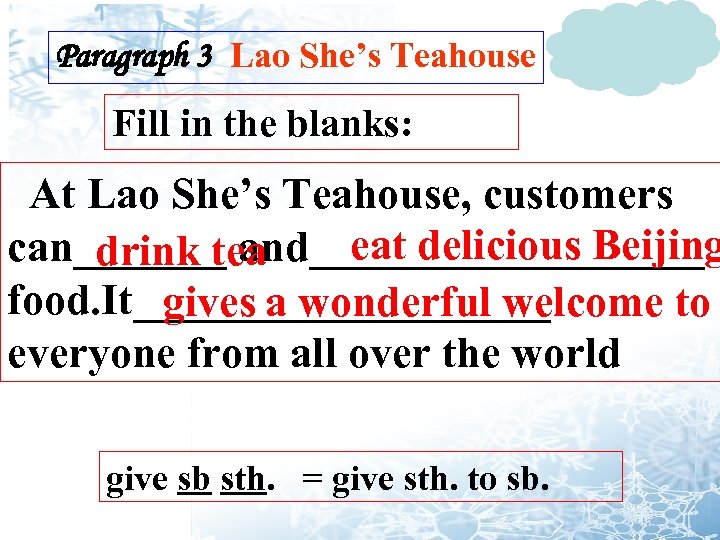 Paragraph 3 Lao She’s Teahouse Fill in the blanks: At Lao She’s Teahouse, customers eat delicious Beijing can_______ and_________ drink tea food. It__________ gives a wonderful welcome to everyone from all over the world give sb sth. = give sth. to sb.
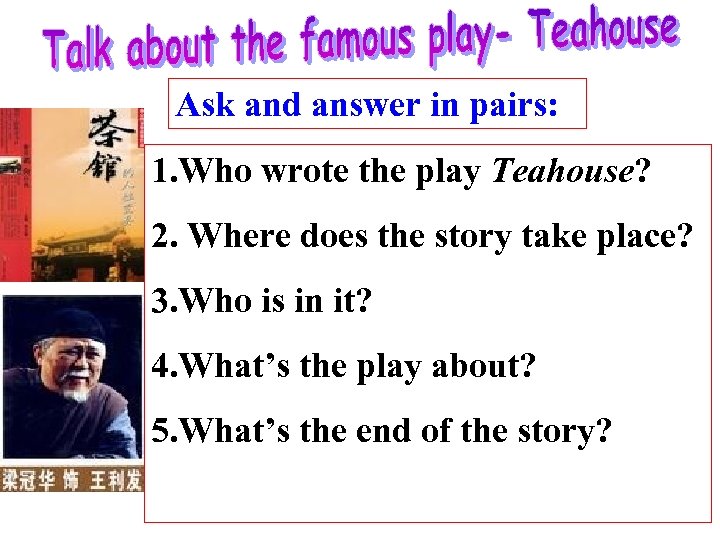 Ask and answer in pairs: 1. Who wrote the play Teahouse? 2. Where does the story take place? 3. Who is in it? 4. What’s the play about? 5. What’s the end of the story?
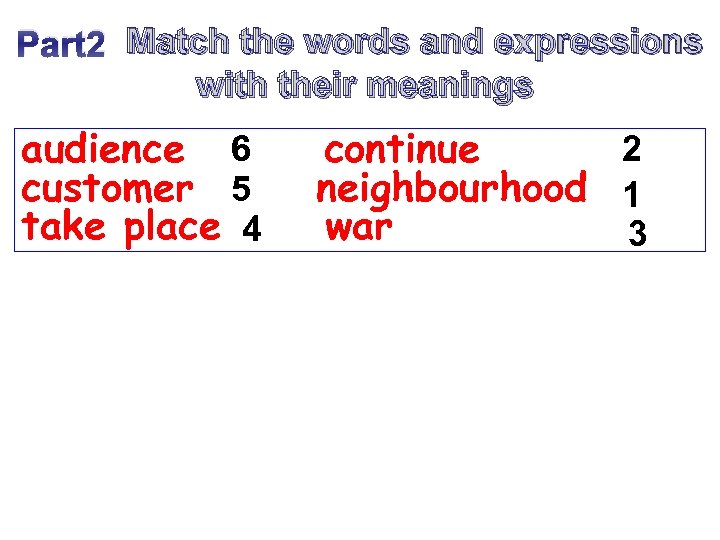 Part 2 Match the words and expressions with their meanings audience 6 customer 5 take place 4 2 continue neighbourhood 1 war 3
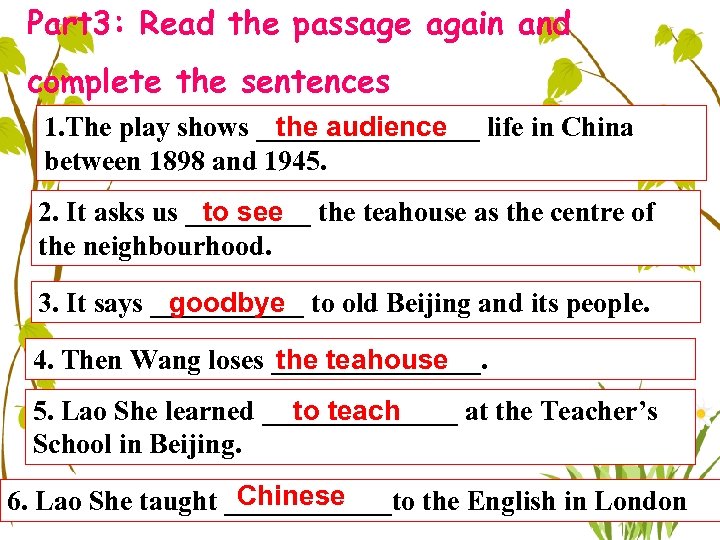 Part 3: Read the passage again and complete the sentences 1. The play shows ________ life in China the audience between 1898 and 1945. 2. It asks us _____ the teahouse as the centre of to see the neighbourhood. 3. It says ______ to old Beijing and its people. goodbye 4. Then Wang loses ________. the teahouse 5. Lao She learned _______ at the Teacher’s to teach School in Beijing. Chinese 6. Lao She taught ______to the English in London
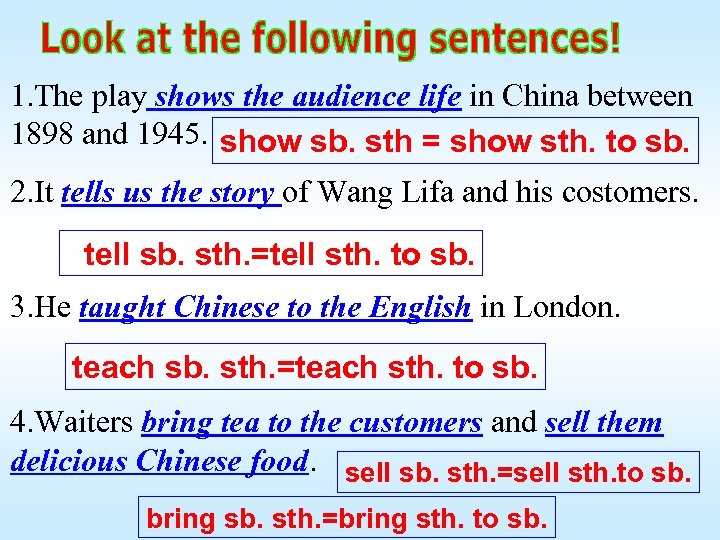 1. The play shows the audience life in China between 1898 and 1945. show sb. sth = show sth. to sb. 2. It tells us the story of Wang Lifa and his costomers. tell sb. sth. =tell sth. to sb. 3. He taught Chinese to the English in London. teach sb. sth. =teach sth. to sb. 4. Waiters bring tea to the customers and sell them delicious Chinese food. sell sb. sth. =sell sth. to sb. bring sb. sth. =bring sth. to sb.
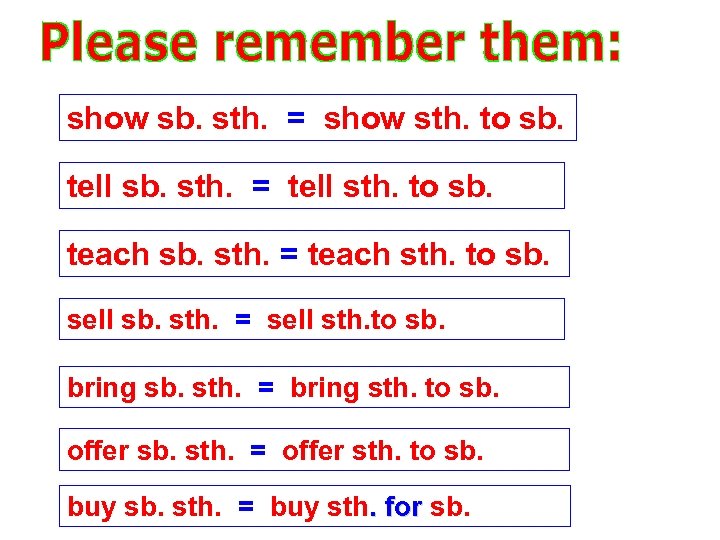 show sb. sth. = show sth. to sb. tell sb. sth. = tell sth. to sb. teach sb. sth. = teach sth. to sb. sell sb. sth. = sell sth. to sb. bring sb. sth. = bring sth. to sb. offer sb. sth. = offer sth. to sb. buy sb. sth. = buy sth. for sb.
 Language points 1. It asks us to see the teahouse as the centre of the neighbourhood. 2. Finally, it says goodbye to old Beijing and its people. 3. The story starts in 1898 during the Qing Dynasty. It continues in 1916. 4. and finally, it brings the audience to the end of the Anti-Japanese War in 1945. 5. From 1924 to 1929 he taught Chinese to the English in London. 6. He was named a “ People’s Artist ” 7. He was one of the greatest Chinese writers of the twentieth century. 8. Lao She Teahouse gives a wonderful welcome to everyone from China and from all over the world.
 Writing Read the passage and find sentences which answer the questions. 1. What’s the name of it? 2. Where does it take place? 3. Who is in it? 4. What’s the story? 5. What was the best part? 6. What’s the writer’s opinion?
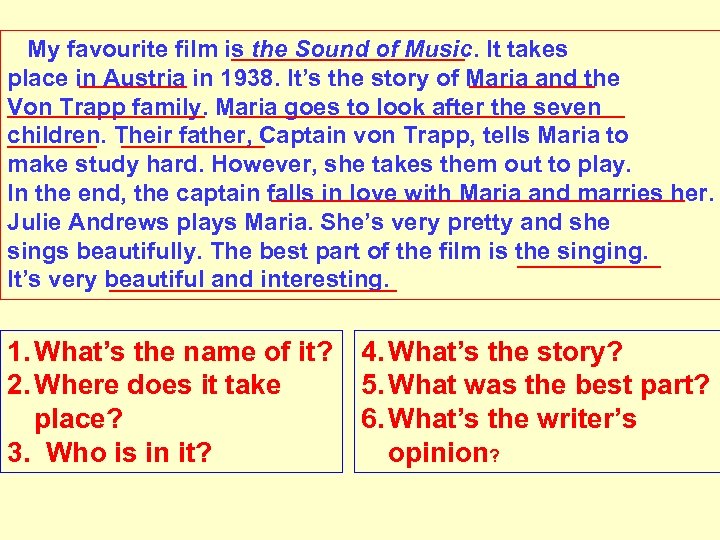 _______ My favourite film is the Sound of Music. It takes _______ place in Austria in 1938. It’s the story of Maria and the ______ Maria goes to look after the seven Von Trapp family. ___________ Their father, Captain von Trapp, tells Maria to children. ____ make study hard. However, she takes them out to play. ____________ In the end, the captain falls in love with Maria and marries her. Julie Andrews plays Maria. She’s very pretty and she sings beautifully. The best part of the film is the singing. ____________ It’s very beautiful and interesting. 1. What’s the name of it? 2. Where does it take place? 3. Who is in it? 4. What’s the story? 5. What was the best part? 6. What’s the writer’s opinion?
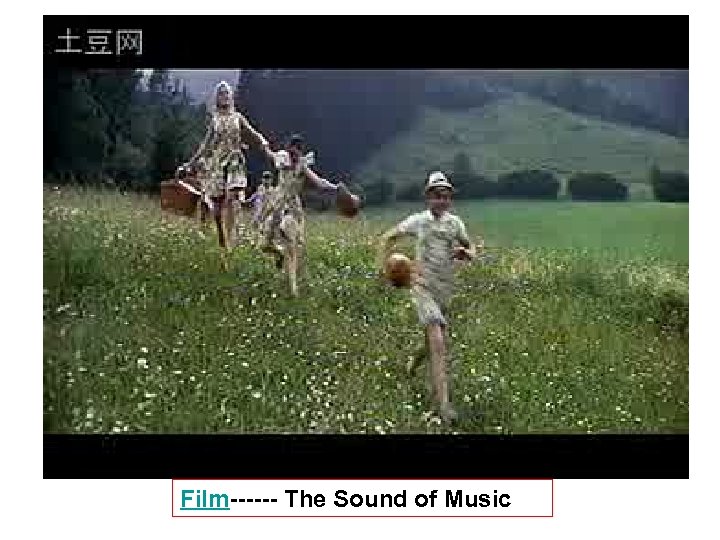 Film------ The Sound of Music
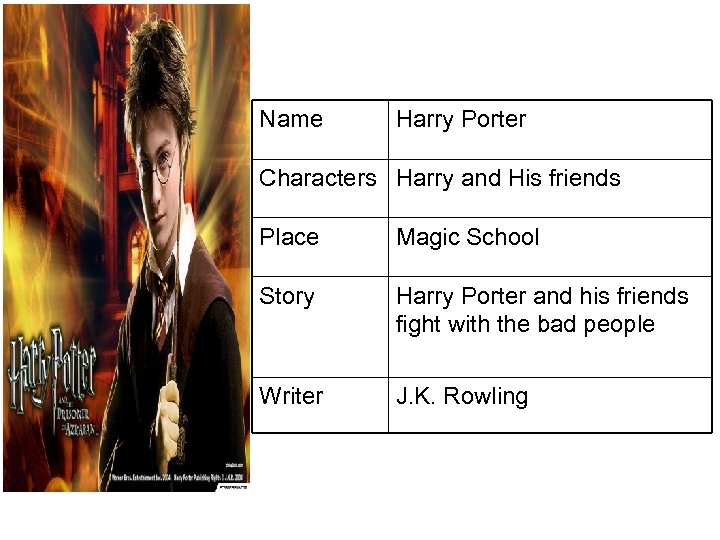 Name Harry Porter Characters Harry and His friends Place Magic School Story Harry Porter and his friends fight with the bad people Writer J. K. Rowling
 • The name of the film is Harry Porter. The story was written by J. K. Rowling. It takes place in a magic school. It tells us the story of Harry Porter and his friends. They fight with the bad people. It's very interesting and exciting.
 Homework 1. Remember the words and expressions we learned in the class. 2. What is your favorite film / book / TV play? Write an article about it.
 Retell Paragraph 1 : Lao She … in 1957. His story … in a teahouse in Beijing. It’s the story of …. The play shows … between 1898 and 1945. Finally, Wang … and he dies. The teahouse says … old Beijing and its people.
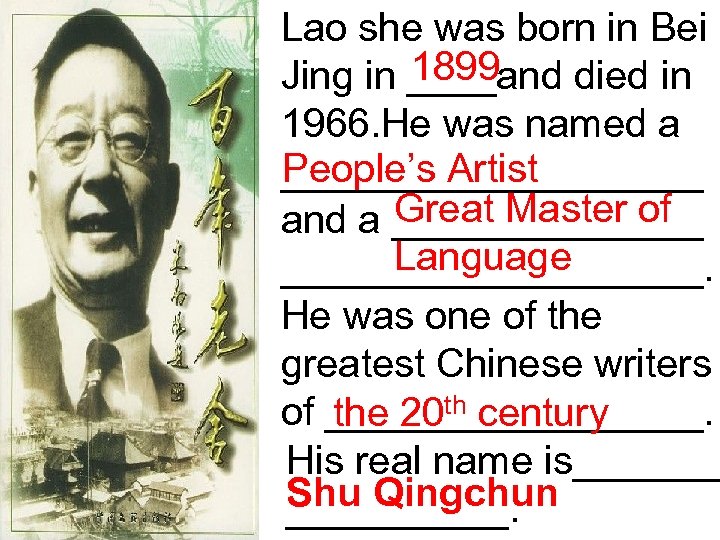 Lao she was born in Bei 1899 Jing in ____and died in 1966. He was named a People’s Artist __________ Great Master of and a _______ Language __________. He was one of the greatest Chinese writers of _________. the 20 th century His real name is_______ Shu Qingchun _____.
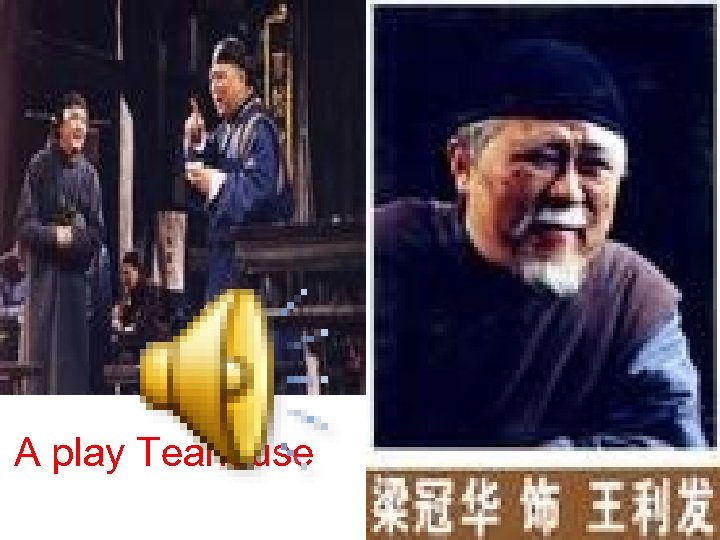 A play Teahouse
 Reading: wrote Lao she _____ Teahouse in 1957. The play shows the ______ in China between 1898 and audience life takes place 1945. It ______ in a teahouse in old Beijing. customers Wang Lifa It tells us the story of _____ and his______. It asks centre as us to____ the teahouse ___ the _____ of the see neighborhood. The story starts in 1898 during the continues ______. It ______ in 1916. It brings the Qing Dynasty Anti-Japanese War audience to the end of the ______ in loses 1945. After the war, Wang ______ the teahouse And he dies.