 Скачать презентацию Free Markets I Economic and Behavioral Foundations of
b533ed5c6d2e072fe0a2d13e7e9fd79a.ppt
- Количество слайдов: 37



Free. Markets I. Economic and Behavioral Foundations of Pricing II. Innovative Pricing Concepts and Tools III. Internet Pricing Models Teck-Hua Ho 1
Revenue Model Design Teck-Hua Ho 2
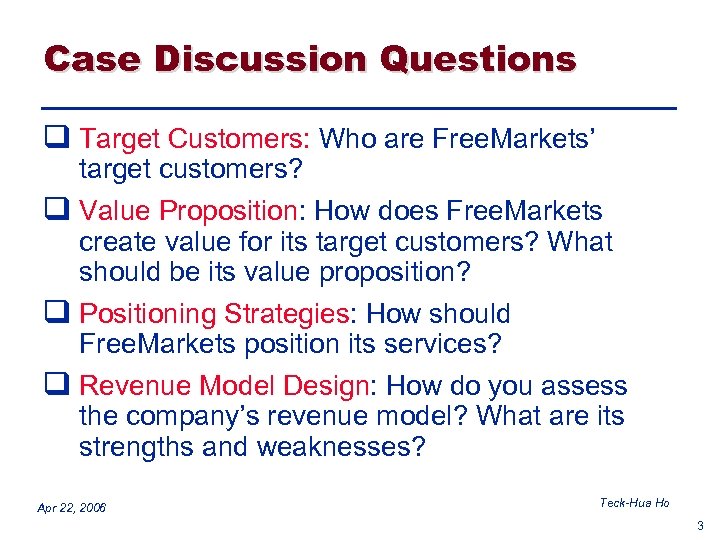
Case Discussion Questions q Target Customers: Who are Free. Markets’ target customers? q Value Proposition: How does Free. Markets create value for its target customers? What should be its value proposition? q Positioning Strategies: How should Free. Markets position its services? q Revenue Model Design: How do you assess the company’s revenue model? What are its strengths and weaknesses? Apr 22, 2006 Teck-Hua Ho 3
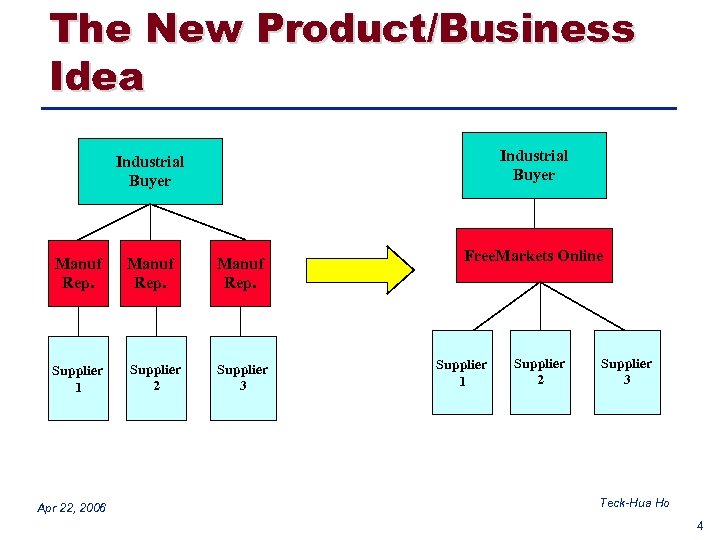
The New Product/Business Idea Industrial Buyer Manuf Rep. Supplier 1 Supplier 2 Supplier 3 Apr 22, 2006 Free. Markets Online Supplier 1 Supplier 2 Supplier 3 Teck-Hua Ho 4
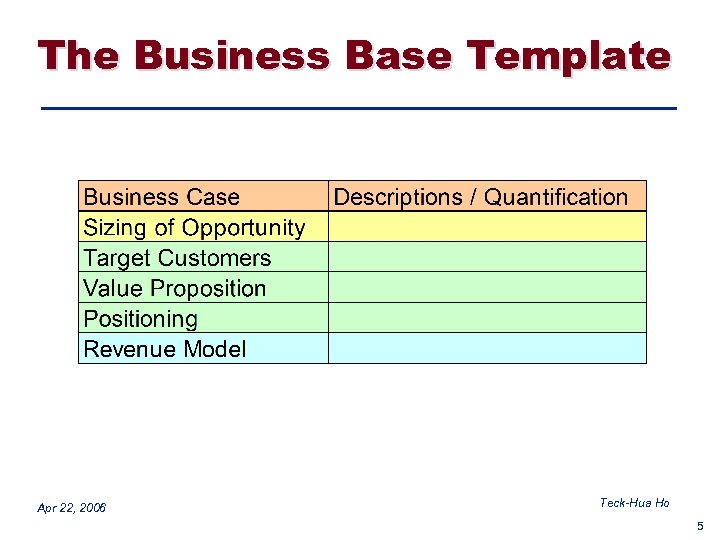
The Business Base Template Apr 22, 2006 Teck-Hua Ho 5
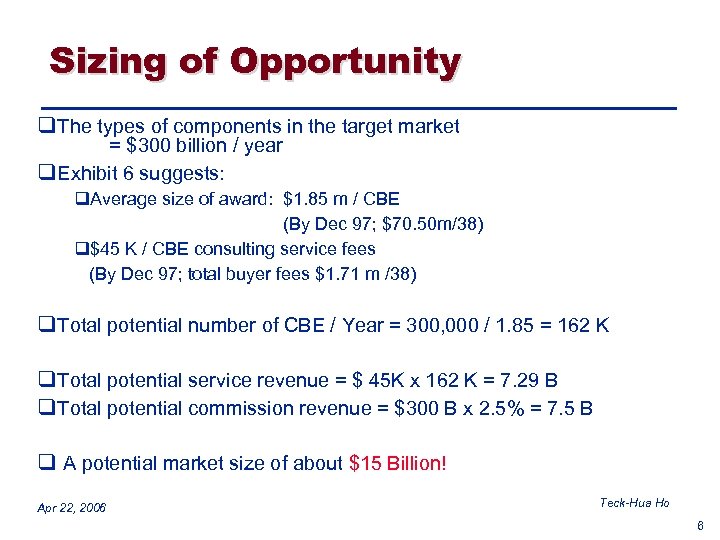
Sizing of Opportunity q. The types of components in the target market = $300 billion / year q. Exhibit 6 suggests: q. Average size of award: $1. 85 m / CBE (By Dec 97; $70. 50 m/38) q$45 K / CBE consulting service fees (By Dec 97; total buyer fees $1. 71 m /38) q. Total potential number of CBE / Year = 300, 000 / 1. 85 = 162 K q. Total potential service revenue = $ 45 K x 162 K = 7. 29 B q. Total potential commission revenue = $300 B x 2. 5% = 7. 5 B q A potential market size of about $15 Billion! Apr 22, 2006 Teck-Hua Ho 6
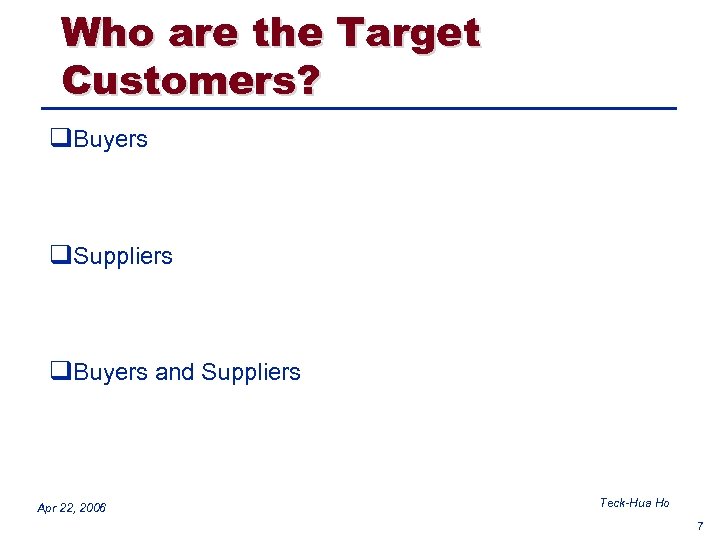
Who are the Target Customers? q. Buyers q. Suppliers q. Buyers and Suppliers Apr 22, 2006 Teck-Hua Ho 7
Who are the Target Customers? q. Buyers q. Suppliers q. Buyers and Suppliers Apr 22, 2006 Teck-Hua Ho 8
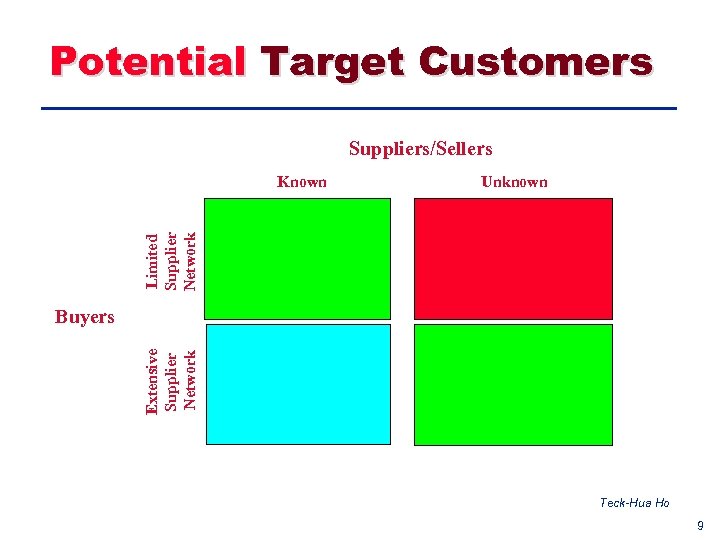
Potential Target Customers Suppliers/Sellers Unknown Limited Supplier Network Known Extensive Supplier Network Buyers Teck-Hua Ho 9
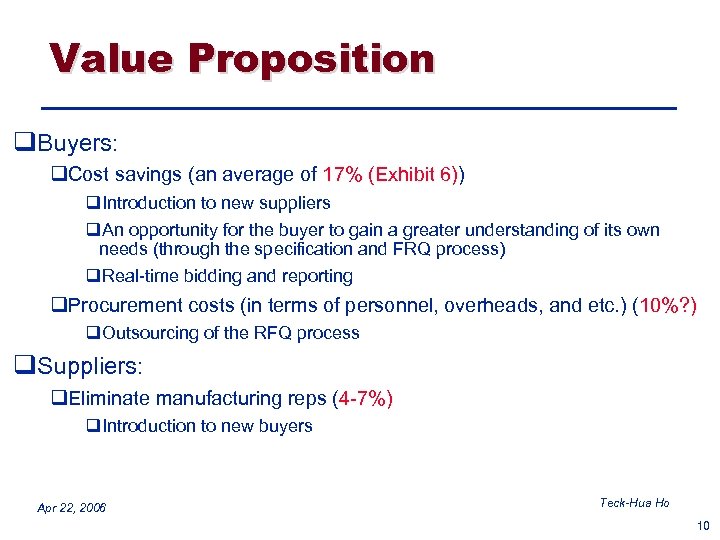
Value Proposition q. Buyers: q. Cost savings (an average of 17% (Exhibit 6)) q. Introduction to new suppliers q. An opportunity for the buyer to gain a greater understanding of its own needs (through the specification and FRQ process) q. Real-time bidding and reporting q. Procurement costs (in terms of personnel, overheads, and etc. ) (10%? ) q. Outsourcing of the RFQ process q. Suppliers: q. Eliminate manufacturing reps (4 -7%) q. Introduction to new buyers Apr 22, 2006 Teck-Hua Ho 10
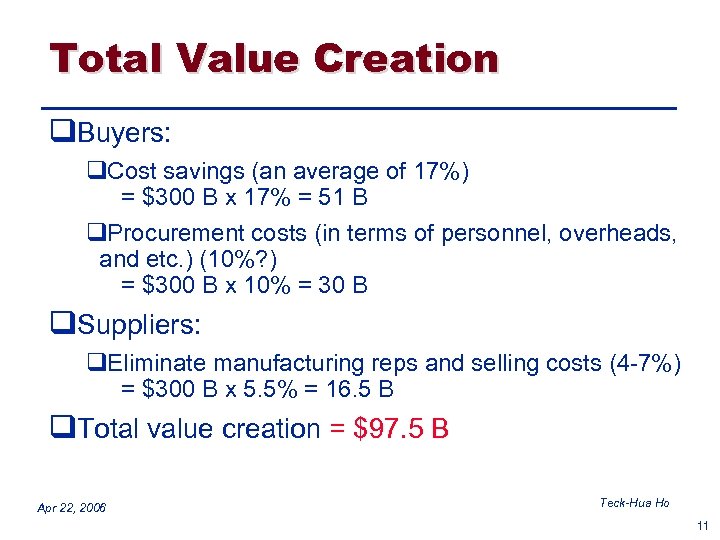
Total Value Creation q. Buyers: q. Cost savings (an average of 17%) = $300 B x 17% = 51 B q. Procurement costs (in terms of personnel, overheads, and etc. ) (10%? ) = $300 B x 10% = 30 B q. Suppliers: q. Eliminate manufacturing reps and selling costs (4 -7%) = $300 B x 5. 5% = 16. 5 B q. Total value creation = $97. 5 B Apr 22, 2006 Teck-Hua Ho 11
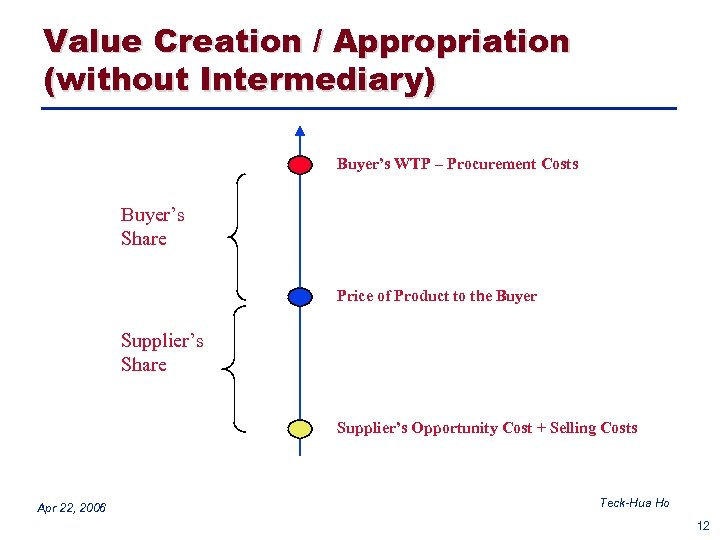
Value Creation / Appropriation (without Intermediary) Buyer’s WTP – Procurement Costs Buyer’s Share Price of Product to the Buyer Supplier’s Share Supplier’s Opportunity Cost + Selling Costs Apr 22, 2006 Teck-Hua Ho 12
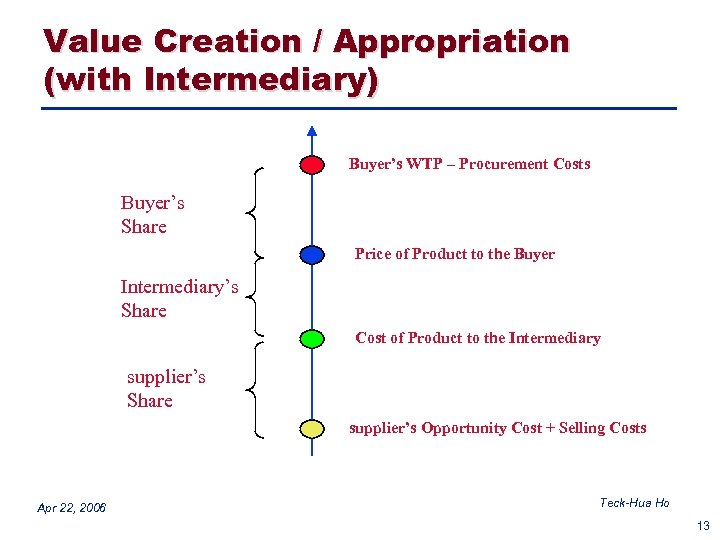
Value Creation / Appropriation (with Intermediary) Buyer’s WTP – Procurement Costs Buyer’s Share Price of Product to the Buyer Intermediary’s Share Cost of Product to the Intermediary supplier’s Share supplier’s Opportunity Cost + Selling Costs Apr 22, 2006 Teck-Hua Ho 13
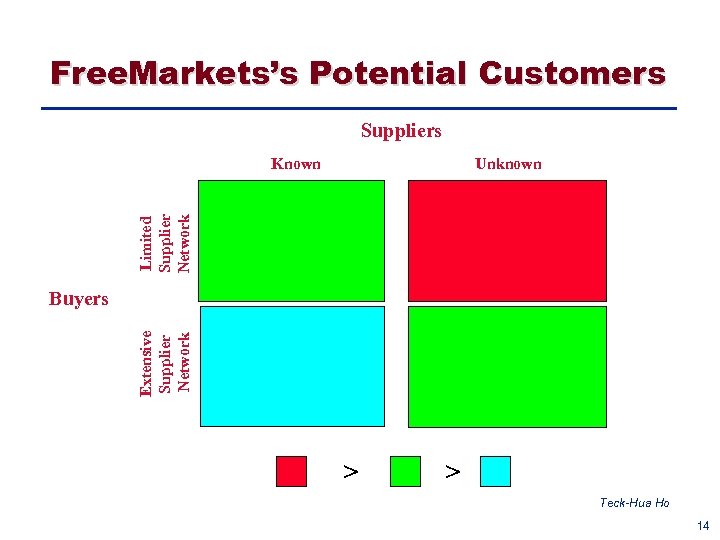
Free. Markets’s Potential Customers Suppliers Unknown Limited Supplier Network Known Extensive Supplier Network Buyers > > Teck-Hua Ho 14
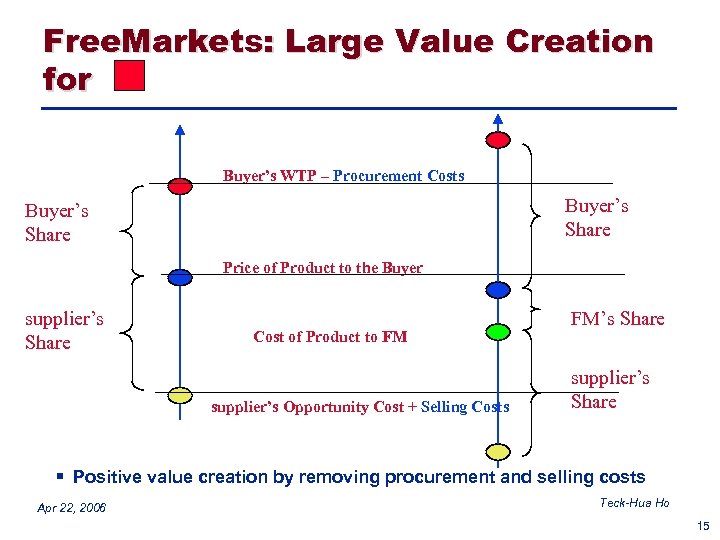
Free. Markets: Large Value Creation for Buyer’s WTP – Procurement Costs Buyer’s Share Price of Product to the Buyer supplier’s Share Cost of Product to FM supplier’s Opportunity Cost + Selling Costs FM’s Share supplier’s Share § Positive value creation by removing procurement and selling costs Apr 22, 2006 Teck-Hua Ho 15
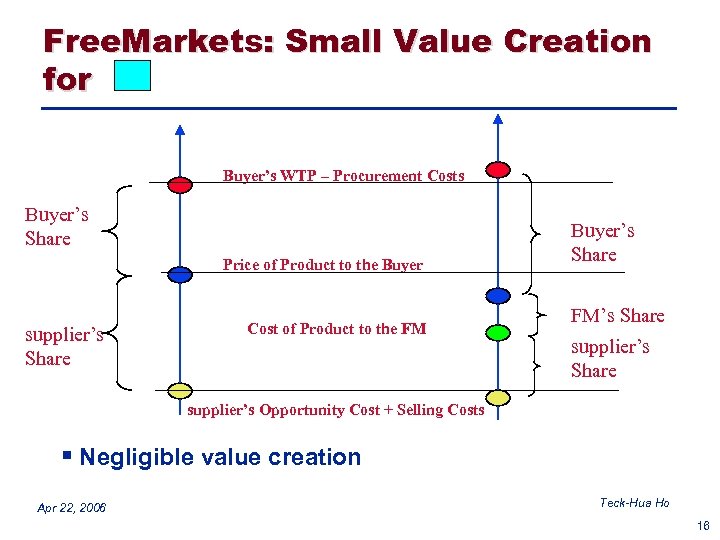
Free. Markets: Small Value Creation for Buyer’s WTP – Procurement Costs Buyer’s Share Price of Product to the Buyer supplier’s Share Cost of Product to the FM Buyer’s Share FM’s Share supplier’s Opportunity Cost + Selling Costs § Negligible value creation Apr 22, 2006 Teck-Hua Ho 16
Current Positioning § A hybrid business model of consulting and sales commission services § Consulting model (Buyers): § High value-added consulting service § Requires investment in human capital (i. e. , industry experts) so that Free. Markets can be perceived as a thought leader § Sales commission model (Suppliers) § Smaller than 4 -7% in commission § New businesses Apr 22, 2006 Teck-Hua Ho 17
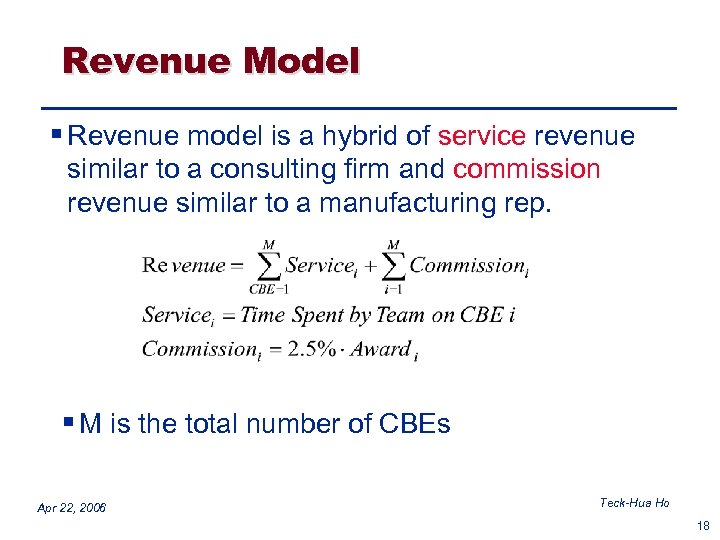
Revenue Model § Revenue model is a hybrid of service revenue similar to a consulting firm and commission revenue similar to a manufacturing rep. § M is the total number of CBEs Apr 22, 2006 Teck-Hua Ho 18
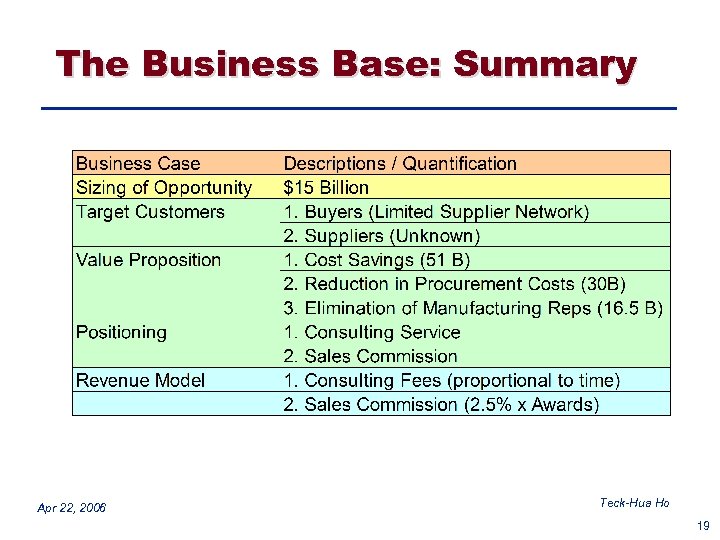
The Business Base: Summary Apr 22, 2006 Teck-Hua Ho 19
Three Major Problems § Value Proposition § Dynamics of value proposition § Target Customers and Positioning § Long-term winners and sustained value creation § Revenue Model § Incentive compatibility Apr 22, 2006 Teck-Hua Ho 20
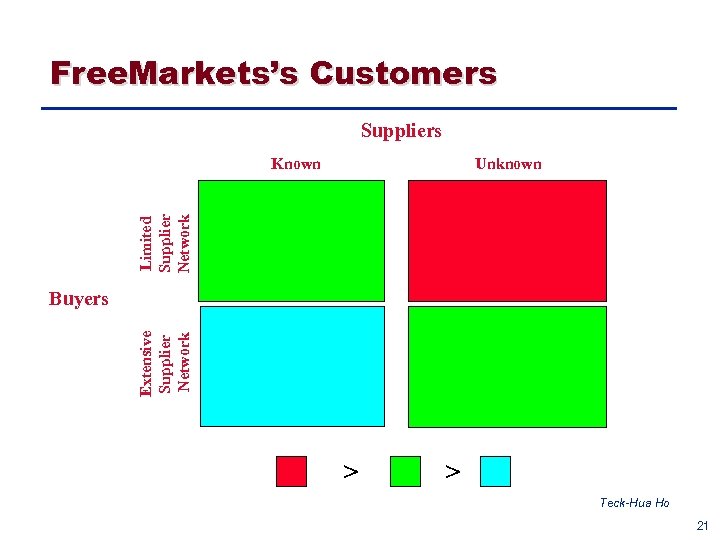
Free. Markets’s Customers Suppliers Unknown Limited Supplier Network Known Extensive Supplier Network Buyers > > Teck-Hua Ho 21
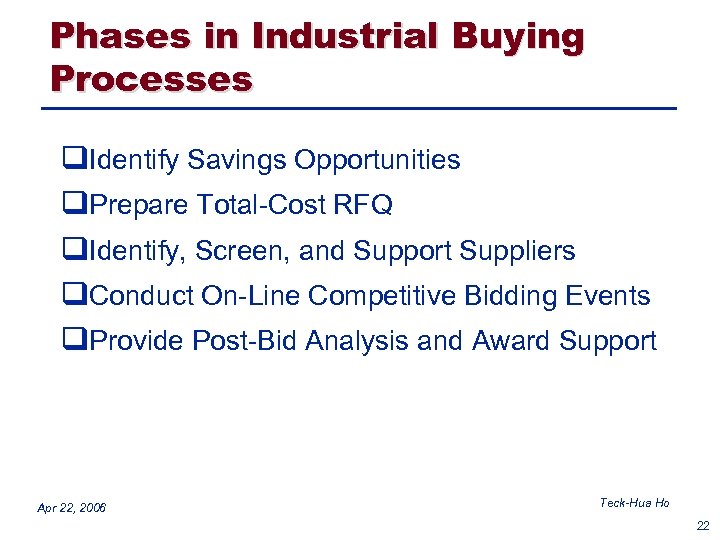
Phases in Industrial Buying Processes q. Identify Savings Opportunities q. Prepare Total-Cost RFQ q. Identify, Screen, and Support Suppliers q. Conduct On-Line Competitive Bidding Events q. Provide Post-Bid Analysis and Award Support Apr 22, 2006 Teck-Hua Ho 22
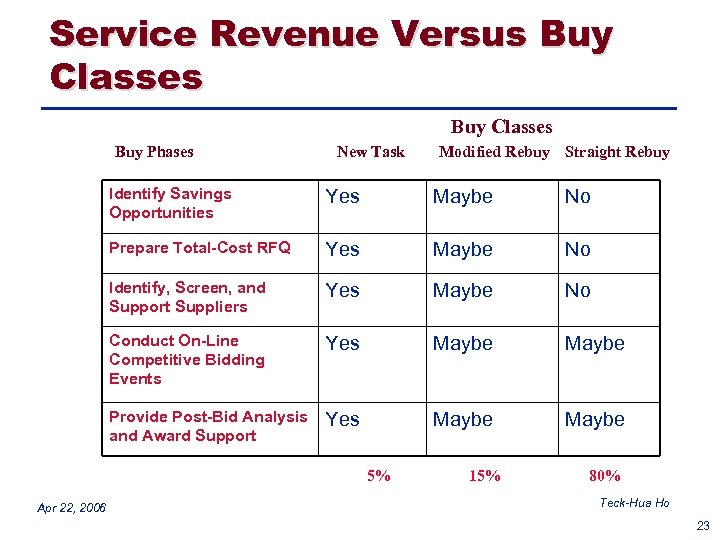
Service Revenue Versus Buy Classes Buy Phases New Task Modified Rebuy Straight Rebuy Identify Savings Opportunities Yes Maybe No Prepare Total-Cost RFQ Yes Maybe No Identify, Screen, and Support Suppliers Yes Maybe No Conduct On-Line Competitive Bidding Events Yes Maybe Provide Post-Bid Analysis and Award Support Yes Maybe 5% Apr 22, 2006 15% 80% Teck-Hua Ho 23
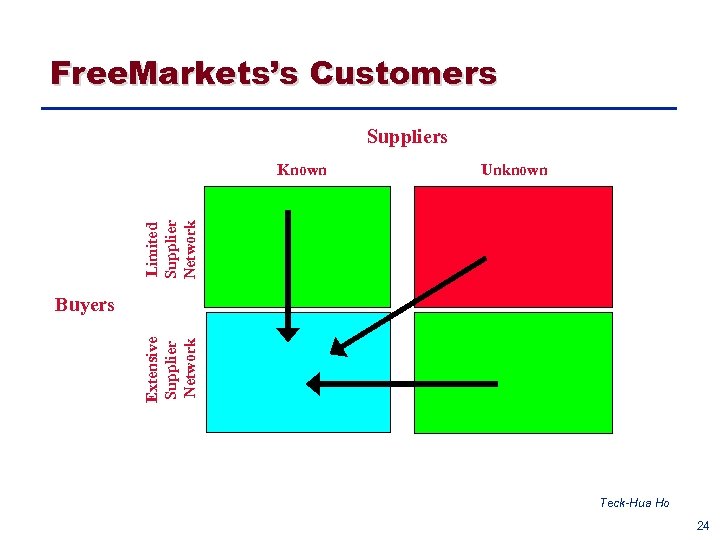
Free. Markets’s Customers Suppliers Unknown Limited Supplier Network Known Extensive Supplier Network Buyers Teck-Hua Ho 24
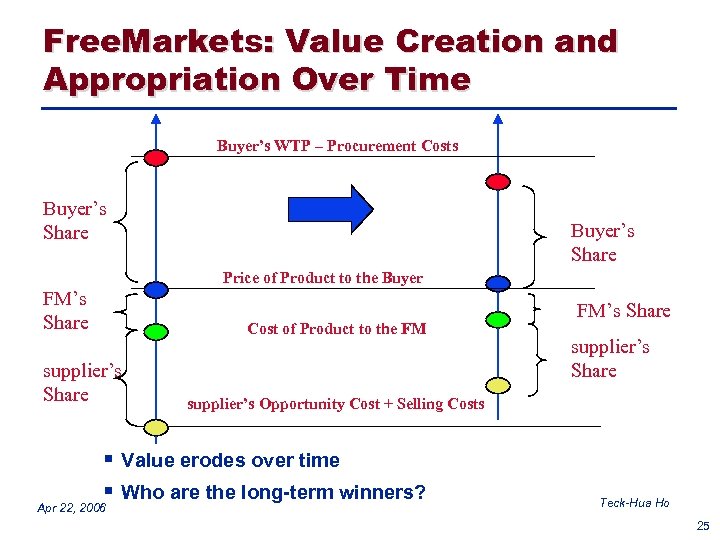
Free. Markets: Value Creation and Appropriation Over Time Buyer’s WTP – Procurement Costs Buyer’s Share Price of Product to the Buyer FM’s Share Cost of Product to the FM supplier’s Share supplier’s Opportunity Cost + Selling Costs § Value erodes over time § Who are the long-term winners? Apr 22, 2006 FM’s Share Teck-Hua Ho 25
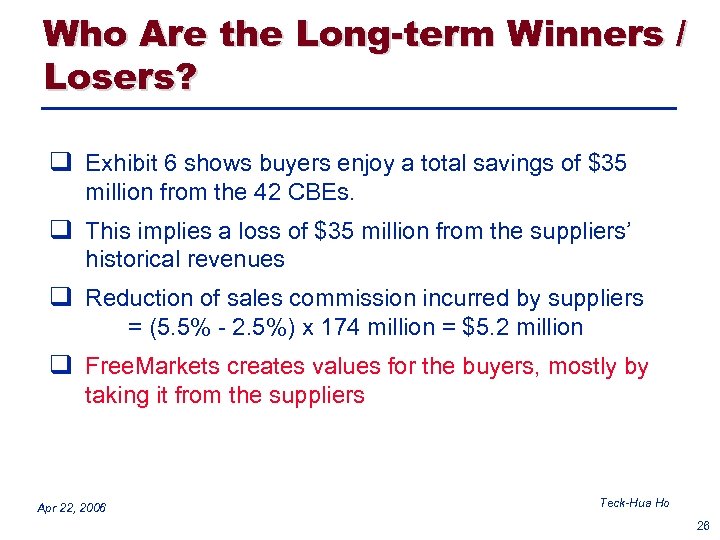
Who Are the Long-term Winners / Losers? q Exhibit 6 shows buyers enjoy a total savings of $35 million from the 42 CBEs. q This implies a loss of $35 million from the suppliers’ historical revenues q Reduction of sales commission incurred by suppliers = (5. 5% - 2. 5%) x 174 million = $5. 2 million q Free. Markets creates values for the buyers, mostly by taking it from the suppliers Apr 22, 2006 Teck-Hua Ho 26
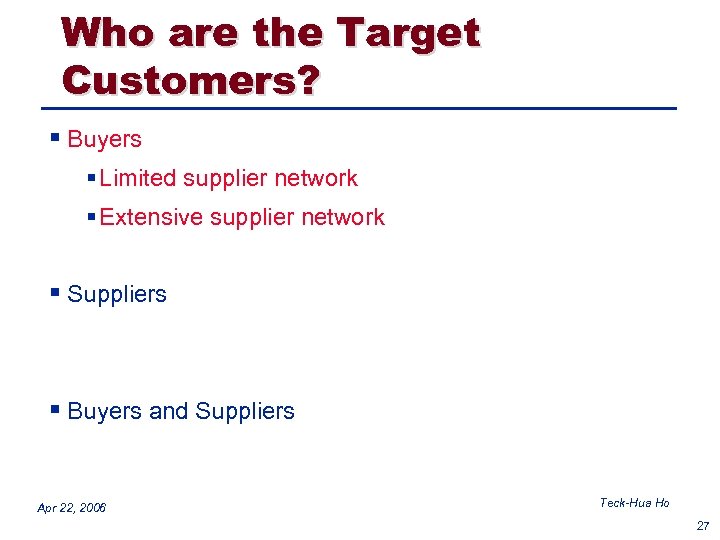
Who are the Target Customers? § Buyers § Limited supplier network § Extensive supplier network § Suppliers § Buyers and Suppliers Apr 22, 2006 Teck-Hua Ho 27
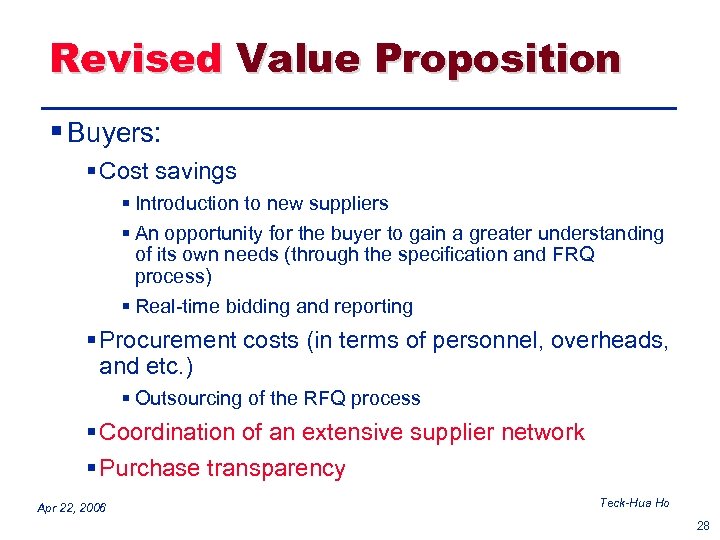
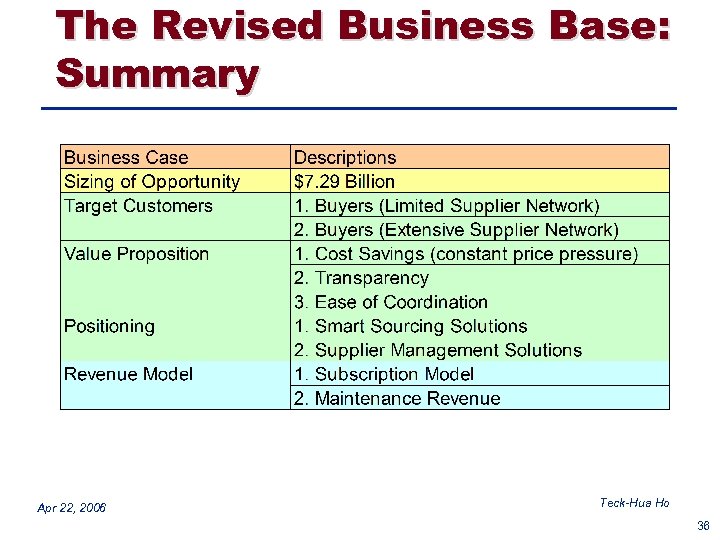
Revised Value Proposition § Buyers: § Cost savings § Introduction to new suppliers § An opportunity for the buyer to gain a greater understanding of its own needs (through the specification and FRQ process) § Real-time bidding and reporting § Procurement costs (in terms of personnel, overheads, and etc. ) § Outsourcing of the RFQ process § Coordination of an extensive supplier network § Purchase transparency Apr 22, 2006 Teck-Hua Ho 28
Revised Positioning ? Apr 22, 2006 Teck-Hua Ho 29
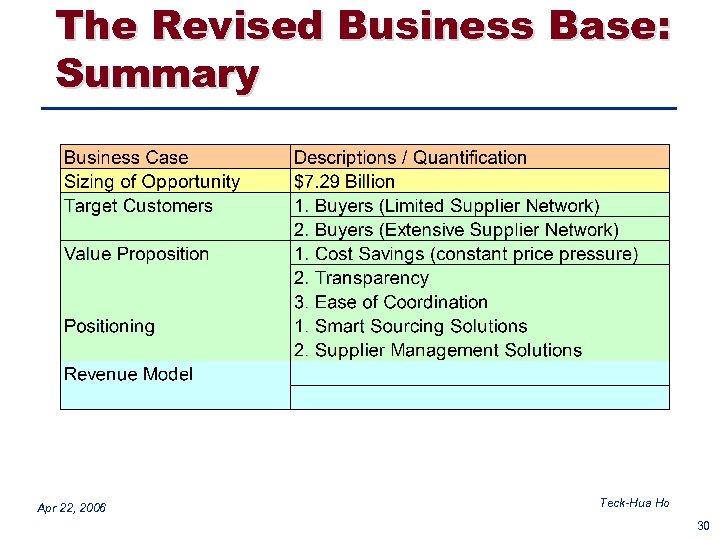
The Revised Business Base: Summary Apr 22, 2006 Teck-Hua Ho 30
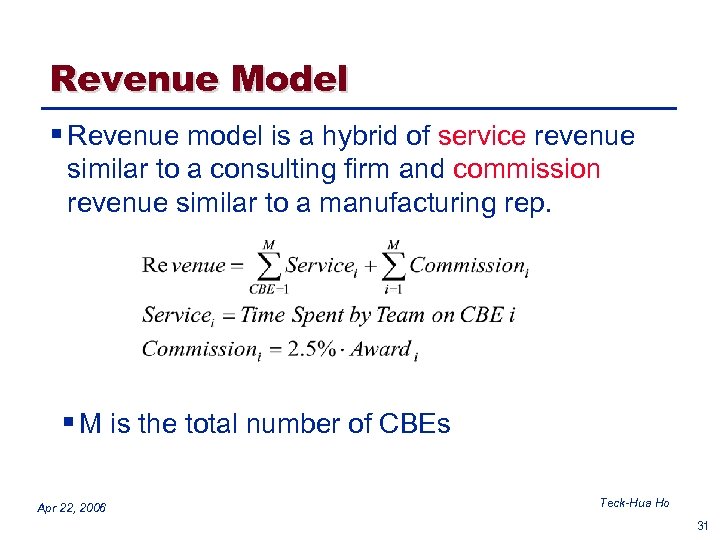
Revenue Model § Revenue model is a hybrid of service revenue similar to a consulting firm and commission revenue similar to a manufacturing rep. § M is the total number of CBEs Apr 22, 2006 Teck-Hua Ho 31
Service Revenue § Free. Markets must invest substantially up-front (e. g. , industry experts) in understanding a new client’s buying process and her product procurement requirements § Once the RFQ is written and suppliers identified, a buyer merely needs to run the auction again § The service revenue model does not allow Free. Markets to benefit from their accumulation of expertise because the more they understand the buying process, the shorter will be their engagements, and hence they will collect lower service revenue Apr 22, 2006 Teck-Hua Ho 32
Commission Revenue § Free. Markets’ success depends on their ability to find similar suppliers who bid against each other § Few suppliers will be happy paying commissions to a company that helps to reduce their margins § The more they save buyers the less they receive in service revenue § The value proposition remains only for those small, unknown suppliers that need access to these large buyers § But once the connection is made, there seems like a large incentive for the suppliers to sell directly to the buyer (By Dec 97, expected commissions = 2. 5% x $70. 5 m = $1. 76 m; actual commissions = $0. 5 m (Exhibit 4)) Apr 22, 2006 Teck-Hua Ho 33
How to Lock-in Customers? ? Apr 22, 2006 Teck-Hua Ho 34
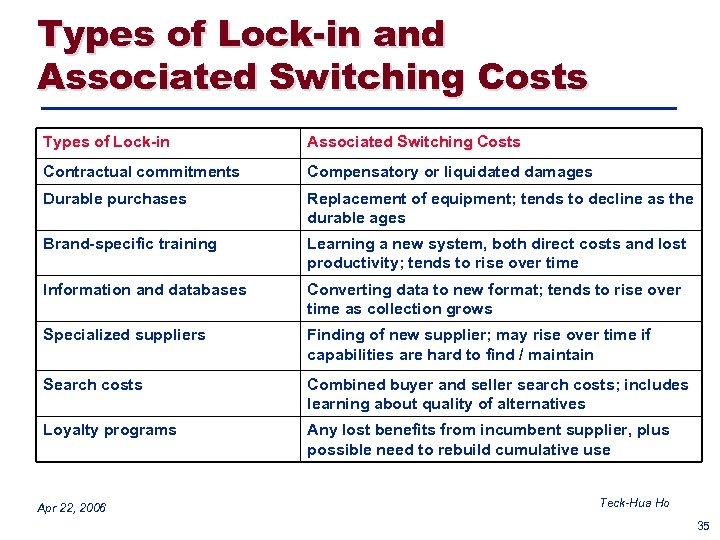
Types of Lock-in and Associated Switching Costs Types of Lock-in Associated Switching Costs Contractual commitments Compensatory or liquidated damages Durable purchases Replacement of equipment; tends to decline as the durable ages Brand-specific training Learning a new system, both direct costs and lost productivity; tends to rise over time Information and databases Converting data to new format; tends to rise over time as collection grows Specialized suppliers Finding of new supplier; may rise over time if capabilities are hard to find / maintain Search costs Combined buyer and seller search costs; includes learning about quality of alternatives Loyalty programs Any lost benefits from incumbent supplier, plus possible need to rebuild cumulative use Apr 22, 2006 Teck-Hua Ho 35
The Revised Business Base: Summary Apr 22, 2006 Teck-Hua Ho 36
Punchline q The target customers are long-run winners as a consequence of your new product or service introduction. q Position your product to emphasize its sustained value for your target customers. q Ensure that revenue components are incentive-compatible (the better you are the higher your revenue) q Build in a revenue component to increase customer lock-in, if possible. Apr 22, 2006 Teck-Hua Ho 37
Скачать презентацию Free Markets I Economic and Behavioral Foundations of
b533ed5c6d2e072fe0a2d13e7e9fd79a.ppt