


 Скачать презентацию Frankfurt Germany 6 -9 June 2011 ANALYSIS OF
eefde00bd8c571790026e6d20e91b20a.ppt
- Количество слайдов: 17
 Frankfurt (Germany), 6 -9 June 2011 ANALYSIS OF HARMONIC CURRENT INTERACTION IN AN INDUSTIAL PLANT Vladimir Ćuk*, Sjef Cobben*, Wil L. Kling*, Roelof B. Timens** TU Eindhoven – The Netherlands, ** Universiteit Twente – The Netherlands Presenter: Dr. ir. G. M. A. Vanalme TU Eindhoven The Netherlands Session: Power Quality and Electromagnetic Compatibility Paper 0580
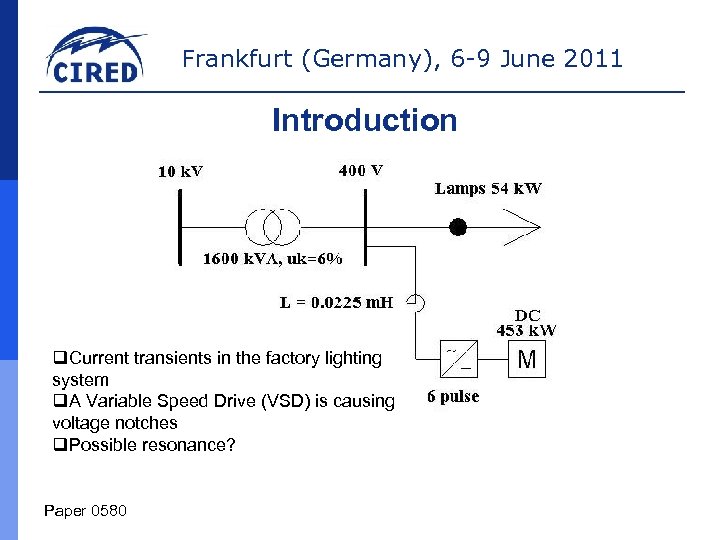 Frankfurt (Germany), 6 -9 June 2011 Introduction q. Current transients in the factory lighting system q. A Variable Speed Drive (VSD) is causing voltage notches q. Possible resonance? Paper 0580
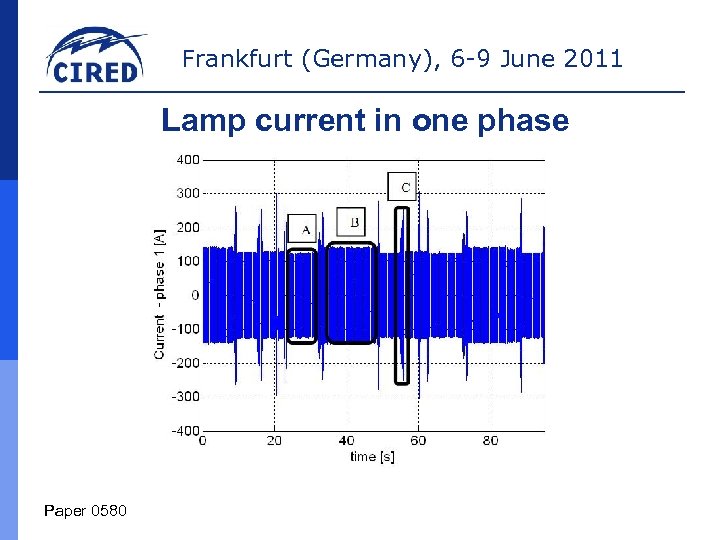 Frankfurt (Germany), 6 -9 June 2011 Lamp current in one phase Paper 0580
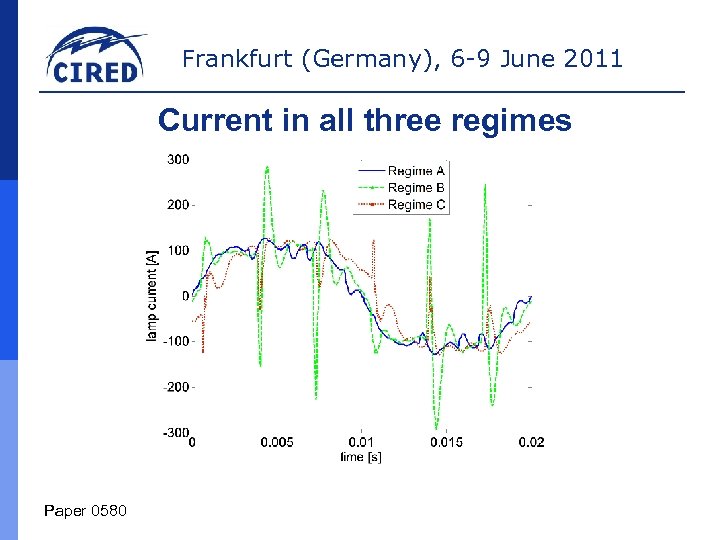 Frankfurt (Germany), 6 -9 June 2011 Current in all three regimes Paper 0580
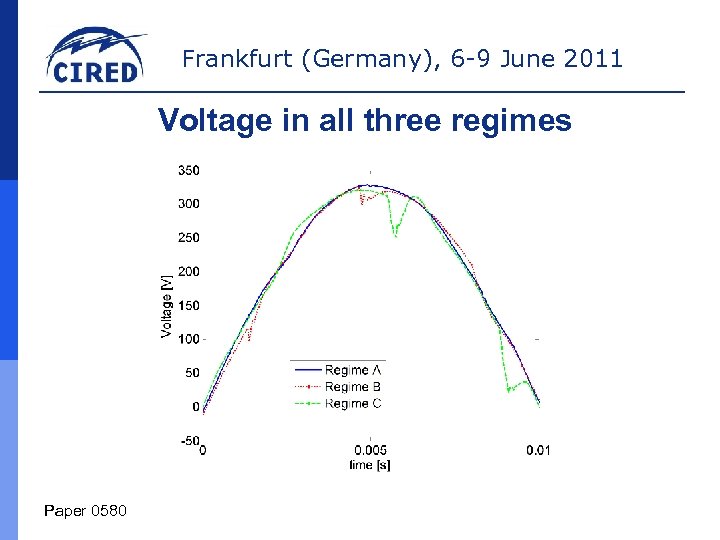 Frankfurt (Germany), 6 -9 June 2011 Voltage in all three regimes Paper 0580
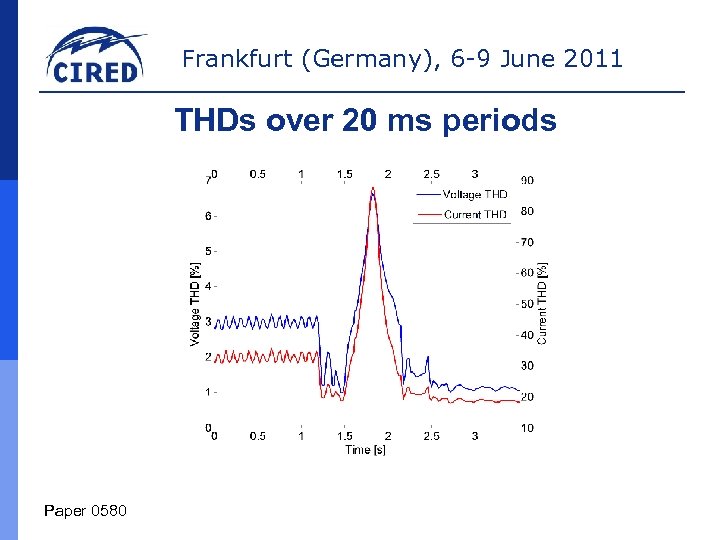 Frankfurt (Germany), 6 -9 June 2011 THDs over 20 ms periods Paper 0580
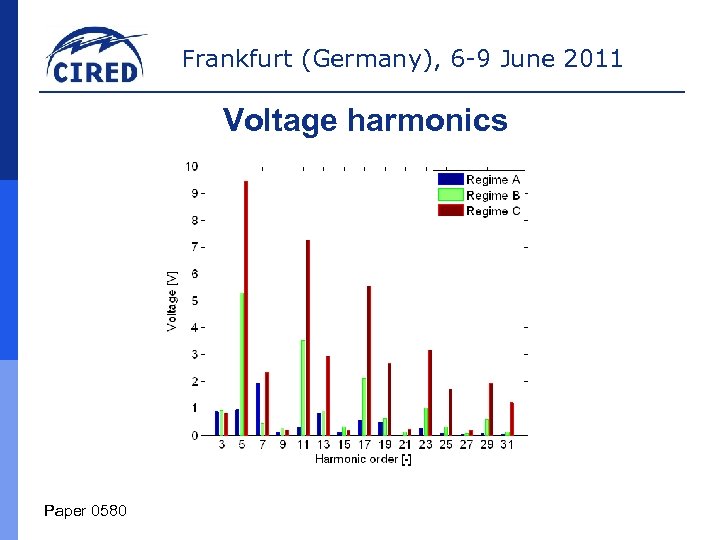 Frankfurt (Germany), 6 -9 June 2011 Voltage harmonics Paper 0580
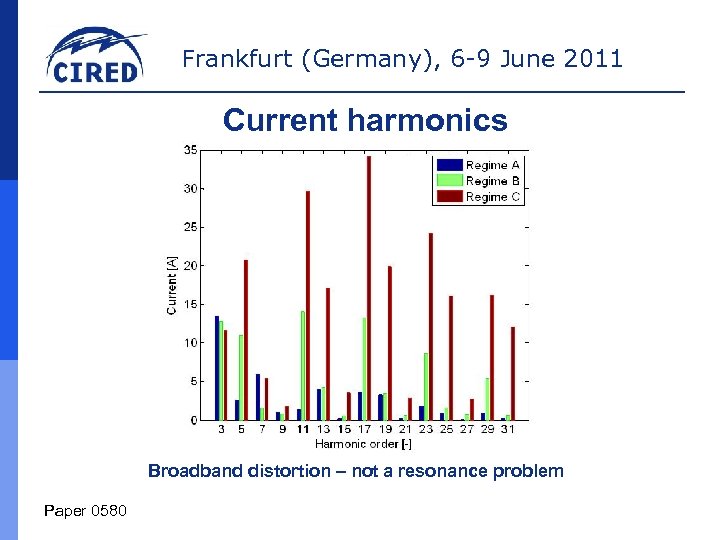 Frankfurt (Germany), 6 -9 June 2011 Current harmonics Broadband distortion – not a resonance problem Paper 0580
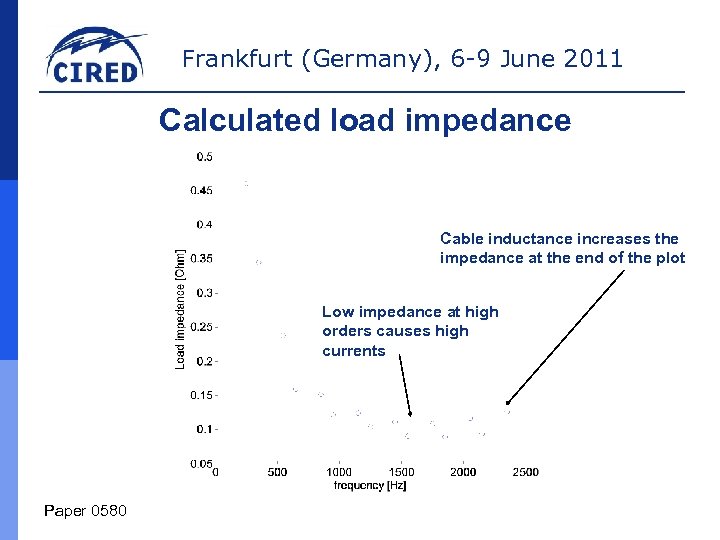 Frankfurt (Germany), 6 -9 June 2011 Calculated load impedance Cable inductance increases the impedance at the end of the plot Low impedance at high orders causes high currents Paper 0580
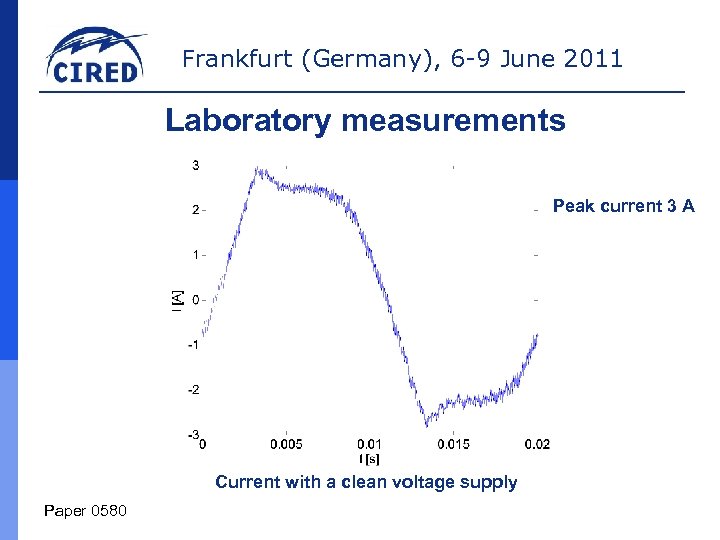 Frankfurt (Germany), 6 -9 June 2011 Laboratory measurements Peak current 3 A Current with a clean voltage supply Paper 0580
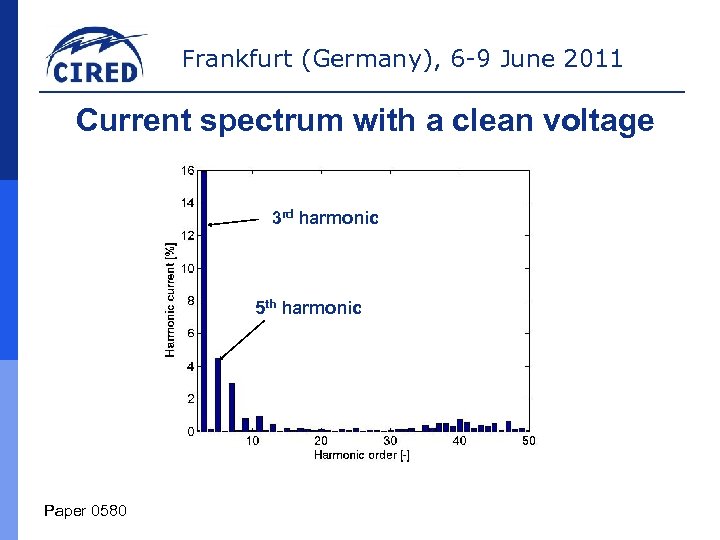 Frankfurt (Germany), 6 -9 June 2011 Current spectrum with a clean voltage 3 rd harmonic 5 th harmonic Paper 0580
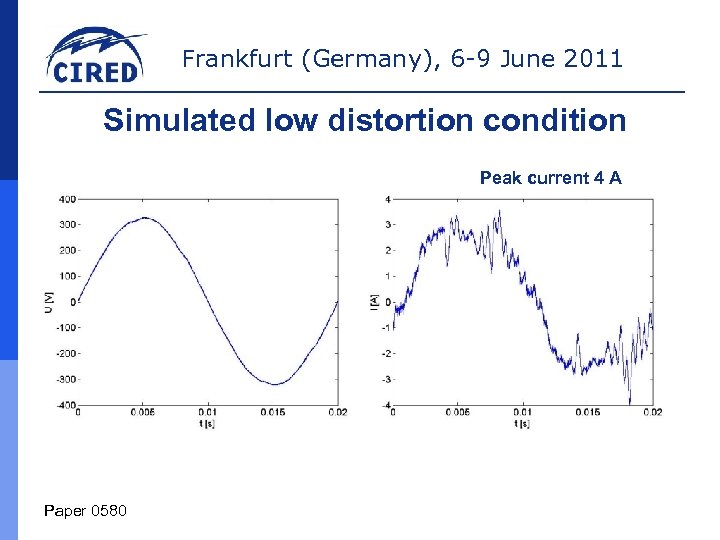 Frankfurt (Germany), 6 -9 June 2011 Simulated low distortion condition Peak current 4 A Paper 0580
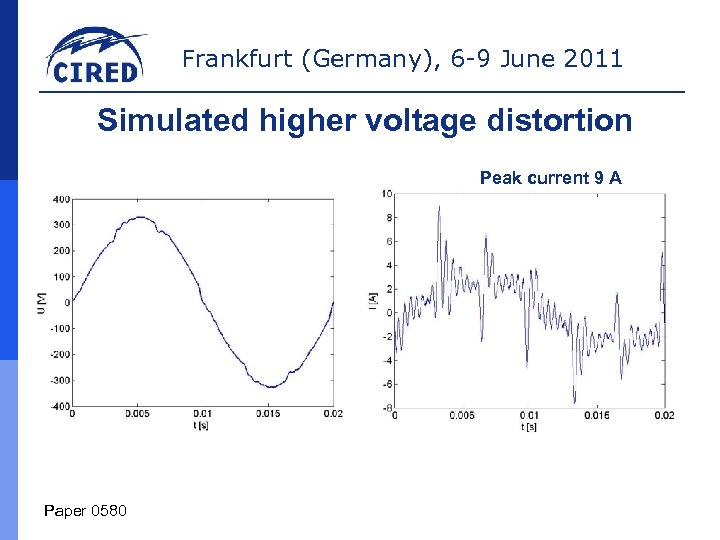 Frankfurt (Germany), 6 -9 June 2011 Simulated higher voltage distortion Peak current 9 A Paper 0580
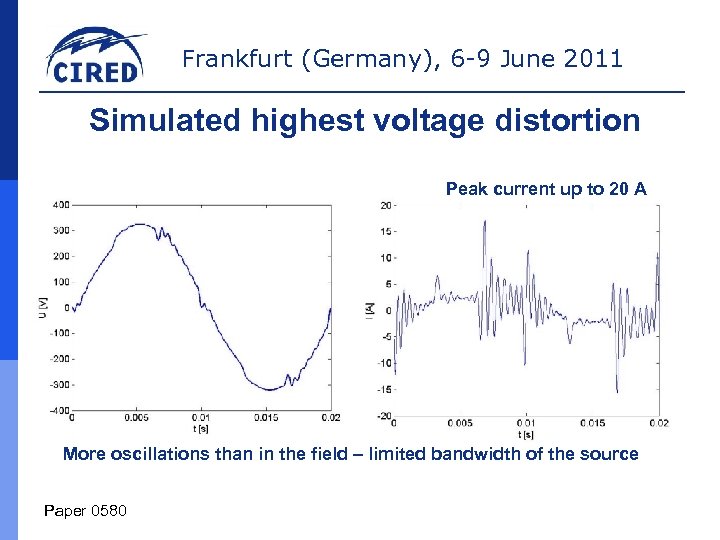 Frankfurt (Germany), 6 -9 June 2011 Simulated highest voltage distortion Peak current up to 20 A More oscillations than in the field – limited bandwidth of the source Paper 0580
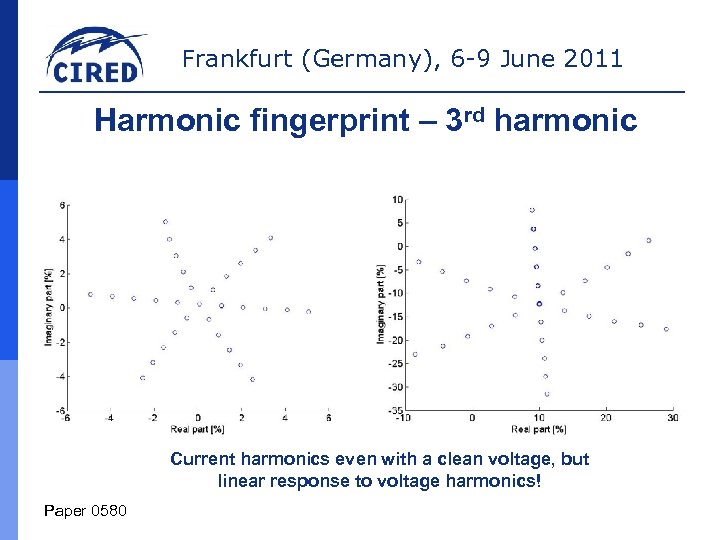 Frankfurt (Germany), 6 -9 June 2011 Harmonic fingerprint – 3 rd harmonic Current harmonics even with a clean voltage, but linear response to voltage harmonics! Paper 0580
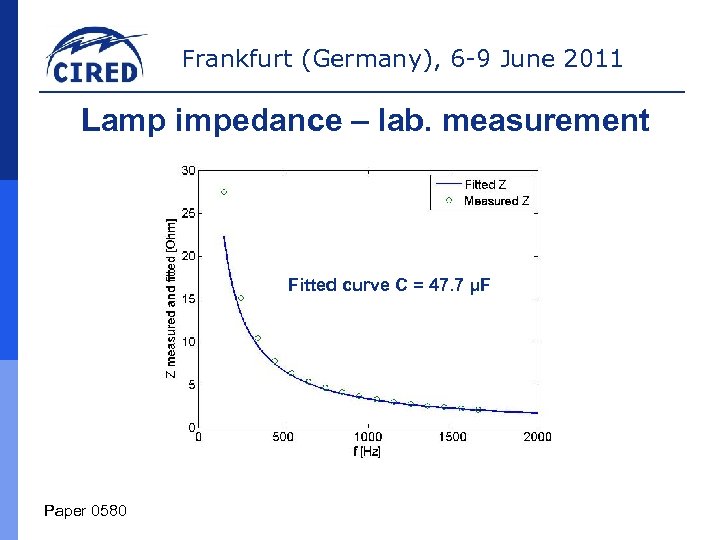 Frankfurt (Germany), 6 -9 June 2011 Lamp impedance – lab. measurement Fitted curve C = 47. 7 μF Paper 0580
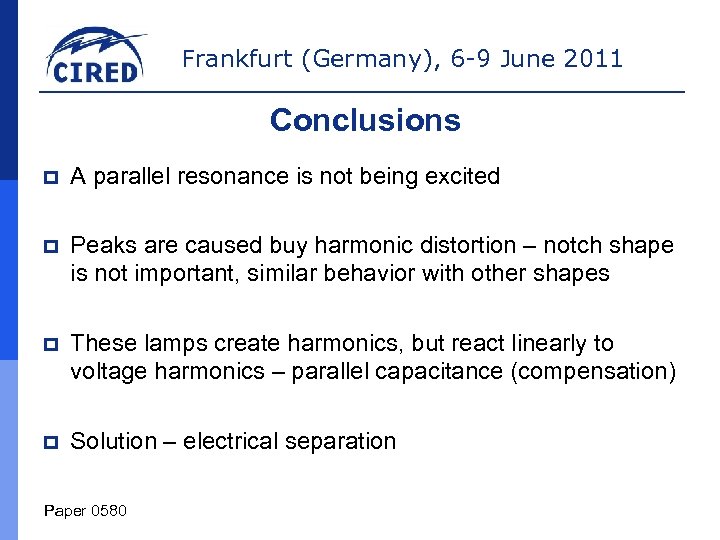 Frankfurt (Germany), 6 -9 June 2011 Conclusions p A parallel resonance is not being excited p Peaks are caused buy harmonic distortion – notch shape is not important, similar behavior with other shapes p These lamps create harmonics, but react linearly to voltage harmonics – parallel capacitance (compensation) p Solution – electrical separation Paper 0580