 Скачать презентацию Frank Bernanke rd edition 2007 3 Ch
aa7594d7cea6f1f8596b2469e9012f6d.ppt
- Количество слайдов: 30



Frank & Bernanke rd edition, 2007 3 Ch. 5: Demand - The Benefit Side of The Market 1
Questions l If free ice cream is available between 2 PM and 4 PM, do every one who is attracted to the site get it? l What is the MC in monetary terms? l What is the MC in opportunity cost terms? l How is ice cream allocated among consumers? 2
Law of Demand The costly one views an activity, the less likely one will do it. l The lower the cost of a good/service/activity, the more of it will be “consumed. ” l 3
Law of Demand The benefit of an activity equals the highest price we’d be willing to pay to pursue it (i. e. , the reservation price). l As the cost of an activity rises and exceeds the reservation price, less of the activity will be pursued. l 4
Needs vs Wants “Californians don’t have as much water as they need!” l “Californians don’t have as much water as they want at the ongoing price of water!” l 5
Measuring Wants: The Concept of Utility l The satisfaction people derive from their consumption activities l Assumption l People allocate their income to maximize their satisfaction or total utility 6
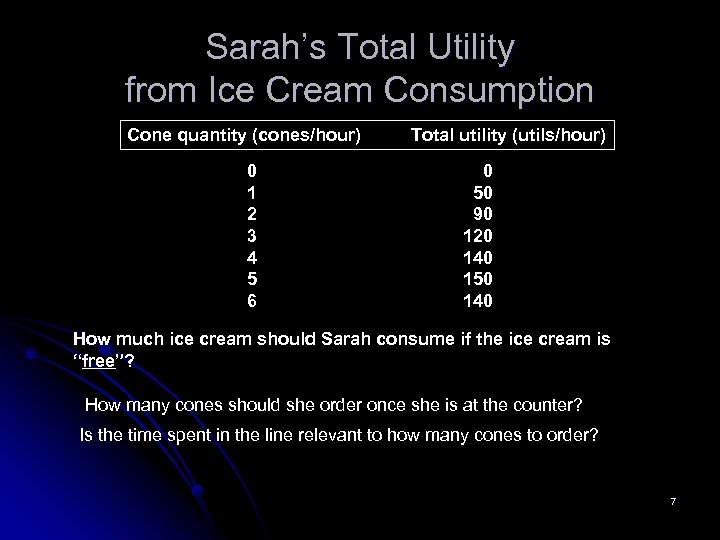
Sarah’s Total Utility from Ice Cream Consumption Cone quantity (cones/hour) 0 1 2 3 4 5 6 Total utility (utils/hour) 0 50 90 120 140 150 140 How much ice cream should Sarah consume if the ice cream is “free”? How many cones should she order once she is at the counter? Is the time spent in the line relevant to how many cones to order? 7
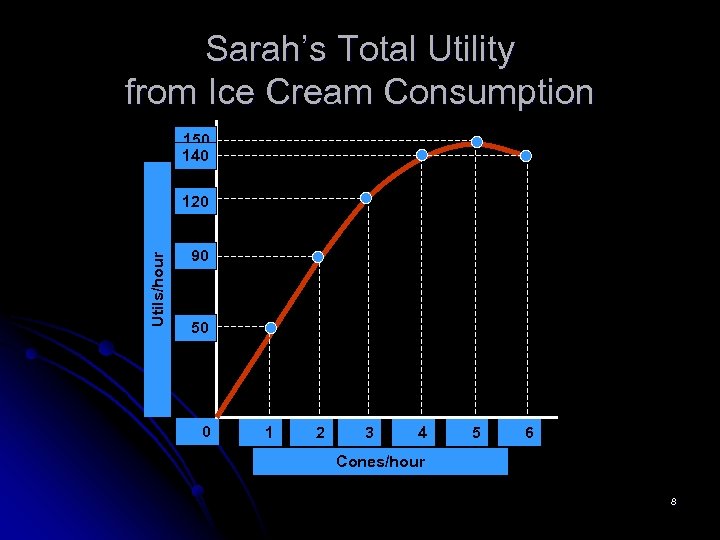
Sarah’s Total Utility from Ice Cream Consumption 150 140 Utils/hour 120 90 50 0 1 2 3 4 5 6 Cones/hour 8
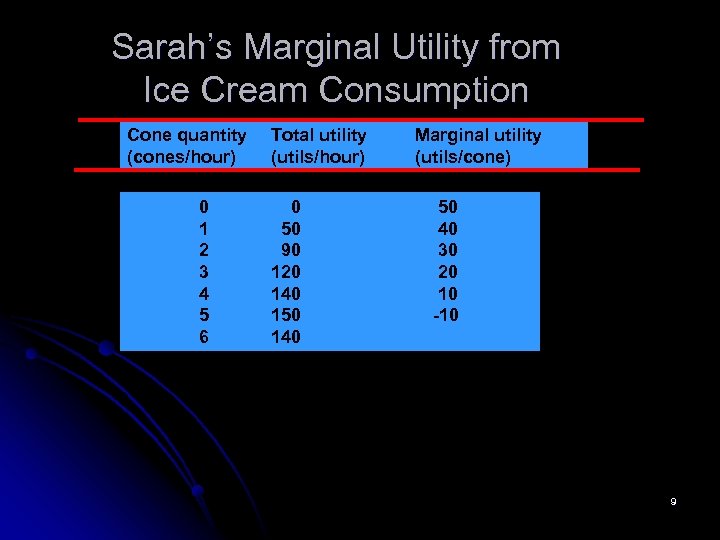
Sarah’s Marginal Utility from Ice Cream Consumption Cone quantity (cones/hour) 0 1 2 3 4 5 6 Total utility (utils/hour) 0 50 90 120 140 150 140 Marginal utility (utils/cone) 50 40 30 20 10 -10 9
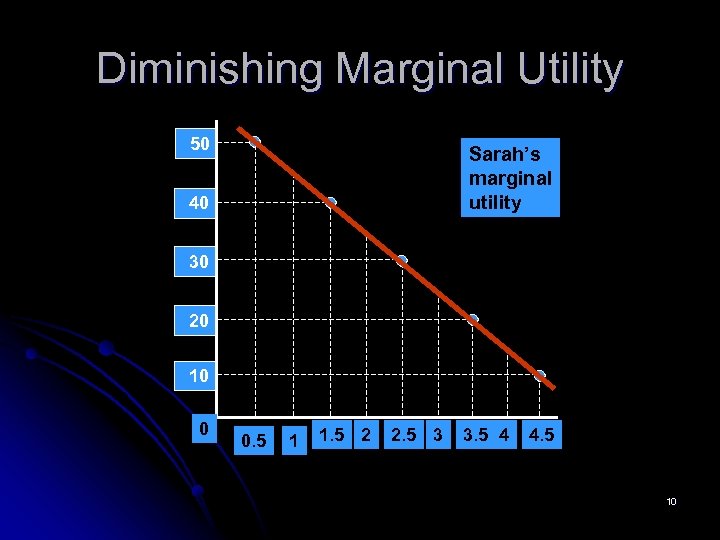
Diminishing Marginal Utility 50 Sarah’s marginal utility 40 30 20 10 0. 5 1 1. 5 2 2. 5 3 3. 5 4 4. 5 10 0
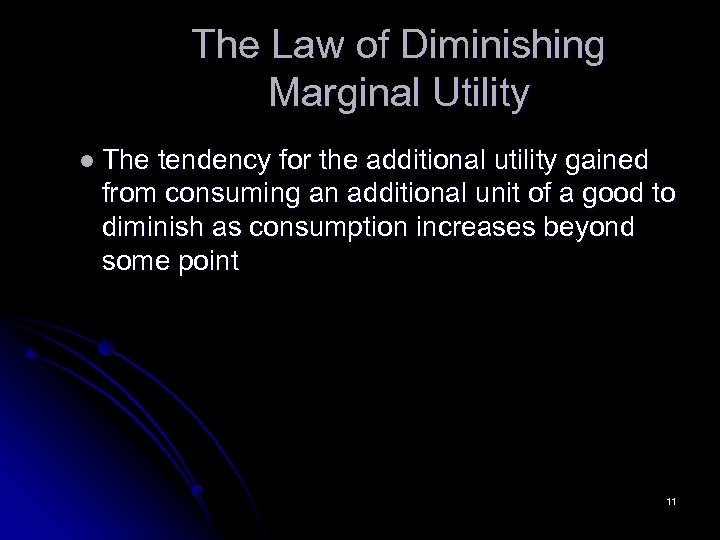
The Law of Diminishing Marginal Utility l The tendency for the additional utility gained from consuming an additional unit of a good to diminish as consumption increases beyond some point 11
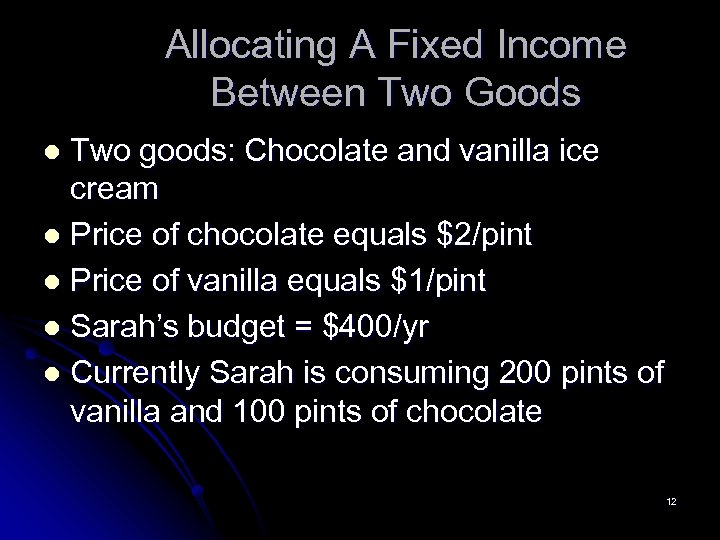
Allocating A Fixed Income Between Two Goods Two goods: Chocolate and vanilla ice cream l Price of chocolate equals $2/pint l Price of vanilla equals $1/pint l Sarah’s budget = $400/yr l Currently Sarah is consuming 200 pints of vanilla and 100 pints of chocolate l 12
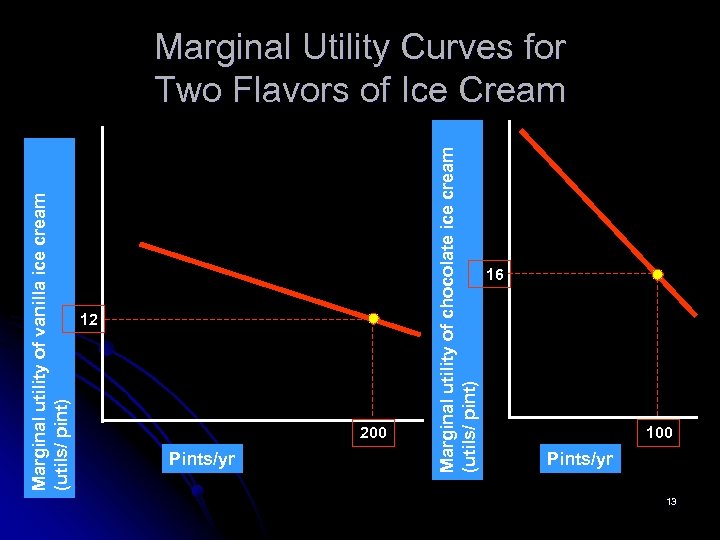
Marginal utility of vanilla ice cream (utils/ pint) 12 200 Pints/yr Marginal utility of chocolate ice cream (utils/ pint) Marginal Utility Curves for Two Flavors of Ice Cream 16 100 Pints/yr 13
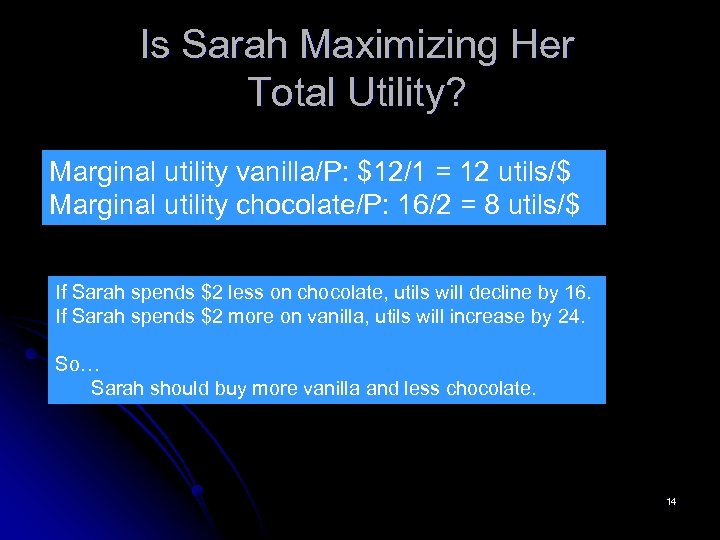
Is Sarah Maximizing Her Total Utility? Marginal utility vanilla/P: $12/1 = 12 utils/$ Marginal utility chocolate/P: 16/2 = 8 utils/$ If Sarah spends $2 less on chocolate, utils will decline by 16. If Sarah spends $2 more on vanilla, utils will increase by 24. So… Sarah should buy more vanilla and less chocolate. 14
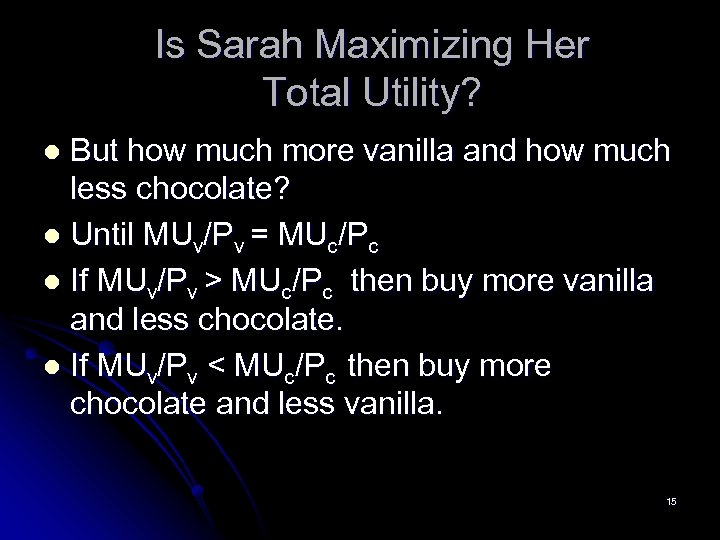
Is Sarah Maximizing Her Total Utility? But how much more vanilla and how much less chocolate? l Until MUv/Pv = MUc/Pc l If MUv/Pv > MUc/Pc then buy more vanilla and less chocolate. l If MUv/Pv < MUc/Pc then buy more chocolate and less vanilla. l 15
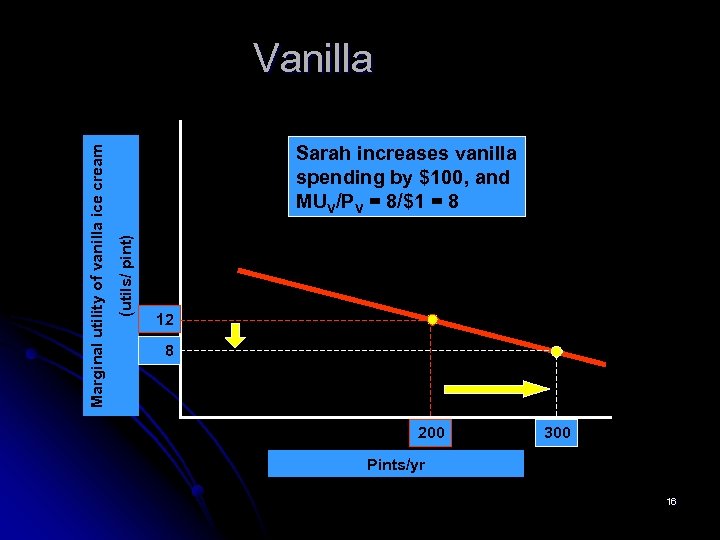
Sarah increases vanilla spending by $100, and MUV/PV = 8/$1 = 8 (utils/ pint) Marginal utility of vanilla ice cream Vanilla 12 8 200 300 Pints/yr 16
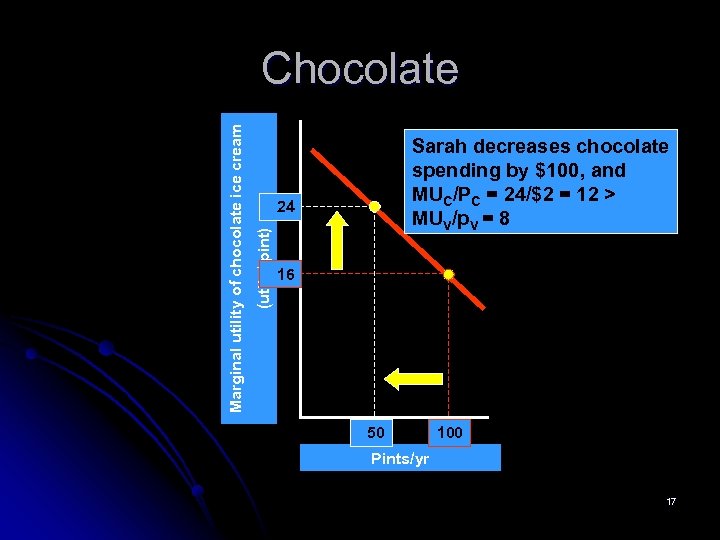
Sarah decreases chocolate spending by $100, and MUC/PC = 24/$2 = 12 > MUV/p. V = 8 24 (utils/ pint) Marginal utility of chocolate ice cream Chocolate 16 50 100 Pints/yr 17
Is Sarah Maximizing Her Total Utility? Can she improve her position? l Use the rational decision-making rule. l Is MU per $ of vanilla greater or less than MU per $ of chocolate? l MU/P of vanilla was $8 and MU/P of chocolate was $12. l So Sarah should buy more chocolate and less vanilla. l 18
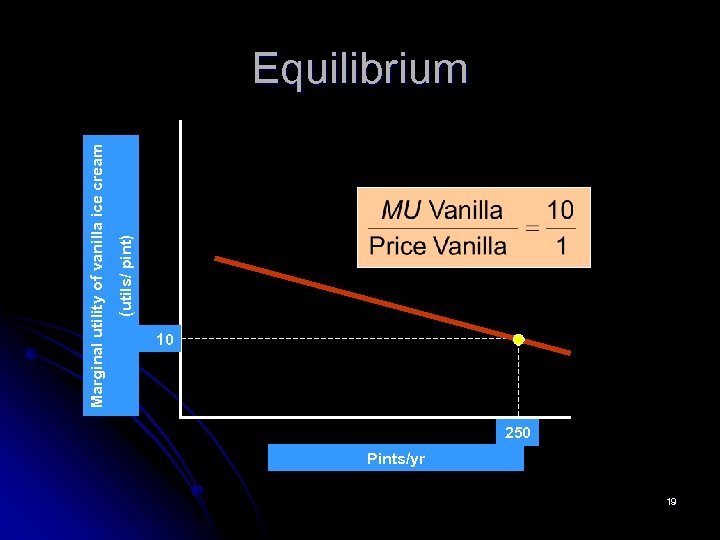
(utils/ pint) Marginal utility of vanilla ice cream Equilibrium 10 250 Pints/yr 19
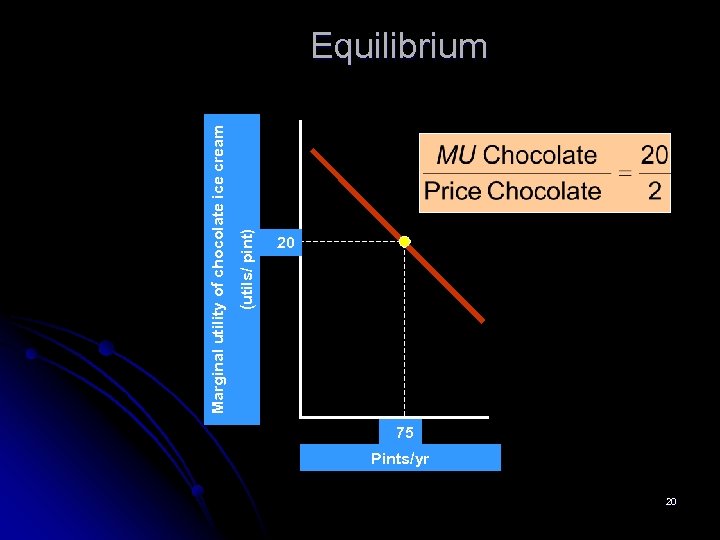
(utils/ pint) Marginal utility of chocolate ice cream Equilibrium 20 75 Pints/yr 20
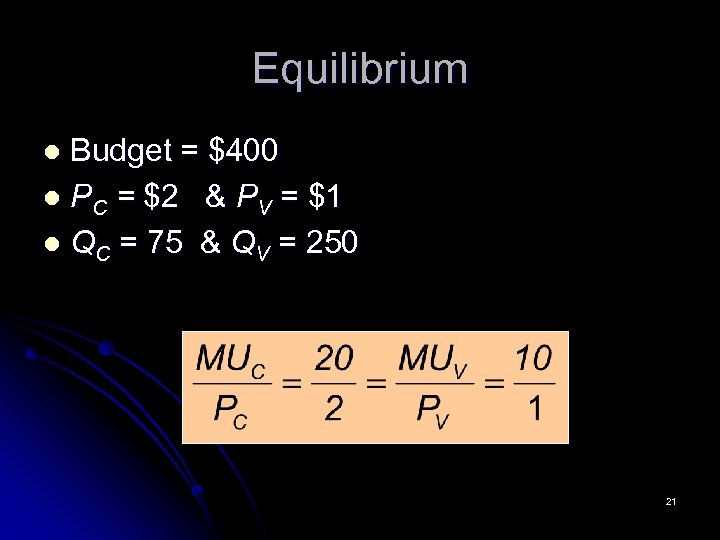
Equilibrium Budget = $400 l PC = $2 & PV = $1 l QC = 75 & QV = 250 l 21
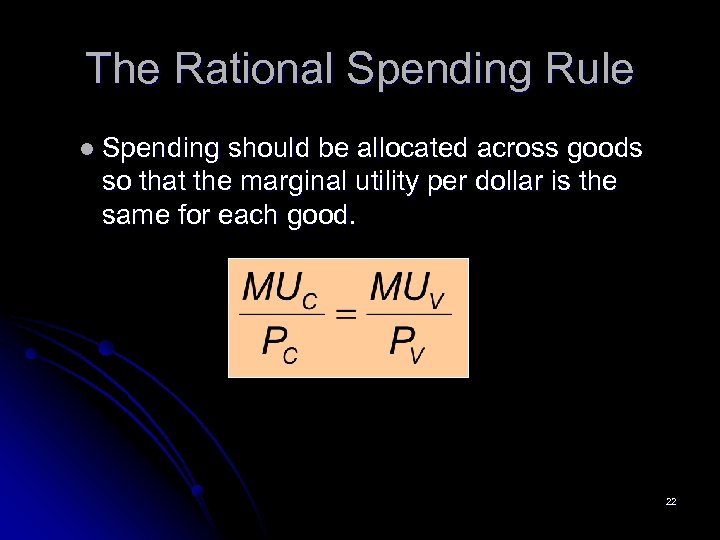
The Rational Spending Rule l Spending should be allocated across goods so that the marginal utility per dollar is the same for each good. 22
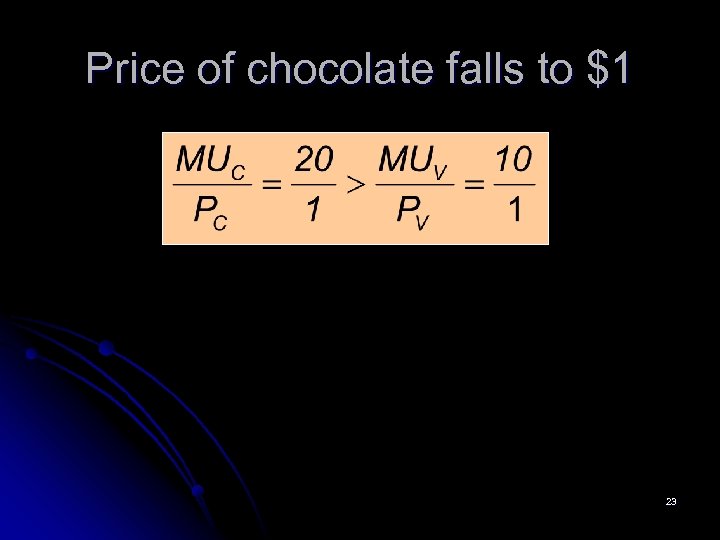
Price of chocolate falls to $1 23
Applying the Rational Spending Rule l l Why do the wealthy in Manhattan live in smaller houses than the wealthy in Seattle? Why did people turn to four-cylinder cars in the 1970 s only to shift back to six- and eight-cylinder cars in the 1990 s? Why are automobile engines smaller in England than in the United States? Why are waiting lines longer in poorer neighborhoods? 24
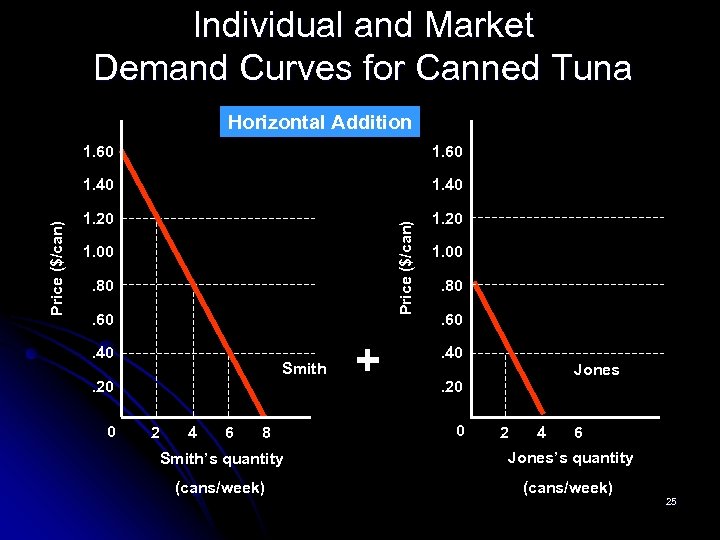
Individual and Market Demand Curves for Canned Tuna Horizontal Addition 1. 40 1. 20 Price ($/can) 1. 60 1. 40 Price ($/can) 1. 60 1. 00. 80. 60. 40 Smith . 20 0 2 4 6 8 + 1. 00. 80. 60. 40 Jones . 20 0 2 4 6 Smith’s quantity Jones’s quantity (cans/week) 25
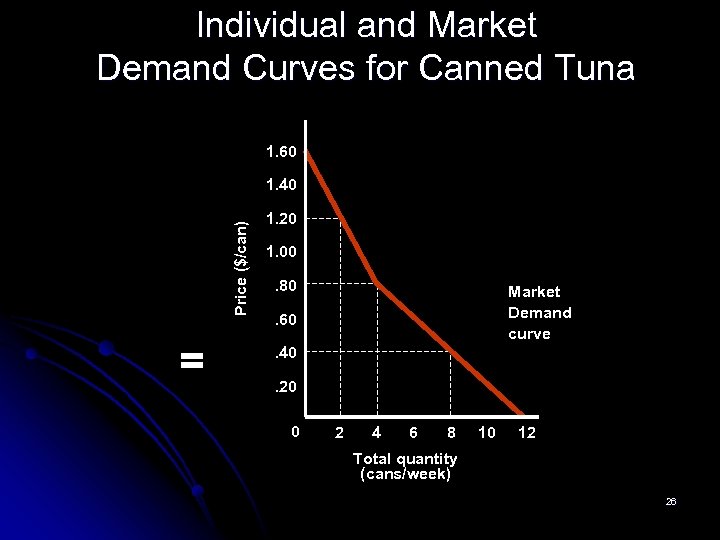
Individual and Market Demand Curves for Canned Tuna 1. 60 Price ($/can) 1. 40 = 1. 20 1. 00. 80 Market Demand curve . 60. 40. 20 0 2 4 6 8 10 12 Total quantity (cans/week) 26
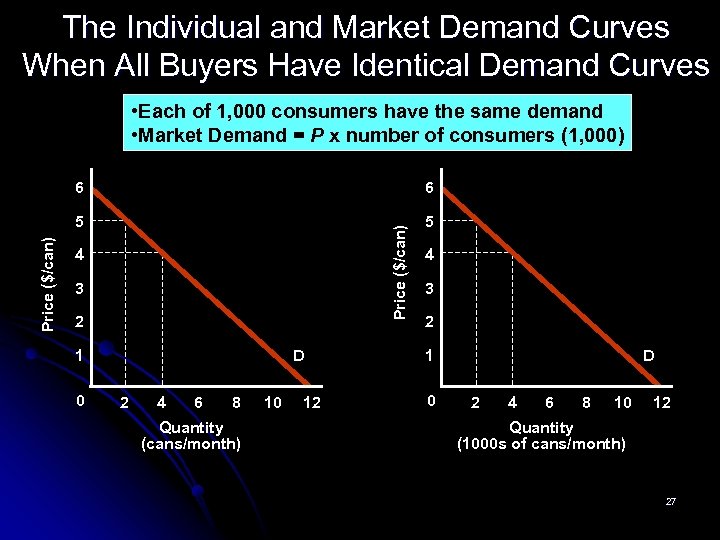
The Individual and Market Demand Curves When All Buyers Have Identical Demand Curves • Each of 1, 000 consumers have the same demand • Market Demand = P x number of consumers (1, 000) 5 Price ($/can) 6 4 3 2 1 0 D 2 4 6 8 Quantity (cans/month) 10 12 4 3 2 1 0 D 2 4 6 8 10 12 Quantity (1000 s of cans/month) 27
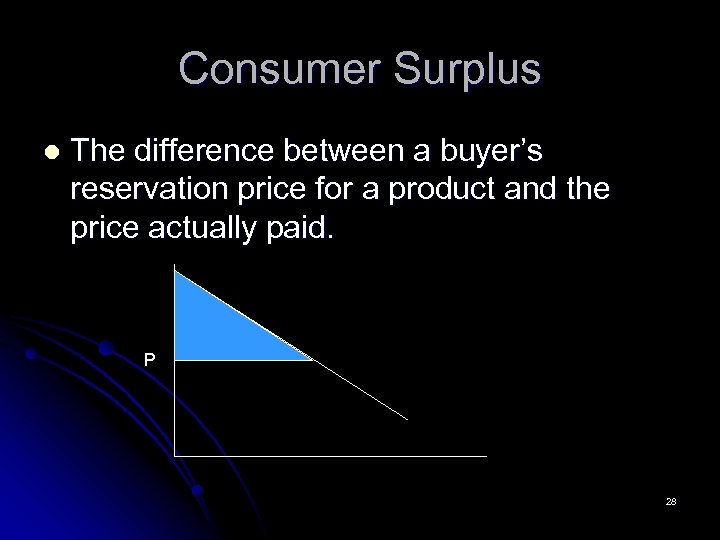
Consumer Surplus l The difference between a buyer’s reservation price for a product and the price actually paid. P 28
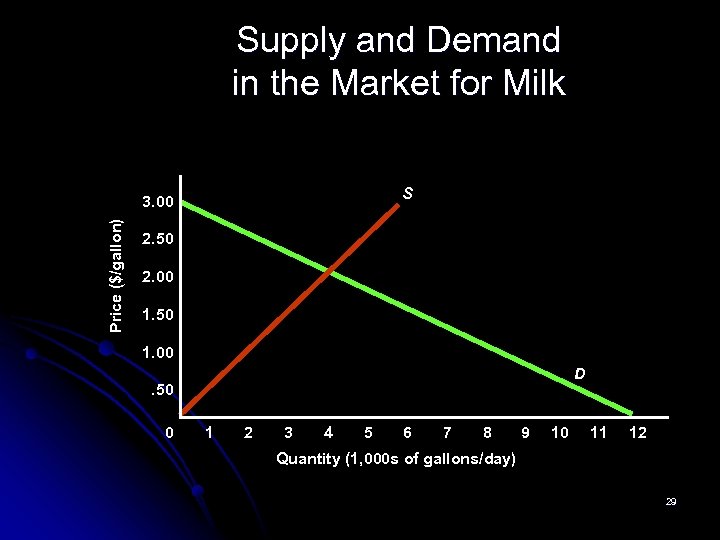
Supply and Demand in the Market for Milk S Price ($/gallon) 3. 00 2. 50 2. 00 1. 50 1. 00 D . 50 0 1 2 3 4 5 6 7 8 9 10 11 12 Quantity (1, 000 s of gallons/day) 29
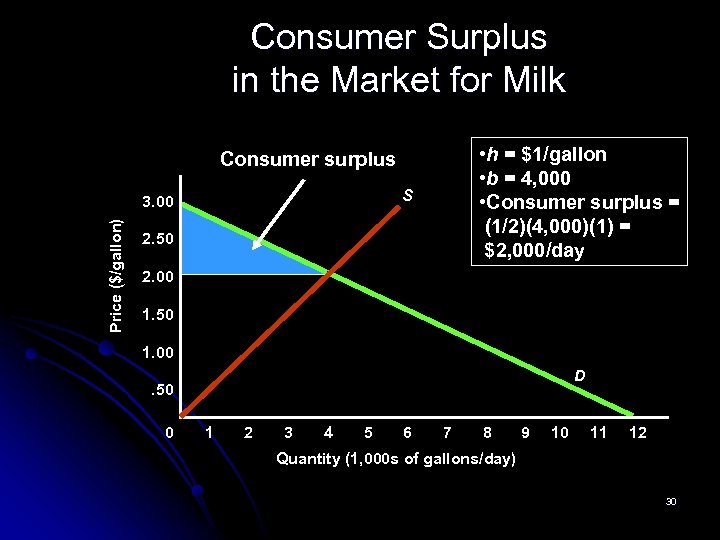
Consumer Surplus in the Market for Milk • h = $1/gallon • b = 4, 000 • Consumer surplus = (1/2)(4, 000)(1) = $2, 000/day Consumer surplus S Price ($/gallon) 3. 00 2. 50 2. 00 1. 50 1. 00 D . 50 0 1 2 3 4 5 6 7 8 9 10 11 12 Quantity (1, 000 s of gallons/day) 30
Скачать презентацию Frank Bernanke rd edition 2007 3 Ch
aa7594d7cea6f1f8596b2469e9012f6d.ppt