


 Скачать презентацию Framework for CSO Control Planning Michael Sullivan Limno-Tech
206c02413a12cec3ef12720e84b207d5.ppt
- Количество слайдов: 33
 Framework for CSO Control Planning Michael Sullivan Limno-Tech, Inc.
 Material to be Covered CSO Control Policy Nine Minimum Controls (NMC) Long-term Control Plans (LTCPs) Small System Considerations 2 Framework for CSO Control Planning
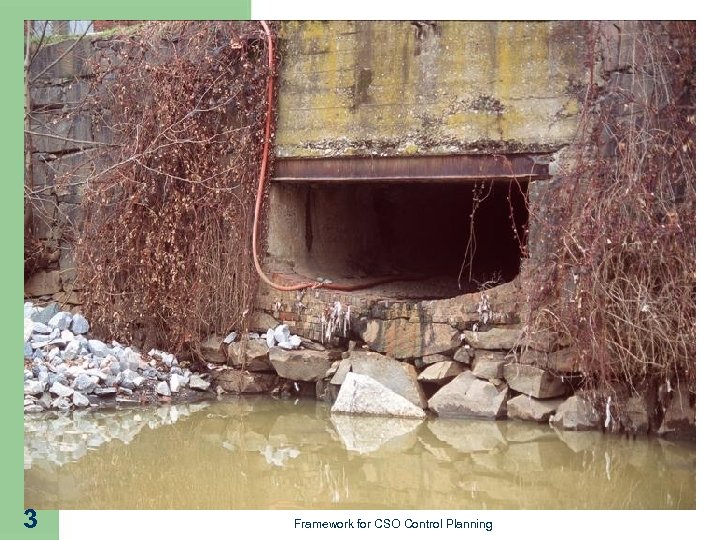 Gambles Hill CSO Outfall Prior to CSO Control (1996) 3 Framework for CSO Control Planning
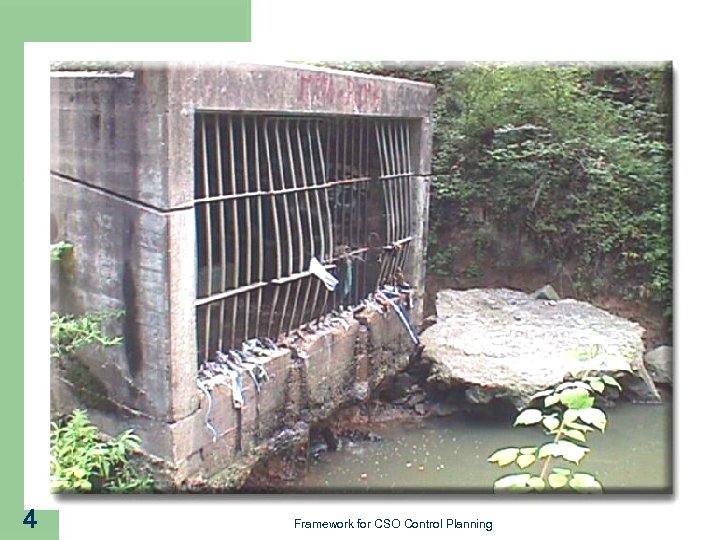 CSO Outfall 4 Framework for CSO Control Planning
 Objective of CSO Control Bring CSO discharges into compliance with Clean Water Act requirements and applicable State WQ standards Eliminate CSO discharges where possible 5 Framework for CSO Control Planning
 Four Key Principles of CSO Control Policy Provide clear levels of control Provide sufficient flexibility Allow a phased approach Review and revise, as appropriate, WQS and WQS implementation procedures when developing LTCPs 6 Framework for CSO Control Planning
 Roles of Permitting Authorities are Key Facilitate and coordinate the CSO control program Ensure coordination among WQS authorities, enforcement authorities, public and permittee Coordinate CSO control efforts with water pollution control needs on a watershed management basis Provide leadership Consider the financial capability of permittees when reviewing CSO control plans 7 Framework for CSO Control Planning
 Overview of CSO Controls NMC – Technology-based controls, require documentation and annual reporting LTCP – Water quality-based controls Presumption approach Demonstration approach 8 Framework for CSO Control Planning
 Small System Considerations The CSO Control Policy recognizes that the scope of the long-term control plan, including the characterization, monitoring and modeling, and evaluation of control Alternatives, may be difficult for small communities. 9 Framework for CSO Control Planning
 What are the Expectations for Small Communities? Implement the nine minimum controls Develop an abbreviated Long-Term Control Plan to cover: Prioritization of the control of CSOs in sensitive areas Implementation of a public participation process that actively involves the affected public in the selection of CSO controls Evaluation of controls and development of a proposed plan for CSO control. 10 Framework for CSO Control Planning
 What are the Nine Minimum Controls? The NMCs are minimum technology-based controls that can be used to address CSO problems -- without extensive engineering studies or significant costs -- prior to implementation of long-term control measures. 11 Framework for CSO Control Planning
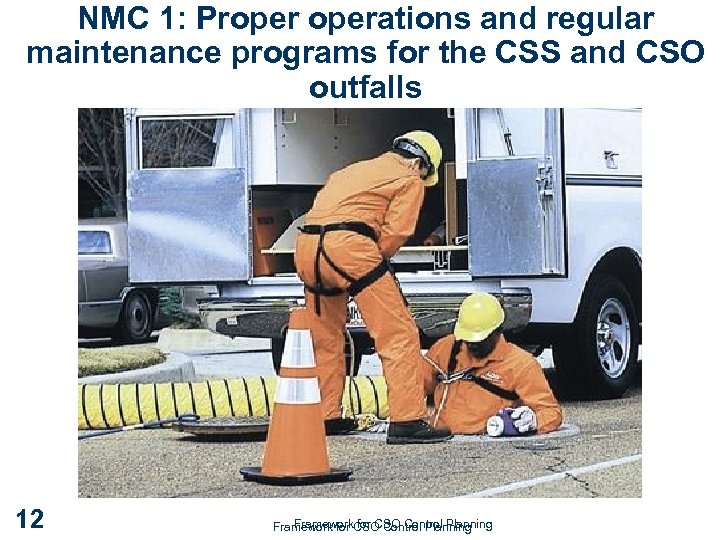 NMC 1: Properations and regular maintenance programs for the CSS and CSO outfalls 12 Framework for CSO Control Planning
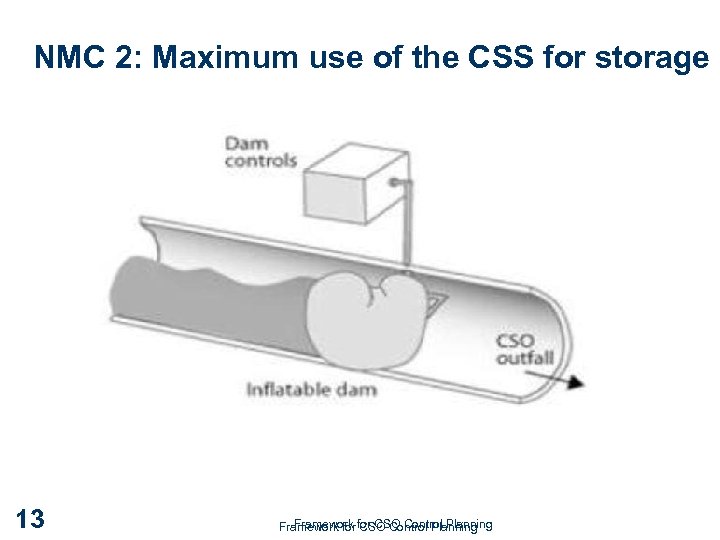 NMC 2: Maximum use of the CSS for storage 13 Framework CSO Control Planning Framework for CSO Control Planning
 NMC 3: Review and modification of pretreatment requirements. Besides SIUs, small communities may want to focus on other users or groups of users such as: Hospitals Photo processors Gas Stations Dry cleaners Restaurants Laundries Landfill leachate Auto body shops 14 Garages Printers Dentists Car Washes Framework for CSO Control Planning
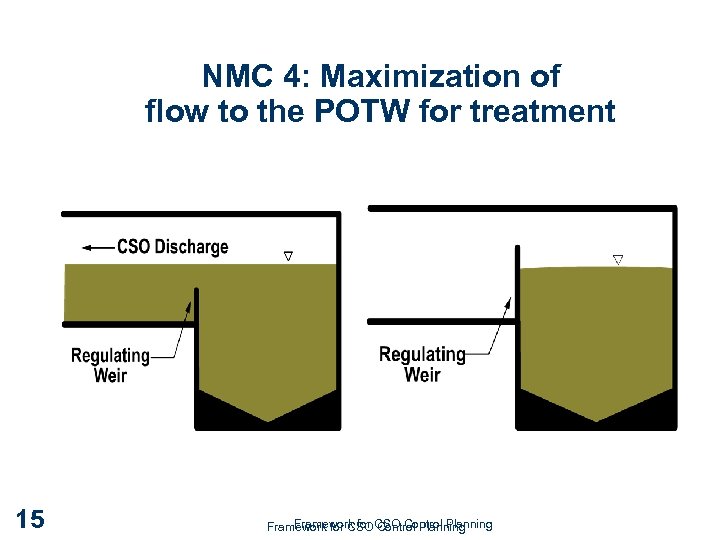 NMC 4: Maximization of flow to the POTW for treatment 15 Framework for Control Planning Framework for CSO Control Planning
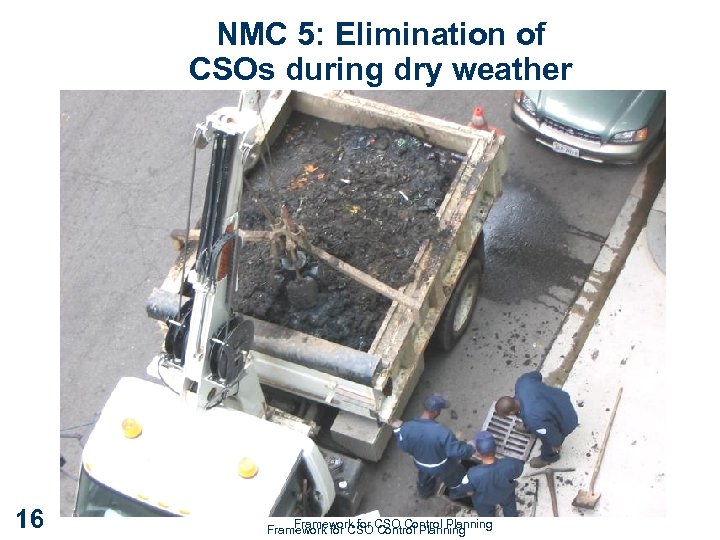 NMC 5: Elimination of CSOs during dry weather 16 Framework for Control Planning Framework for CSO Control Planning
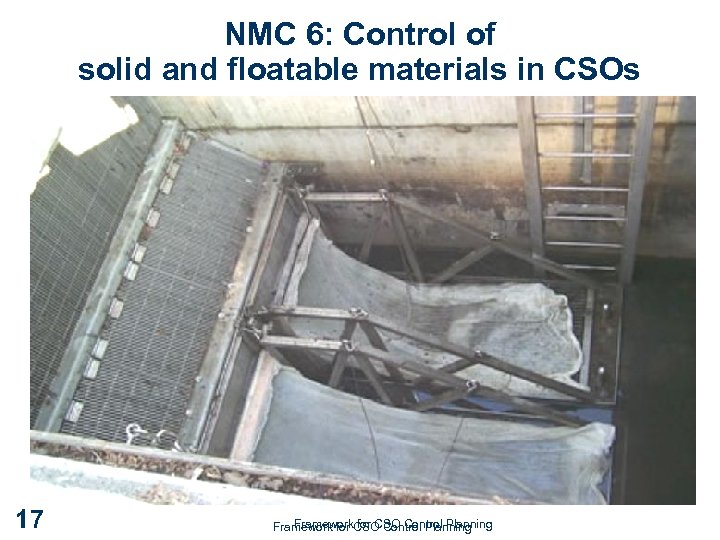 NMC 6: Control of solid and floatable materials in CSOs 17 Framework for CSO Control Planning
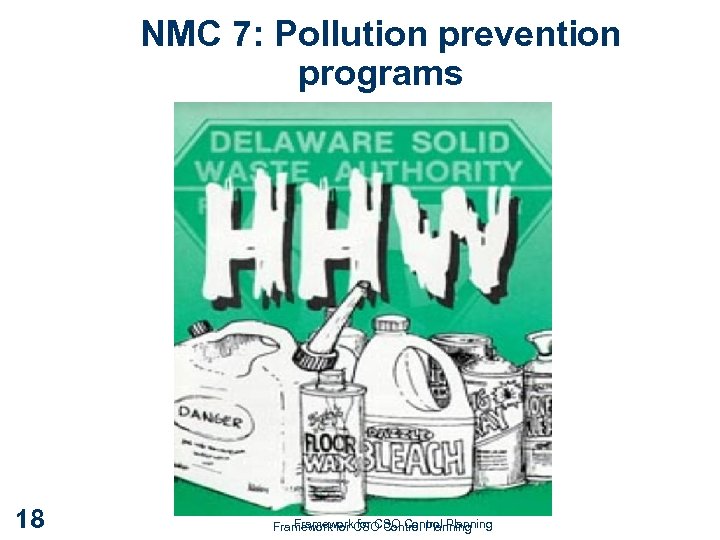 NMC 7: Pollution prevention programs 18 Framework for CSO Control Planning
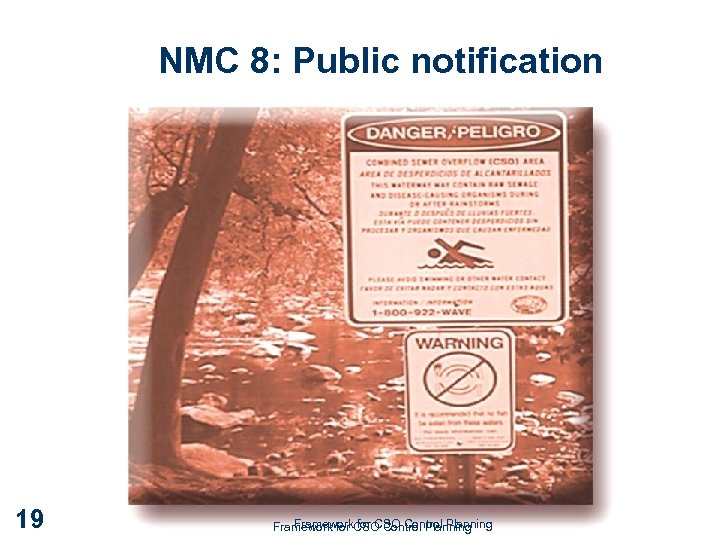 NMC 8: Public notification 19 Framework for CSO Control Planning
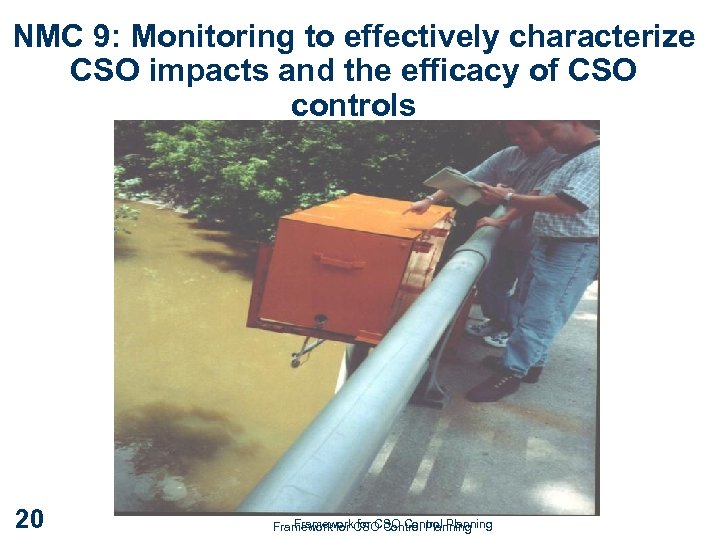 NMC 9: Monitoring to effectively characterize CSO impacts and the efficacy of CSO controls 20 Framework for CSO Control Planning
 What is a Long-Term Control Plan? The LTCP is a comprehensive plan that recognizes the site-specific nature of CSOs and their impacts on receiving waters. The final LTCP should include water qualitybased control measures that are technically feasible, affordable, and consistent with the CSO Control Policy 21 Framework for CSO Control Planning
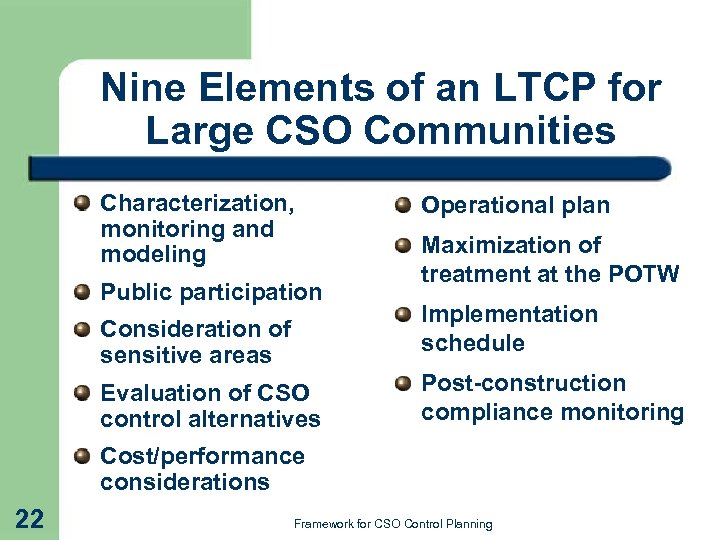 Nine Elements of an LTCP for Large CSO Communities Characterization, monitoring and modeling Public participation Consideration of sensitive areas Evaluation of CSO control alternatives Operational plan Maximization of treatment at the POTW Implementation schedule Post-construction compliance monitoring Cost/performance considerations 22 Framework for CSO Control Planning
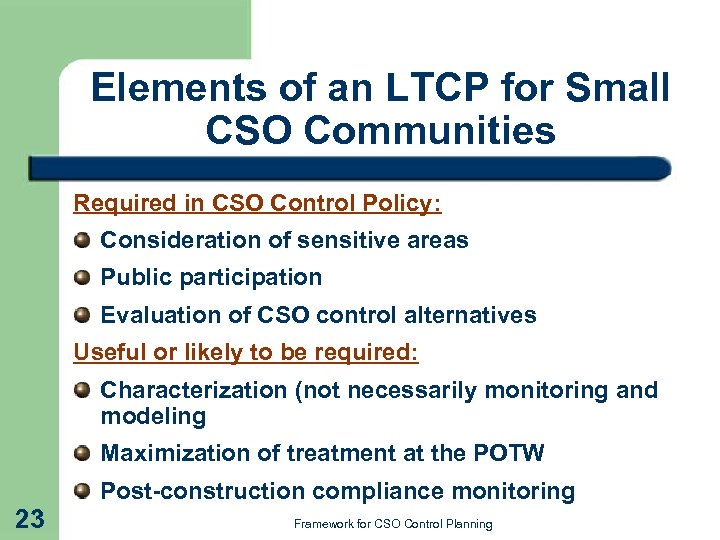 Elements of an LTCP for Small CSO Communities Required in CSO Control Policy: Consideration of sensitive areas Public participation Evaluation of CSO control alternatives Useful or likely to be required: Characterization (not necessarily monitoring and modeling Maximization of treatment at the POTW Post-construction compliance monitoring 23 Framework for CSO Control Planning
 LTCP Approaches Demonstration and Presumption Approaches Two alternative methods for developing a water quality-based control program in the LTCP Provide CSO communities with targets for CSO control that are presumed to meet the water quality-based requirements of the CWA 24 Framework for CSO Control Planning
 LTCP Approaches Presumption approach (performance based) Demonstration approach (more of a watershed approach and based on data) Combination of Presumption and Demonstration approaches (used by some communities) 25 Framework for CSO Control Planning
 Presumption Approach Presumes that implementation of controls needed to meet defined performance criteria (e. g. , controlling CSOs to no more than an average of four overflow events per year) would provide an adequate level of protection to meet the WQ-based objectives of the CWA. Minimum treatment defined as primary clarification or equivalent level of treatment. 26 Framework for CSO Control Planning
 Presumption Approach: Performance Criteria Reduction of CSO frequency to an average of 4 overflows per year (with discretion to add 2 additional overflows) Elimination or capture for treatment of 85% of the volume of combined sewage in CSS during precipitation events on an "average annual basis. ” Elimination or capture for treatment of 85% of the mass of pollutants in CSS during precipitation events on an average annual basis. Note: Still requires post-construction compliance monitoring! 27 Framework for CSO Control Planning
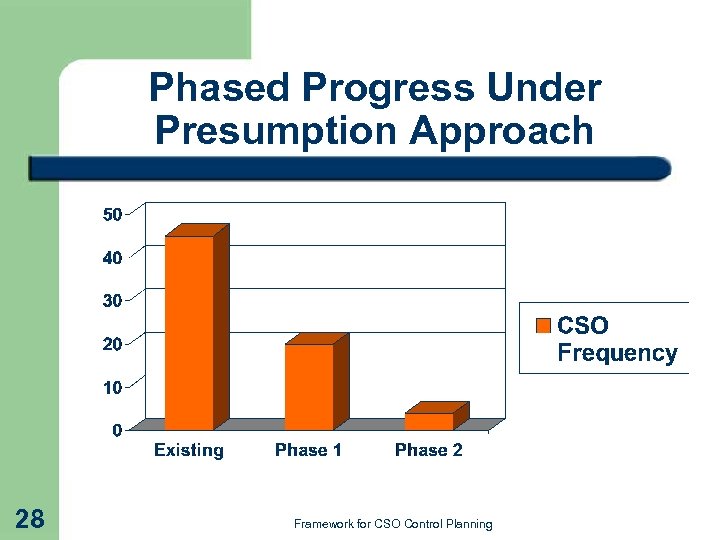 Phased Progress Under Presumption Approach 28 Framework for CSO Control Planning
 Demonstration Approach Requires municipality to demonstrate that: The LTCP is adequate to meet WQ standards Remaining CSO discharges will not preclude attainment of WQ standards LTCP provides maximum pollutant reduction and benefits reasonably attainable Note: Generally provides for less control than Presumption Approach (< 85% capture) 29 Framework for CSO Control Planning
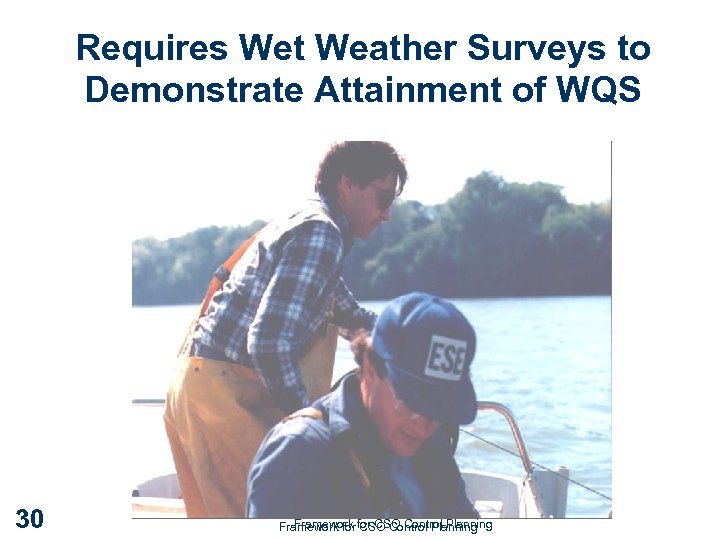 Requires Wet Weather Surveys to Demonstrate Attainment of WQS 30 Framework CSO Control Planning Framework for CSO Control Planning
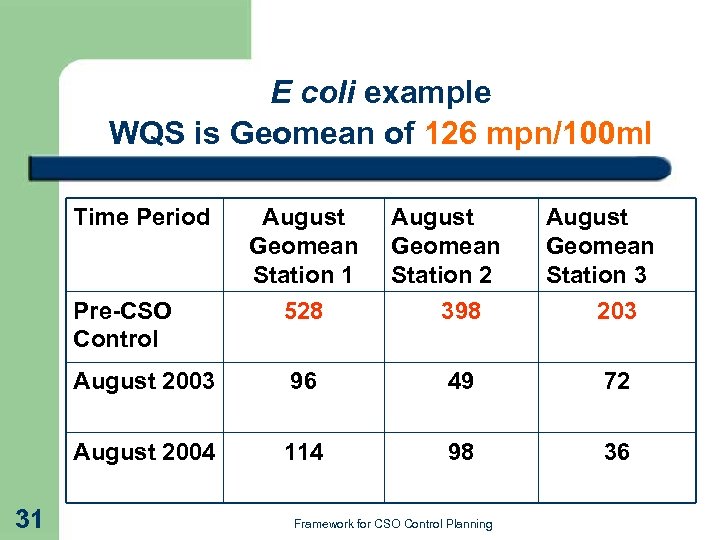 E coli example WQS is Geomean of 126 mpn/100 ml Time Period Pre-CSO Control August Geomean Station 1 528 August Geomean Station 2 398 August Geomean Station 3 203 August 2003 49 72 August 2004 31 96 114 98 36 Framework for CSO Control Planning
 The Key Discuss the scope of LTCP with NPDES and WQS authority in advance to make sure that they will have sufficient information to identify the appropriate level of CSO control. 32 Framework for CSO Control Planning
 Success Requires Participation and Coordination 33 Framework for CSO Control Planning