


 Скачать презентацию Fourteenth Lecture Hour 9 30 10 20
0c2c87ddfbad24db86335848da83ff2c.ppt
- Количество слайдов: 27
 Fourteenth Lecture Hour 9: 30 – 10: 20 am, Sunday, September 16 Software Management Disciplines Project Control and Process Automation (from Part III, Chapter 13 of Royce’ book)
 Review –The Four Parts of the Course • Software Management Renaissance – The conventional software management process. – Five improvements to make the waterfall process work. • A Software Management Process Framework – Phases – Artifacts – Workflows – Checkpoints • Software Management Disciplines – Planning – Organization – Automation – Process control and instrumentation – Tailoring • Looking Ahead – Modern project profiles – Next-generation software economics – Modern process transitions
 Topics for Today • • • Seven Core Metrics Management Indicators Quality Indicators Life Cycle Expectations Pragmatic Software Metrics Automation
 Basic Themes for Modern Software Management • Getting design right by architecture first. • Managing risk through iterative development. • Reducing complexity with components-based techniques. • Making progress and quality tangible through instrumented change management. • Automating overhead and bookkeeping through use of round-trip engineering and integrated environment.
 Goals of Software Metrics • An accurate assessment of progress to date. • Insight into the quality of the evolving software product. • A basis for estimating the cost and schedule for completion with increasing accuracy over time.
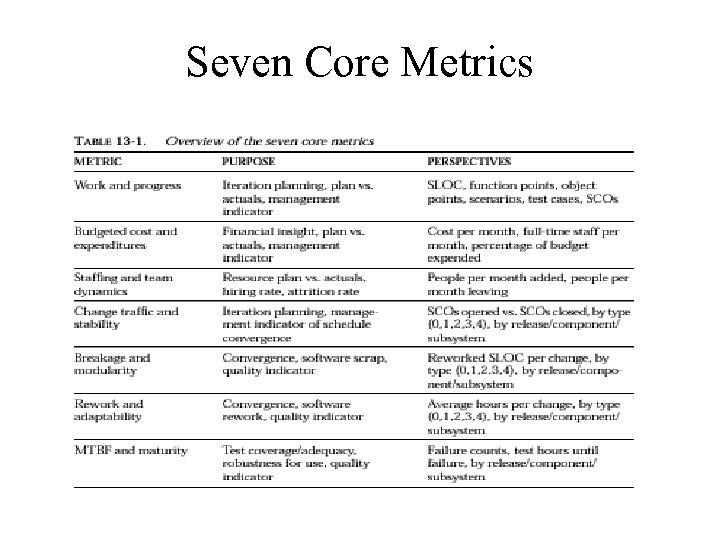 Seven Core Metrics
 Metrics Characteristics • They are simple, objective, easy to collect, easy to interpret, and hard to misinterpret. • Collection can be automated and nonintrusive. • Assessment is continuous and non-subjective. • They are useful to both management and engineering personnel for communicating progress and quality in a consistent format. • Their fidelity improves across the life cycle.
 Three Basic Management Metrics • Technical progress • Financial status • Staffing progress Financial and staffing metrics are easy. They always have been easy. The real problem is to measure technical progress with objectivity.
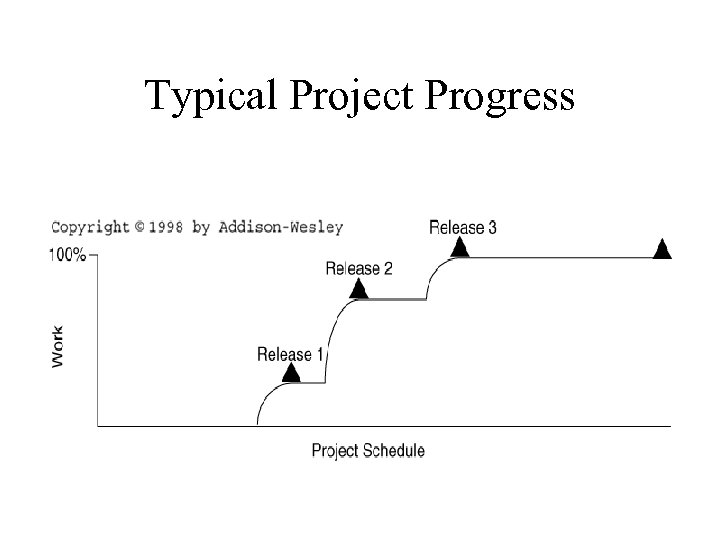
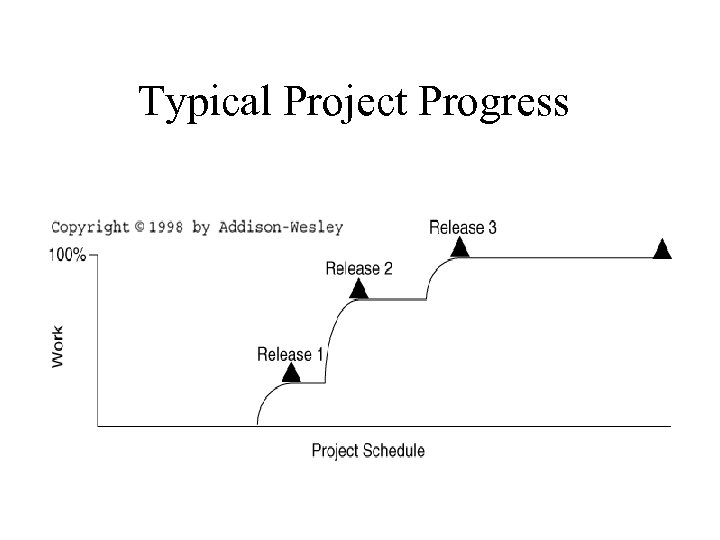 Typical Project Progress
 Three Progress Metrics • Software architecture team: – number of use cases demonstrated. • Software development team: – number of source lines of code under configuration management – number of change orders closed • Software assessment team: – Number of change orders opened – Test hours executed – Evaluation criteria met • Software management team: – Milestones completed.
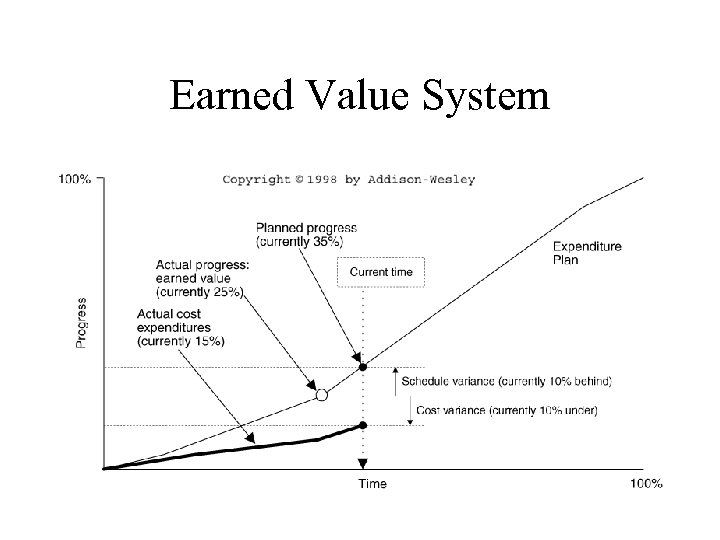 Earned Value System
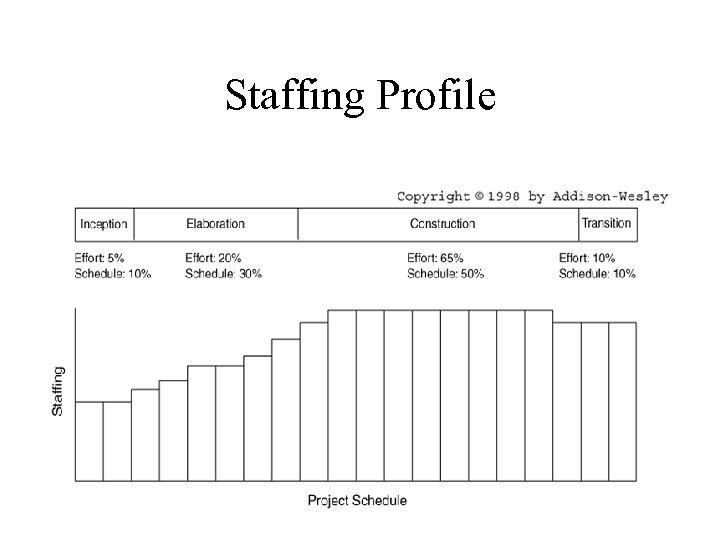 Staffing Profile
 Staffing and Team Dynamics • Metric: – percent staffed. • Metric: staffing momentum – additions versus attrition. • Glaring indicator of future trouble: – Unplanned attrition. Usually due to personnel dissatisfaction with management, lack of teamwork, or high probability of failure to meet objectives.
 Typical Project Progress
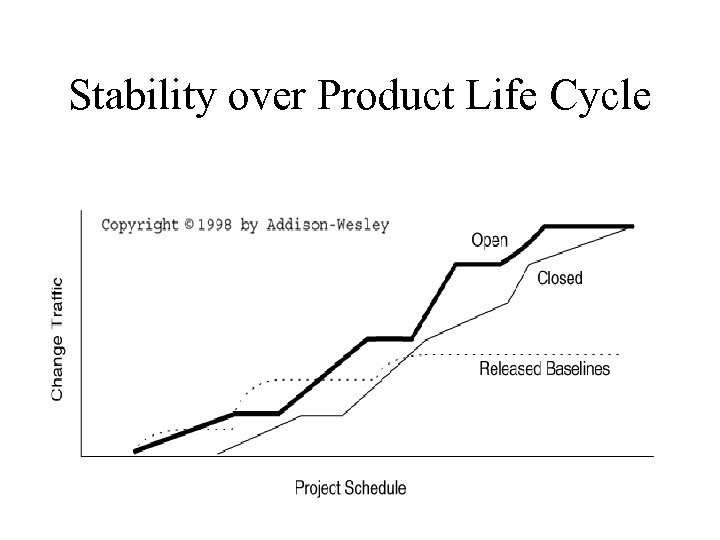
 Four Quality Indicators • Change traffic and stability – Provides insight into stability, convergence toward stability, predictability of completion • Breakage and Modularity – Breakage: extent of change needed. – Modularity: average breakage trend over time. • Rework and Adaptability – Rework: amount of effort needed to fix. – Adaptability: rework trend over time. • Maturity – Average time between faults.
 Stability over Product Life Cycle
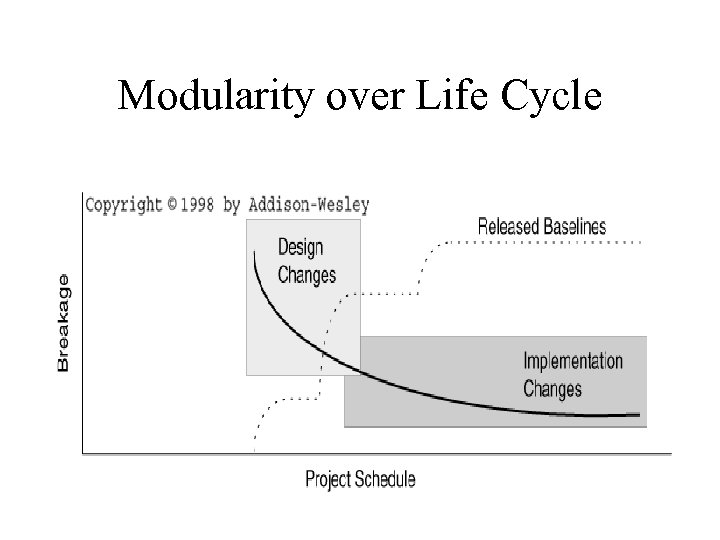 Modularity over Life Cycle
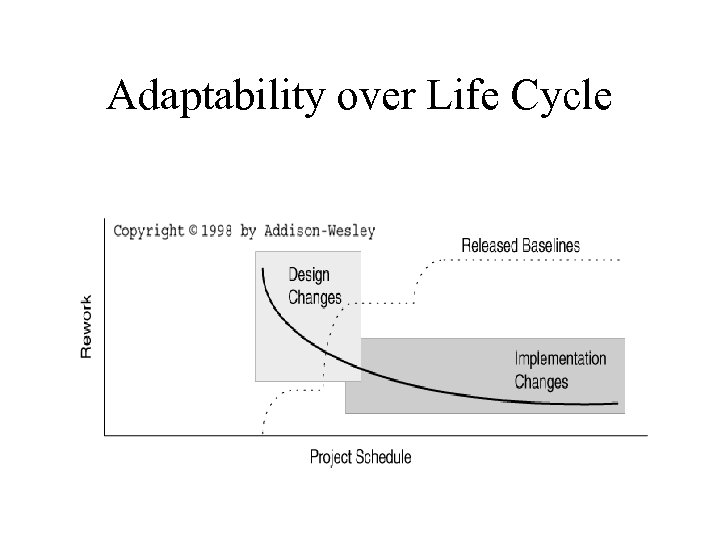 Adaptability over Life Cycle
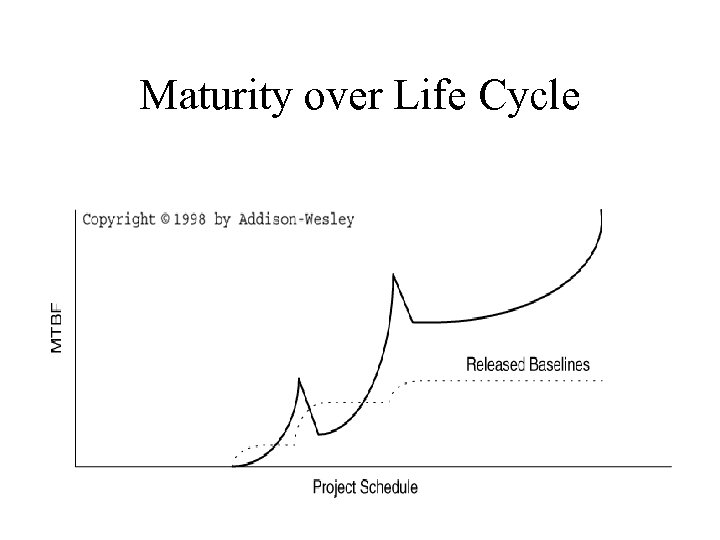 Maturity over Life Cycle
 Quality Indicator Characteristics • They are derived from the evolving products, not other artifacts. • They provide insight into waste. • They are dynamic for an iterative process. Focus is on trends and changes in time. • Combination of current value and trends provide tangible indicators for effective management action.
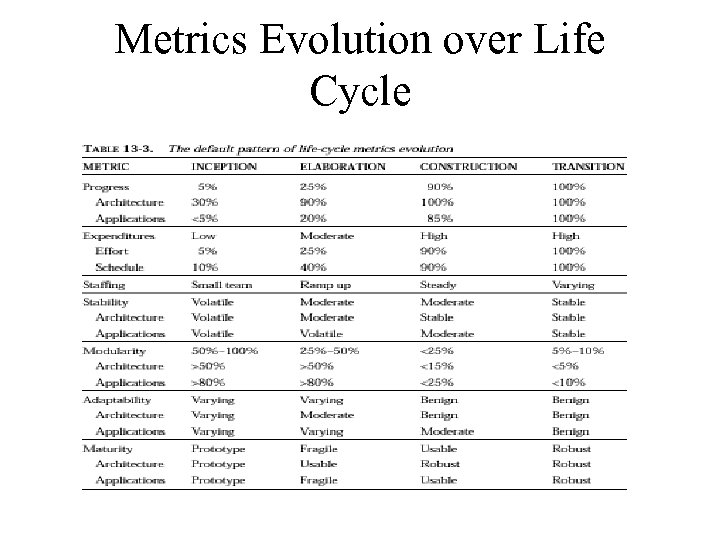 Metrics Evolution over Life Cycle
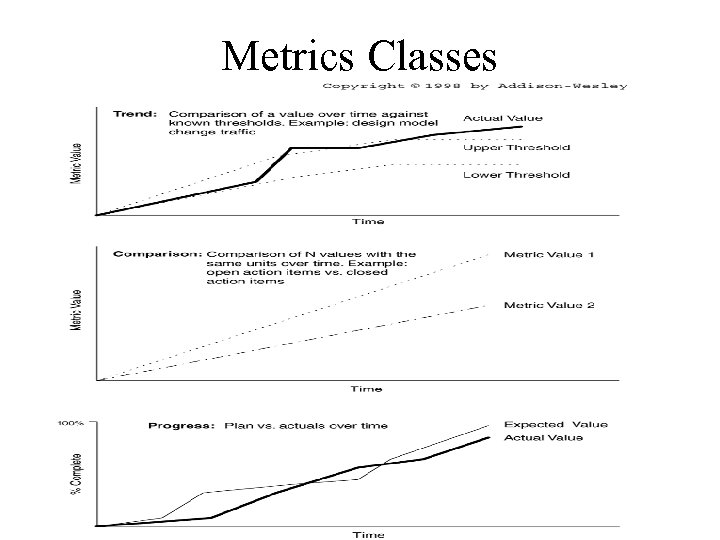 Metrics Classes
 Comment on Metrics • Metrics usually display the effects of problems, not the underlying causes of problems. Reasoning and synthesis are required for solution. • Although measuring is useful, it doesn’t do any thinking for the decision makers. – Value judgments can not be make by metrics; they must be left to smarter entities such as software project managers. • However, metrics can provide data to help ask the right questions, understand the context, and make objective decisions.
 Metrics Automation – the Software Project Control Panel • On-line version of status of artifacts. – Display panel that integrates data. A “dashboard”. – Display for – • • project manager (overall values) test manager (status of an upcoming release) Configuration Manager (change traffic) etc.
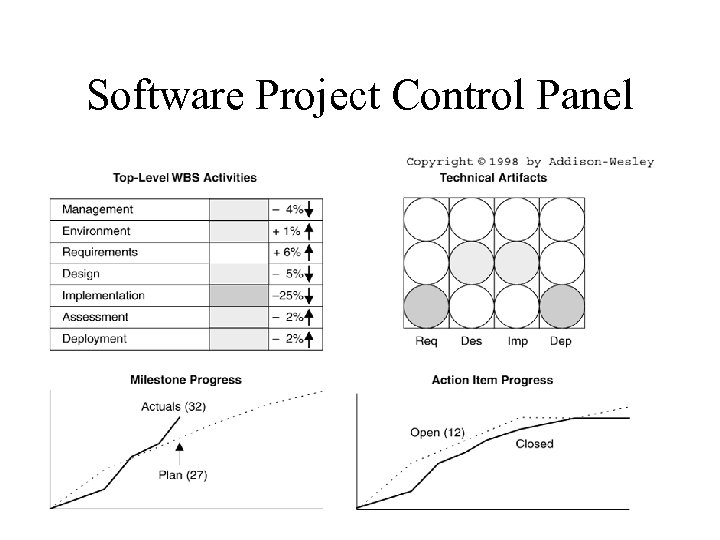 Software Project Control Panel
 Summary for Project Control and Instrumentation • Progress toward project goals and quality of products must be measurable. • The most useful metrics are extracted from the evolving artifacts. • Management and quality indicators must be used continuously as project proceeds. • Trends and status measures must be used together. • Technical progress is the most difficult item to measure.
 Assignment for Next Class Meeting • Read Chapter 13 of Royce’ book, on process control and instrumentation. – Learn and discuss the three core management metrics. – Learn and discuss the four core quality metrics. – Learn the three primary causes of excessive personnel attrition.