Скачать презентацию Foundations of Georgia Government Georgia s State Government
5b86ccdbc38ca1403fed3af9c000364b.ppt
- Количество слайдов: 81
 Foundations of Georgia Government
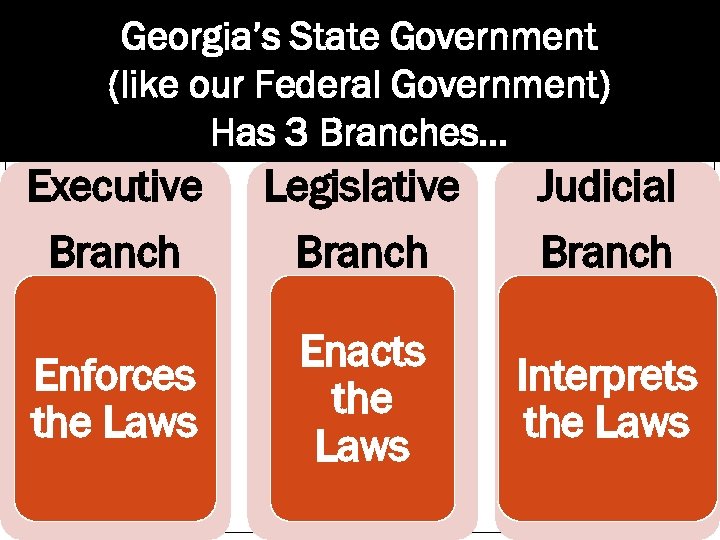 Georgia’s State Government (like our Federal Government) Has 3 Branches. . . Executive Branch Legislative Branch Judicial Branch Enforces the Laws Enacts the Laws Interprets the Laws
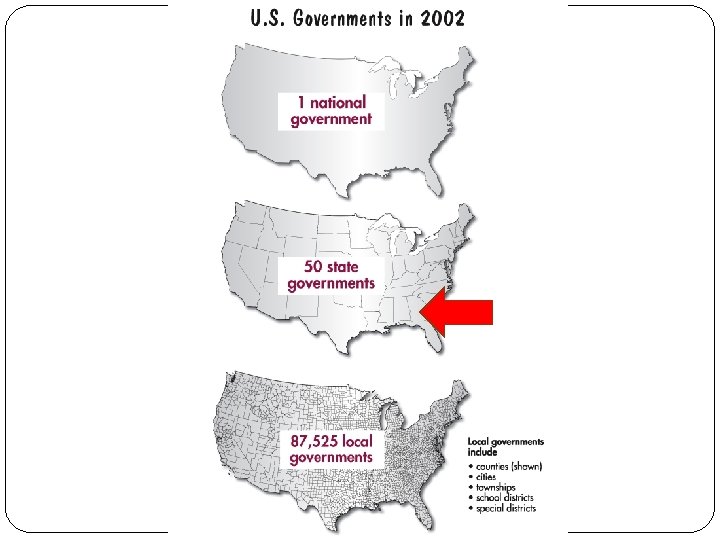
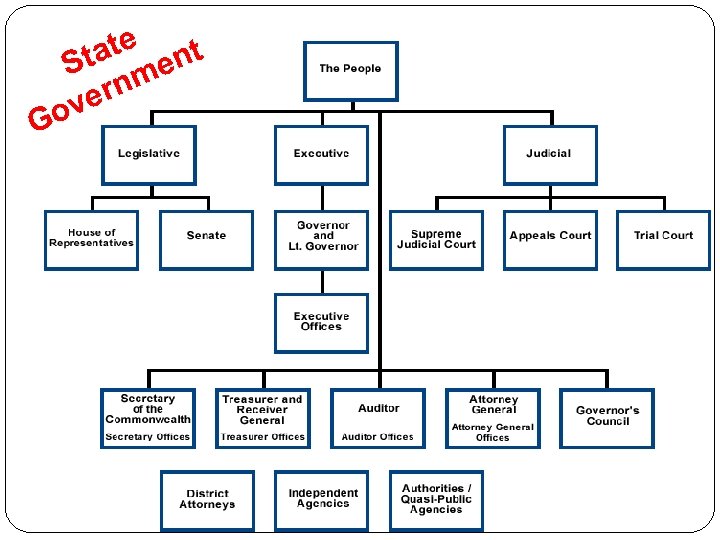 ate ent St m ern ov G
 Georgia’s Constitution Georgia adopted its first state constitution in 1777. In 1983, Georgians approved the state’s 10 th Constitution. Purpose has always been the same. . . It gives voters the right to control state government by electing state officials. Citizens may also suggest laws that improve the way the state is governed.
 Georgia’s Government What is the Georgia state constitution? It is the governing document the explains the laws, governmental offices, and citizens rights and responsibilities in the state of Georgia.
 Georgia’s Government What is the basic structure of the Georgia state constitution? • The state constitution is a living document. It is used everyday in governmental decisions. • Structure of the Georgia state constitution: – Preamble (Introduction) – Articles (11 main articles) – Sections – Paragraphs • Georgia State Constitution
 Georgia’s Government • Article I: Bill of Rights What is the basic structure of the Georgia state constitution? • Article II: Voting & Elections • Article III: Legislative Branch • Article IV: Constitutional Boards & • • Commissions Article V: Executive Branch Article VI: Judicial Branch Article VII: Taxation & Finance Article VIII: Education Article IX: Counties & Municipal Corporations Article X: Amendments to the Constitution Article XI: Miscellaneous Provisions
 The Executive Branch (Largest Branch) Governor is the chief executive officer of the state Lieutenant Governor Attorney General Commissioner of Agriculture Commissioner of Labor Commissioner of Insurance Public Service Commissioners Secretary of State School Superintendent
 The Governor
 Election Elected by a majority of the popular vote Serves a 4 year term May serve 2 consecutive terms
 Qualifications Must be at least 30 years of age Must be a citizen of the US for at least 15 years Must be a resident of the state for at least 6 years -------------------------------------------------- If Governor dies or resigns, the Lieutenant Governor takes over until the next general election. Should both the Governor and the Lieutenant Governor die or resign, the Speaker of the House of Representatives serves until a new Governor is elected.
 Formal Powers of the Governor Manages the State’s Budget Appoints State Officials Makes an annual “State of the State” address Prepares budget bills Serves as Commander-in-Chief of the Georgia National Guard Makes Sure Laws Are Enforced Sends Georgia Highway Patrol officers and the Georgia Bureau of Investigation into communities in times of danger. Paroles or Pardons Convicted Criminals Appoints State Justices Vetoes Bills or Signs Into Law
 Informal Powers of the Governor guides state agencies issues proclamations appoints people to state boards and executive offices works with legislators to get laws passed represents the state in various meetings and events communicates personal position on important issues
 Who Is Our Current Governor?
 Honorable Nathan Deal Governor of State of Georgia
 Our Most Famous Governor
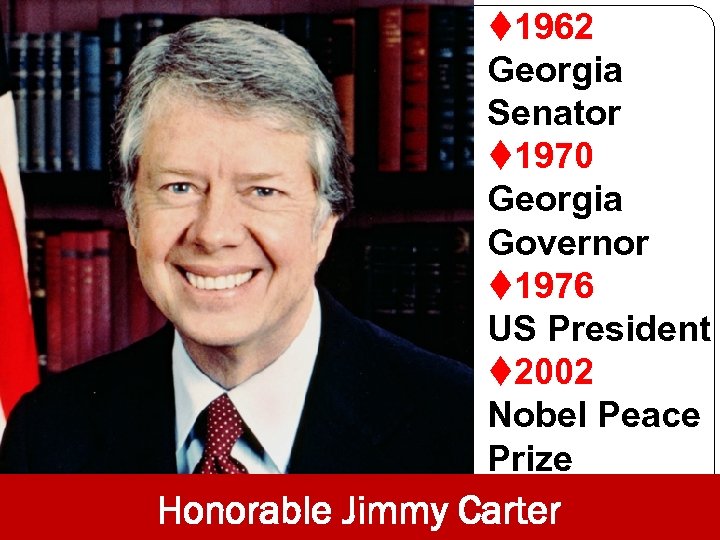 t 1962 Georgia Senator t 1970 Georgia Governor t 1976 US President t 2002 Nobel Peace Prize Honorable Jimmy Carter
 The Lieutenant Governor
 Terms Elected by a majority of the popular vote Can serve unlimited number of consecutive terms
 Qualifications SAME AS GOVERNOR Must be at least 30 years of age Must be a citizen of the US for at least 15 years Must be a resident of the state for at least 6 years If Governor dies or resigns, the Lieutenant Governor takes over until the next general election. Lieutenant Governor also serves as the chief executive officer when the Governor is out of state.
 Powers of the Lieutenant Governor Presiding officer of the State Senate Makes senate committee appointments Assigns senate bills to committees Recognizes members of the senate who wish to speak May affect the passage or failure of some senate bills
 Who Is Our Current Lieutenant Governor?
 Casey Cagle
 Georgia’s Elected Officials
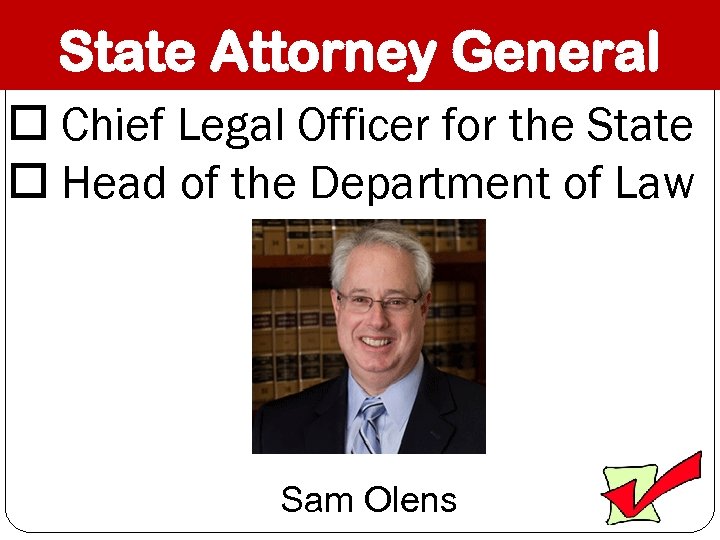 State Attorney General Chief Legal Officer for the State Head of the Department of Law Sam Olens
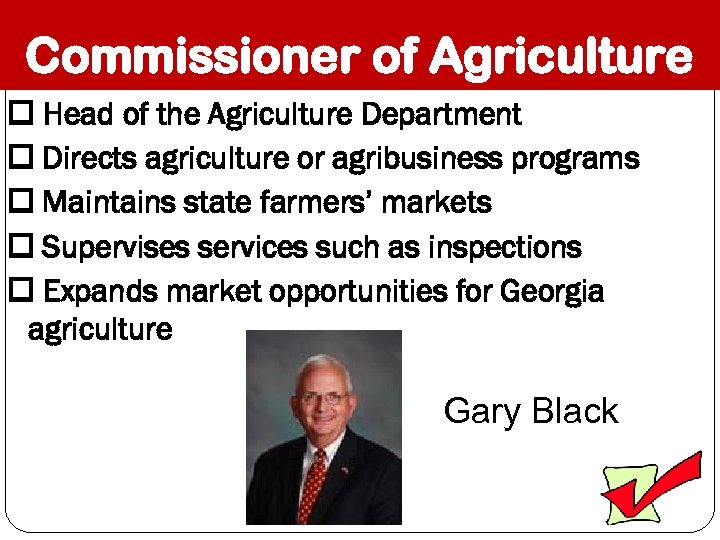 Commissioner of Agriculture Head of the Agriculture Department Directs agriculture or agribusiness programs Maintains state farmers’ markets Supervises services such as inspections Expands market opportunities for Georgia agriculture Gary Black
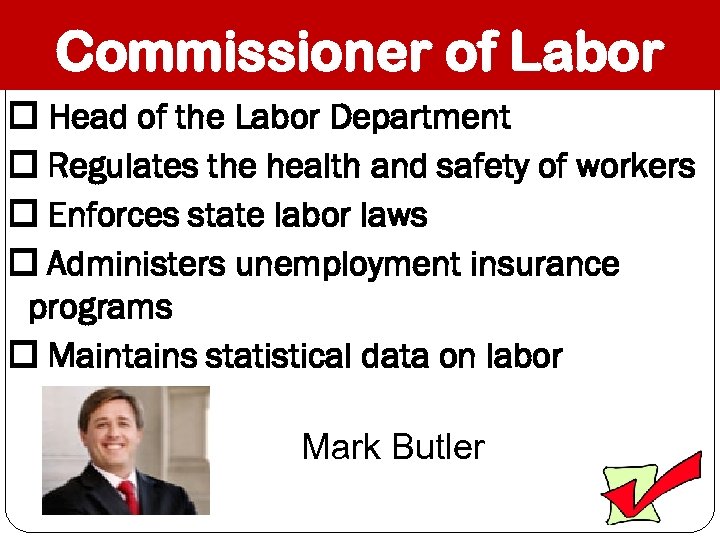 Commissioner of Labor Head of the Labor Department Regulates the health and safety of workers Enforces state labor laws Administers unemployment insurance programs Maintains statistical data on labor Mark Butler
 Commissioner of Insurance Regulates insurance carriers Issues insurance licenses Ralph Hudgens
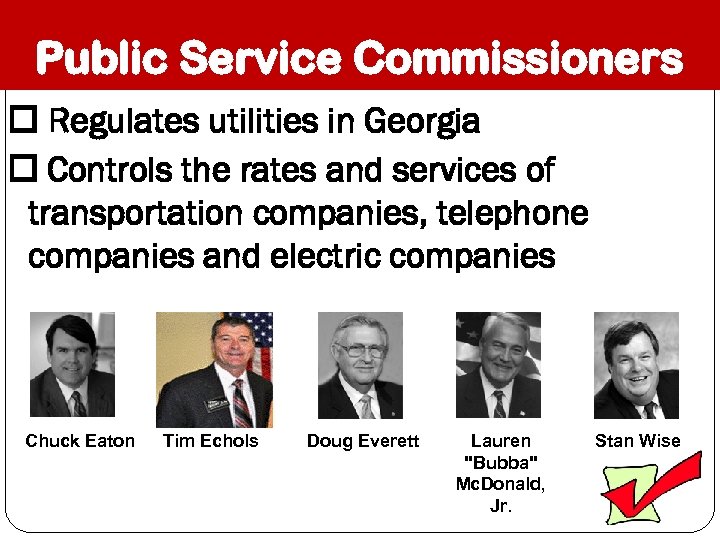 Public Service Commissioners Regulates utilities in Georgia Controls the rates and services of transportation companies, telephone companies and electric companies Chuck Eaton Tim Echols Doug Everett Lauren "Bubba" Mc. Donald, Jr. Stan Wise
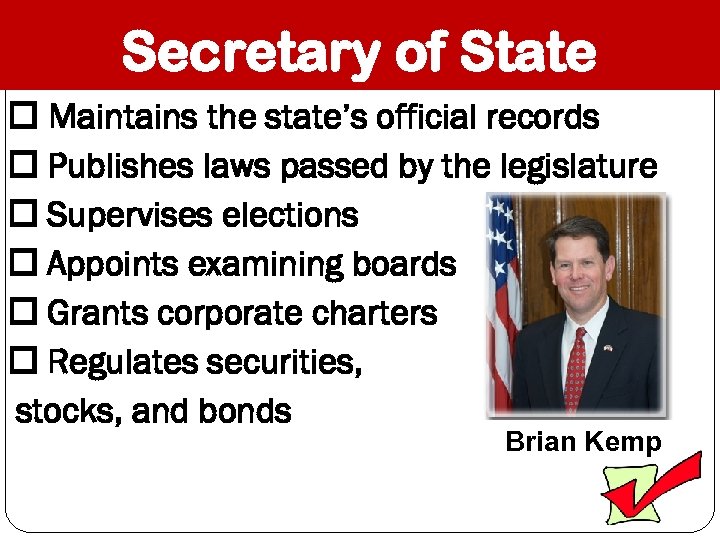 Secretary of State Maintains the state’s official records Publishes laws passed by the legislature Supervises elections Appoints examining boards Grants corporate charters Regulates securities, stocks, and bonds Brian Kemp
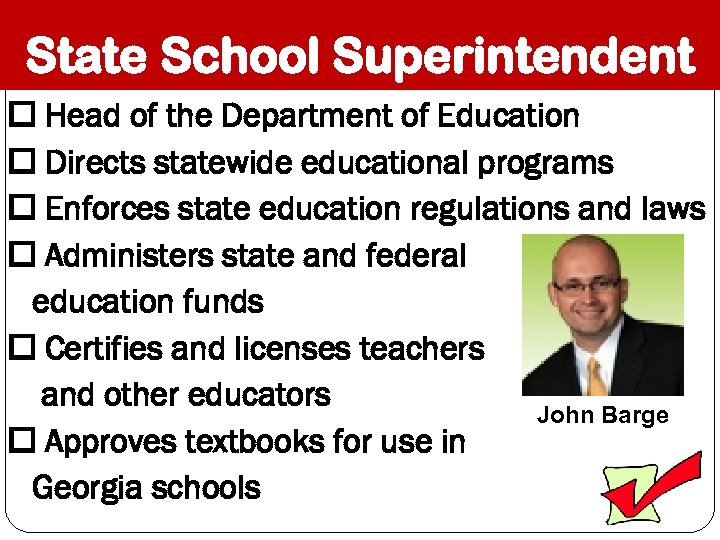 State School Superintendent Head of the Department of Education Directs statewide educational programs Enforces state education regulations and laws Administers state and federal education funds Certifies and licenses teachers and other educators John Barge Approves textbooks for use in Georgia schools
 Appointed Officials, Boards, & Commissions
 These positions are not provided for in the state’s constitution, nor are they elected, but their jobs are called for by law. Example: Chief Drug Inspector Another sector of Georgia’s government are boards and agencies. There are over 30 major agencies. . . Examples: State Board of Pardons & Paroles Board of Natural Resources State Personnel Board
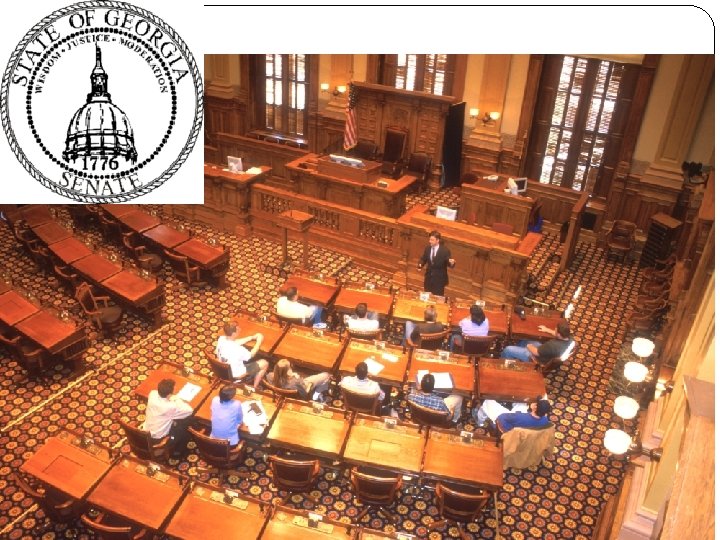
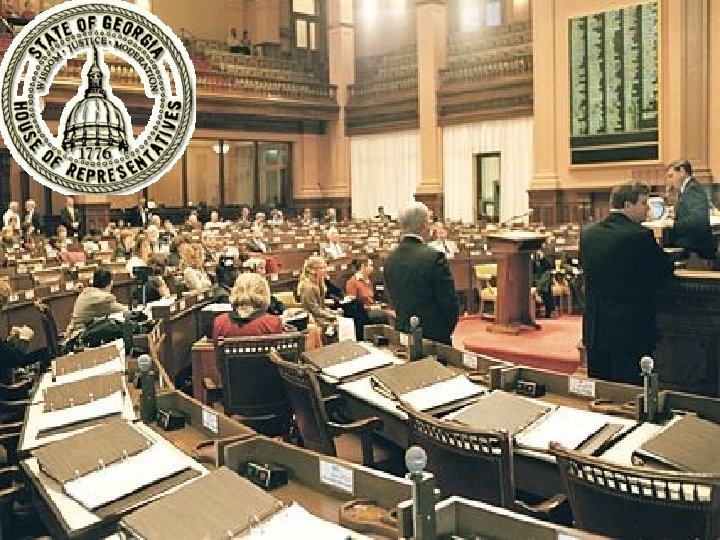
 The Legislative Branch The Georgia state constitution grants law- making power to the legislative branch. Georgia’s legislature is officially known as the Georgia General Assembly. Formed in 1777 as a 1 house legislature. That makes it older than the Congress of the United States. In 1789, the Georgia General Assembly was reorganized.
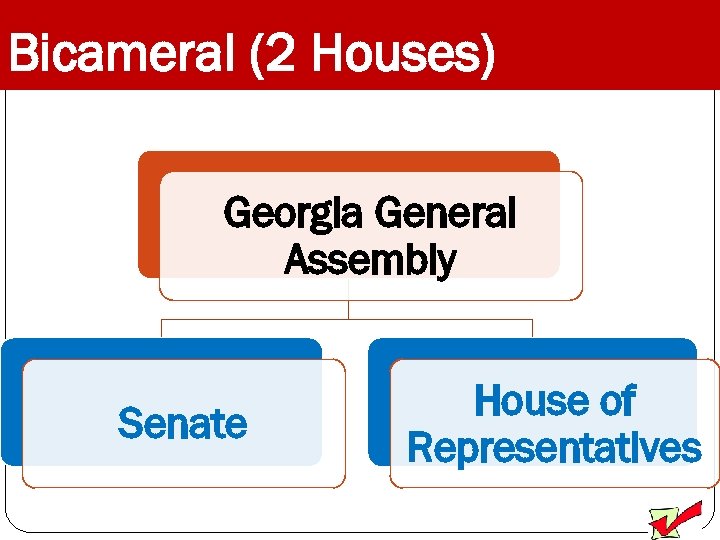 Bicameral (2 Houses) Georgia General Assembly Senate House of Representatives
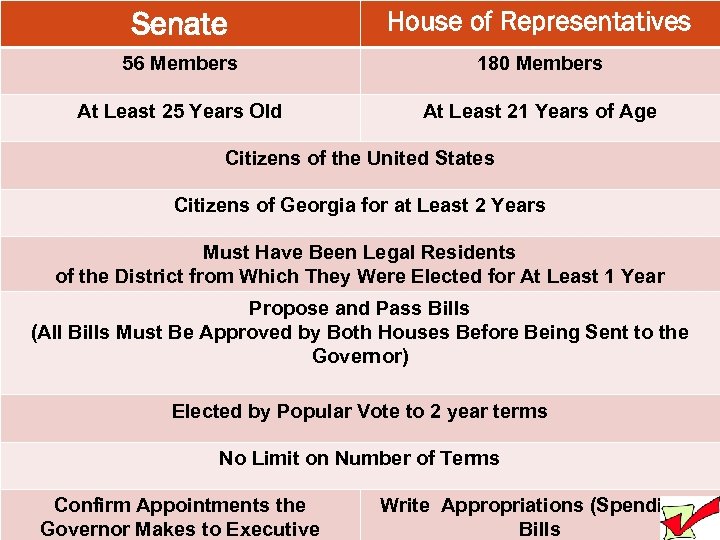 Senate House of Representatives 56 Members 180 Members At Least 25 Years Old At Least 21 Years of Age Citizens of the United States Citizens of Georgia for at Least 2 Years Must Have Been Legal Residents of the District from Which They Were Elected for At Least 1 Year Propose and Pass Bills (All Bills Must Be Approved by Both Houses Before Being Sent to the Governor) Elected by Popular Vote to 2 year terms No Limit on Number of Terms Confirm Appointments the Governor Makes to Executive Write Appropriations (Spending ) Bills
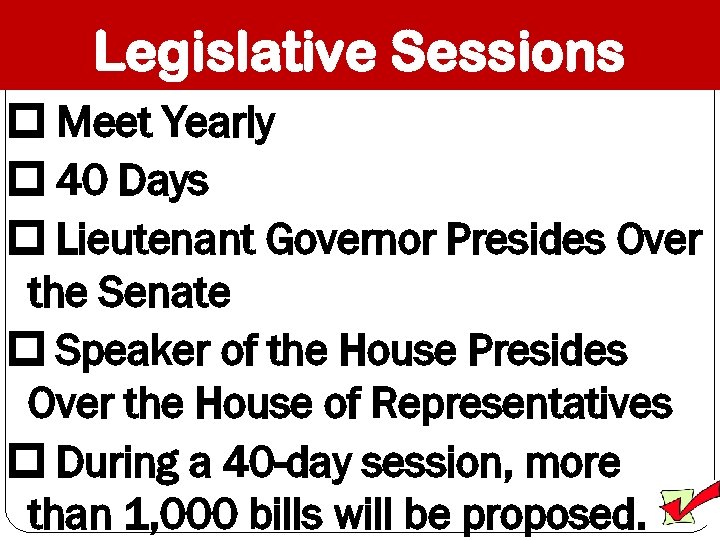 Legislative Sessions Meet Yearly 40 Days Lieutenant Governor Presides Over the Senate Speaker of the House Presides Over the House of Representatives During a 40 -day session, more than 1, 000 bills will be proposed.
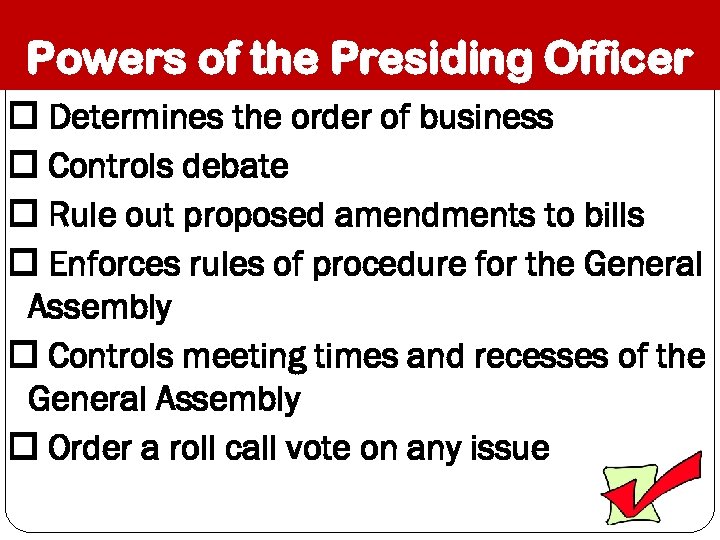 Powers of the Presiding Officer Determines the order of business Controls debate Rule out proposed amendments to bills Enforces rules of procedure for the General Assembly Controls meeting times and recesses of the General Assembly Order a roll call vote on any issue
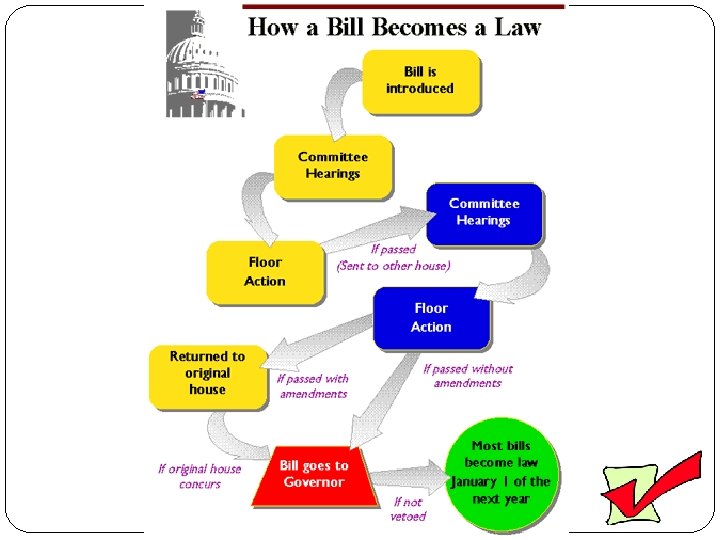
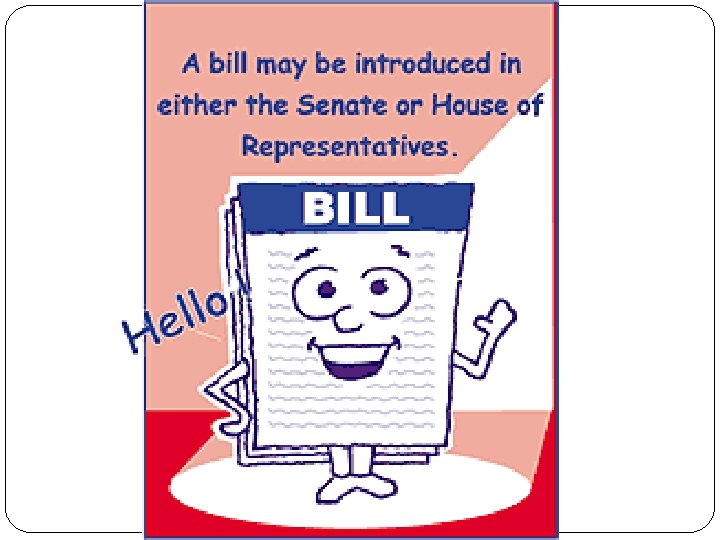
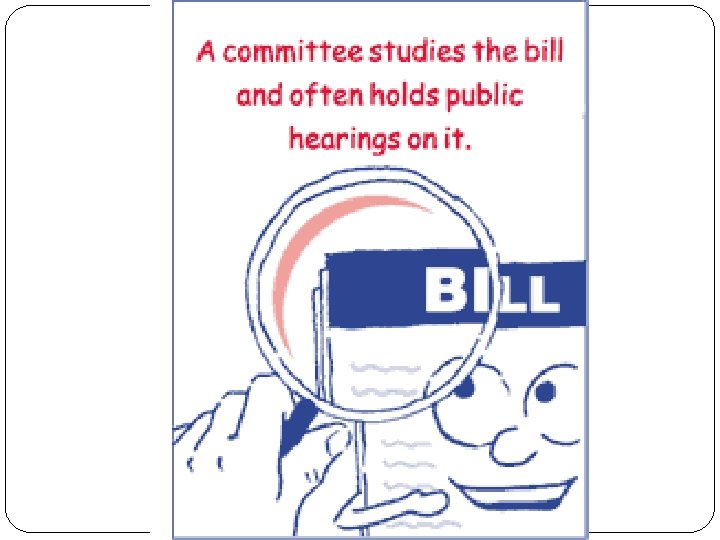
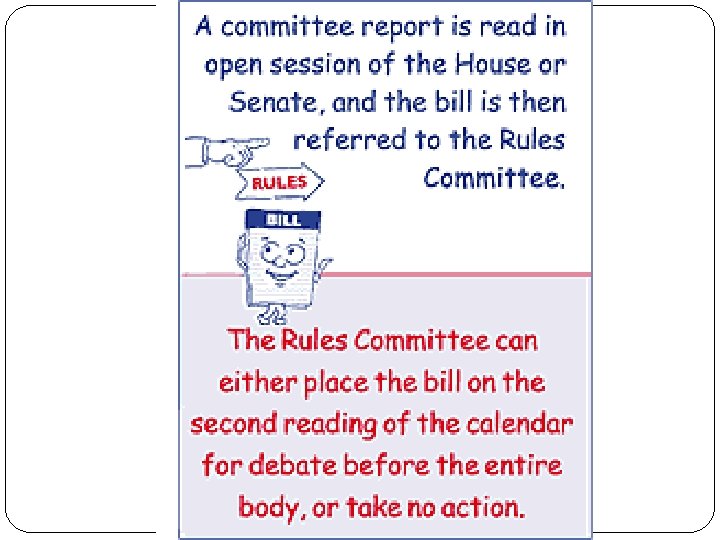
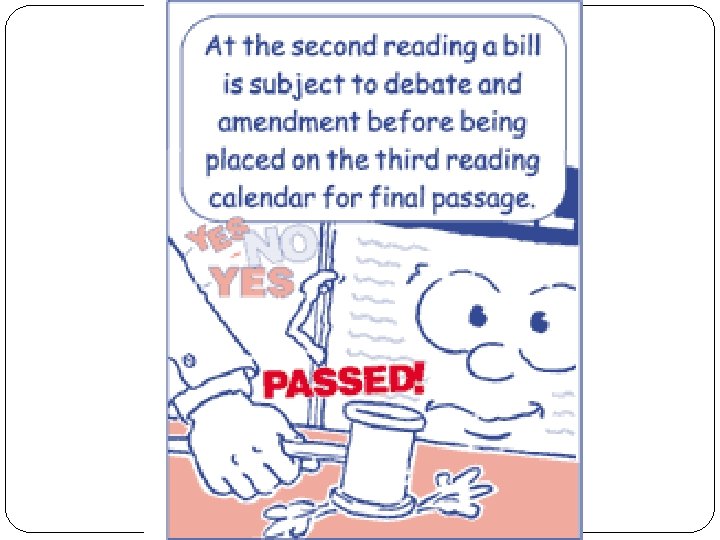
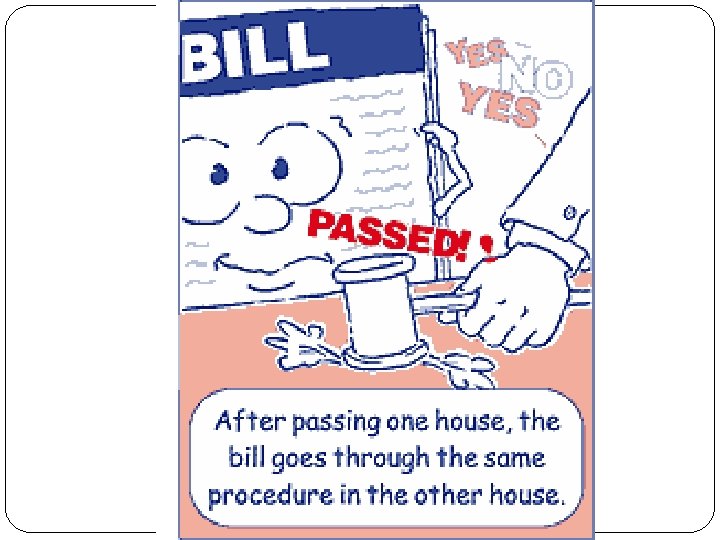
 Committees Like Congress, members of the Georgia house and senate are organized into committees. All bills must be reviewed by a house or senate committee before they can be brought to either the whole house or sent for a vote.
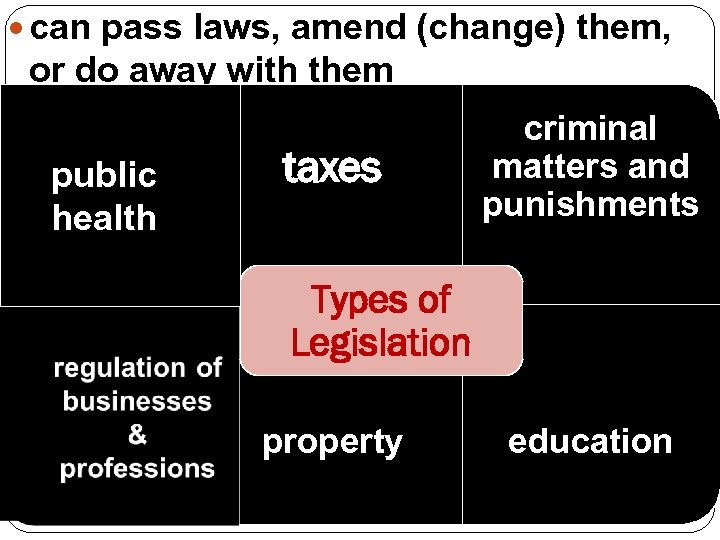 can pass laws, amend (change) them, or do away with them public health taxes criminal matters and punishments Types of Legislation property education
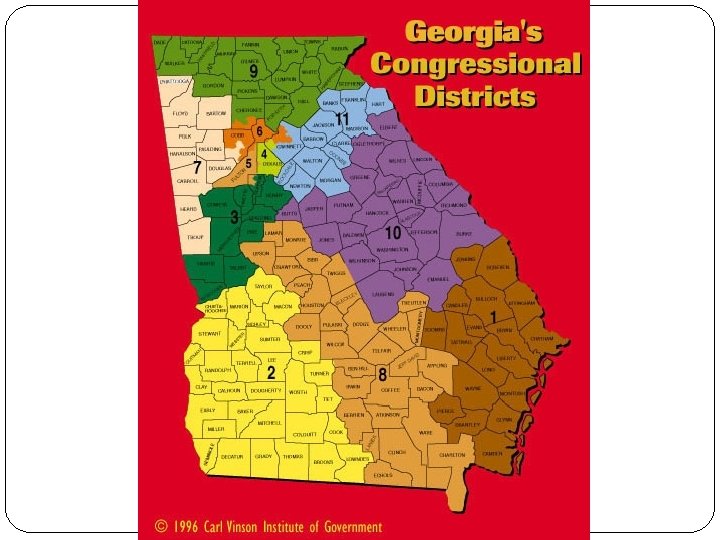
 Reapportionment Occurs each 10 years following the census legislature must redraw the voting districts to make them have the equal numbers of people 2001: districts drawn by Democratic legislature ruled unconstitutional 2004: revisions made to district map gerrymandering: drawing up a election district to support a particular group
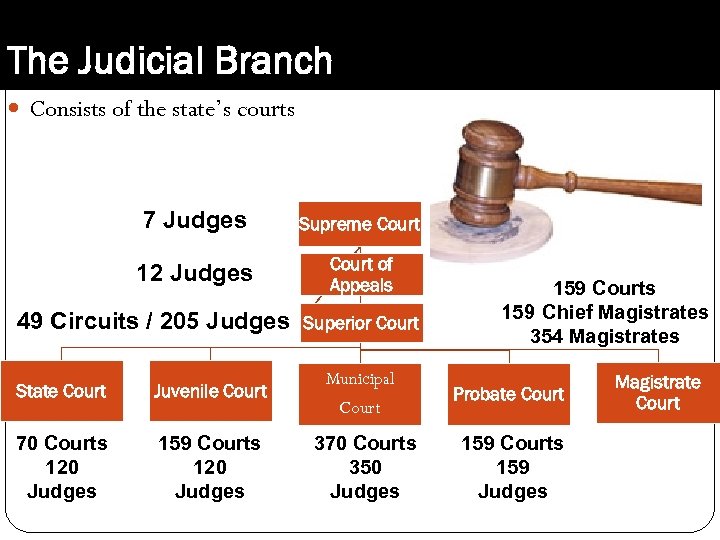 The Judicial Branch Consists of the state’s courts 7 Judges Supreme Court 12 Judges Court of Appeals 49 Circuits / 205 Judges Superior Court 159 Courts 159 Chief Magistrates 354 Magistrates State Court Juvenile Court Municipal Court Probate Court 70 Courts 120 Judges 159 Courts 120 Judges 370 Courts 350 Judges 159 Courts 159 Judges Magistrate Court
 Duties Interpret the State Constitution Protect legal rights of citizens Enforce laws of the state
 Supreme Court Reviews decisions made by other courts in civil and criminal cases. Rules on questions involving the constitutionality of state statutes, all criminal cases involving a sentence of death, and petitions from decisions of the Court of Appeals. No trials are held at the appellate level; Oral arguments are heard by the entire court.
 Court of Appeals First review for many civil and criminal cases decided in the trial courts. Correct legal errors or errors of law made at the trial level, not to alter jury verdicts or the outcome of bench trials.
 Superior Court Exclusive, constitutional authority over felony cases, divorce, equity and cases regarding title to land. Corrects errors made by lower courts
 State Court misdemeanor violations, including traffic cases, and all civil actions, regardless of the amount claimed, unless the superior court has exclusive jurisdiction. Issue search and arrest warrants
 Juvenile Court protect the well-being of children, provide guidance and control conducive to child welfare and the best interests of the state, and secure care for children removed from their homes.
 Municipal Court municipal ordinance violations, issue criminal warrants, conduct preliminary hearings, and may have concurrent jurisdiction over shoplifting cases and cases involving possession of one ounce or less of marijuana.
 Probate Court wills, administration of estates, appointment of guardians and involuntary hospitalization of incapacitated adults and other individuals. oaths of office and issue marriage licenses. They may hold habeas corpus hearings or preside over criminal preliminary hearings.
 Probate Court Continued Unless a jury trial is requested, may also hear certain misdemeanors, traffic cases and violations of state game and fish laws election supervisors and make appointments to certain local public offices.
 Magistrate Court civil claims of $15, 000 or less; certain minor criminal offenses; distress warrants and dispossessory writs; county ordinance violations; deposit account fraud (bad checks); preliminary hearings; and summonses, arrest and search warrants.
 Magistrate Court Continued May grant bail in cases where the setting of bail is not exclusively reserved to a judge of another court. No jury trials are held in magistrate court. If a defendant submits a written request for a jury trial, cases may be removed to superior or state court.
 serious crime with severe punishments allowed Misdemeanor involve violation of laws Felony Civil Cases disputes between citizens Criminal Cases Types of Court Cases less serious crime with smaller punishments
 The Jury System Trial before one’s peers Two Types: 1) Grand Jury -- determines whether or not persons accused of crimes should be indicted (officially charged) and required to stand trial. 2) Trial Jury -- group of citizens who are charged with judging a person charged with a crime
 Young People and the Law Over 2, 500 children in jail in Georgia juvenile: citizen under the age of 17 truancy: failure to attend school juveniles must follow state’s laws, but violators may be tried by a juvenile court Common Crimes: smoking, drinking alcohol, loitering (hanging around a public place without permission), violating curfews, running away
 Juvenile Court System every county has a juvenile court purposes: help and protect children ensure protection of children coming under their jurisdiction provide care for children removed from their home delinquent behavior: act that would be a crime if committed by an adult (example: burglary, etc. . ) unruly behavior: act that would not be a crime if committed by an adult (example: smoking, drinking, etc…)
 Steps in Juvenile Justice Process juvenile “taken into custody” intake: intake officer evaluates case detain or release (to parents) detained juveniles sent to RYDC (regional youth detention center) 5. probable cause hearing before a juvenile court judge 6. dismissal, informal adjustment, or formal hearing 7. if the juvenile committed a serious offense or multiple offenses, a judge has many sentencing options 1. 2. 3. 4.
 Georgia’s Seven Deadly Sins Act 1994: legislature addressed issue of increasingly violent youth crime juveniles charged with certain crimes (murder, rape, armed robbery with a firearm) could be treated as adults by the courts superior courts handle these cases mandatory 10 -year sentences were a part of the new law
 Rights of Juveniles juveniles have the right to a fair and speedy trial no juries in juvenile cases parents or guardians may be present at hearings attorney must be provided if child’s parents cannot afford one
 Students’ Rights Under School Law sometimes students’ rights have been in conflict with schools’ authority courts have ruled that students’ civil rights are in effect at school; however, schools have been given broad power to control and manage the school environment
 Students’ Responsibilities Under School Law students have a legal right to a free public education responsibilities of students: attend school regularly from ages 6 -16 follow reasonable rules and regulations work with school officials to prevent disruption and violence which keeps students from learning and achieving
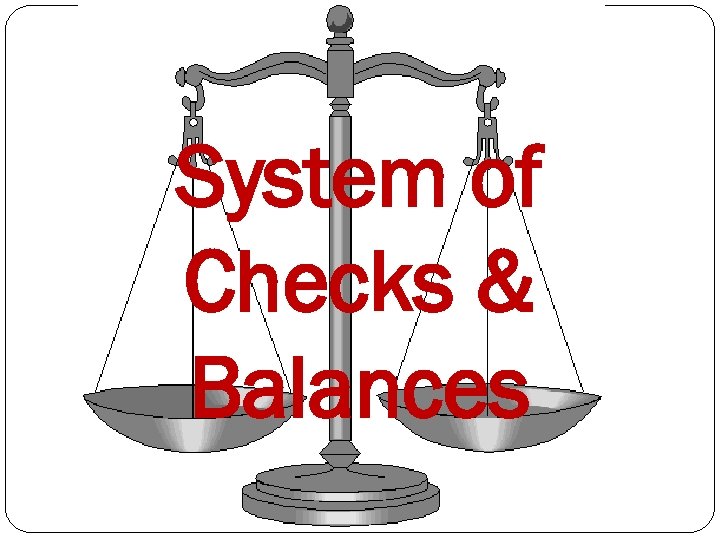 System of Checks & Balances
 Separation of Powers each branch of government has its own powers similar to US Constitution designed so that no branch or person can become too powerful checks and balances system depends on citizens choosing wisely when they vote
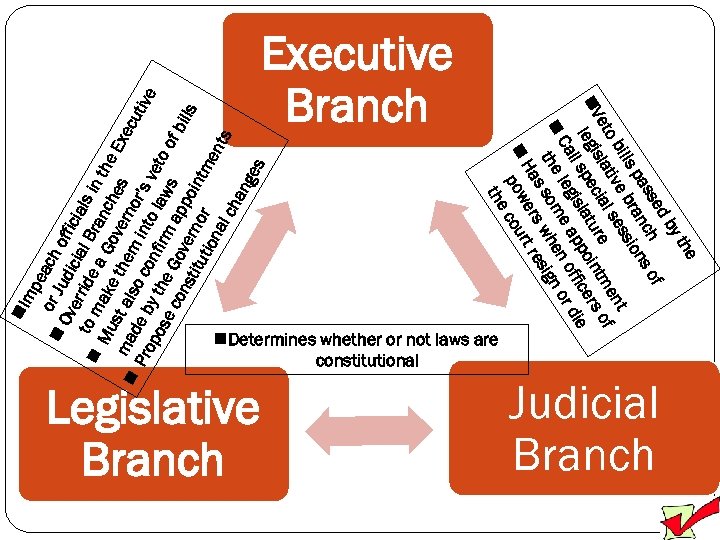 mp or each Ov Judic offic e to rride ial B ials i n r Mu make a Go anch n the Exe ma st al the vern es n cu m tiv Pro de b so co int or’s e y th nfi o la vet po oo rm se w e fb co Gov ap s ills ns ern poi titu tio or ntme na nts l ch an ge s I Executive Branch Legislative Branch the by ed of ss ch pa ran ions ls b s t bil ive ses en eto islat cial ure ntm s of i r V leg l spe islat ppo fice ie f l d Ca leg e a n o or the s som whe sign s e Ha er t r pow cour the Determines whether or not laws are constitutional Judicial Branch
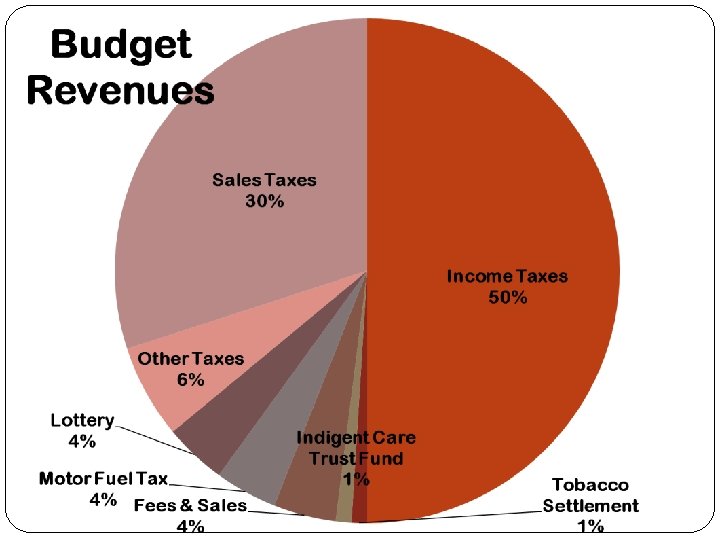
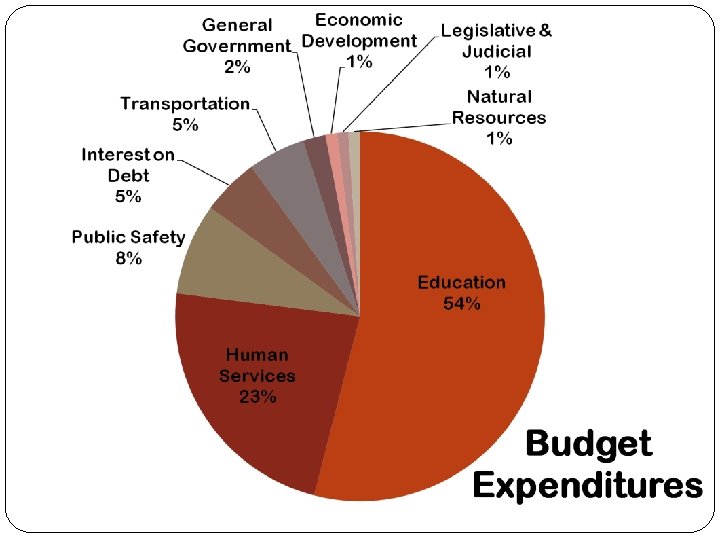
 How Is Georgia’s Government Funded?