


 Скачать презентацию FORMAL COMMANDS FORMAL COMMANDS To tell someone
7f6c51325126813633be30cb2f77f31f.ppt
- Количество слайдов: 7
 FORMAL COMMANDS
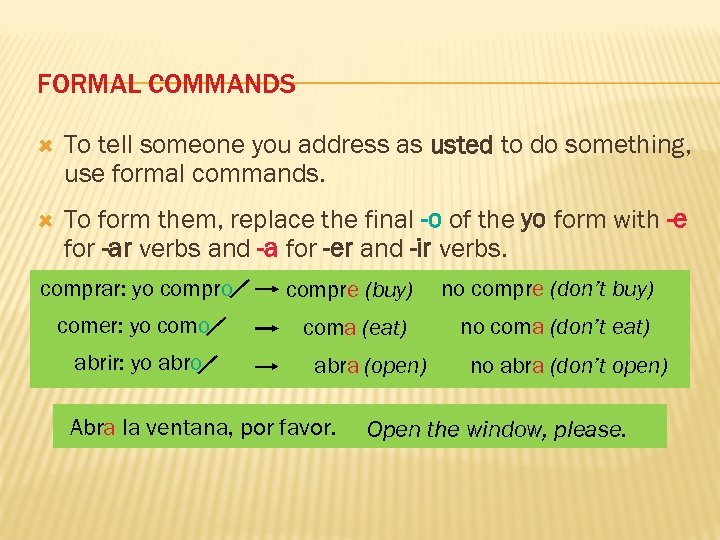 FORMAL COMMANDS To tell someone you address as usted to do something, use formal commands. To form them, replace the final -o of the yo form with -e for -ar verbs and -a for -er and -ir verbs. comprar: yo compre (buy) no compre (don’t buy) comer: yo coma (eat) no coma (don’t eat) abrir: yo abra (open) Abra la ventana, por favor. no abra (don’t open) Open the window, please.
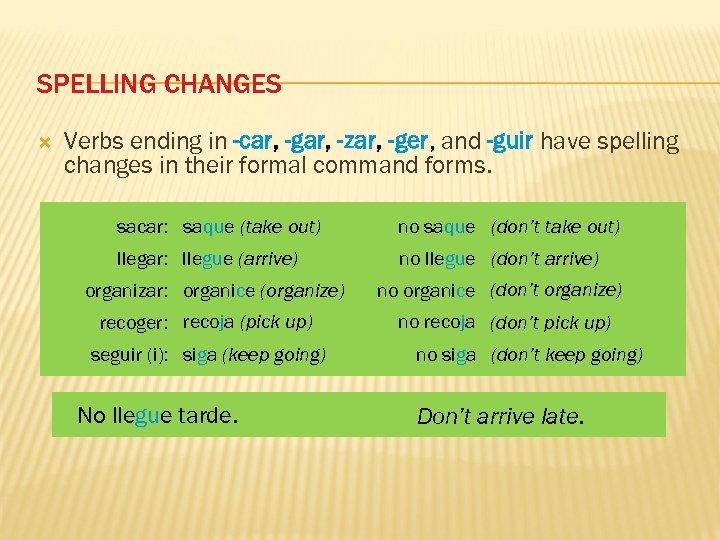 SPELLING CHANGES Verbs ending in -car, -gar, -zar, -ger, and -guir have spelling changes in their formal command forms. sacar: saque (take out) no saque (don’t take out) llegar: llegue (arrive) no llegue (don’t arrive) organizar: organice (organize) recoger: recoja (pick up) seguir (i): siga (keep going) No llegue tarde. no organice (don’t organize) no recoja (don’t pick up) no siga (don’t keep going) Don’t arrive late.
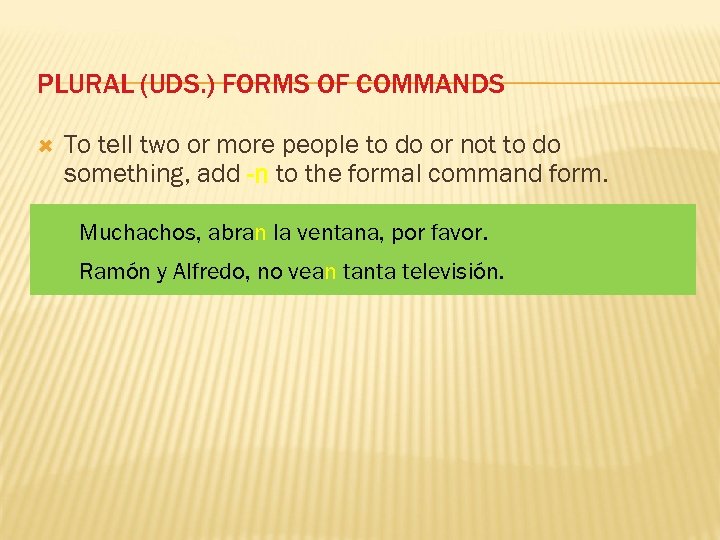 PLURAL (UDS. ) FORMS OF COMMANDS To tell two or more people to do or not to do something, add -n to the formal command form. Muchachos, abran la ventana, por favor. Ramón y Alfredo, no vean tanta televisión.
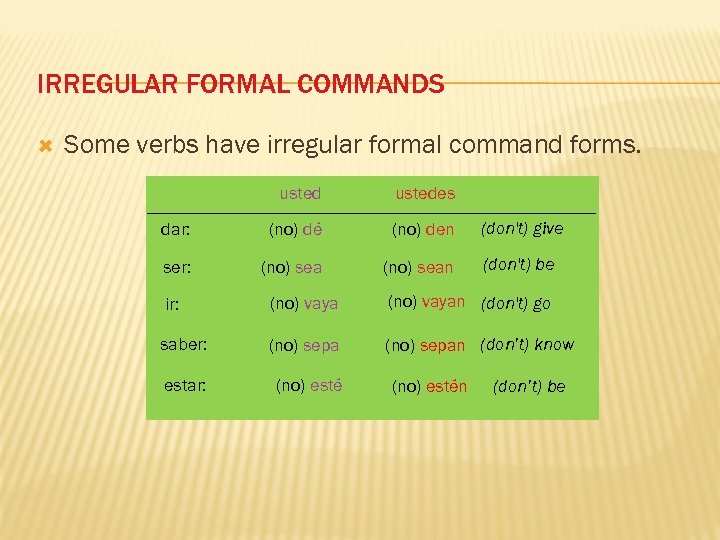 IRREGULAR FORMAL COMMANDS Some verbs have irregular formal command forms. ustedes dar: (no) dé (no) den (don't) give ser: (no) sean (don't) be ir: (no) vayan (don't) go saber: (no) sepan (don’t) know estar: (no) estén (don’t) be
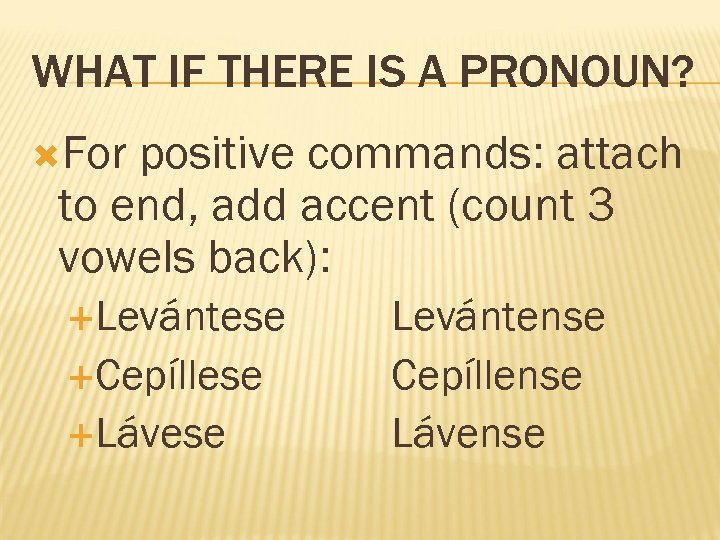 WHAT IF THERE IS A PRONOUN? For positive commands: attach to end, add accent (count 3 vowels back): Levántese Cepíllese Lávese Levántense Cepíllense Lávense
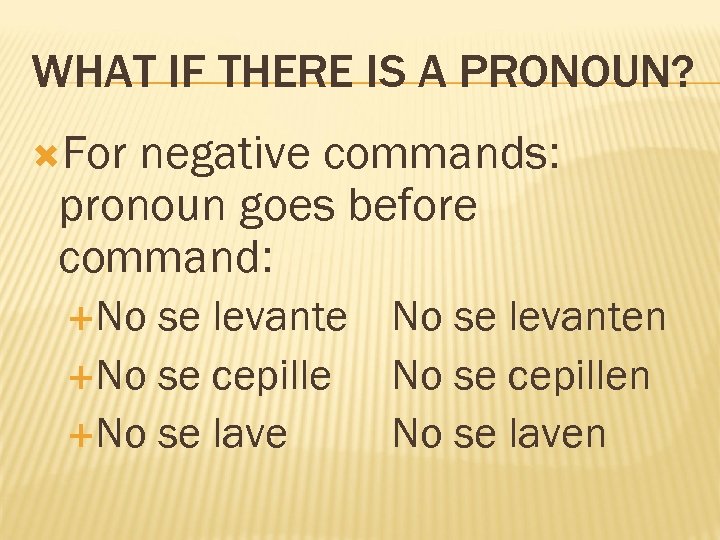 WHAT IF THERE IS A PRONOUN? For negative commands: pronoun goes before command: No se levanten No se cepillen No se laven