 Скачать презентацию Forecast Verification Research Beth Ebert Bureau of Meteorology
8e1e8199a82e32fc9e2fd8a09e0f9773.ppt
- Количество слайдов: 24



Forecast Verification Research Beth Ebert, Bureau of Meteorology Laurie Wilson, Meteorological Service of Canada WWRP-JSC, Geneva, 11 -13 April 2012
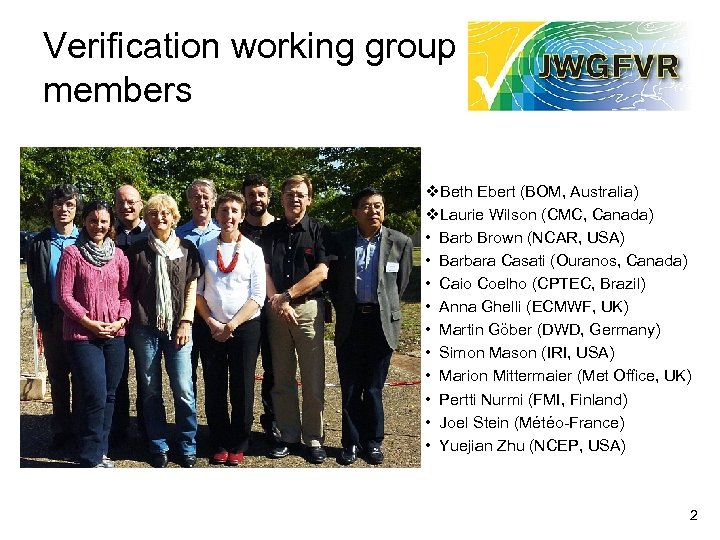
Verification working group members v. Beth Ebert (BOM, Australia) v. Laurie Wilson (CMC, Canada) • Barb Brown (NCAR, USA) • Barbara Casati (Ouranos, Canada) • Caio Coelho (CPTEC, Brazil) • Anna Ghelli (ECMWF, UK) • Martin Göber (DWD, Germany) • Simon Mason (IRI, USA) • Marion Mittermaier (Met Office, UK) • Pertti Nurmi (FMI, Finland) • Joel Stein (Météo-France) • Yuejian Zhu (NCEP, USA) 2
Aims Verification component of WWRP, in collaboration with WGNE, WCRP, CBS • Develop and promote new verification methods • Training on verification methodologies • Ensure forecast verification is relevant to users • Encourage sharing of observational data • Promote importance of verification as a vital part of experiments • Promote collaboration among verification scientists, model developers and forecast providers 3
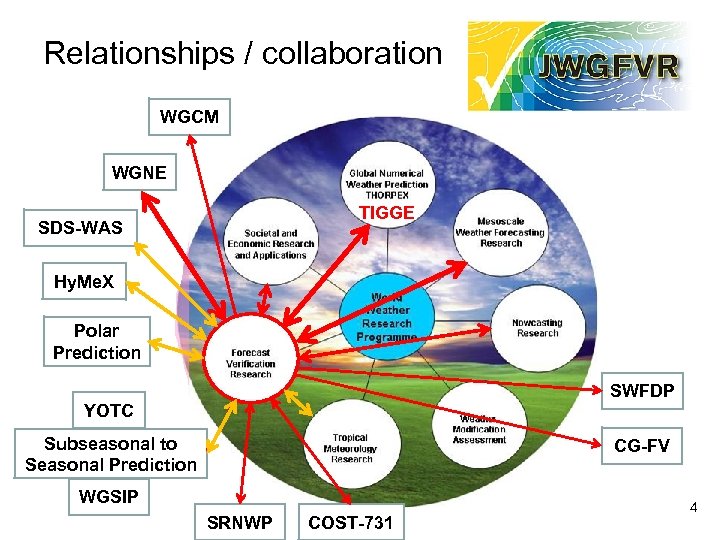
Relationships / collaboration WGCM WGNE TIGGE SDS-WAS Hy. Me. X Polar Prediction SWFDP YOTC Subseasonal to Seasonal Prediction CG-FV WGSIP SRNWP COST-731 4
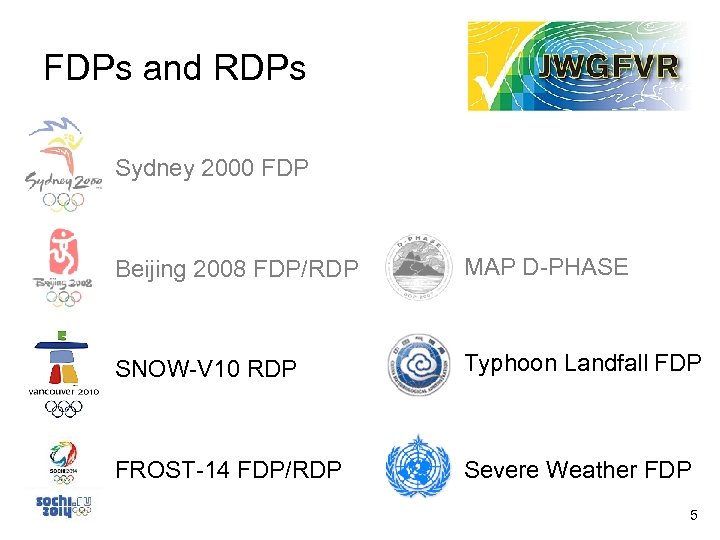
FDPs and RDPs Sydney 2000 FDP Beijing 2008 FDP/RDP MAP D-PHASE SNOW-V 10 RDP Typhoon Landfall FDP FROST-14 FDP/RDP Severe Weather FDP 5
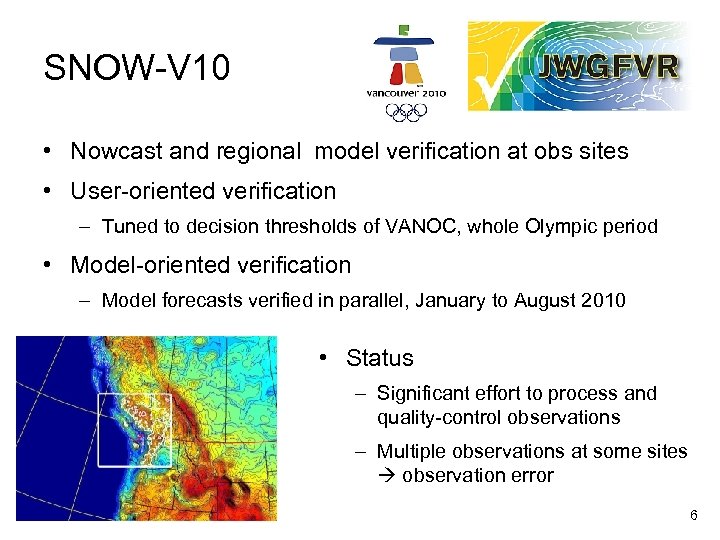
SNOW-V 10 • Nowcast and regional model verification at obs sites • User-oriented verification – Tuned to decision thresholds of VANOC, whole Olympic period • Model-oriented verification – Model forecasts verified in parallel, January to August 2010 • Status – Significant effort to process and quality-control observations – Multiple observations at some sites observation error 6
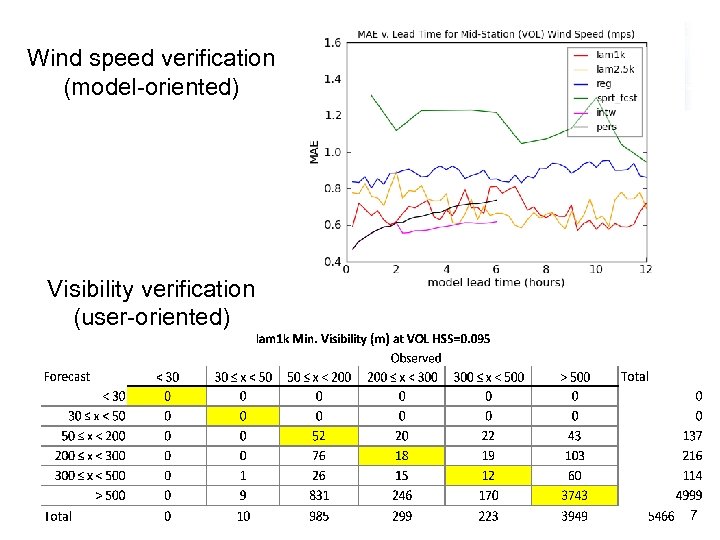
Wind speed verification (model-oriented) Visibility verification (user-oriented) 7
FROST-14 User-focused verification • Threshold-based as in SNOW-V 10 • Timing of events – onset, duration, cessation • Real-time verification • Road weather forecasts? Model-focused verification • Neighborhood verification of high-resolution NWP • Spatial verification of ensembles Account for observation uncertainty 8
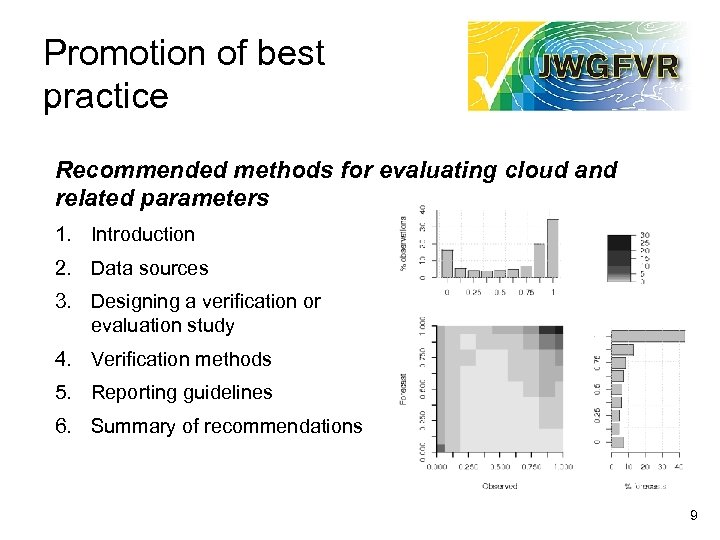
Promotion of best practice Recommended methods for evaluating cloud and related parameters 1. Introduction 2. Data sources 3. Designing a verification or evaluation study 4. Verification methods 5. Reporting guidelines 6. Summary of recommendations 9
Promotion of best practice Verification of tropical cyclone forecasts 1. Introduction 2. Observations and analyses 3. Forecasts 4. Current practice in TC verification – deterministic forecasts 5. Current verification practice – Probabilistic forecasts and ensembles 6. Verification of monthly and seasonal tropical cyclone forecasts 7. Experimental verification methods 8. Comparing forecasts 9. Presentation of verification results 10
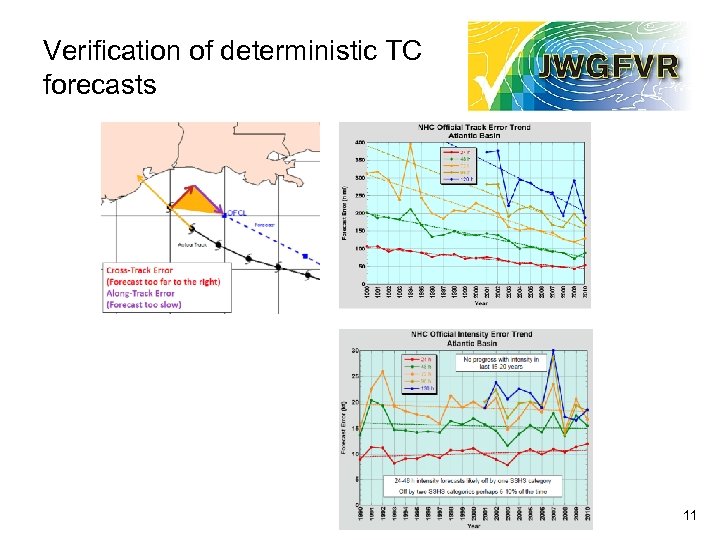
Verification of deterministic TC forecasts 11
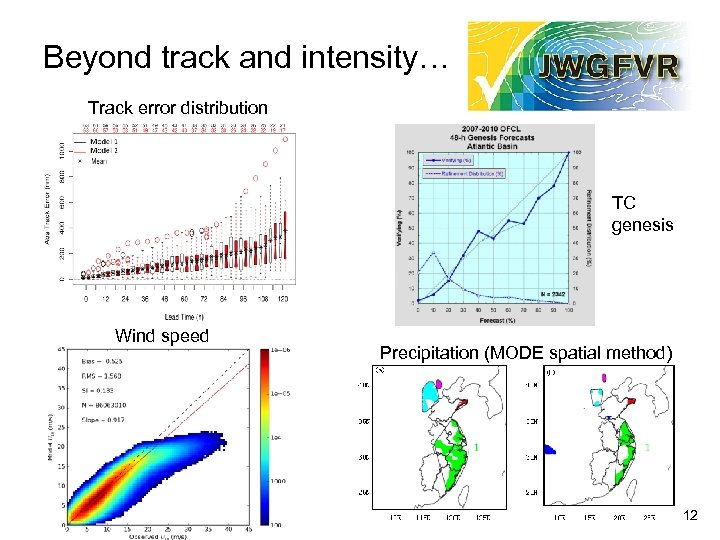
Beyond track and intensity… Track error distribution TC genesis Wind speed Precipitation (MODE spatial method) 12
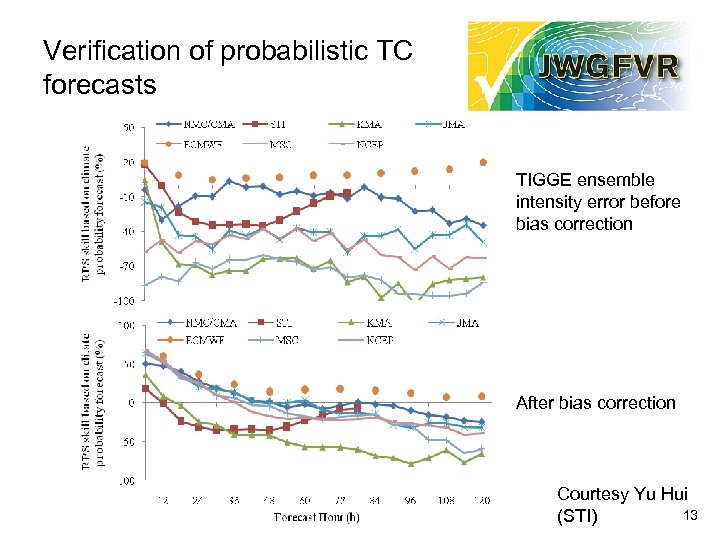
Verification of probabilistic TC forecasts TIGGE ensemble intensity error before bias correction After bias correction Courtesy Yu Hui 13 (STI)
Issues in TC verification • Observations contain large uncertainties • Some additional important variables: • • Storm structure and size Rapid intensification Landfall time, position, and intensity Precipitation Storm surge Consistency Uncertainty Info to help forecasters (e. g. , steering flow) • Tailoring verification to help forecasters with their high-pressure job and multiple sources of guidance information • False alarms (incl. forecast storms outliving actual storm) and misses (unforecasted storms) currently ignored • How best to evaluate ensemble TC predictions? 14
Promotion of best practice Verification of forecasts from mesoscale models (early DRAFT) 1. Purposes of verification 2. Choices to be made a. Surface and/or upper-air verification? b. Point-wise and/or spatial verification? 3. Proposal for 2 nd Spatial Verification Intercomparison Project in collaboration with Short-Range NWP (SRNWP) 15
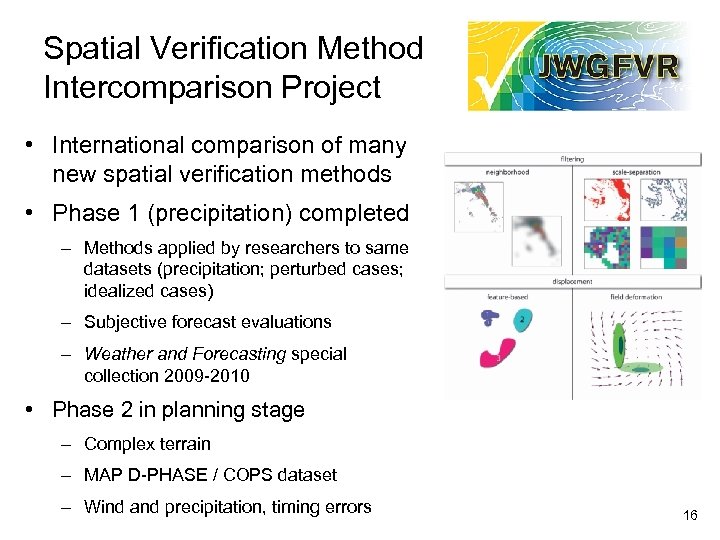
Spatial Verification Method Intercomparison Project • International comparison of many new spatial verification methods • Phase 1 (precipitation) completed – Methods applied by researchers to same datasets (precipitation; perturbed cases; idealized cases) – Subjective forecast evaluations – Weather and Forecasting special collection 2009 -2010 • Phase 2 in planning stage – Complex terrain – MAP D-PHASE / COPS dataset – Wind and precipitation, timing errors 16
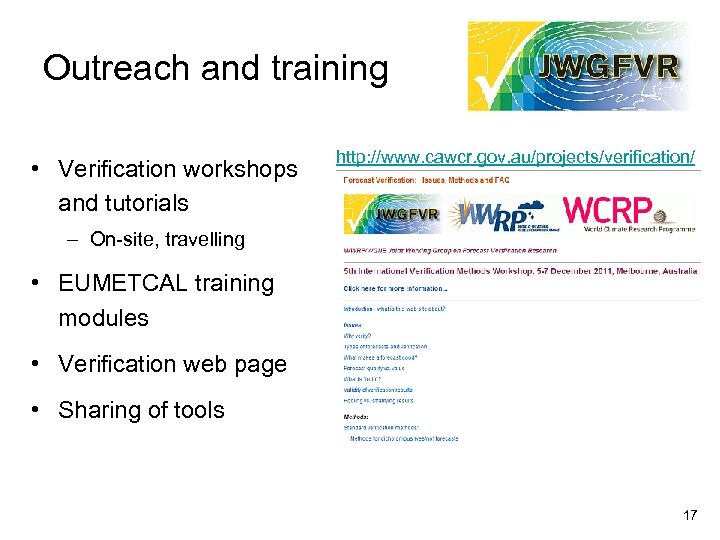
Outreach and training • Verification workshops and tutorials http: //www. cawcr. gov. au/projects/verification/ – On-site, travelling • EUMETCAL training modules • Verification web page • Sharing of tools 17
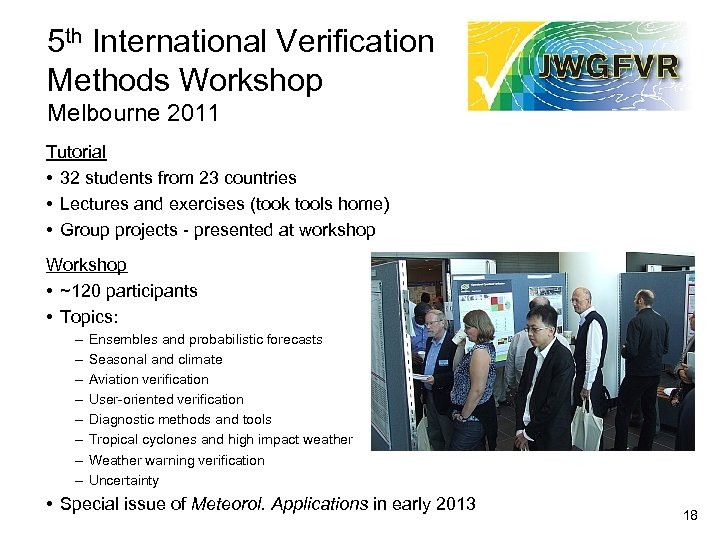
5 th International Verification Methods Workshop Melbourne 2011 Tutorial • 32 students from 23 countries • Lectures and exercises (took tools home) • Group projects - presented at workshop Workshop • ~120 participants • Topics: – – – – Ensembles and probabilistic forecasts Seasonal and climate Aviation verification User-oriented verification Diagnostic methods and tools Tropical cyclones and high impact weather Weather warning verification Uncertainty • Special issue of Meteorol. Applications in early 2013 18
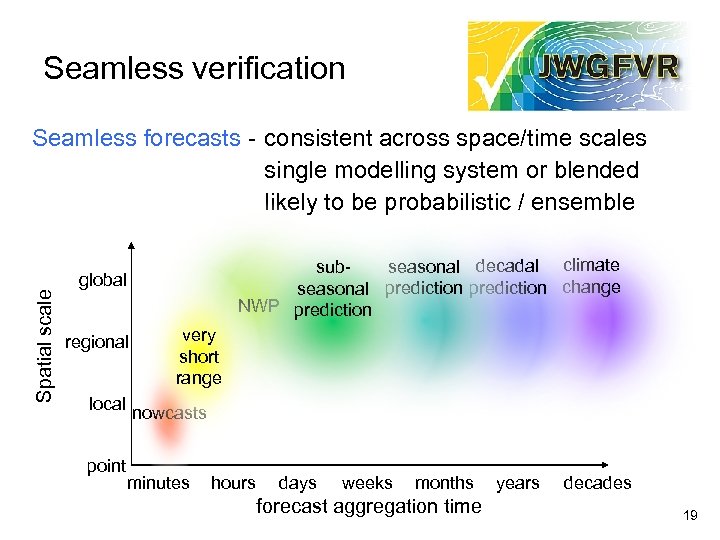
Seamless verification Spatial scale Seamless forecasts - consistent across space/time scales single modelling system or blended likely to be probabilistic / ensemble seasonal decadal climate subseasonal prediction change NWP prediction global regional local point very short range nowcasts minutes hours days weeks months forecast aggregation time years decades 19
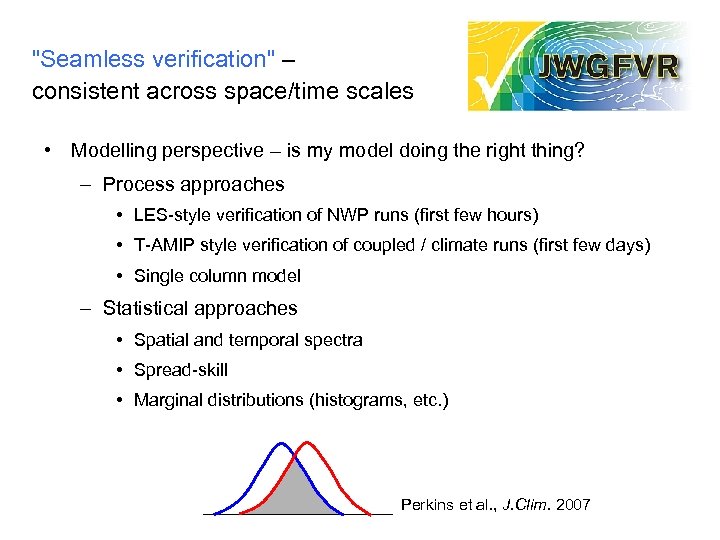
"Seamless verification" – consistent across space/time scales • Modelling perspective – is my model doing the right thing? – Process approaches • LES-style verification of NWP runs (first few hours) • T-AMIP style verification of coupled / climate runs (first few days) • Single column model – Statistical approaches • Spatial and temporal spectra • Spread-skill • Marginal distributions (histograms, etc. ) Perkins et al. , J. Clim. 2007
"Seamless verification" – consistent across space/time scales • User perspective – can I use this forecast to help me make a better decision? – Neighborhood approaches - spatial and temporal scales with useful skill – Generalized discrimination score (Mason & Weigel, MWR 2009) – consistent treatment of binary, multi-category, continuous, probabilistic forecasts – Calibration - accounting for space-time dependence of bias and accuracy? – Conditional verification based on larger scale regime – Extreme Forecast Index (EFI) approach for extremes • JWGFVR activity – Proposal for research in verifying forecasts in weather-climate interface – Assessment component of UK INTEGRATE project
Final thoughts • JWGFVR would like to strengthen its relationship with WWRP Tropical Meteorology WG – – – Typhoon Landfall FDP YOTC TIGGE Subseasonal to Seasonal Prediction CLIVAR • “Good will” participation (beyond advice) in WWRP and THORPEX projects getting harder to provide – Videoconferencing – Capacity building of “local” scientists – Include verification component in funded projects 22
Thank you 23
Summary of recommendations for cloud verification • • We recommend that the purpose of a verification study is considered carefully before commencing. Depending on the purpose: – – • We recommend that verification be done both against: – – – • For user-oriented verification we recommend that, at least the following cloud variables be verified: total cloud cover and cloud base height (CBH). If possible low, medium and high cloud should also be considered. An estimate of spatial bias is highly desirable, through the use of, e. g. , satellite cloud masks; More generally, we recommend the use of remotely sensed data such as satellite imagery for cloud verification. Satellite analyses should not be used at short lead times, because of a lack of independence. For model-oriented verification there is a preference for a comparison of simulated and observed radiances, but ultimately what is used should depend on the pre-determined purpose. For model-oriented verification the range of parameters of interest is more diverse, and the purpose will dictate the parameter and choice of observations, but we strongly recommend that vertical profiles are considered in this context. We also recommend the use of post-processed cloud products created from satellite radiances for user- and model-oriented verification, but these should be avoided for model inter-comparisons if the derived satellite products require model input since the model that is used to derive the product could be favoured. gridded observations and vertical profiles (model-oriented verification), with model inter-comparison done on a common latitude/longitude grid that accommodates the coarsest resolution; the use of cloud analyses should be avoided because of any model-specific "contamination" of observation data sets; surface station observations (user-oriented verification). For synoptic surface observations we recommend that: – – – – all observations should be used but if different observation types exist (e. g. , automated and manual) they should not be mixed; automated cloud base height observations be used for low thresholds (which are typically those of interest, e. g. , for aviation). We recognize that a combination of observations is required when assessing the impact of model physics changes. We recommend the use of cloud radar and lidar data as available, but recognize that this may not be a routine activity. We recommend that verification data and results be stratified by lead time, diurnal cycle, season, and geographical region. The recommended set of metrics is listed in Section 4. Higher priority should be given to those labeled with three stars. The optional measures are also desirable. We recommend that the verification of climatology forecasts be reported along with the forecast verification. The verification of persistence forecasts and use of model skill scores with respect to persistence, climatology, or random chance is highly desirable. For model-oriented verification in particular, it is recommended that all aggregate verification scores be accompanied by 95% confidence intervals, and reporting of the median and inter-quartile range for each score is highly desirable. 24
Скачать презентацию Forecast Verification Research Beth Ebert Bureau of Meteorology
8e1e8199a82e32fc9e2fd8a09e0f9773.ppt