


 Скачать презентацию Forces of change in world tourism The role
4d4e42ac3b000dd4815cb94d869211be.ppt
- Количество слайдов: 22
 "Forces of change in world tourism. The role of governments, enterprises and the need for p-p partnerships" Carlos Vogeler Chairman Affiliate Members UNWTO
 The importance of Travel & Tourism • 12% of international consumer spending • 10. 3 % of world gross domestic product (GDP) • 234 million jobs (1 in 12 jobs, 8. 2 % of total world employment) • The economic significance and potential of Travel & Tourism is particularly prominent in the developing world • Most new jobs in developing economies are created in tourism industries • Diversifies economic activity and enables the creation of wealth and jobs in rural areas • Positive effects in the balance of payments for inbound countries • Multiplier effect in the economy impacting other sectors
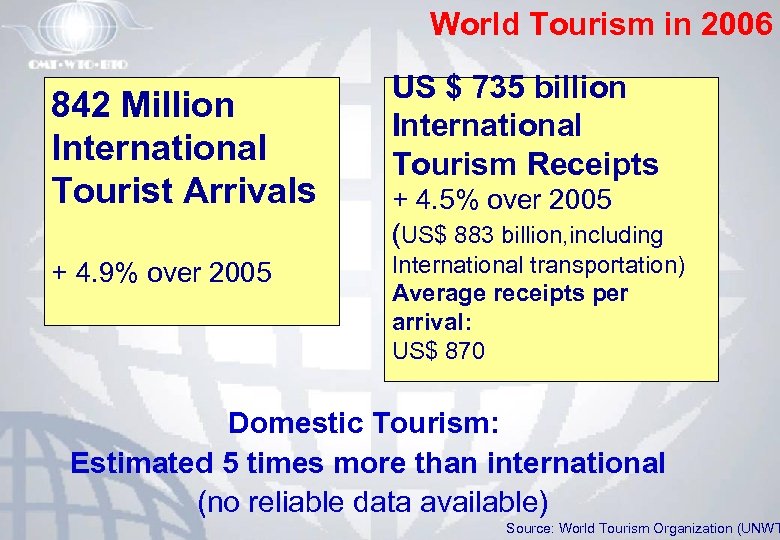 World Tourism in 2006 842 Million International Tourist Arrivals + 4. 9% over 2005 US $ 735 billion International Tourism Receipts + 4. 5% over 2005 (US$ 883 billion, including International transportation) Average receipts per arrival: US$ 870 Domestic Tourism: Estimated 5 times more than international (no reliable data available) Source: World Tourism Organization (UNWT
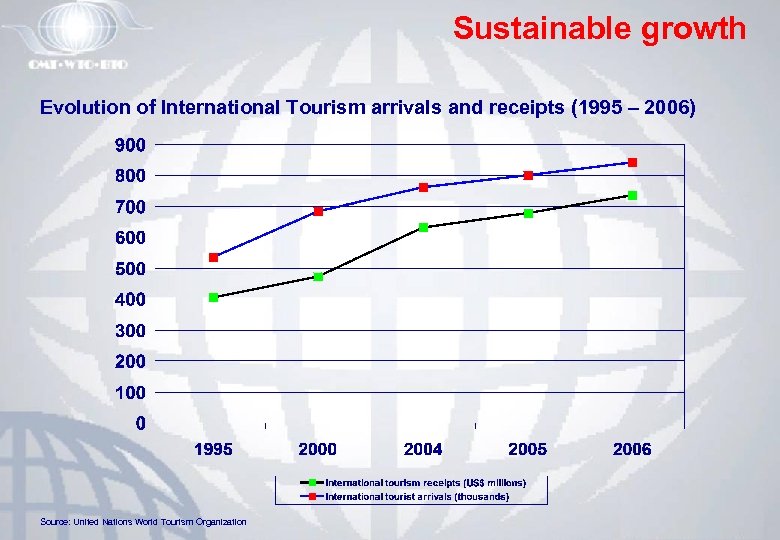 Sustainable growth Evolution of International Tourism arrivals and receipts (1995 – 2006) Source: United Nations World Tourism Organization
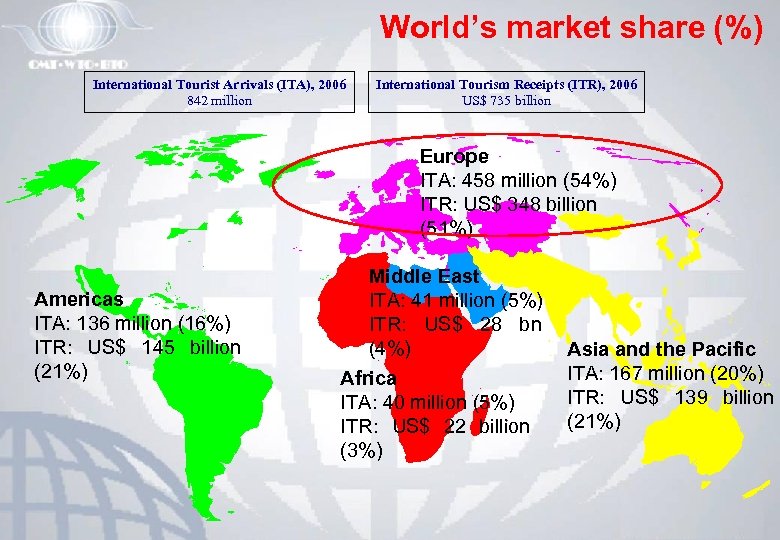 World’s market share (%) International Tourist Arrivals (ITA), 2006 842 million International Tourism Receipts (ITR), 2006 US$ 735 billion Europe ITA: 458 million (54%) ITR: US$ 348 billion (51%) Americas ITA: 136 million (16%) ITR: US$ 145 billion (21%) Middle East ITA: 41 million (5%) ITR: US$ 28 bn (4%) Africa ITA: 40 million (5%) ITR: US$ 22 billion (3%) Asia and the Pacific ITA: 167 million (20%) ITR: US$ 139 billion (21%)
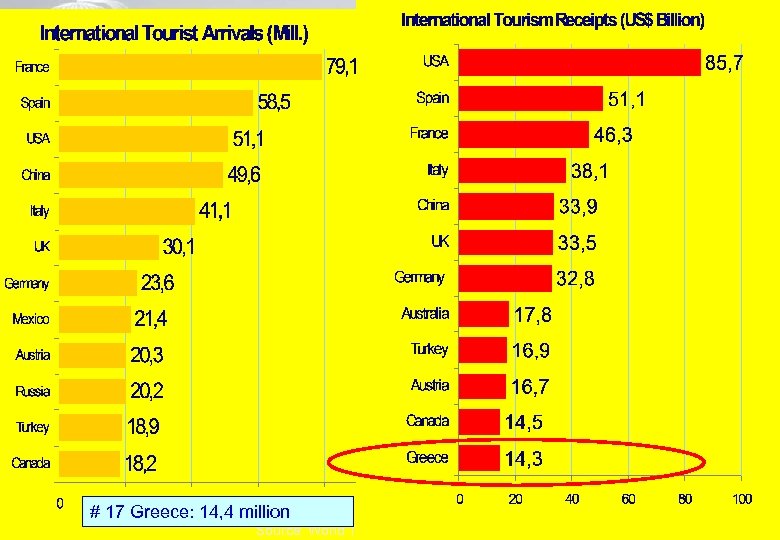 # 17 Greece: 14, 4 million Source: World Tourism Organization
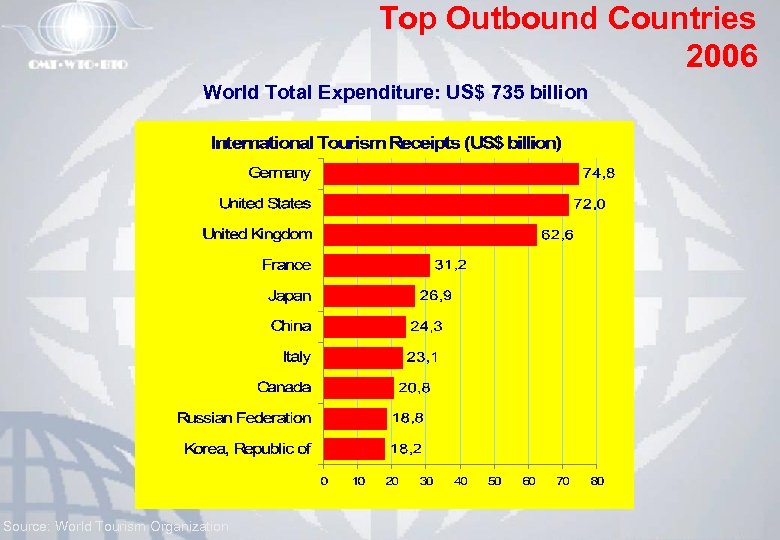 Top Outbound Countries 2006 World Total Expenditure: US$ 735 billion Source: World Tourism Organization
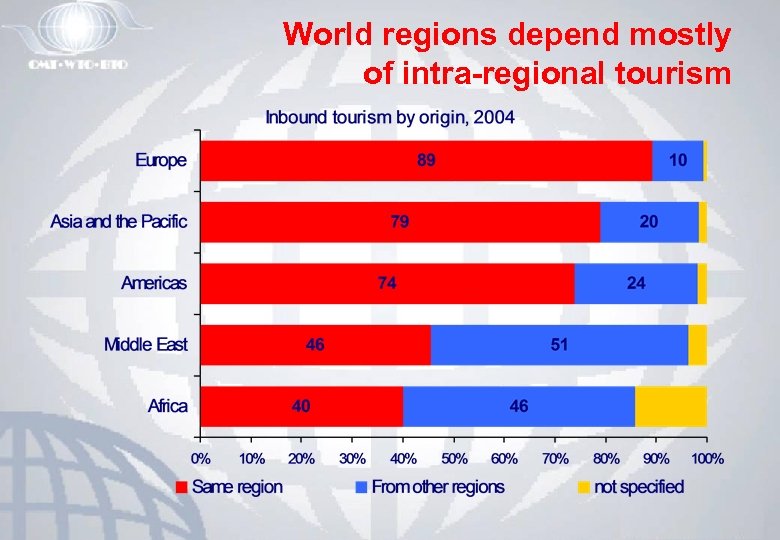 World regions depend mostly of intra-regional tourism
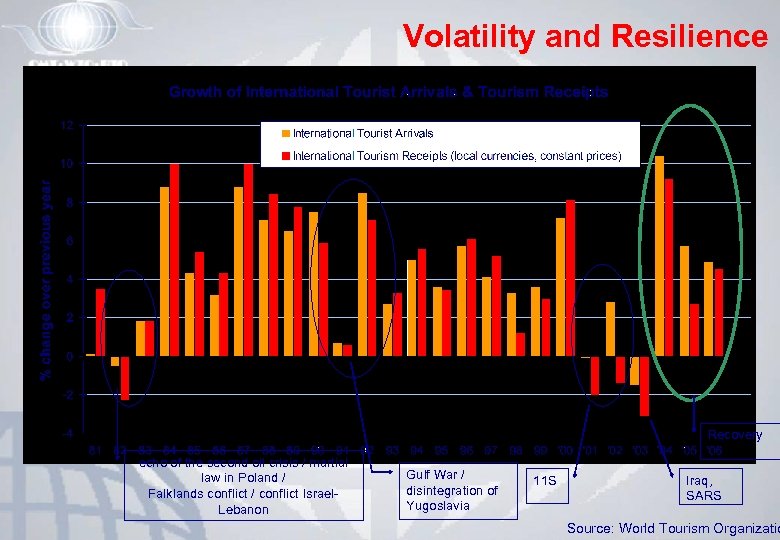 Volatility and Resilience Recovery echo of the second oil crisis / martial law in Poland / Falklands conflict / conflict Israel. Lebanon Gulf War / disintegration of Yugoslavia 11 S Iraq, SARS Source: World Tourism Organizatio
 The Travel & Tourism Competitiveness Report 2007 Furthering the Process of Economic Development www. weforum. org
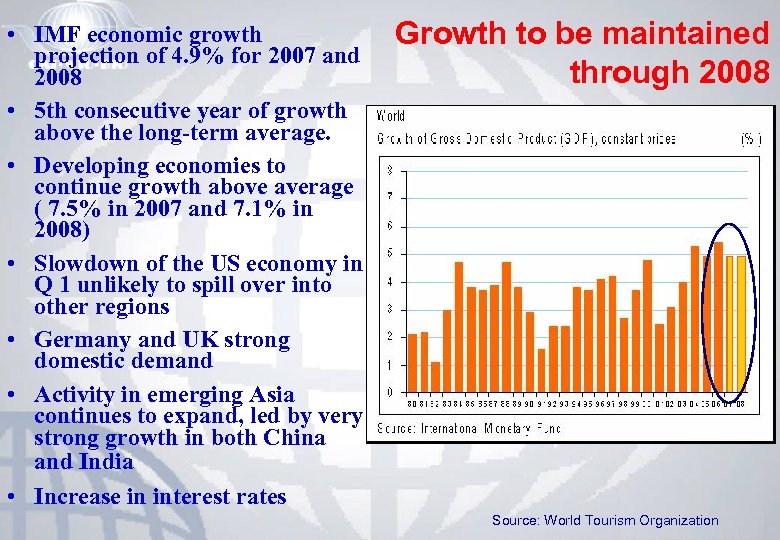 • IMF economic growth projection of 4. 9% for 2007 and 2008 • 5 th consecutive year of growth above the long-term average. • Developing economies to continue growth above average ( 7. 5% in 2007 and 7. 1% in 2008) • Slowdown of the US economy in Q 1 unlikely to spill over into other regions • Germany and UK strong domestic demand • Activity in emerging Asia continues to expand, led by very strong growth in both China and India • Increase in interest rates Growth to be maintained through 2008 Source: World Tourism Organization
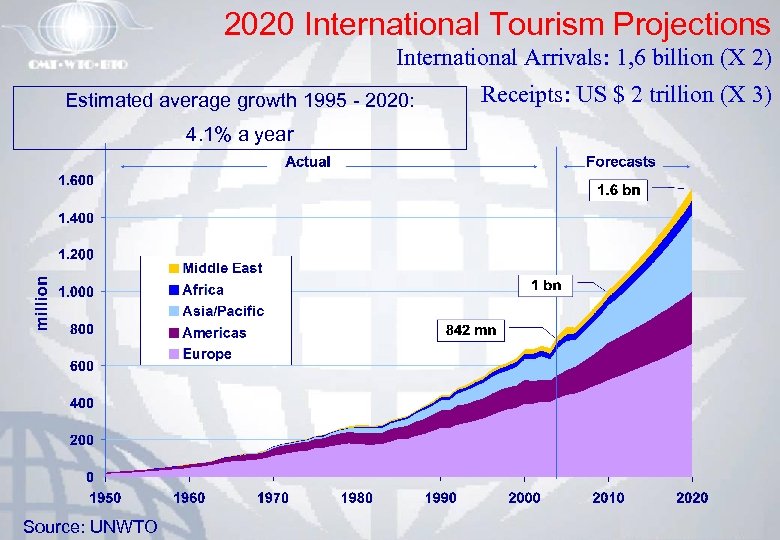 2020 International Tourism Projections International Arrivals: 1, 6 billion (X 2) Estimated average growth 1995 - 2020: 4. 1% a year Source: UNWTO Receipts: US $ 2 trillion (X 3)
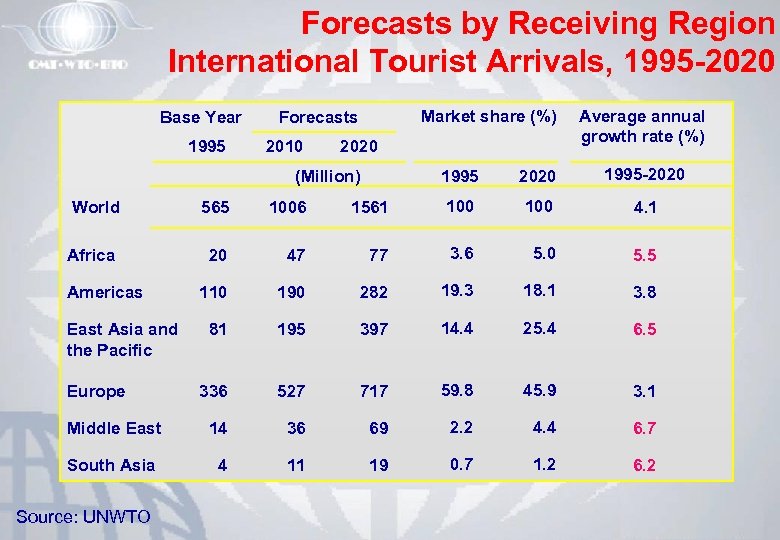 Forecasts by Receiving Region International Tourist Arrivals, 1995 -2020 Base Year 1995 Market share (%) Forecasts 2010 2020 Average annual growth rate (%) 1995 (Million) 2020 1995 -2020 World 565 1006 1561 100 4. 1 Africa 20 47 77 3. 6 5. 0 5. 5 110 190 282 19. 3 18. 1 3. 8 81 195 397 14. 4 25. 4 6. 5 336 527 717 59. 8 45. 9 3. 1 Middle East 14 36 69 2. 2 4. 4 6. 7 South Asia 4 11 19 0. 7 1. 2 6. 2 Americas East Asia and the Pacific Europe Source: UNWTO
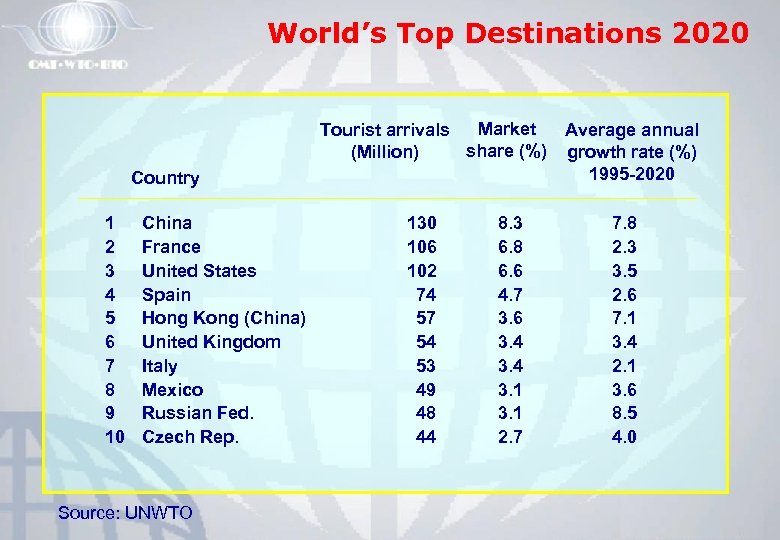 World’s Top Destinations 2020 Country 1 2 3 4 5 6 7 8 9 10 China France United States Spain Hong Kong (China) United Kingdom Italy Mexico Russian Fed. Czech Rep. Source: UNWTO Market Tourist arrivals Average annual share (%) growth rate (%) (Million) 1995 -2020 130 106 102 74 57 54 53 49 48 44 8. 3 6. 8 6. 6 4. 7 3. 6 3. 4 3. 1 2. 7 7. 8 2. 3 3. 5 2. 6 7. 1 3. 4 2. 1 3. 6 8. 5 4. 0
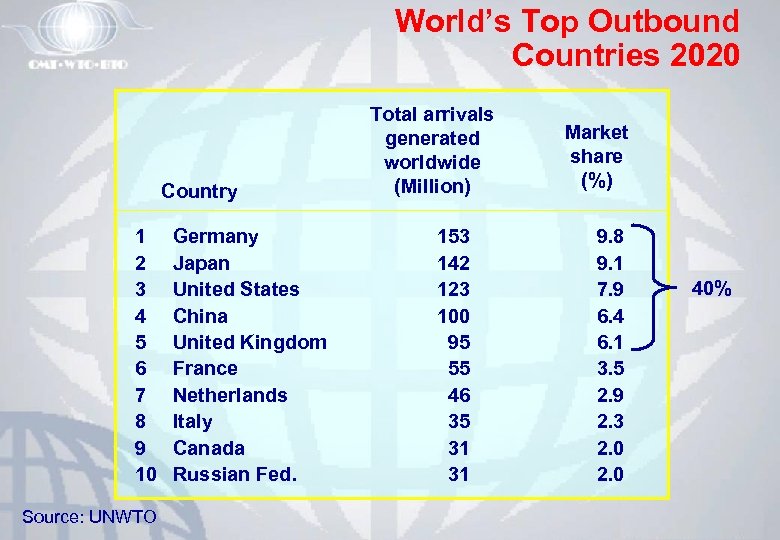 World’s Top Outbound Countries 2020 Country 1 2 3 4 5 6 7 8 9 10 Source: UNWTO Germany Japan United States China United Kingdom France Netherlands Italy Canada Russian Fed. Total arrivals generated worldwide (Million) 153 142 123 100 95 55 46 35 31 31 Market share (%) 9. 8 9. 1 7. 9 6. 4 6. 1 3. 5 2. 9 2. 3 2. 0 40%
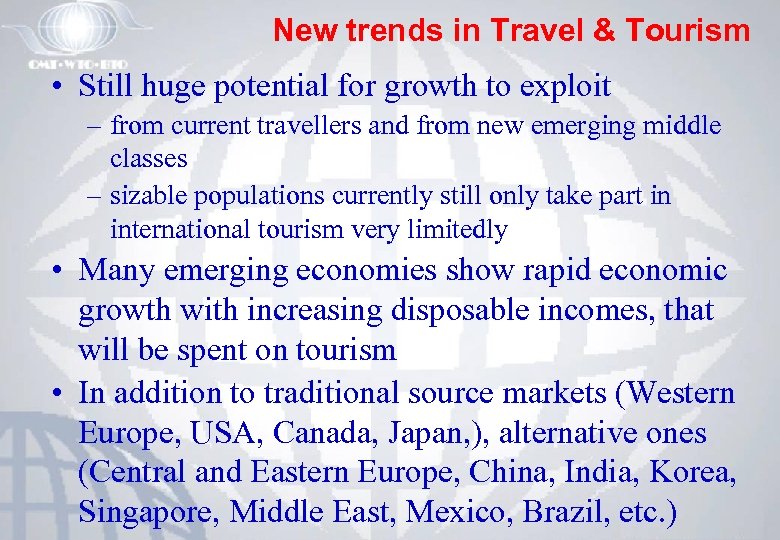 New trends in Travel & Tourism • Still huge potential for growth to exploit – from current travellers and from new emerging middle classes – sizable populations currently still only take part in international tourism very limitedly • Many emerging economies show rapid economic growth with increasing disposable incomes, that will be spent on tourism • In addition to traditional source markets (Western Europe, USA, Canada, Japan, ), alternative ones (Central and Eastern Europe, China, India, Korea, Singapore, Middle East, Mexico, Brazil, etc. )
 Consumer profile and behaviour • More mature and experienced travellers – Increased concern for safety and security • Access to much more information – Consumers know what they want and what they can get • Aging population – – Better health and economic conditions Seek new experiences and innovative more sophisticated products Added value and services. Value for money Shift in power from producers to consumers • Increased competition • More direct distribution – Need to develop and apply new technologies
 Public-private partnerships • Close synergy of interests – Among business; civil society; government – Private sector, the engine in wealth creation, involved in telecommunications, education, health, safety, etc. • Corporate responsibility – Companies support community development: environmental protection and enhancement; cultural and heritage preservation • Changing Public sector – Need to reinvent itself – More strategic approach to its role in society – Foster trust that creates social capital
 Public-private partnerships • Governments have played a key role in the developing of tourism • They need to give more space to the private sector • Many areas in which P-P sectors can work – Marketing – Control and monitoring of regulation – Quality factors – Education – Investment – Infrastructure – Research, development and innovation – Climate change – Sustainability – Tourism policy, etc.
 Public-private partnerships • Tourism dpts in government depend on many other areas, not under their control – Interior; culture & education, economy, foreign affairs, health, infrastructure, environment, transportation, etc. • Too many changes in Ministerial departments do not allow for continuity and stability • The private sector brings a closer look to the reality of the marketplace
 Good luck, bad luck. Who knows?
 ΕΥΧΑΡΙΣΤΩ "Forces of change in world tourism. The role of governments, enterprises and the need for p-p partnerships" Carlos Vogeler Chairman Affiliate Members UNWTO