

For versus During For is used to say

 Скачать презентацию For versus During For is used to say
13762-words_denoting_time.ppt
- Количество слайдов: 6
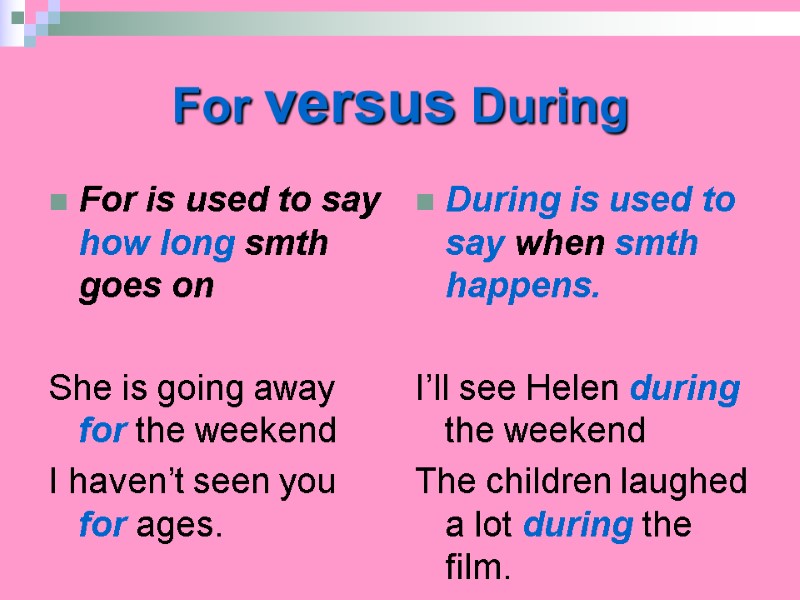
For versus During For is used to say how long smth goes on She is going away for the weekend I haven’t seen you for ages. During is used to say when smth happens. I’ll see Helen during the weekend The children laughed a lot during the film.
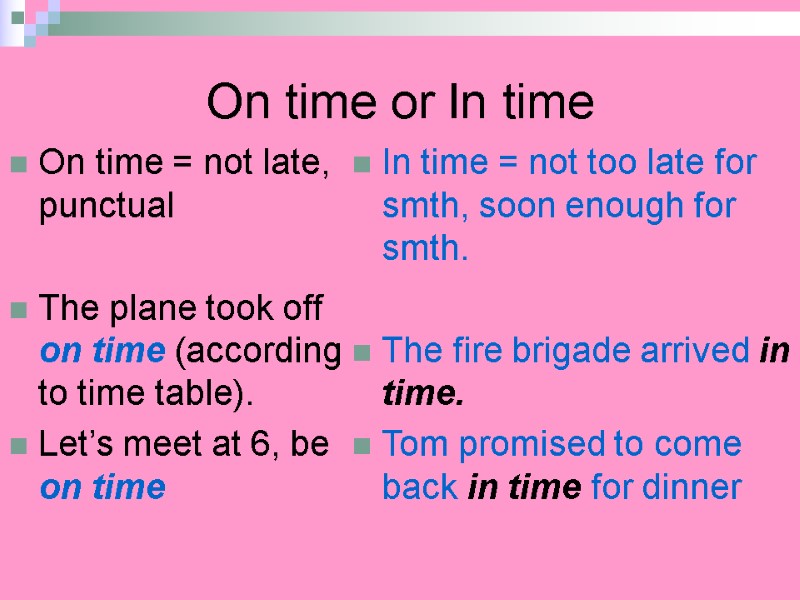
On time or In time On time = not late, punctual The plane took off on time (according to time table). Let’s meet at 6, be on time In time = not too late for smth, soon enough for smth. The fire brigade arrived in time. Tom promised to come back in time for dinner
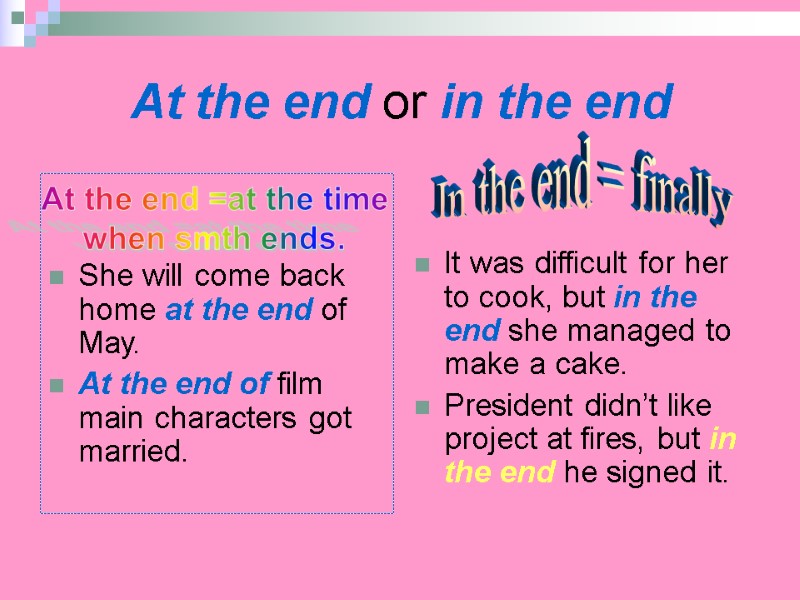
At the end or in the end She will come back home at the end of May. At the end of film main characters got married. It was difficult for her to cook, but in the end she managed to make a cake. President didn’t like project at fires, but in the end he signed it. At the end =at the time when smth ends. In the end = finally
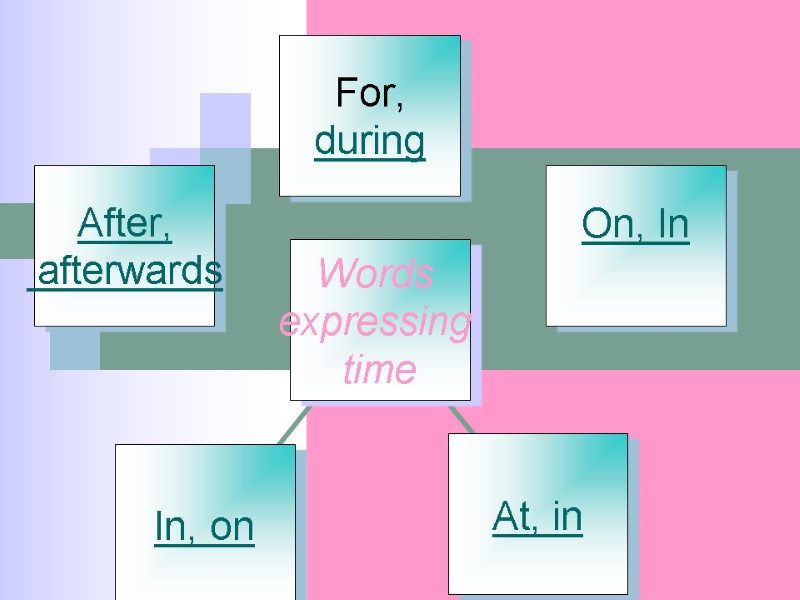
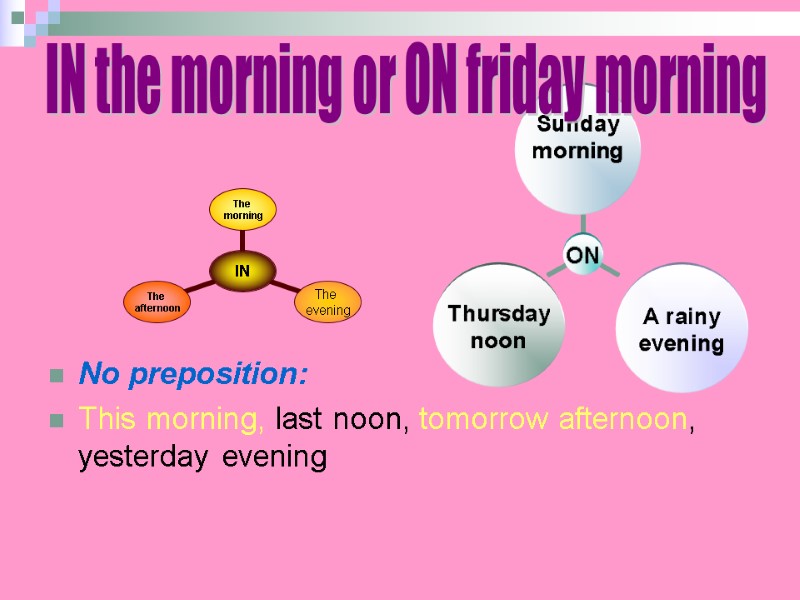
No preposition: This morning, last noon, tomorrow afternoon, yesterday evening IN the morning or ON friday morning
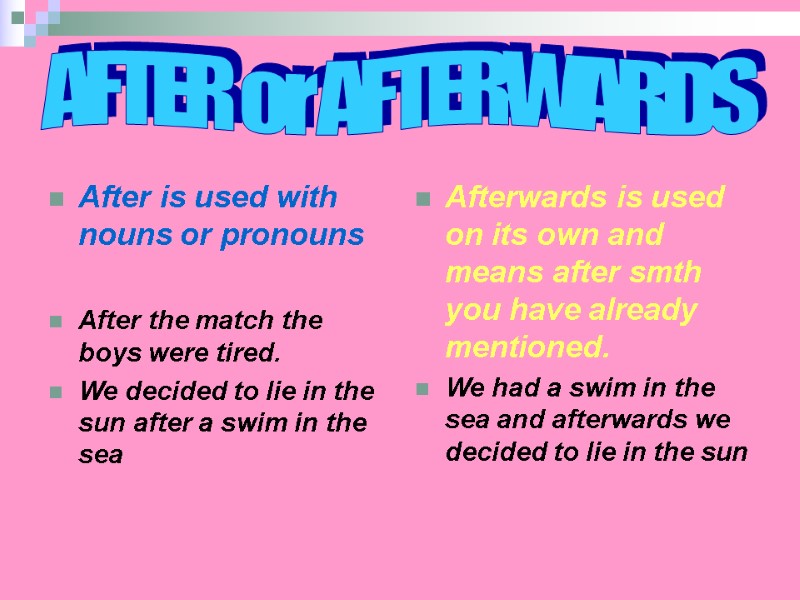
After is used with nouns or pronouns After the match the boys were tired. We decided to lie in the sun after a swim in the sea Afterwards is used on its own and means after smth you have already mentioned. We had a swim in the sea and afterwards we decided to lie in the sun AFTER or AFTERWARDS