 Скачать презентацию Foodborne Illness and the Public Health Nurse Bureau
abc9589c0fe6152a8255daa6a6d39b2d.ppt
- Количество слайдов: 39



Foodborne Illness and the Public Health Nurse Bureau of Epidemiology Sally A. Bidol, MPH Mark A. Schmidt, MPH Office of Public Health Preparedness Susan L. Shiflett Michigan Department of Community Health

Day 1 Monday 06/07
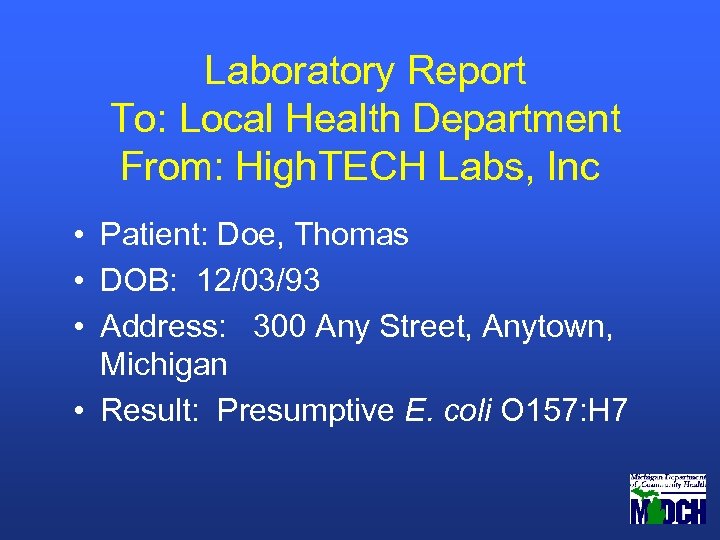
Laboratory Report To: Local Health Department From: High. TECH Labs, Inc • Patient: Doe, Thomas • DOB: 12/03/93 • Address: 300 Any Street, Anytown, Michigan • Result: Presumptive E. coli O 157: H 7

What would you do? What information will you need to collect?
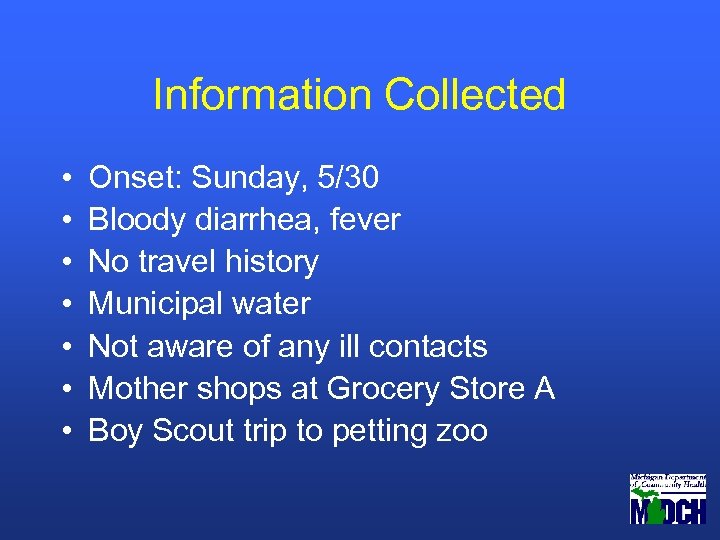
Information Collected • • Onset: Sunday, 5/30 Bloody diarrhea, fever No travel history Municipal water Not aware of any ill contacts Mother shops at Grocery Store A Boy Scout trip to petting zoo
Pet
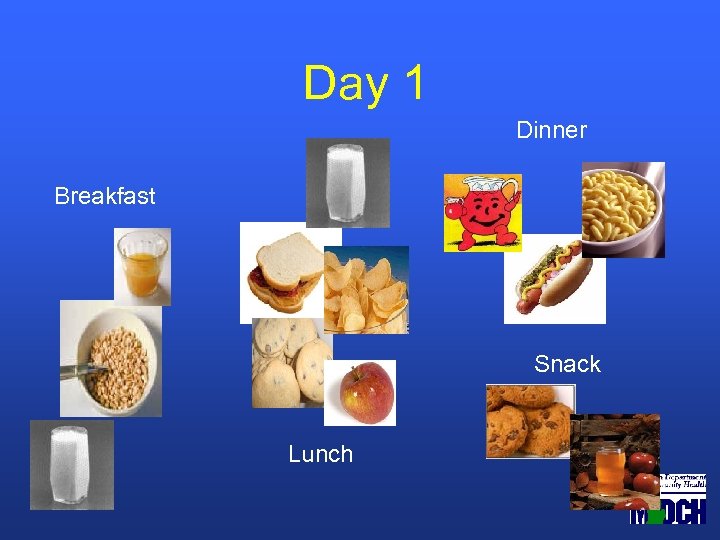
Day 1 Dinner Breakfast Snack Lunch
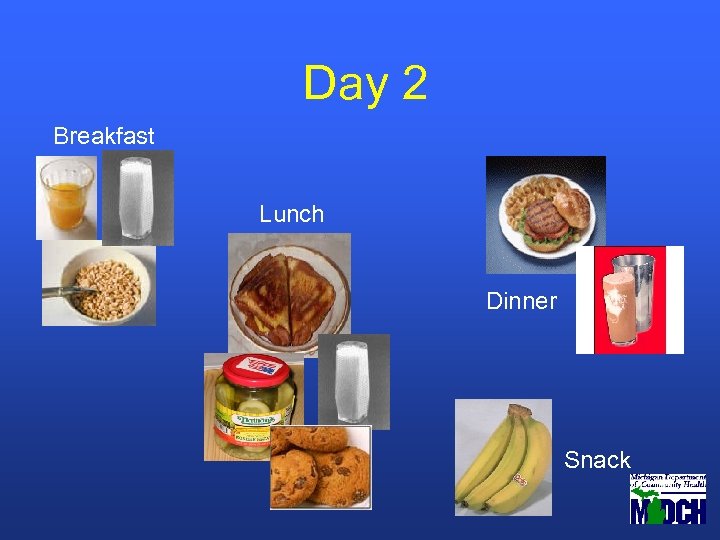
Day 2 Breakfast Lunch Dinner Snack
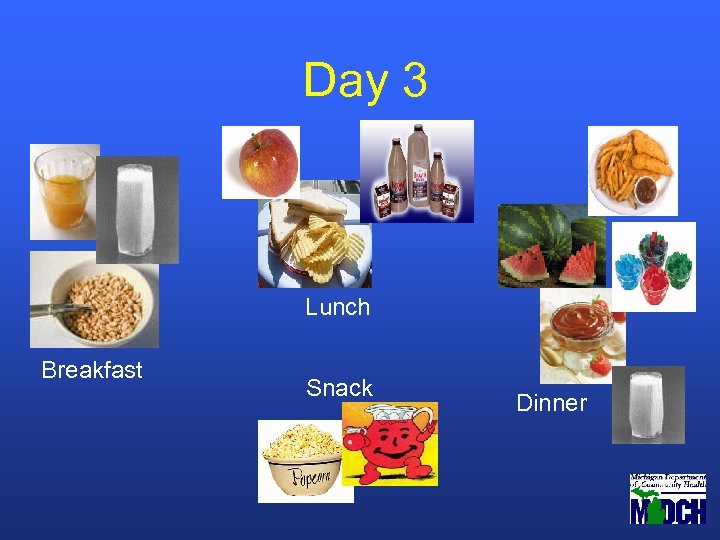
Day 3 Lunch Breakfast Snack Dinner
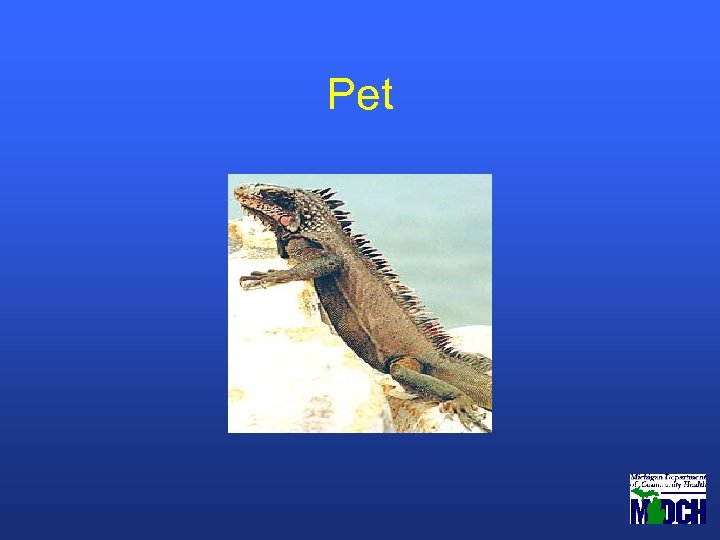
What are the most likely causes of infection? • Food history • Pet • Other exposures
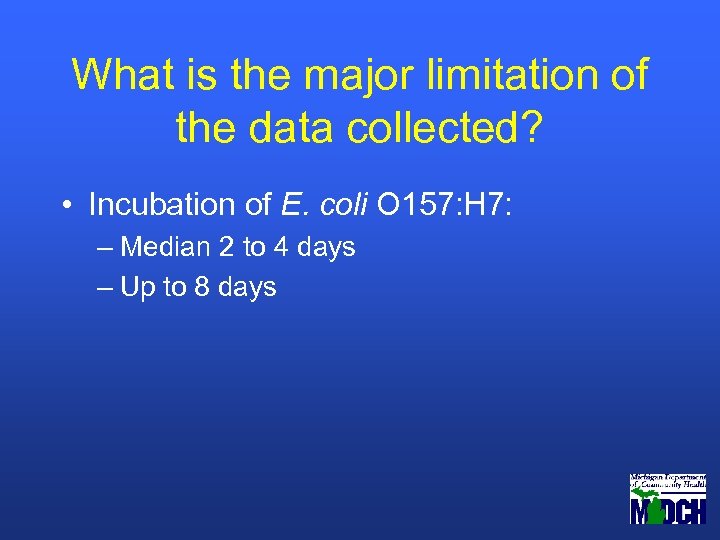
What is the major limitation of the data collected? • Incubation of E. coli O 157: H 7: – Median 2 to 4 days – Up to 8 days

Day 2 Tuesday 06/08
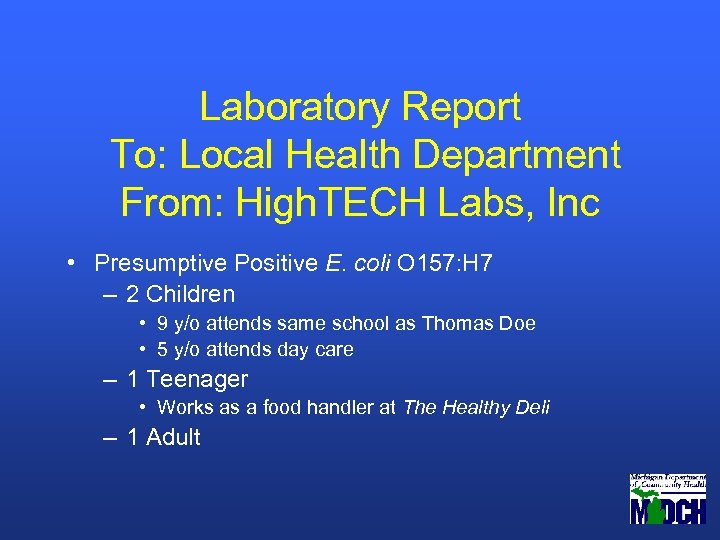
Laboratory Report To: Local Health Department From: High. TECH Labs, Inc • Presumptive Positive E. coli O 157: H 7 – 2 Children • 9 y/o attends same school as Thomas Doe • 5 y/o attends day care – 1 Teenager • Works as a food handler at The Healthy Deli – 1 Adult
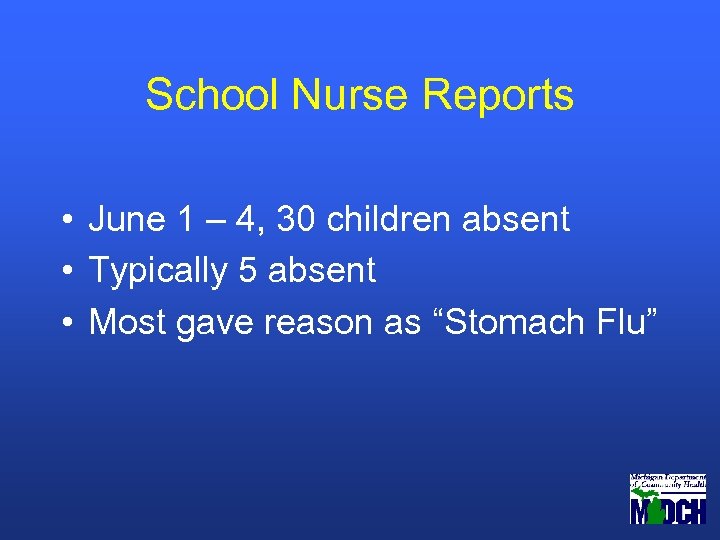
School Nurse Reports • June 1 – 4, 30 children absent • Typically 5 absent • Most gave reason as “Stomach Flu”
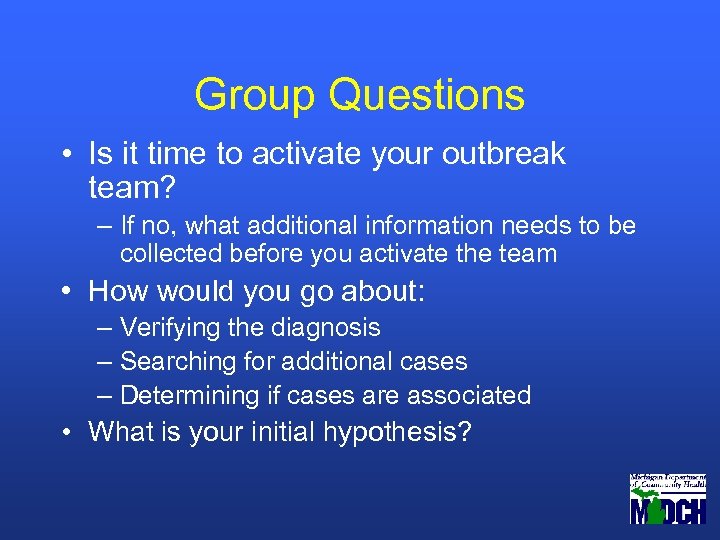
Group Questions • Is it time to activate your outbreak team? – If no, what additional information needs to be collected before you activate the team • How would you go about: – Verifying the diagnosis – Searching for additional cases – Determining if cases are associated • What is your initial hypothesis?
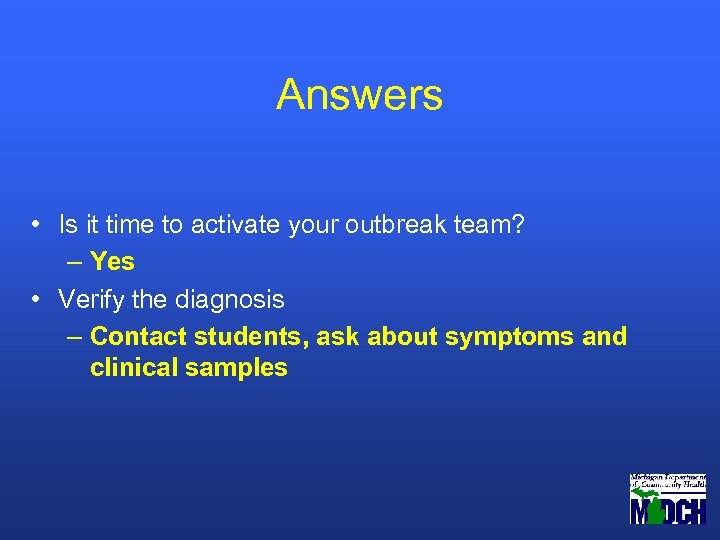
Answers • Is it time to activate your outbreak team? – Yes • Verify the diagnosis – Contact students, ask about symptoms and clinical samples
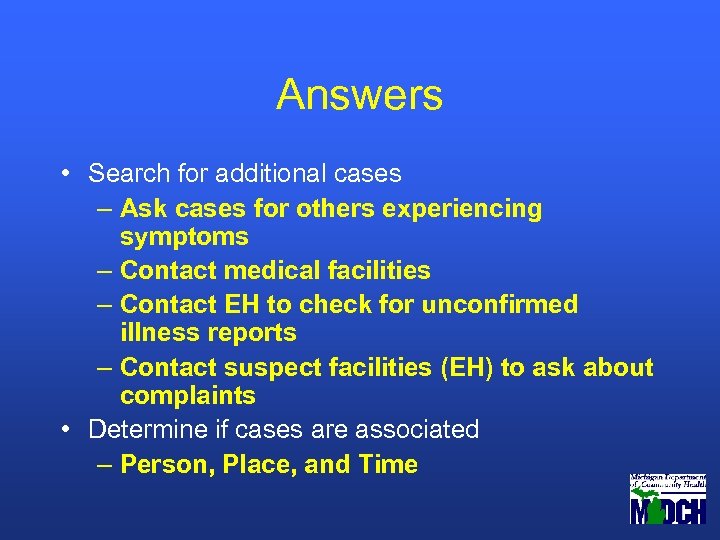
Answers • Search for additional cases – Ask cases for others experiencing symptoms – Contact medical facilities – Contact EH to check for unconfirmed illness reports – Contact suspect facilities (EH) to ask about complaints • Determine if cases are associated – Person, Place, and Time
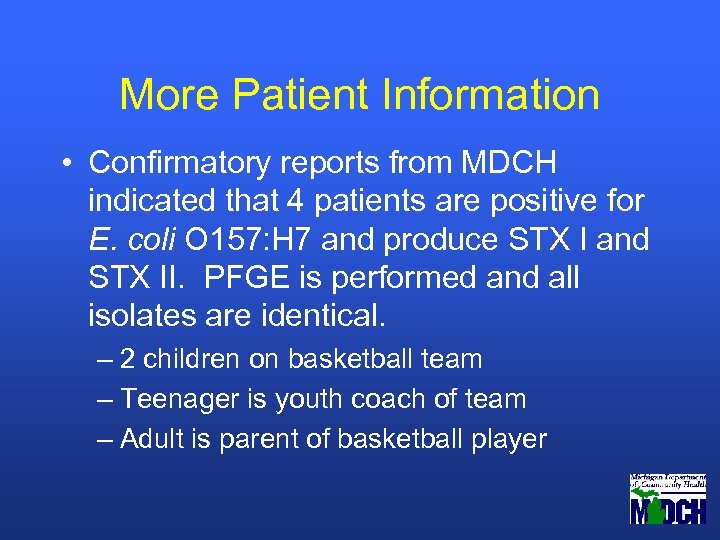
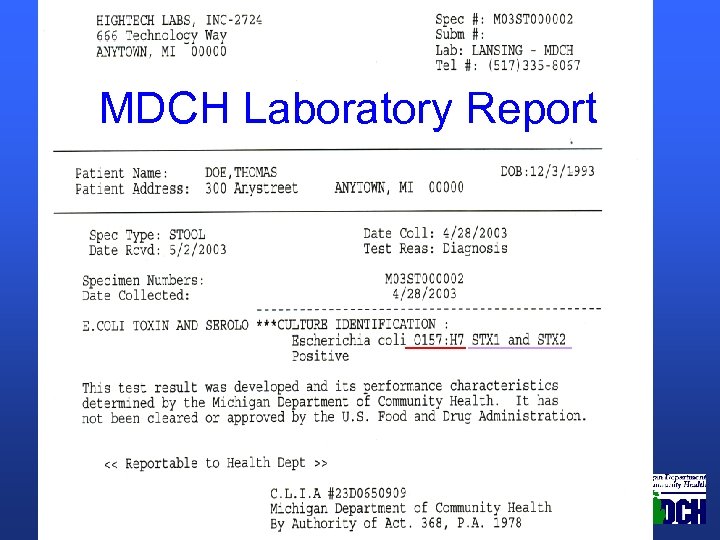
More Patient Information • Confirmatory reports from MDCH indicated that 4 patients are positive for E. coli O 157: H 7 and produce STX I and STX II. PFGE is performed and all isolates are identical. – 2 children on basketball team – Teenager is youth coach of team – Adult is parent of basketball player
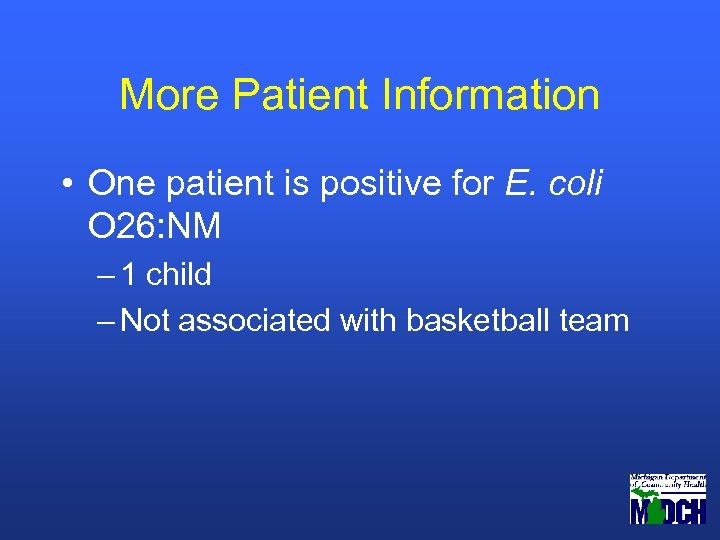
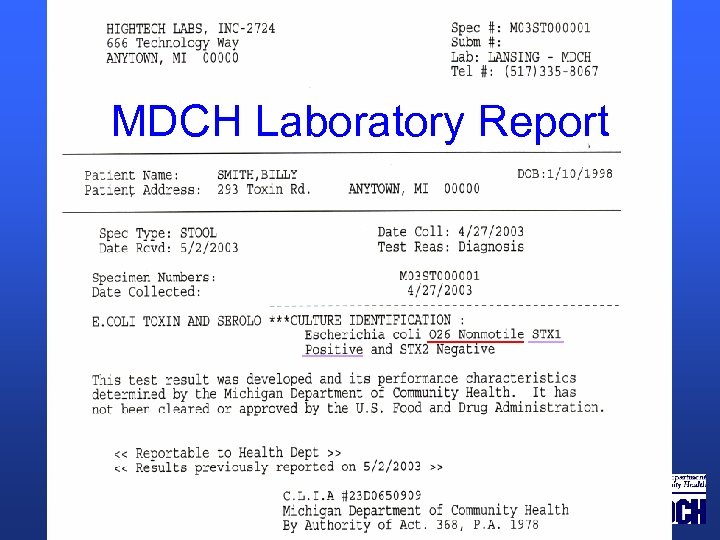
More Patient Information • One patient is positive for E. coli O 26: NM – 1 child – Not associated with basketball team
Interpreting Laboratory Reports
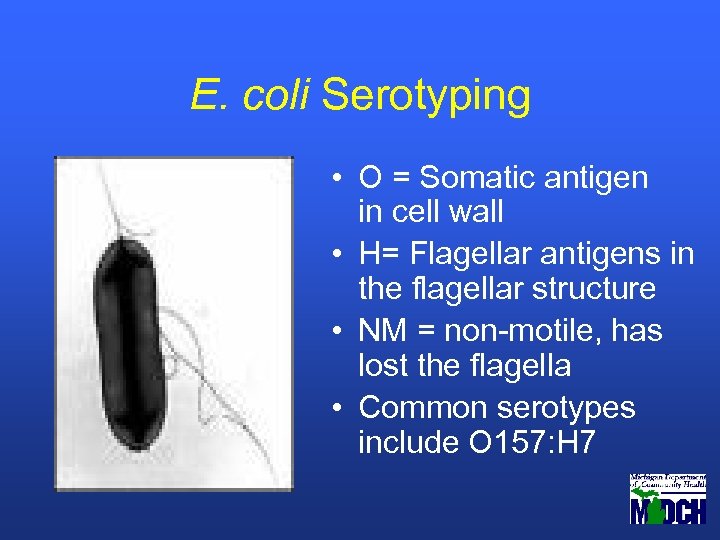
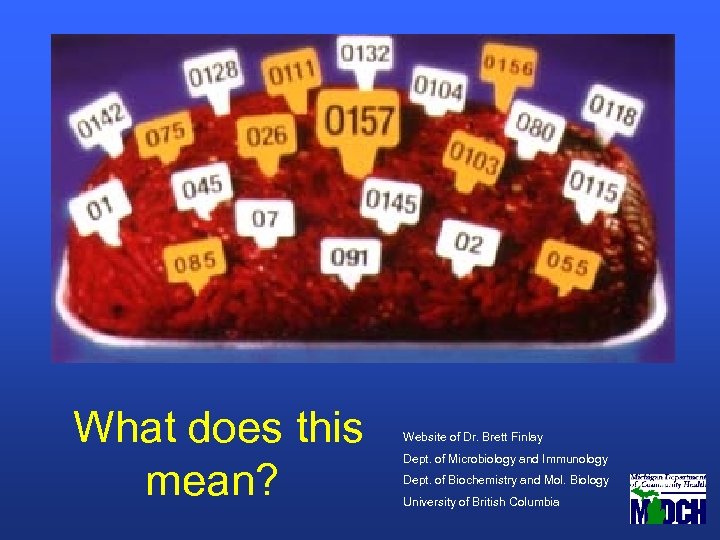
E. coli Serotyping • O = Somatic antigen in cell wall • H= Flagellar antigens in the flagellar structure • NM = non-motile, has lost the flagella • Common serotypes include O 157: H 7
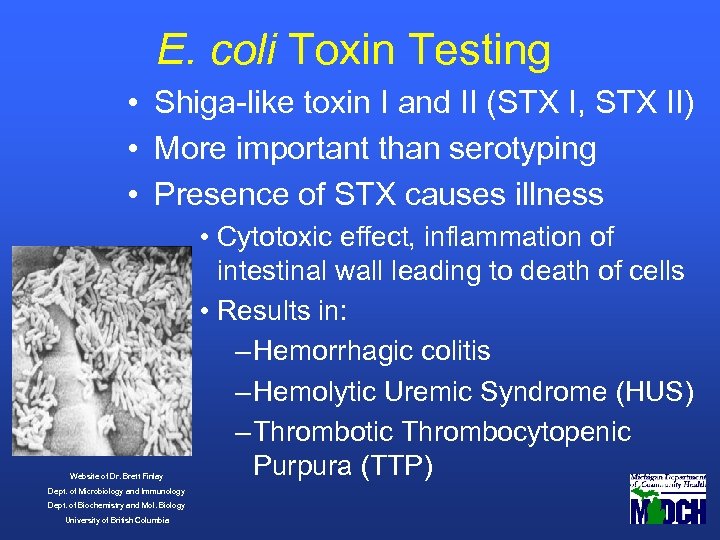
E. coli Toxin Testing • Shiga-like toxin I and II (STX I, STX II) • More important than serotyping • Presence of STX causes illness Website of Dr. Brett Finlay Dept. of Microbiology and Immunology Dept. of Biochemistry and Mol. Biology University of British Columbia • Cytotoxic effect, inflammation of intestinal wall leading to death of cells • Results in: – Hemorrhagic colitis – Hemolytic Uremic Syndrome (HUS) – Thrombotic Thrombocytopenic Purpura (TTP)
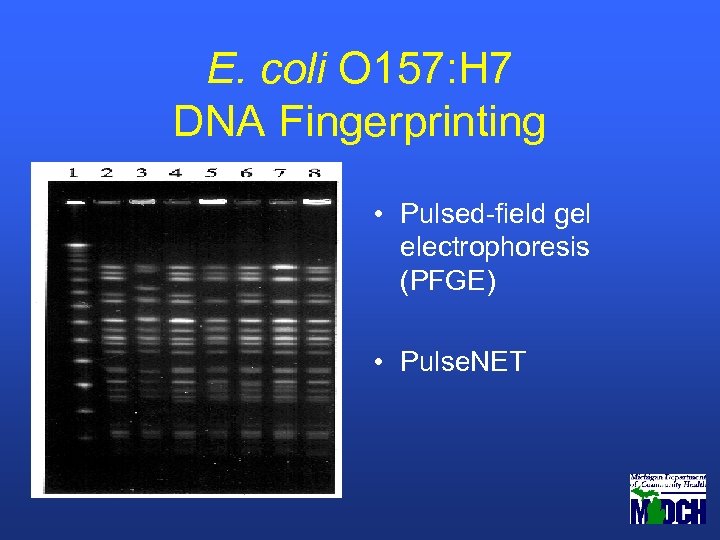
E. coli O 157: H 7 DNA Fingerprinting • Pulsed-field gel electrophoresis (PFGE) • Pulse. NET
MDCH Laboratory Report
MDCH Laboratory Report
What does this mean? Website of Dr. Brett Finlay Dept. of Microbiology and Immunology Dept. of Biochemistry and Mol. Biology University of British Columbia
Lab Testing Results Does this change the direction of your investigation?
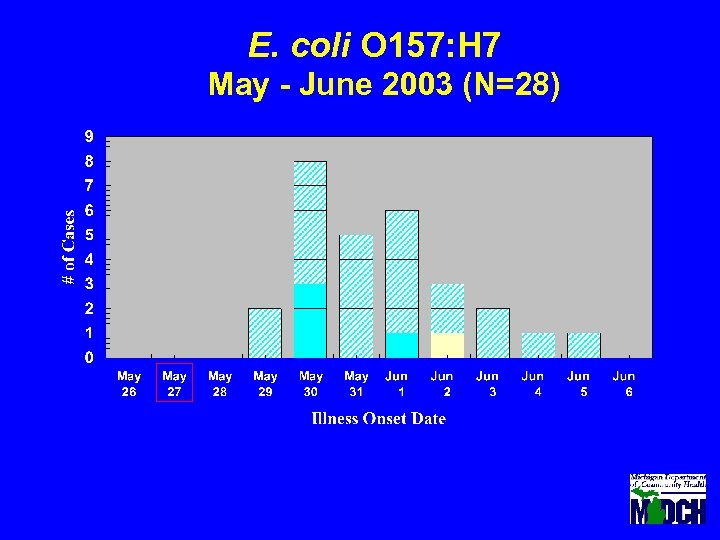
E. coli O 157: H 7 May - June 2003 (N=28)
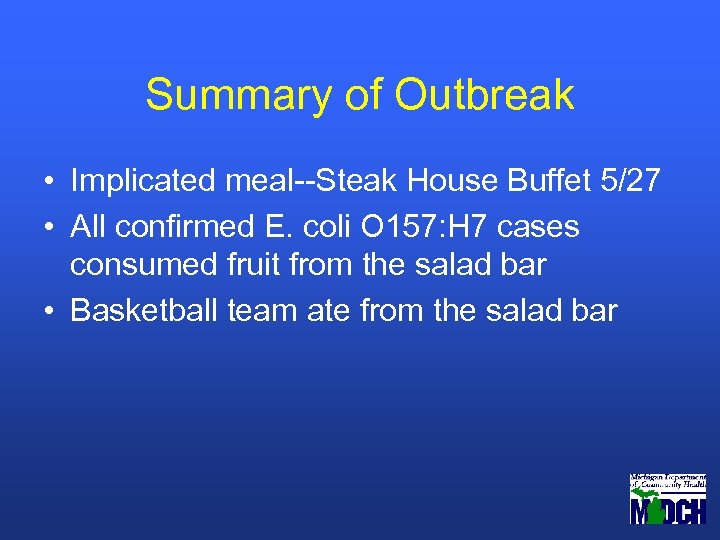
Summary of Outbreak • Implicated meal--Steak House Buffet 5/27 • All confirmed E. coli O 157: H 7 cases consumed fruit from the salad bar • Basketball team ate from the salad bar
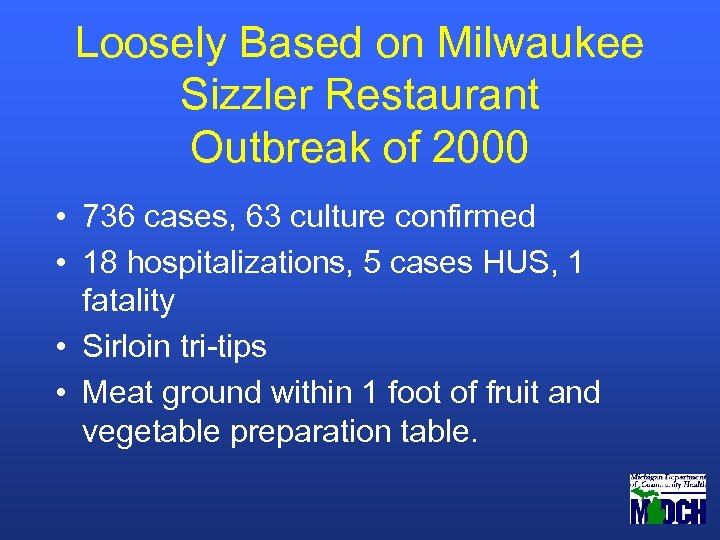
Loosely Based on Milwaukee Sizzler Restaurant Outbreak of 2000 • 736 cases, 63 culture confirmed • 18 hospitalizations, 5 cases HUS, 1 fatality • Sirloin tri-tips • Meat ground within 1 foot of fruit and vegetable preparation table.
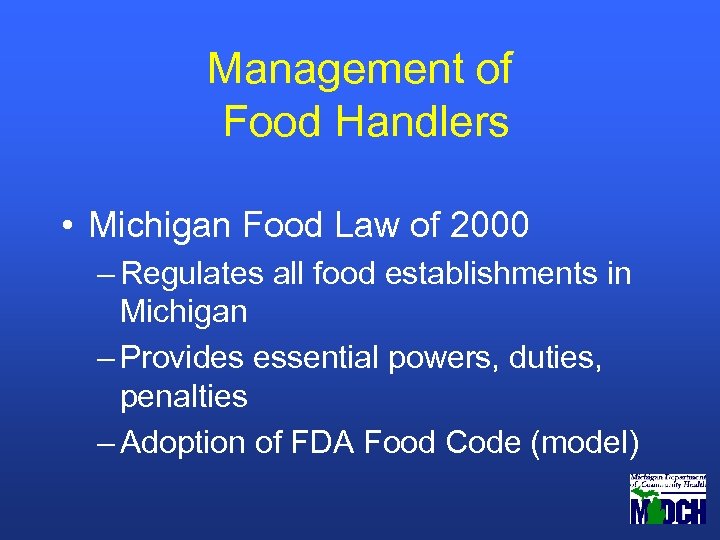
Management of Food Handlers • Michigan Food Law of 2000 – Regulates all food establishments in Michigan – Provides essential powers, duties, penalties – Adoption of FDA Food Code (model)
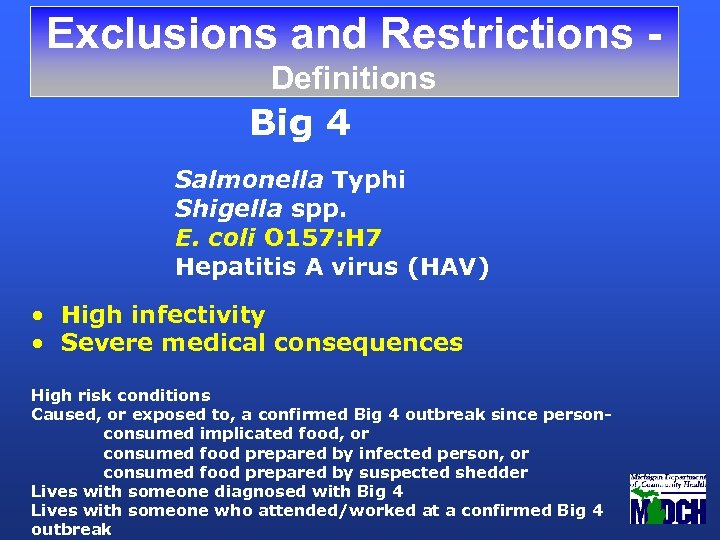
Exclusions and Restrictions Definitions Big 4 Salmonella Typhi Shigella spp. E. coli O 157: H 7 Hepatitis A virus (HAV) • High infectivity • Severe medical consequences High risk conditions Caused, or exposed to, a confirmed Big 4 outbreak since personconsumed implicated food, or consumed food prepared by infected person, or consumed food prepared by suspected shedder Lives with someone diagnosed with Big 4 Lives with someone who attended/worked at a confirmed Big 4 outbreak
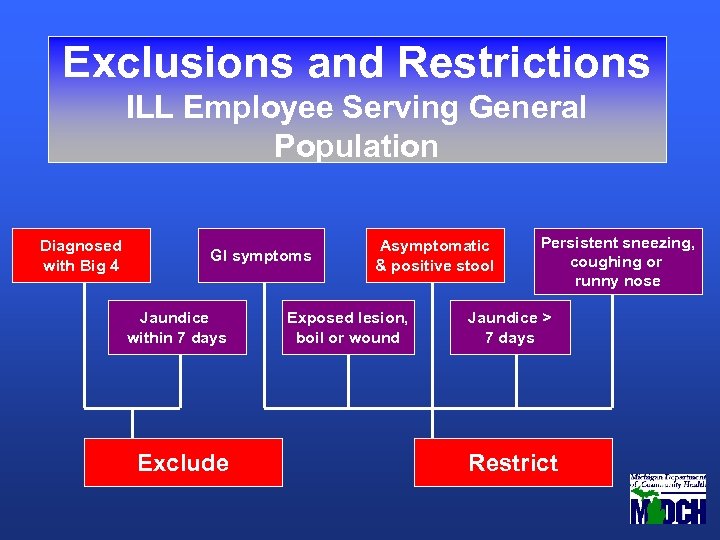
Exclusions and Restrictions ILL Employee Serving General Population Diagnosed with Big 4 GI symptoms Jaundice within 7 days Exclude Asymptomatic & positive stool Exposed lesion, boil or wound Persistent sneezing, coughing or runny nose Jaundice > 7 days Restrict
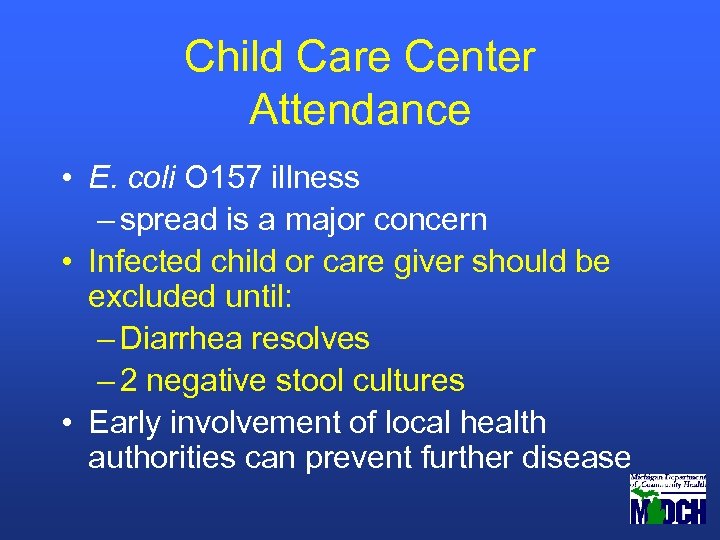
Child Care Center Attendance • E. coli O 157 illness – spread is a major concern • Infected child or care giver should be excluded until: – Diarrhea resolves – 2 negative stool cultures • Early involvement of local health authorities can prevent further disease
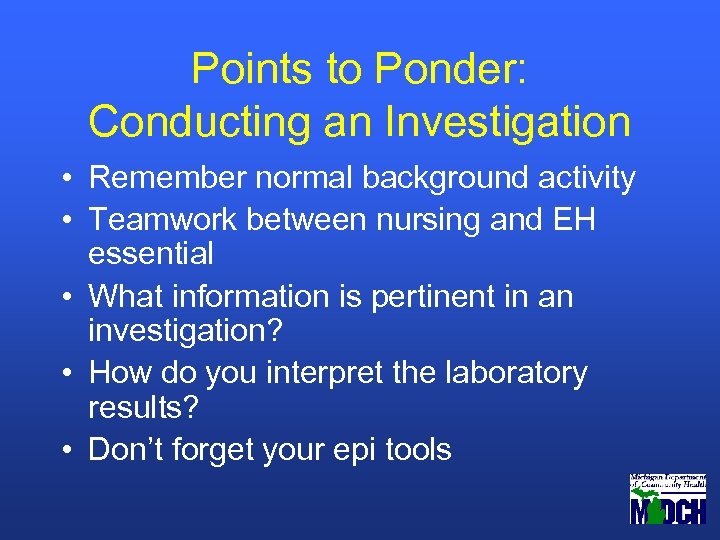
Points to Ponder: Conducting an Investigation • Remember normal background activity • Teamwork between nursing and EH essential • What information is pertinent in an investigation? • How do you interpret the laboratory results? • Don’t forget your epi tools
RUsick 2 FORUM Got Food Poisoning? Welcome to the Foodborne Outbreak Early Detection System (FOEDS) Forum Web users share and compare info
WWW. RUSick 2. msu. edu – Forum for people with suspected foodborne disease to share and compare their preillness food history and other factors. Objective: Did they eat the same food items? Identify common source outbreaks. – Being pilot tested in Greater Lansing Area. – “Delivers” foodborne disease reports to the LHD

RUsick 2 Contact Information (www. RUsick 2. msu. edu) : Holly Wethington 165 Food Safety & Toxicology Bldg Michigan State University East Lansing, MI 48824 P: 517. 432. 7181 (#128) F: 517. 432. 2310 Email: ffmod@cvm. msu. edu

Questions?
Скачать презентацию Foodborne Illness and the Public Health Nurse Bureau
abc9589c0fe6152a8255daa6a6d39b2d.ppt