 Скачать презентацию Food the Environment Berkeley California September 22
f3378552a51c54692a9cacc381364d64.ppt
- Количество слайдов: 52



"Food & the Environment" Berkeley, California September 22 -26, 2002 Food Safety & Modern Food Production
Conclusions • Foodborne illnesses are still common. • Are these warning signs…YES. . . • …that the system is breaking down? No • How well does our food safety & regulation system work? How well do you want it to work?
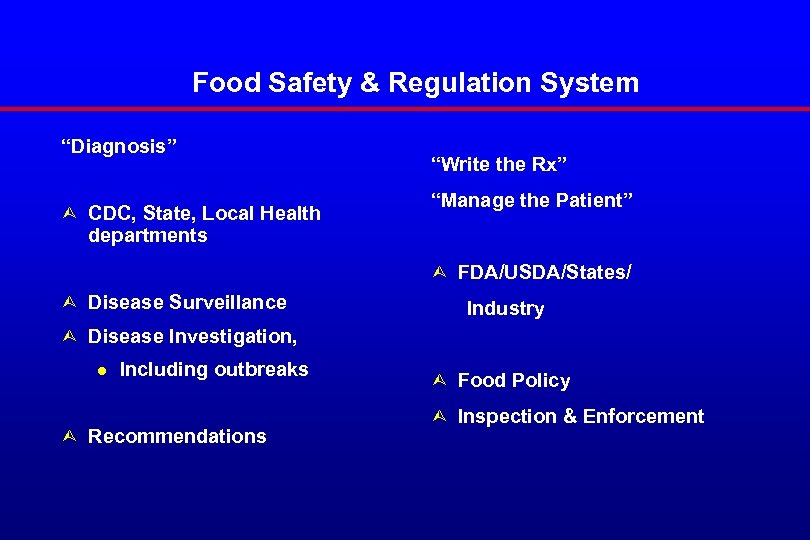
Food Safety & Regulation System “Diagnosis” Ù CDC, State, Local Health “Write the Rx” “Manage the Patient” departments Ù FDA/USDA/States/ Ù Disease Surveillance Industry Ù Disease Investigation, l Including outbreaks Ù Recommendations Ù Food Policy Ù Inspection & Enforcement
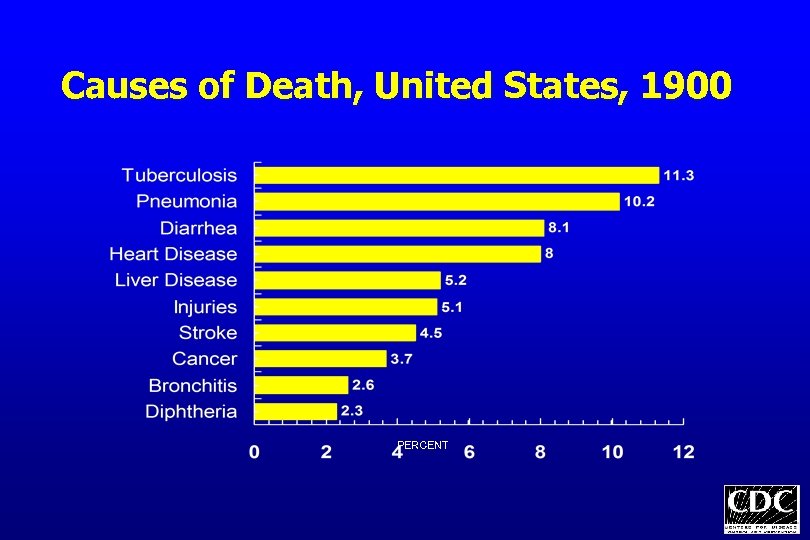
Causes of Death, United States, 1900 PERCENT
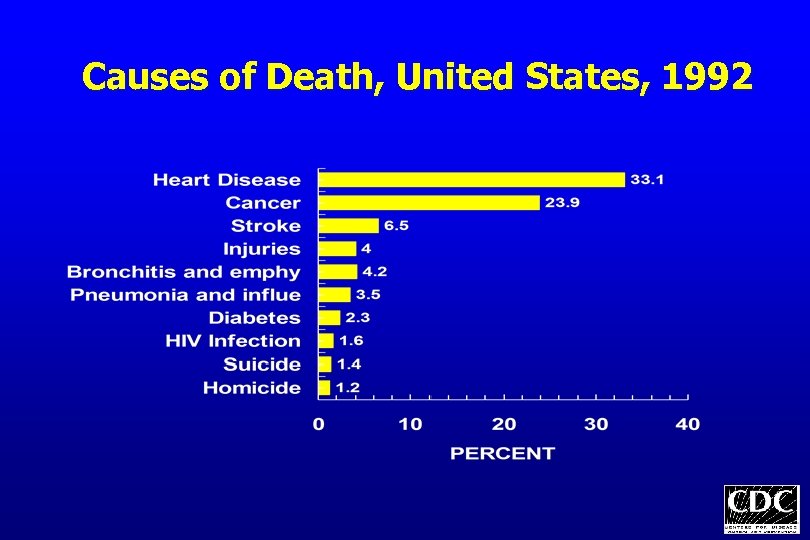
Causes of Death, United States, 1992
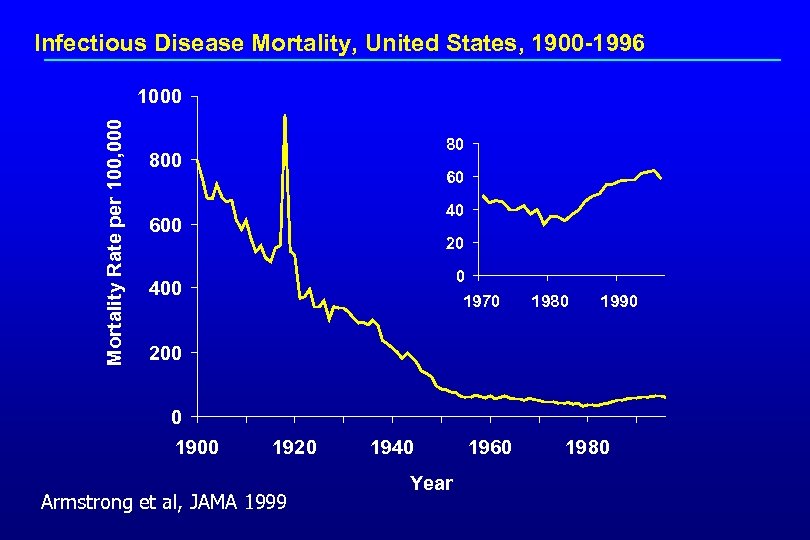
Infectious Disease Mortality, United States, 1900 -1996 Mortality Rate per 100, 000 1000 80 800 60 40 600 20 0 1970 400 1980 1990 200 0 1900 1920 Armstrong et al, JAMA 1999 1940 Year 1960 1980
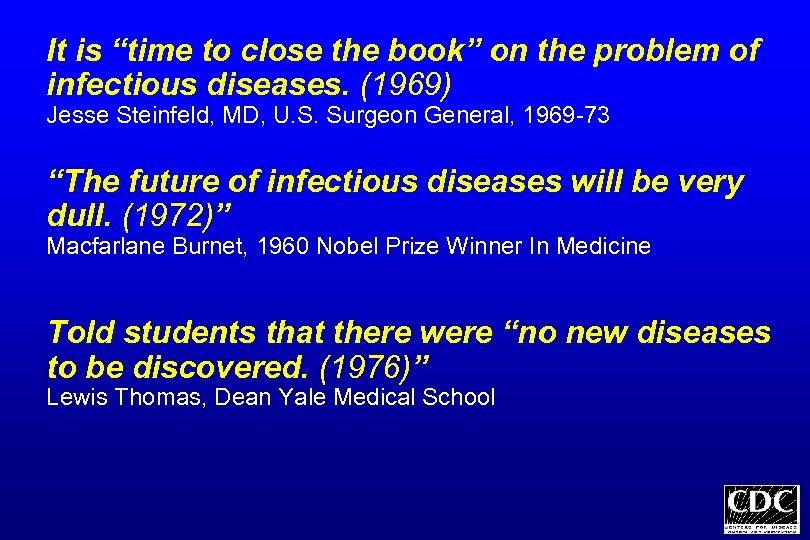
It is “time to close the book” on the problem of infectious diseases. (1969) Jesse Steinfeld, MD, U. S. Surgeon General, 1969 -73 “The future of infectious diseases will be very dull. (1972)” Macfarlane Burnet, 1960 Nobel Prize Winner In Medicine Told students that there were “no new diseases to be discovered. (1976)” Lewis Thomas, Dean Yale Medical School
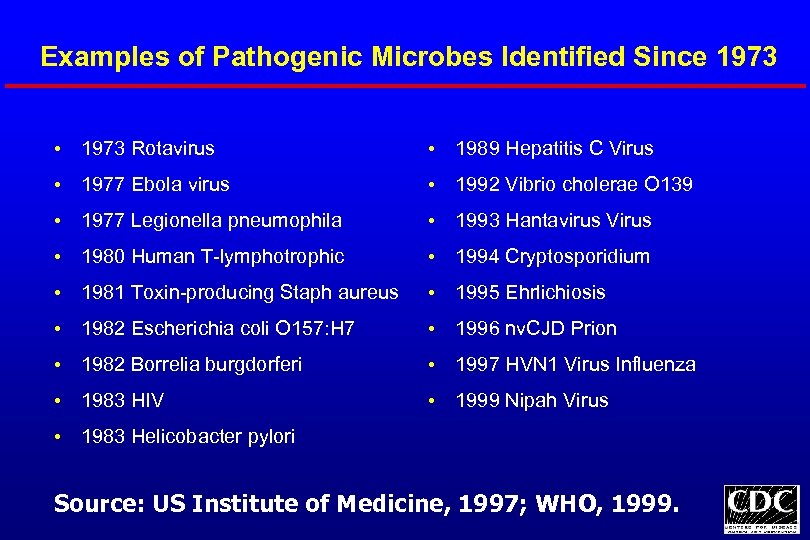
Examples of Pathogenic Microbes Identified Since 1973 • 1973 Rotavirus • 1989 Hepatitis C Virus • 1977 Ebola virus • 1992 Vibrio cholerae O 139 • 1977 Legionella pneumophila • 1993 Hantavirus Virus • 1980 Human T-lymphotrophic • 1994 Cryptosporidium • 1981 Toxin-producing Staph aureus • 1995 Ehrlichiosis • 1982 Escherichia coli O 157: H 7 • 1996 nv. CJD Prion • 1982 Borrelia burgdorferi • 1997 HVN 1 Virus Influenza • 1983 HIV • 1999 Nipah Virus • 1983 Helicobacter pylori Source: US Institute of Medicine, 1997; WHO, 1999.
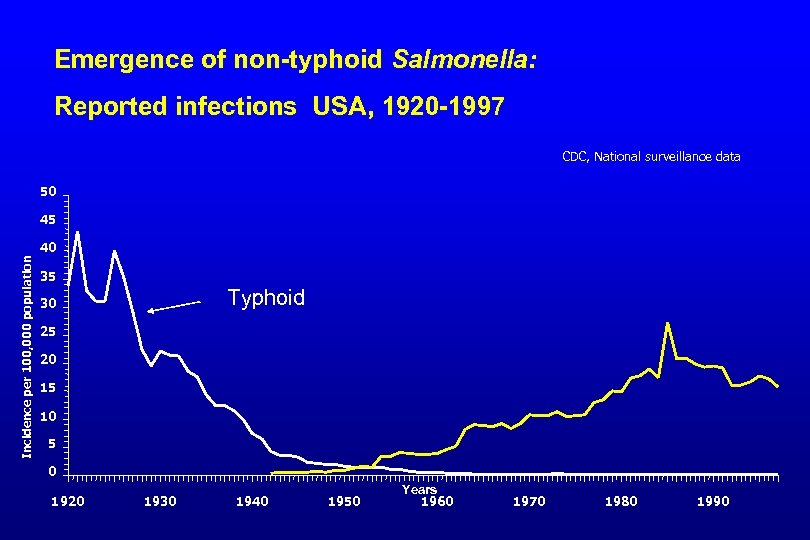
Emergence of non-typhoid Salmonella: Reported infections USA, 1920 -1997 CDC, National surveillance data 50 45 Incidence per 100, 000 population 40 35 Typhoid 30 25 20 15 10 5 0 1920 1930 1940 1950 Years 1960 1970 1980 1990
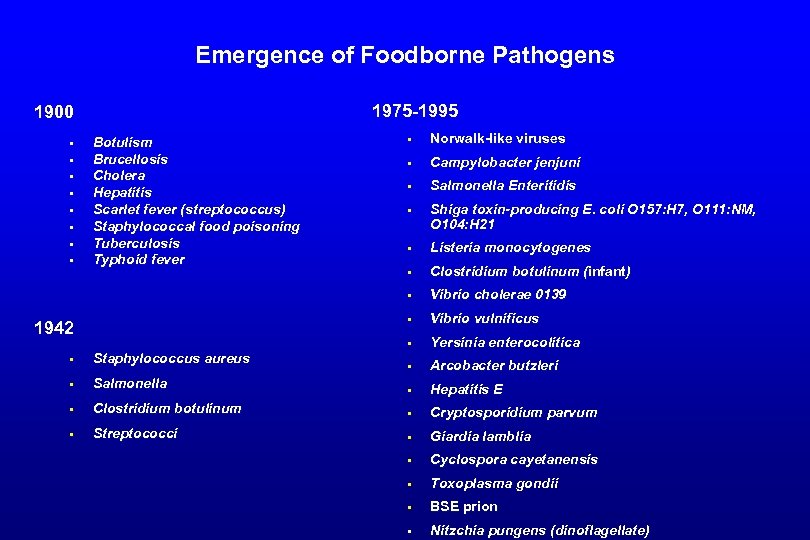
Emergence of Foodborne Pathogens 1975 -1995 1900 • • Campylobacter jenjuni • Salmonella Enteritidis • Shiga toxin-producing E. coli O 157: H 7, O 111: NM, O 104: H 21 • Listeria monocytogenes • Clostridium botulinum (infant) Vibrio cholerae 0139 Vibrio vulnificus • 1942 Norwalk-like viruses • Botulism Brucellosis Cholera Hepatitis Scarlet fever (streptococcus) Staphylococcal food poisoning Tuberculosis Typhoid fever • • • Yersinia enterocolitica • Arcobacter butzleri • Staphylococcus aureus • Salmonella • Hepatitis E • Clostridium botulinum • Cryptosporidium parvum • Streptococci • Giardia lamblia • Cyclospora cayetanensis • Toxoplasma gondii • BSE prion • Nitzchia pungens (dinoflagellate)
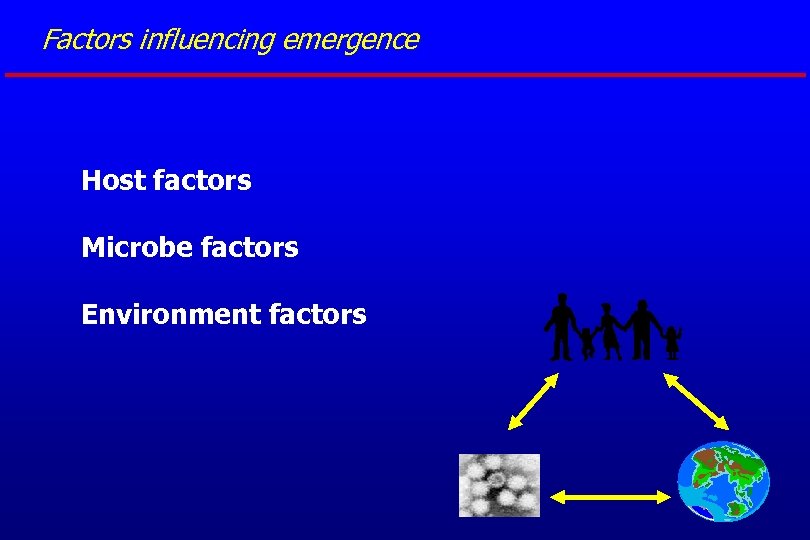
Factors influencing emergence Host factors Microbe factors Environment factors
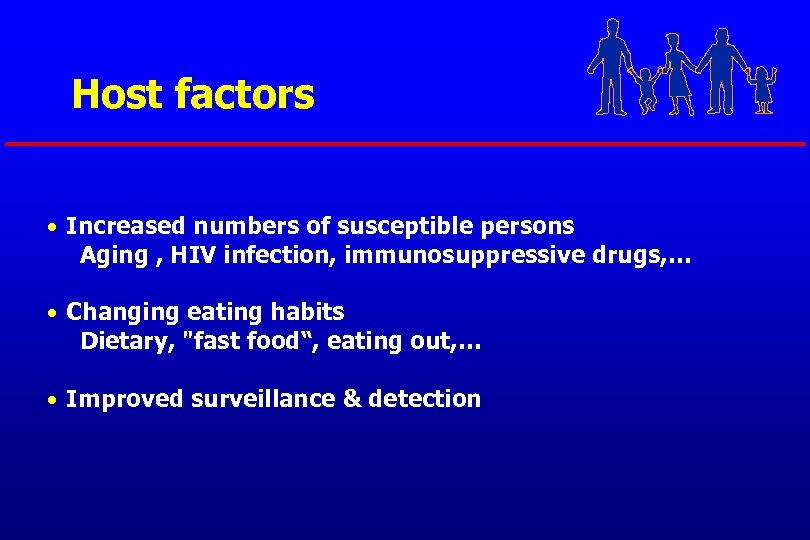
Host factors • Increased numbers of susceptible persons Aging , HIV infection, immunosuppressive drugs, … • Changing eating habits Dietary, "fast food“, eating out, … • Improved surveillance & detection
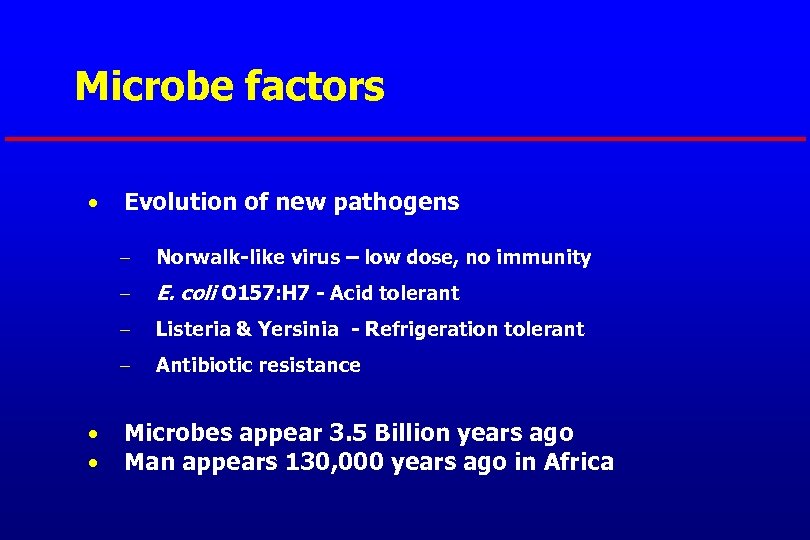
Microbe factors • Evolution of new pathogens – – E. coli O 157: H 7 - Acid tolerant – Listeria & Yersinia - Refrigeration tolerant – • • Norwalk-like virus – low dose, no immunity Antibiotic resistance Microbes appear 3. 5 Billion years ago Man appears 130, 000 years ago in Africa
Environment factors Changes in food production. . . e. g. , botulism • Globalization of food supply • Centralized production • CAFOs & Manure glut
Factors influencing emergence Food industry • Changes in food preservation – decreased use of secondary barriers • e. g. botulism from chopped garlic, soup, and cheese sauce • New products & new processes – Sprouts – Hazelnut yogurt: change from sugar to aspartame in hazelnut yogurt ------> botulism CENTERS FOR DISEASE CONTROL AND PREVENTION
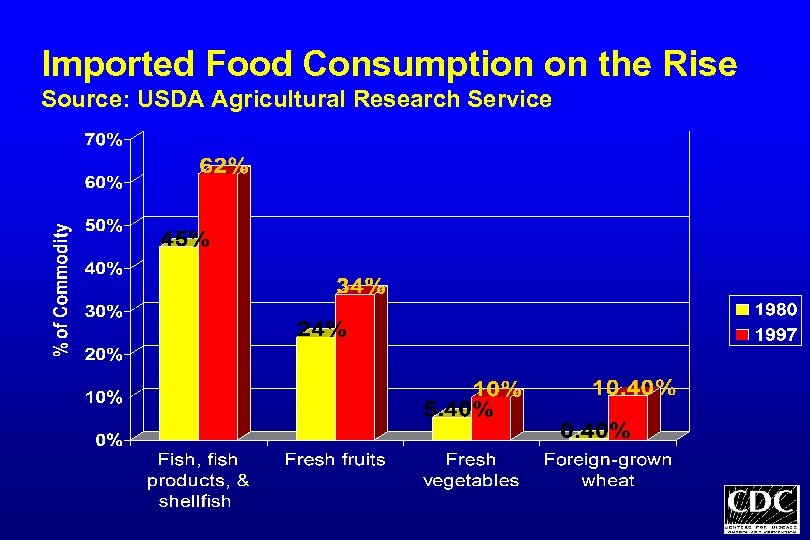
Imported Food Consumption on the Rise Source: USDA Agricultural Research Service
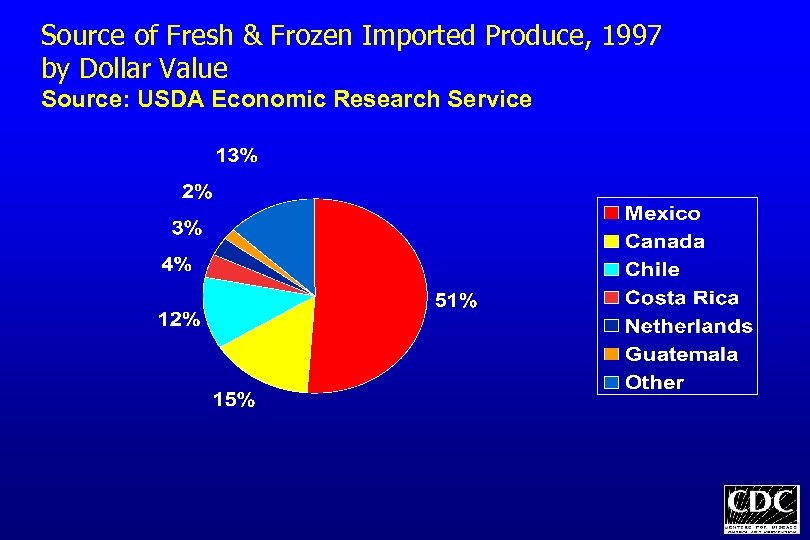
Source of Fresh & Frozen Imported Produce, 1997 by Dollar Value Source: USDA Economic Research Service
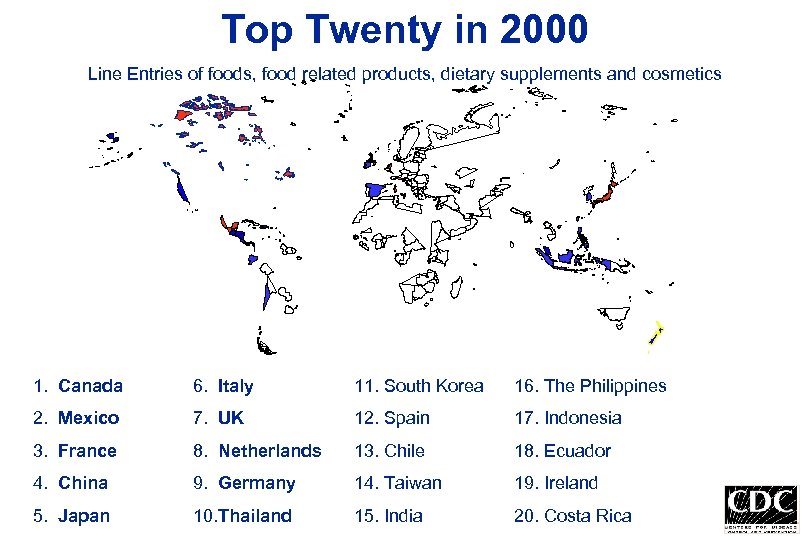
Top Twenty in 2000 Line Entries of foods, food related products, dietary supplements and cosmetics 1. Canada 6. Italy 11. South Korea 16. The Philippines 2. Mexico 7. UK 12. Spain 17. Indonesia 3. France 8. Netherlands 13. Chile 18. Ecuador 4. China 9. Germany 14. Taiwan 19. Ireland 5. Japan 10. Thailand 15. India 20. Costa Rica
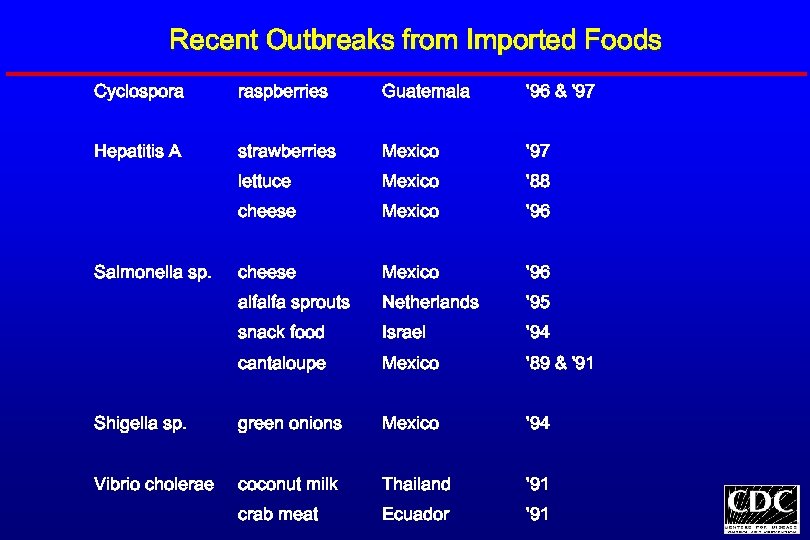
Recent Outbreaks from Imported Foods Cyclospora raspberries Guatemala '96 & '97 Hepatitis A strawberries Mexico '97 lettuce Mexico '88 cheese Mexico '96 alfalfa sprouts Netherlands '95 snack food Israel '94 cantaloupe Mexico '89 & '91 Shigella sp. green onions Mexico '94 Vibrio cholerae coconut milk Thailand '91 crab meat Ecuador '91 Salmonella sp.
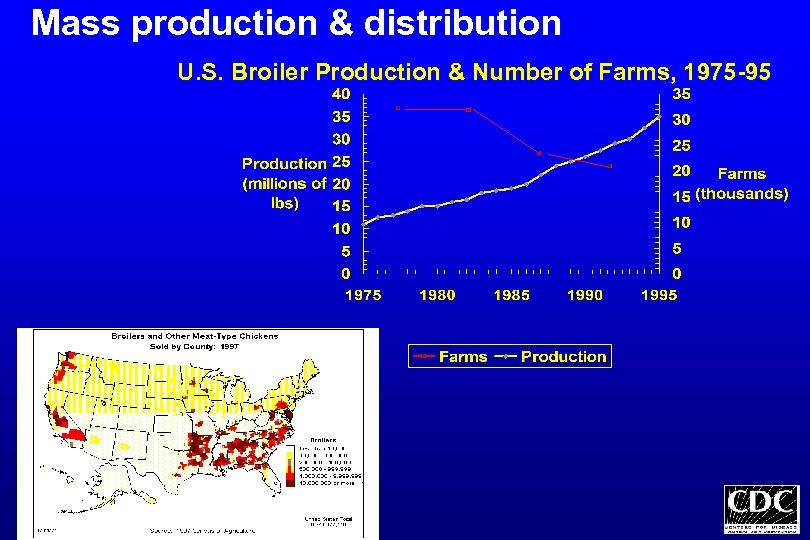
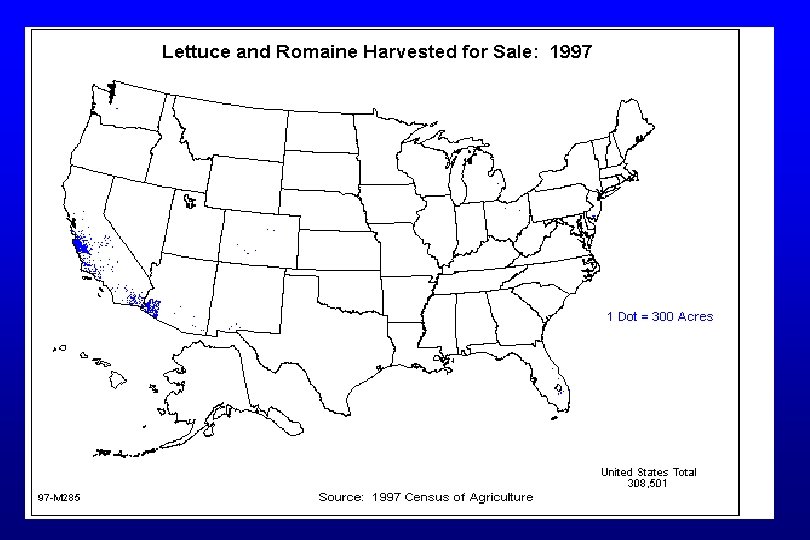
Mass production & distribution U. S. Broiler Production & Number of Farms, 1975 -95
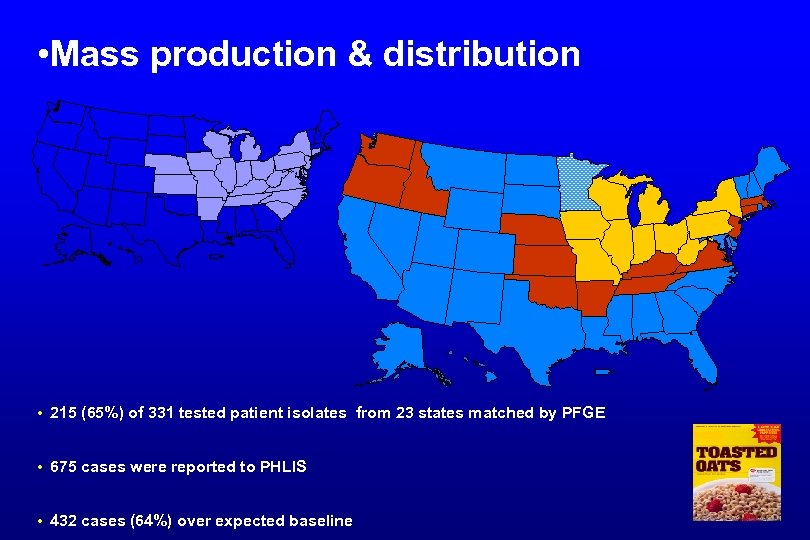
• Mass production & distribution • 215 (65%) of 331 tested patient isolates from 23 states matched by PFGE • 675 cases were reported to PHLIS • 432 cases (64%) over expected baseline
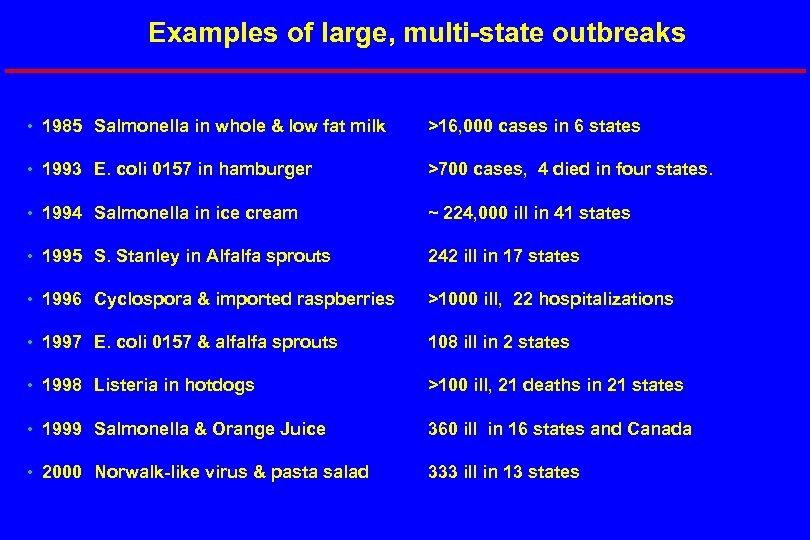
Examples of large, multi-state outbreaks • 1985 Salmonella in whole & low fat milk >16, 000 cases in 6 states • 1993 E. coli 0157 in hamburger >700 cases, 4 died in four states. • 1994 Salmonella in ice cream ~ 224, 000 ill in 41 states • 1995 S. Stanley in Alfalfa sprouts 242 ill in 17 states • 1996 Cyclospora & imported raspberries >1000 ill, 22 hospitalizations • 1997 E. coli 0157 & alfalfa sprouts 108 ill in 2 states • 1998 Listeria in hotdogs >100 ill, 21 deaths in 21 states • 1999 Salmonella & Orange Juice 360 ill in 16 states and Canada • 2000 Norwalk-like virus & pasta salad 333 ill in 13 states
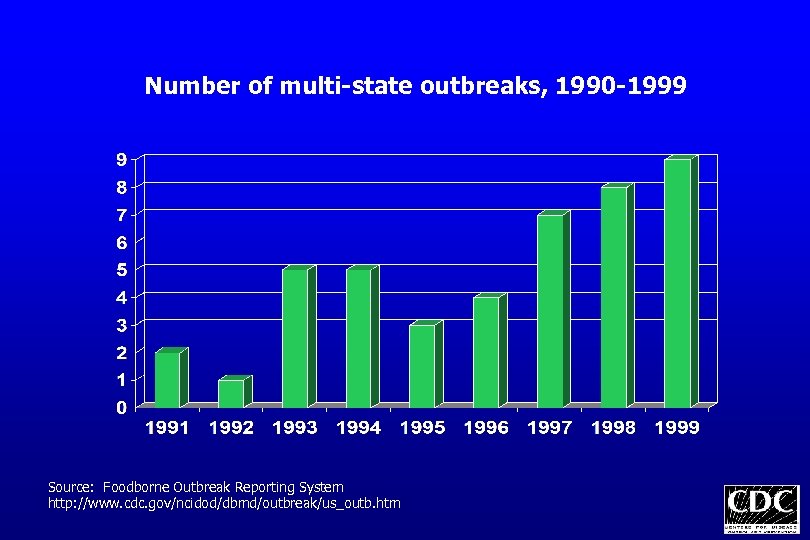
Number of multi-state outbreaks, 1990 -1999 Source: Foodborne Outbreak Reporting System http: //www. cdc. gov/ncidod/dbmd/outbreak/us_outb. htm
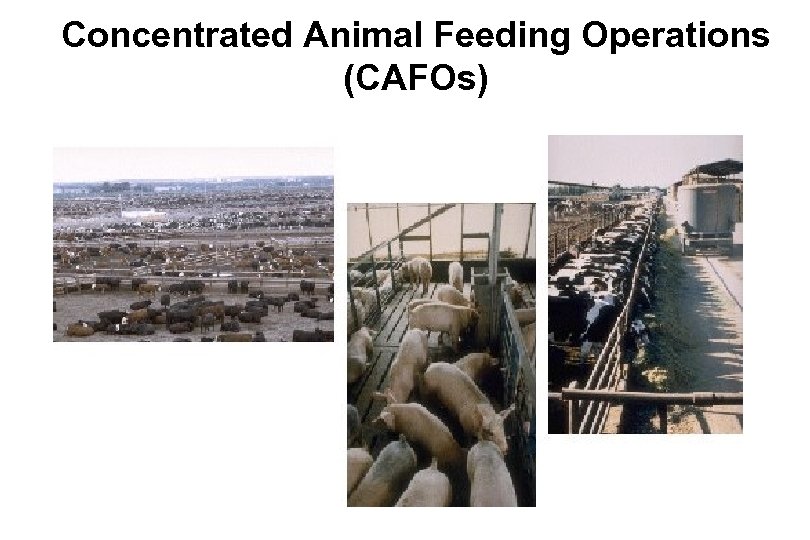
Concentrated Animal Feeding Operations (CAFOs)
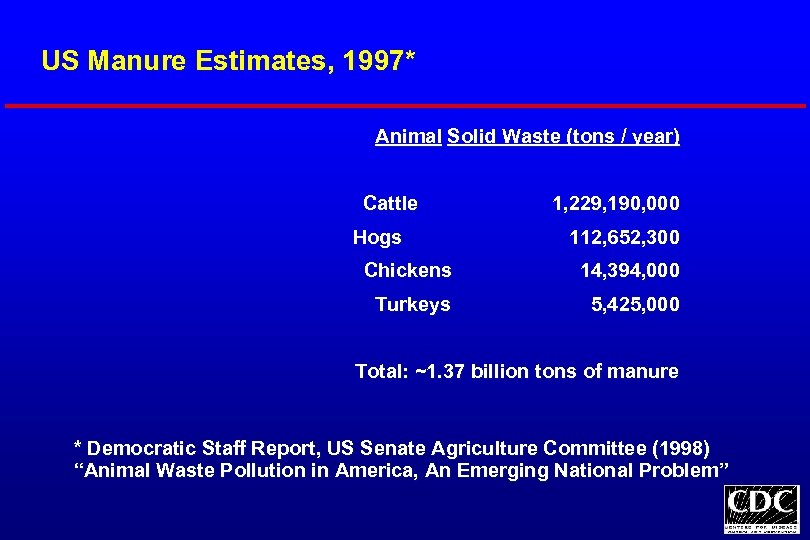
US Manure Estimates, 1997* Animal Solid Waste (tons / year) Cattle Hogs 1, 229, 190, 000 112, 652, 300 Chickens 14, 394, 000 Turkeys 5, 425, 000 Total: ~1. 37 billion tons of manure * Democratic Staff Report, US Senate Agriculture Committee (1998) “Animal Waste Pollution in America, An Emerging National Problem”
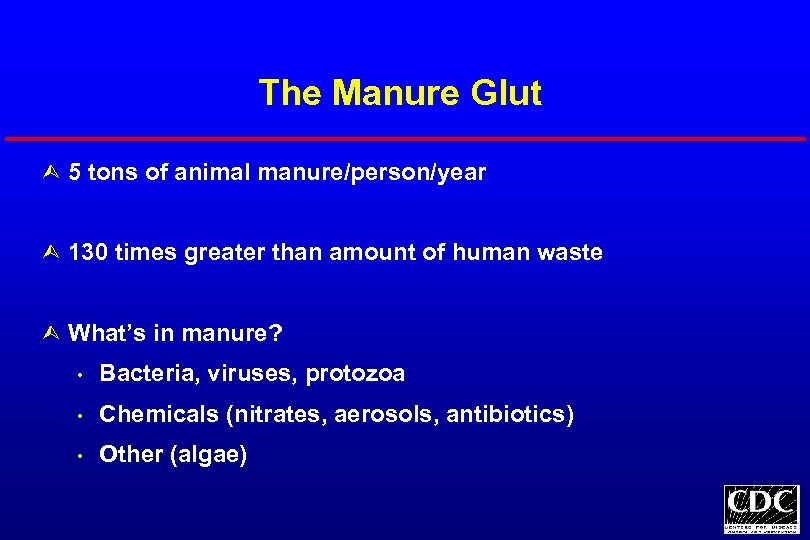
The Manure Glut Ù 5 tons of animal manure/person/year Ù 130 times greater than amount of human waste Ù What’s in manure? • Bacteria, viruses, protozoa • Chemicals (nitrates, aerosols, antibiotics) • Other (algae)
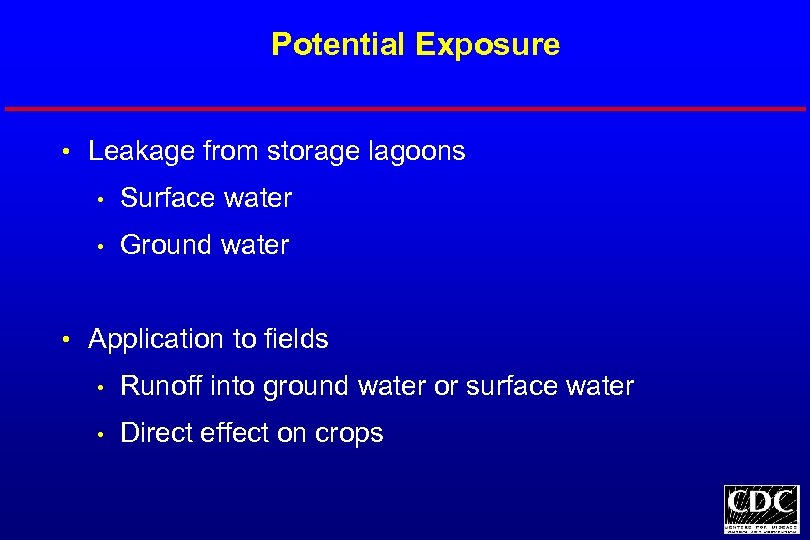
Potential Exposure • Leakage from storage lagoons • Surface water • Ground water • Application to fields • Runoff into ground water or surface water • Direct effect on crops
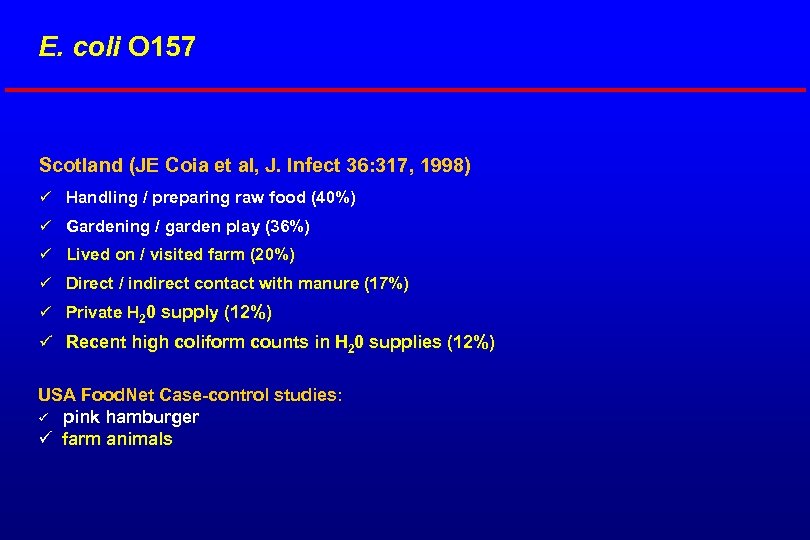
E. coli O 157 Scotland (JE Coia et al, J. Infect 36: 317, 1998) ü Handling / preparing raw food (40%) ü Gardening / garden play (36%) ü Lived on / visited farm (20%) ü Direct / indirect contact with manure (17%) ü Private H 20 supply (12%) ü Recent high coliform counts in H 20 supplies (12%) USA Food. Net Case-control studies: ü pink hamburger ü farm animals
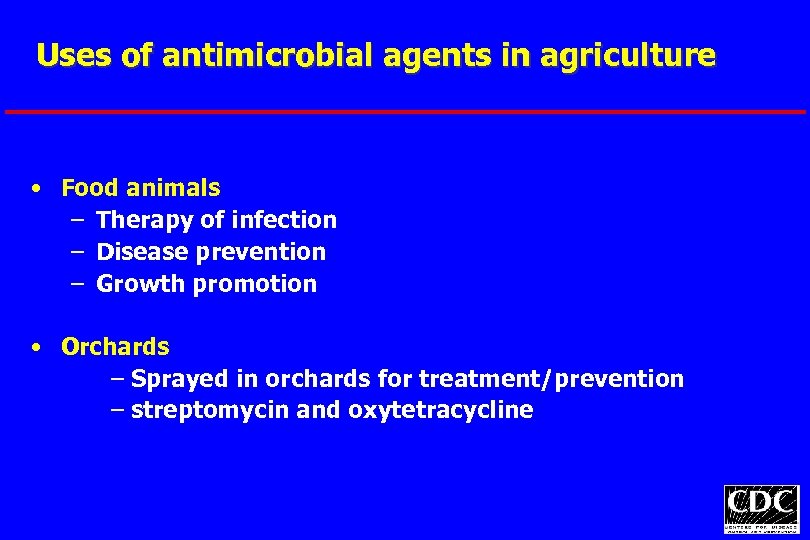
Uses of antimicrobial agents in agriculture • Food animals – Therapy of infection – Disease prevention – Growth promotion • Orchards – Sprayed in orchards for treatment/prevention – streptomycin and oxytetracycline
Resistant Campylobacteriosis in Humans due to Fluoroquinolone Use in Chickens* *Quinolone-Resistant Campylobacter jejuni Infections in Minnesota, 1992– 1998 Smith K. E. , et al, N Engl J Med 1999; 340: 1525 -1532, May 20, 1999.

Is the system breaking down?
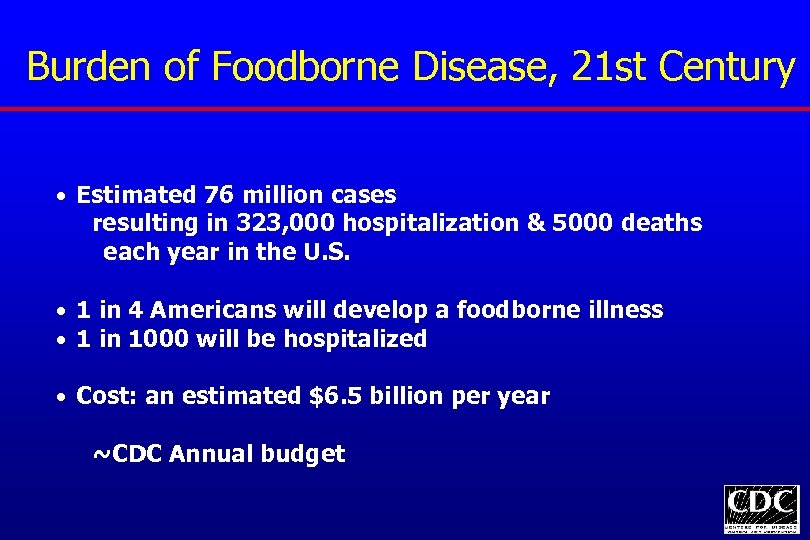
Burden of Foodborne Disease, 21 st Century • Estimated 76 million cases resulting in 323, 000 hospitalization & 5000 deaths each year in the U. S. • 1 in 4 Americans will develop a foodborne illness • 1 in 1000 will be hospitalized • Cost: an estimated $6. 5 billion per year ~CDC Annual budget
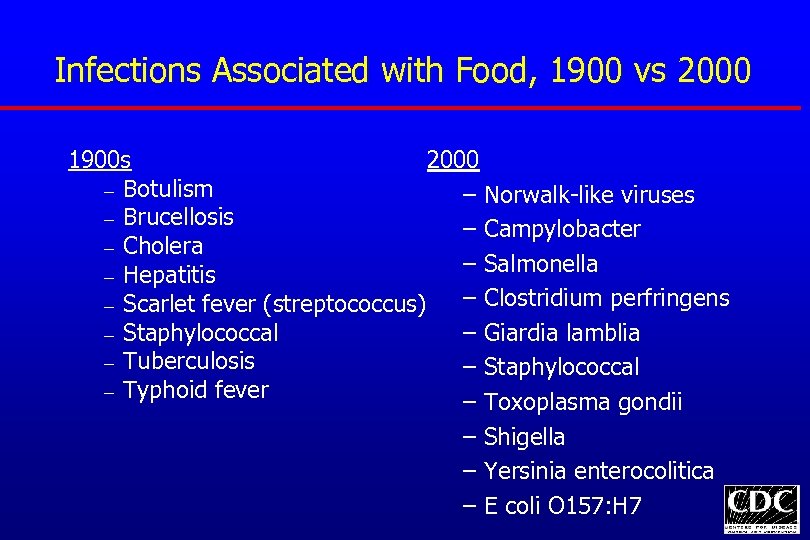
Infections Associated with Food, 1900 vs 2000 1900 s 2000 – Botulism – Norwalk-like viruses – Brucellosis – Campylobacter – Cholera – Salmonella – Hepatitis – Clostridium perfringens – Scarlet fever (streptococcus) – Staphylococcal – Giardia lamblia – Tuberculosis – Staphylococcal – Typhoid fever – Toxoplasma gondii – Shigella – Yersinia enterocolitica – E coli O 157: H 7
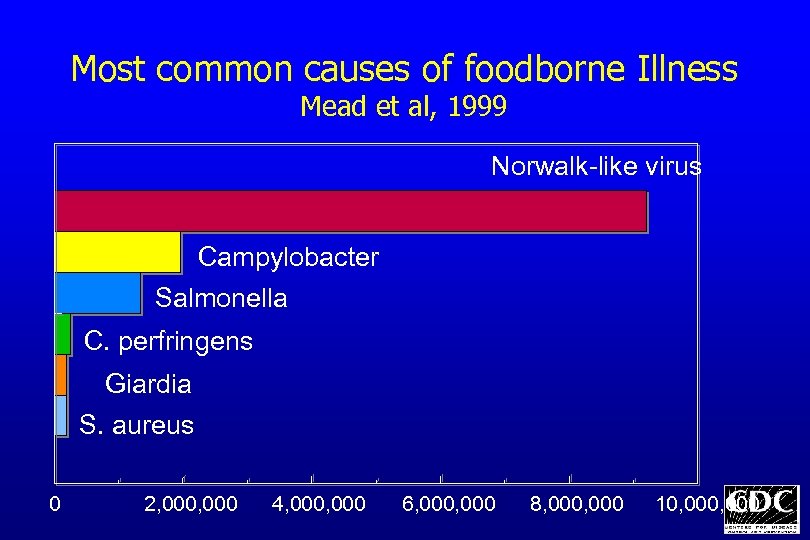
Most common causes of foodborne Illness Mead et al, 1999 Norwalk-like virus Campylobacter Salmonella C. perfringens Giardia S. aureus 0 2, 000 4, 000 6, 000 8, 000 10, 000
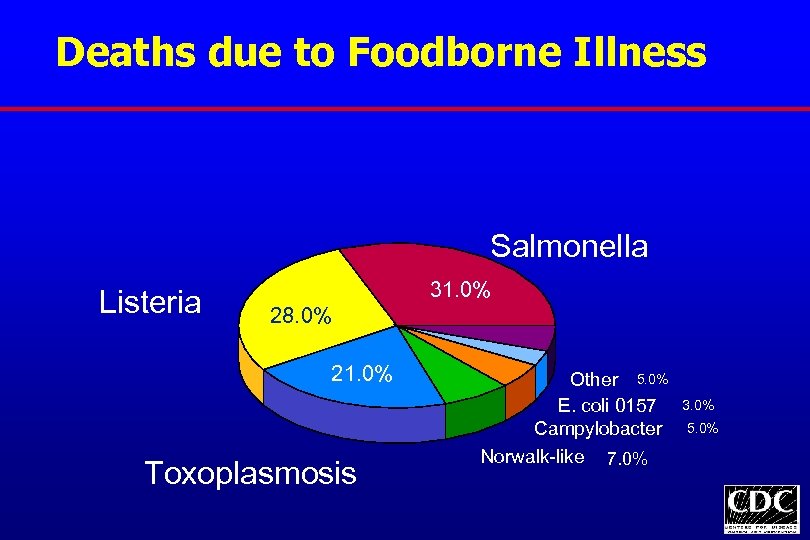
Deaths due to Foodborne Illness Salmonella Listeria 31. 0% 28. 0% 21. 0% Toxoplasmosis Other 5. 0% E. coli 0157 Campylobacter Norwalk-like 7. 0% 3. 0% 5. 0%
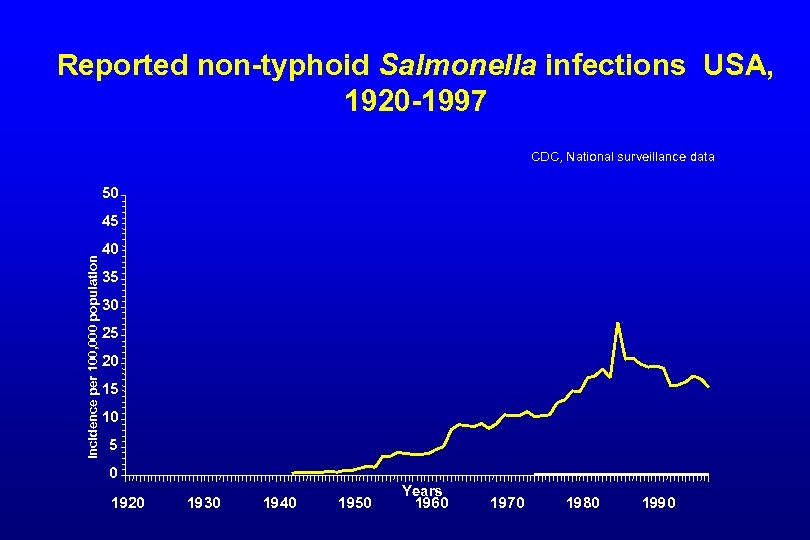
Reported non-typhoid Salmonella infections USA, 1920 -1997 CDC, National surveillance data 50 Incidence per 100, 000 population 45 40 35 30 25 20 15 10 5 0 1920 1930 1940 1950 Years 1960 1970 1980 1990
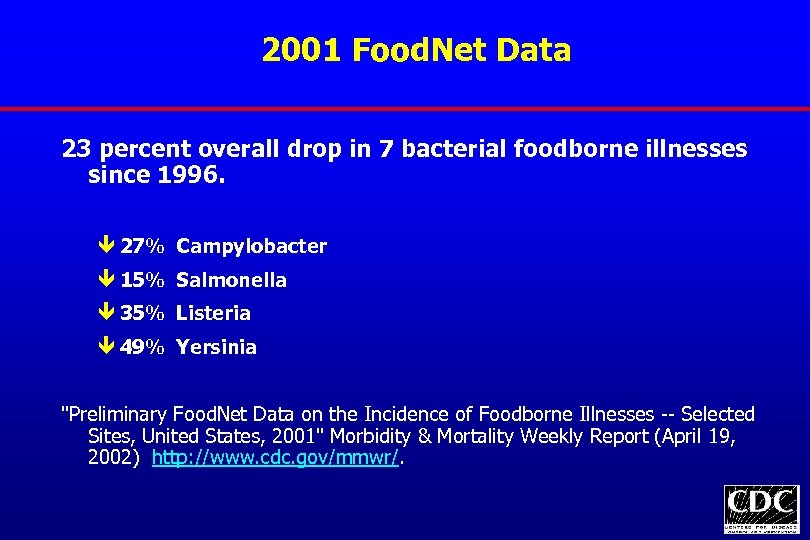
2001 Food. Net Data 23 percent overall drop in 7 bacterial foodborne illnesses since 1996. ê 27% Campylobacter ê 15% Salmonella ê 35% Listeria ê 49% Yersinia "Preliminary Food. Net Data on the Incidence of Foodborne Illnesses -- Selected Sites, United States, 2001" Morbidity & Mortality Weekly Report (April 19, 2002) http: //www. cdc. gov/mmwr/.
How well does our food safety & regulation system work? How well do you want it to work?
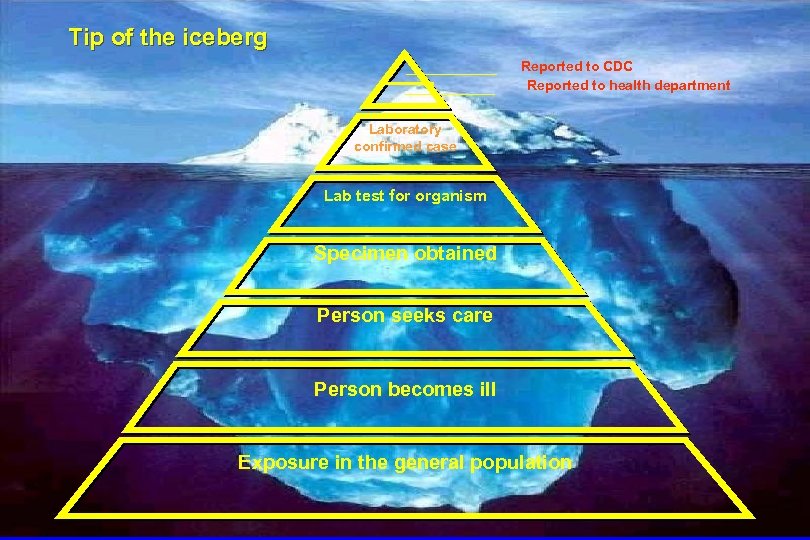
Tip of the iceberg Reported to CDC Reported to health department Laboratory confirmed case Lab test for organism Specimen obtained Person seeks care Person becomes ill Exposure in the general population
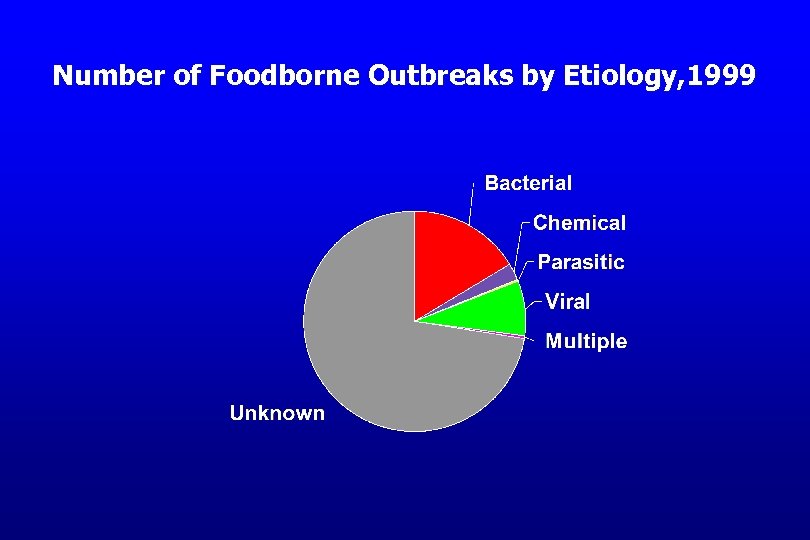
Number of Foodborne Outbreaks by Etiology, 1999
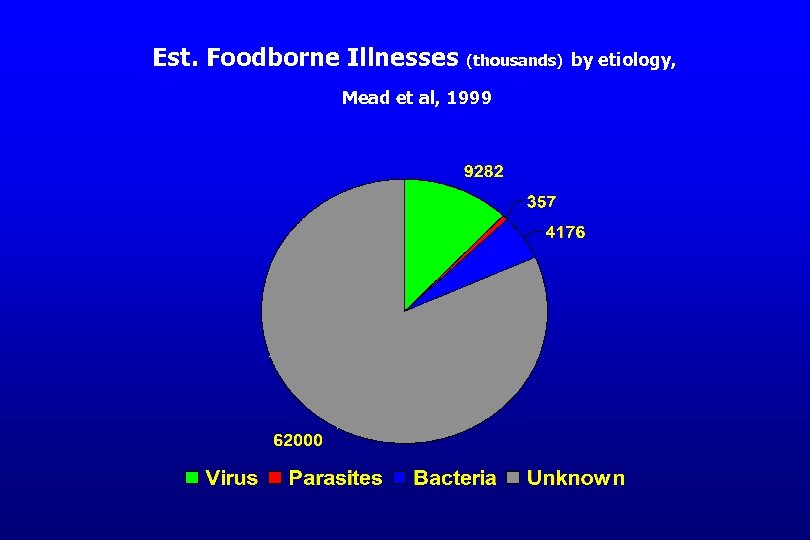
Est. Foodborne Illnesses (thousands) by etiology, Mead et al, 1999
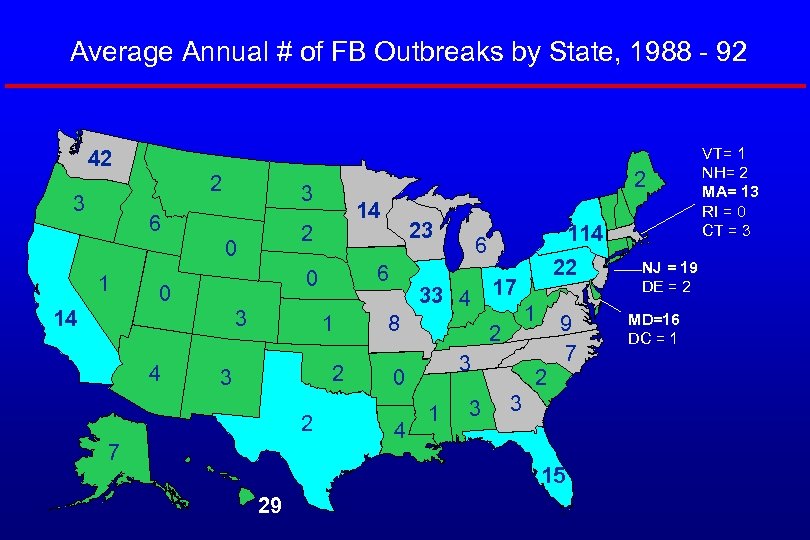
Average Annual # of FB Outbreaks by State, 1988 - 92 42 2 3 3 6 14 3 1 2 3 2 7 23 6 0 0 4 14 2 0 1 2 114 6 33 4 17 8 2 3 0 4 1 3 22 1 9 7 2 3 15 29 NJ = 19 DE = 2 MD=16 DC = 1 VT= 1 NH= 2 MA= 13 RI = 0 CT = 3

Thank you
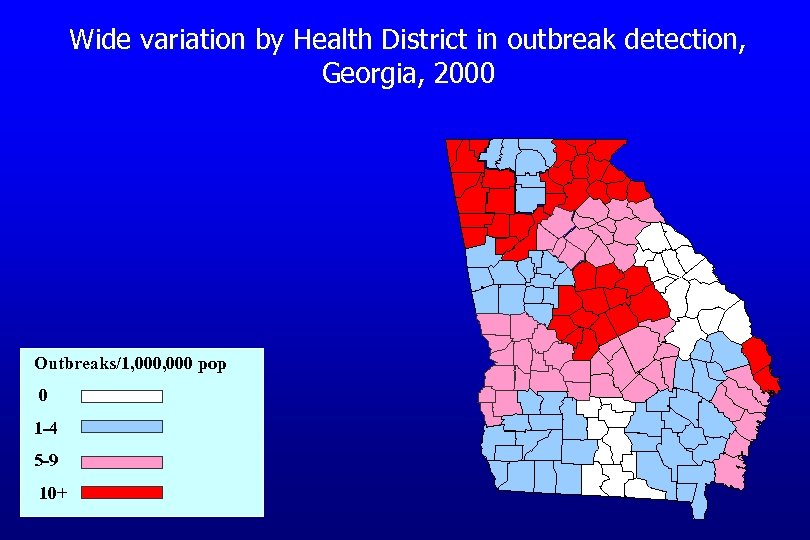
Wide variation by Health District in outbreak detection, Georgia, 2000 Outbreaks/1, 000 pop 0 1 -4 5 -9 10+
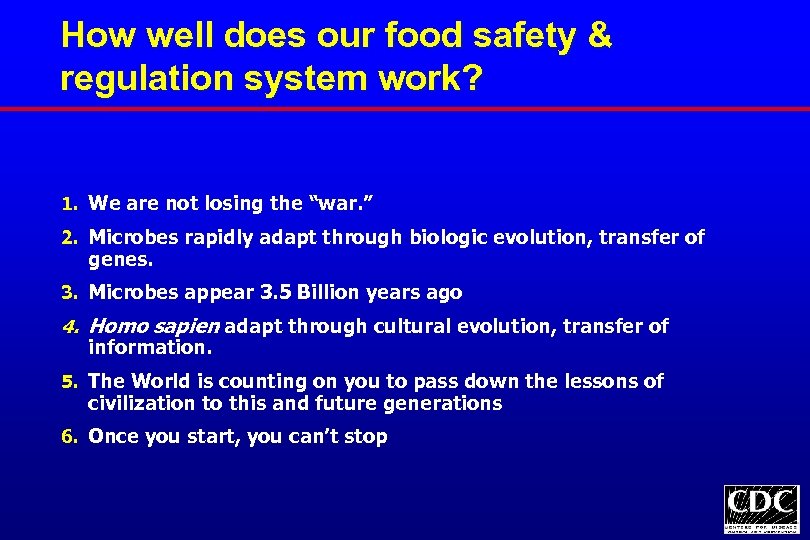
How well does our food safety & regulation system work? 1. We are not losing the “war. ” 2. Microbes rapidly adapt through biologic evolution, transfer of genes. 3. Microbes appear 3. 5 Billion years ago 4. Homo sapien adapt through cultural evolution, transfer of information. 5. The World is counting on you to pass down the lessons of civilization to this and future generations 6. Once you start, you can’t stop
How well does our food safety & regulation system work? “Meat and Poultry: Better USDA Oversight and Enforcement of Safety Rules Needed to Reduce Risk of Foodborne Illnesses. ” GAO-02 -902 August 30, 2002 http: //www. gao. gov/new. items/d 02902. pdf
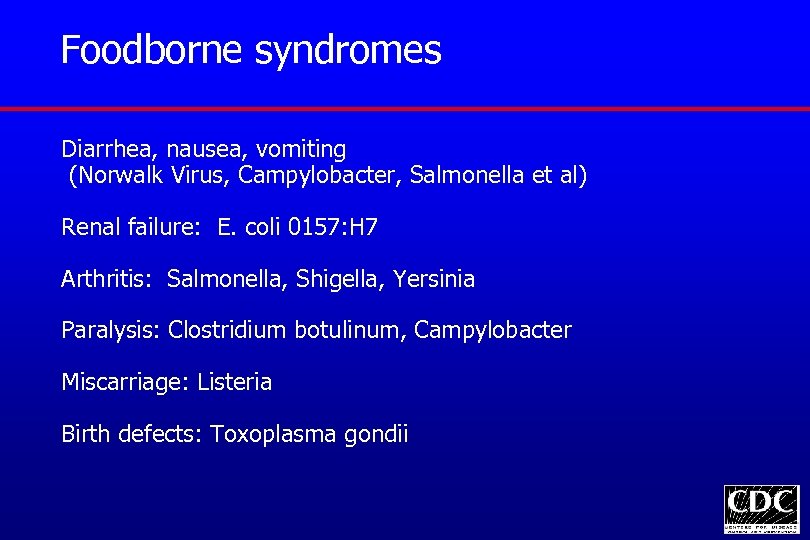
Foodborne syndromes Diarrhea, nausea, vomiting (Norwalk Virus, Campylobacter, Salmonella et al) Renal failure: E. coli 0157: H 7 Arthritis: Salmonella, Shigella, Yersinia Paralysis: Clostridium botulinum, Campylobacter Miscarriage: Listeria Birth defects: Toxoplasma gondii
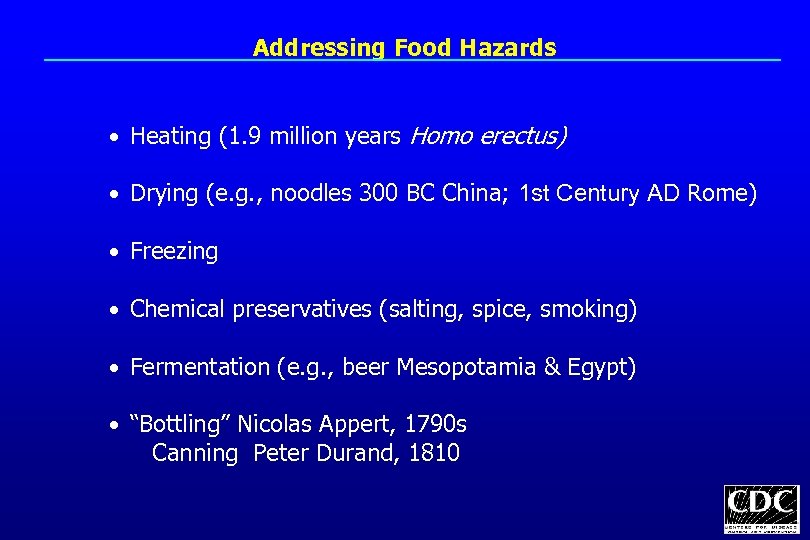
Addressing Food Hazards • Heating (1. 9 million years Homo erectus) • Drying (e. g. , noodles 300 BC China; 1 st Century AD Rome) • Freezing • Chemical preservatives (salting, spice, smoking) • Fermentation (e. g. , beer Mesopotamia & Egypt) • “Bottling” Nicolas Appert, 1790 s Canning Peter Durand, 1810
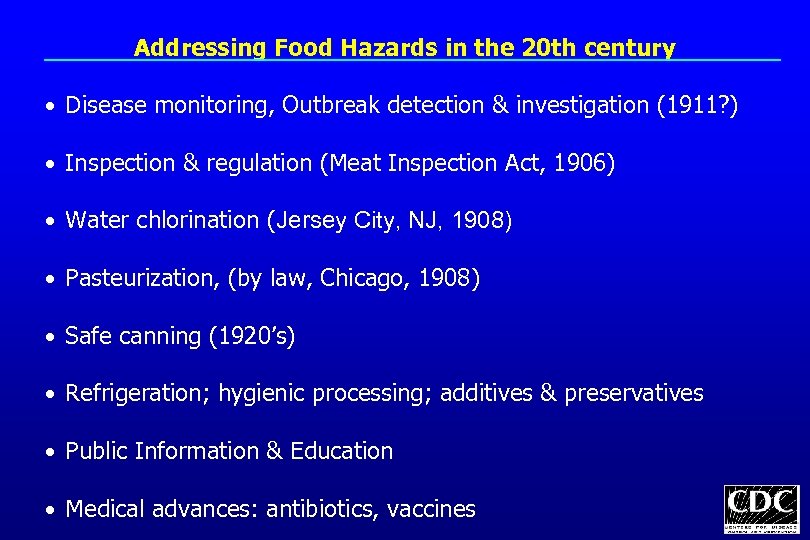
Addressing Food Hazards in the 20 th century • Disease monitoring, Outbreak detection & investigation (1911? ) • Inspection & regulation (Meat Inspection Act, 1906) • Water chlorination (Jersey City, NJ, 1908) • Pasteurization, (by law, Chicago, 1908) • Safe canning (1920’s) • Refrigeration; hygienic processing; additives & preservatives • Public Information & Education • Medical advances: antibiotics, vaccines
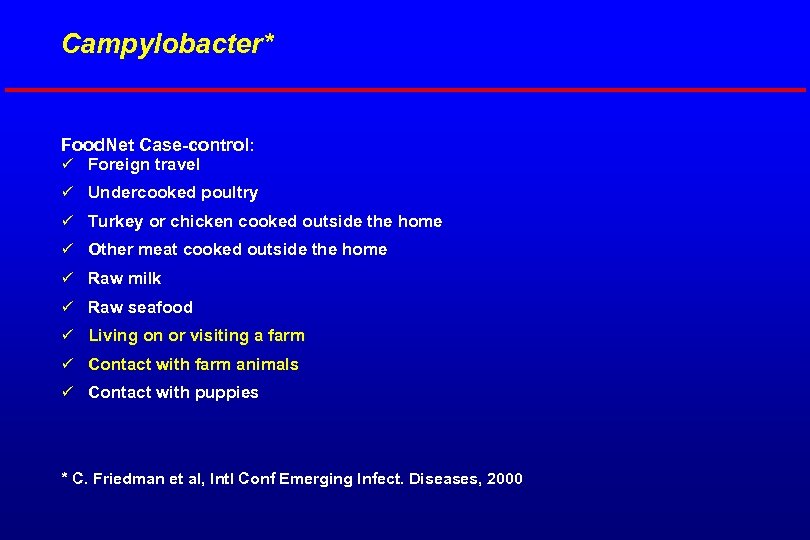
Campylobacter* Food. Net Case-control: ü Foreign travel ü Undercooked poultry ü Turkey or chicken cooked outside the home ü Other meat cooked outside the home ü Raw milk ü Raw seafood ü Living on or visiting a farm ü Contact with farm animals ü Contact with puppies * C. Friedman et al, Intl Conf Emerging Infect. Diseases, 2000
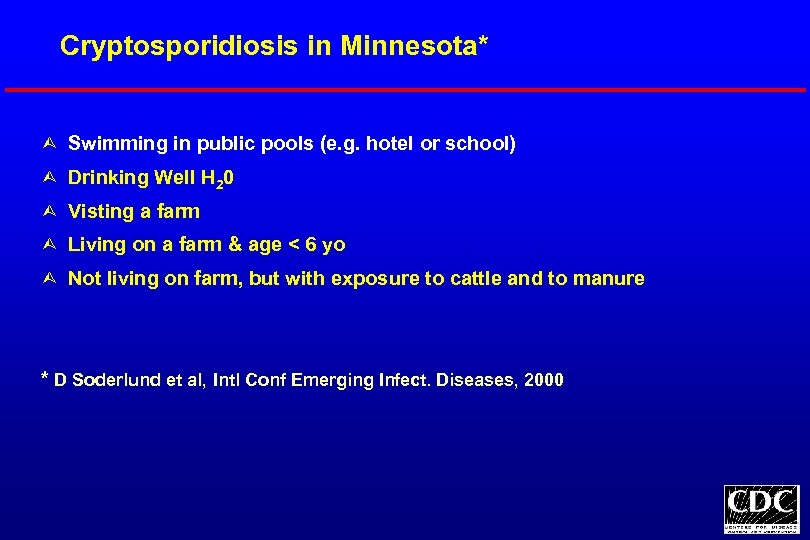
Cryptosporidiosis in Minnesota* Ù Swimming in public pools (e. g. hotel or school) Ù Drinking Well H 20 Ù Visting a farm Ù Living on a farm & age < 6 yo Ù Not living on farm, but with exposure to cattle and to manure * D Soderlund et al, Intl Conf Emerging Infect. Diseases, 2000
Скачать презентацию Food the Environment Berkeley California September 22
f3378552a51c54692a9cacc381364d64.ppt