


 Скачать презентацию FOOD SAFETY ON THE GO 2012 EDITION 1
8cc5c55aa6acda547b308d74e6c66d52.ppt
- Количество слайдов: 28
 FOOD SAFETY ON THE GO 2012 EDITION 1
 Module 1: Food safety basics 2
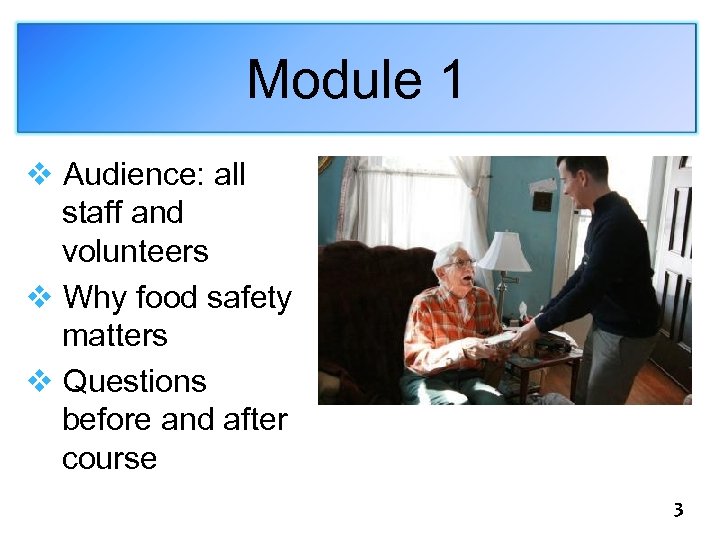 Module 1 v Audience: all staff and volunteers v Why food safety matters v Questions before and after course 3
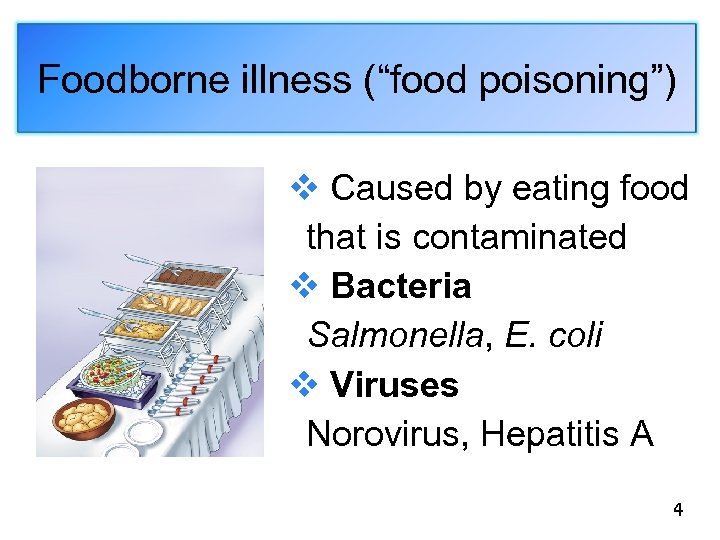 Foodborne illness (“food poisoning”) v Caused by eating food that is contaminated v Bacteria Salmonella, E. coli v Viruses Norovirus, Hepatitis A 4
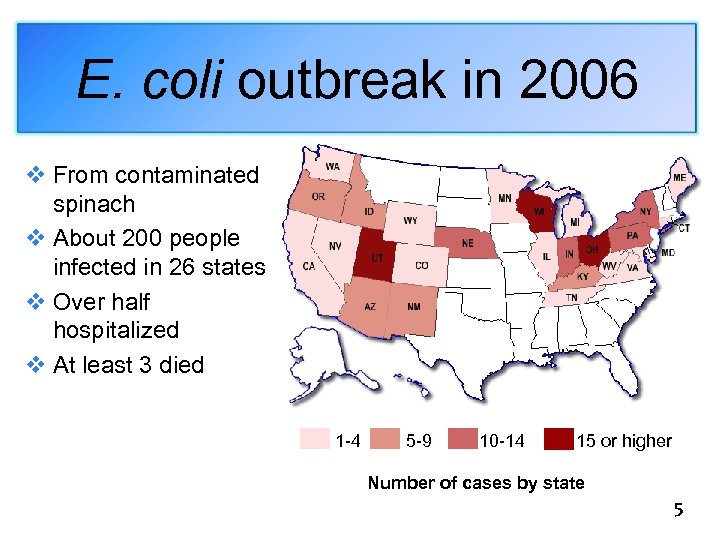 E. coli outbreak in 2006 v From contaminated spinach v About 200 people infected in 26 states v Over half hospitalized v At least 3 died 1 -4 5 -9 10 -14 15 or higher Number of cases by state 5
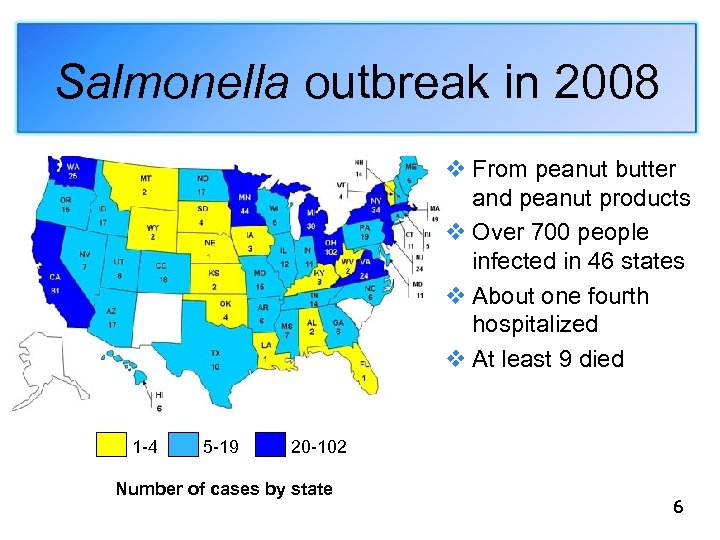 Salmonella outbreak in 2008 v From peanut butter and peanut products v Over 700 people infected in 46 states v About one fourth hospitalized v At least 9 died 1 -4 5 -19 20 -102 Number of cases by state 6
 Foodborne illness is common v 1 in 6 Americans every year v Adults 50 and over more likely to be hospitalized and die v Cost: $152 billion/year 7
 Symptoms v Stomach and intestines: nausea, vomiting, diarrhea v May not appear for weeks v Not “stomach flu” or “ 24 -hour flu” v There can be serious complications: kidney failure, arthritis, paralysis… 8
 The food supply is changing v U. S. food supply one of safest v Foods produced on a larger scale, more processed, come from further away v ~20% from other countries 9
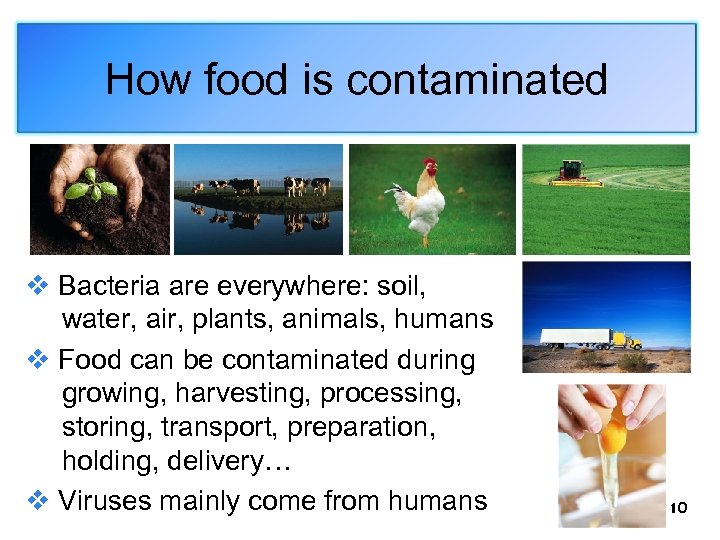 How food is contaminated v Bacteria are everywhere: soil, water, air, plants, animals, humans v Food can be contaminated during growing, harvesting, processing, storing, transport, preparation, holding, delivery… v Viruses mainly come from humans 10
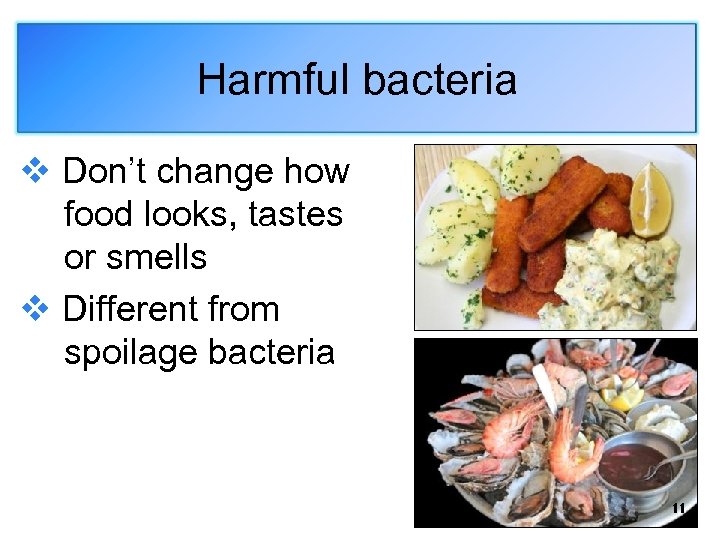 Harmful bacteria v Don’t change how food looks, tastes or smells v Different from spoilage bacteria 11
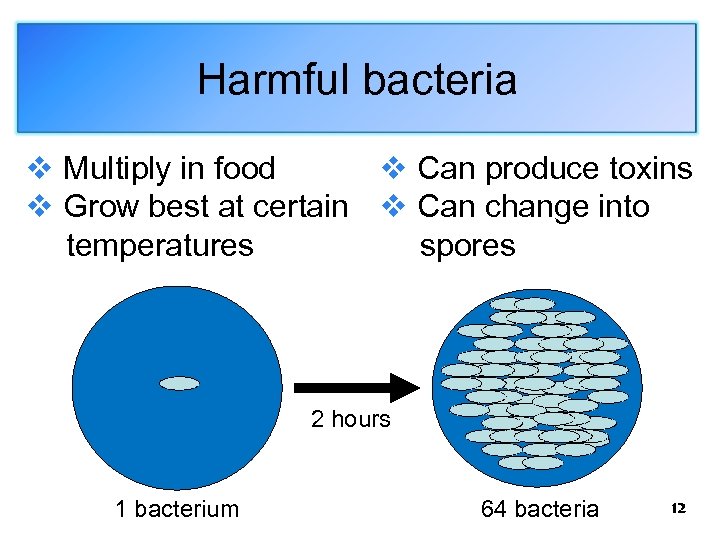 Harmful bacteria v Multiply in food v Can produce toxins v Grow best at certain v Can change into temperatures spores 2 hours 1 bacterium 64 bacteria 12
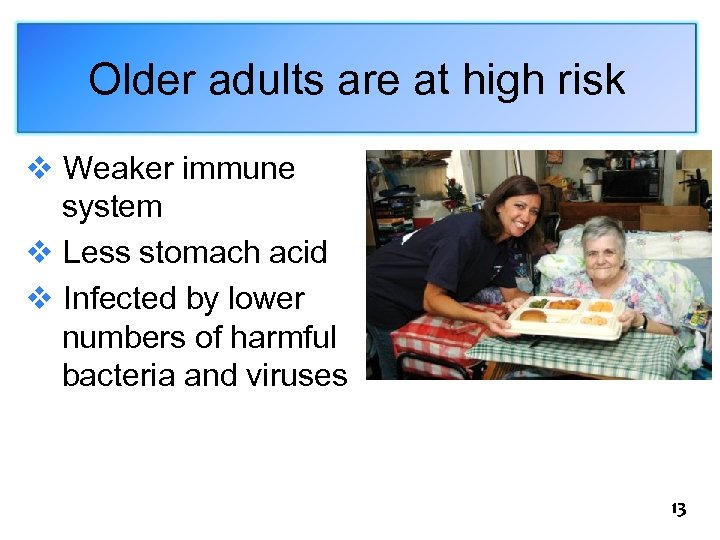 Older adults are at high risk v Weaker immune system v Less stomach acid v Infected by lower numbers of harmful bacteria and viruses 13
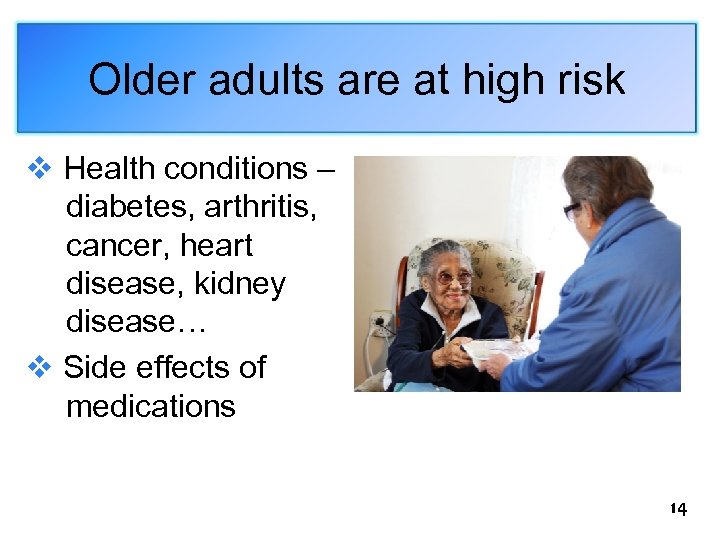 Older adults are at high risk v Health conditions – diabetes, arthritis, cancer, heart disease, kidney disease… v Side effects of medications 14
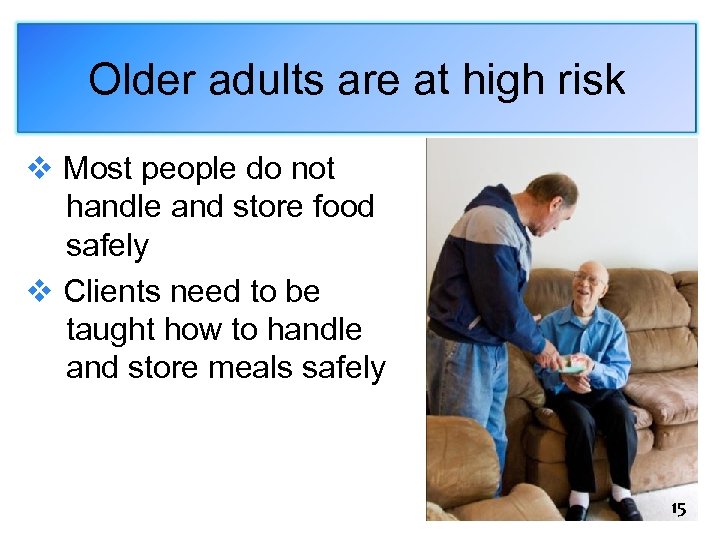 Older adults are at high risk v Most people do not handle and store food safely v Clients need to be taught how to handle and store meals safely 15
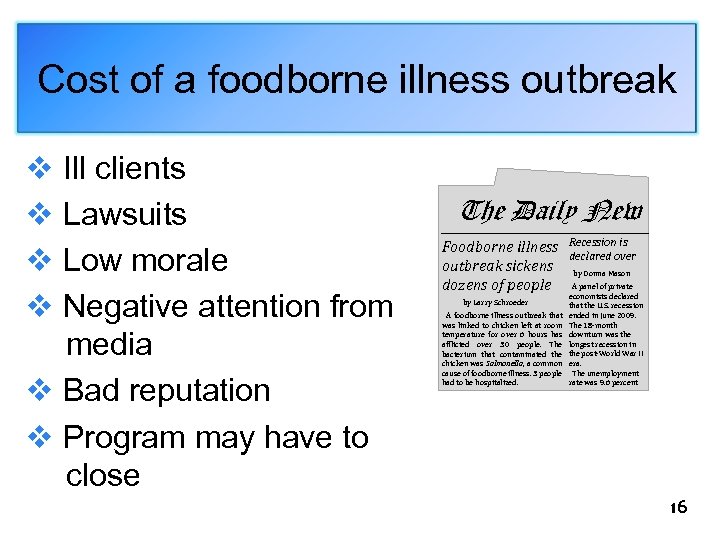 Cost of a foodborne illness outbreak v Ill clients v Lawsuits v Low morale v Negative attention from media v Bad reputation v Program may have to close The Daily New Foodborne illness outbreak sickens dozens of people by Larry Schroeder A foodborne illness outbreak that was linked to chicken left at room temperature for over 6 hours has afflicted over 30 people. The bacterium that contaminated the chicken was Salmonella, a common cause of foodborne illness. 3 people had to be hospitalized. Recession is declared over by Donna Mason A panel of private economists declared that the U. S. recession ended in June 2009. The 18 -month downturn was the longest recession in the post-World War II era. The unemployment rate was 9. 6 percent 16
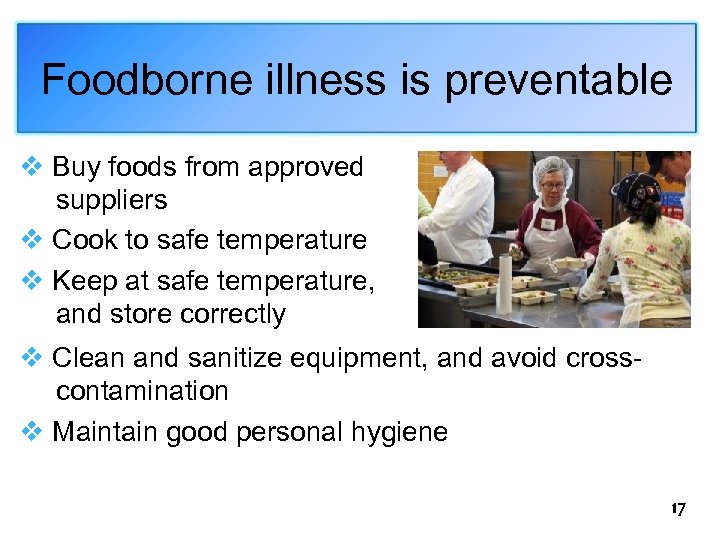 Foodborne illness is preventable v Buy foods from approved suppliers v Cook to safe temperature v Keep at safe temperature, and store correctly v Clean and sanitize equipment, and avoid crosscontamination v Maintain good personal hygiene 17
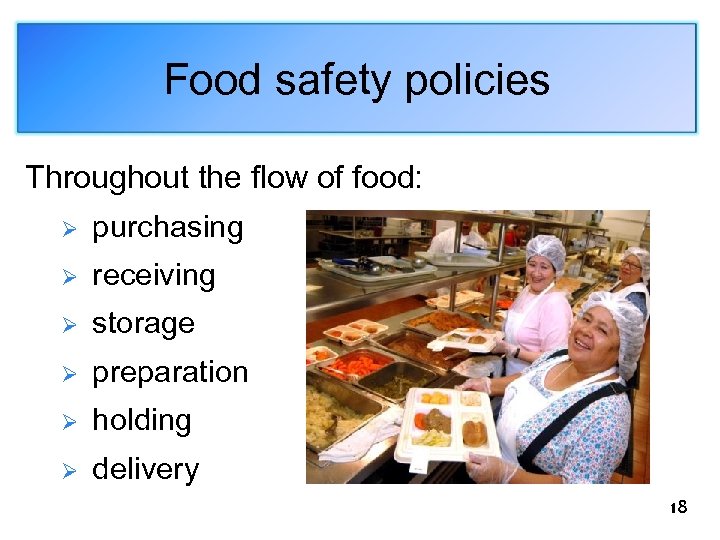 Food safety policies Throughout the flow of food: Ø purchasing Ø receiving Ø storage Ø preparation Ø holding Ø delivery 18
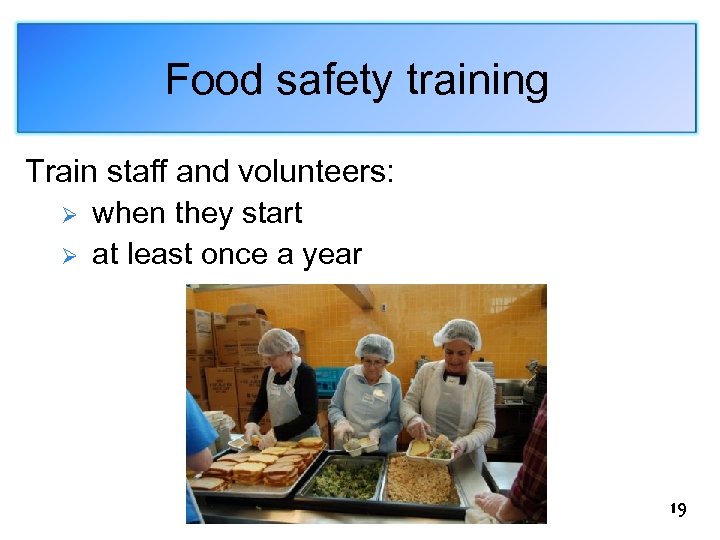 Food safety training Train staff and volunteers: Ø when they start Ø at least once a year 19
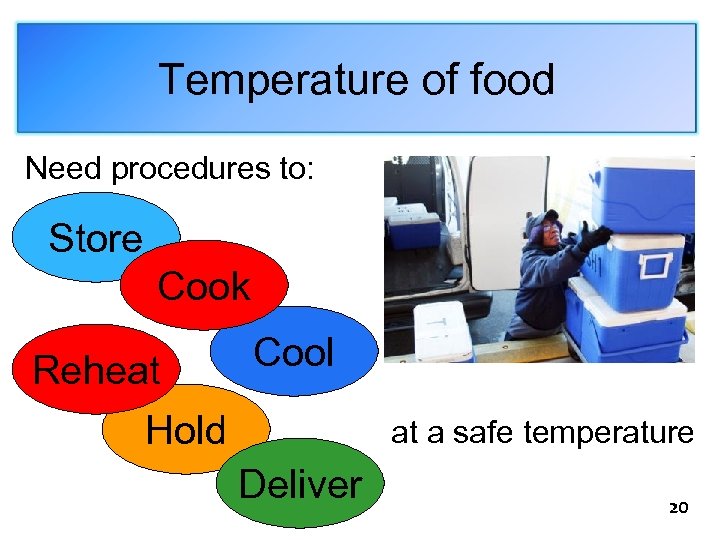 Temperature of food Need procedures to: Store Cook Reheat Hold Cool at a safe temperature Deliver 20
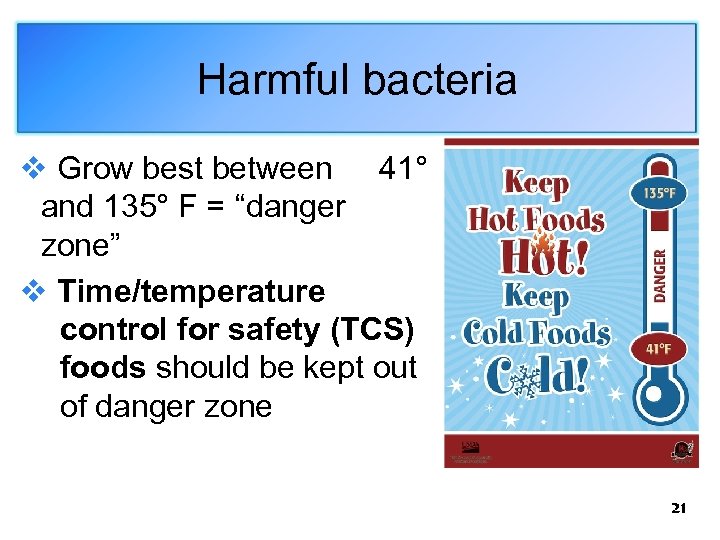 Harmful bacteria v Grow best between 41° and 135° F = “danger zone” v Time/temperature control for safety (TCS) foods should be kept out of danger zone 21
 Health and personal hygiene v Staff and volunteers need to be in good health v Washing hands is one of the best ways to reduce risk of foodborne illness 22
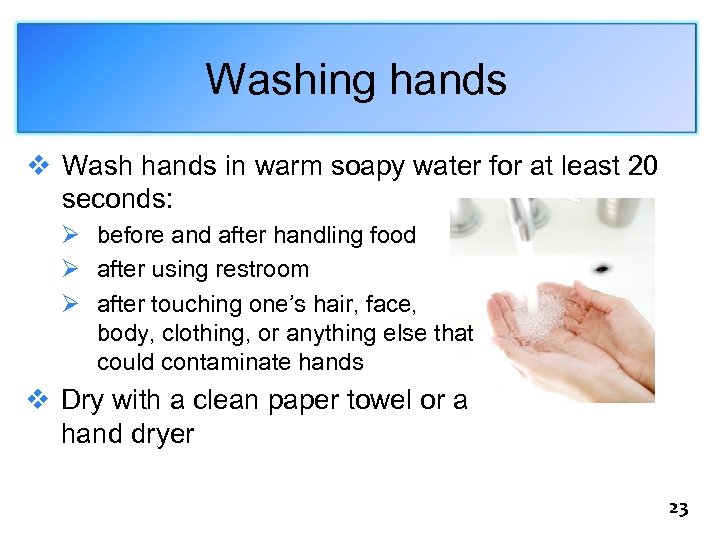 Washing hands v Wash hands in warm soapy water for at least 20 seconds: Ø before and after handling food Ø after using restroom Ø after touching one’s hair, face, body, clothing, or anything else that could contaminate hands v Dry with a clean paper towel or a hand dryer 23
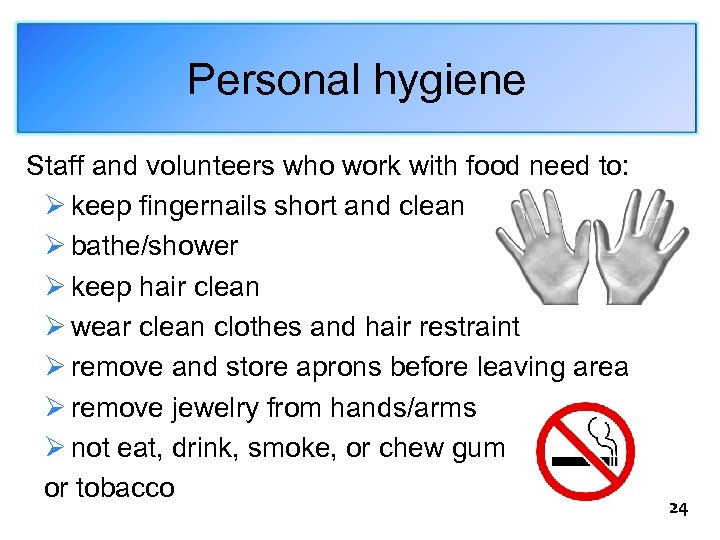 Personal hygiene Staff and volunteers who work with food need to: Ø keep fingernails short and clean Ø bathe/shower Ø keep hair clean Ø wear clean clothes and hair restraint Ø remove and store aprons before leaving area Ø remove jewelry from hands/arms Ø not eat, drink, smoke, or chew gum or tobacco 24
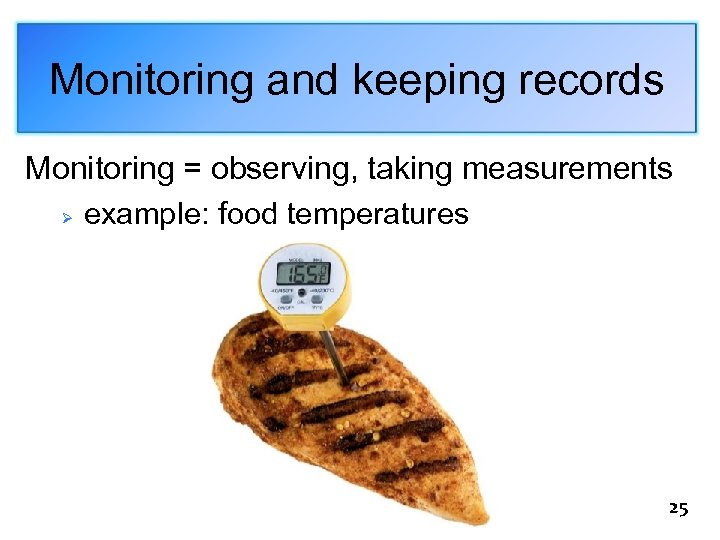 Monitoring and keeping records Monitoring = observing, taking measurements Ø example: food temperatures 25
 Crossword puzzle ACROSS 1 2 3 4 5 6 7 8 9 1. _____ illness is any illness that is caused by eating food that is contaminated. 4. A person’s _____ system can become weaker with age. 6. The temperature range between 41 and 135 degrees Fahrenheit is called the temperature “_____ zone. ” 8. It is important for staff and volunteers to maintain good _____ hygiene. 10. _____ and viruses are the most common causes of foodborne illness. 12. _____-contamination is the transfer of harmful bacteria or viruses from one food or surface to another. 13. Washing your _____ is one of the best ways to reduce the risk of foodborne illness. DOWN 10 11 12 13 2. When two or more people get the same illness after eating the same food, it is called an _____. 3. _____ that cause foodborne illness mainly come from humans. 5. _____ of foodborne illness may not appear for days or even weeks after a person eats a contaminated food. 7. Time/temperature control for _____ foods are foods that support the growth of harmful bacteria when kept at inappropriate temperatures. 9. Every year, about one in _____ Americans gets a foodborne illness. 11. Most bacteria and viruses that cause foodborne illness don’t change the way food _____, smells or tastes. 26
 Crossword puzzle 1 2 F O ACROSS 3 O D B O R N E V 4 U I 5 D M U N 6 S T M A N G E R 7 B Y U S 8 R M E P P E R S O N A 9 S E F DOWN 10 B A C T E R I A S E 11 K O X L T O M Y 12 C L E 1. _____ illness is any illness that is caused by eating food that is contaminated. 4. A person’s _____ system can become weaker with age. 6. The temperature range between 41 and 135 degrees Fahrenheit is called the temperature “_____ zone. ” 8. It is important for staff and volunteers to maintain good _____ hygiene. 10. _____ and viruses are the most common causes of foodborne illness. 12. _____-contamination is the transfer of harmful bacteria or viruses from one food or surface to another. 13. Washing your _____ is one of the best ways to reduce the risk of foodborne illness. R O S S O K 13 H A N D S 2. When two or more people get the same illness after eating the same food, it is called an _____. 3. _____ that cause foodborne illness mainly come from humans. 5. _____ of foodborne illness may not appear for days or even weeks after a person eats a contaminated food. 7. Time/temperature control for _____ foods are foods that support the growth of harmful bacteria when kept at inappropriate temperatures. 9. Every year, about one in _____ Americans gets a foodborne illness. 11. Most bacteria and viruses that cause foodborne illness don’t change the way food _____, smells or tastes. 27
 Thank you 28