


 Скачать презентацию FOOD SAFETY FOR CHEFS DR MRINALINI DARSWAL COMMISSIONER
4259c14285c915f8114cc257b8e022f8.ppt
- Количество слайдов: 65
 FOOD SAFETY FOR CHEFS DR. MRINALINI DARSWAL COMMISSIONER, FOOD SAFETY GNCTD Friday, March 16, 2018 1
 PLAN FOR PRESENTATION • • • SALIENT POINTS- FSSAct, 2006 Sections/Rules/Regulations/Notifications Compliances required Procedures- enforcement related Rights of FBO Beyond the Act Challenges in Food Safety 2
 PREAMBLE-FSSA • An Act …. . laying down science based standards for articles of food and to regulate their manufacture, storage, distribution, sale and import, to ensure availability of safe and wholesome food for human consumption and for matters connected therewith or incidental thereto. 3
 WHAT IS FOOD? 3 J FOOD IS WHAT IT IS NOT 4
 WHAT IS IT NOT? • animal feed, • live animals unless they are prepared or processed for placing on the market for human consumption, • plants, prior to harvesting, • drugs and medicinal products, • cosmetics, • narcotic or psychotropic substances : 5
 IT IS…. • any substance, whether processed, partially processed or unprocessed, which intended for human consumption…… is • (BAN ON FOOD PRODUCTS CONTAINING TOBACCO AND NICOTINE) 6
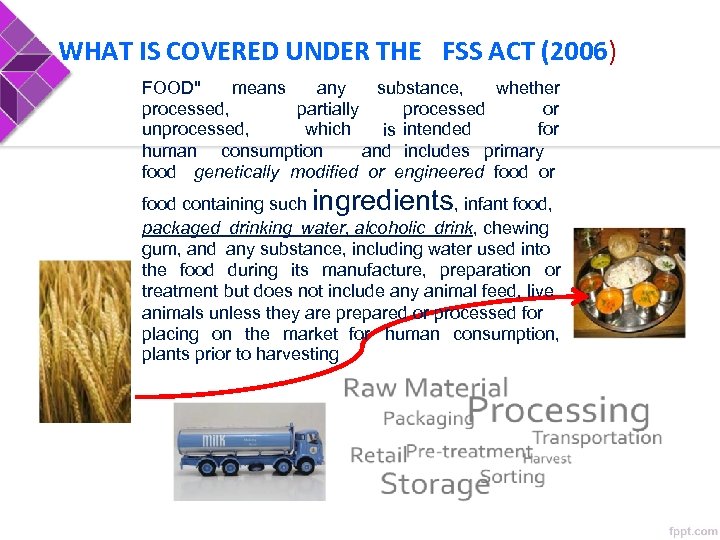 WHAT IS COVERED UNDER THE FSS ACT (2006) FOOD" means any substance, whether processed, partially processed or unprocessed, which for is intended and includes primary human consumption food genetically modified or engineered food or ingredients food containing such , infant food, packaged drinking water, alcoholic drink, chewing gum, and any substance, including water used into the food during its manufacture, preparation or treatment but does not include any animal feed, live animals unless they are prepared or processed for placing on the market for human consumption, plants prior to harvesting
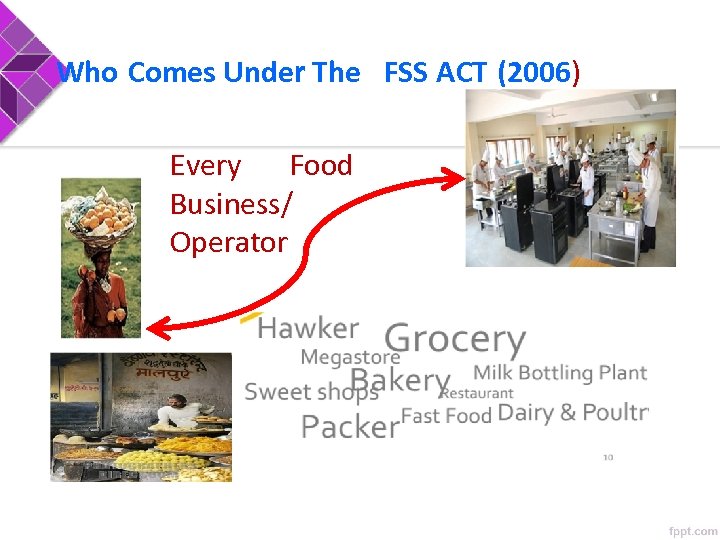 Who Comes Under The FSS ACT (2006) Every Food Business/ Operator
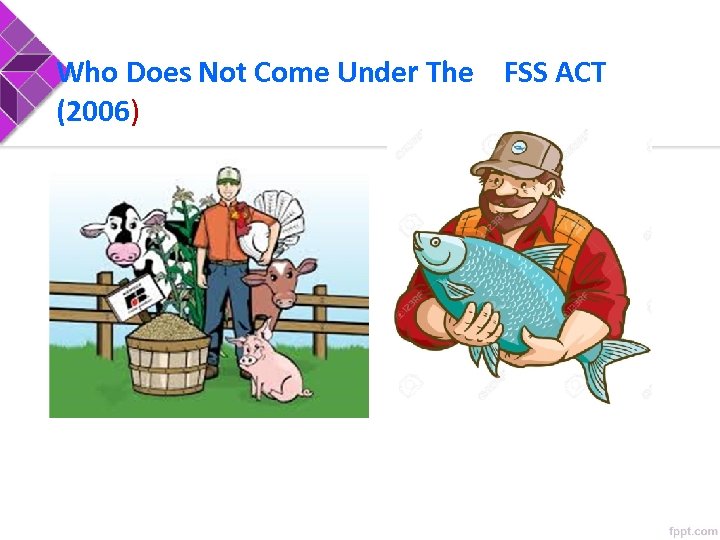 Who Does Not Come Under The FSS ACT (2006)
 SAFE FOOD-which is not unsafe • Section 3 (zz)- “unsafe food” means an article of food whose nature, substance or quality is so affected as to render it injurious to health- Poisonous or deleterious - Filthy, putrid, rotten, decomposed, or diseased animal or plant substance - Unhygienic processing-harmful 10
 CONTD…. . - Substitution-inferior or cheaper substance Addition of something not permitted Abstraction of constituents Coloured, flavoured, coatwd, powdered, polished-to conceal damage Coloring matter or preservatives-not specified Infected or infested with worms, weevils or insects Insanitary conditions Misbranded, sub-standard, extraneous matter pesticides or contaminants-excess 11
 RISK S 3 -zm to zq • Risk-probability of an adverse effect on the health of consumers • Risk analysis -Risk assessment- (i) hazard identification, (ii) hazard characterisation; (iii) exposure assessment, and (iv) risk characterisation -Risk communication -Risk management - evaluating policy alternatives…protection of health of consumers and for the promotion of fair trade practices…. 12
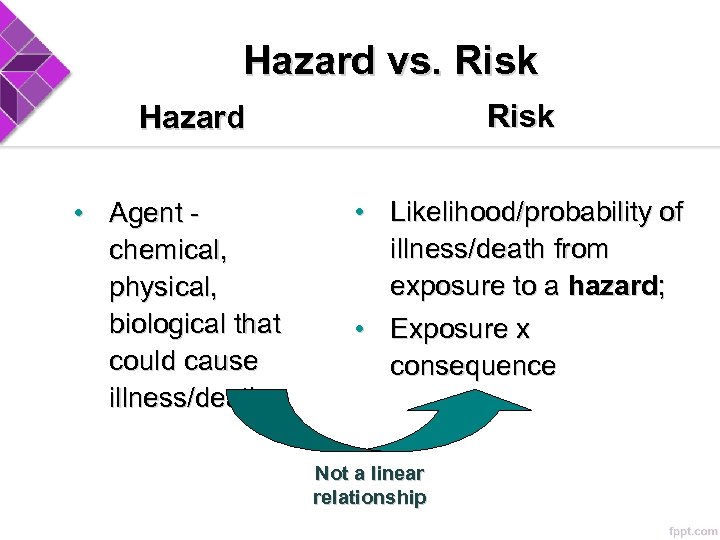 Hazard vs. Risk Hazard • Agent chemical, physical, biological that could cause illness/death • Likelihood/probability of illness/death from exposure to a hazard; • Exposure x consequence Not a linear relationship
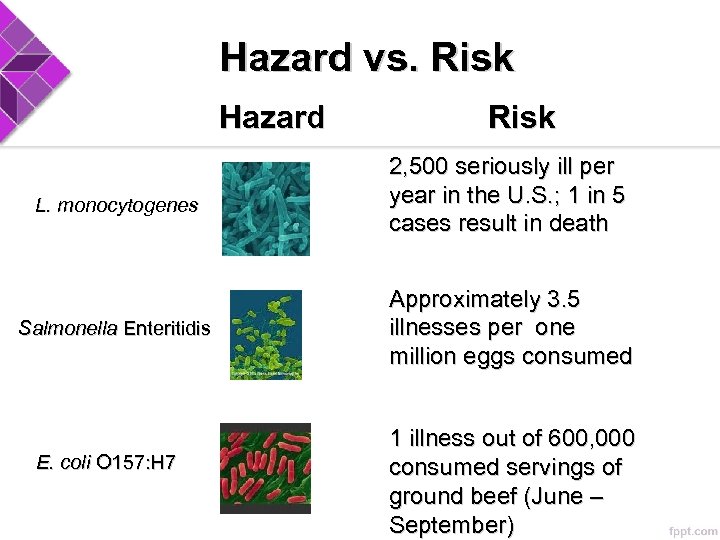 Hazard vs. Risk Hazard L. monocytogenes Salmonella Enteritidis E. coli O 157: H 7 Risk 2, 500 seriously ill per year in the U. S. ; 1 in 5 cases result in death Approximately 3. 5 illnesses per one million eggs consumed 1 illness out of 600, 000 consumed servings of ground beef (June – September)
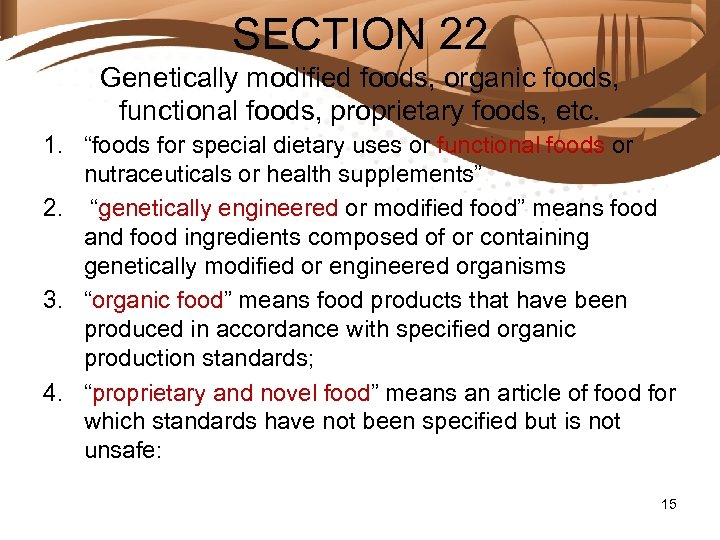 SECTION 22 Genetically modified foods, organic foods, functional foods, proprietary foods, etc. 1. “foods for special dietary uses or functional foods or nutraceuticals or health supplements” 2. “genetically engineered or modified food” means food and food ingredients composed of or containing genetically modified or engineered organisms 3. “organic food” means food products that have been produced in accordance with specified organic production standards; 4. “proprietary and novel food” means an article of food for which standards have not been specified but is not unsafe: 15
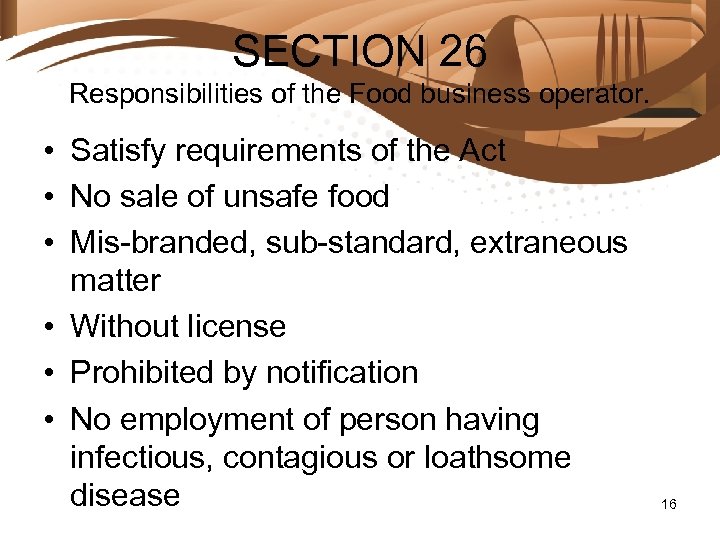 SECTION 26 Responsibilities of the Food business operator. • Satisfy requirements of the Act • No sale of unsafe food • Mis-branded, sub-standard, extraneous matter • Without license • Prohibited by notification • No employment of person having infectious, contagious or loathsome disease 16
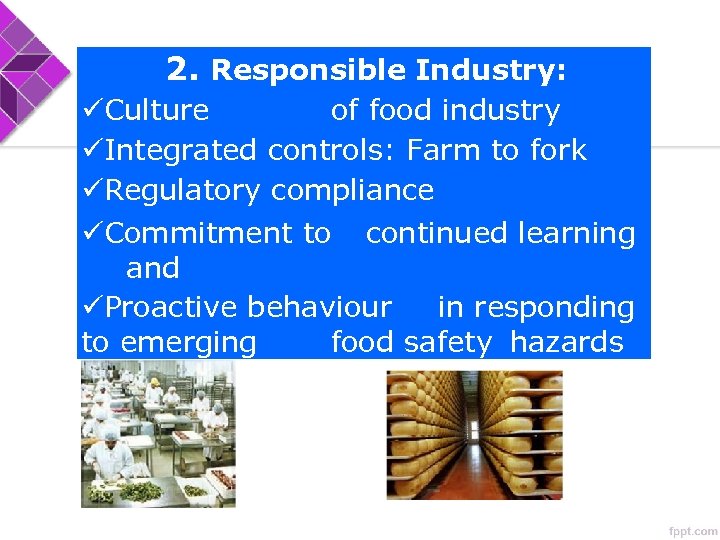 2. Responsible Industry: Culture of food industry Integrated controls: Farm to fork Regulatory compliance Commitment to continued learning and Proactive behaviour in responding to emerging food safety hazards
 SECTION 27 • Liability of the manufacturers, packers, wholesalers, distributors and sellers • date of expiry • unidentifiable manufacturer • unhygienically stored or handled 18
 SECTION 31 LICENSING AND REGISTRATION • No person shall commence or carry on any food business except under a license • Turnover-Rs. 12 Lakhs pa- Self-declared • Otherwise Registration • There are two list for grant of a license 1. Central List- where the license is granted by the FSSAI (Food Safety and Standards Authority of India) given in Schedule 1 of the Licensing Regulation. 2. State List- All others • Fee for Registration i- Rs. 100 per year. Fee for grant of License -Rs. 2, 000 to Rs. 5, 000 per year. 19
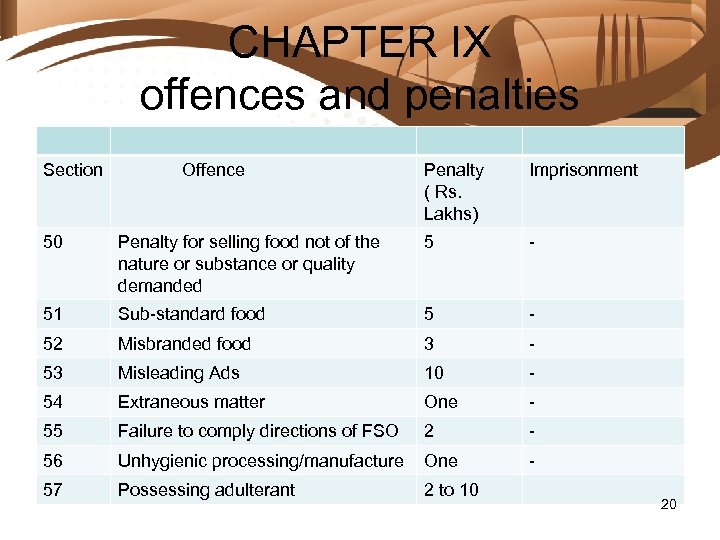 CHAPTER IX offences and penalties Section Offence Penalty ( Rs. Lakhs) Imprisonment 50 Penalty for selling food not of the nature or substance or quality demanded 5 - 51 Sub-standard food 5 - 52 Misbranded food 3 - 53 Misleading Ads 10 - 54 Extraneous matter One - 55 Failure to comply directions of FSO 2 - 56 Unhygienic processing/manufacture One - 57 Possessing adulterant 2 to 10 20
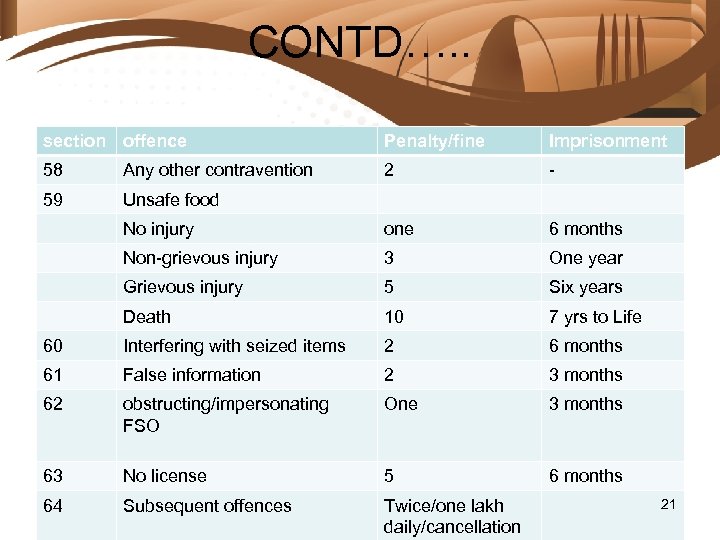 CONTD…. . section offence Penalty/fine Imprisonment 58 Any other contravention 2 - 59 Unsafe food No injury one 6 months Non-grievous injury 3 One year Grievous injury 5 Six years Death 10 7 yrs to Life 60 Interfering with seized items 2 6 months 61 False information 2 3 months 62 obstructing/impersonating FSO One 3 months 63 No license 5 6 months 64 Subsequent offences Twice/one lakh daily/cancellation 21
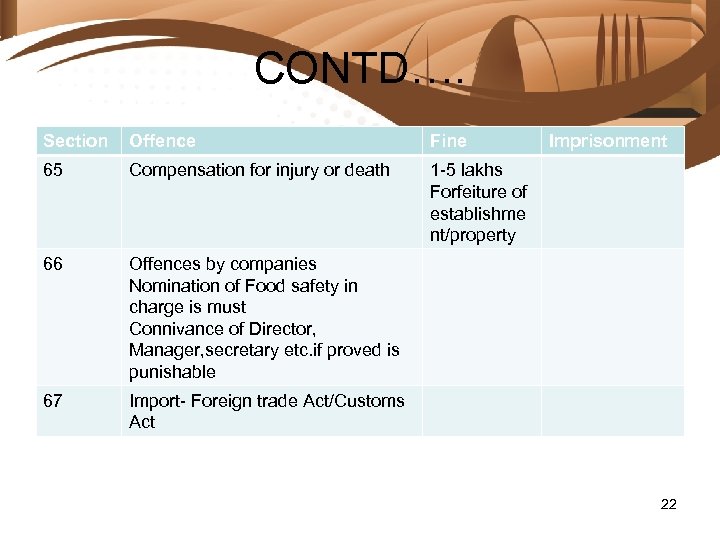 CONTD…. Section Offence Fine 65 Compensation for injury or death 1 -5 lakhs Forfeiture of establishme nt/property 66 Offences by companies Nomination of Food safety in charge is must Connivance of Director, Manager, secretary etc. if proved is punishable 67 Imprisonment Import- Foreign trade Act/Customs Act 22
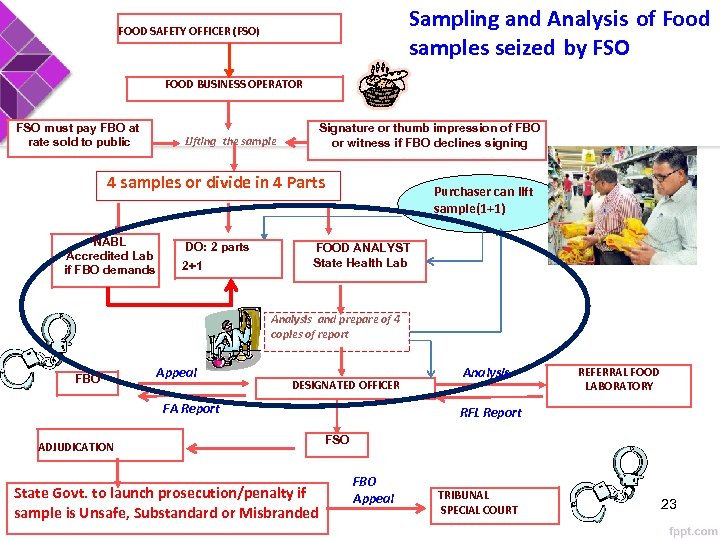 Sampling and Analysis of Food samples seized by FSO FOOD SAFETY OFFICER (FSO) FOOD BUSINESS OPERATOR FSO must pay FBO at rate sold to public Signature or thumb impression of FBO or witness if FBO declines signing Lifting the sample 4 samples or divide in 4 Parts NABL Accredited Lab if FBO demands DO: 2 parts 2+1 Purchaser can lift sample(1+1) FOOD ANALYST State Health Lab Analysis and prepare of 4 copies of report FBO Appeal DESIGNATED OFFICER FA Report ADJUDICATION State Govt. to launch prosecution/penalty if sample is Unsafe, Substandard or Misbranded Analysis REFERRAL FOOD LABORATORY RFL Report FSO FBO Appeal TRIBUNAL SPECIAL COURT 23
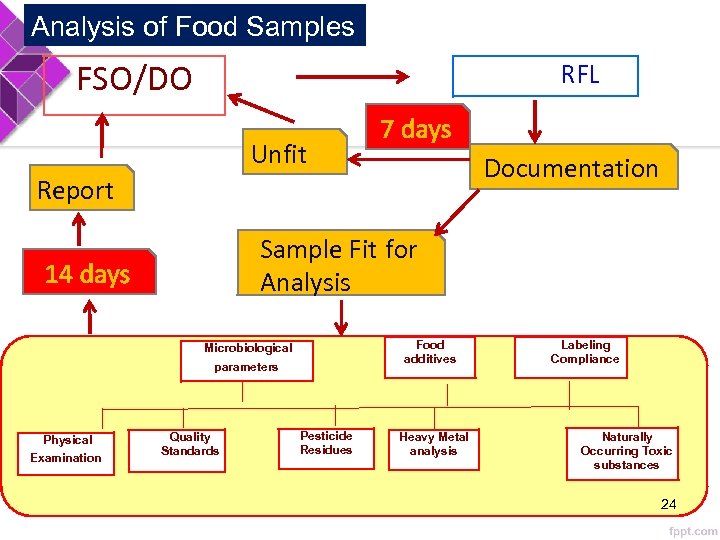 Analysis of Food Samples RFL FSO/DO Unfit Documentation Report Sample Fit for Analysis Food additives Microbiological parameters Physical Examination Quality Standards Pesticide Residues Heavy Metal analysis Labeling Compliance Naturally Occurring Toxic substances 24
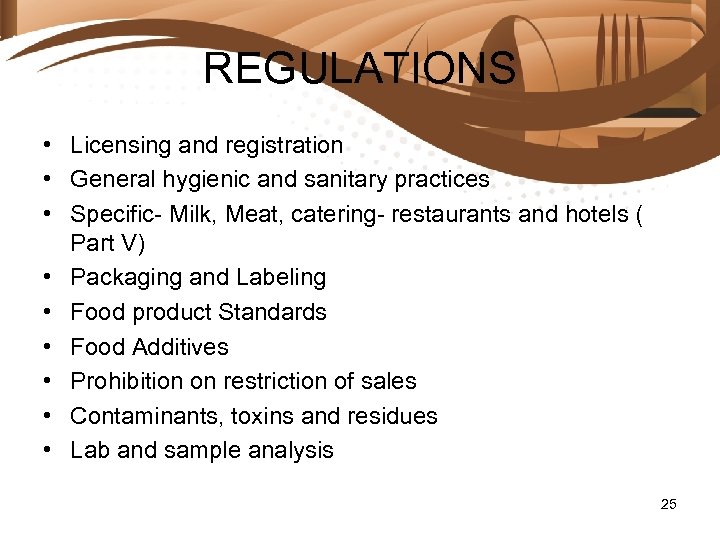 REGULATIONS • Licensing and registration • General hygienic and sanitary practices • Specific- Milk, Meat, catering- restaurants and hotels ( Part V) • Packaging and Labeling • Food product Standards • Food Additives • Prohibition on restriction of sales • Contaminants, toxins and residues • Lab and sample analysis 25
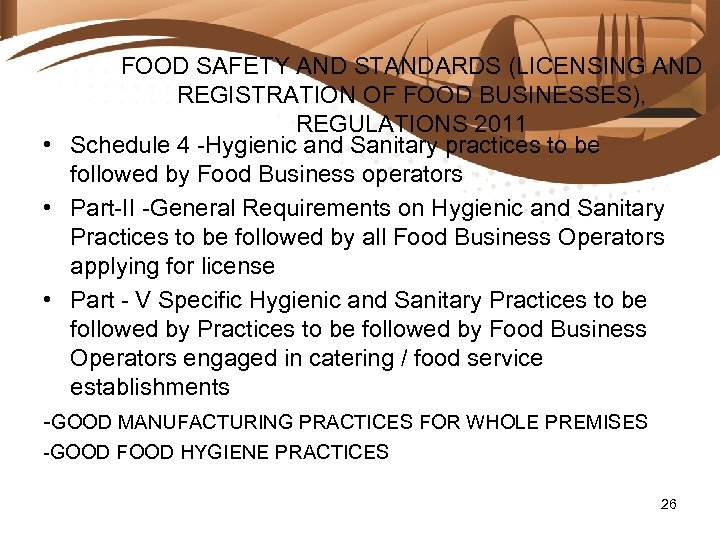 FOOD SAFETY AND STANDARDS (LICENSING AND REGISTRATION OF FOOD BUSINESSES), REGULATIONS 2011 • Schedule 4 -Hygienic and Sanitary practices to be followed by Food Business operators • Part-II -General Requirements on Hygienic and Sanitary Practices to be followed by all Food Business Operators applying for license • Part - V Specific Hygienic and Sanitary Practices to be followed by Food Business Operators engaged in catering / food service establishments -GOOD MANUFACTURING PRACTICES FOR WHOLE PREMISES -GOOD FOOD HYGIENE PRACTICES 26
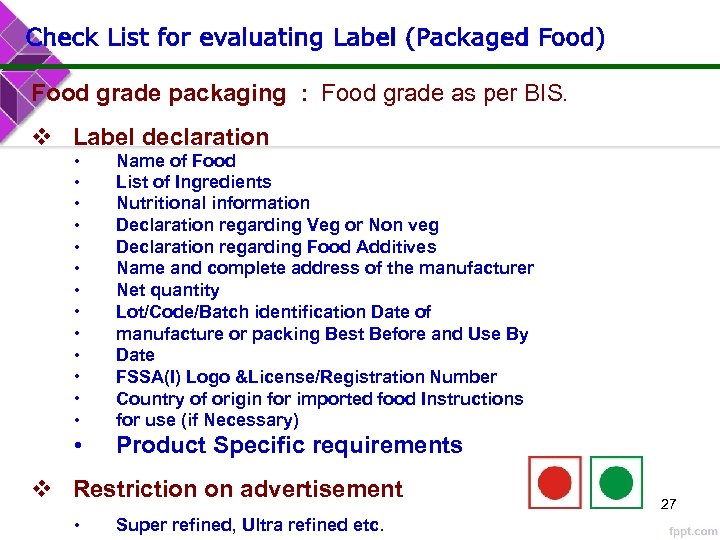 Food grade packaging : Food grade as per BIS. Label declaration • • • • Name of Food List of Ingredients Nutritional information Declaration regarding Veg or Non veg Declaration regarding Food Additives Name and complete address of the manufacturer Net quantity Lot/Code/Batch identification Date of manufacture or packing Best Before and Use By Date FSSA(I) Logo &License/Registration Number Country of origin for imported food Instructions for use (if Necessary) • Product Specific requirements Restriction on advertisement • Super refined, Ultra refined etc. 27
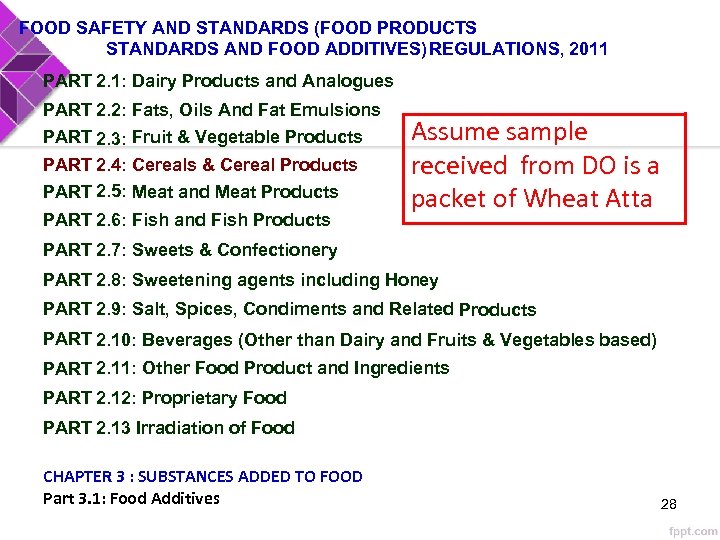 FOOD SAFETY AND STANDARDS (FOOD PRODUCTS STANDARDS AND FOOD ADDITIVES) REGULATIONS, 2011 PART 2. 1: Dairy Products and Analogues PART 2. 2: Fats, Oils And Fat Emulsions PART 2. 3: Fruit & Vegetable Products PART 2. 4: Cereals & Cereal Products PART 2. 5: Meat and Meat Products PART 2. 6: Fish and Fish Products Assume sample received from DO is a packet of Wheat Atta PART 2. 7: Sweets & Confectionery PART 2. 8: Sweetening agents including Honey PART 2. 9: Salt, Spices, Condiments and Related Products PART 2. 10: Beverages (Other than Dairy and Fruits & Vegetables based) PART 2. 11: Other Food Product and Ingredients PART 2. 12: Proprietary Food PART 2. 13 Irradiation of Food CHAPTER 3 : SUBSTANCES ADDED TO FOOD Part 3. 1: Food Additives 28
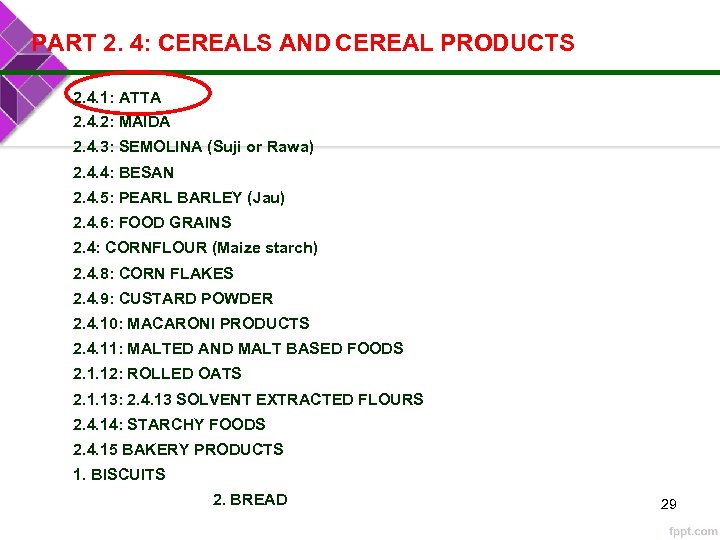 PART 2. 4: CEREALS AND CEREAL PRODUCTS 2. 4. 1: ATTA 2. 4. 2: MAIDA 2. 4. 3: SEMOLINA (Suji or Rawa) 2. 4. 4: BESAN 2. 4. 5: PEARL BARLEY (Jau) 2. 4. 6: FOOD GRAINS 2. 4: CORNFLOUR (Maize starch) 2. 4. 8: CORN FLAKES 2. 4. 9: CUSTARD POWDER 2. 4. 10: MACARONI PRODUCTS 2. 4. 11: MALTED AND MALT BASED FOODS 2. 1. 12: ROLLED OATS 2. 1. 13: 2. 4. 13 SOLVENT EXTRACTED FLOURS 2. 4. 14: STARCHY FOODS 2. 4. 15 BAKERY PRODUCTS 1. BISCUITS 2. BREAD 29
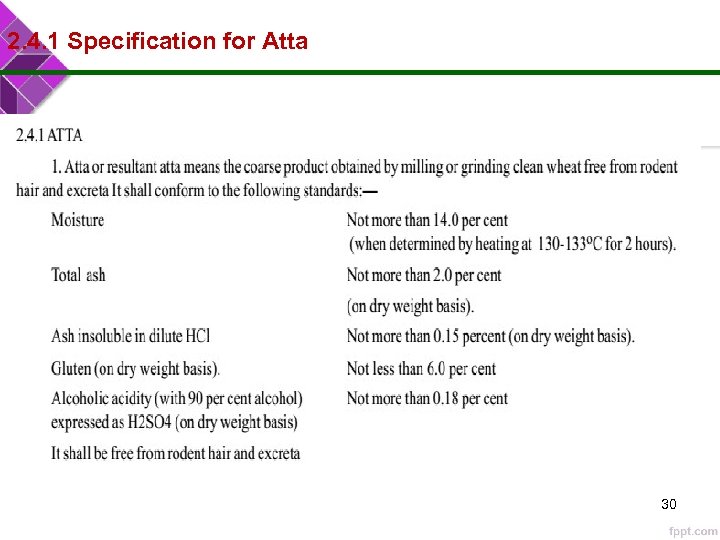 2. 4. 1 Specification for Atta 30
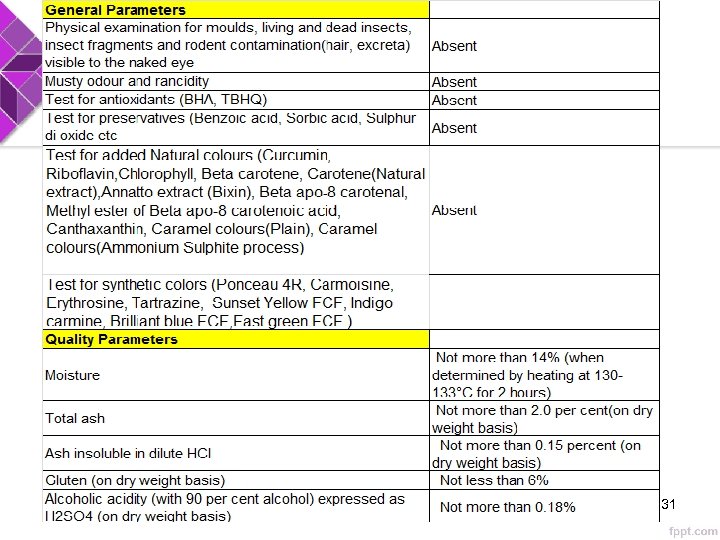 31
31
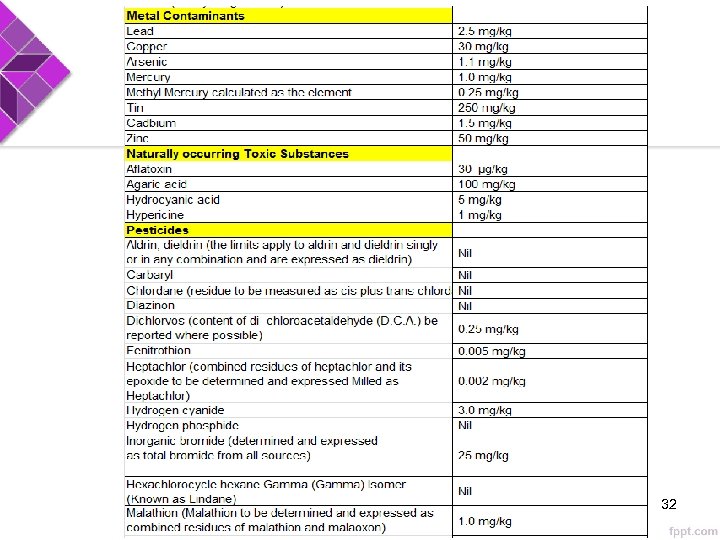 32
32
 33
33
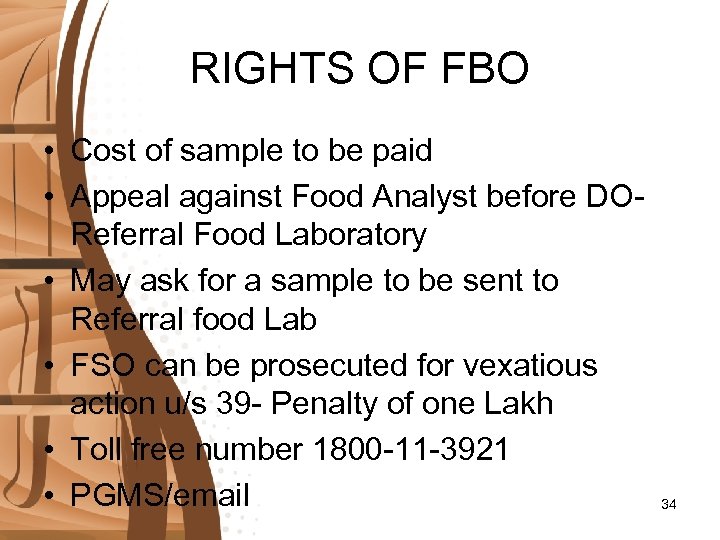 RIGHTS OF FBO • Cost of sample to be paid • Appeal against Food Analyst before DOReferral Food Laboratory • May ask for a sample to be sent to Referral food Lab • FSO can be prosecuted for vexatious action u/s 39 - Penalty of one Lakh • Toll free number 1800 -11 -3921 • PGMS/email 34
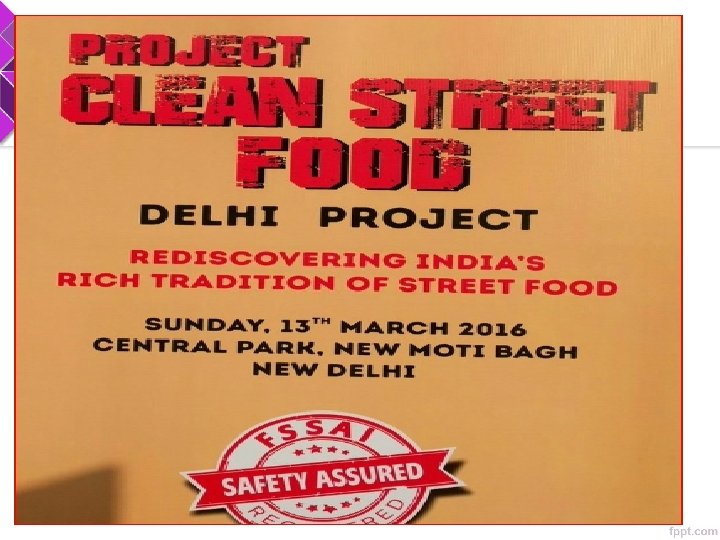
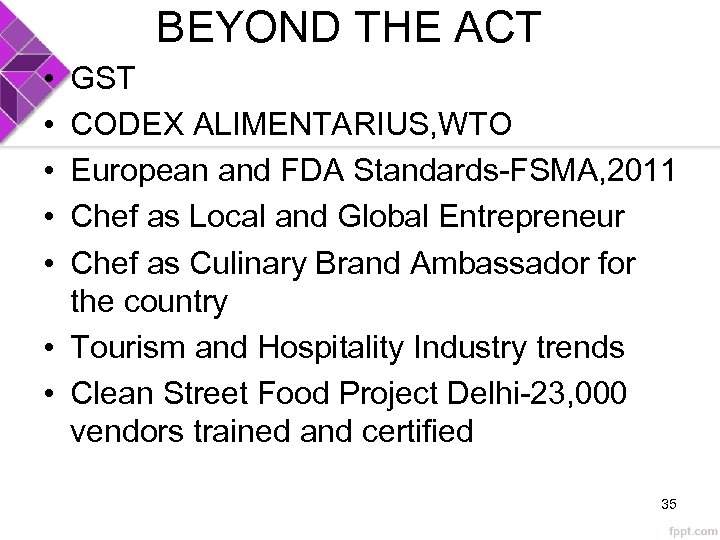 BEYOND THE ACT • • • GST CODEX ALIMENTARIUS, WTO European and FDA Standards-FSMA, 2011 Chef as Local and Global Entrepreneur Chef as Culinary Brand Ambassador for the country • Tourism and Hospitality Industry trends • Clean Street Food Project Delhi-23, 000 vendors trained and certified 35
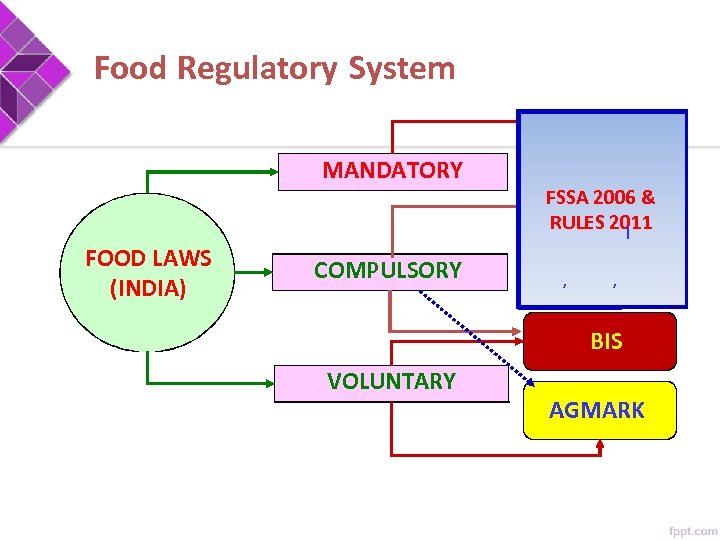 Food Regulatory System MANDATORY FOOD LAWS (INDIA) PFA FSSA 2006 & RULES 2011 l Essentia COMPULSORY Commodities Act , , FPO MMPO VOPO BIS VOLUNTARY AGMARK
 37
37
 38
38
 10 AT 10 SWASTHA AAHAR SWASTHYA KA AADHAR • The primary focus of the 10@10 initiative is to engage with stakeholders and consumers to create food safety culture in the country. This bouquet of 10 initiatives focused on safe and nutritious food at home, school, workplace, religious places, in trains and railway stations, in restaurants and other places. 39
 ECONOMIC PROSPECTS AND TRENDS 40
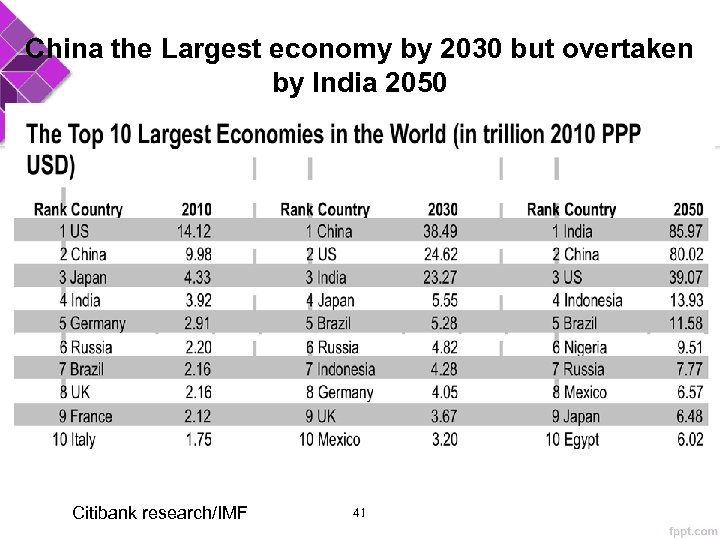 China the Largest economy by 2030 but overtaken by India 2050 Citibank research/IMF 41
 With stagnant domestic markets, global majors want to swamp emerging markets China, Indian Sub-continent, Brazil, South Africa and ASEAN region will add twice of US food markets in the next ten years. (Yum in India $ 1 bn, Yum in China 6300 restaurants in 950 cities - Franchise model Focus on global technologies, local products Asian buying power in USA – 1 Tn $ Low income Economies have less concern for food safety 42
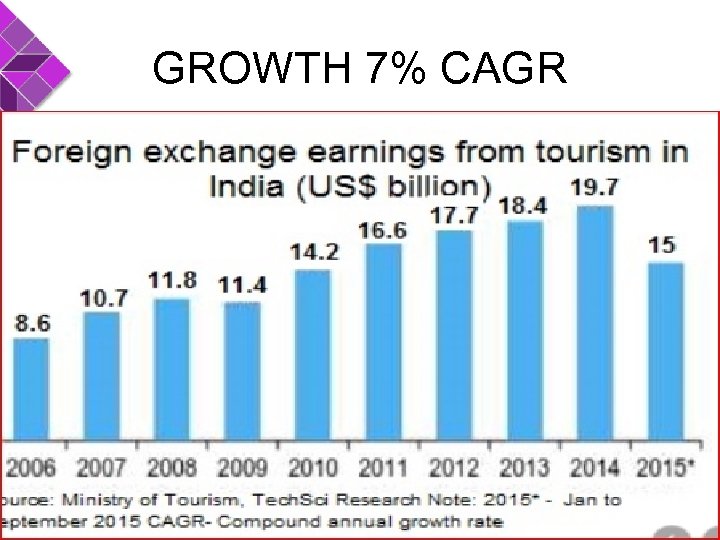 GROWTH 7% CAGR 43
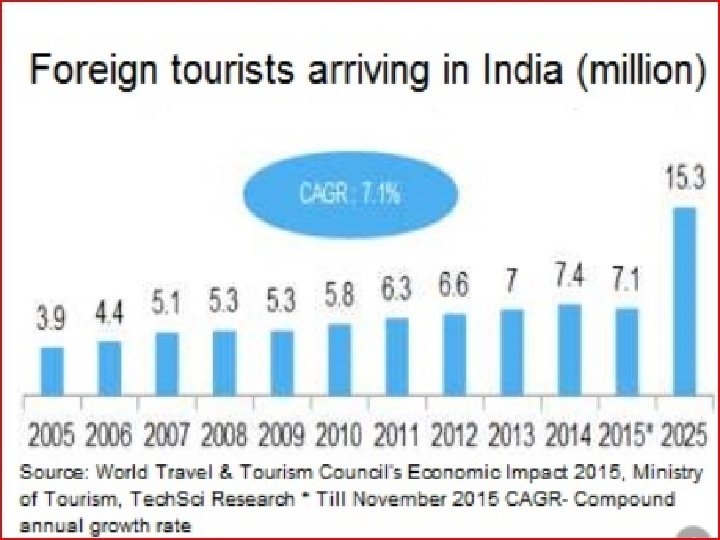 44
44
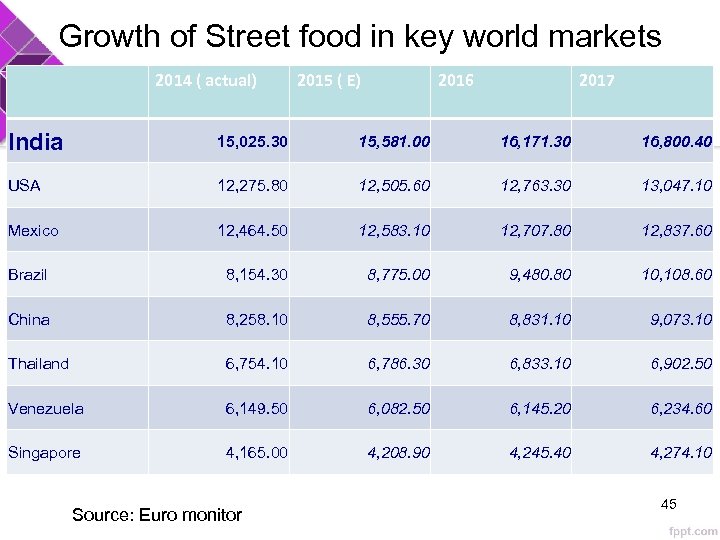 Growth of Street food in key world markets 2014 ( actual) 2015 ( E) 2016 2017 India 15, 025. 30 15, 581. 00 16, 171. 30 16, 800. 40 USA 12, 275. 80 12, 505. 60 12, 763. 30 13, 047. 10 Mexico 12, 464. 50 12, 583. 10 12, 707. 80 12, 837. 60 Brazil 8, 154. 30 8, 775. 00 9, 480. 80 10, 108. 60 China 8, 258. 10 8, 555. 70 8, 831. 10 9, 073. 10 Thailand 6, 754. 10 6, 786. 30 6, 833. 10 6, 902. 50 Venezuela 6, 149. 50 6, 082. 50 6, 145. 20 6, 234. 60 Singapore 4, 165. 00 4, 208. 90 4, 245. 40 4, 274. 10 Source: Euro monitor 45
 NEW CONCERNS IN FOOD SAFETY 46
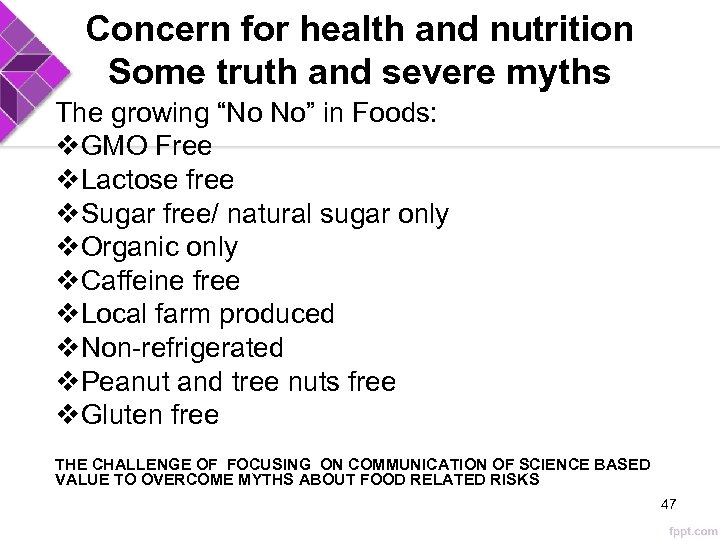 Concern for health and nutrition Some truth and severe myths The growing “No No” in Foods: GMO Free Lactose free Sugar free/ natural sugar only Organic only Caffeine free Local farm produced Non-refrigerated Peanut and tree nuts free Gluten free THE CHALLENGE OF FOCUSING ON COMMUNICATION OF SCIENCE BASED VALUE TO OVERCOME MYTHS ABOUT FOOD RELATED RISKS 47
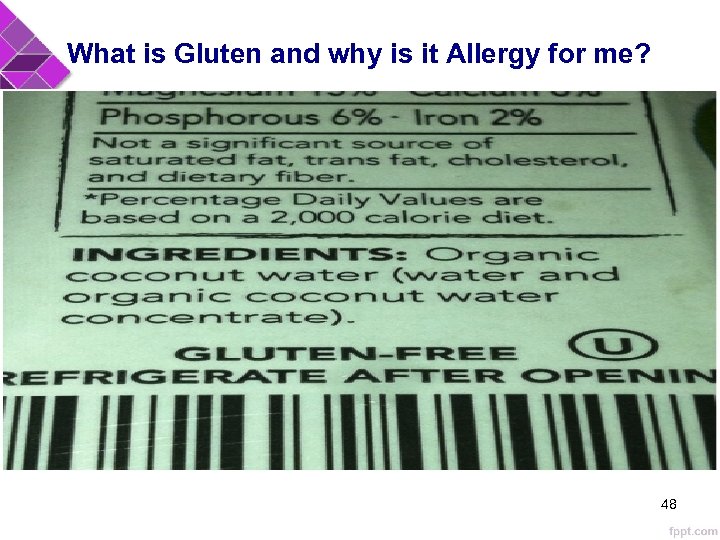 What is Gluten and why is it Allergy for me? 48
 Threats from global food movement and contamination • Surge in global food trade – 25% of global food production moves across the world. • As food travels so too disease vectors, consequently enhancing the risk of food borne diseases. • Global flow of products forces researchers to understand global needs and global regulations, not just local needs & local regulations. • Global flow of products place researchers under serious pressure to redefine epidemiological, surveillance and food safety assessment parameters. 49
 Growing threat of intentional contamination • Melamine, Peanut butter and Donot Dough contaminations triggers global debate on enterprise level food safety assessment process. • Cost of failure any where too high to absorb for the whole world. • ECONOMICALLY MOTIVATED ADULTERATION (EMA) ISSUE IN FOODS – COUNTERFEIT INGREDIENTS &FG – DRIVEN BY COST SAVING AND TARIFF REDUCTION GAME 50
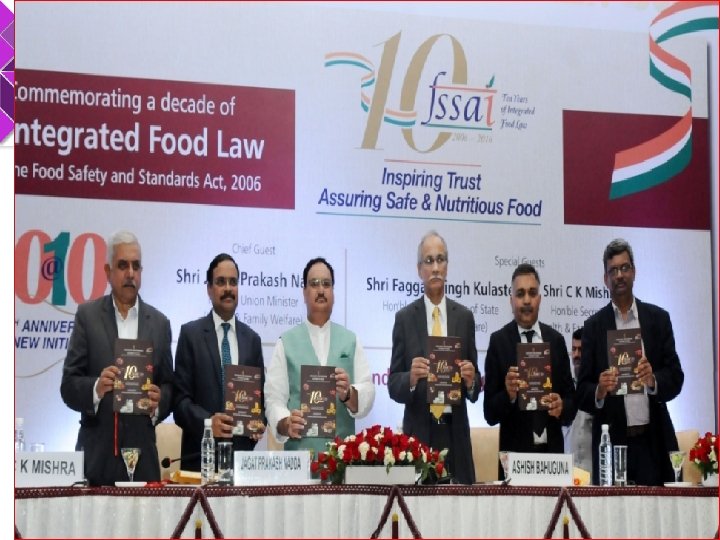
 FINALLY • SELF REGULATION-HAND HOLDING AND FACILITATION-10 ON 10 INITIATIVE • EASE OF DOING BUSINESS • NECESSARY COMPLIANCES- TO STAY COMPETITIVE AS CONSUMERS ARE AWARE • GLOBAL MARKET-COMPARATIVE ADVANTAGE 51
 QUESTIONS PLEASE 52
 HUNGRY? ? ? ? THANK YOU 53
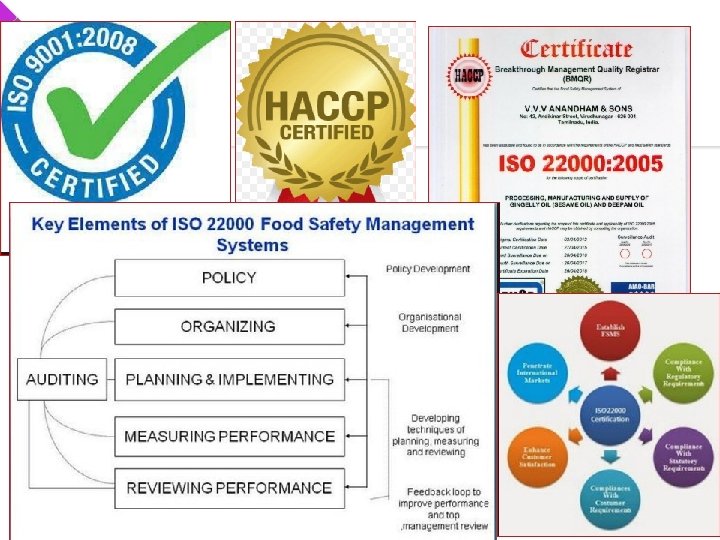
 SAFE WORDS TO REMEMBER • HACCP-Hazard analysis and critical control points -systematic preventive approach to food safety from biological, chemical, and physical hazards in production processes that can cause the finished product to be unsafe, and designs measurements to reduce these risks to a safe level. • HARPC-Hazard Analysis and Risk based Preventive Controls • GMP • GSP • ISO 22000 54
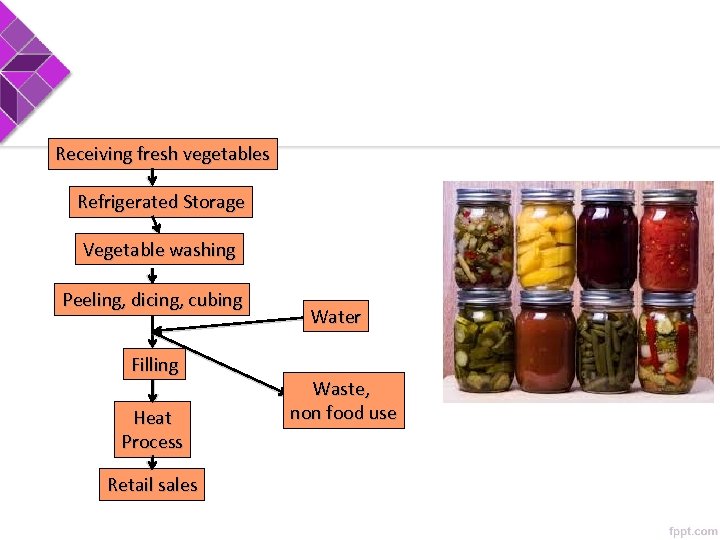 Receiving fresh vegetables Refrigerated Storage Vegetable washing Peeling, dicing, cubing Filling Heat Process Retail sales Water Waste, non food use
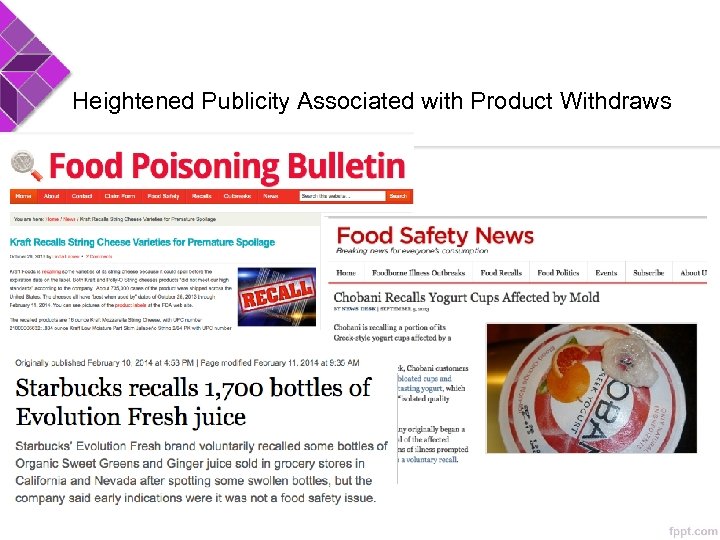 Heightened Publicity Associated with Product Withdraws
 Recall when ventures fail to comply is the utmost challenge FSSAI recall advisory When a Food Business Operator refuses to undertake a recall directed by the State Food Authority / Food Authority or where the State Food Authority / Food Authority has sufficient reasons to believe that a recall would not be effective, determines that a recall is ineffective, or discovers that a violation is continuing the State Food Authority/Food Authority will take appropriate action. The cost incurred by the State Food Authority / Food Authority for carrying out such actions will be recovered from the Food Business Operator responsible for such violation. (c)Vijayaraghavan, Cornell Sathguru 58
 59
59
 Food Safety Modernization Act (FSMA) signed by President Obama in 2011 brings sweeping changes to the Federal Food, Drug and Cosmetic Act of 1938 FSMA holds both domestic and Imported Foods higher standards with emphasis on Hazard Analysis and Risk-based Preventive Controls (HARPC)
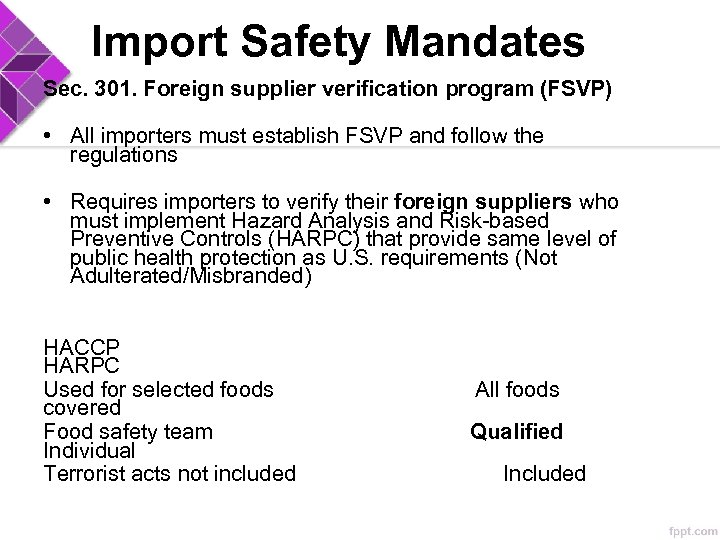 Import Safety Mandates Sec. 301. Foreign supplier verification program (FSVP) • All importers must establish FSVP and follow the regulations • Requires importers to verify their foreign suppliers who must implement Hazard Analysis and Risk-based Preventive Controls (HARPC) that provide same level of public health protection as U. S. requirements (Not Adulterated/Misbranded) HACCP HARPC Used for selected foods covered Food safety team Individual Terrorist acts not included All foods Qualified Included
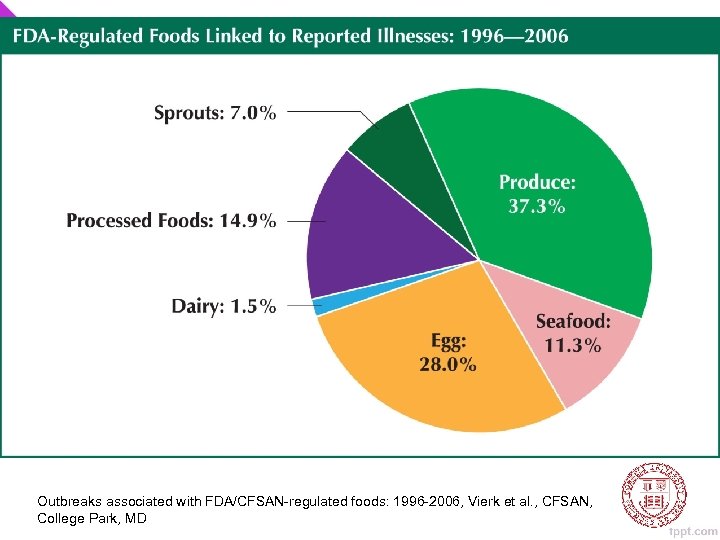 Types of produce associated with US outbreaks, 1996 -2006 (N=71) Outbreaks associated with FDA/CFSAN-regulated foods: 1996 -2006, Vierk et al. , CFSAN, College Park, MD
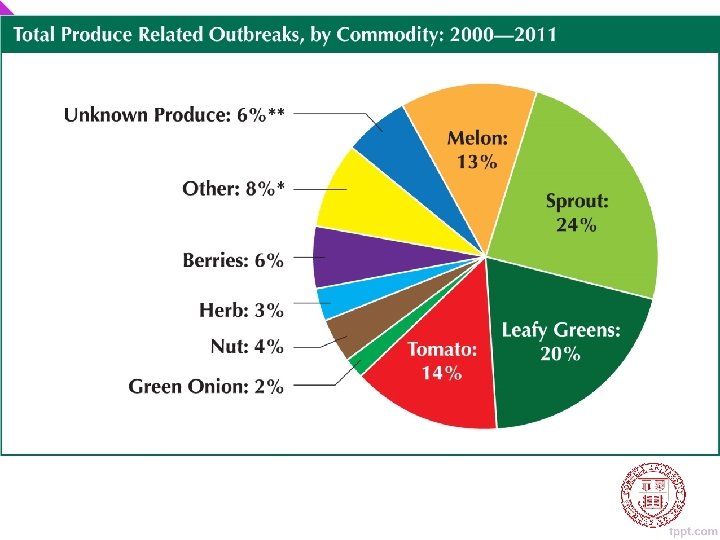 US FDA-regulated foods linked to reported illnesses, 1996 -2006 (N=23, 428 illnesses)
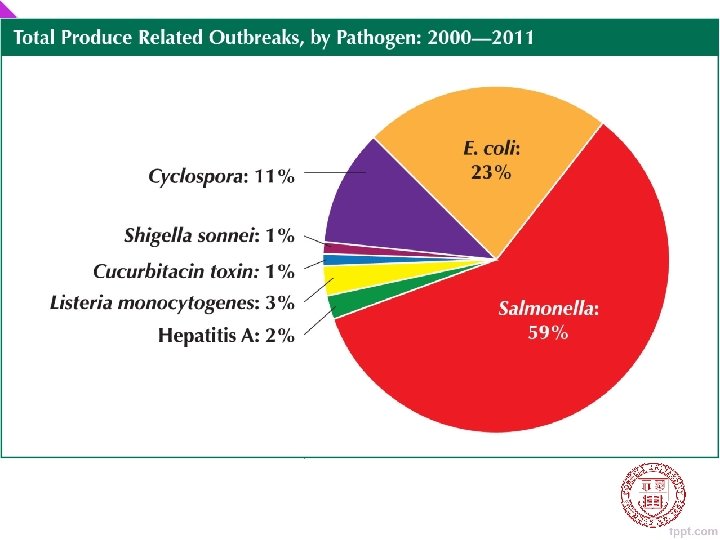 US FDA-regulated foods linked to reported illnesses, 1996 -2006 (N=23, 428 illnesses)
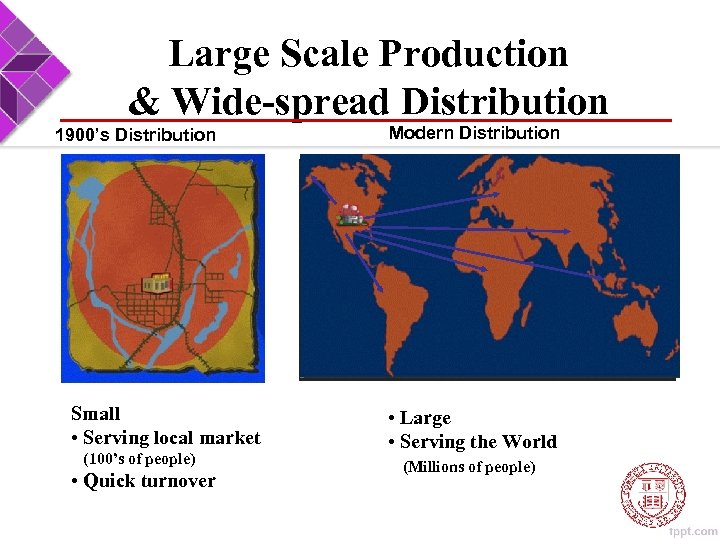 Large Scale Production & Wide-spread Distribution 1900’s Distribution Small • Serving local market (100’s of people) • Quick turnover Modern Distribution • Large • Serving the World (Millions of people)