


 Скачать презентацию Food miles Advantage or disadvantage What we are
6474e19e457e95f8798d98f53b531c49.ppt
- Количество слайдов: 11
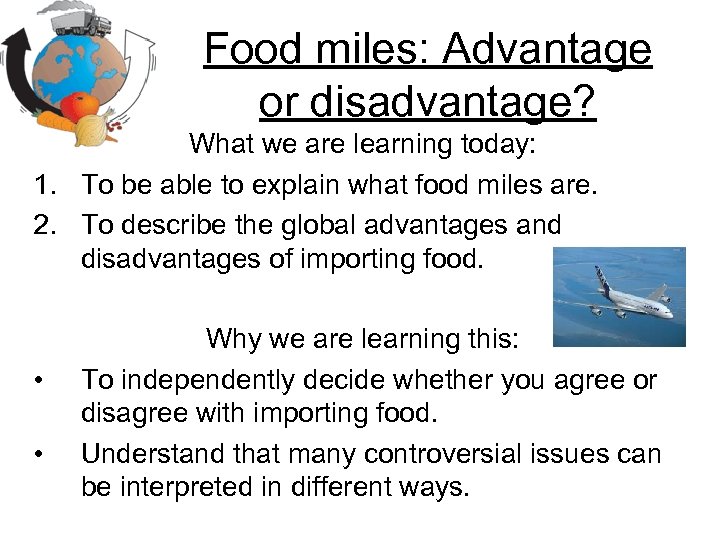 Food miles: Advantage or disadvantage? What we are learning today: 1. To be able to explain what food miles are. 2. To describe the global advantages and disadvantages of importing food. • • Why we are learning this: To independently decide whether you agree or disagree with importing food. Understand that many controversial issues can be interpreted in different ways.
 Stick this table into your books and complete the first two columns that last will be filled in at the end. What I know What I want What I have already. to know. learnt.
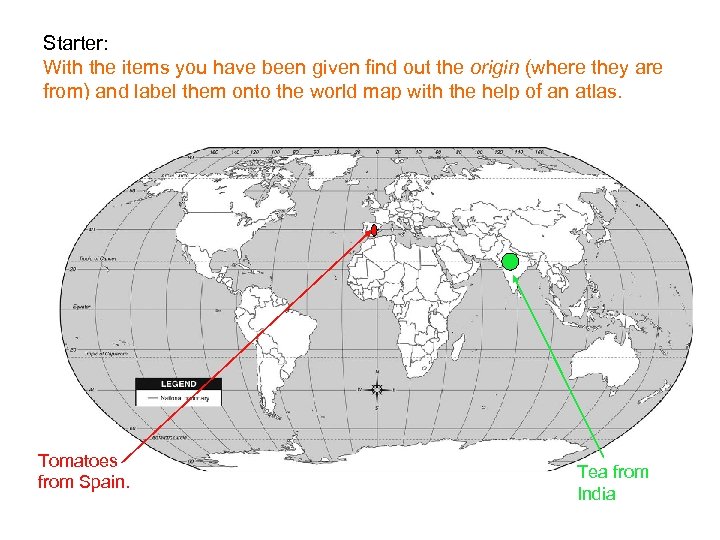 Starter: With the items you have been given find out the origin (where they are from) and label them onto the world map with the help of an atlas. Tomatoes from Spain. Tea from India
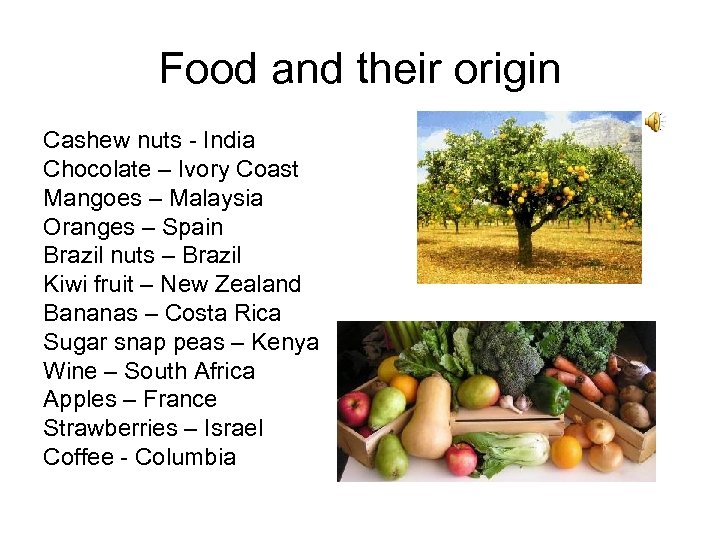 Food and their origin Cashew nuts - India Chocolate – Ivory Coast Mangoes – Malaysia Oranges – Spain Brazil nuts – Brazil Kiwi fruit – New Zealand Bananas – Costa Rica Sugar snap peas – Kenya Wine – South Africa Apples – France Strawberries – Israel Coffee - Columbia
 What can you remember about… Development Global Warming • What types of jobs do people in LEDCs have? • What is trade, how can it improve development? • What causes it? • What are the effects?
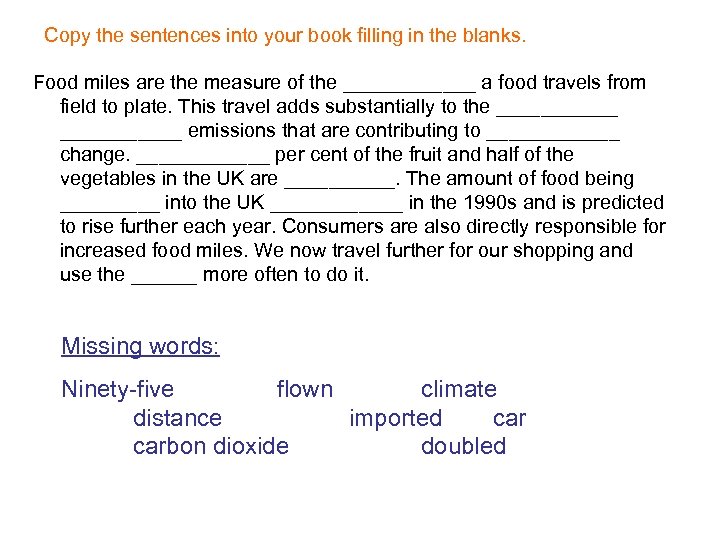 Copy the sentences into your book filling in the blanks. Food miles are the measure of the ______ a food travels from field to plate. This travel adds substantially to the ___________ emissions that are contributing to ______ change. ______ per cent of the fruit and half of the vegetables in the UK are _____. The amount of food being _____ into the UK ______ in the 1990 s and is predicted to rise further each year. Consumers are also directly responsible for increased food miles. We now travel further for our shopping and use the ______ more often to do it. Missing words: Ninety-five flown climate distance imported carbon dioxide doubled
 Sort the cards into the advantages and disadvantages of food miles. Advantages Disadvantages
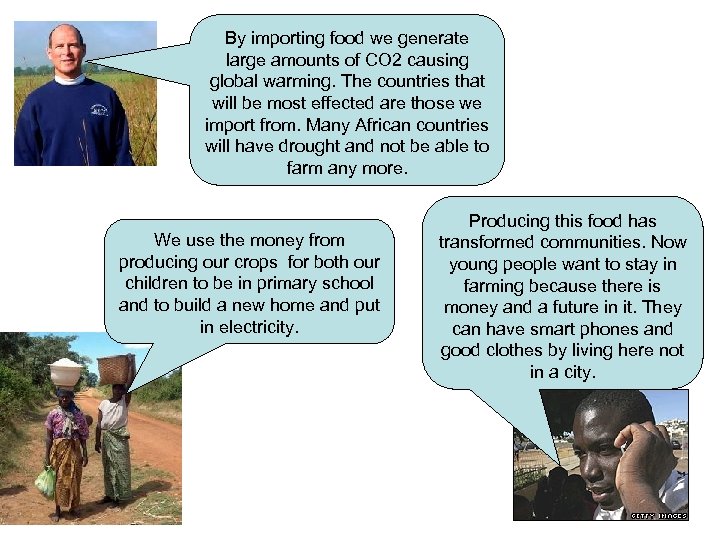 By importing food we generate large amounts of CO 2 causing global warming. The countries that will be most effected are those we import from. Many African countries will have drought and not be able to farm any more. We use the money from producing our crops for both our children to be in primary school and to build a new home and put in electricity. Producing this food has transformed communities. Now young people want to stay in farming because there is money and a future in it. They can have smart phones and good clothes by living here not in a city.
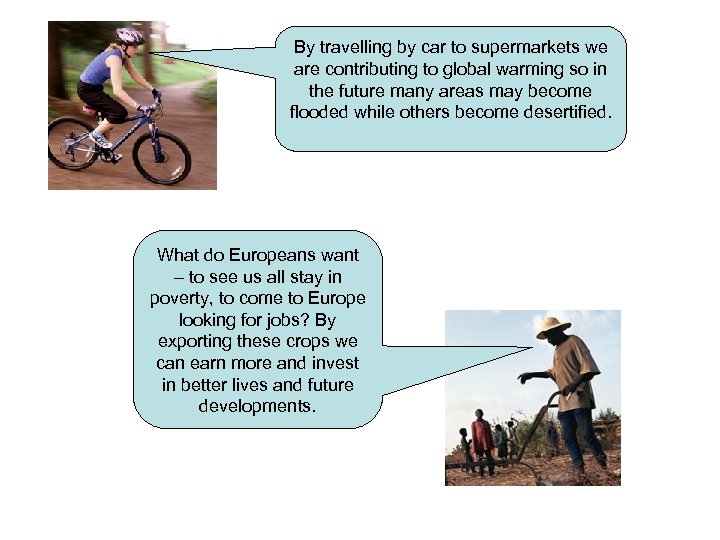 By travelling by car to supermarkets we are contributing to global warming so in the future many areas may become flooded while others become desertified. What do Europeans want – to see us all stay in poverty, to come to Europe looking for jobs? By exporting these crops we can earn more and invest in better lives and future developments.
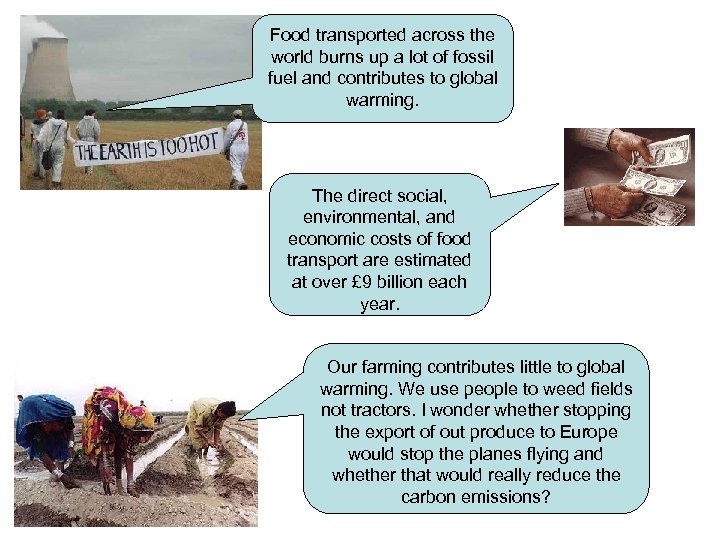 Food transported across the world burns up a lot of fossil fuel and contributes to global warming. The direct social, environmental, and economic costs of food transport are estimated at over £ 9 billion each year. Our farming contributes little to global warming. We use people to weed fields not tractors. I wonder whether stopping the export of out produce to Europe would stop the planes flying and whether that would really reduce the carbon emissions?
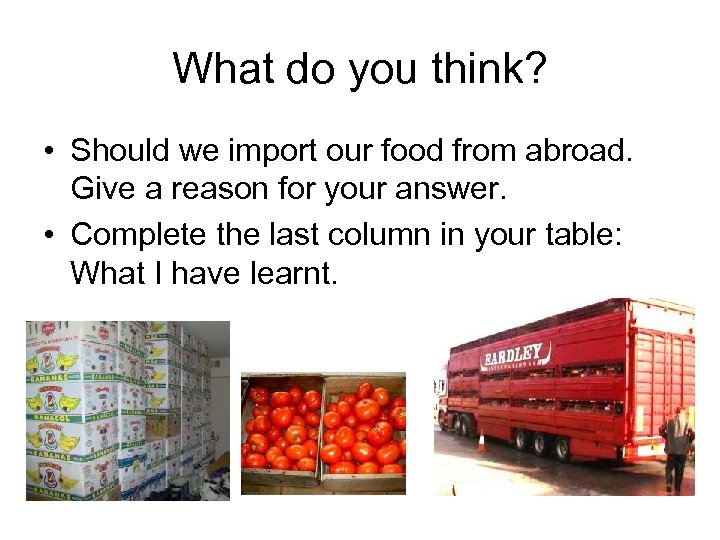 What do you think? • Should we import our food from abroad. Give a reason for your answer. • Complete the last column in your table: What I have learnt.