


 Скачать презентацию FOCUSING FRONT LINE STAFF ON PERFORMANCE GOALS ERICSA
31179ebbcc702d991b2708d2118e08d7.ppt
- Количество слайдов: 101
 FOCUSING FRONT LINE STAFF ON PERFORMANCE GOALS ERICSA 50 th Annual Training Conference & Exposition ▪ May 19 – 23 ▪ Hilton Orlando Lake Buena Vista, Florida
 Scott Cade, Moderator Regional VP Operations Xerox State & Local Solutions INTRODUCTION
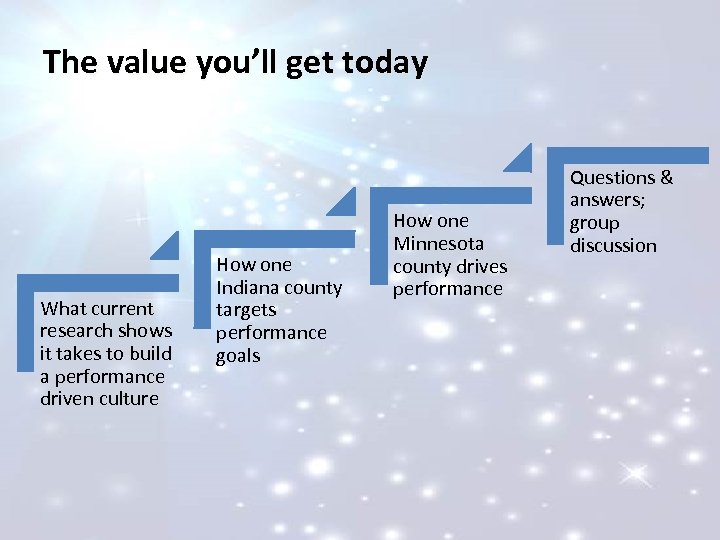 The value you’ll get today What current research shows it takes to build a performance driven culture How one Indiana county targets performance goals How one Minnesota county drives performance Questions & answers; group discussion
 Our speakers A workplace change consultant sharing research: • Rhonda Tamulonis, Auctor Corporation Two CSE program veterans sharing their experiences: • Ethan Mc. Kinney, St. Joseph County, Indiana • Melissa Rossow, Ramsey County, Minnesota
 Who are you? Please stand if you are: Please raise your hand if your goals include: q Front line staff (you work cases) q Front line supervisor (your staff work cases) q Other manager/trainer q Tasked with performance goals attained through the work of staff q 157 performance measures q Other client service measures q Non-client services workplace metrics
 Why are you here? Ø What are your goals? Ø What challenges are you experiencing? Ø What do you hope to take away from this workshop?
 Rhonda Tamulonis Director, Performance and Learning Services Auctor Corporation CREATING A PERFORMANCE DRIVEN CULTURE
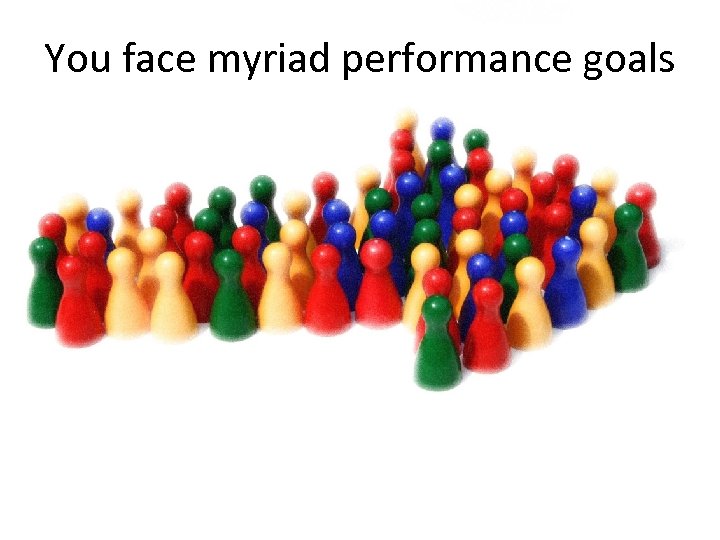 You face myriad performance goals
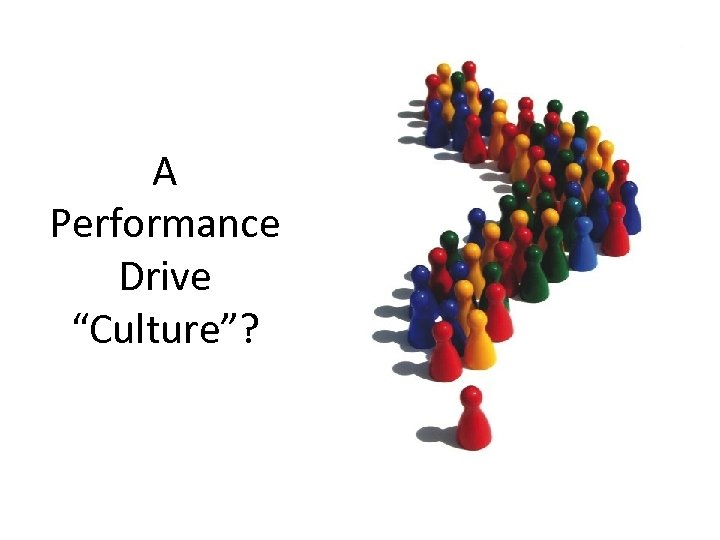 A Performance Drive “Culture”?
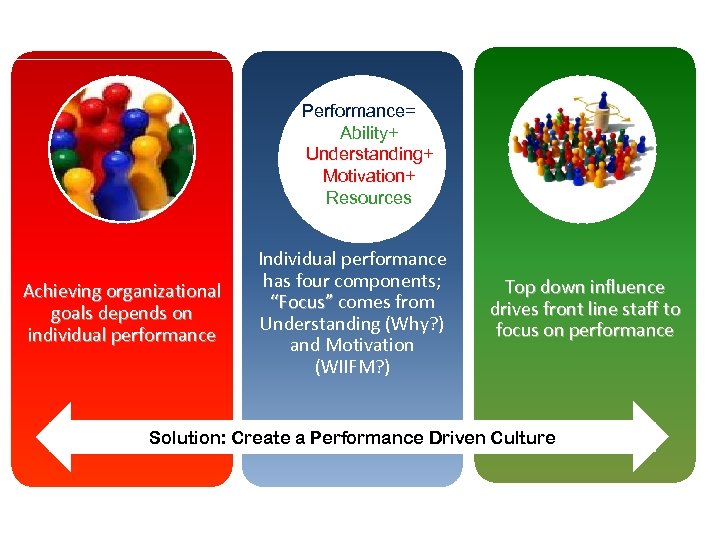 Performance= Ability+ Understanding+ Motivation+ Resources Achieving organizational goals depends on individual performance Individual performance has four components; “Focus” comes from “Focus” Understanding (Why? ) and Motivation (WIIFM? ) Top down influence drives front line staff to focus on performance Solution: Create a Performance Driven Culture
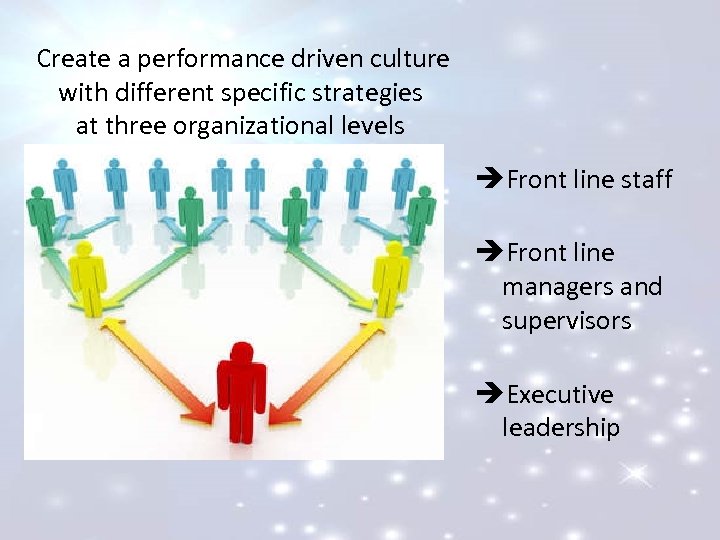 Create a performance driven culture with different specific strategies at three organizational levels èFront line staff èFront line managers and supervisors èExecutive leadership
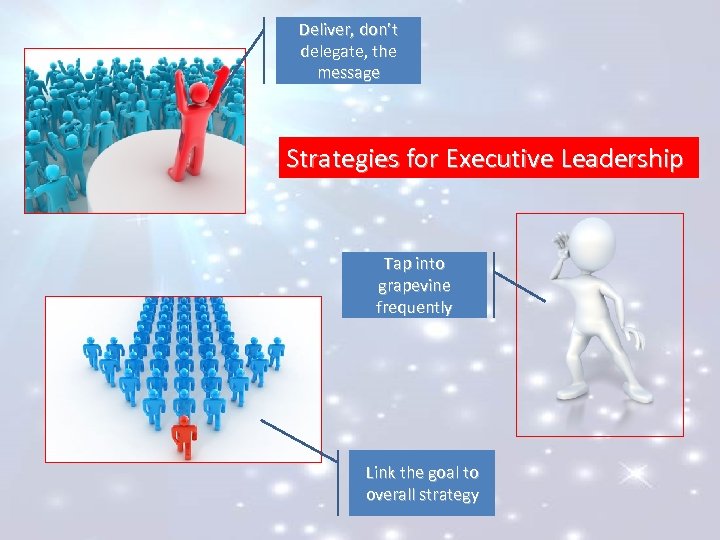 Deliver, don’t delegate, the message Strategies for Executive Leadership Tap into grapevine frequently Link the goal to overall strategy
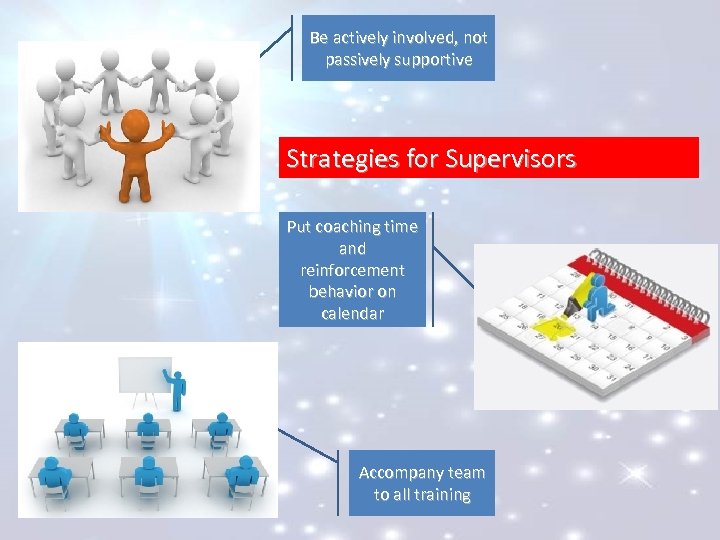 Be actively involved, not passively supportive Strategies for Supervisors Put coaching time and reinforcement behavior on calendar Accompany team to all training
 Assume a high degree of skepticism Strategies for Front Line Staff Tap into untapped talent Do not underestimate effort to change behavior
 Two final thoughts: Accountability • Holding everyone accountable is common sense but not common practice. Remember Mom’s Advice • Accountability is about setting “What you do speaks so loud, expectations I can’t hear what you say. ” • Visibility drives accountability
 Contact Information Rhonda Tamulonis Director, Performance & Learning Services Auctor Corporation 9225 Priority Way West Drive Indianapolis, IN 46240 www. auctor. com 317 -569 -7488 tamulonisr@auctor. com
 Ethan Mc. Kinney Director, Child Support Division St. Joseph County, Indiana THE INDIANA EXPERIENCE
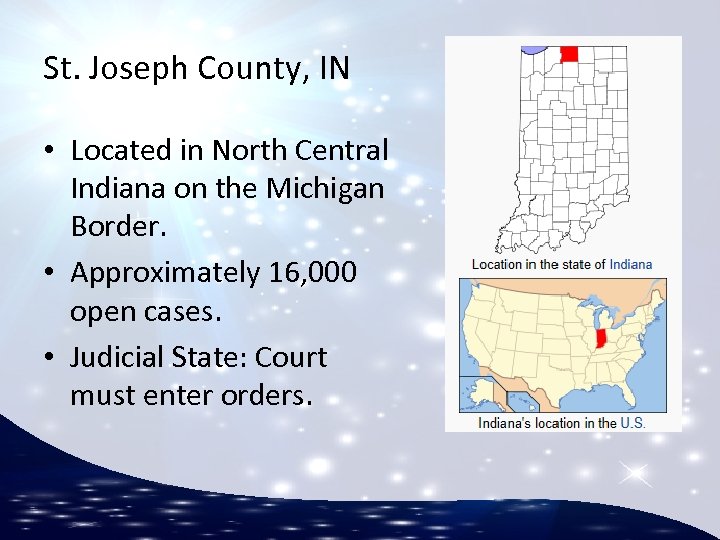 St. Joseph County, IN • Located in North Central Indiana on the Michigan Border. • Approximately 16, 000 open cases. • Judicial State: Court must enter orders.
 Educate your Elected Official • Elected official responsible for all divisions of his or her office. Child support likely one facet. • Focus on why Child Support is so crucial. – Number of cases likely impacts more constituents than any other issue. – Ties to family reduce recidivism. – Children who are supported less likely engage in crime. – Incentive Money to supplement the budgetary money! – Better success on the performance measures = more incentive money! – Improved benefit to local community.
 Improving the Performance Measures benefits the families you serve! • Improved Paternity Establishment Ratio = More children know both parents. • Improved Support Order Ratio = More parents responsible for supporting their children. • Improved Current Support Collections = More money in the household for families to live on. • Improved Cases Paying on Arrears = More money in household, recoups money custodial parent already spent to raise the child.
 Improving the Performance Measures increases your Incentive Payments! • The better you do on Performance Measures the more Incentive Money you will receive. • This money can be used to “supplement” your budget. • This incentive money will help you continue to improve your program. • Plan to spend your increased money to further increase performance.
 Identify Where you Stand • We started by a review of where we were on the performance measures. • We needed to improve in every performance measure. • Recognize where you can improve the quickest and most efficiently.
 Track Your Performance • Review your improvement weekly, monthly, quarterly and yearly. • Weekly review to determine if resources need to be allocated to a different area. • Monthly and Quarterly to track improvements. • Decide if projects are working or not.
 Things to Look For • Number of Cases • Amount due in current support. – If you charge weekly, be aware of 5 week months. • More or less cases owe arrears than last year. • Don’t just look at amount collected, but compare it also with amount due. You may collect less but if the amount due is also less this needs to be considered.
 Areas for Improvement • We started with Establishment because we can control those stats. • We realized our Enforcement stats stalled due to the increased amount of orders. Once we leveled out Establishment, Enforcement started to gain. • Now we focus on Enforcement.
 State Child Support Tracking • Review your State’s tracking system. – Can you run specialized reports? – Who can run them? – How specific can you be? • Don’t want to run an “all cases in arrears” report. That is too massive to be useful. • Do want to run specific focused reports.
 Don’t be too Broad • Don’t Run: – Cases not paying Full Current Support – Cases with no payment on arrears. • These are too broad and may be overwhelming. • Instead Run these: – FIDM Report, NCP/CP w/ Same Address, INIT Report, RESP Report, Incarceration Report.
 Reports to Improve Establishment • BOW Indicator Report (Born Out of Wedlock) • New Case/Case Type Change Report – Helps keep referrals in check. – Set appointments. – Work new cases. – Close any incorrect referrals. • New IV-D Cases – To catch any Divorce cases that “flipped” to open IV-D so you can work those cases.
 Reports to Improve Establishment • No Support Order Report – Started with 5500 cases on this report. Supervisor worked the report. 4 caseworkers split the caseload. – Took 1 year to work the whole report once: Update BOW indicator, set court dates, set stipulation appointments. – Down to only 700 cases this year.
 Reports to Improve Enforcement • Not paying in full, but paid in last 30 days. – Review why this is. • Send Employment Verification to get wage info. • Order too high based on income – Modify. • Does NCP have too many orders too high for income – Modify. • Enough hours/pay but Employer submitting wrong amount – Contact employer. • Tip Income position, contact NCP for cash payments from tips.
 Enforcement Reports • Cases that have arrears that haven’t made a payment in over 1 fiscal year. – Non-Payment Letter – Collection Calls – Administrative Enforcement – Administrative Hearings – Judicial Enforcement (per State Law) – Repeat until compliance
 Enforcement Reports • Party on case with a Date of Death – Take appropriate actions. • Kids nearing age of emancipation. – Multiple kids: modify. • Arrears only Cases – To obtain payments on arrears. • Cases with Zero Dollar CSUP but with arrears. – Incarcerated or Co-habitating address arrears.
 Interstate Reports • Indiana is Initiating State but CP is no longer in Indiana. – Check if another state may be working the case, review for closure or redirection. • Indiana is responding but AP no longer in Indiana. – Notify initiating State so they can locate AP and request we close our case.
 Incarcerated Project • Jail Outreach Education – Program in the County Jail to educate and meet with inmates. • Prison Modification – Proactively Modify incarcerated support orders based on your State statutes. – Streamline how you conduct the process.
 Prison Modification Process • Process – Review if Sentence is 6 months or greater. – File Motion to Modify due to Incarceration and proposed order. – Opposing party has 20 days to object or else the Court enters the Order. Follow your trial rules. – If no objection Motion granted without hearing.
 Prison Modification Results Very few Objections filed by Custodial Parents. Typically $0. 00 per week while incarcerated. IWO to prison for minimal amount for arrears. Arrears are not increasing due to order while in prison. • Arrears being paid down from State Pay. • •
 Support Order Education • Designate a staff member to educate parties on support orders. – Meet with Parties to new support orders to inform how and where to pay. Provide all addresses and payment options! – Notify to contact us if they lose a job, lose income. – Provide Job leads, job programs, Goodwill, etc. – Meet with NCPs who were recently released from custody.
 Support Order Education • Educate on all the ways to pay support. – Our participants may see any barrier as a reason not to pay. • Remove barriers by showing them all the ways they can pay. • In person at clerk’s offices: give addresses and hours. • By mail through our State Collection Unit, give address and information to put on Check. • Online or by phone – give all information on how to do so.
 Early Intervention • Run a report of all cases with new orders that haven’t paid in the first month, 2 months. – Contact those cases: Non-Payment Letters, Telephone. – Administrative Enforcement Tools – Administrative Hearings – Judicial Enforcement
 Modification Stipulations • We created in office Modification Stipulations. – Request for Modification Review set much quicker due to in office process. – Only the cases that require Court go to Court. – Stipulate to Modification, Deviations to $0. 00 CSUP due to Co-Habitation or alternatively plan for support. – Fulfills our mandatory “review and adjust” more efficiently.
 SSI/SSD Cases • Streamline a process for SSI or SSD Modifications. – SSI modifications we file just like our Prison Modifications to modify to $0. 00 and then Close. – Motion and proposed order, no hearing unless objection. – SSD Modifications either with Stipulation in office or Court hearing, put petitions on file pending determination to preserve retroactive dates.
 Proof • Paternity Establishment – 2005: 83% – 2012: 117. 19% – We were able to jump from 85. 5% in 2006 to 95. 3% in 2007 by aggressively targeting this. • Order Establishment – 2005: 72% – 2012: 95. 15%
 Proof • Current Support Collections – 2005: 46% – 2012: 59. 6% • Cases Paying On Arrears – 2005: 51% – 2012: 69. 42% • It is a gradual process over years of commitment but focus on the performance measures and they will improve.
 Contact Information Ethan Mc. Kinney Director St. Joseph County, IN Child Support Division 227 W Jefferson Blvd South Bend, IN 46601 emckinney@stjoepros. org 574 -235 -5023
 Melissa Rossow Assistant Director, Attorney’s Office Ramsey County, Minnesota THE MINNESOTA EXPERIENCE
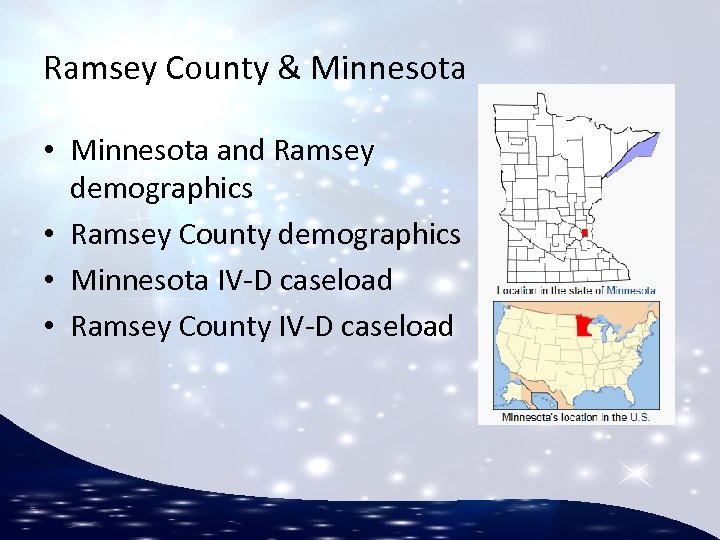 Ramsey County & Minnesota • Minnesota and Ramsey demographics • Ramsey County demographics • Minnesota IV-D caseload • Ramsey County IV-D caseload
 Ramsey County & Minnesota Ramsey County Challenges • Highest out-of-wedlock birthrate in Minnesota • Highest English as a 2 nd Language population in Minnesota • Higher poverty rate than both State and National averages • Budget cuts (more with less) • Workers stuck in the old way of doing business Statewide Challenges • Child support program deemed unconstitutional in 1999 • New child support guidelines with significant changes in 2007 • Archaic case management system, still at least 5 years out until a new system • Budget cuts (more with less) • Workers stuck in the old way of doing business
 More About Ramsey County • Ramsey County has the most challenging demographics in Minnesota • Ramsey County historically performs the worst in the Federal Performance Measures in Minnesota • Why am I here?
 Ramsey County Performance Improvement Projects • 4 Major Performance Improvement Projects – 2008 Child Support Strategic Plan – 2010 Business Model – 2012 Enforcement Project – 2012 Child Support Strategic Plan • All Staff were invited to participate in the planning – Over 75% participated
 2008 Strategic Plan • Vision Statement – Ramsey County Child Support: • Working to meet the needs of children • A knowledgeable approach to child support that combines efficiency, diversity, innovation, and high performance • We never stop working for children
 2008 Strategic Plan • Areas of Concentration: – Communication – Training – Staff Performance – Diversity – Federal and State Performance Measures – Business Model
 2010 Business Model Project • Objective: – Adopt a Business Model that maximizes the efficient and productive use of resources • Goals: – Increase fluidity of staff – Establish performance standards – Improve performance – Improve job satisfaction
 2010 Business Model Project • Accomplishments: • Shifted staff to focus on establishment without harming enforcement performance • More orders established and modified • Reduced handoffs and “hot potatoes” • Performance standards established • Performance appraisals being done regularly
 2012 Enforcement Project • Fine tuning of 2010 Business Model – Focus on enforcement – 2010 Business Model did not work as well for Order Enforcement • Need to move on • Caseloads divided differently
 2012 Enforcement Project • Objective – Implement the 2010 Business Model in enforcement function • Goals – Implement the 2010 Business Model in enforcement function, while: • Identifying the barriers to original implementation • Making adjustments as needed
 2012 Enforcement Project • Regular Enforcement Caseload Divided Differently: – Paying caseload changes – Nonpaying caseload changes – Rapid Response – Contempt
 2012 Enforcement Project • Accomplishments – Still early, just implemented in 4 th Quarter 2012 – In 1 st quarter 2013, doubled the number of new contempt cases pursued in 2012 – Held first after hours, in-house education session – Transition cases being worked – Communication about performance – Case plan meetings and more collaboration
 Special Projects Team • Team of workers who dive in, figure it out, develop a process, and train others (existed since 2008) • Recent examples: – Cleanup projects – Streamlined modifications – Partnership development
 Multiple Caseloads, Performance Standards and Reports • Multiple caseloads for each worker: – Work the automated worklists in batches – Determine which cases can be batched or can be worked faster – Keep statistics and report on statistics – Identify where a particular worker needs help – Identify where a particular worker is doing well
 Multiple Caseloads, Performance Standards and Reports • Performance Standards – Clear communication about expectations – Real and updated data to identify where a particular worker needs help or is doing well – Objective and not subjective – Good for morale
 Multiple Caseloads, Performance Standards and Reports • Reports – Support caseload distribution and performance standards
 Multiple Caseloads, Performance Standards and Reports • How our office is divided – Intake and Case Preparation • Known elsewhere as “Case initiation” – Order Setting • Known elsewhere as “Establishment” – Review and Modification • Known elsewhere as “Review and Adjust” – Order Enforcement • Known elsewhere as “Enforcement”
 Intake and Case Preparation • 6 caseloads per worker 1. 2. 3. 4. 5. 6. New cases that need to be assessed Paternity cases Establishment cases Paternity and Establishment cases in sanction Cases that meet case closure criteria Special Projects
 Intake and Case Preparation • Performance Standards – Number of cases in caseload – Timeframes to work the cases – Timeframes for moving cases set
 Intake and Case Preparation • Example of Helpful Reports – Reports to determine compliance with performance standards set – Caseload sizes – “Round Robin” case transfer reports – CP and NCP out of state and no order – CP was PA and now is NPA – Cases sanctioned more than 2 months – Children under the age of 3 with no order
 Intake and Case Preparation • Accomplishments – Changed the name from “intake” to reflect the post 2010 Project expectation that cases leave this unit with more work done – Decreased number of days from initiation to moving or closing the case to 30 days – Increased number of cases moving monthly – Standardized case notes when moving cases on to other parts of the office (for better tracking) – Problem case feedback from other units
 Order Setting • 4 caseloads per worker 1. Cases ready to draft pleadings 2. Cases with attorney after drafting and out for service of process 3. Cases waiting for the next step 4. Special Projects
 Order Setting • Performance Standards - Depending on whether worker goes to court or not, monthly standards set for number of: – New petitions or motions drafted – Amended petitions or motions drafted – Default orders drafted – Orders loaded – Hearings attended – Documents returned from attorneys unsigned
 Order Setting • Example of Helpful Reports – Reports to determine compliance with performance standards set – Caseload sizes – Worklist (tasks) reports - to see how up to date the workers are on their tasks for each of their 4 caseloads – Open LETL - no activity in 6 months report – Service of process complete and no resolution report
 Order Setting • Accomplishments – A sustained increase in establishment and paternity pleadings and motions drafted and orders obtained • Not relying on overtime projects to reach goals – A baseline standard to use when discussing performance that is understandable and acceptable by all of the workers – Clear communication about expectations
 Review and Modification • 1 caseload per worker – This is because the actual case assignment remains with the enforcement worker
 Review and Modification • Performance Standards – Time from referral to drafting – Time from drafting to order – Number of motions drafted – Number of default orders drafted – Number of orders loaded – Number of documents returned from attorneys unsigned
 Review and Modification • Example of Helpful Reports – Reports to determine compliance with performance standards set – Caseload number reports – Open REAM – Worklist (tasks) reports - to see how up to date the workers are on their tasks for their caseloads – Open LETL - no activity in 6 months report
 Review and Modification • Accomplishments – 25% increase in completed modifications from 2011 to 2012 – 15% increase in in-house agency referrals – Tracking status spreadsheet on shared computer drive has cut down the number of questions about cases
 Enforcement • Multiple caseloads per worker - varies by function – Paying – Nonpaying – Rapid Response – Contempt – Language Specific – Medical – Interstate
 Enforcement • Paying – 3 caseloads per worker 1. Primary (most cases) 2. Companion cases with $0. 00 monthly accruals (i. e. relative caretaker cases) or other specially identified cases 3. Companion cases with contempt orders
 Enforcement • Nonpaying – 5 caseloads per worker 1. Primary 2. Locate – but not on office locate caseload yet 3. Contempt – working cases before transfer to contempt team 4. $0. 00 cases – cases that need to be modified due to incarceration, institutionalization or SSI 5. Paying – cases that are now paying and need to be transferred to paying
 Enforcement • Rapid Response – 3 caseloads per worker 1. New cases – newly transferred cases from paying, nonpaying, or contempt 2. Screened cases – working cases 3. Hold cases – Cases that are on hold for some reason (i. e. modification order pending, so not appropriate to be in paying or nonpaying)
 Enforcement • Contempt – 3 caseloads per worker 1. New Order to Show Cause referrals 2. Cases that have a Contempt order and need to be monitored for a Motion to Revoke 3. Cases that already have a motion to revoke/difficult or complicated cases
 Enforcement • Language Specific – 4 -7 caseloads per worker 1. 2. 3. 4. 5. 6. 7. 8. LS Paying LS Nonpaying English paying LS Paying with a Contempt order Paying with a valid SSN (Spanish only) Paying without a valid SSN (Spanish only) Nonpaying without a valid SSN (Spanish only)
 Enforcement • Medical – 3 caseloads for each worker 1. Party ordered to carry health care coverage 2. No medical terms in the order 3. Medical obligation only cases
 Enforcement • Interstate – Initiating – 5 caseloads per worker 1. 2. 3. 4. 5. Incoming cases Waiting for acknowledgment cases Paying cases Nonpaying cases $0. 00 or Locate cases
 Enforcement • Interstate – Responding – 4 caseloads per worker 1. 2. 3. 4. New or Paying cases Nonpaying cases $0. 00 cases Contempt cases
 Enforcement • Performance Standards (depending on function) – Number of cases on caseload – Number of cases paying – Amount collected – Collection percentage – Percent of paying cases – Contempt OSC and Contempt MTR Referrals
 Enforcement • Performance Standards (depending on function) – Amount collected from certain enforcement remedies (contempt, FIDM) – Incarcerated Review and Modifications – Number of arrears managements referred – Amount of arrears removed from debt load through arrears management
 Enforcement • Example of Helpful Reports – Reports to determine compliance with performance standards set – Open LETL - no activity in 6 months report – Service of process complete and no resolution report – Case plans – Caseload number report
 Enforcement • Example of Helpful Reports – Orders loaded – Phone contact – Collections percentage – Worklist (tasks) reports - to see how up to date the workers are on their tasks for their caseloads
 Enforcement • Accomplishments – Contempt cases increase – Workers are aware of their goals and their performance – Workers are aware of the team’s goals and performance (so they can compare their individual goals and performance) – Improved performance by 1 -2%, and it appears to be realistic to continue to improve
 Lessons Learned • Performance Appraisals Help – Regular, consistent – Real, measurable, objective data – Rewarding, honoring success – Goal setting for improvement – Resources/tools
 Lessons Learned • Quarterly meetings help – 3 other meetings other than the annual performance appraisal scheduled with supervisor – Staff driven - what do they want to talk about – Performance standards information provided – The good, the bad, and the ugly; and where do we go from here – Review of goals at each meeting
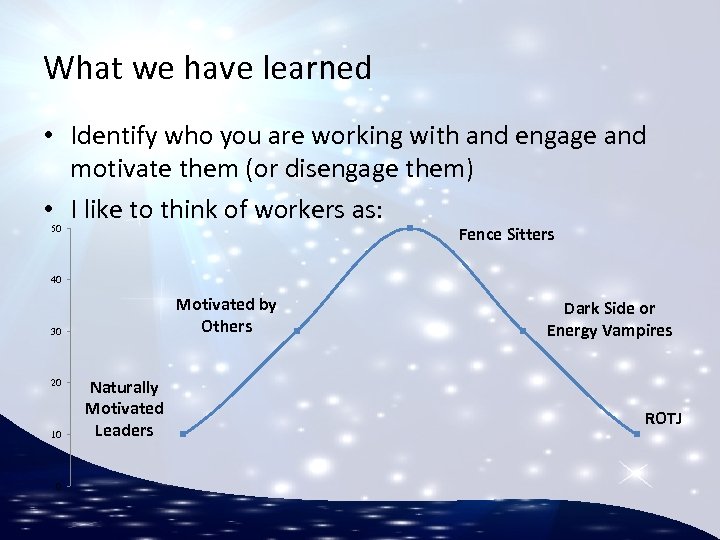 What we have learned • Identify who you are working with and engage and motivate them (or disengage them) • I like to think of workers as: 50 Fence Sitters 40 Motivated by Others 30 20 10 0 Naturally Motivated Leaders Dark Side or Energy Vampires ROTJ
 Lessons Learned • Leadership Attitude is Everything – Stay positive – Believe – Bring others along – Everyone on the same page
 Lessons Learned • Communication is key – Message given from the top – Consistent messages repeated down the line – Meetings – Email – One-on-one meetings (quarterly meetings) – Follow up in subsequent meetings – Remember staff receive and process information in different ways
 Lessons Learned • Real, objective, and updated data is vital – Let automated reports work for you • Data Warehouse • Info Pac – Ad hoc reports – Manual statistics – Workers are eager and hungry for the data (but some are intimidated by it)
 Lessons learned • Honor the level of anxiety that change causes – Have some fun – Reassure those who are doing well that they will continue to do well in the new system – Help those who are doing less than well
 Helpful Resources for Success • Staff – Recognition that not everyone is the same – Flexibility • Telework • Flex schedules • Overtime projects (when there is money) – Mentoring program – Developing new leaders program
 Helpful Resources for Success • Equipment – Programmable keyboards – Dual computer screens – Laptops • Communication – Regular all staff and unit meetings – Online training/policy resources – Letting the automated system and reports work • System to recognize and celebrate success
 HOW WE HAVE IMPROVED…
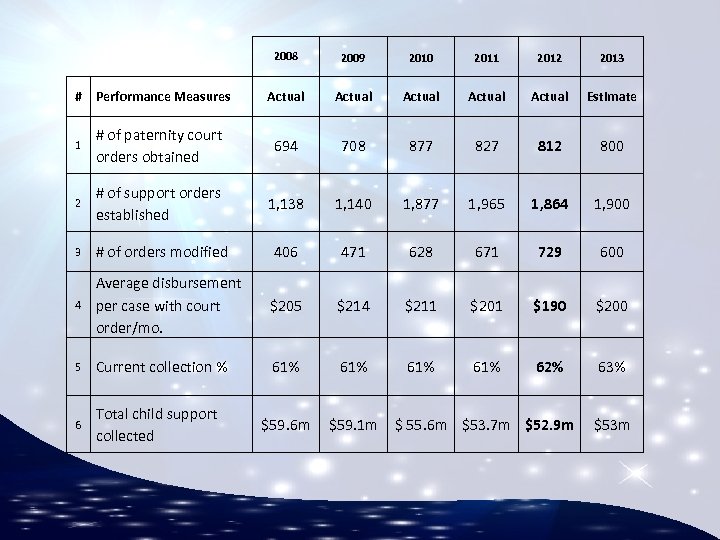 2008 2009 2010 2011 2012 2013 # Performance Measures Actual Actual Estimate 1 # of paternity court orders obtained 694 708 877 827 812 800 2 # of support orders established 1, 138 1, 140 1, 877 1, 965 1, 864 1, 900 3 # of orders modified 406 471 628 671 729 600 4 Average disbursement per case with court order/mo. $205 $214 $211 $201 $190 $200 5 Current collection % 61% 61% 62% 63% 6 Total child support collected $59. 6 m $59. 1 m $ 55. 6 m $53. 7 m $52. 9 m $53 m
 Contact Information Melissa Rossow Assistant Director Ramsey County Attorney’s Office 121 7 th Place E, Suite 4500 St. Paul, MN 55101 651 -266 -2625 melissa. rossow@co. ramsey. mn. us
 Questions? FOCUSING FRONT LINE STAFF ON PERFORMANCE GOALS ERICSA 50 th Annual Training Conference & Exposition ▪ May 19 – 23 ▪ Hilton Orlando Lake Buena Vista, Florida