


 Скачать презентацию Focus on Lead Markets Waste and Recycling Wastewater
8a82f074d7774b4d9ce267d96919083a.ppt
- Количество слайдов: 23
 Focus on Lead Markets: Waste and Recycling Wastewater Treatment Ernő Fleit Associate Professor Department of Sanitary and Environmental Engineering Budapest University of Technology and Economics Hungary
 Problem exposition n n n Do we know enough from our solid and liquid wastes (wastewater)? To meet standards – yes For sustainability and lead market objectives – probably not Key issues on waste management High-tech (generation) low-tech (waste management) dilemmas Virtually no old concepts exist New ideas in old environment – urban cycles
 New Directive on waste (EU Directive 2006/12/EC) n Waste hierarchy n Reduction (prevention of generation) n Re-use n Recovery (recycling, composting, energy) n Disposal
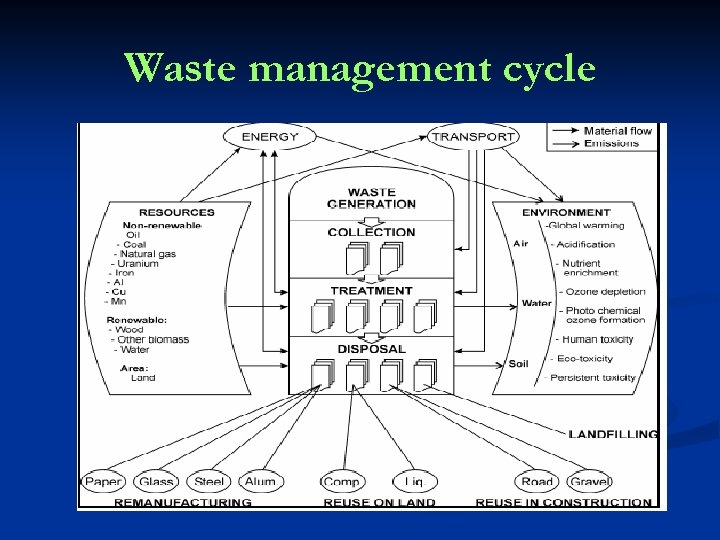 Waste management cycle
 Waste management options Mechanical/biological treatment AIM: Improvements on landfill operation n Reduction of waste volume to be landfilled n Reduction in emission potential n Facilitation of landfill operation due to reduced emissions n Reduction in leachate collection needs n
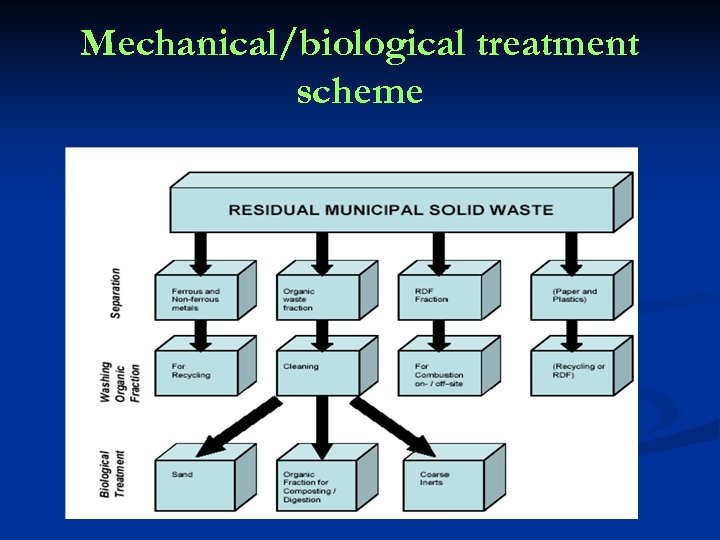 Mechanical/biological treatment scheme
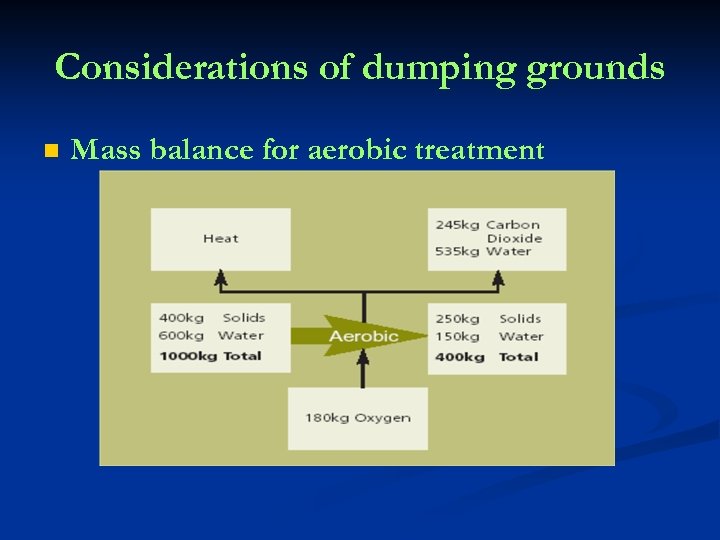 Considerations of dumping grounds n Mass balance for aerobic treatment
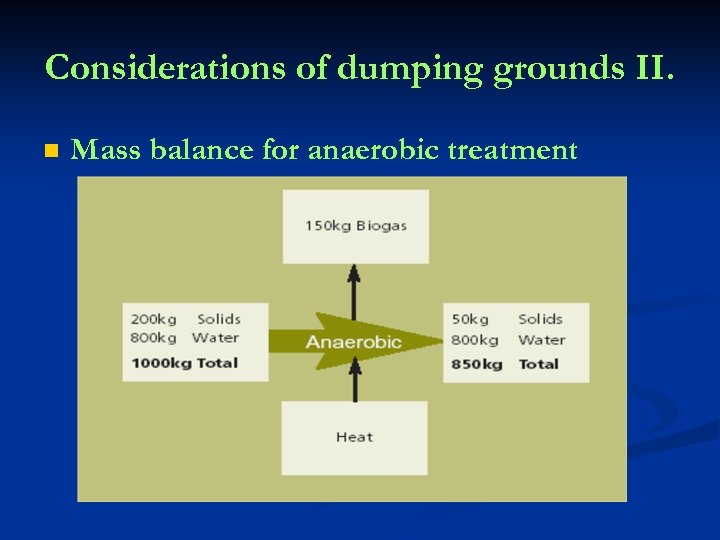 Considerations of dumping grounds II. n Mass balance for anaerobic treatment
 Intermediate conclusions I. n No unique solution exists – as criteria vary Technical n Financial n Environmental n Social n Institutional n Political n
 Intermediate conclusions II. n Selection of appropriate technology: Volume of waste n Waste composition n Market for secondary products if any n Authority and social priorities n Volume of residual material (available landfill) n Investment and operational cost n New challenges n
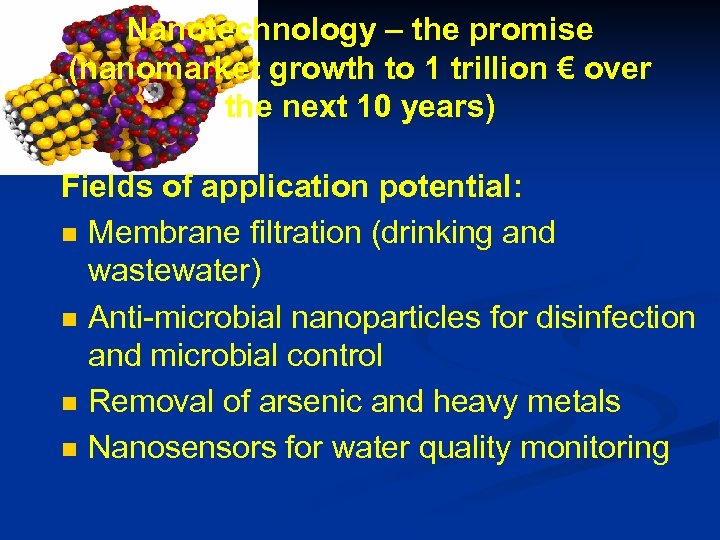 Nanotechnology – the promise (nanomarket growth to 1 trillion € over the next 10 years) Fields of application potential: n Membrane filtration (drinking and wastewater) n Anti-microbial nanoparticles for disinfection and microbial control n Removal of arsenic and heavy metals n Nanosensors for water quality monitoring
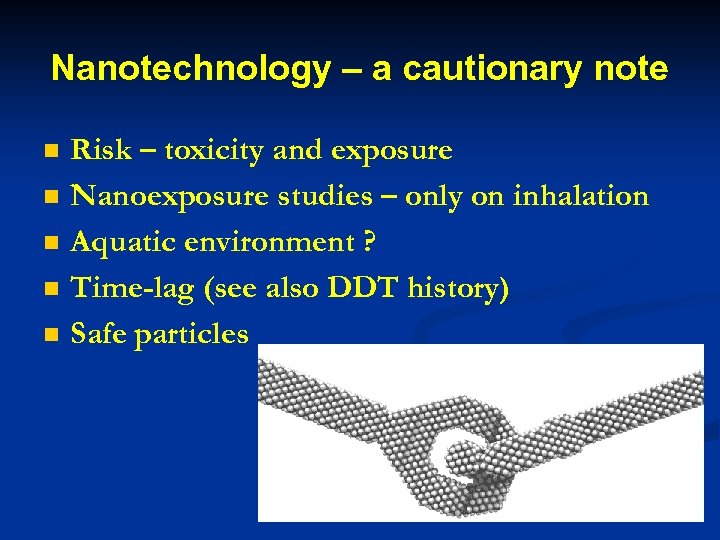 Nanotechnology – a cautionary note n n n Risk – toxicity and exposure Nanoexposure studies – only on inhalation Aquatic environment ? Time-lag (see also DDT history) Safe particles
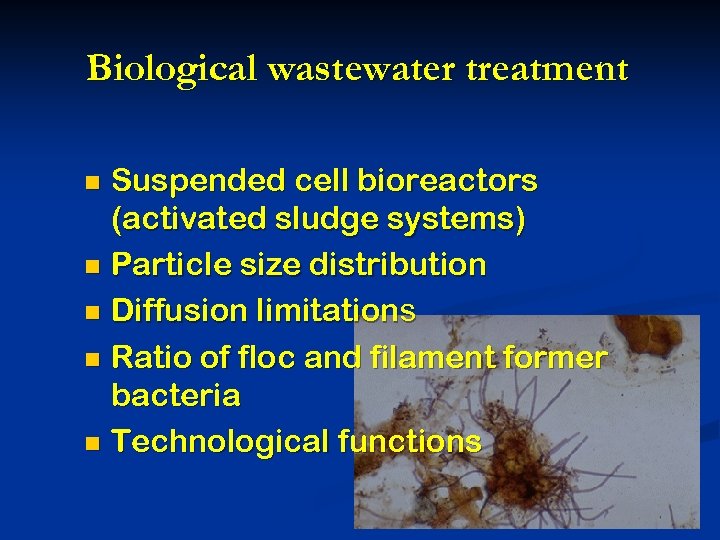 Biological wastewater treatment Suspended cell bioreactors (activated sludge systems) n Particle size distribution n Diffusion limitations n Ratio of floc and filament former bacteria n Technological functions n
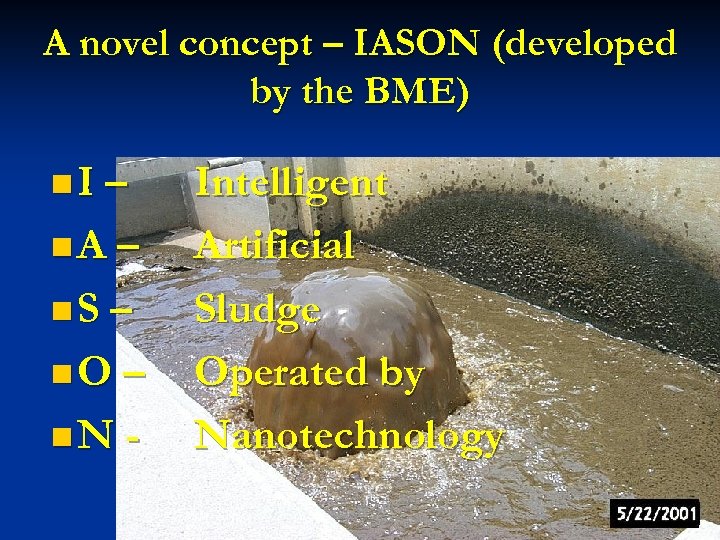 A novel concept – IASON (developed by the BME) n. I – n. A – n. S – n. O – n. N - Intelligent Artificial Sludge Operated by Nanotechnology
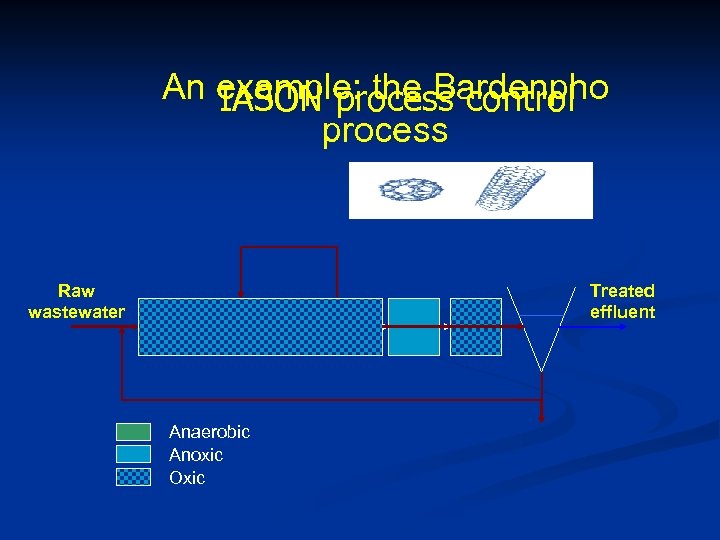 An example: the Bardenpho IASON process control process Raw wastewater Treated effluent Anaerobic Anoxic Oxic
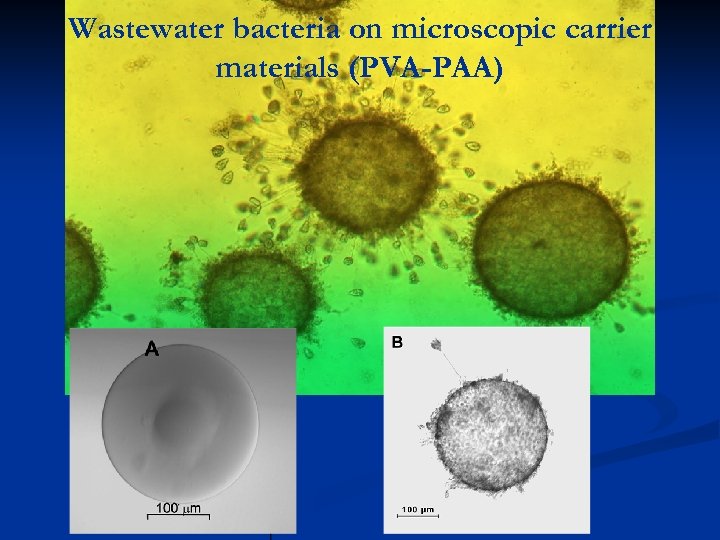 Wastewater bacteria on microscopic carrier materials (PVA-PAA)
 Challenges for wastewater treatment Adoption to changes in ever changing wastewater composition n New type of pollutants (EDS materials) n Conceptual change and novel opportunities n Professional background (R+D and education) n Design of wastewater composition n
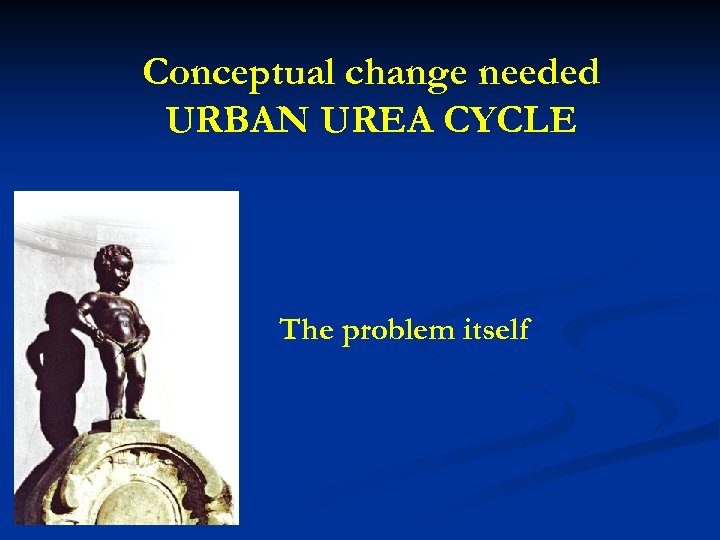 Conceptual change needed URBAN UREA CYCLE The problem itself
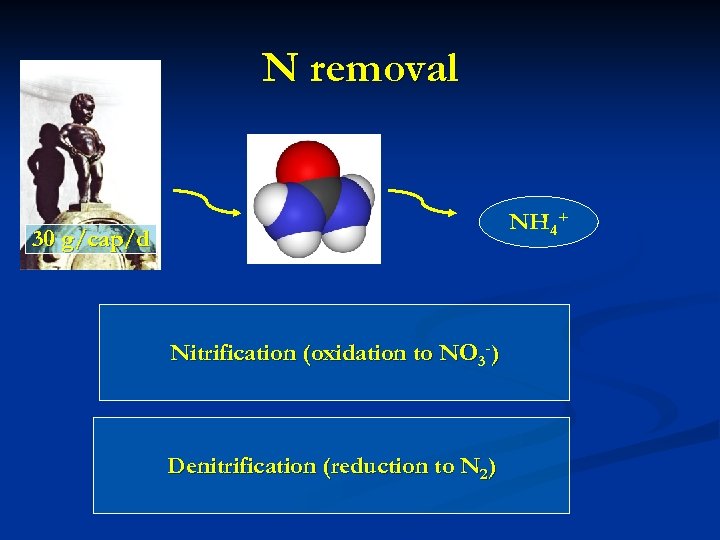 N removal NH 4+ 30 g/cap/d Nitrification (oxidation to NO 3 -) Denitrification (reduction to N 2)
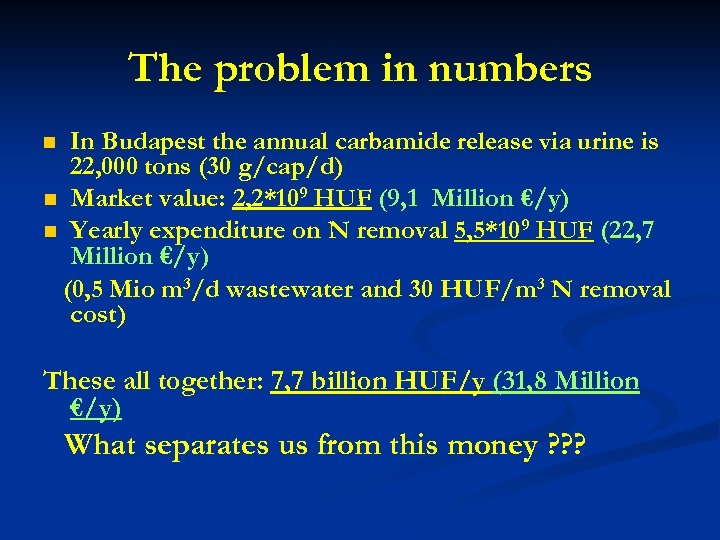 The problem in numbers In Budapest the annual carbamide release via urine is 22, 000 tons (30 g/cap/d) n Market value: 2, 2*109 HUF (9, 1 Million €/y) n Yearly expenditure on N removal 5, 5*109 HUF (22, 7 Million €/y) (0, 5 Mio m 3/d wastewater and 30 HUF/m 3 N removal cost) n These all together: 7, 7 billion HUF/y (31, 8 Million €/y) What separates us from this money ? ? ?
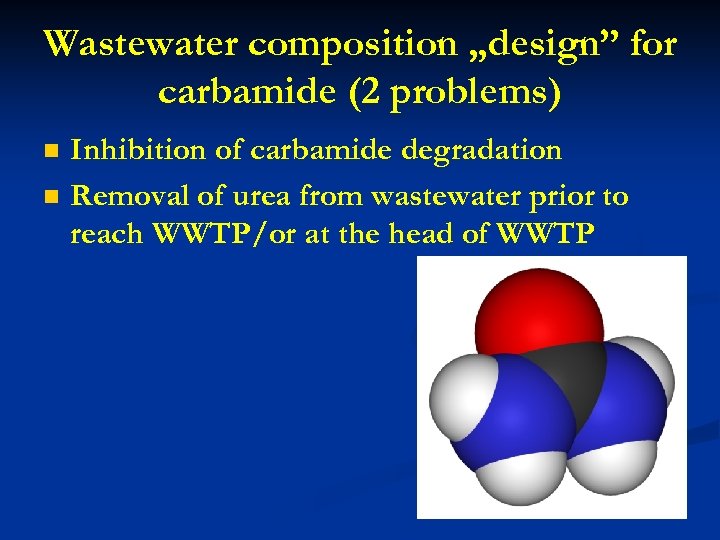 Wastewater composition „design” for carbamide (2 problems) n n Inhibition of carbamide degradation Removal of urea from wastewater prior to reach WWTP/or at the head of WWTP
 Removal of urea from raw wastewater n n n Microfiltration (should precipitable product is formed) Ionic exchange (charged molecule) Simple adsorbers (if polymer) Sedimentation (if formed precipitate is large and dense enough) FINAL RESULTS: greatly decreased N load in raw wastewater (savings on O+M cost) and marketable N fertilizer (carbamide)
 FINAL CONCLUSIONS n n The classical period of wastewater treatment technology is over (LCA, EDS, cost, sustainability) We must not keep the usual distance from our wastewater (e. g. , Singapore – NEWater, reclaimed water) The raw wastewater has to be considered as a valuable product (energy contents: MFC, biogas production), marketable compounds (carbamide) Source control (EDS materials)