 Скачать презентацию FNR 407 Forest Economics William L Bill Hoover
3ada9a6bc99cd8c5d028bb099cc84658.ppt
- Количество слайдов: 30



FNR 407 Forest Economics William L. (Bill) Hoover Professor of Forestry 496 -0077 743 -4120 home, 404 -7432 cell billh@purdue. edu
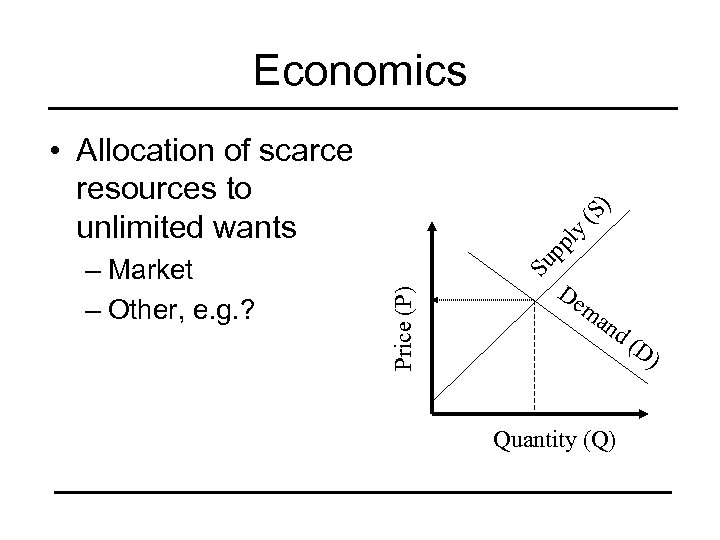
Economics y pp l Su Price (P) – Market – Other, e. g. ? (S ) • Allocation of scarce resources to unlimited wants De ma nd (D ) Quantity (Q)
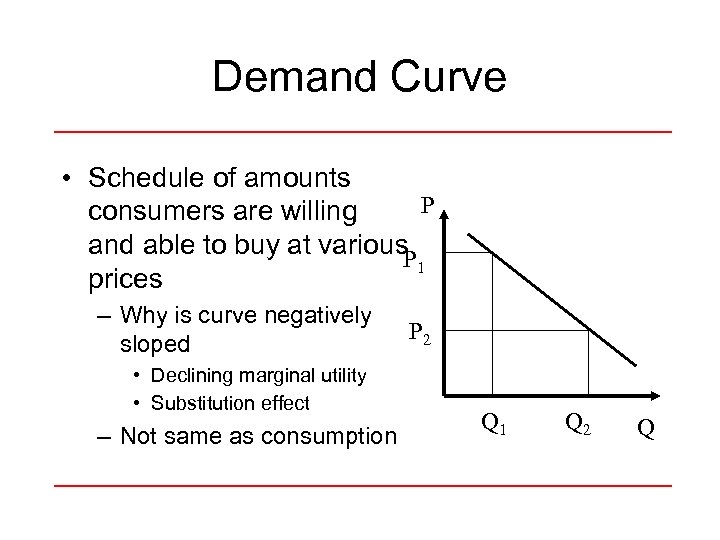
Demand Curve • Schedule of amounts P consumers are willing and able to buy at various. P 1 prices – Why is curve negatively sloped • Declining marginal utility • Substitution effect – Not same as consumption P 2 Q 1 Q 2 Q
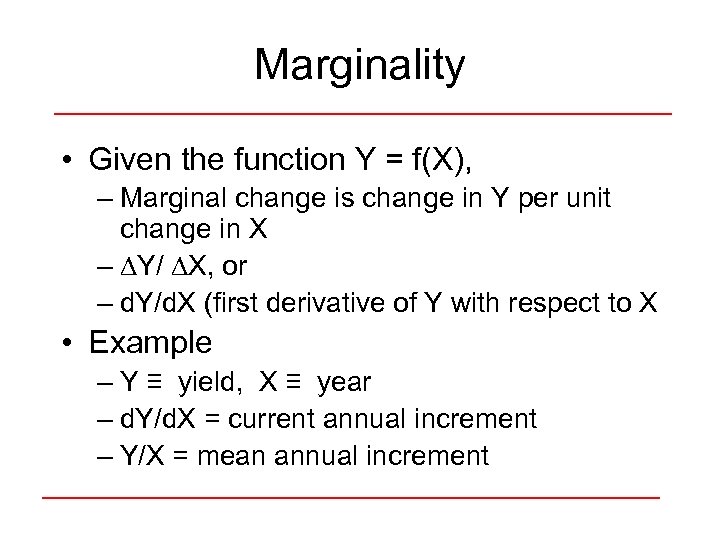
Marginality • Given the function Y = f(X), – Marginal change is change in Y per unit change in X – ∆Y/ ∆X, or – d. Y/d. X (first derivative of Y with respect to X • Example – Y ≡ yield, X ≡ year – d. Y/d. X = current annual increment – Y/X = mean annual increment
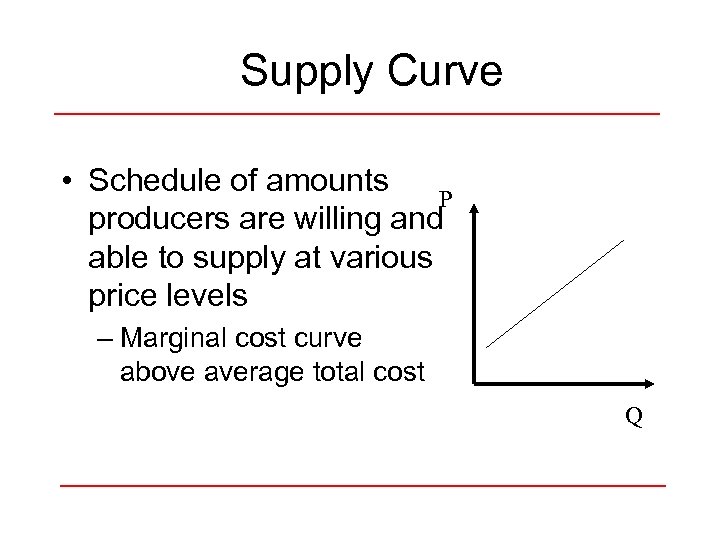
Supply Curve • Schedule of amounts P producers are willing and able to supply at various price levels – Marginal cost curve above average total cost Q
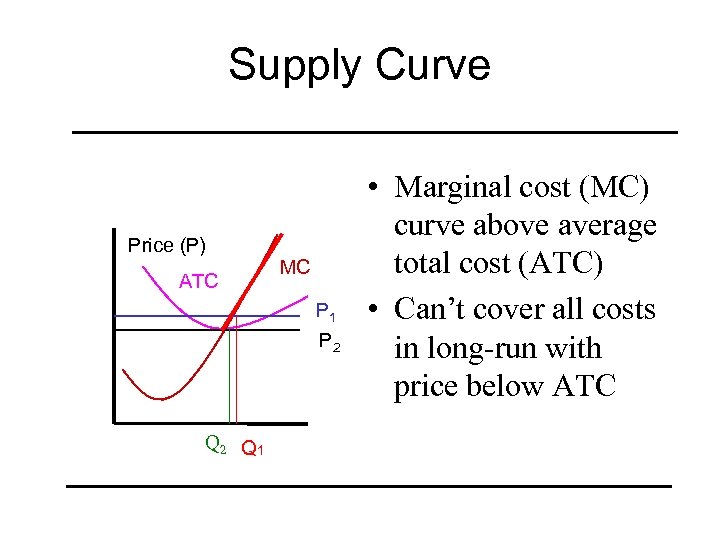
Supply Curve Price (P) ATC MC P 1 P 2 Q 1 • Marginal cost (MC) curve above average total cost (ATC) • Can’t cover all costs in long-run with price below ATC
Forest Economics • For forests decision making complicated by – Joint production – Externalities – Non-marketed outputs – Wide variety of “types” of owners
Joint Production • Forest provides multiple “outputs” – Wood – Water – Wildlife habitat – Recreation, etc. • How does a manager simultaneously determine appropriate level of output of each?
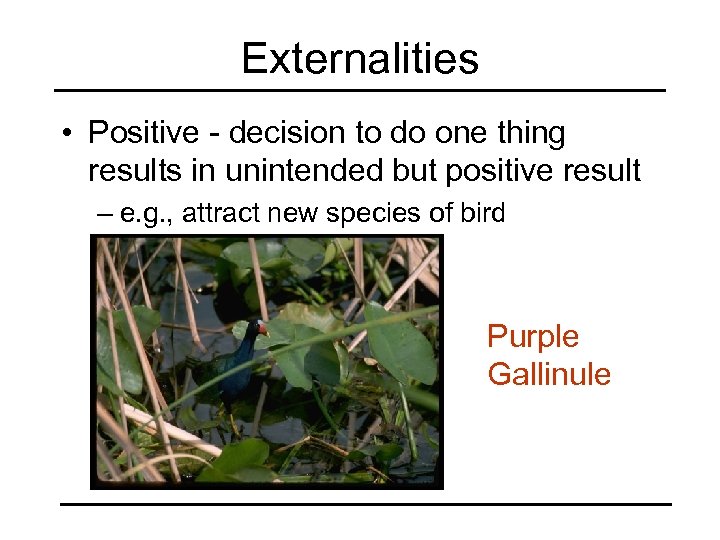
Externalities • Positive - decision to do one thing results in unintended but positive result – e. g. , attract new species of bird Purple Gallinule
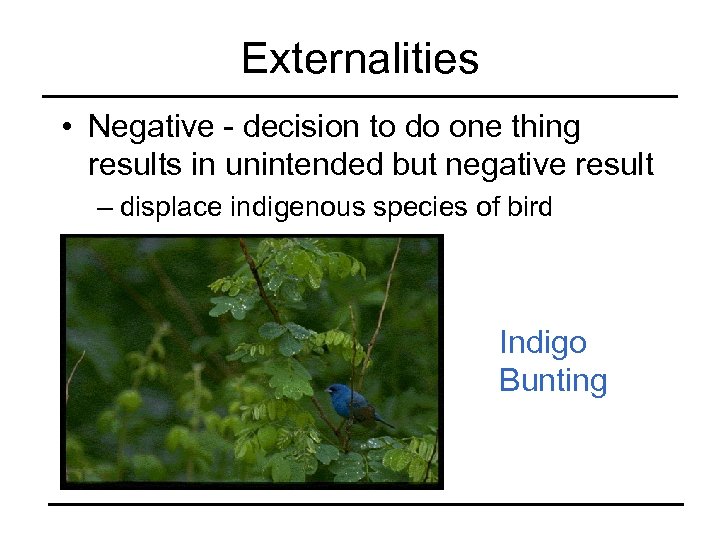
Externalities • Negative - decision to do one thing results in unintended but negative result – displace indigenous species of bird Indigo Bunting
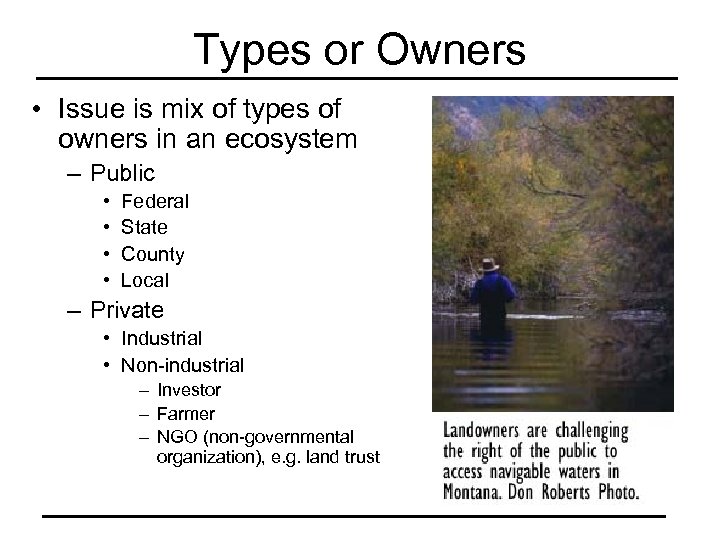
Types or Owners • Issue is mix of types of owners in an ecosystem – Public • • Federal State County Local – Private • Industrial • Non-industrial – Investor – Farmer – NGO (non-governmental organization), e. g. land trust
Context In Which Decisions Are Made Matters! • What is affect of type of owner? – Public agency – Industrial firm – Private nonindustrial (NIPF)
Public Agencies • Management objectives set by large number and variety of interest groups • Conflicts among interest groups difficult to resolve • Political pressures may dictate budget and land use decisions
Industrial Firms • Profit motivated • Forest practices constrained by AF&PA Sustainable Forestry Program, public pressure, and regulations • Most productive forest land • Forest land is security for conversion facilities
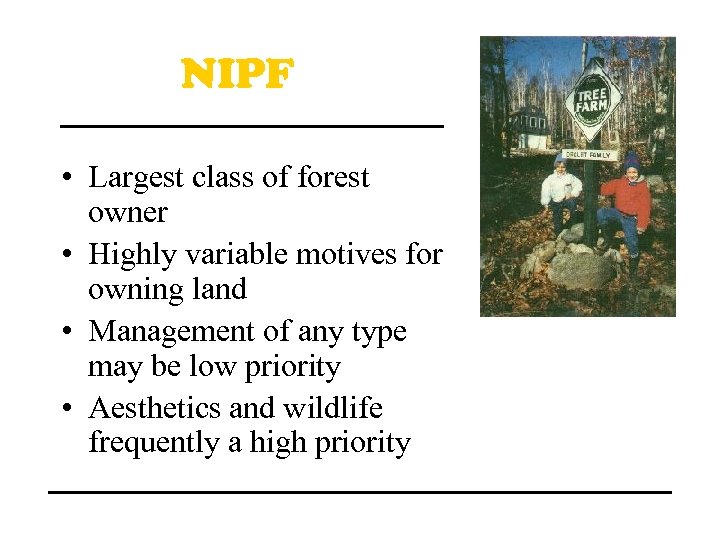
NIPF • Largest class of forest owner • Highly variable motives for owning land • Management of any type may be low priority • Aesthetics and wildlife frequently a high priority
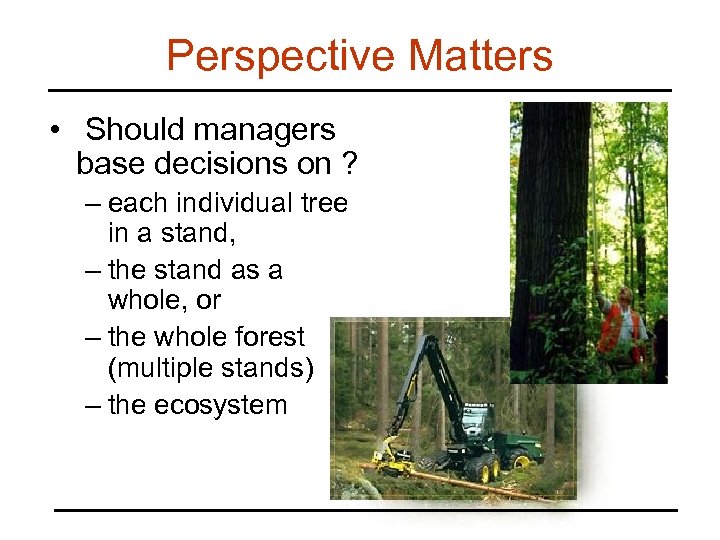
Perspective Matters • Should managers base decisions on ? – each individual tree in a stand, – the stand as a whole, or – the whole forest (multiple stands) – the ecosystem
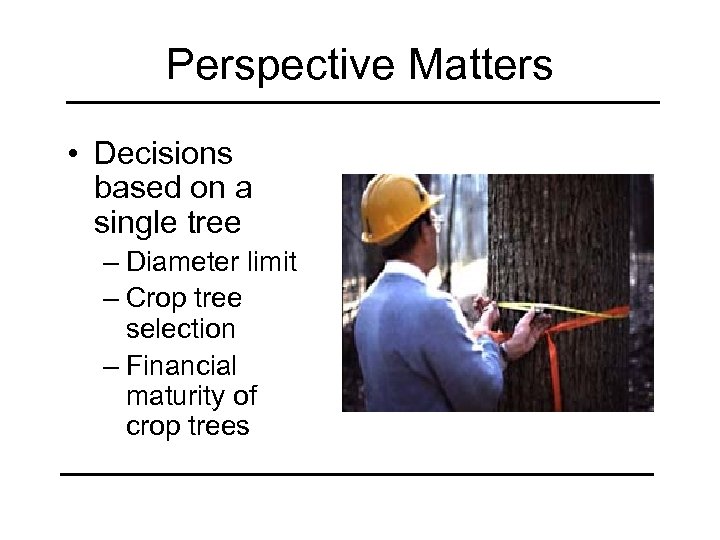
Perspective Matters • Decisions based on a single tree – Diameter limit – Crop tree selection – Financial maturity of crop trees
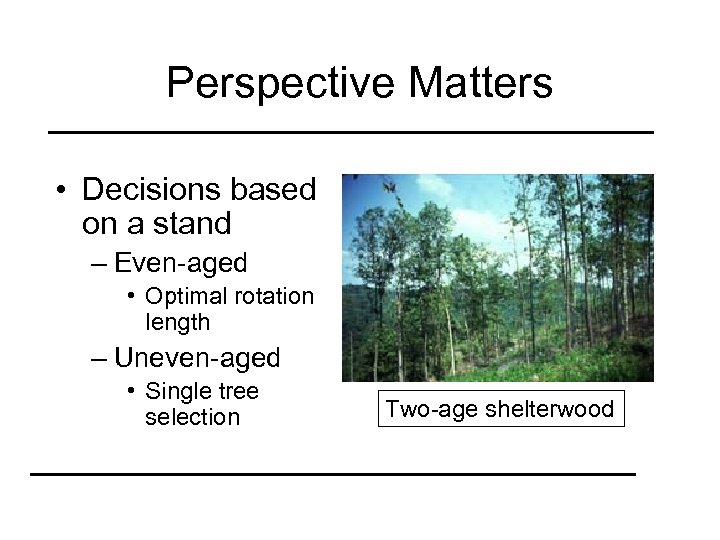
Perspective Matters • Decisions based on a stand – Even-aged • Optimal rotation length – Uneven-aged • Single tree selection Two-age shelterwood
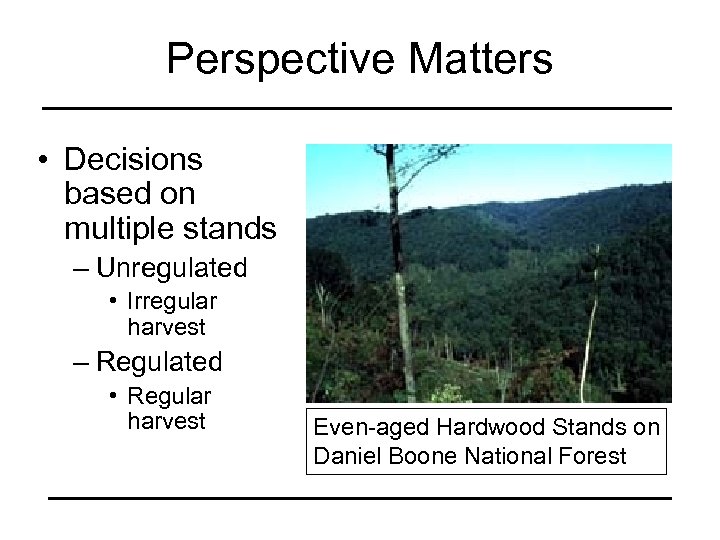
Perspective Matters • Decisions based on multiple stands – Unregulated • Irregular harvest – Regulated • Regular harvest Even-aged Hardwood Stands on Daniel Boone National Forest
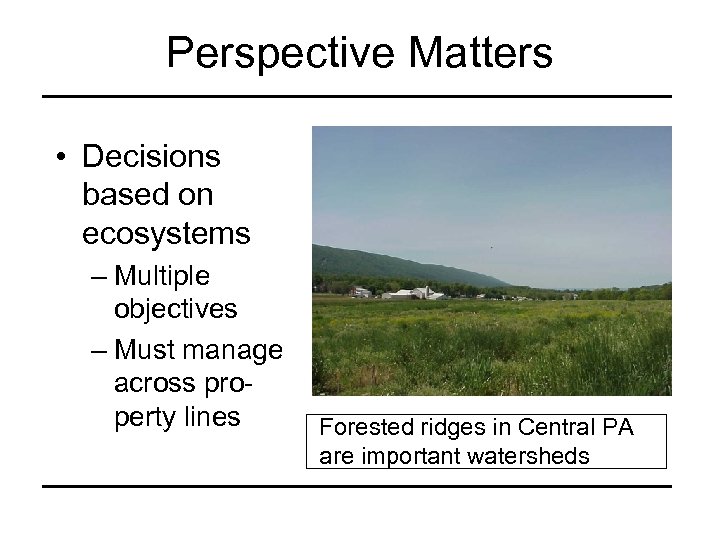
Perspective Matters • Decisions based on ecosystems – Multiple objectives – Must manage across property lines Forested ridges in Central PA are important watersheds
Economic Characteristics of Forests and Timber – Immobility of trees • Location utility – Inventory vs. economic supply – Long production period – Dual nature of trees • Capital (factory & machinery) • Product
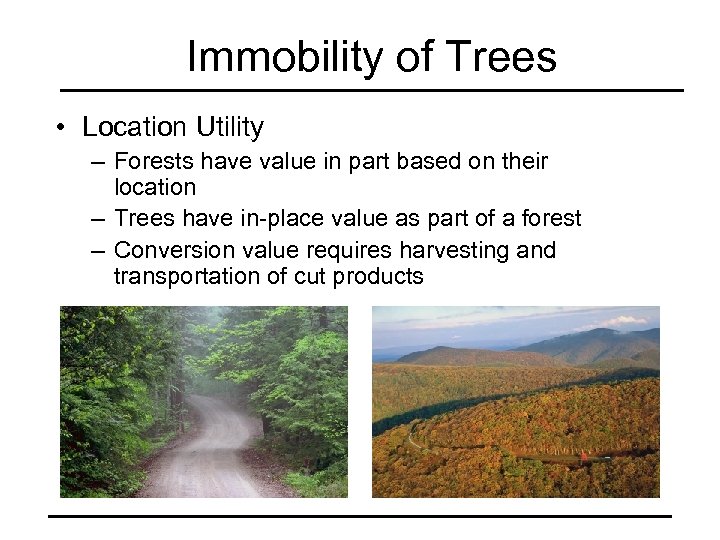
Immobility of Trees • Location Utility – Forests have value in part based on their location – Trees have in-place value as part of a forest – Conversion value requires harvesting and transportation of cut products
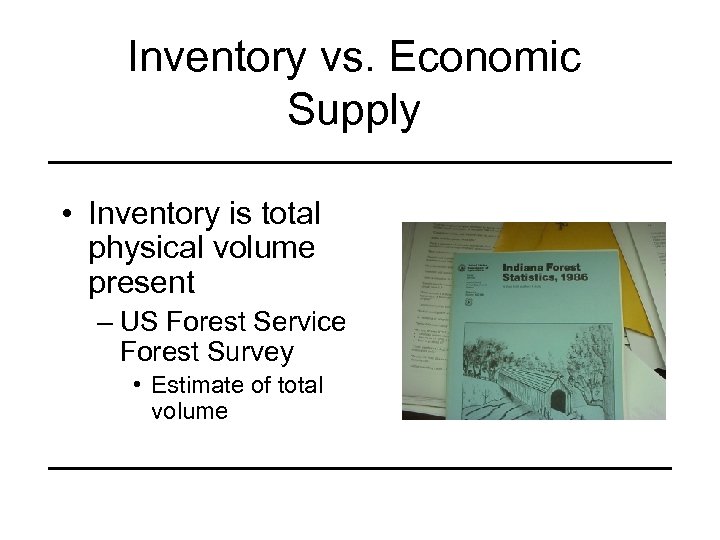
Inventory vs. Economic Supply • Inventory is total physical volume present – US Forest Service Forest Survey • Estimate of total volume
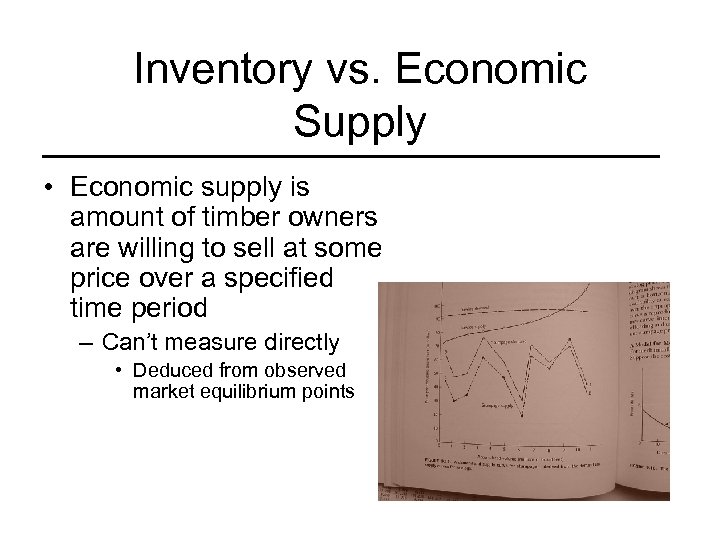
Inventory vs. Economic Supply • Economic supply is amount of timber owners are willing to sell at some price over a specified time period – Can’t measure directly • Deduced from observed market equilibrium points
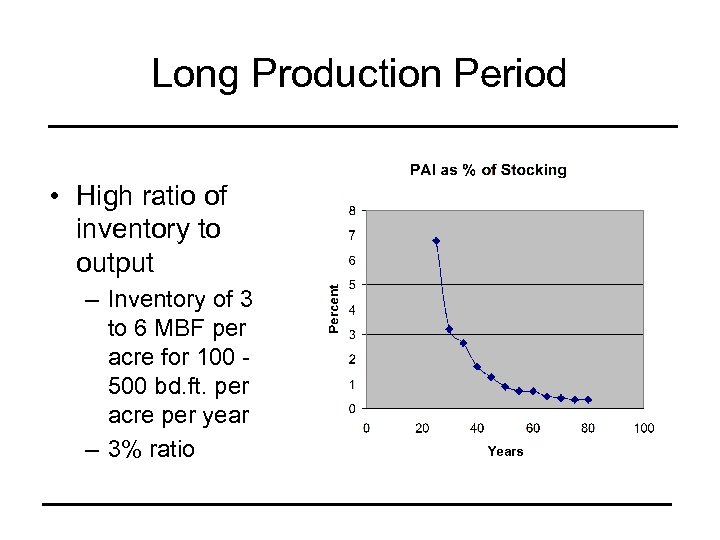
Long Production Period • High ratio of inventory to output – Inventory of 3 to 6 MBF per acre for 100 500 bd. ft. per acre per year – 3% ratio
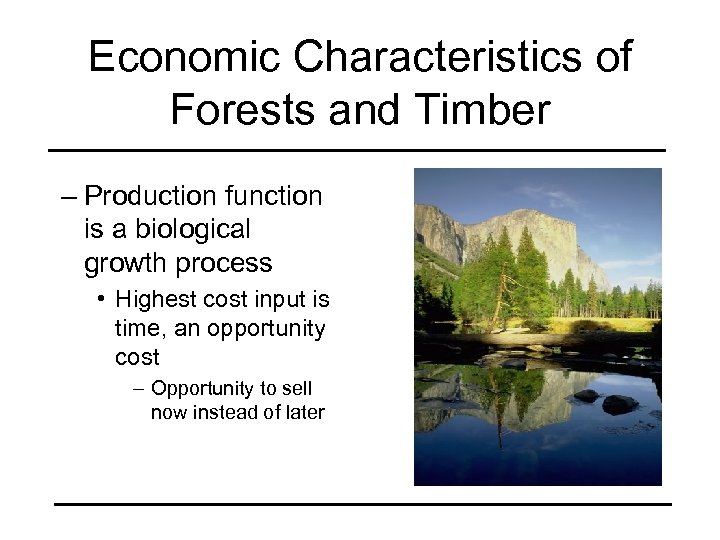
Economic Characteristics of Forests and Timber – Production function is a biological growth process • Highest cost input is time, an opportunity cost – Opportunity to sell now instead of later
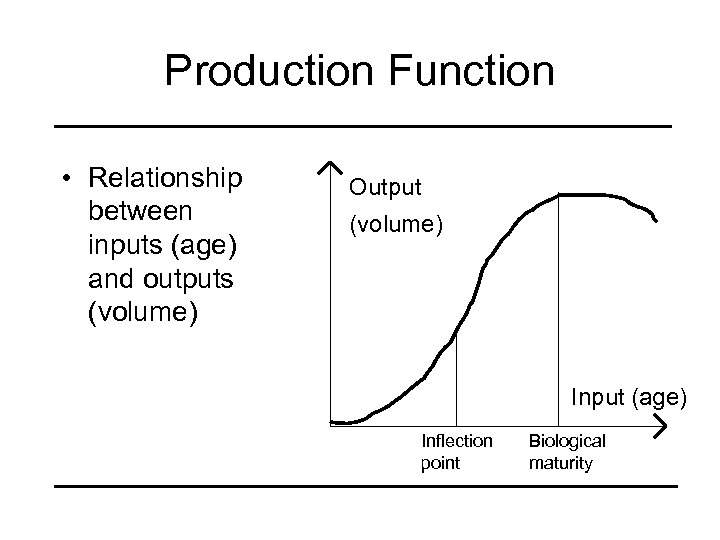
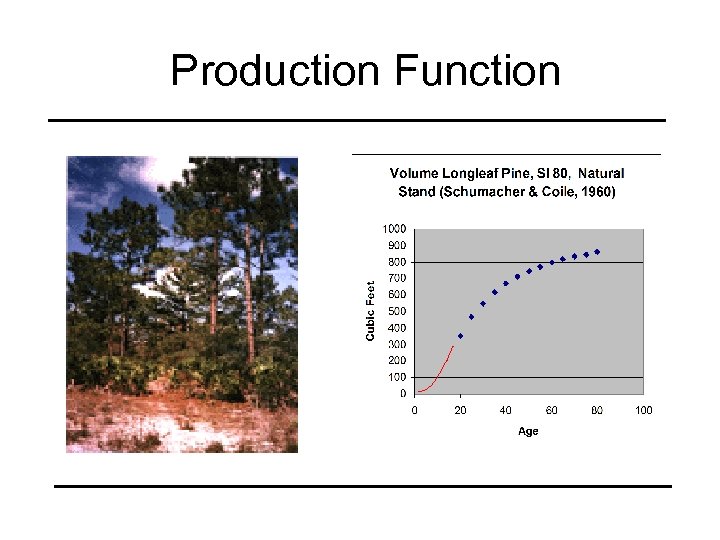
Production Function • Relationship between inputs (age) and outputs (volume) Output (volume) Input (age) Inflection point Biological maturity
Production Function
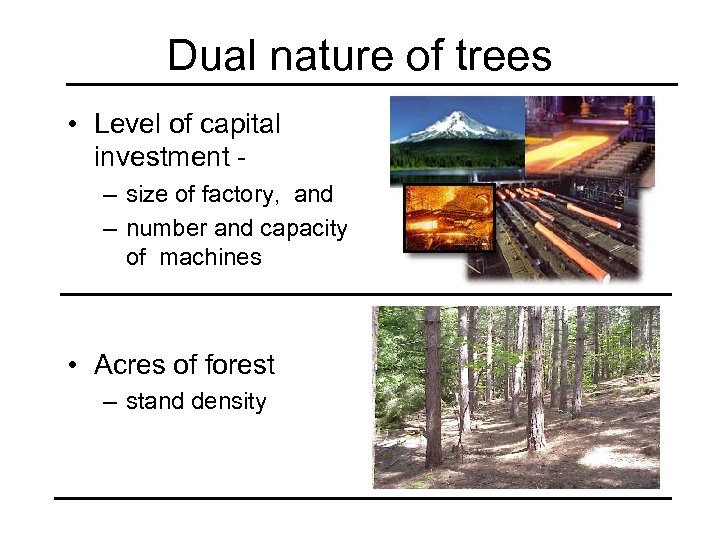
Dual nature of trees • Level of capital investment – size of factory, and – number and capacity of machines • Acres of forest – stand density
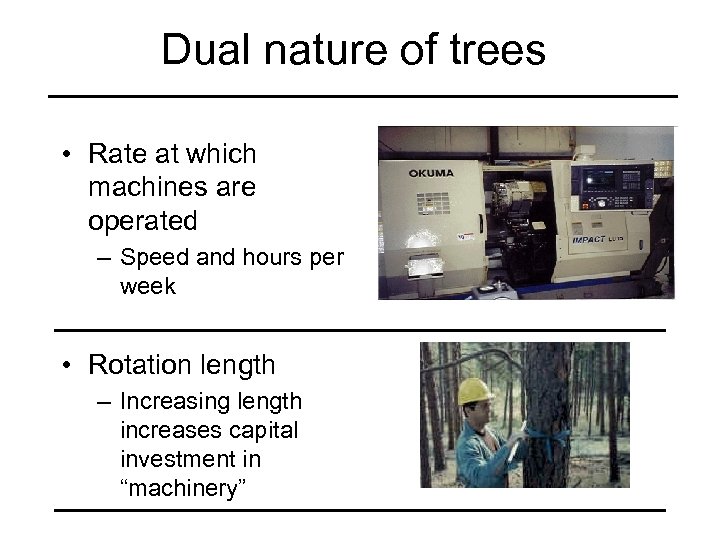
Dual nature of trees • Rate at which machines are operated – Speed and hours per week • Rotation length – Increasing length increases capital investment in “machinery”
Скачать презентацию FNR 407 Forest Economics William L Bill Hoover
3ada9a6bc99cd8c5d028bb099cc84658.ppt