


 Скачать презентацию Fly Systems Or the wonderful world of rigging
283ffc990a1ef3065f4b499d048d4afd.ppt
- Количество слайдов: 46
 Fly Systems Or the wonderful world of rigging
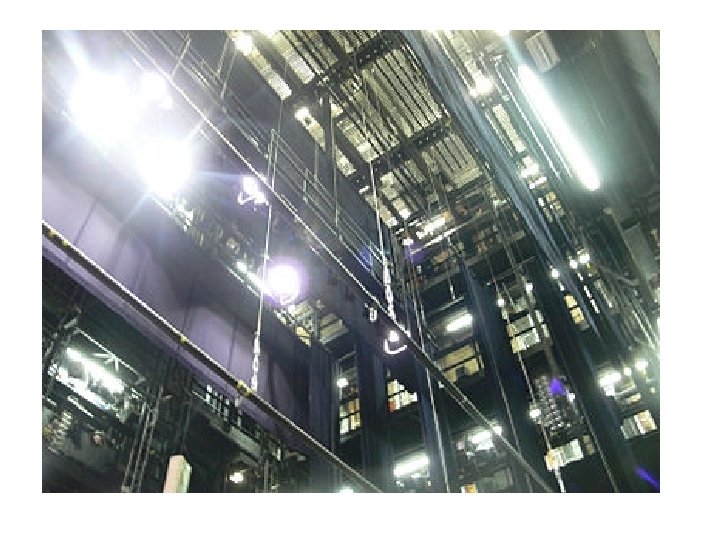
 What is a Fly System? o A system of raising and lowering scenery and lights using a set of pipes, cables, ropes, pulleys and weights, chain motors, or winches n Allows for vertical storage above the stage in the “heavens” n Also allows for utility work (bringing electrics in to hang/remove lights)
 • There are three types of fly systems: 1. Direct line or “direct drive” – where the weight of the batten is transferred directly to the lines manipulated by the stage hand 2. Counterweight – where a weight is added to the lines to “counter” the weight on the batten. 3. Winch or chain winch – where the weight on the batten is held and moved by a winch motor system.
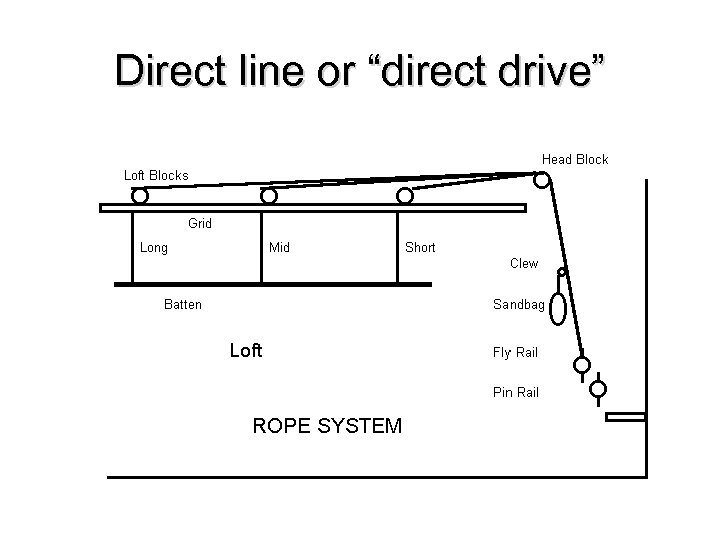 Direct line or “direct drive”
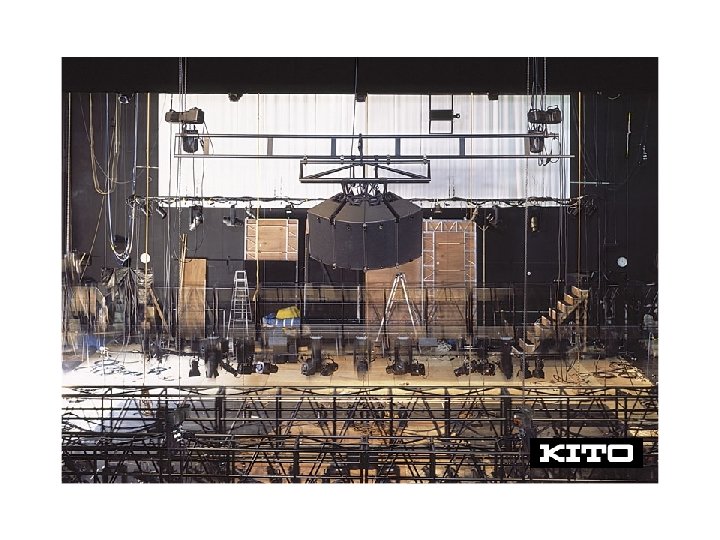
 Where do the pipes go? o Into the fly house o The fly house is the space above the stage where scenery, curtains and electrics are stored when not in use o Fly house is masked by what?
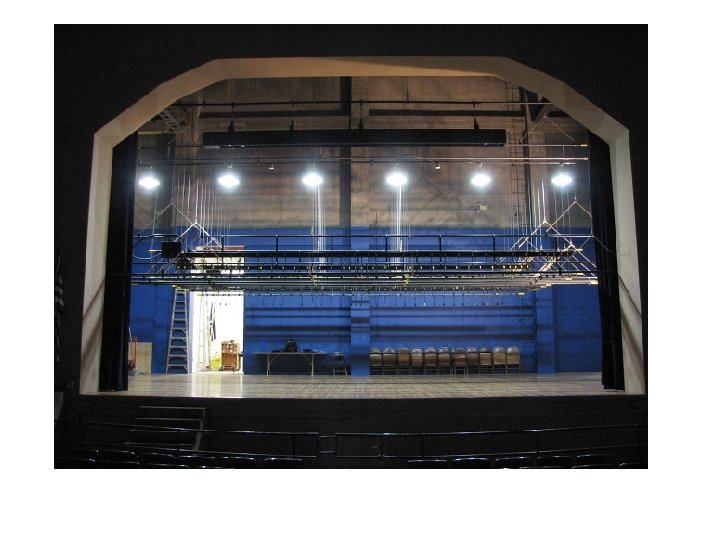
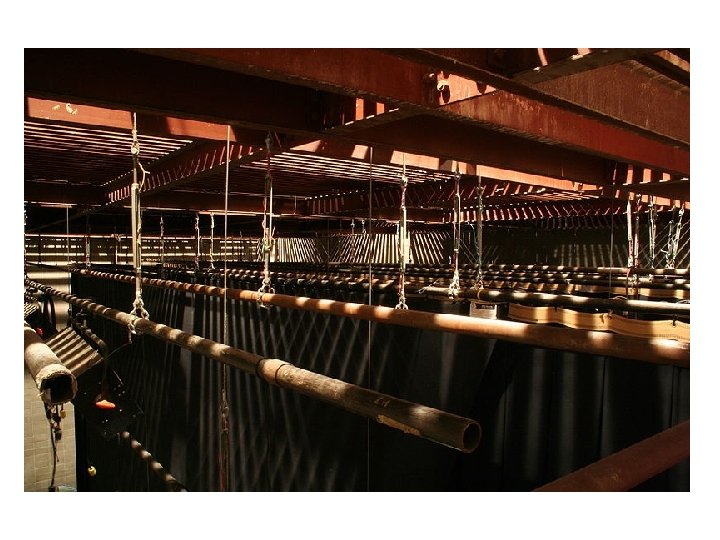
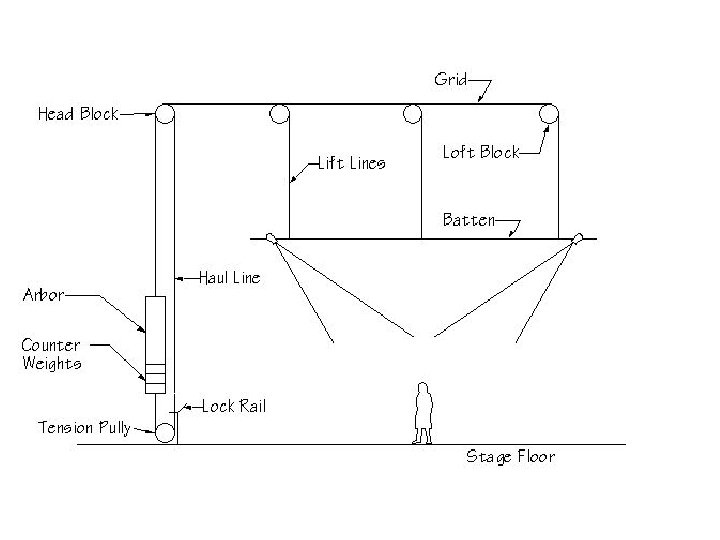
 What are the pipes called? o A line set is one system of a pipe, all of the cables, pulleys (blocks) and rope o The pipe attached to a line set is called a batten n On the Concert Hall stage, our battens are 63’ -0” long n Our battens are industry standard 1 -½” Schedule 40 Black Pipe o The proscenium opening is 50’-0” wide o Why are the battens 13’ longer than the proscenium opening?
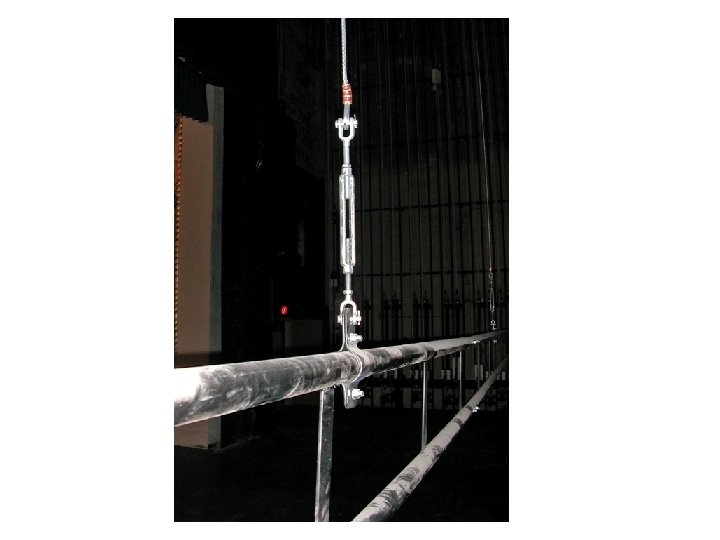
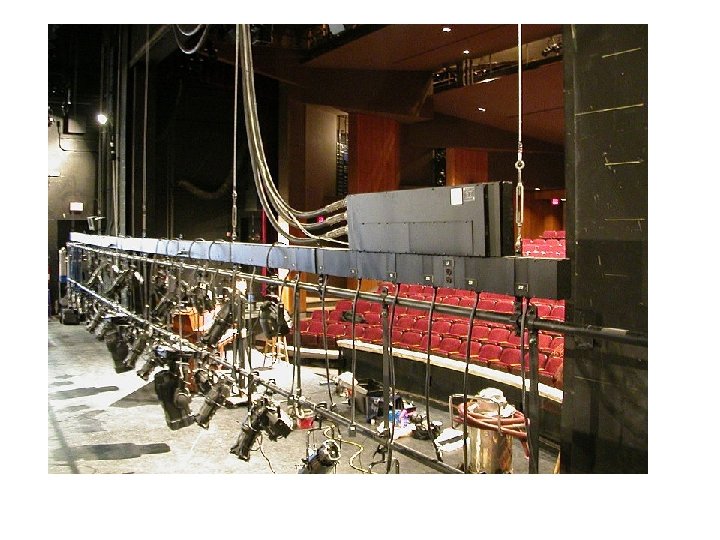
 Types of battens o Single pipe batten n One pipe suspended by lift lines (7 on our stage) o Truss Batten n 2 pipes joined together by steel connector bars o Looks like a ladder on it’s side n Advantage? o Holds more weight (and has a bigger arbor) o Tri-Batten n 2 pipes joined together and tipped at an angle, joined to a 3 rd pipe above (with a raceway for dimmer circuits) n Used for “electrics” o Battens used for lighting
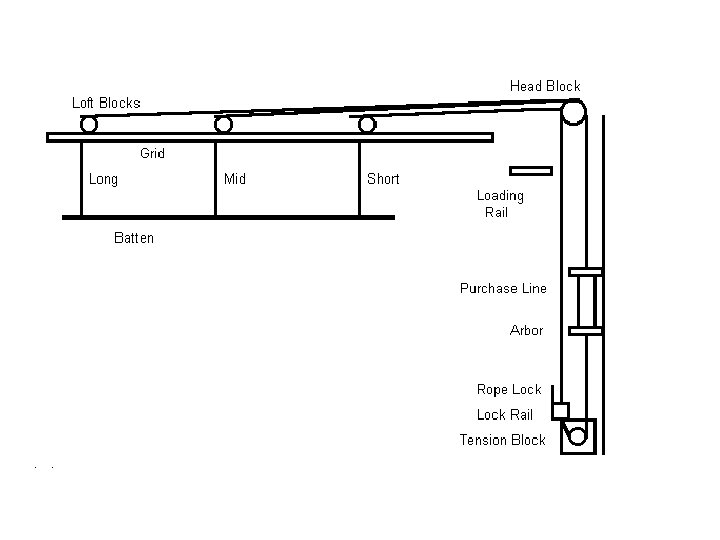
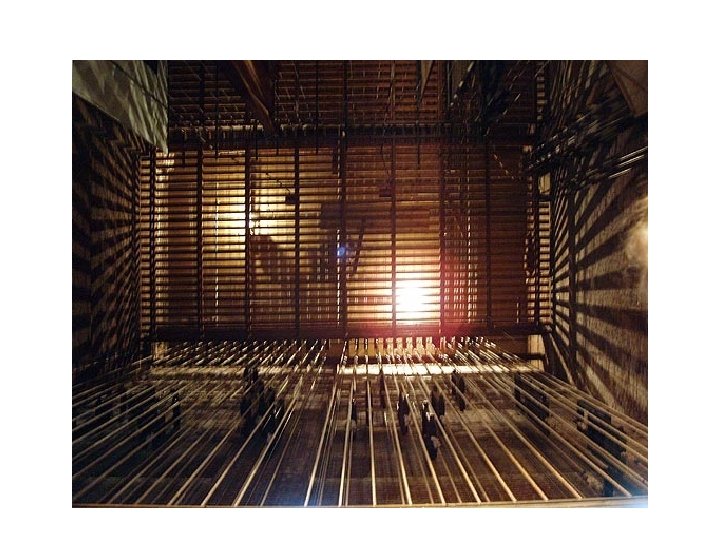
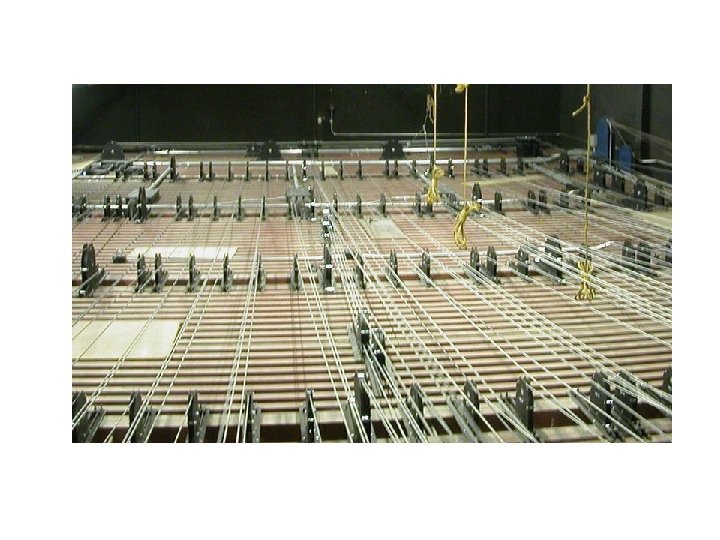
 Grid o An open floor made of a “grid” of iron high over the stage. o Perpendicular to the iron, loft blocks are attached to carry a lift line towards the stage floor. o The open spaces in the grid floor are designed to allow additional pulleys and lines for special spot lines.
 What’s a Block? o Loft blocks (or any block) is a pulley that’s mounted in a fixed position. o The “wheel” that rotates as the cable runs over it is called a Sheave
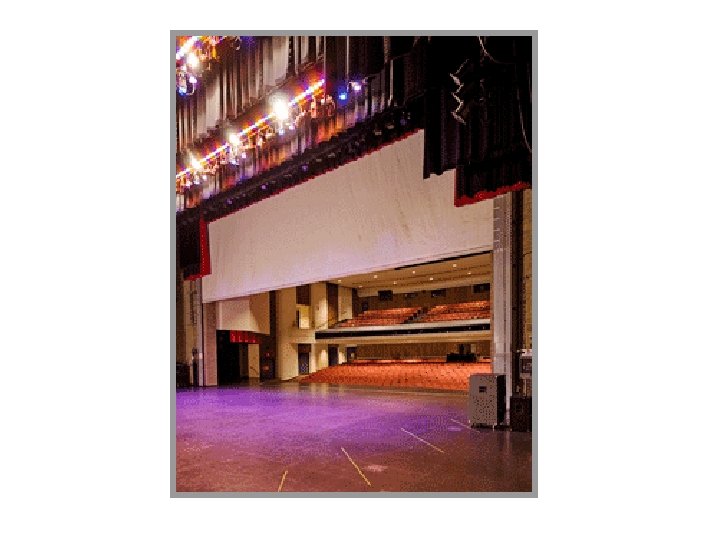
 Fire Curtain o Primary purpose of the fire curtain: n To isolate the fire and save lives o Always located most downstage o Three ways to bring in: 1. Motor control (allows for raising and lowering) 2. Emergency pull handles (one way only) 3. Fusible links (activated by heat, one way only)
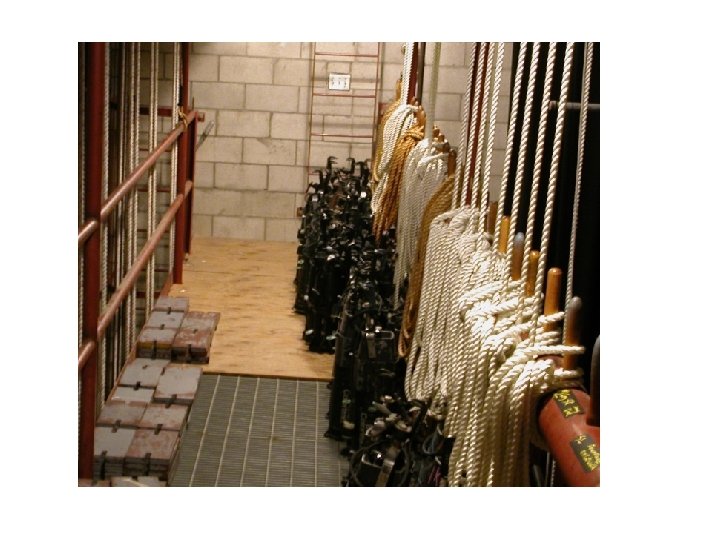
 Pin Rails o Used to tie off pick lines (spot lines) n Spot lines are placed where lightweight loads need to be lifted o A large steel pipe with holes along it where wooden Belaying Pins can be inserted, and ropes tied off o Usually located on or near the fly rail
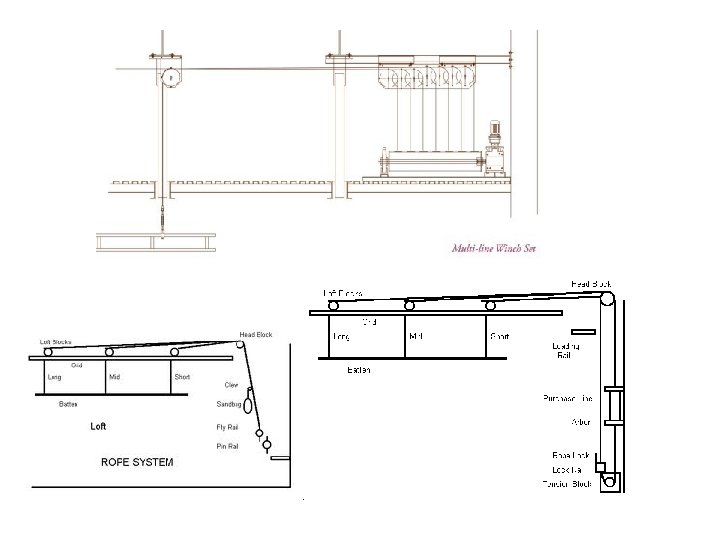
 Line Sets o One complete set of rigging components (batten, lift lines, blocks, arbor, purchase line, stage weights winch etc. ). o Each line set runs one batton o Each line set must be checked thoroughly before and after a show!
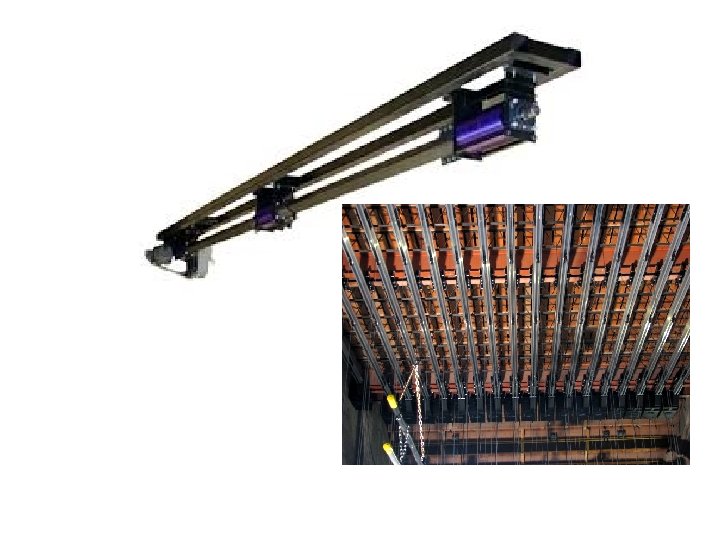
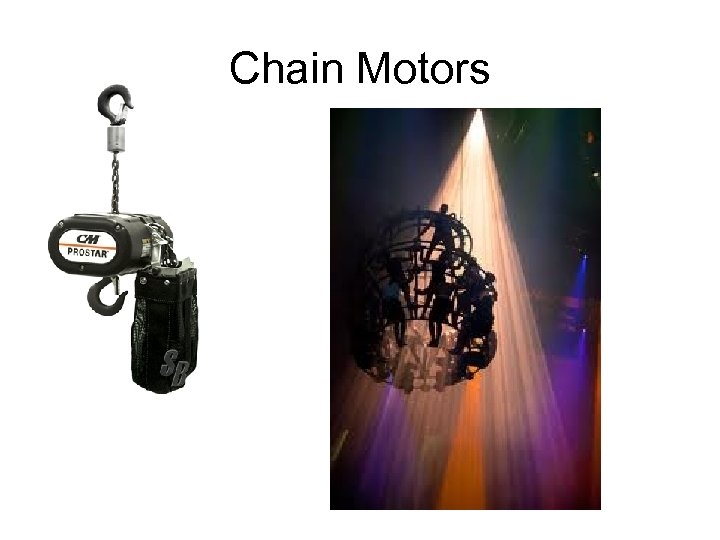
 Motorized Line Sets / chain motors o A type of dead-lift system that employs electric winches designed for the purpose of lifting scenery o Controlled by a motor control panel stage right, near the Stage Manager’s Panel o Winch: A hand-cranked or motorized drum rigged with cable used to move scenery
 Chain Motors
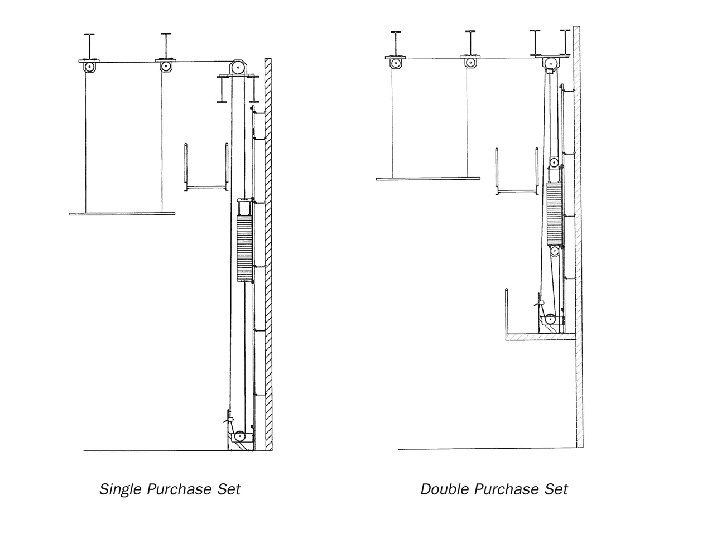
 Types of Counterweight Systems o Single Purchase n L. T. P. A. C. Concert Hall o 1: 1 ratio for both travel and weight n 1 pound added to the batten means 1 pound must be added to the arbor n 1 foot of travel for the batten means the arbor will travel 1 foot n What does this mean the length of the TTracks must be? o Purchase line is tied to the top & bottom of the arbor
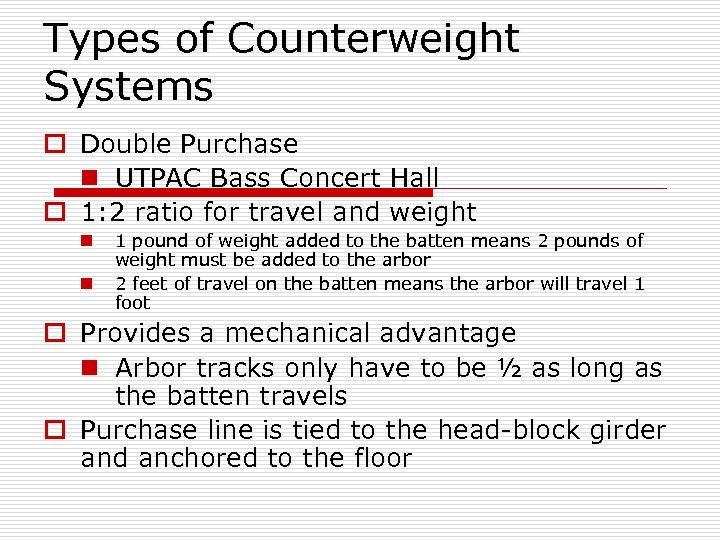 Types of Counterweight Systems o Double Purchase n UTPAC Bass Concert Hall o 1: 2 ratio for travel and weight n n 1 pound of weight added to the batten means 2 pounds of weight must be added to the arbor 2 feet of travel on the batten means the arbor will travel 1 foot o Provides a mechanical advantage n Arbor tracks only have to be ½ as long as the batten travels o Purchase line is tied to the head-block girder and anchored to the floor
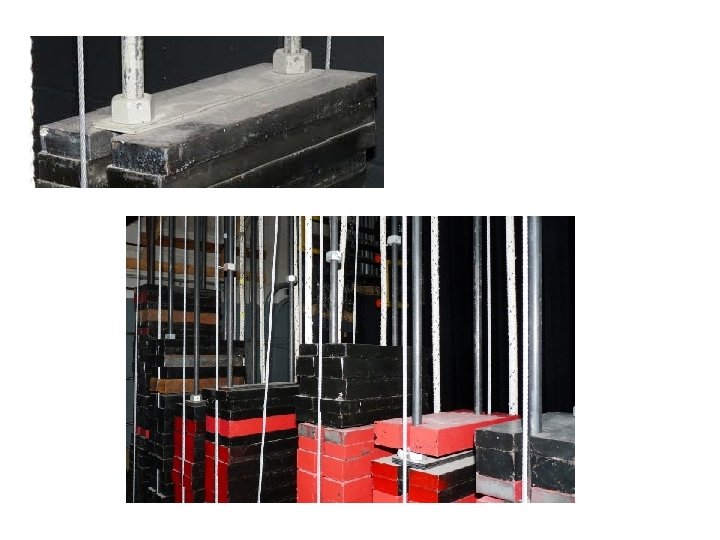
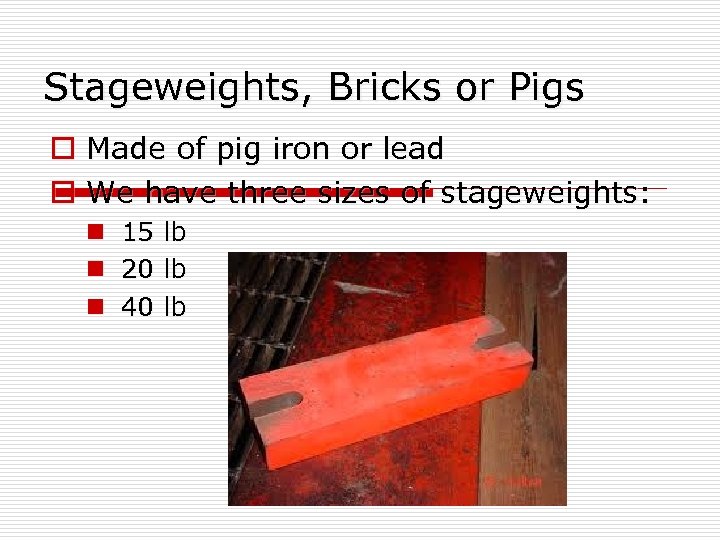 Stageweights, Bricks or Pigs o Made of pig iron or lead o We have three sizes of stageweights: n n n 15 20 40 lb lb lb
 Trim o Trim is the height of something above the deck (stage floor) o In-Trim is the position of scenery as it should be when in use o Out-Trim is the position of scenery as it should be when not in use
 Wing and drop set at trim

 Spreader Plates – Counterweight system o A commonly misunderstood part of the arbor o Primary purpose is to prevent the arbor rods from bending o The spreader plates should be at the top of the brick stack on the arbor, and leave one behind every 2 feet in the stack
 Before You Move any rigging In a loud, clear and serious tone call the following EVERY time a batten is about to move (except during performance) 1. Heads up 2. Line set # 3. Coming in/going out 4. Location (US, DS, CS) 5. Make sure people on stage heard you with their response “thank you”
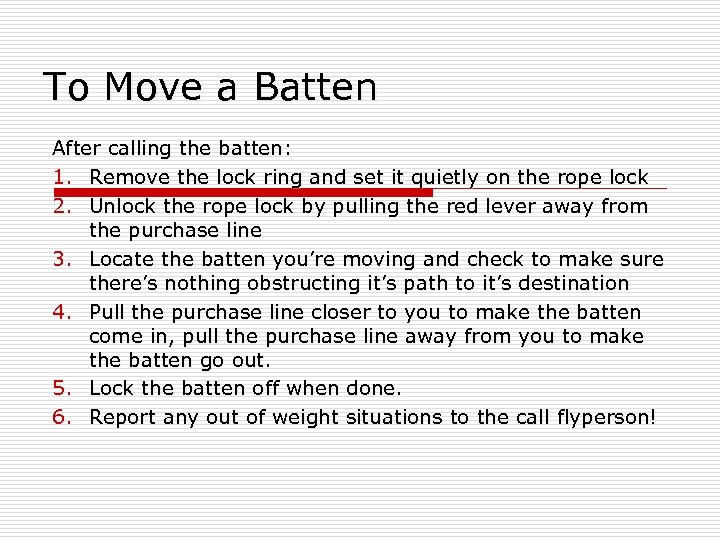 To Move a Batten After calling the batten: 1. Remove the lock ring and set it quietly on the rope lock 2. Unlock the rope lock by pulling the red lever away from the purchase line 3. Locate the batten you’re moving and check to make sure there’s nothing obstructing it’s path to it’s destination 4. Pull the purchase line closer to you to make the batten come in, pull the purchase line away from you to make the batten go out. 5. Lock the batten off when done. 6. Report any out of weight situations to the call flyperson!
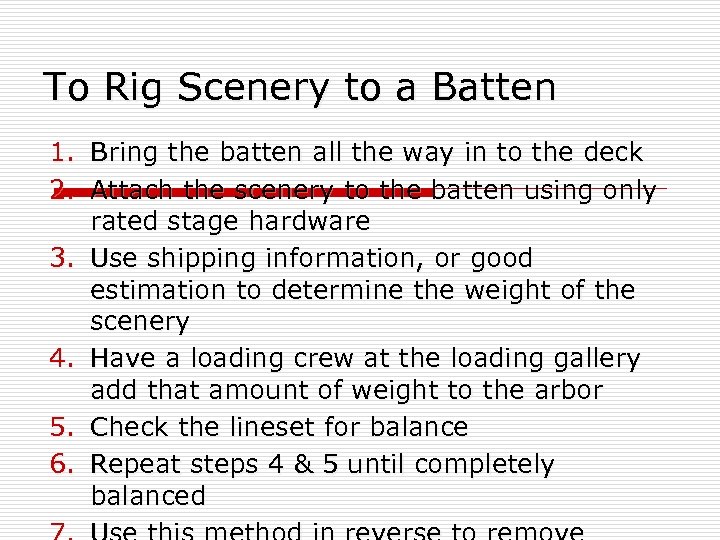 To Rig Scenery to a Batten 1. Bring the batten all the way in to the deck 2. Attach the scenery to the batten using only rated stage hardware 3. Use shipping information, or good estimation to determine the weight of the scenery 4. Have a loading crew at the loading gallery add that amount of weight to the arbor 5. Check the lineset for balance 6. Repeat steps 4 & 5 until completely balanced
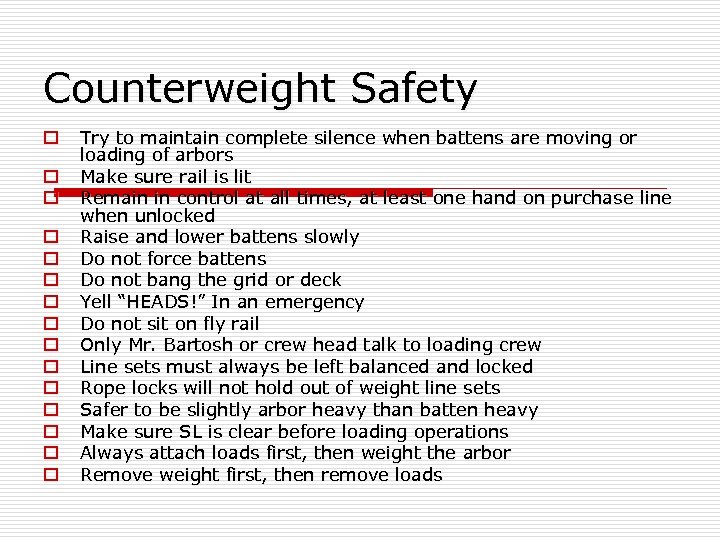 Counterweight Safety o o o o Try to maintain complete silence when battens are moving or loading of arbors Make sure rail is lit Remain in control at all times, at least one hand on purchase line when unlocked Raise and lower battens slowly Do not force battens Do not bang the grid or deck Yell “HEADS!” In an emergency Do not sit on fly rail Only Mr. Bartosh or crew head talk to loading crew Line sets must always be left balanced and locked Rope locks will not hold out of weight line sets Safer to be slightly arbor heavy than batten heavy Make sure SL is clear before loading operations Always attach loads first, then weight the arbor Remove weight first, then remove loads
 Parts of a Single-Purchase Counterweight Fly System
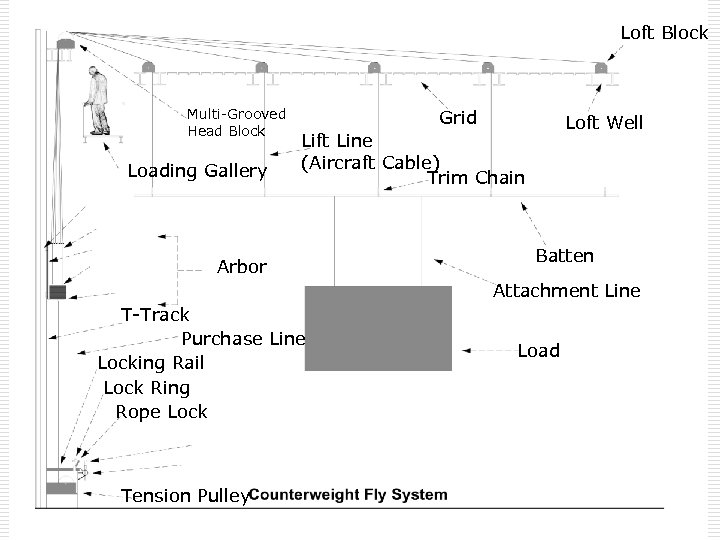 Loft Block Multi-Grooved Head Block Loading Gallery Grid Loft Well Lift Line (Aircraft Cable) Trim Chain Arbor Batten Attachment Line T-Track Purchase Line Locking Rail Lock Ring Rope Lock Tension Pulley Load
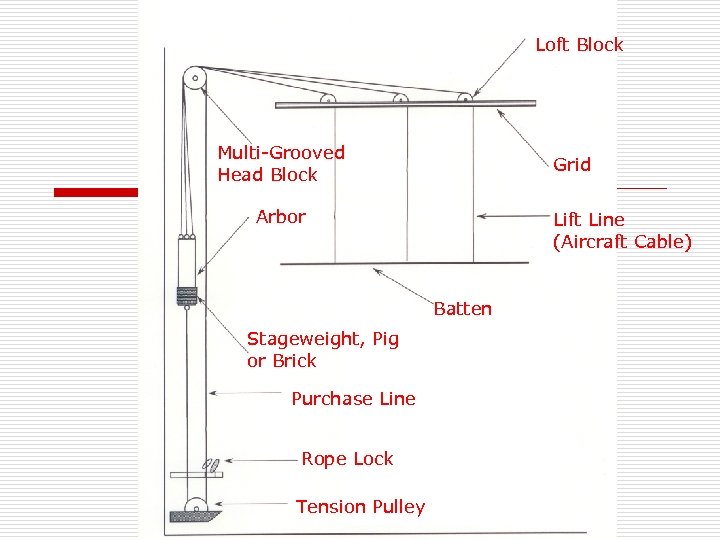 Loft Block Multi-Grooved Head Block Grid Arbor Lift Line (Aircraft Cable) Batten Stageweight, Pig or Brick Purchase Line Rope Lock Tension Pulley
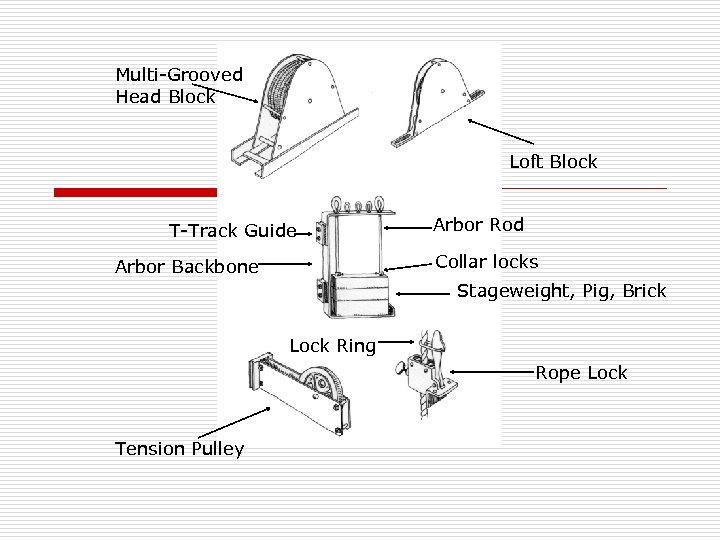 Multi-Grooved Head Block Loft Block T-Track Guide Arbor Rod Collar locks Arbor Backbone Stageweight, Pig, Brick Lock Ring Rope Lock Tension Pulley
 Remember: • The law of gravity cannot be repealed! F=MA works first time every time! • If you do not know don’t pretend – the life you save may be your own. • Everyone has some “local” protocol – if in doubt ask! Being an “instant expert” can get someone hurt or killed! • No one is a “permanent know it all expert” keep looking and learning, you might just find a way to make a better mouse trap!