


 Скачать презентацию Fluoride Varnish Application Quality Education for a Healthier
6a9f664a56521e9b31414668a1bd4dce.ppt
- Количество слайдов: 33
 Fluoride Varnish Application Quality Education for a Healthier Scotland
 Learning outcomes Ø Describe the properties of fluoride varnish and how fluoride varnish helps to reduce dental decay. Ø Identify the areas of competency required in the Direct Observational Procedure (DOP) DN only Ø Apply knowledge of the risk assessment protocol prior to application of fluoride varnish DN only Ø Practice the safe use and application of fluoride varnish DN only Quality Education for a Healthier Scotland
 Session outline Ø Why apply fluoride varnish and how does it reduce caries Ø Fluoride varnish properties Ø Fluoride varnish safety Ø Completing the reflective journal and DOP Ø How to apply fluoride varnish (DVD) Ø Practical session Quality Education for a Healthier Scotland
 Programme Manual The web address is: www. child-smile. org. uk Programme Manual for Childsmile Staff March 2014 Follow links: Professional > Childsmile manuals Quality Education for a Healthier Scotland
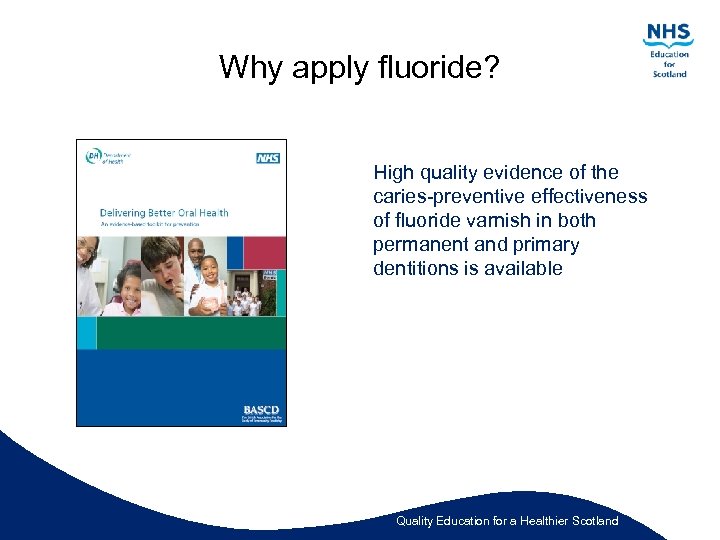 Why apply fluoride? High quality evidence of the caries-preventive effectiveness of fluoride varnish in both permanent and primary dentitions is available Quality Education for a Healthier Scotland
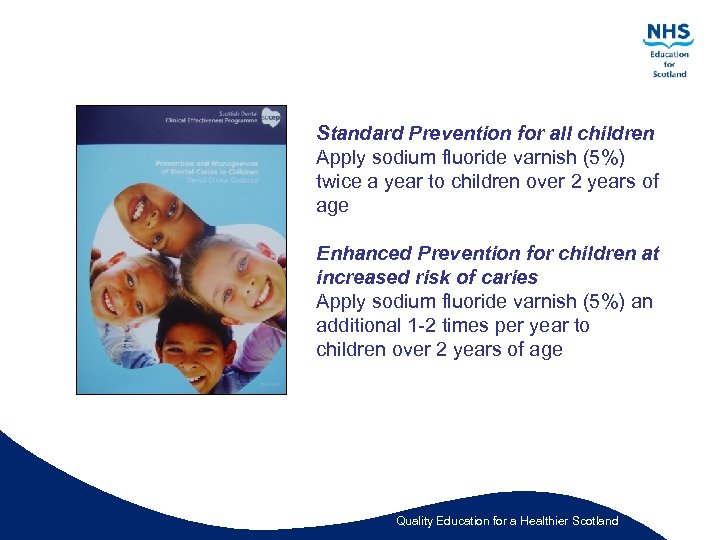 Standard Prevention for all children Apply sodium fluoride varnish (5%) twice a year to children over 2 years of age Enhanced Prevention for children at increased risk of caries Apply sodium fluoride varnish (5%) an additional 1 -2 times per year to children over 2 years of age Quality Education for a Healthier Scotland
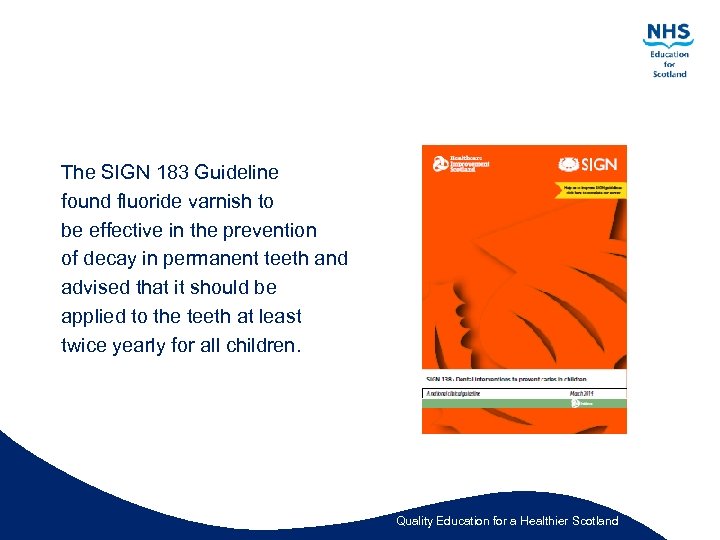 The SIGN 183 Guideline found fluoride varnish to be effective in the prevention of decay in permanent teeth and advised that it should be applied to the teeth at least twice yearly for all children. Quality Education for a Healthier Scotland
 Marinho VCC, Worthington HV, Walsh T, Clarkson JE. Fluoride varnishes for preventing dental caries in children and adolescents. Cochrane Database of Systematic Reviews 2013, Issue 7 www. thecochranelibrary. com Quality Education for a Healthier Scotland
 How does fluoride work Topical effect which; Ø Slows down the development of decay by stopping demineralisation Ø Makes enamel more resistant to acid attack and speeds up remineralisation Ø Can stop bacterial metabolism and reduce acid production. Quality Education for a Healthier Scotland
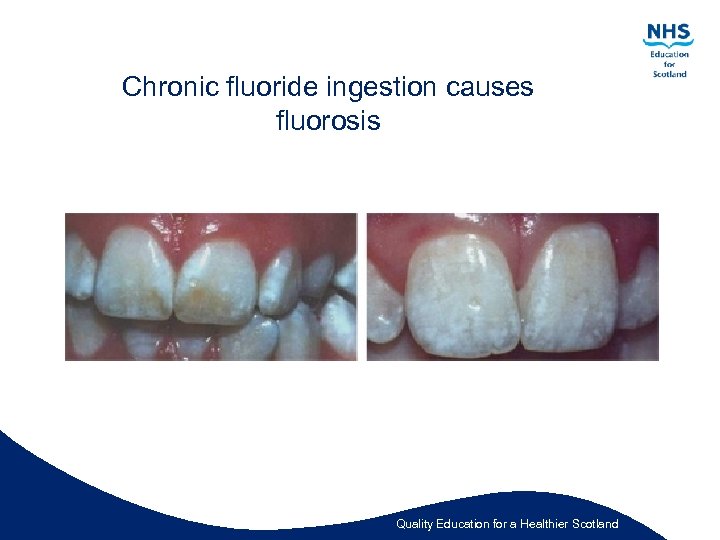 Chronic fluoride ingestion causes fluorosis Quality Education for a Healthier Scotland
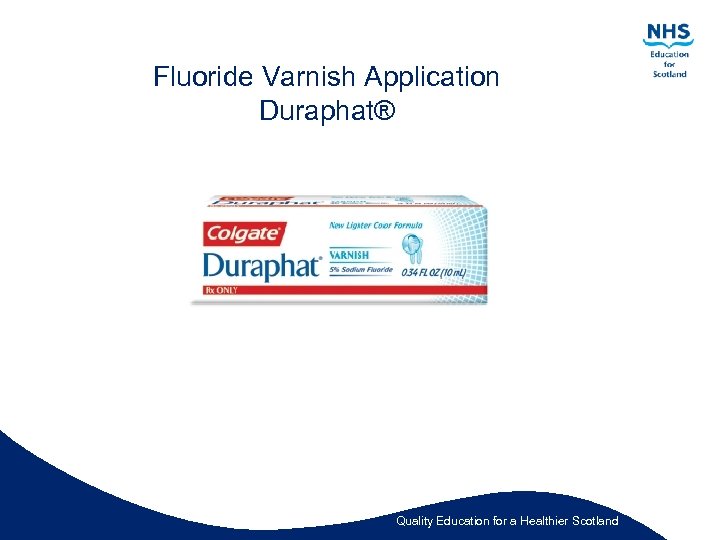 Fluoride Varnish Application Duraphat® Quality Education for a Healthier Scotland
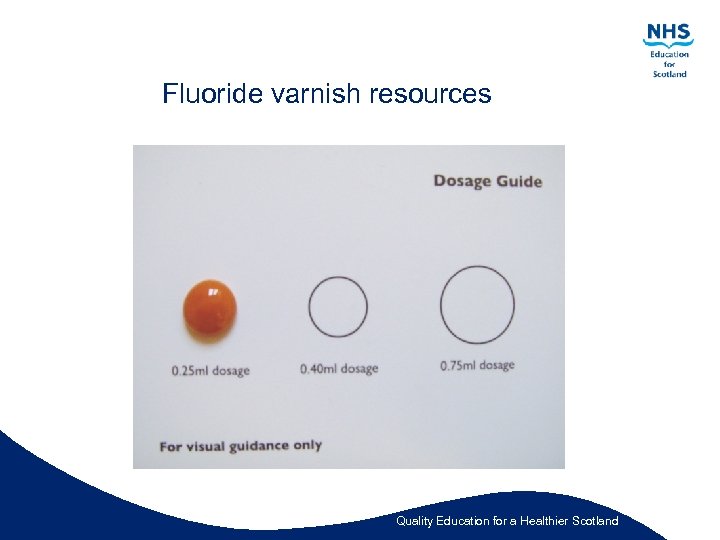 Fluoride varnish resources Quality Education for a Healthier Scotland
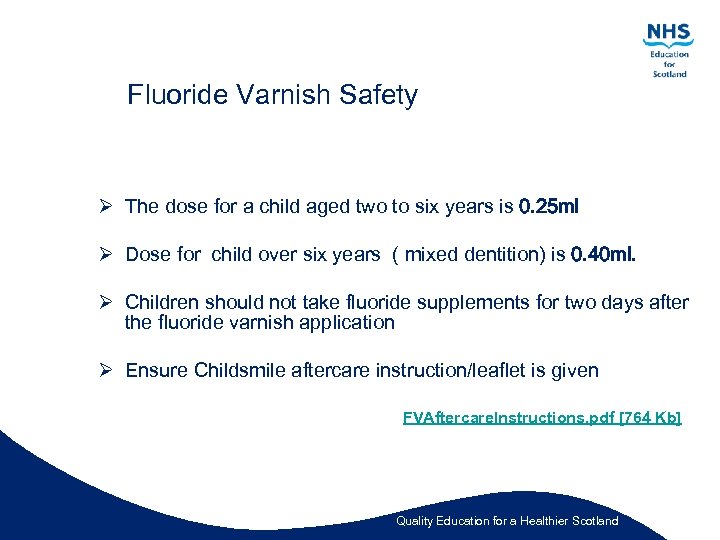 Fluoride Varnish Safety Ø The dose for a child aged two to six years is 0. 25 ml Ø Dose for child over six years ( mixed dentition) is 0. 40 ml. Ø Children should not take fluoride supplements for two days after the fluoride varnish application Ø Ensure Childsmile aftercare instruction/leaflet is given FVAftercare. Instructions. pdf [764 Kb] Quality Education for a Healthier Scotland
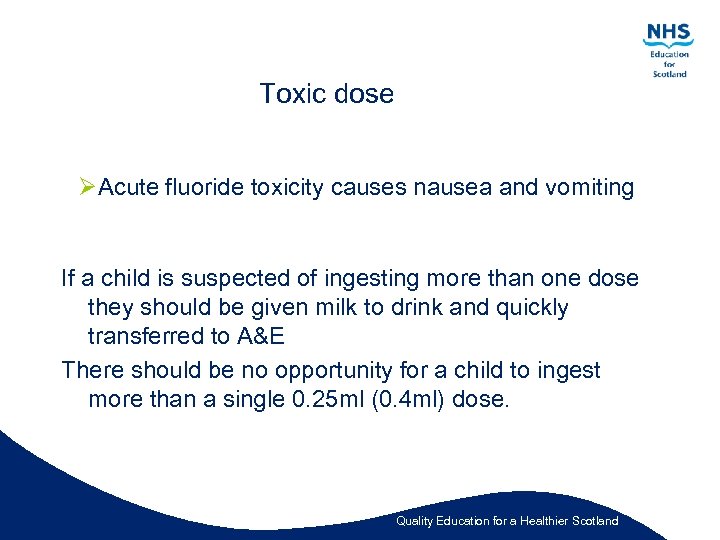 Toxic dose ØAcute fluoride toxicity causes nausea and vomiting If a child is suspected of ingesting more than one dose they should be given milk to drink and quickly transferred to A&E There should be no opportunity for a child to ingest more than a single 0. 25 ml (0. 4 ml) dose. Quality Education for a Healthier Scotland
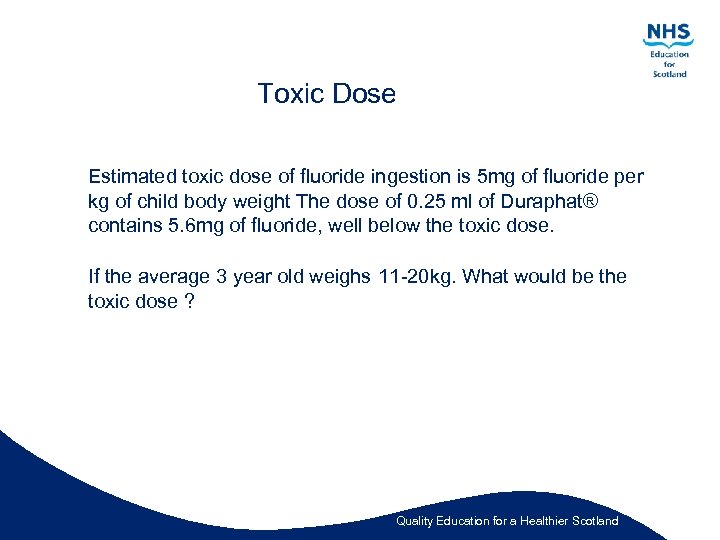 Toxic Dose Estimated toxic dose of fluoride ingestion is 5 mg of fluoride per kg of child body weight The dose of 0. 25 ml of Duraphat® contains 5. 6 mg of fluoride, well below the toxic dose. If the average 3 year old weighs 11 -20 kg. What would be the toxic dose ? Quality Education for a Healthier Scotland
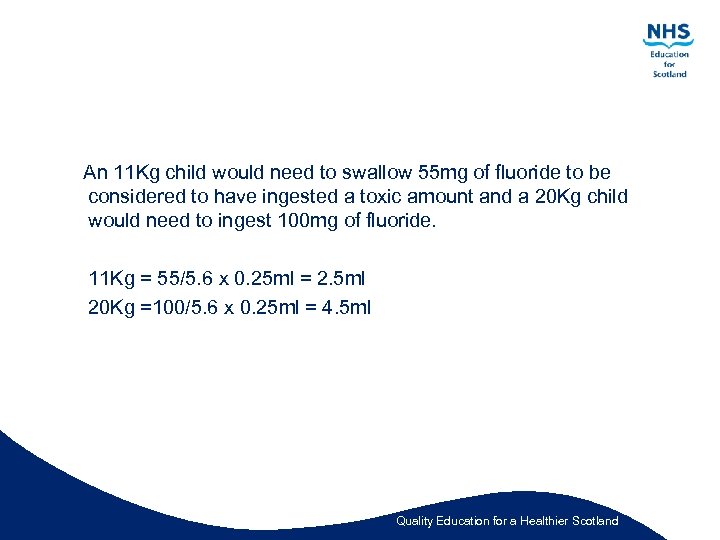 An 11 Kg child would need to swallow 55 mg of fluoride to be considered to have ingested a toxic amount and a 20 Kg child would need to ingest 100 mg of fluoride. 11 Kg = 55/5. 6 x 0. 25 ml = 2. 5 ml 20 Kg =100/5. 6 x 0. 25 ml = 4. 5 ml Quality Education for a Healthier Scotland
 The Collapsed Child Ø Duraphat® applied in the correct dose is not associated with any adverse reactions Ø Every parent is asked about allergies and asthma, and children who have been hospitalised due to severe asthma or allergy or who are allergic to sticking plaster should not have Duraphat applied. Ø Duraphat –Safety Issues information sheet Childsmile Website http: //www. child-smile. org. uk/professionals/information-for-dentalpractice-staff/practice-documents. aspx Ø Prescribing Duraphat is the DENTIST’S responsibility Quality Education for a Healthier Scotland
 The Collapsed Child Protocol Ø Stop the procedure and summon help from the rest of the team/teacher Ø Call 999 and note the time Ø Remove all equipment from the vicinity of the child Ø Put the child in the recovery position Ø Make sure all other children are kept safe and away from the incident Quality Education for a Healthier Scotland
 Reporting adverse reactions protocol Remove product by tooth brushing and rinsing and follow local protocol Complete and submit a BNF yellow card as per local procedure If there any adverse reactions to the fluoride varnish (e. g. mucositis, allergy etc. ) then these must be reported, by either the DHSW or the EDDN, to the prescribing dentist http: //yellowcard. mhra. gov. uk/ Quality Education for a Healthier Scotland
 Reflective Diary and Direct Observational Procedure Ø Firstly observe and assist a trainer apply varnish in five cases. Write a reflective statement detailing your learning during observation. Ø Apply varnish to at least 10 children approx age under 10 years with the majority being under 6 years it should be supervised and documented in the reflective diaries Ø Undergo 1 Direct Observational Procedure (DOP). If you are successful then the diary is sent to NES Oral Health Improvement Tutors and you will receive your certificate Quality Education for a Healthier Scotland
 Direct Observational Procedure Ø You must be assessed as competent in areas 1 -7 to complete the DOP satisfactorily Ø If you do not complete one of the cases satisfactorily the area should be identified and addressed and the DOP re-taken Quality Education for a Healthier Scotland
 Competencies 1. Taking a relevant history and risk-assessing for fluoride varnish application 2. Clinical Judgment 3. Technical Ability & Manual Dexterity 4. Communication Skills 5. Professionalism 6. Knowledge 7. Organisation Quality Education for a Healthier Scotland
 Child Protection Ø There are many forms of abuse: physical, emotional, sexual, neglect. Ø Everyone has a part to play in making sure children are safe from harm Ø 60% of cases of physical abuse have orofacial signs Quality Education for a Healthier Scotland
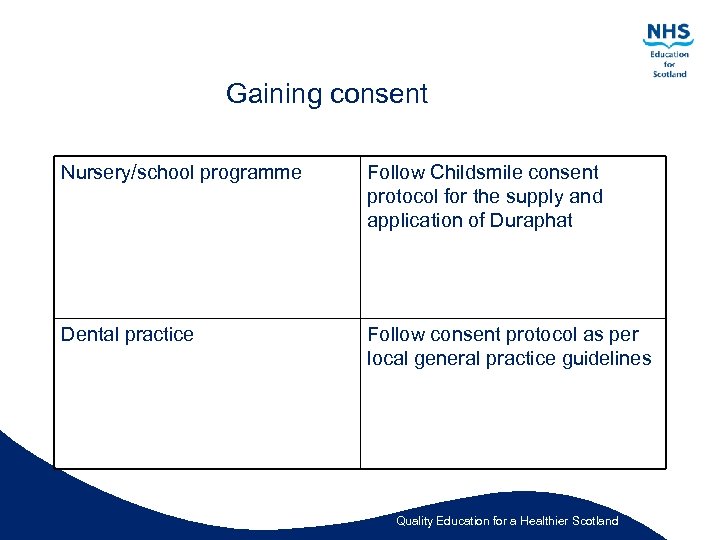 Gaining consent Nursery/school programme Follow Childsmile consent protocol for the supply and application of Duraphat Dental practice Follow consent protocol as per local general practice guidelines Quality Education for a Healthier Scotland
 Communicating with children What can we do well? Quality Education for a Healthier Scotland
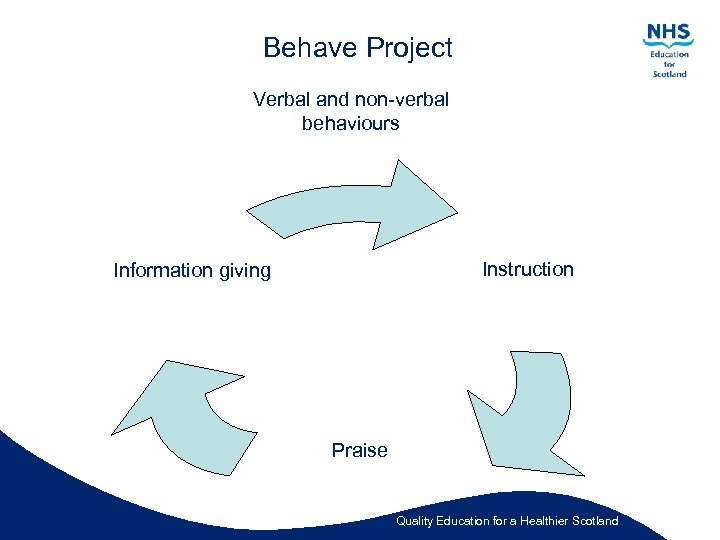 Behave Project Verbal and non-verbal behaviours Instruction Information giving Praise Quality Education for a Healthier Scotland
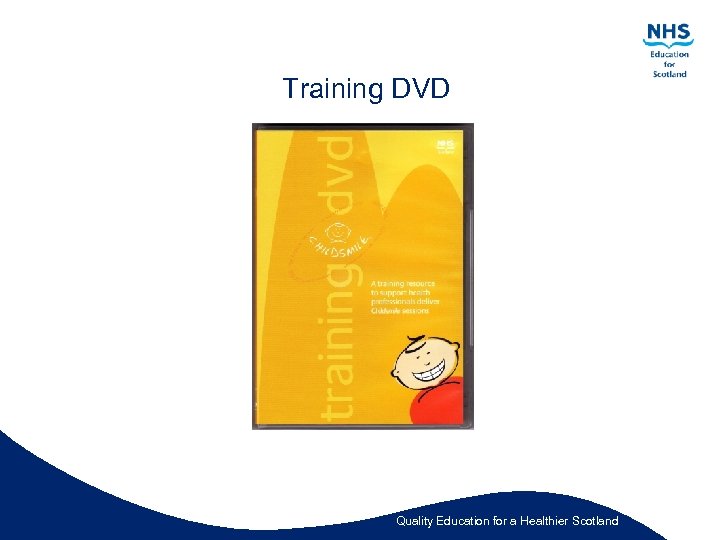 Training DVD Quality Education for a Healthier Scotland
 Practical session Quality Education for a Healthier Scotland
 Learning Points Ø Feedback from practical session Quality Education for a Healthier Scotland
 Appropriate preventative care Group work Ø In addition to application of fluoride what other simple preventative interventions are available? Ø Discuss what your responsibilities are in terms of preventive advice. Quality Education for a Healthier Scotland
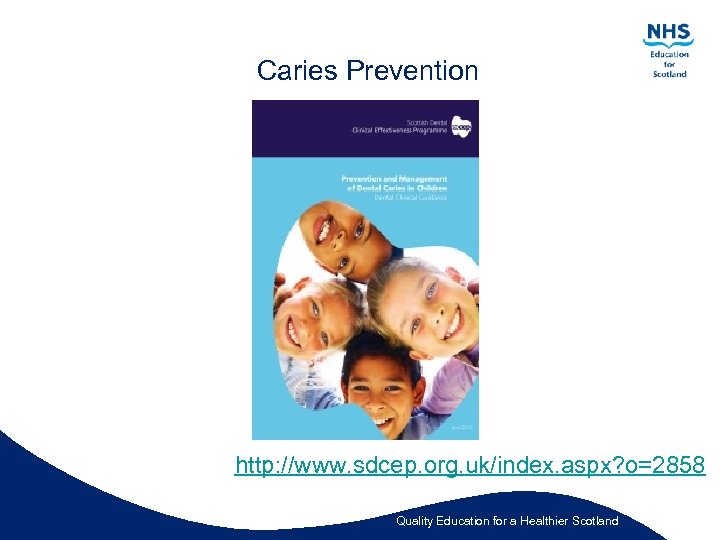 Caries Prevention http: //www. sdcep. org. uk/index. aspx? o=2858 Quality Education for a Healthier Scotland
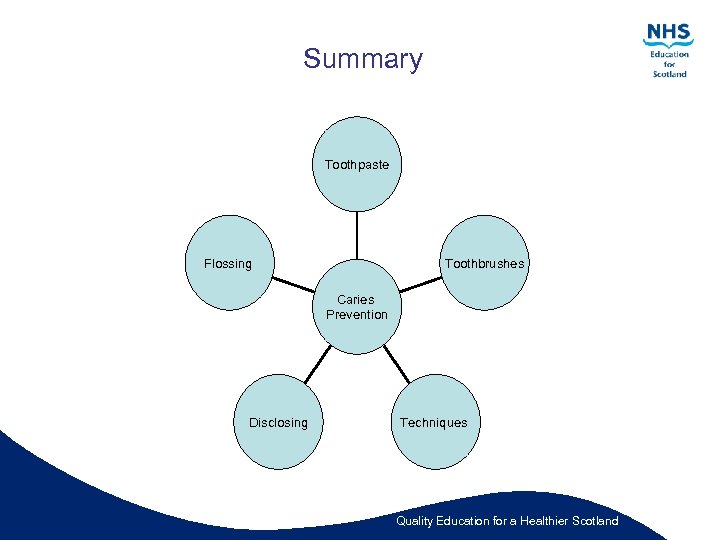 Summary Toothpaste Flossing Toothbrushes Caries Prevention Disclosing Techniques Quality Education for a Healthier Scotland
 Evidence Scottish Dental Clinical Effectiveness Programme www. sdcep. org. uk The Scottish Intercollegiate Guidelines Network (SIGN) www. sign. ac. uk The Cochrane library www. thecochranelibrary. com Childsmile Programme www. childsmile. org. uk The yellow card scheme http: //yellowcard. mhra. gov. uk/ Quality Education for a Healthier Scotland