


 Скачать презентацию Florida Tsunamis and You soo-NAH-mee The word tsunami
0cd69a7e717241a8f5e5a6149cc05e5f.ppt
- Количество слайдов: 56
 Florida, Tsunamis, and You soo-NAH-mee The word tsunami is Japanese meaning harbor wave Daniel Noah Warning Coordination Meteorologist National Weather Service Forecast Office - Ruskin, FL
 What is a Tsunami? �A series of long waves created by a disturbance that displaces a large amount of water. �Primarily associated with earthquakes in oceanic or coastal regions. �Landslides, volcanic eruptions, nuclear explosions, and even impacts from objects from outer space (such as meteorites, asteroids, and comets)
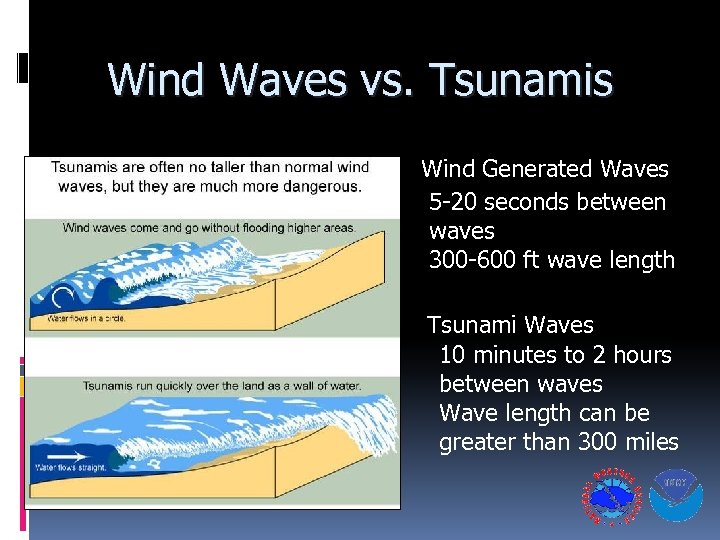 Wind Waves vs. Tsunamis Wind Generated Waves 5 -20 seconds between waves 300 -600 ft wave length Tsunami Waves 10 minutes to 2 hours between waves Wave length can be greater than 300 miles
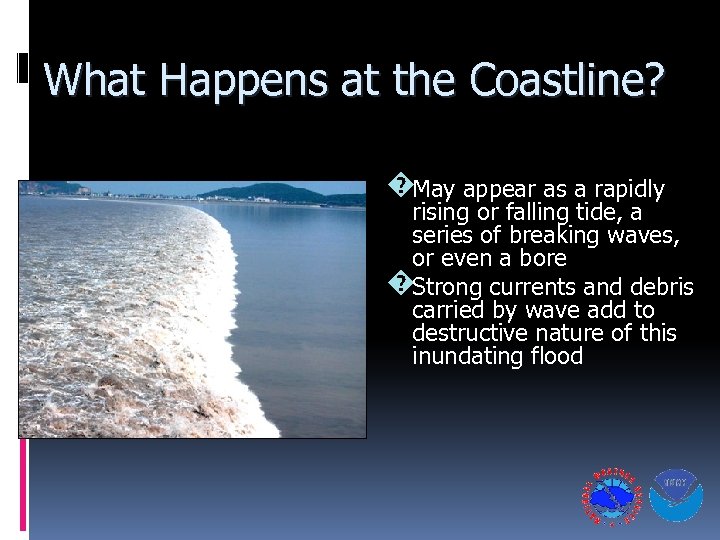 What Happens at the Coastline? �May appear as a rapidly rising or falling tide, a series of breaking waves, or even a bore �Strong currents and debris carried by wave add to destructive nature of this inundating flood
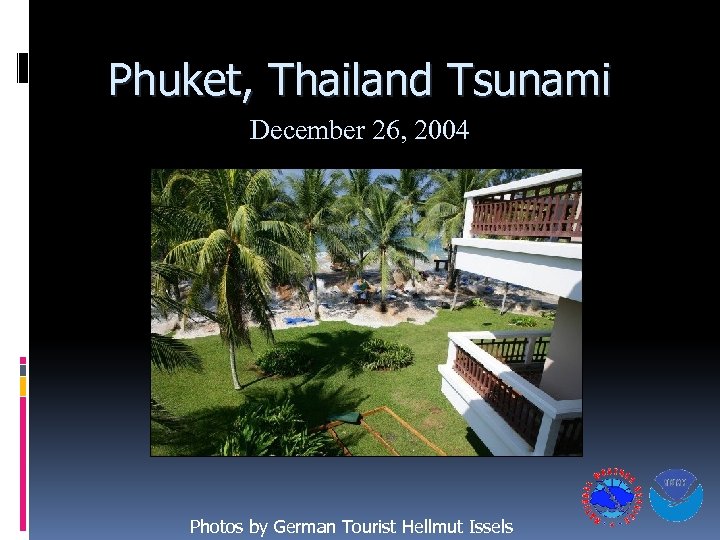 Phuket, Thailand Tsunami December 26, 2004 Photos by German Tourist Hellmut Issels
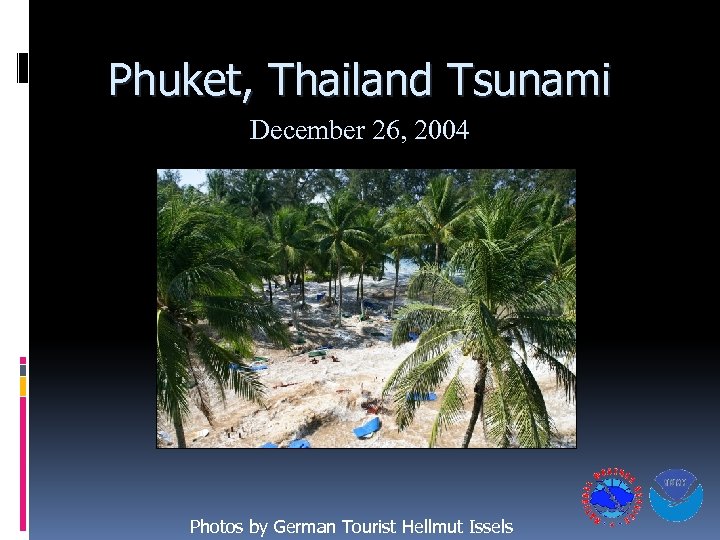 Phuket, Thailand Tsunami December 26, 2004 Photos by German Tourist Hellmut Issels
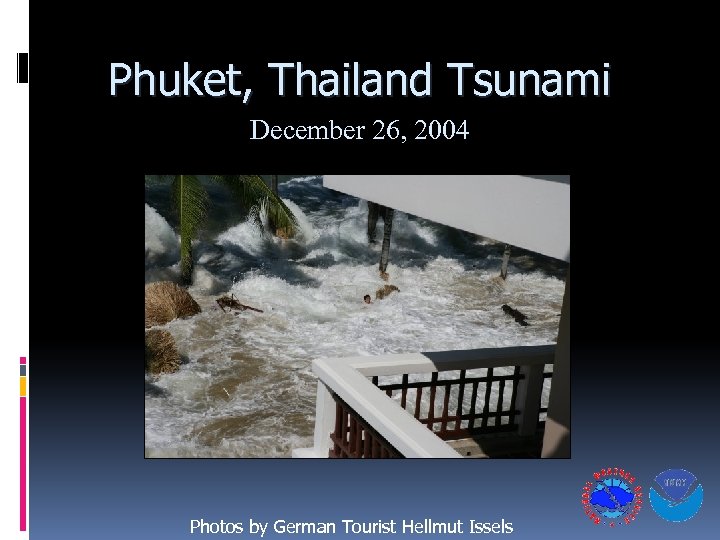 Phuket, Thailand Tsunami December 26, 2004 Photos by German Tourist Hellmut Issels
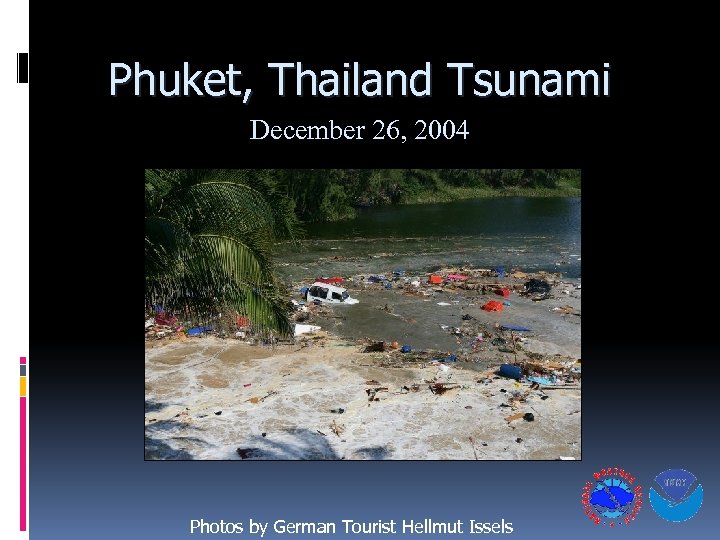 Phuket, Thailand Tsunami December 26, 2004 Photos by German Tourist Hellmut Issels
 Tsunami Safety
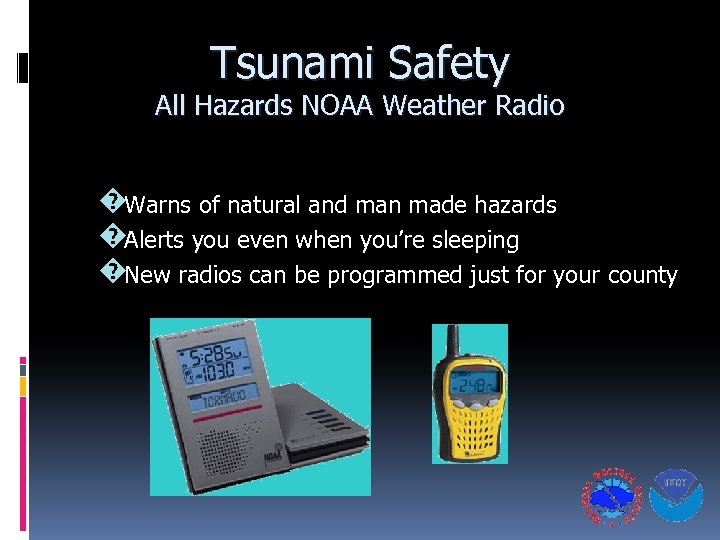 Tsunami Safety All Hazards NOAA Weather Radio �Warns of natural and man made hazards �Alerts you even when you’re sleeping �New radios can be programmed just for your county
 Tsunami Safety Rules For those on the beach �If you feel the earth shake, move immediately to higher ground, DO NOT wait for a tsunami warning to be announced. Stay away from rivers and streams that lead to the ocean if there is a tsunami.
 Tsunami Safety Rules For those on the water �Do not return to port when a Tsunami Warning has been issued �Tsunamis can cause dangerous currents in harbors and ports �If you have time, move your vessel to deep water �Contact the harbor authority to verify conditions are safe before returning
 Tsunami Safety Rules For those on land �Evacuate your house if you live in a hurricane storm surge zone Evacuate vertically if you do not have time to leave the surge zone, move to the highest floor or to the roof Follow the advice of local emergency management and law enforcement officials
 For More Information http: //tsunami. gov
 Causes of Tsunamis
 Causes of Tsunamis • Usually by earthquakes • Less commonly by landslides (into the water and completely below the water) • Infrequently by volcanic eruptions or explosive decompression of underwater methane deposits • Very rarely by a large meteorite impact in the ocean
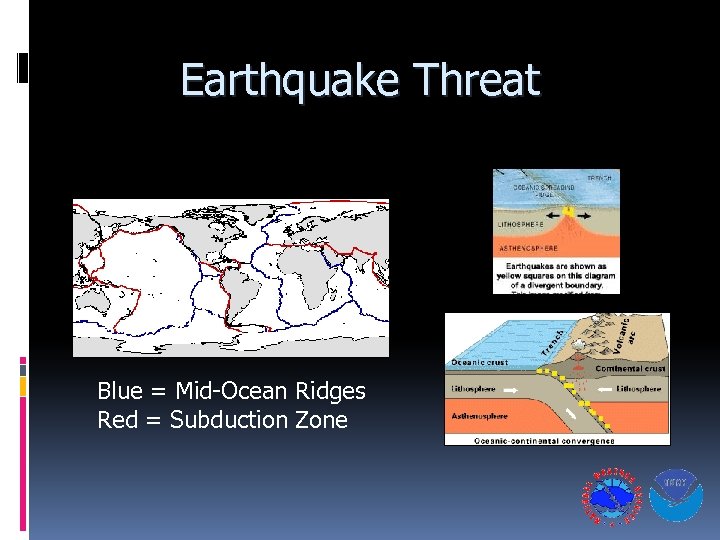 Earthquake Threat Blue = Mid-Ocean Ridges Red = Subduction Zone
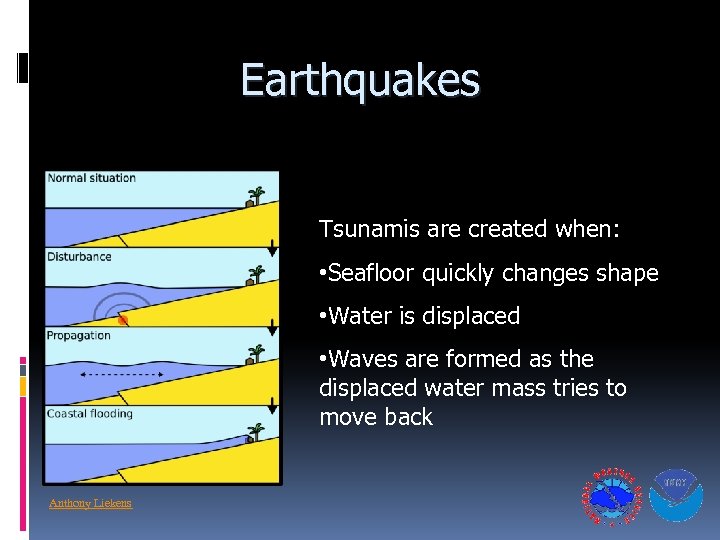 Earthquakes Tsunamis are created when: • Seafloor quickly changes shape • Water is displaced • Waves are formed as the displaced water mass tries to move back Anthony Liekens
 Tsunami Animation
 Tsunami Animation, 12/26/04 Earthquake 9. 0 on Richter Scale near Sumatra Over 160, 000 fatalities
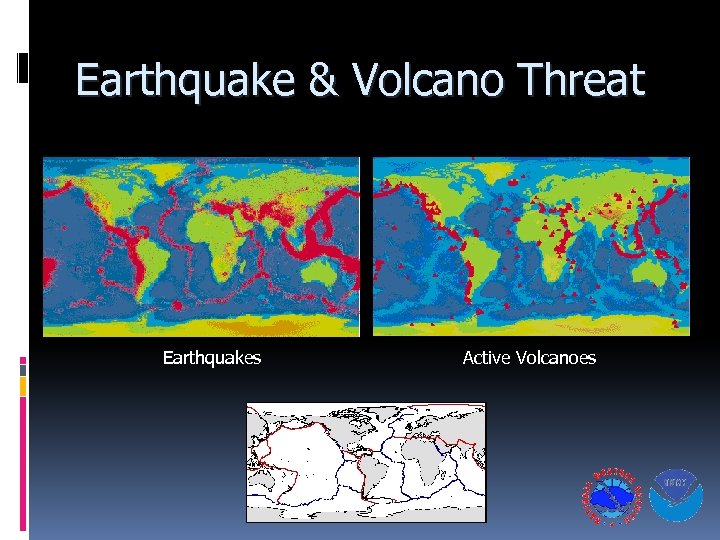 Earthquake & Volcano Threat Earthquakes Active Volcanoes
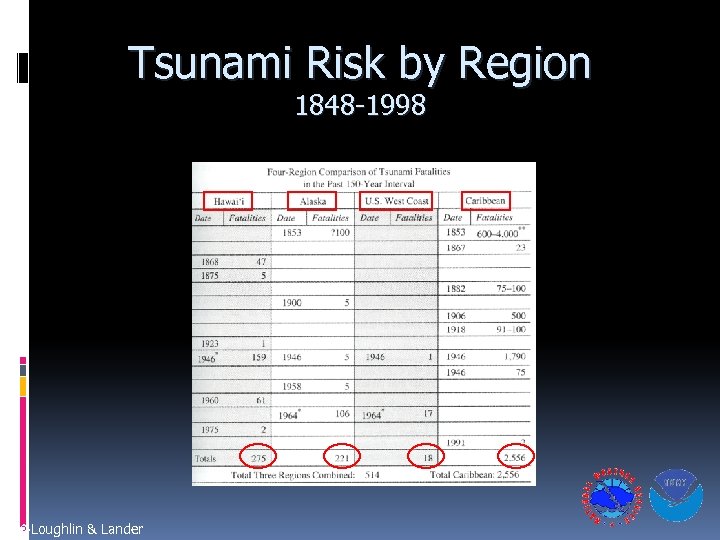 Tsunami Risk by Region 1848 -1998 O�Loughlin & Lander
 Florida’s Risk of Tsunamis
 Tsunami Risk in Florida • Florida’s Atlantic Coast • Puerto Rico Trench • Cumbre Vieja Volcano in Canary Islands • 1755 Lisbon Earthquake • Azores-Gibraltar fracture zone • Florida’s Gulf Coast and Keys • Puerto Rico Trench (minor effect as wave wraps around islands) • Large Meteorite into Gulf of Mexico
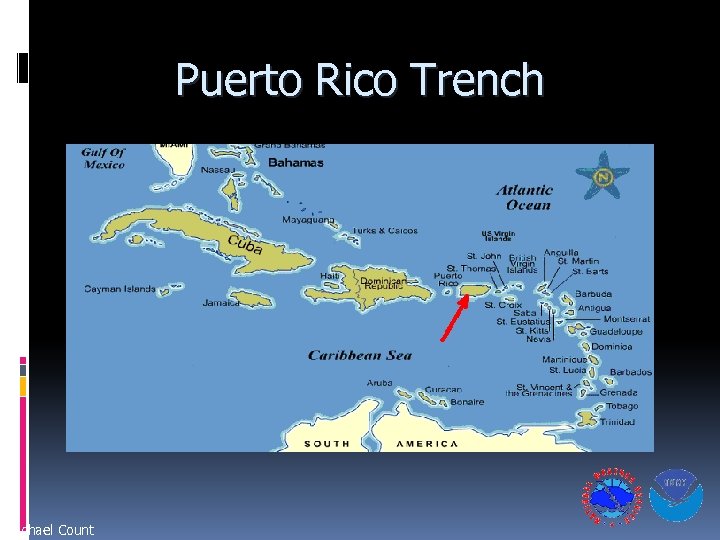 Puerto Rico Trench Michael Count
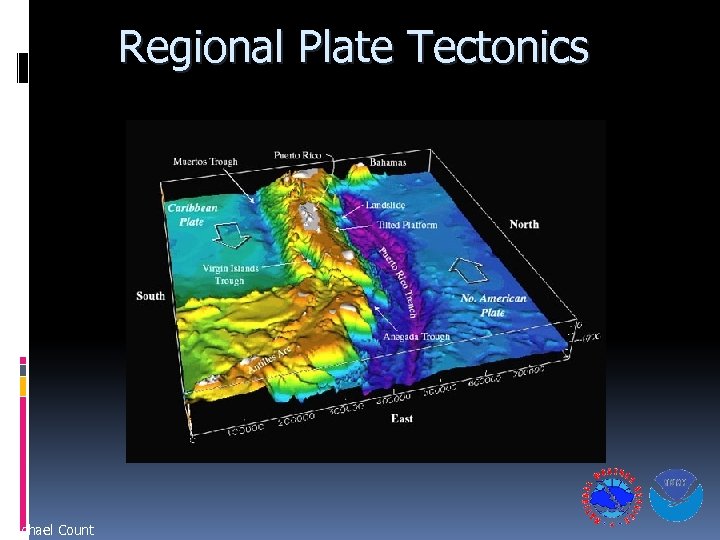 Regional Plate Tectonics Michael Count
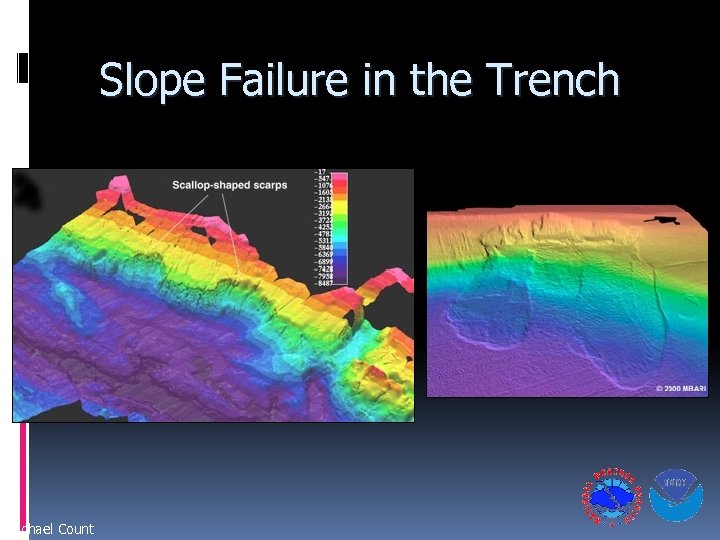 Slope Failure in the Trench Michael Count
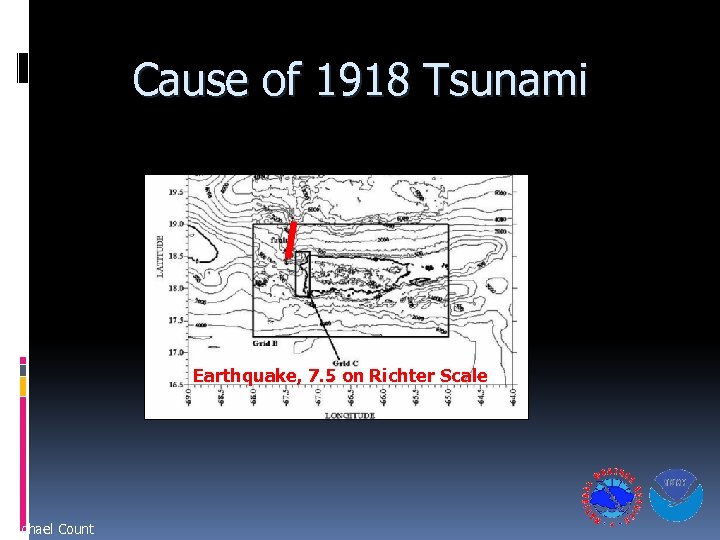 Cause of 1918 Tsunami Earthquake, 7. 5 on Richter Scale Michael Count
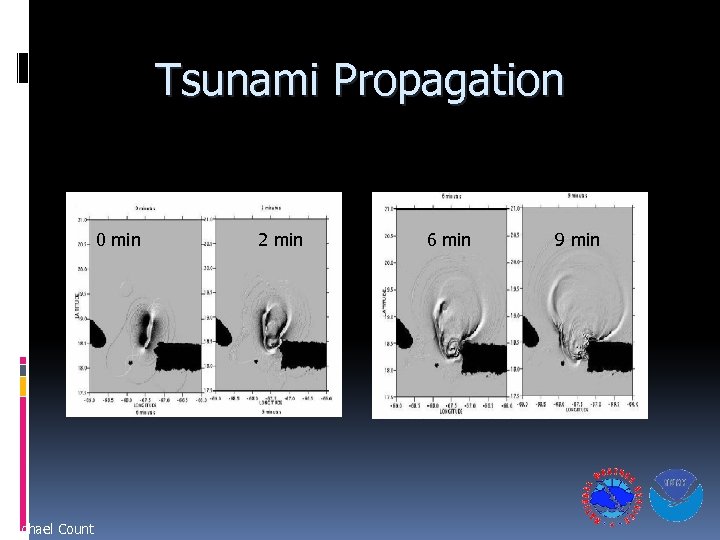 Tsunami Propagation 0 min Michael Count 2 min 6 min 9 min
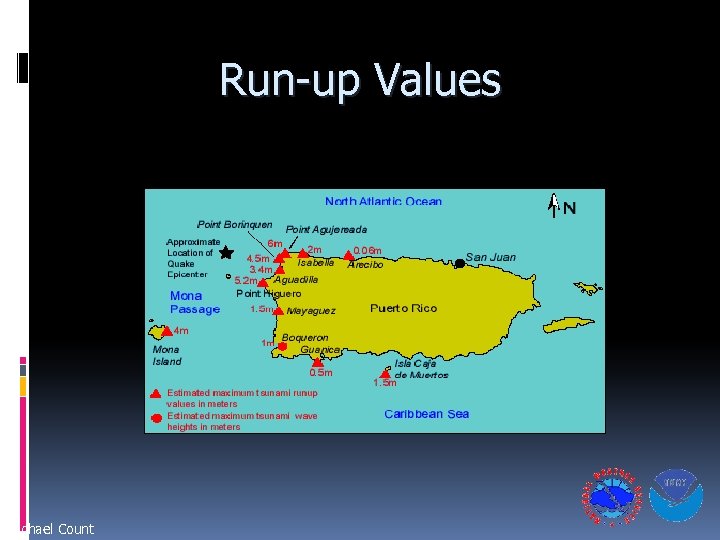 Run-up Values Michael Count
 Tsunami Devastation • Report of large withdrawal of water exposing unseen sediment before tsunami struck the shore • Wave run-up of approximately 20 feet • 116 Deaths • Water traveled 100 meters inland in low lying areas, destroying villages and buildings Michael Count
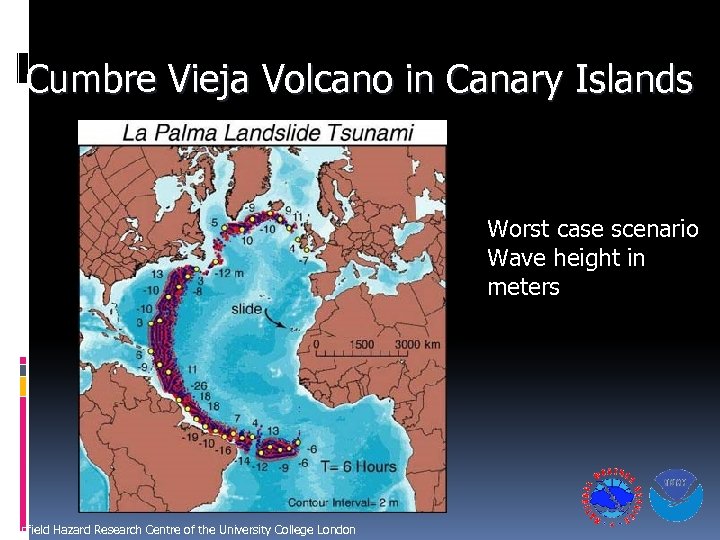 Cumbre Vieja Volcano in Canary Islands Worst case scenario Wave height in meters Benfield Hazard Research Centre of the University College London
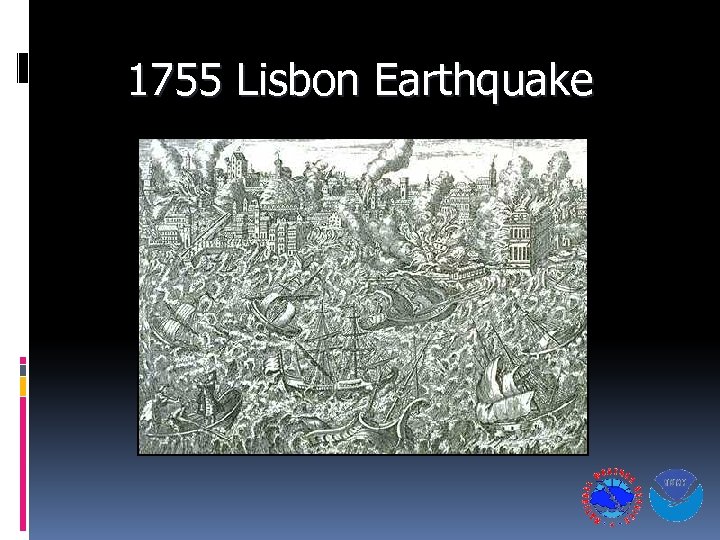 1755 Lisbon Earthquake
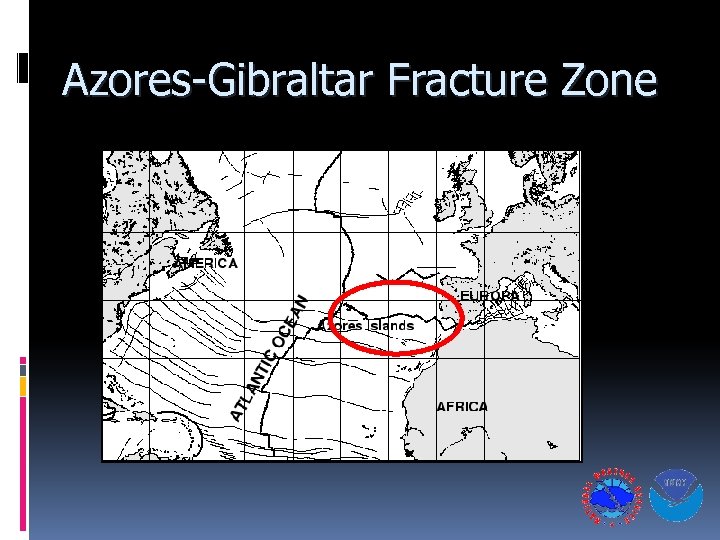 Azores-Gibraltar Fracture Zone
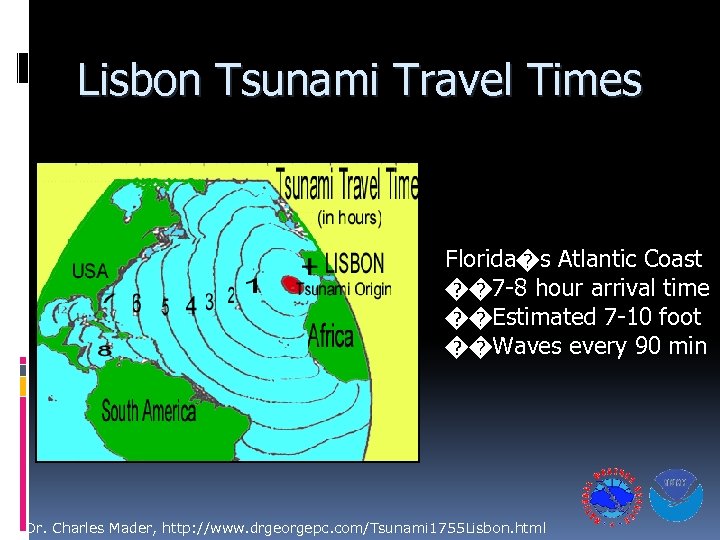 Lisbon Tsunami Travel Times Florida�s Atlantic Coast �� 7 -8 hour arrival time ��Estimated 7 -10 foot ��Waves every 90 min Dr. Charles Mader, http: //www. drgeorgepc. com/Tsunami 1755 Lisbon. html
 Tsunamis vs. Rogue Waves
 Tsunamis vs. Rogue Waves Rogue waves are different the Tsunamis but the end result is similar. Rogue Wave Characteristics • Unpredictable nature • Little is know about the formation • May be caused by regularly-spaced ocean swells that are magnified by currents or the atmosphere
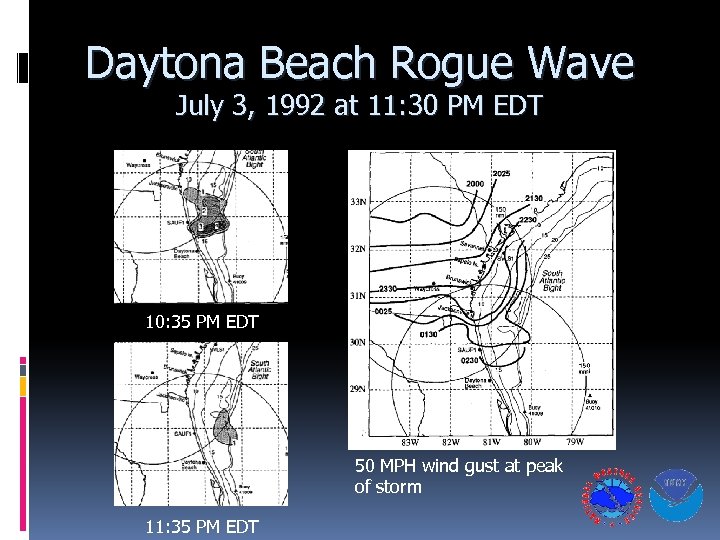 Daytona Beach Rogue Wave July 3, 1992 at 11: 30 PM EDT 10: 35 PM EDT 50 MPH wind gust at peak of storm 11: 35 PM EDT
 Daytona Beach Rogue Wave July 3, 1992 • 10 ft rise at the beach at 11: 30 PM EDT • 75 minor injuries • About 36 vehicles damaged • Swamped shoreline for 30 miles, worst was five miles of shoreline near Daytona Beach
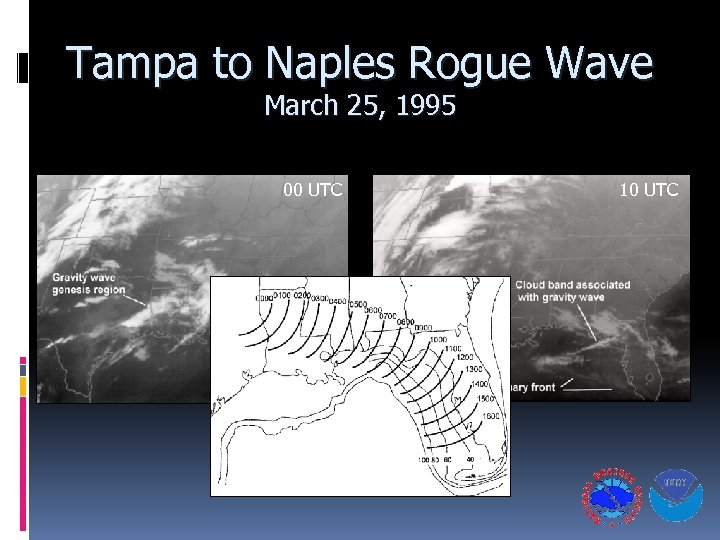 Tampa to Naples Rogue Wave March 25, 1995 00 UTC 10 UTC
 Tampa to Naples Rogue Wave March 25, 1995 • Strong outgoing tide at the mouth of Tampa Bay before an 11 foot rise around 9 AM EST • Tide was 1 to 4 feet above normal south of Tampa Bay to Naples (124 miles of shoreline) • Carried stingrays and jellyfish on the beach causing people to flee • Wave broke about 1 mile offshore
 How Often Can We Expect Tsunamis & Rogue Waves One or two tsunamis each century along the east coast of the U. S. �� Only one Atlantic-wide Tsunami documented (the 1755 Lisbon earthquake) However, Eastern U. S. has had 40 tsunamis/rogue waves in the last 400 years or an average of one coastal flood event every 10 years Lockridge, Whiteside, and Lander
 Tsunamis Detection & Warning
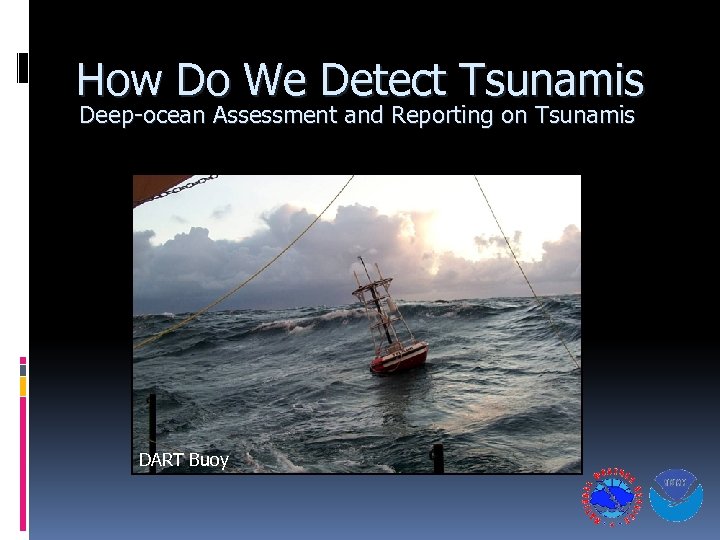 How Do We Detect Tsunamis Deep-ocean Assessment and Reporting on Tsunamis DART Buoy
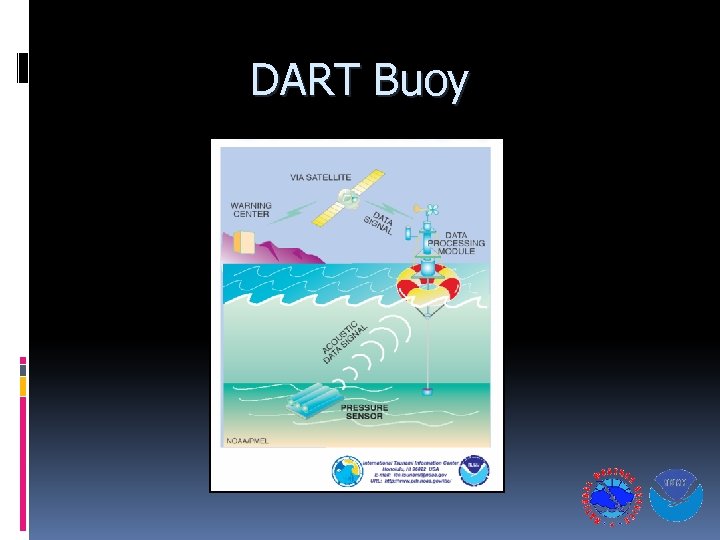 DART Buoy
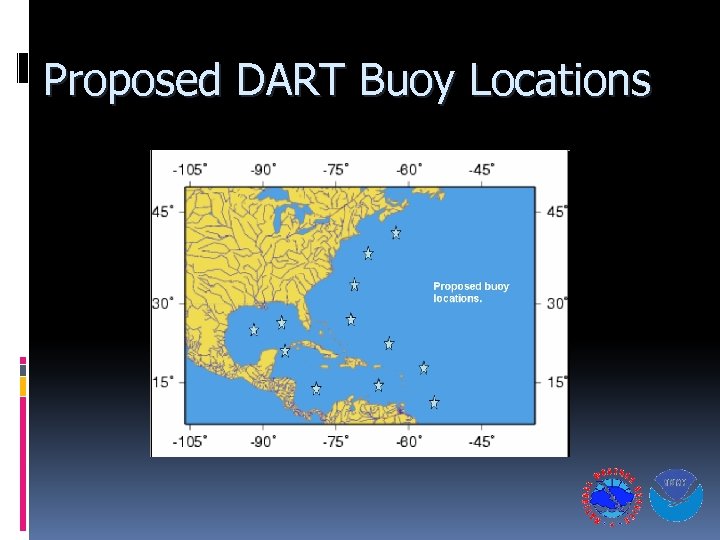 Proposed DART Buoy Locations
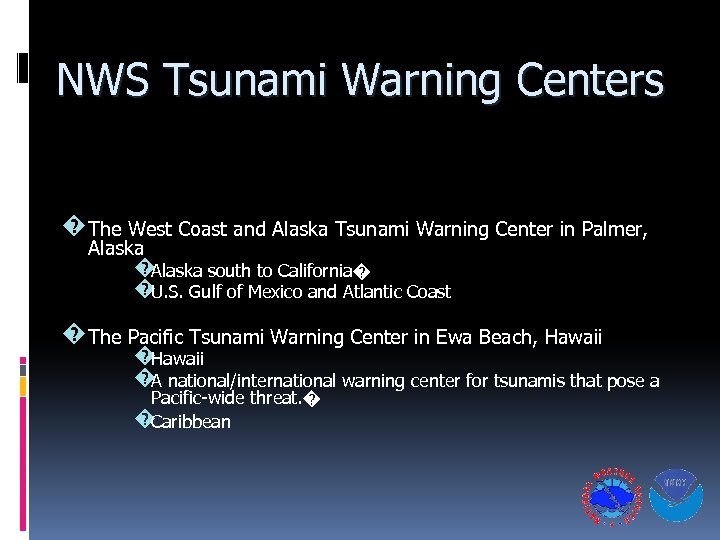 NWS Tsunami Warning Centers �The West Coast and Alaska Tsunami Warning Center in Palmer, Alaska � Alaska south to California� � Gulf of Mexico and Atlantic Coast U. S. �The Pacific Tsunami Warning Center in Ewa Beach, Hawaii � national/international warning center for tsunamis that pose a A Pacific-wide threat. � � Caribbean
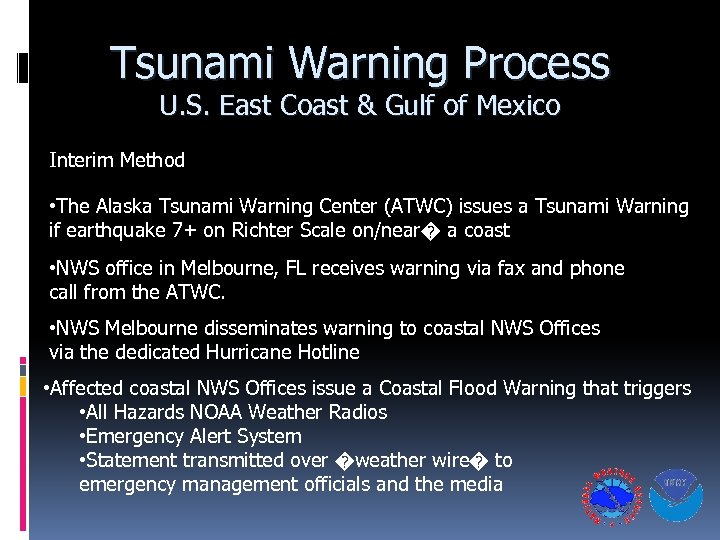 Tsunami Warning Process U. S. East Coast & Gulf of Mexico Interim Method • The Alaska Tsunami Warning Center (ATWC) issues a Tsunami Warning if earthquake 7+ on Richter Scale on/near� a coast • NWS office in Melbourne, FL receives warning via fax and phone call from the ATWC. • NWS Melbourne disseminates warning to coastal NWS Offices via the dedicated Hurricane Hotline • Affected coastal NWS Offices issue a Coastal Flood Warning that triggers • All Hazards NOAA Weather Radios • Emergency Alert System • Statement transmitted over �weather wire� to emergency management officials and the media
 Tsunami Warning Statistics �Tsunami Warning Center in Palmer, AK �Warnings are issued within 15 minutes of earthquake and are based solely on seismic data �The average response time was 6. 8 minutes in 2003 �Since 1981, 11 regional tsunami warnings have been issued by the WC/ATWC
 How can I find out if there is a tsunami warning program in my county?
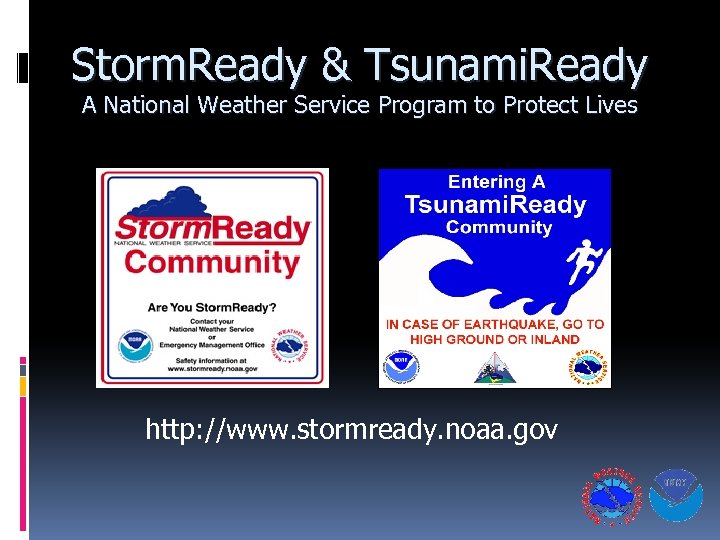 Storm. Ready & Tsunami. Ready A National Weather Service Program to Protect Lives Thank you! http: //www. stormready. noaa. gov
 What is Storm. Ready? �A NWS program for our communities to improve communication and hazardous weather preparedness �Provides community leaders and emergency managers with guidance on how to improve warning and weather preparedness programs
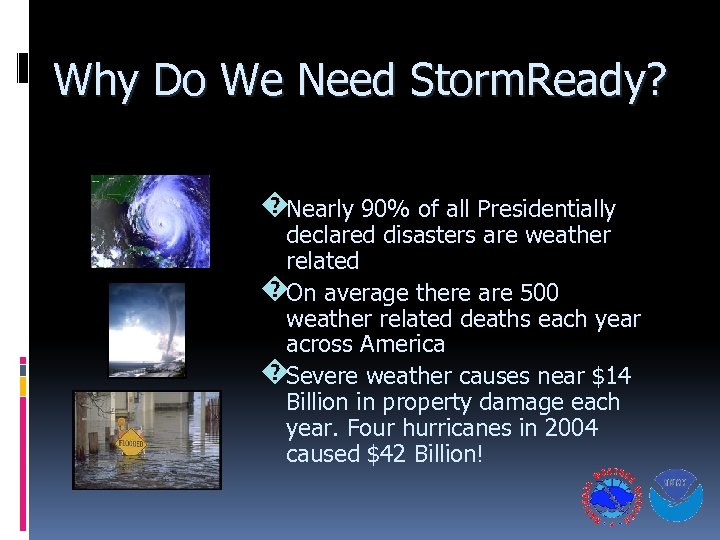 Why Do We Need Storm. Ready? �Nearly 90% of all Presidentially declared disasters are weather related �On average there are 500 weather related deaths each year across America �Severe weather causes near $14 Billion in property damage each year. Four hurricanes in 2004 caused $42 Billion!
 What is Tsunami. Ready? • A part of the NWS Storm. Ready Program • A collaborative effort between federal, state, and local emergency management, and the public • A method to improve public safety during tsunami emergencies
 Tsunami. Ready Objectives ��Create minimum standard community guidelines for adequate tsunami readiness ��Encourage consistency in educational materials and response ��Recognize communities that have adopted Tsunami. Ready guidelines ��Increase public awareness and understanding of the tsunami hazard
 Thank You!