


 Скачать презентацию Florida s PS Rt I Project Evaluation of Efforts to
6001c6c494812cec6c81d17f6e2f5c8d.ppt
- Количество слайдов: 56
 Florida’s PS/Rt. I Project: Evaluation of Efforts to Scale Up Implementation Just Read, Florida! Leadership Conference July 1, 2008 Jose Castillo, M. A. Michael Curtis, Ph. D. George Batsche, Ed. D.
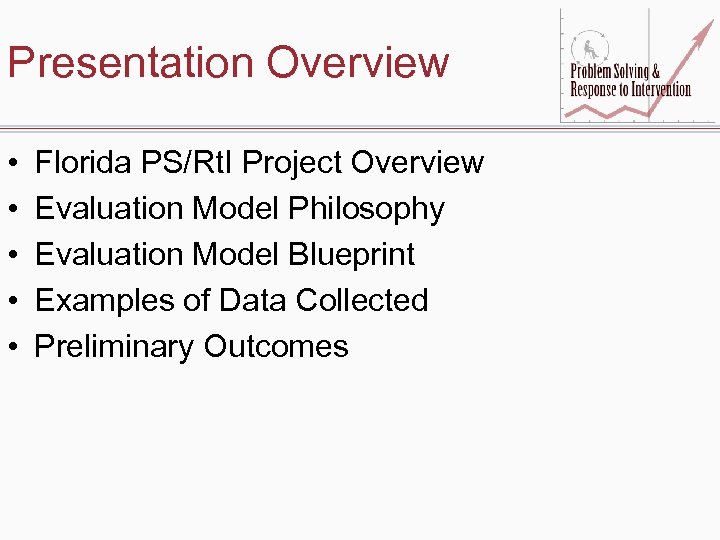 Presentation Overview • • • Florida PS/Rt. I Project Overview Evaluation Model Philosophy Evaluation Model Blueprint Examples of Data Collected Preliminary Outcomes
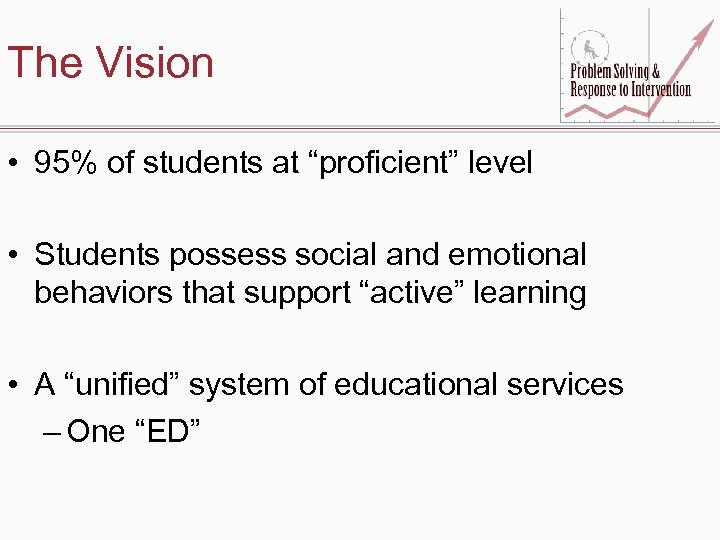 The Vision • 95% of students at “proficient” level • Students possess social and emotional behaviors that support “active” learning • A “unified” system of educational services – One “ED”
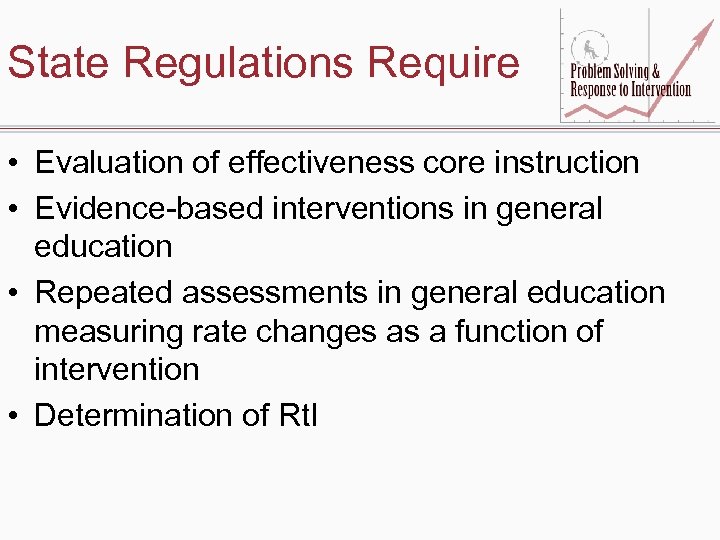 State Regulations Require • Evaluation of effectiveness core instruction • Evidence-based interventions in general education • Repeated assessments in general education measuring rate changes as a function of intervention • Determination of Rt. I
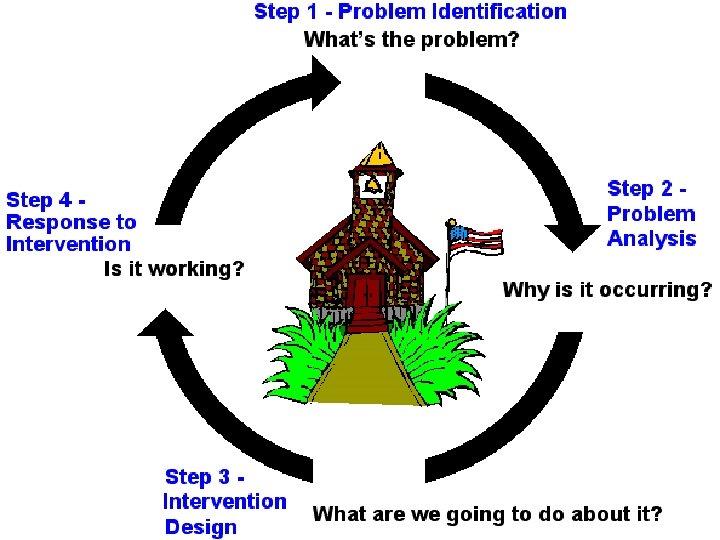
 Response to Intervention • Rt. I is the practice of (1) providing high-quality instruction/intervention matched to student needs and (2) using learning rate over time and level of performance to (3) make important educational decisions (Batsche et al. , 2005). • Problem-solving is the process that is used to develop effective instruction/interventions.
 What Does “Scaling Up” Mean? • What is the unit of analysis – Building – District – State – Region – Nation? • Scaling up cannot be considered without considering “Portability”
 Portability • Student mobility rate in the United States is significant – 33% Elementary Student, 20% Middle School (NAEP) • Impact on Data – Different assessment systems/databases may limit portability • Impact on Interventions – What if interventions used for 2 -3 years are not “available” in the new district, state? • Portability of systems MUST be considered when any realistic scaling up process is considered
 Brief FL PS/Rt. I Project Description Two purposes of PS/Rt. I Project: – Statewide training in PS/Rt. I – Evaluate the impact of PS/Rt. I on educator, student, and systemic outcomes in pilot sites implementing the model (FOCUS TODAY)
 Scope of the Project • • • Pre. K-12 (Current focus = K-5) Tiers 1 -3 Reading Math Behavior
 FL PS/Rt. I Project: Where Does It Fit? • Districts must develop a plan to guide implementation of their use of PS/Rt. I • State Project can be one component of the plan • It cannot be THE plan for the district • District must own their implementation process and integrate existing elements and initiate new elements
 Pilot Site Overview • Through competitive application process – 8 school districts selected • 40 demonstration schools • 33 matched comparison schools • Districts and schools vary in terms of – Geographic location – Student demographics – Districts: 6, 200 – 360, 000 students • School, district and Project personnel work collaboratively to implement PS/Rt. I model
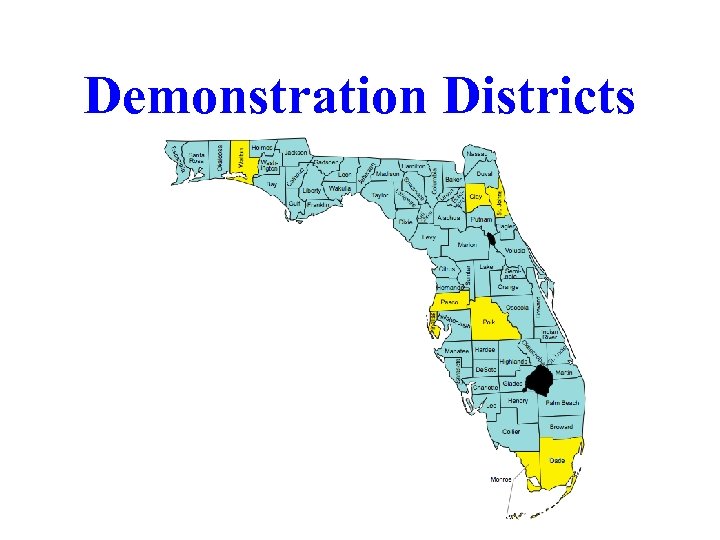 Demonstration Districts
 Pilot Site Overview (cont’d) • Training, technical assistance, and support provided to schools – Training provided by 3 Regional Coordinators using same format as statewide training – Regional Coordinators and PS/Rt. I coaches (one for each three pilot schools) provide additional guidance/support to districts and schools • Purpose = program evaluation – Comprehensive evaluation model developed – Data collected from/on: • Approximately 25 -100 educators per school • Approximately 300 -1200 students per school
 Year 1 Focus Understanding the Model Tier 1 Applications
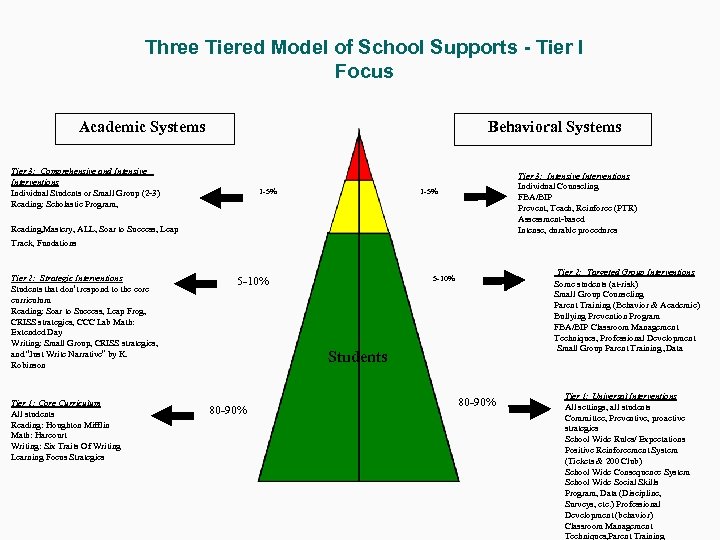 Three Tiered Model of School Supports - Tier I Focus Behavioral Systems Academic Systems Tier 3: Comprehensive and Intensive Interventions Individual Students or Small Group (2 -3) Reading: Scholastic Program, 1 -5% Tier 3: Intensive Interventions Individual Counseling FBA/BIP Prevent, Teach, Reinforce (PTR) Assessment-based Intense, durable procedures 1 -5% Reading, Mastery, ALL, Soar to Success, Leap Track, Fundations Tier 2: Strategic Interventions Students that don’t respond to the core curriculum Reading: Soar to Success, Leap Frog, CRISS strategies, CCC Lab Math: Extended Day Writing: Small Group, CRISS strategies, and “Just Write Narrative” by K. Robinson Tier 1: Core Curriculum All students Reading: Houghton Mifflin Math: Harcourt Writing: Six Traits Of Writing Learning Focus Strategies 5 -10% Tier 2: Targeted Group Interventions Some students (at-risk) Small Group Counseling Parent Training (Behavior & Academic) Bullying Prevention Program FBA/BIP Classroom Management Techniques, Professional Development Small Group Parent Training , Data 5 -10% Students 80 -90% Tier 1: Universal Interventions All settings, all students Committee, Preventive, proactive strategies School Wide Rules/ Expectations Positive Reinforcement System (Tickets & 200 Club) School Wide Consequence System School Wide Social Skills Program, Data (Discipline, Surveys, etc. ) Professional Development (behavior) Classroom Management Techniques, Parent Training
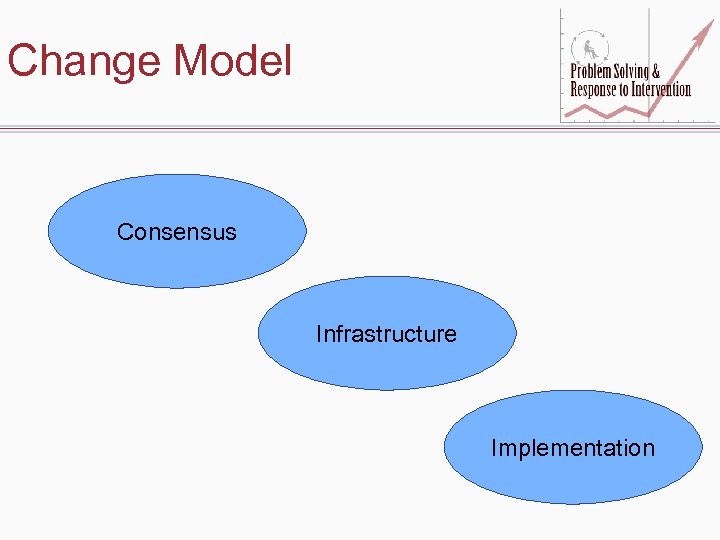 Change Model Consensus Infrastructure Implementation
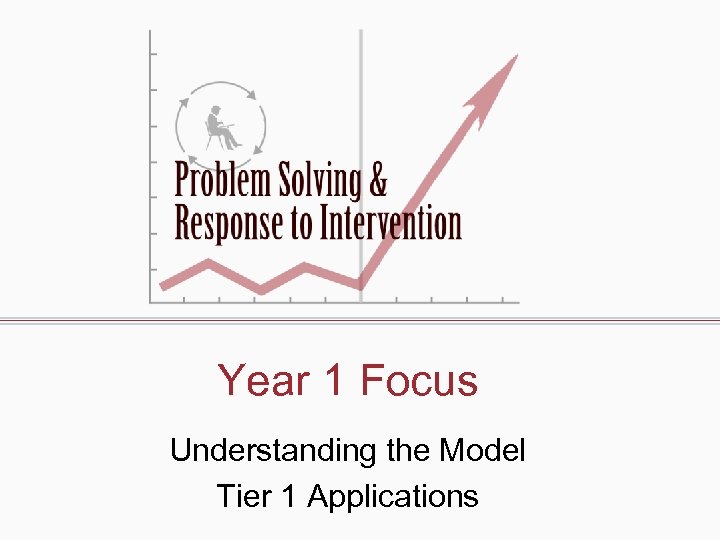
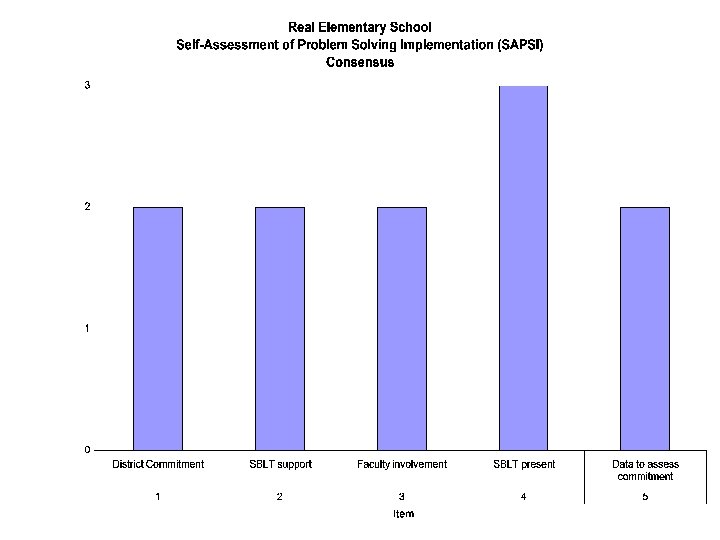
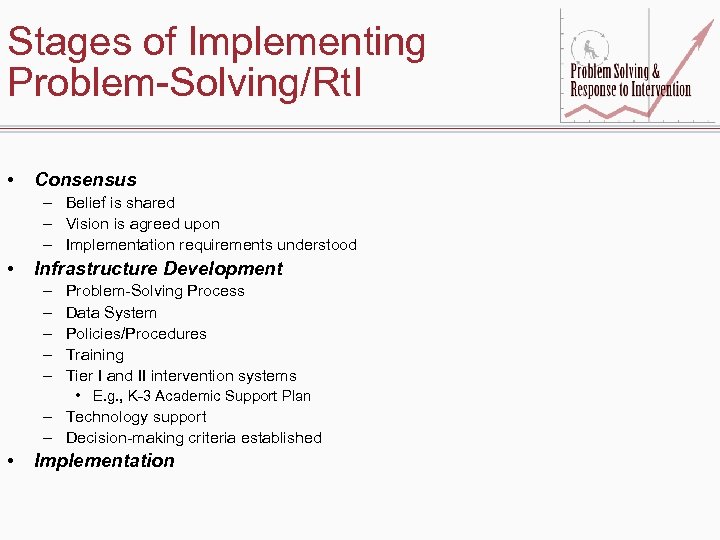 Stages of Implementing Problem-Solving/Rt. I • Consensus – Belief is shared – Vision is agreed upon – Implementation requirements understood • Infrastructure Development – – – Problem-Solving Process Data System Policies/Procedures Training Tier I and II intervention systems • E. g. , K-3 Academic Support Plan – Technology support – Decision-making criteria established • Implementation
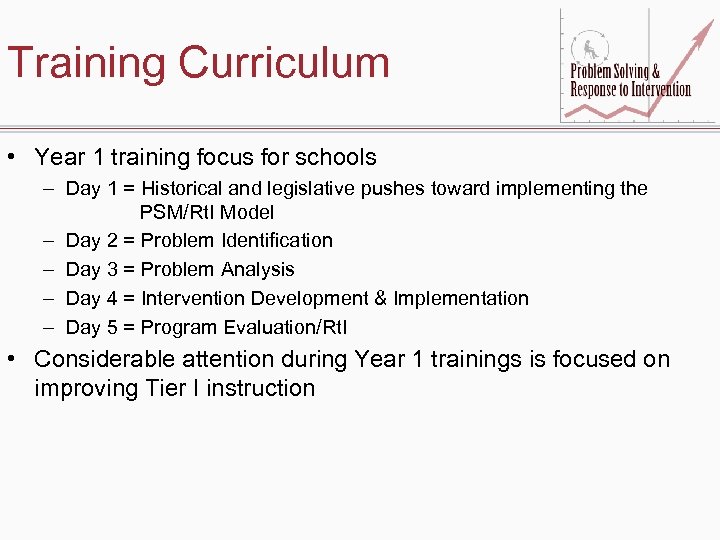 Training Curriculum • Year 1 training focus for schools – Day 1 = Historical and legislative pushes toward implementing the PSM/Rt. I Model – Day 2 = Problem Identification – Day 3 = Problem Analysis – Day 4 = Intervention Development & Implementation – Day 5 = Program Evaluation/Rt. I • Considerable attention during Year 1 trainings is focused on improving Tier I instruction
 Evaluation Model
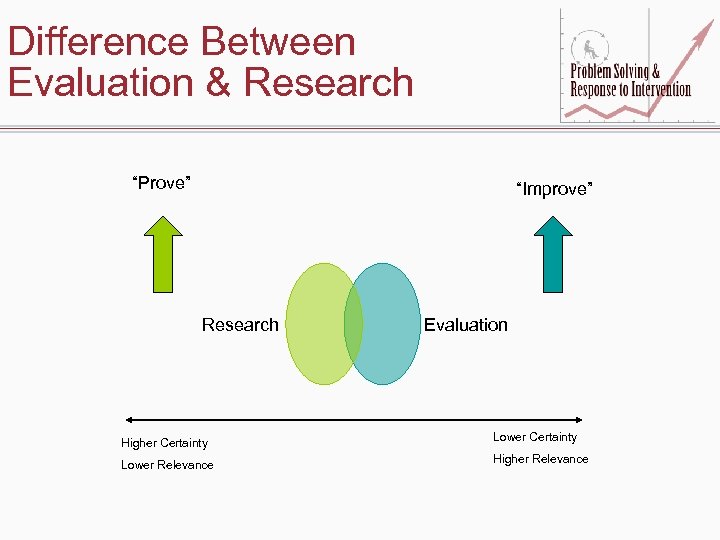 Difference Between Evaluation & Research “Prove” “Improve” Research Evaluation Higher Certainty Lower Relevance Higher Relevance
 Working Definition of Evaluation • The practice of evaluation involves the systematic collection of information about the activities, characteristics, and outcomes of programs, personnel, and products for use by specific people to reduce uncertainties, improve effectiveness and make decisions with regard to what those program, personnel, or products are doing and affecting (Patton).
 Data Collection Philosophy • Data elements selected that will best answer Project evaluation questions – Demonstration schools – Comparison schools when applicable • Data collected from – Existing databases • Building • District • State – Instruments developed by the Project • Data derived from multiple sources when possible • Data used to drive decision-making – Project – Districts – Schools
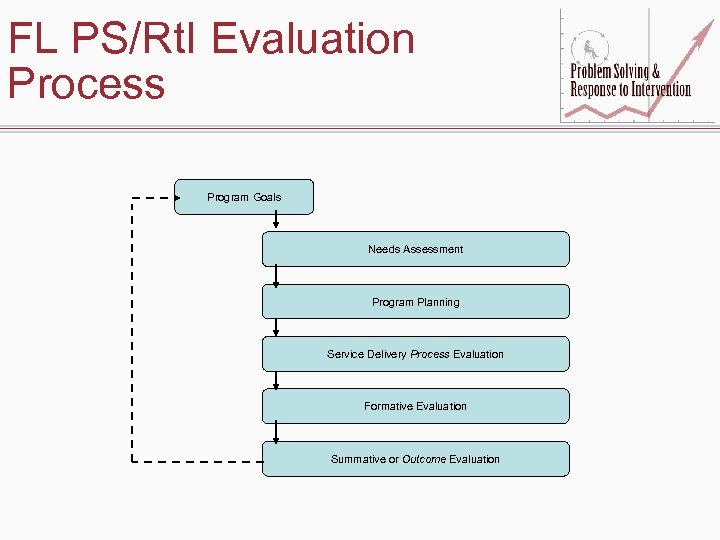 FL PS/Rt. I Evaluation Process Program Goals Needs Assessment Program Planning Service Delivery Process Evaluation Formative Evaluation Summative or Outcome Evaluation
 FL PS/Rt. I Evaluation Model • IPO model used • Variables included – Levels – Inputs – Processes – Outcomes – Contextual factors – External factors – Goals & objectives
 Levels • Students – Receiving Tiers I, II, & III • Educators – – Teachers Administrators Coaches Student and instructional support personnel • System – – District Building Grade levels Classrooms
 Inputs (What We Don’t Control) • Students – Demographics – Previous learning experiences & achievement • Educators – – Roles Experience Previous PS/Rt. I training Previous beliefs about services • System – Previous consensus regarding PS/Rt. I – Previous PS/Rt. I infrastructure • • Assessments Interventions Procedures Technology
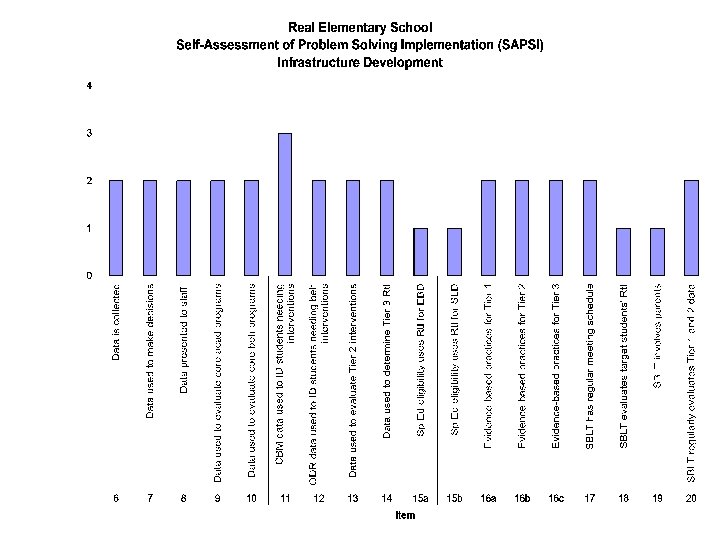

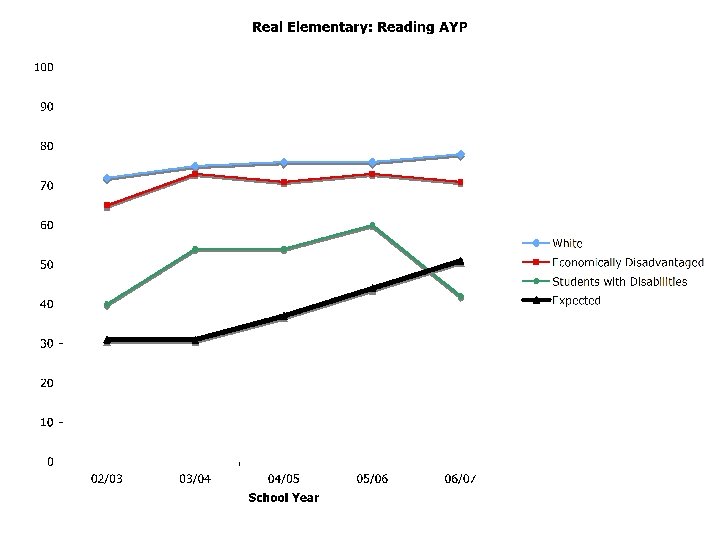
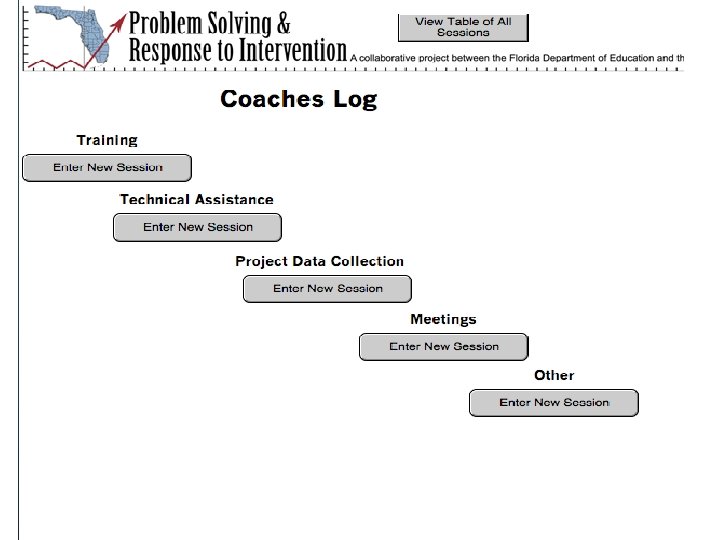
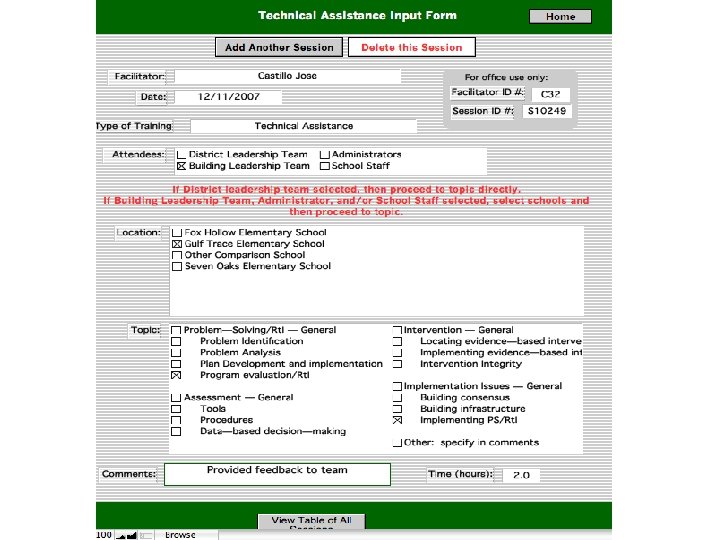
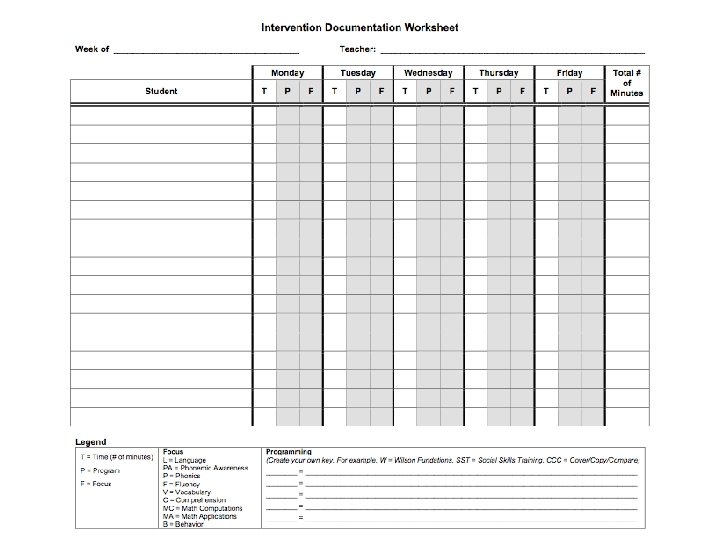
 Processes (What We Do) • Students – Assessment participation (e. g. , DIBELS screening) – Instruction/intervention participation • Educators – Frequency and duration of participation in PS/Rt. I Project training – Content of Project training in which they participated • System – – Frequency & duration of professional development offered by the Project Content of professional development offered Stakeholders participating in professional development activities Communication between Project and districts/buildings
 Implementation Integrity Checklists • Implementation integrity measures developed • Measure – Steps of problem solving – Focus on Tiers I, II, & III • Data come from: – Permanent products (e. g. , meeting notes, reports) – Problem Solving Team meetings
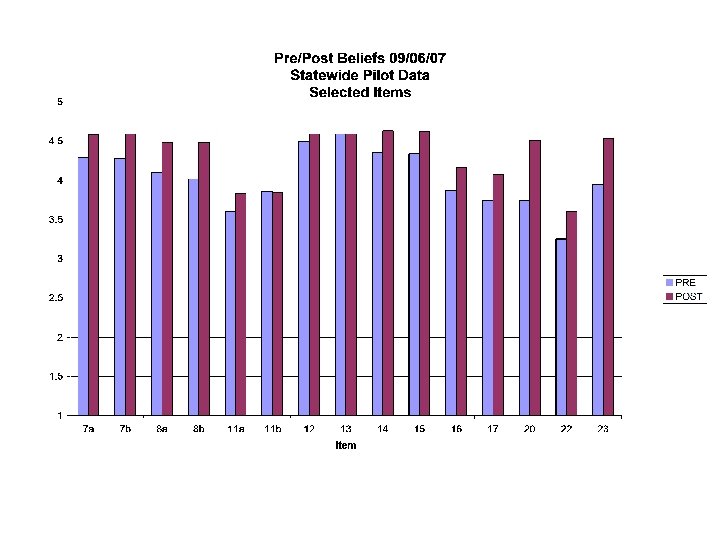
 Outcomes (What We Hope to Impact) • Educators – Consensus regarding PS/Rt. I • Beliefs • Satisfaction – PS/Rt. I Skills – PS/Rt. I Practices

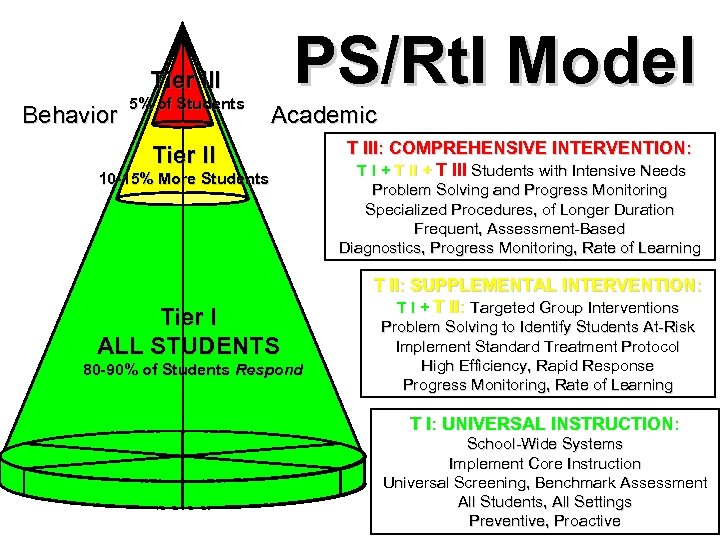 PS/Rt. I Model Tier III Behavior 5% of Students Academic Tier II 10 -15% More Students Tier I ALL STUDENTS 80 -90% of Students Respond T III: COMPREHENSIVE INTERVENTION: T I + T III Students with Intensive Needs Problem Solving and Progress Monitoring Specialized Procedures, of Longer Duration Frequent, Assessment-Based Diagnostics, Progress Monitoring, Rate of Learning T II: SUPPLEMENTAL INTERVENTION: T I + T II: Targeted Group Interventions Problem Solving to Identify Students At-Risk Implement Standard Treatment Protocol High Efficiency, Rapid Response Progress Monitoring, Rate of Learning T I: UNIVERSAL INSTRUCTION: School-Wide Systems Implement Core Instruction Universal Screening, Benchmark Assessment All Students, All Settings Preventive, Proactive
 Outcomes cont. • System – PS/Rt. I Infrastructure • • • Assessments Interventions Procedures Technology Costs – PS/Rt. I Implementation
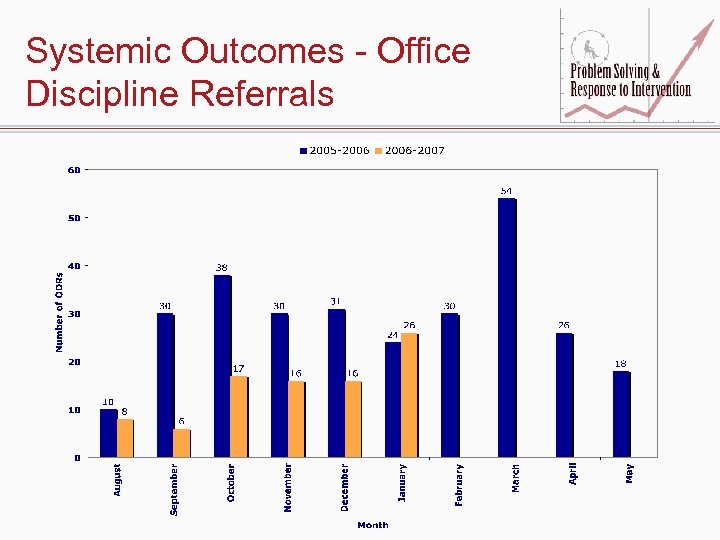
 Outcomes cont. • Students – Academic achievement – Behavioral outcomes • Systemic – Discipline referrals – Referrals for problem solving – Referrals for SPED evaluations – SPED placements
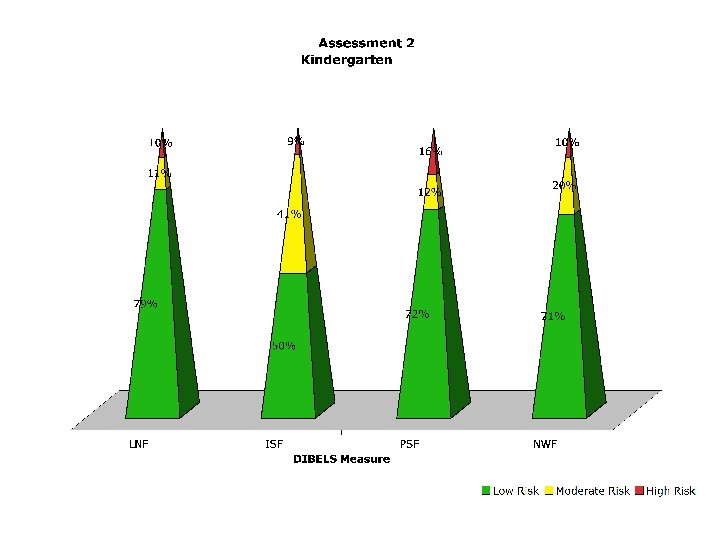
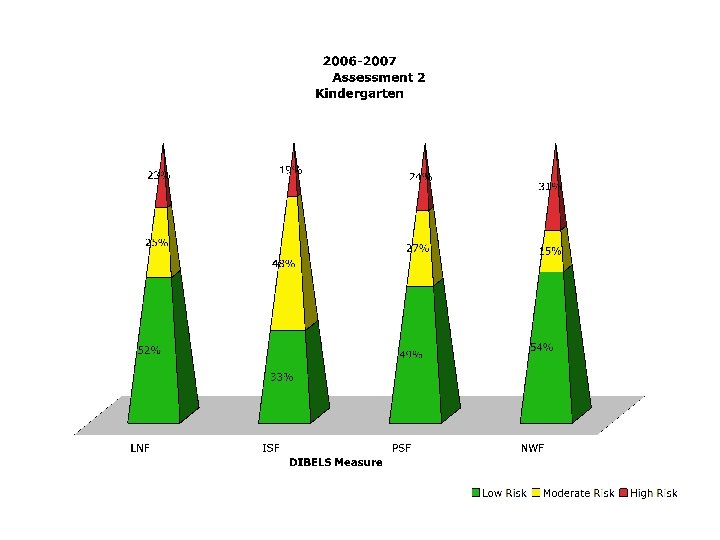
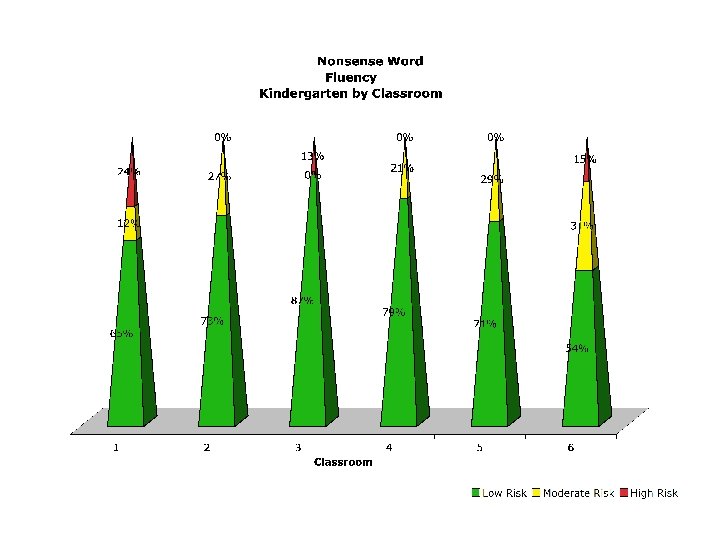
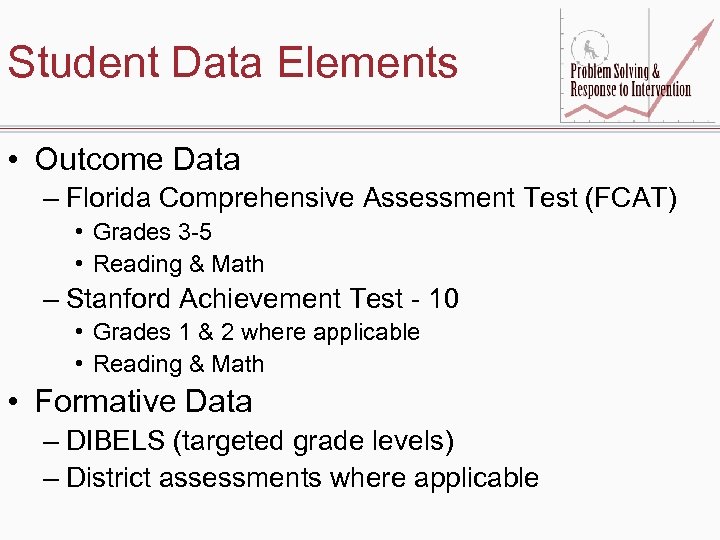 Student Data Elements • Outcome Data – Florida Comprehensive Assessment Test (FCAT) • Grades 3 -5 • Reading & Math – Stanford Achievement Test - 10 • Grades 1 & 2 where applicable • Reading & Math • Formative Data – DIBELS (targeted grade levels) – District assessments where applicable
 Pilot School Example Slides from Data Meeting Following Winter Benchmarking Window
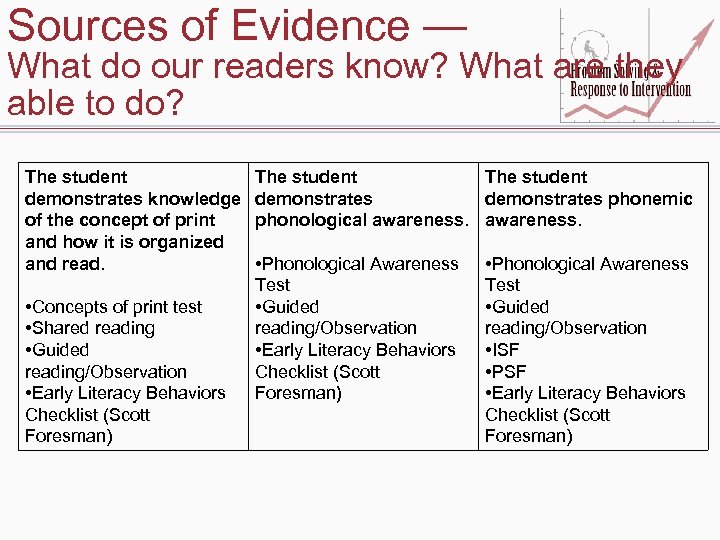 Sources of Evidence — What do our readers know? What are they able to do? The student demonstrates knowledge of the concept of print and how it is organized and read. • Concepts of print test • Shared reading • Guided reading/Observation • Early Literacy Behaviors Checklist (Scott Foresman) The student demonstrates phonemic phonological awareness. • Phonological Awareness Test • Guided reading/Observation • Early Literacy Behaviors Checklist (Scott Foresman) • Phonological Awareness Test • Guided reading/Observation • ISF • PSF • Early Literacy Behaviors Checklist (Scott Foresman)
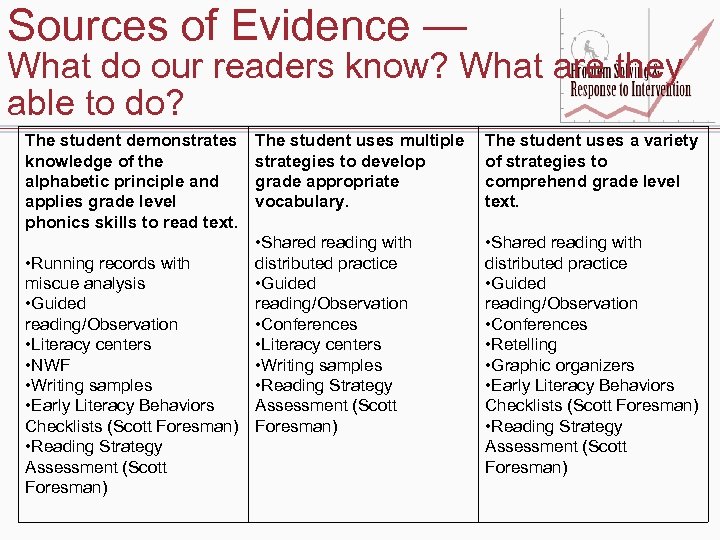 Sources of Evidence — What do our readers know? What are they able to do? The student demonstrates knowledge of the alphabetic principle and applies grade level phonics skills to read text. The student uses multiple strategies to develop grade appropriate vocabulary. • Shared reading with • Running records with distributed practice miscue analysis • Guided reading/Observation • Conferences • Literacy centers • NWF • Writing samples • Reading Strategy • Early Literacy Behaviors Assessment (Scott Checklists (Scott Foresman) • Reading Strategy Assessment (Scott Foresman) The student uses a variety of strategies to comprehend grade level text. • Shared reading with distributed practice • Guided reading/Observation • Conferences • Retelling • Graphic organizers • Early Literacy Behaviors Checklists (Scott Foresman) • Reading Strategy Assessment (Scott Foresman)

 Systemic Outcomes - Office Discipline Referrals
 Other Variables to Keep in Mind • Contextual factors – Leadership – School climate – Stakeholder buy-in • External factors – Legislation – Regulations – Policy
 Factors Noted So Far • Legislative & Regulatory Factors – NCLB reauthorization – FL EBD rule change effective July 1, 2007 – Pending FL SLD rule change • Leadership – Level of involvement (school & district levels) – Facilitative versus directive styles
 School Goals & Objectives • Content Area Targets – Reading – Math – Behavior • Majority focusing on reading • Some selected math and/or behavior as well • Grade levels targeted varied – Some chose K or K-1 – Some chose K-5
 Special Thanks • We would like to offer our gratitude to the graduate assistants who make the intense data collection and analysis that we are attempting possible – Decia Dixon, Amanda March, Kevin Stockslager, Devon Minch, Susan Forde, J. C. Smith, Josh Nadeau, Alana Lopez, Jason Hangauer, Leeza Rooks, and Kristelle Malval
 Project Website • http: //floridarti. usf. edu • http: //www. nasdse. org • http: //www. florida-rti. org (Active Fall, 2008)