 Скачать презентацию Flora information Partnership Barry Conn Royal Botanic Gardens
9fef2e1b381a8bec6aa971e8b3a76ff0.ppt
- Количество слайдов: 17



Flora information Partnership Barry Conn Royal Botanic Gardens Sydney HISCOM Council of Heads of Australian Herbaria
Herbaria: – centres of expertise in plant, algal & fungal biodiversity • Australian collections - about 6. 5 million • Principal repositories of vouchered data • Long-standing global and Australia-wide cooperative approach, – specimen exchange and loan – research across regional interests of herbaria – publication
HISCOM Herbarium Information Systems Committee Advisory committee to: Council of Heads of Australian Herbaria (CHAH) Aim of HISCOM: • to advise, share, develop and promote all aspects of digitisation of herbarium information • Representatives: – all Government Herbaria – University Herbaria representative – New Zealand Herbaria representative – ad hoc invitees: key partners (ABRS, ERIN) and collaborators
Digitisation of herbarium data in Australia • Since mid 1970 s herbarium information data-processed • Digitisation was driven by need for Census and Spatial data Development of standards important • In the 1980 s HISPID - An herbarium specimen-label data interchange standard was developed • HISPID used with specimens exchanged and loaned between Australian herbaria
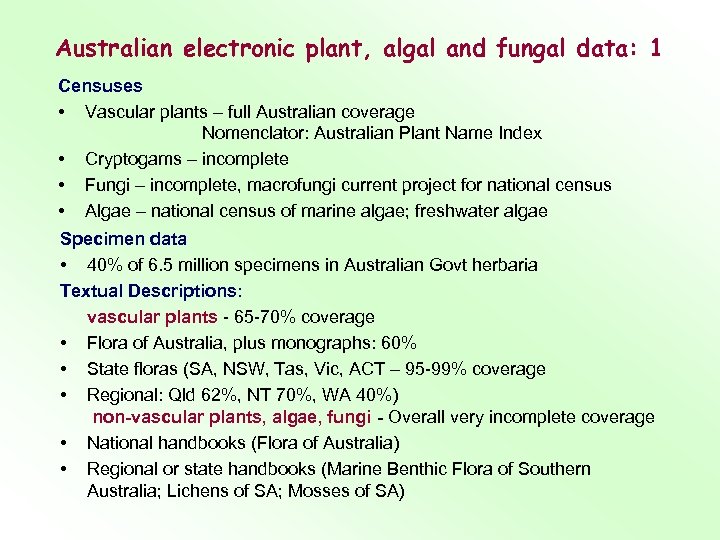
Australian electronic plant, algal and fungal data: 1 Censuses • Vascular plants – full Australian coverage Nomenclator: Australian Plant Name Index • Cryptogams – incomplete • Fungi – incomplete, macrofungi current project for national census • Algae – national census of marine algae; freshwater algae Specimen data • 40% of 6. 5 million specimens in Australian Govt herbaria Textual Descriptions: vascular plants - 65 -70% coverage • Flora of Australia, plus monographs: 60% • State floras (SA, NSW, Tas, Vic, ACT – 95 -99% coverage • Regional: Qld 62%, NT 70%, WA 40%) non-vascular plants, algae, fungi - Overall very incomplete coverage • National handbooks (Flora of Australia) • Regional or state handbooks (Marine Benthic Flora of Southern Australia; Lichens of SA; Mosses of SA)
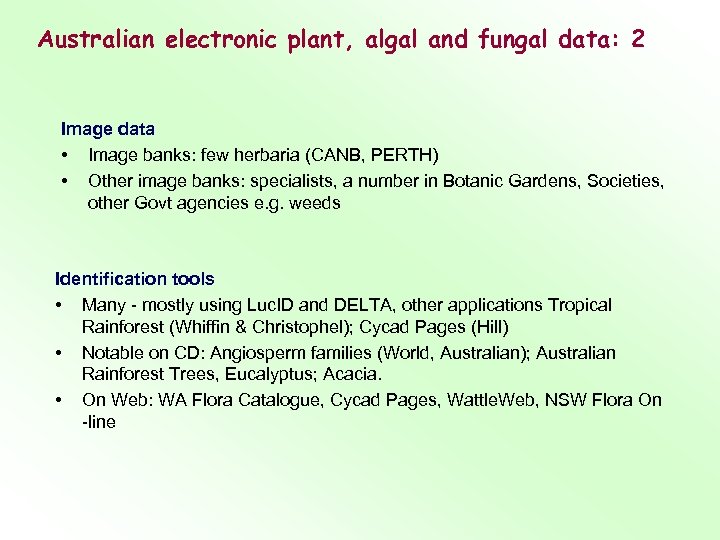
Australian electronic plant, algal and fungal data: 2 Image data • Image banks: few herbaria (CANB, PERTH) • Other image banks: specialists, a number in Botanic Gardens, Societies, other Govt agencies e. g. weeds Identification tools • Many - mostly using Luc. ID and DELTA, other applications Tropical Rainforest (Whiffin & Christophel); Cycad Pages (Hill) • Notable on CD: Angiosperm families (World, Australian); Australian Rainforest Trees, Eucalyptus; Acacia. • On Web: WA Flora Catalogue, Cycad Pages, Wattle. Web, NSW Flora On -line
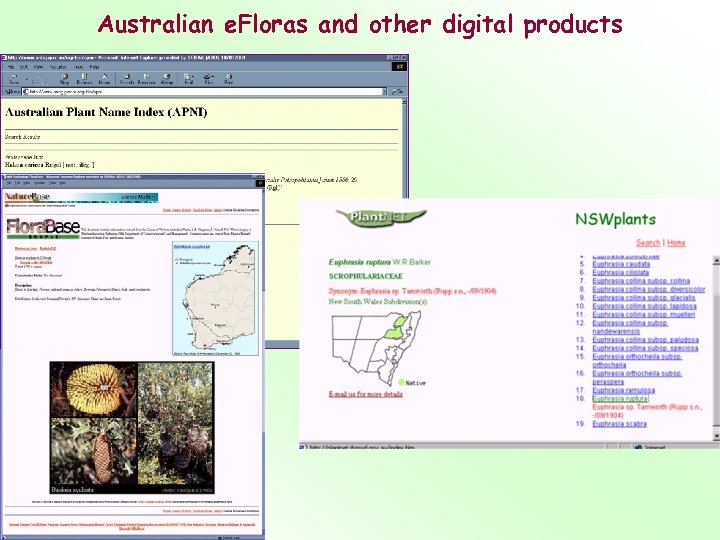
Australian e. Floras and other digital products
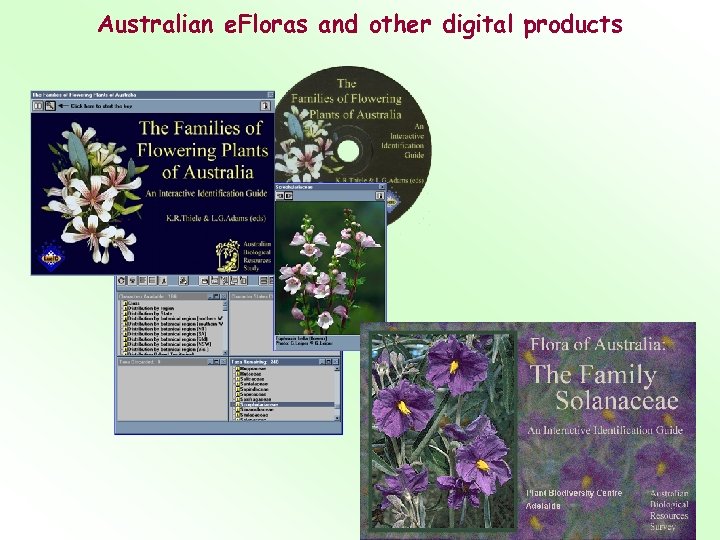
Australian e. Floras and other digital products
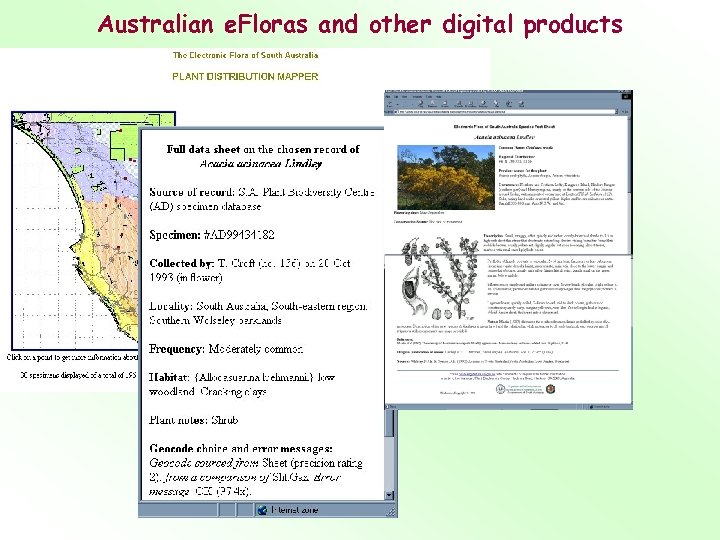
Australian e. Floras and other digital products
Development of Australia’s Virtual Herbarium (VAH) Aim of Prototype: – demonstrate functional capabilities of a distributed network on Internet – demonstrate the collective capability of IT expertise in Australian herbaria – highlight the custodianship and legitimate claim by Australian herbaria to be stakeholders in Australian plant biodiversity projects – highlight the need to resource data capture and delivery – emphasise the essential underlying partnership
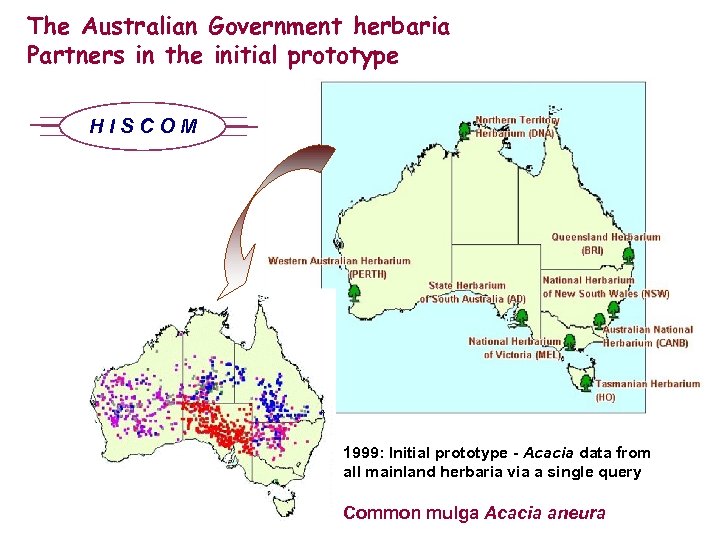
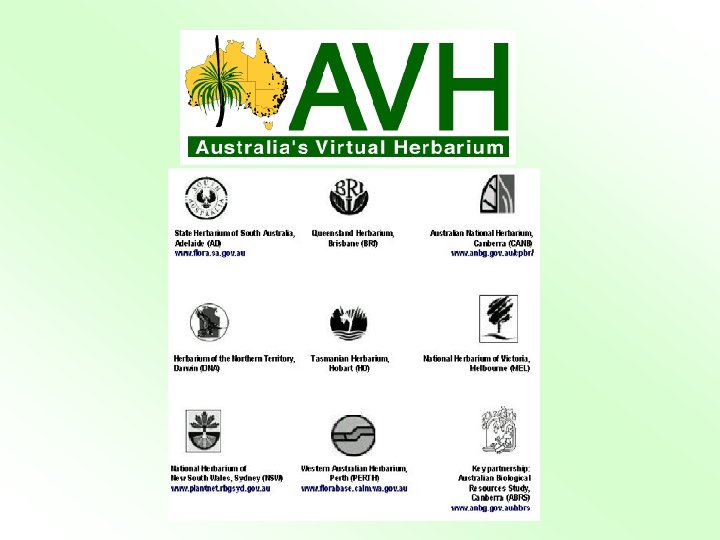
The Australian Government herbaria Partners in the initial prototype HISCOM 1999: Initial prototype - Acacia data from all mainland herbaria via a single query Common mulga Acacia aneura
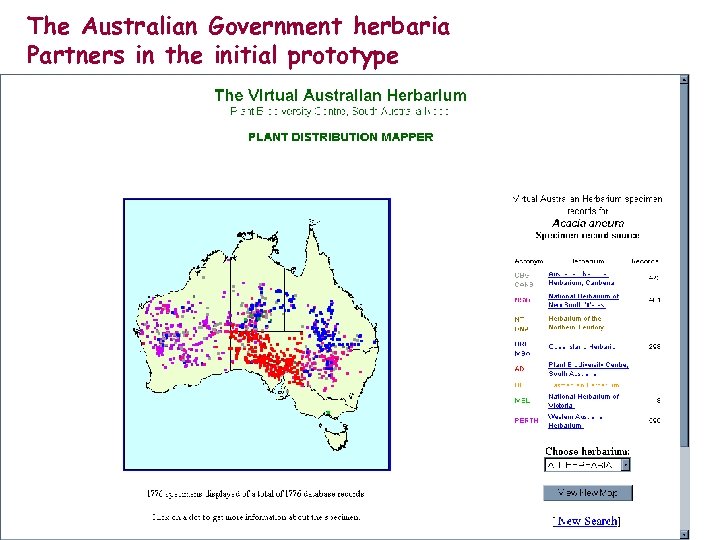
The Australian Government herbaria Partners in the initial prototype
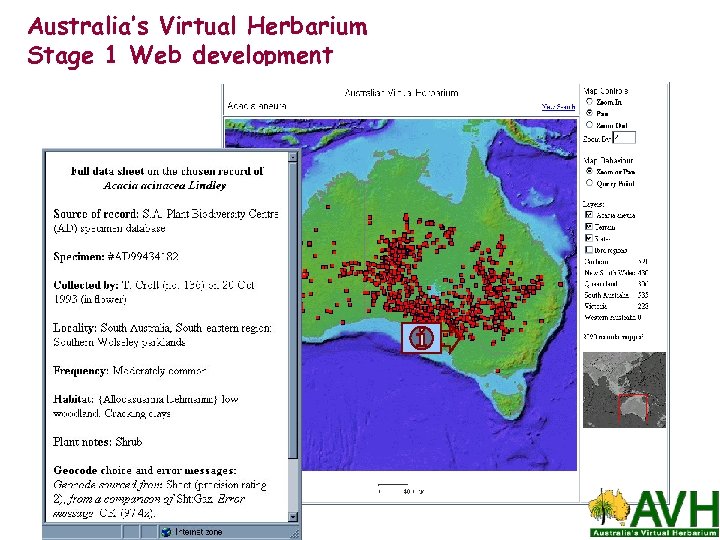
Australia’s Virtual Herbarium Stage 1 Web development
Benefits of AVH over traditional herbarium practices Maximises limited resources • Sharing technological advances – Continue sharing IT developments • Move to sharing data: avoid duplication of effort – – Duplicate specimens Image banks Descriptions ID tools: simple and complex • Develop an on-line information system: effectively electronic Flora of Australia
Benefits of AVH over traditional herbarium practices • Regional herbaria: distributed system or linkage to major State • State censuses: a thing of the past? • Increased accessibility to collections by Community • Publication - an On-line shared resource
Australia’s Virtual Herbarium New opportunities Involving Community and other User groups • Increased collecting - gaps in plant distribution data obvious • Increased use of current plant systematic information New (and continued) partnerships • Access to other data and information through partnerships of mutual benefit to custodians Capacity to link to International networks
 Скачать презентацию Flora information Partnership Barry Conn Royal Botanic Gardens
9fef2e1b381a8bec6aa971e8b3a76ff0.ppt