


 Скачать презентацию Flooded House Clean-up Kenneth Hellevang Ph D
5f8f75a2571417f367a3876d6e789205.ppt
- Количество слайдов: 56
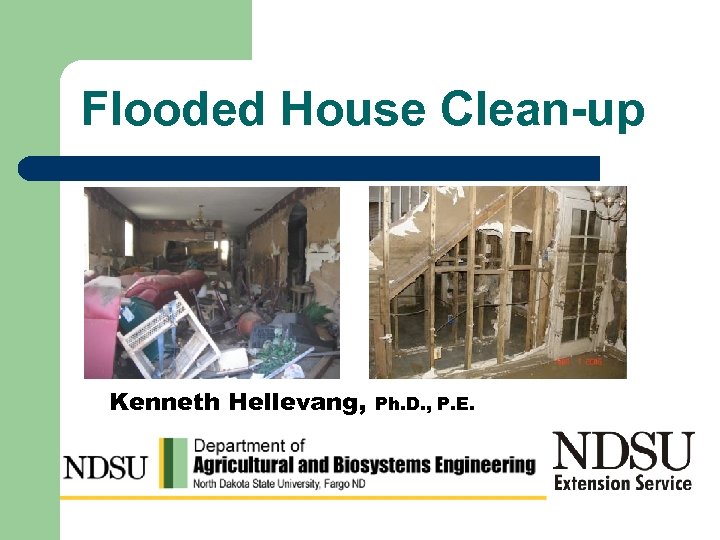 Flooded House Clean-up Kenneth Hellevang, Ph. D. , P. E.
 Flood Sights Verify contractors have local license, bonding, insurance, training & certifications.
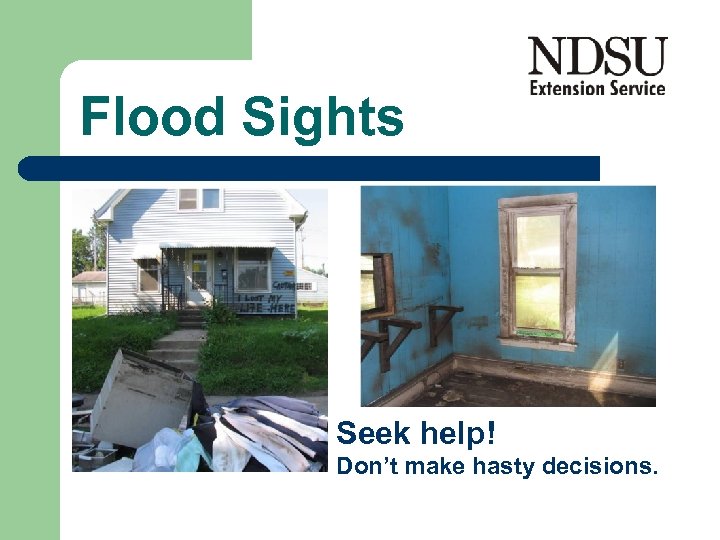 Flood Sights Seek help! Don’t make hasty decisions.
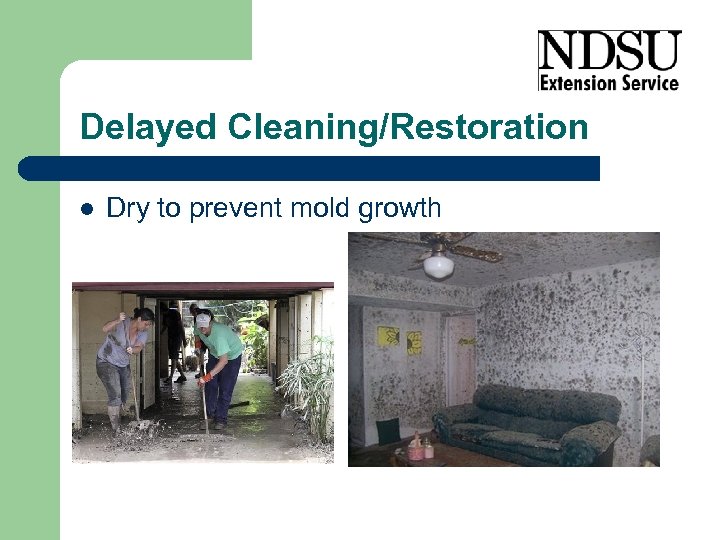 Delayed Cleaning/Restoration l Dry to prevent mold growth
 Hazards l l l l Structural Electrical (telephone & cable) Mold Biological Lead Dust Asbestos Carbon Dioxide Cuts and Punctures
 Categories of Water l Clean Water – Category 1 – l Gray Water – Category 2 – – l Broken water pipes, rainwater, etc Contains contamination & microorganisms Toilets with urine, sump pump, dishwashers Black Water – Category 3 – – Contains pathogenic agents Sewage, surface water flooding, pesticides
 Health Effects of Mold Scientific evidence links mold and other factors related to damp conditions in buildings to: • Asthma symptoms in those with the chronic disorder • Coughing, wheezing, and upper respiratory symptoms in otherwise healthy individuals • Hypersensitivity Pneumonitis in susceptible people • Lower respiratory illness in children Institute of Medicine of the National Academies 2004
 Health Effects of Mold l l l World Health Organization: Sufficient epidemiological evidence is available in different countries and under different climatic conditions to show that the occupants of damp or moldy buildings are at increased risk of respiratory symptoms, respiratory infections and exacerbation of asthma. Some evidence suggest increased risks of allergic rhinitis and asthma. There is clinical evidence that exposure to mold and other dampnessrelated microbial agents increases the risks of rare conditions such as allergic alveolitis, chronic rhinosinusitis and allergic fungal sinusitis. Toxicological evidence supports these findings, showing the occurrence of diverse inflammatory and toxic responses after exposure to microorganisms isolated from damp buildings, including their spores, metabolites and components. February 2007
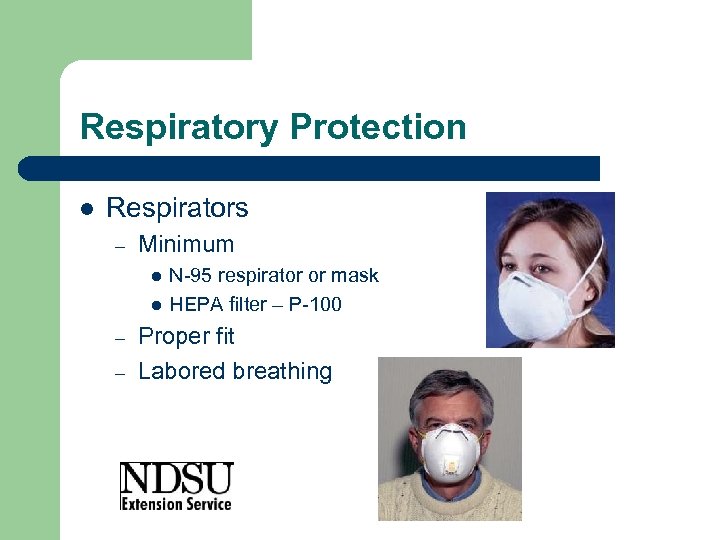 Respiratory Protection l Respirators – Minimum l l – – N-95 respirator or mask HEPA filter – P-100 Proper fit Labored breathing
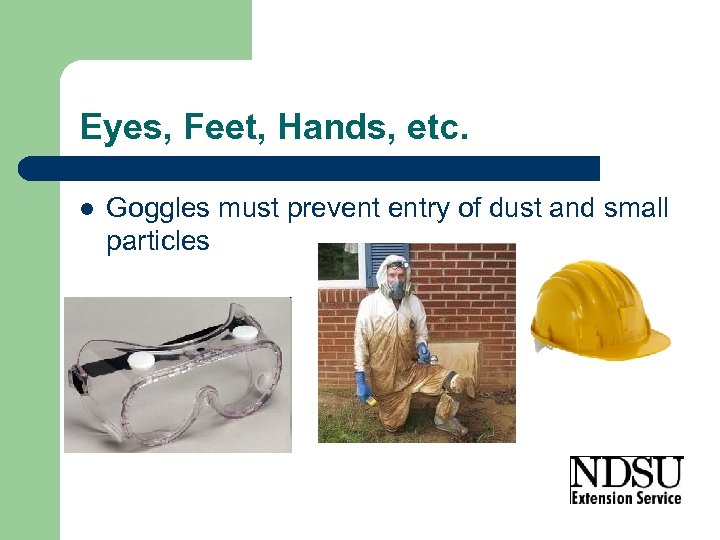 Eyes, Feet, Hands, etc. l Goggles must prevent entry of dust and small particles
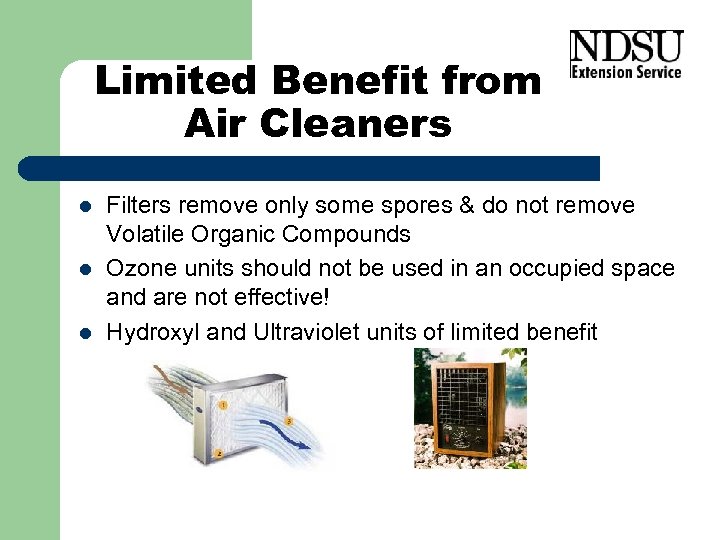 Limited Benefit from Air Cleaners l l l Filters remove only some spores & do not remove Volatile Organic Compounds Ozone units should not be used in an occupied space and are not effective! Hydroxyl and Ultraviolet units of limited benefit
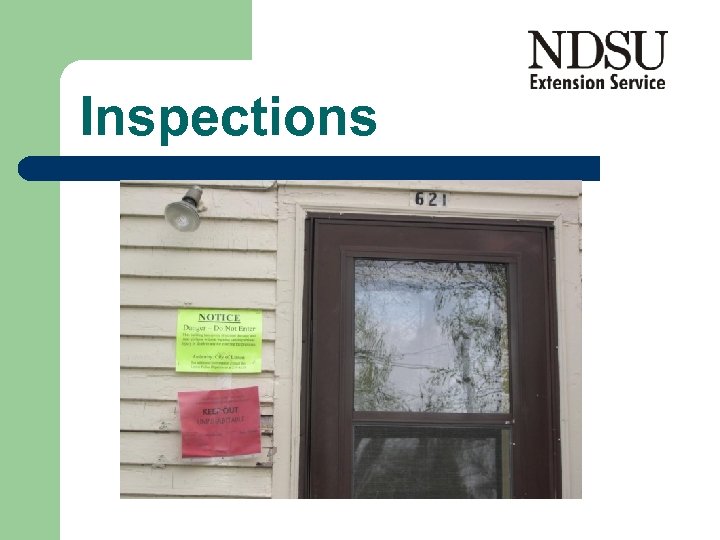 Inspections
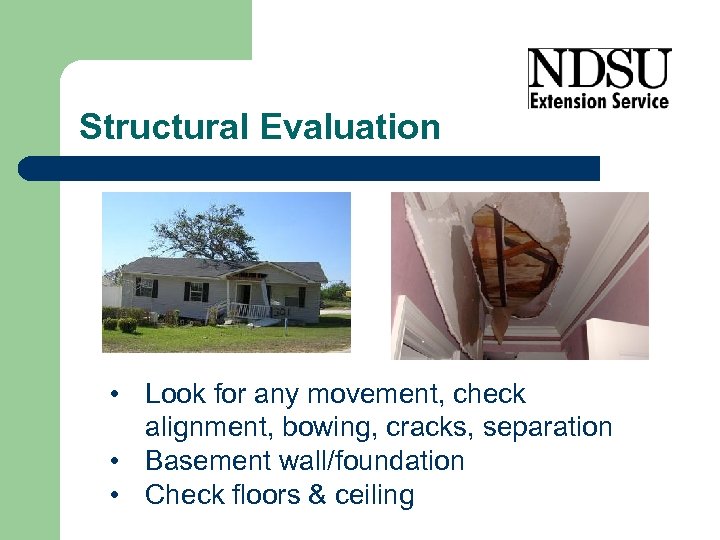 Structural Evaluation • Look for any movement, check alignment, bowing, cracks, separation • Basement wall/foundation • Check floors & ceiling
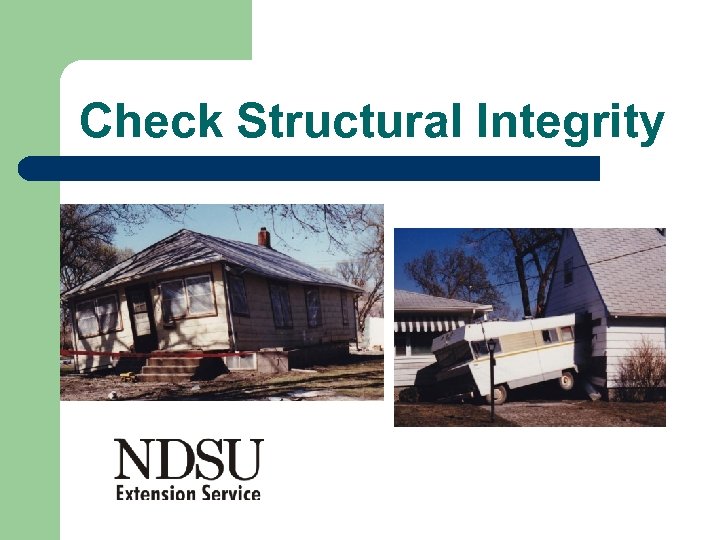 Check Structural Integrity
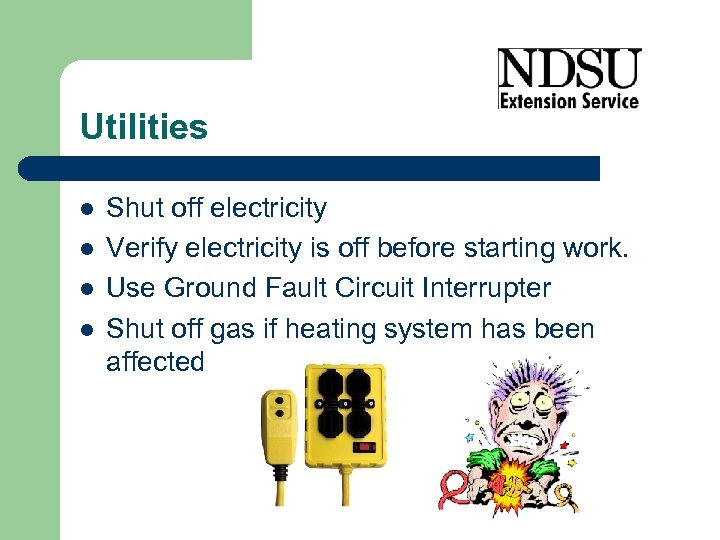 Utilities l l Shut off electricity Verify electricity is off before starting work. Use Ground Fault Circuit Interrupter Shut off gas if heating system has been affected
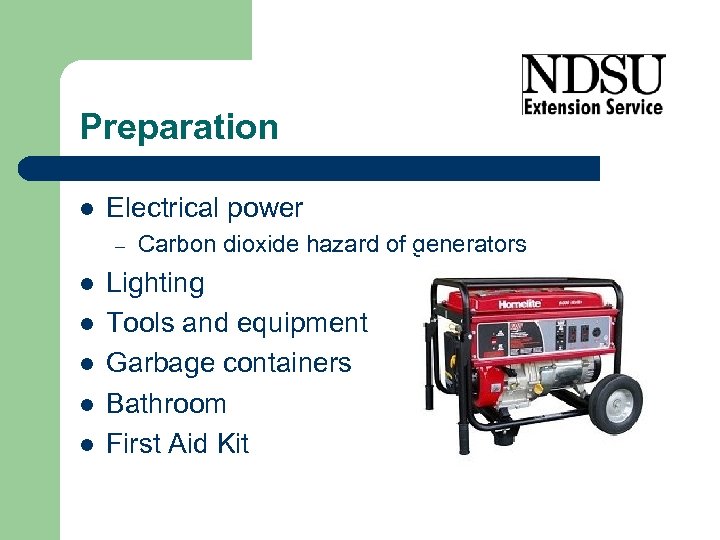 Preparation l Electrical power – l l l Carbon dioxide hazard of generators Lighting Tools and equipment Garbage containers Bathroom First Aid Kit
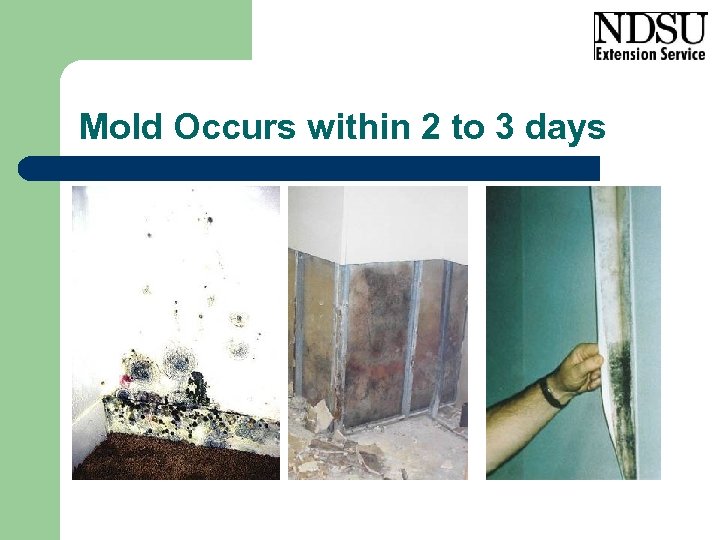 Mold Occurs within 2 to 3 days
 REMOVAL OF MOLD CONTAMINATION People react to active, dormant and dead mold Biocides are not adequate! l Porous Materials (ceiling tiles, carpeting, upholstered furniture, wallboard) – l Non-porous surfaces – – l Remove and replace Vacuum with HEPA filters Wash with a detergent solution Sanitize with a biocide if desired Thorough drying Semi-porous (floor joist, sill plates) – Remove mold, dry
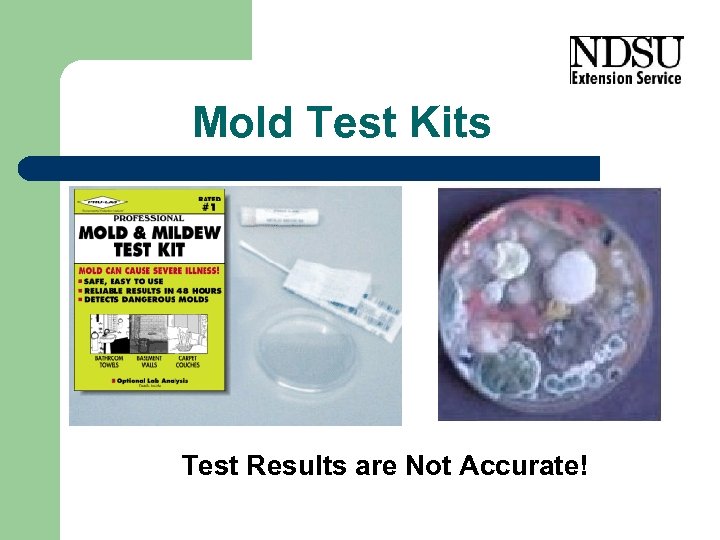 Mold Test Kits Test Results are Not Accurate!
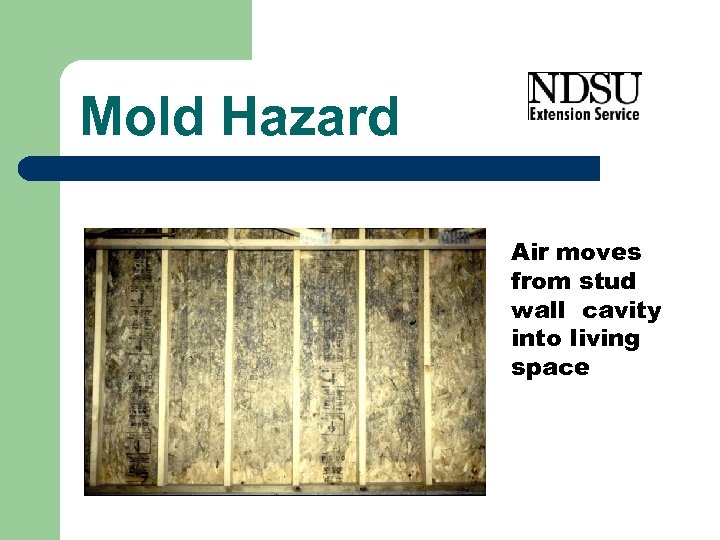 Mold Hazard Air moves from stud wall cavity into living space
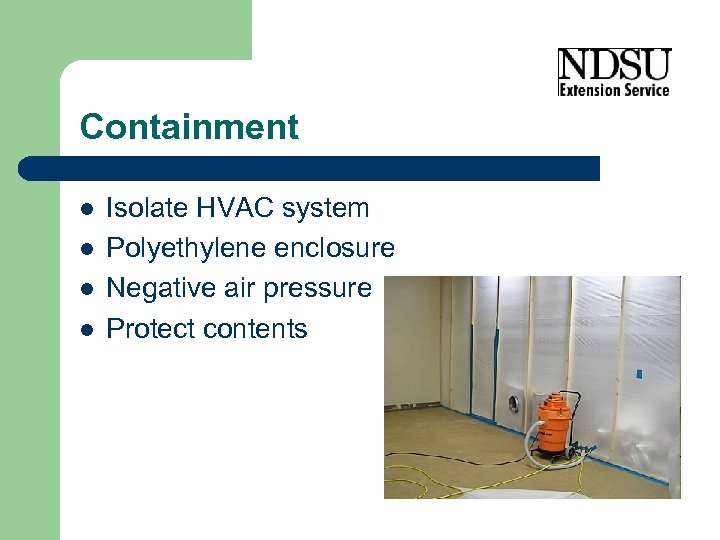 Containment l l Isolate HVAC system Polyethylene enclosure Negative air pressure Protect contents
 Clean-up Steps l l l l Remove water Empty Contents Remove water, mud & muck Remove wall materials and etc. Wash Sanitize Ventilate & dry
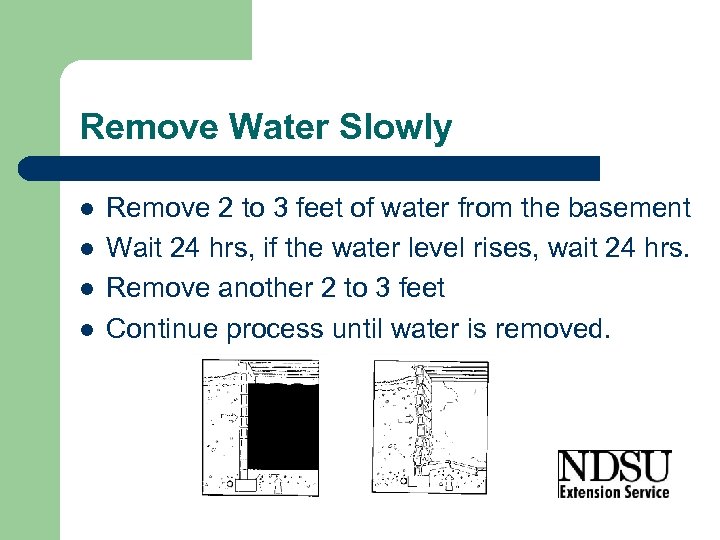 Remove Water Slowly l l Remove 2 to 3 feet of water from the basement Wait 24 hrs, if the water level rises, wait 24 hrs. Remove another 2 to 3 feet Continue process until water is removed.
 Water Damage Restoration l IICRC S 500 Standard and Reference Guide for Professional Water Damage Restoration Third Edition 2006 – Institute of Inspection Cleaning and Restoration Certification l Authored by application and technical experts
 Contaminated Water Restoration l Discard carpet saturated with category 3 water l l l carpet cushion Category 2 water carpet contamination may be cleaned with hot water extraction and biocide Remove floor if water reached subflooring – Subflooring must be cleaned, disinfected, dried
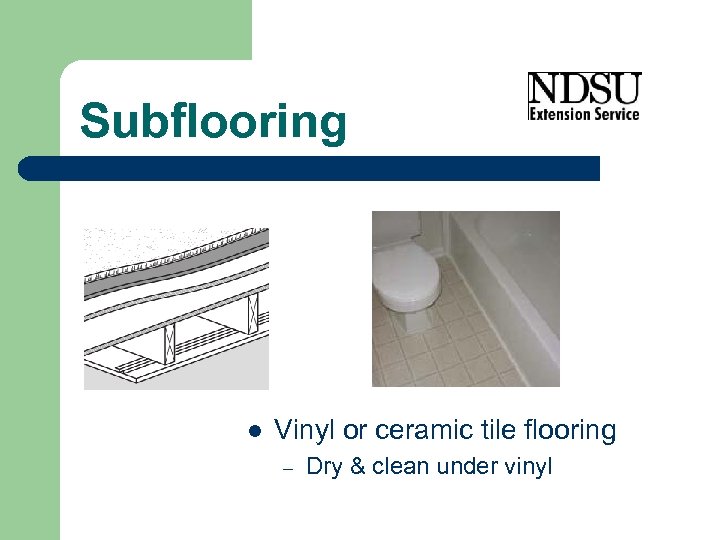 Subflooring l Vinyl or ceramic tile flooring – Dry & clean under vinyl
 Contaminated Water Restoration l Dispose – absorbent stuffed fabrics l – Saturated absorbent materials l l Stuffed furniture Ceiling tile, dry wall, paper, etc. Evaluate structural materials for degree of contamination and physical damage
 Clean-out Sequence l l l Air out Small objects Large objects Appliances (Tape doors shut) Cut and remove carpet Remove items from closets and cabinets
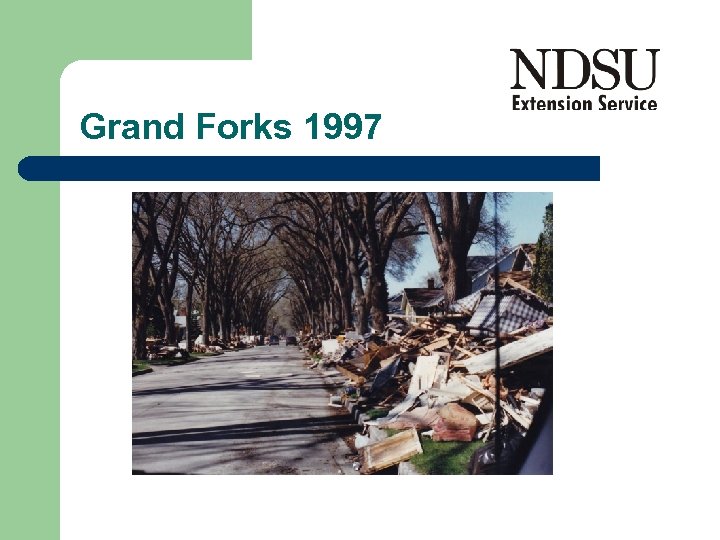 Grand Forks 1997
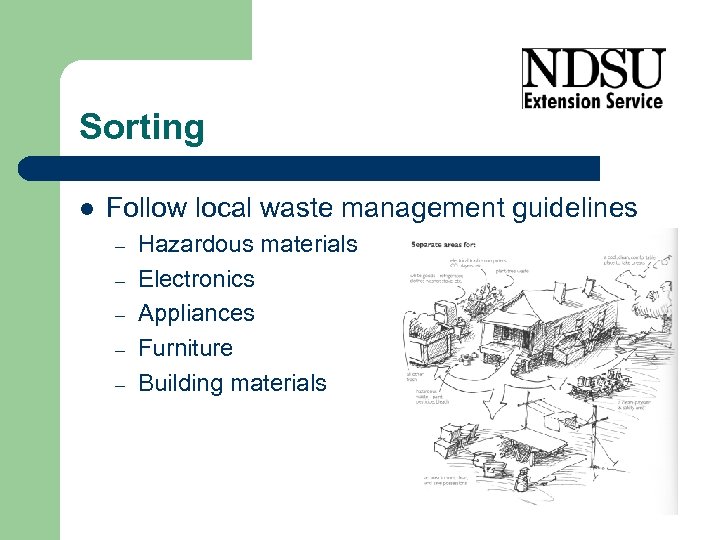 Sorting l Follow local waste management guidelines – – – Hazardous materials Electronics Appliances Furniture Building materials
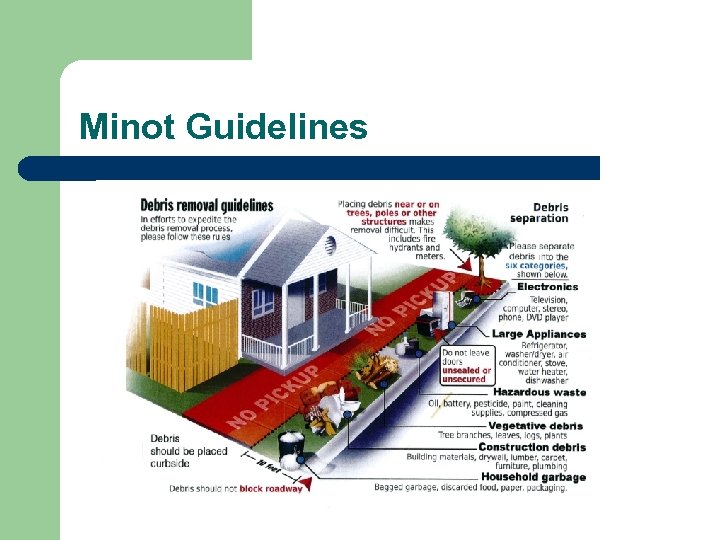 Minot Guidelines
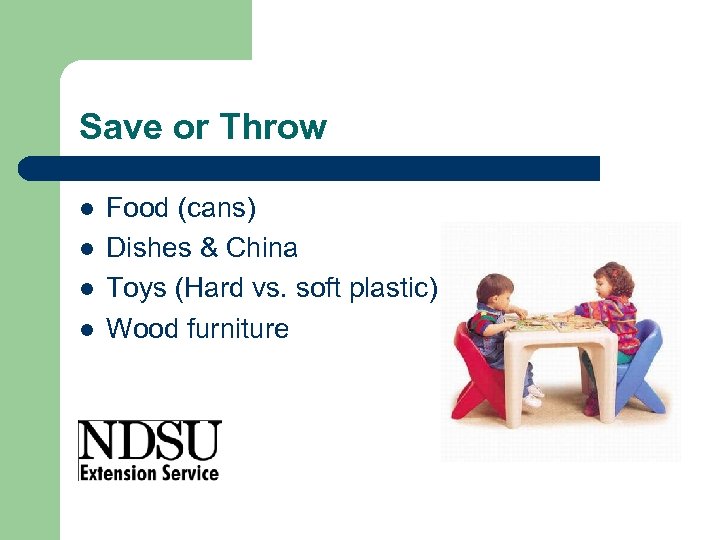 Save or Throw l l Food (cans) Dishes & China Toys (Hard vs. soft plastic) Wood furniture
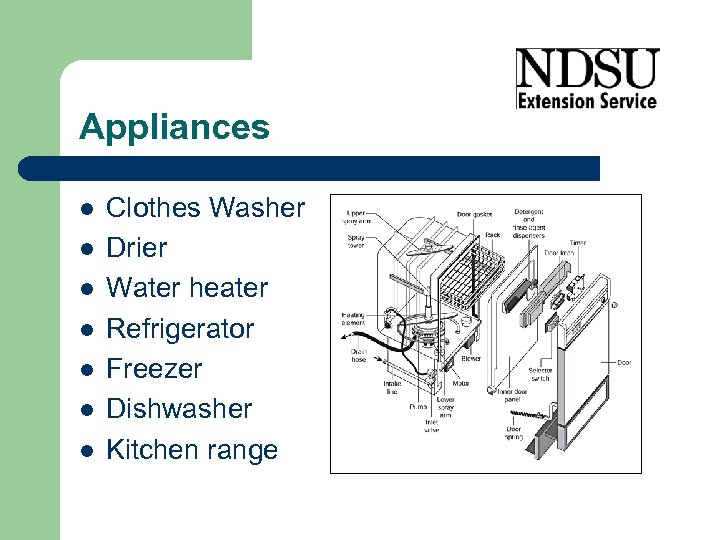 Appliances l l l l Clothes Washer Drier Water heater Refrigerator Freezer Dishwasher Kitchen range
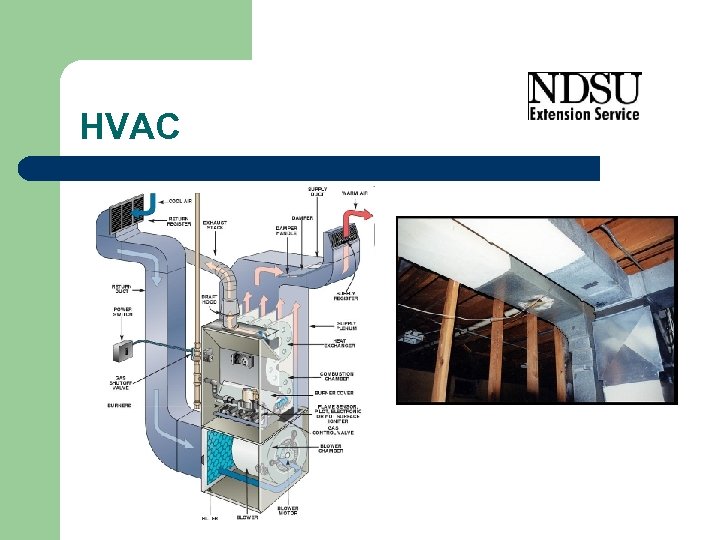 HVAC
HVAC
 Specific Items l Plaster & stucco Cabinets and countertops (check material) Non-porous tubs, toilets, sinks Plumbing Wood Flooring (remove covering, allow expansion) Windows & doors l OSB & particle board l l l
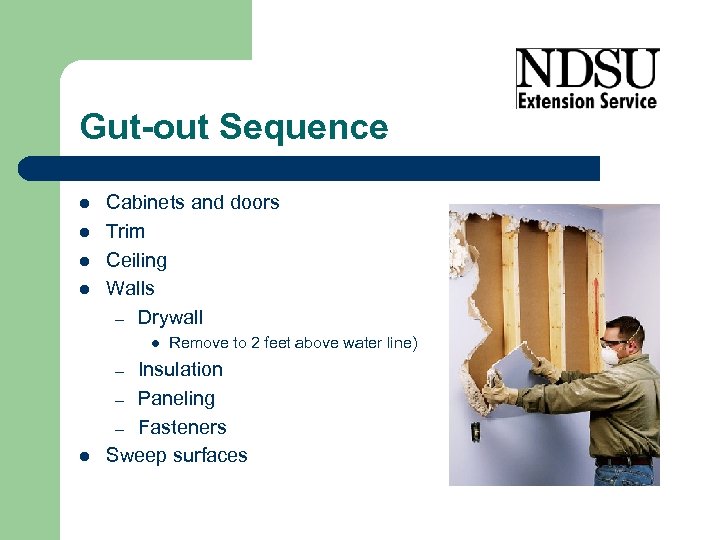 Gut-out Sequence l l Cabinets and doors Trim Ceiling Walls – Drywall l Insulation – Paneling – Fasteners Sweep surfaces – l Remove to 2 feet above water line)
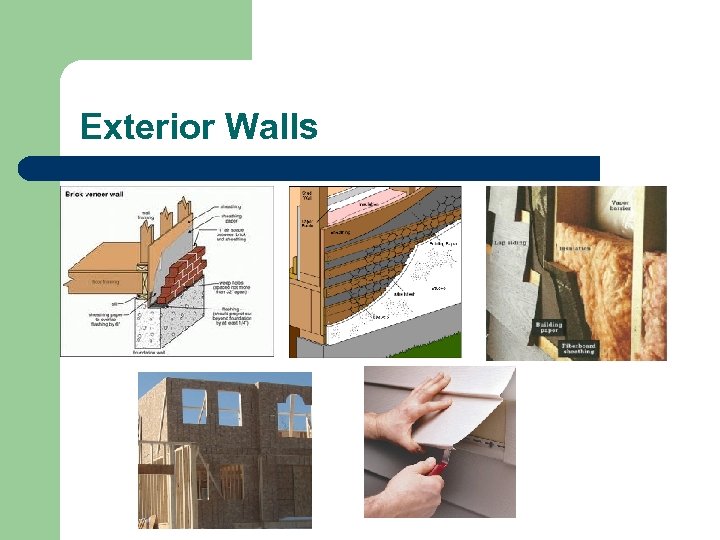 Exterior Walls
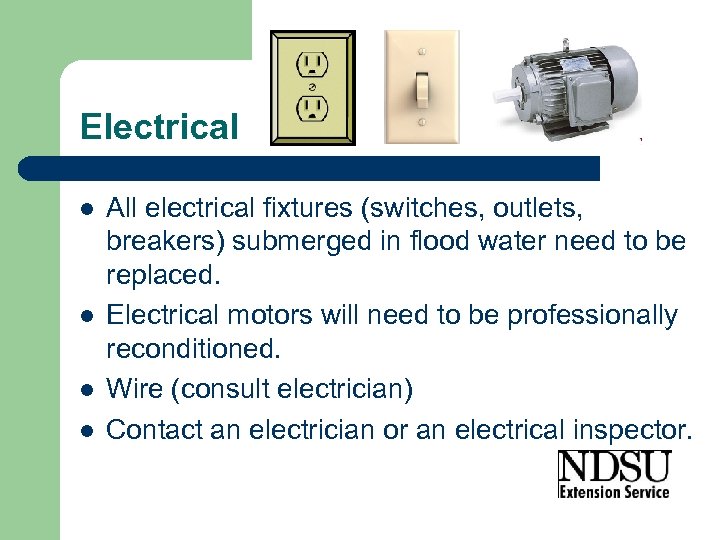 Electrical l l All electrical fixtures (switches, outlets, breakers) submerged in flood water need to be replaced. Electrical motors will need to be professionally reconditioned. Wire (consult electrician) Contact an electrician or an electrical inspector.
 Photographs & Valuables l l Damage arrested by freezing Wax paper between layers Important papers should be copied after drying CDs and DVDs rinse with clean water, dry
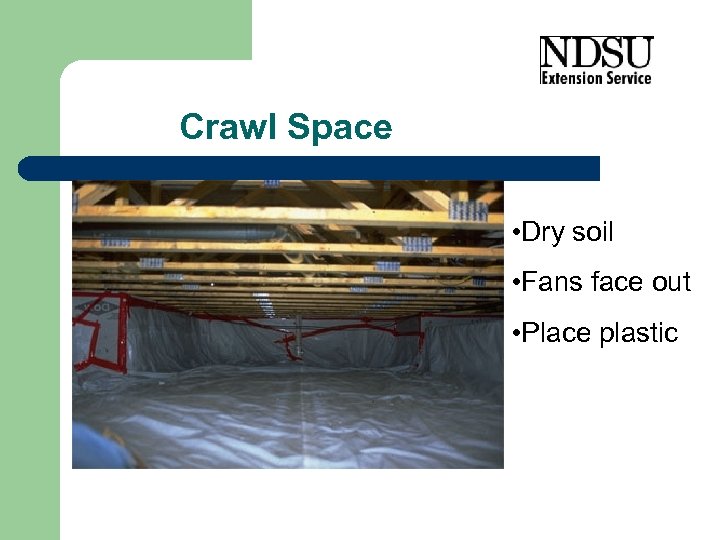 Crawl Space • Dry soil • Fans face out • Place plastic
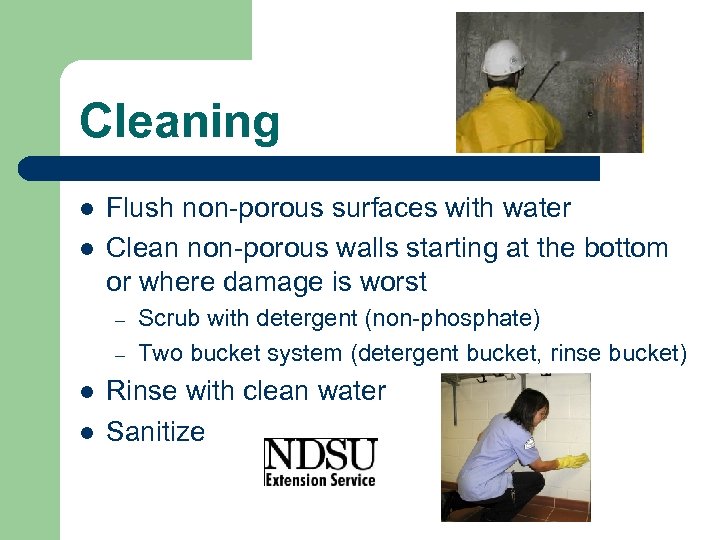 Cleaning l l Flush non-porous surfaces with water Clean non-porous walls starting at the bottom or where damage is worst – – l l Scrub with detergent (non-phosphate) Two bucket system (detergent bucket, rinse bucket) Rinse with clean water Sanitize
 Biocide – Clean then Sanitize l l l Must be used according to label (specific application) – The label is the law – Non-porous material? Must be applied to clean surface Must have required exposure time Must use PPE Ventilate the area Common biocides – Alcohol, sodium hypochlorite (chlorine bleach), hydrogen peroxide, iodine, quaternary ammonium chloride, synthesized phenolic compound
 Chlorine Bleach l l l l Follow the Label! Only non-porous & hard materials & surfaces PPE Ventilation ¾ cup bleach per gallon water Surface wet for 5 minutes Rinse Dry
 Biocide Registration l l Disinfectants are a pesticide EPA reviews efficacy data Use registered disinfectants http: //www. agdepartment. com/ – l http: //www. kellysolutions. com/nd/ People applying disinfectants in buildings for hire need to be commercially certified in the Home and Industrial category.
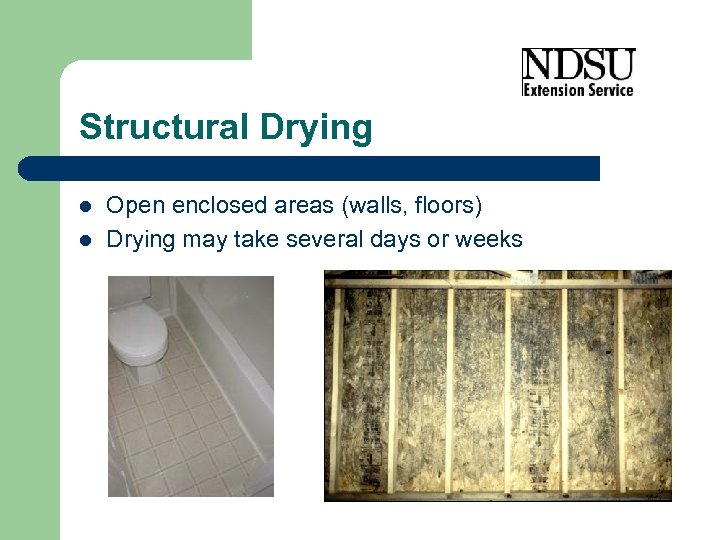 Structural Drying l l Open enclosed areas (walls, floors) Drying may take several days or weeks
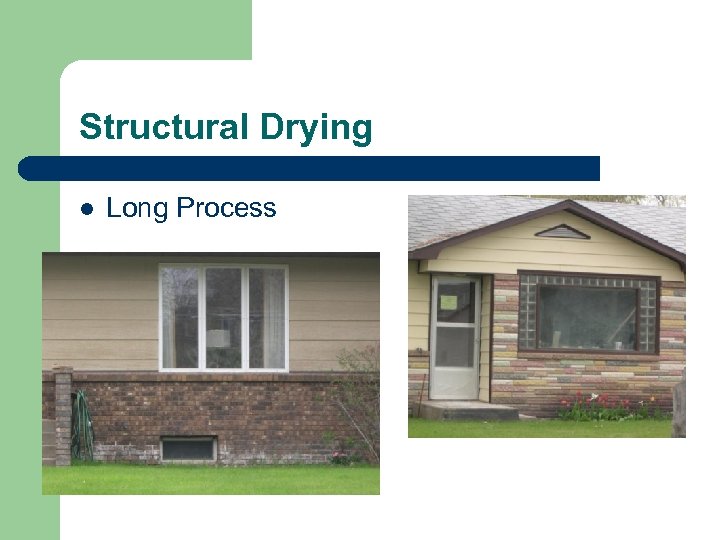 Structural Drying l Long Process
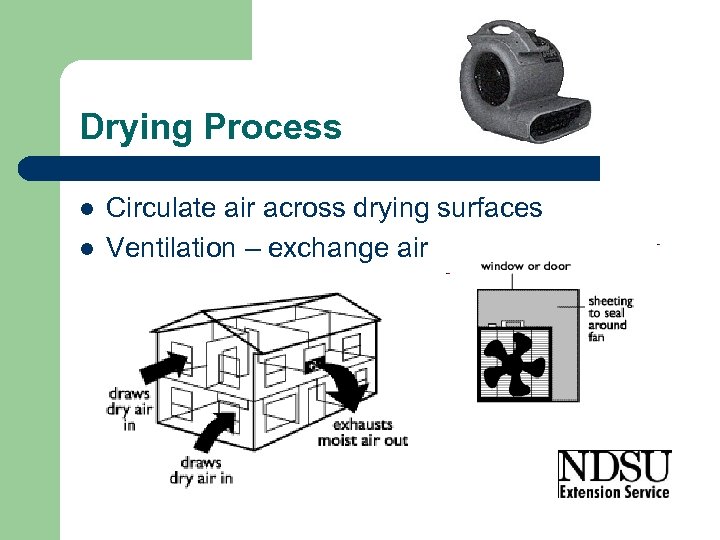 Drying Process l l Circulate air across drying surfaces Ventilation – exchange air
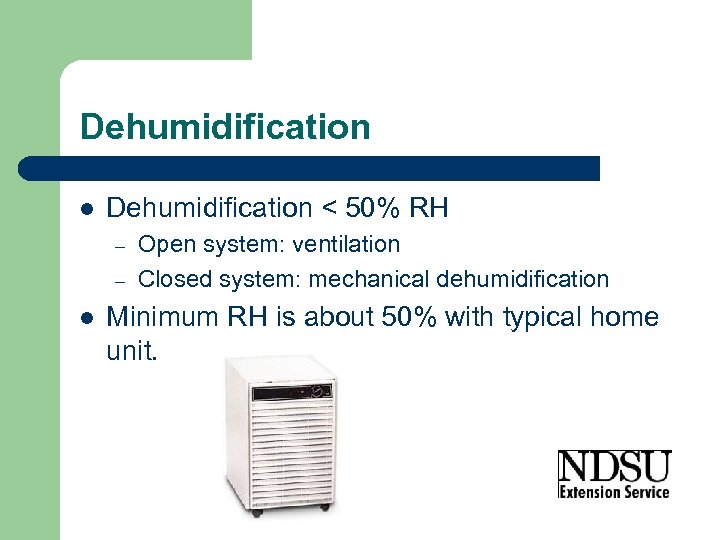 Dehumidification l Dehumidification < 50% RH – – l Open system: ventilation Closed system: mechanical dehumidification Minimum RH is about 50% with typical home unit.
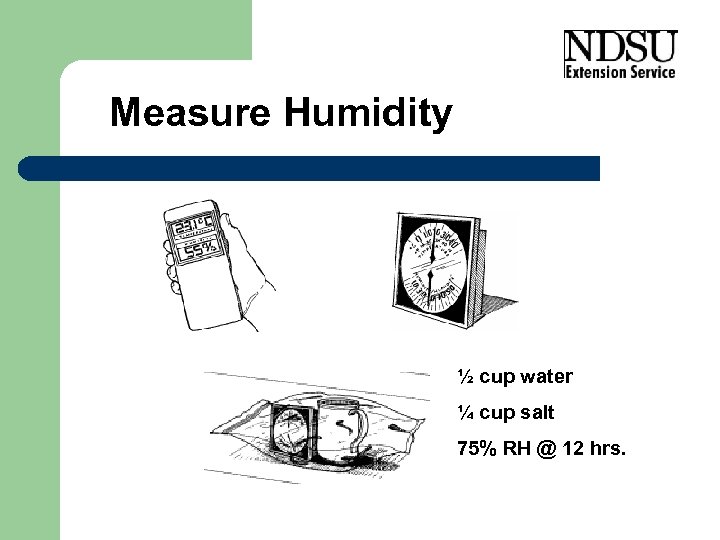 Measure Humidity ½ cup water ¼ cup salt 75% RH @ 12 hrs.
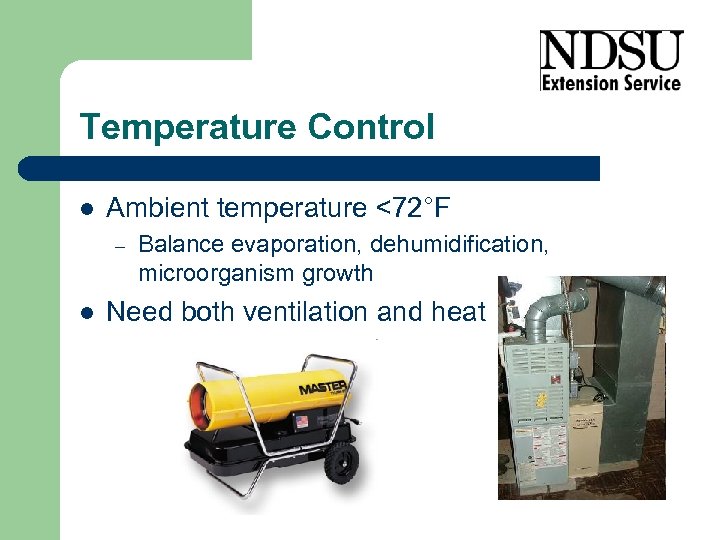 Temperature Control l Ambient temperature <72°F – l Balance evaporation, dehumidification, microorganism growth Need both ventilation and heat
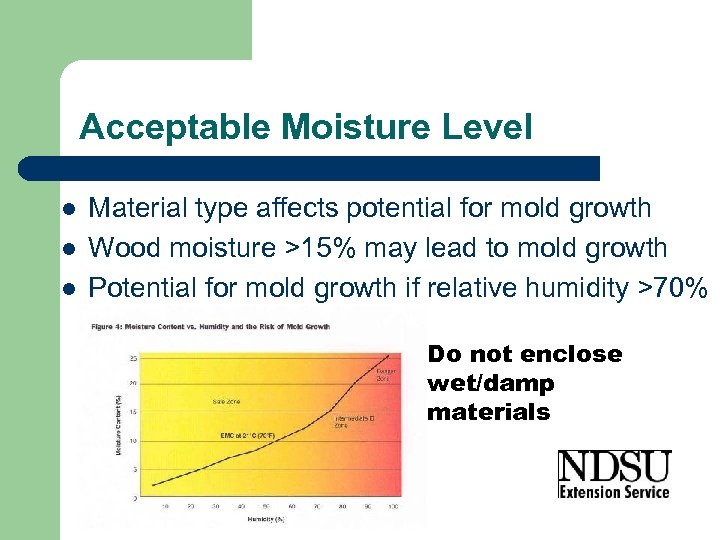 Acceptable Moisture Level l Material type affects potential for mold growth Wood moisture >15% may lead to mold growth Potential for mold growth if relative humidity >70% Do not enclose wet/damp materials
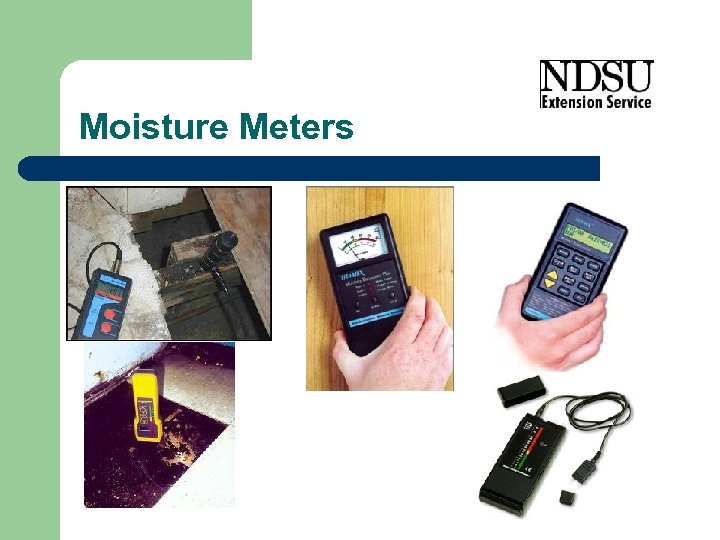 Moisture Meters
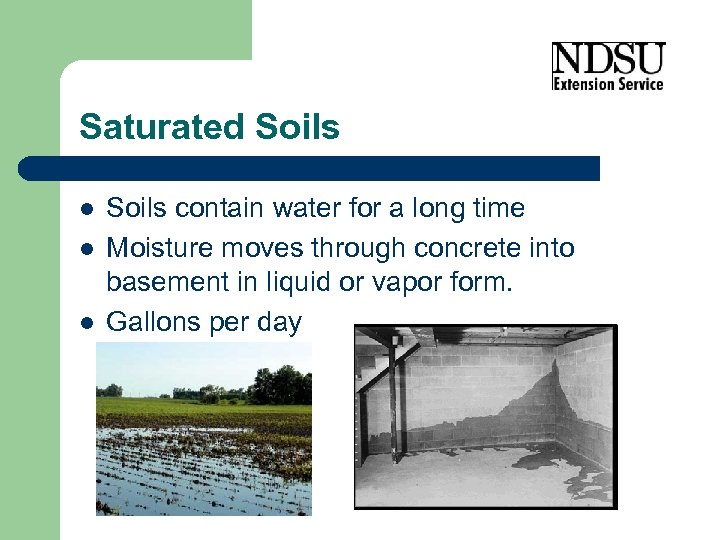 Saturated Soils l l l Soils contain water for a long time Moisture moves through concrete into basement in liquid or vapor form. Gallons per day
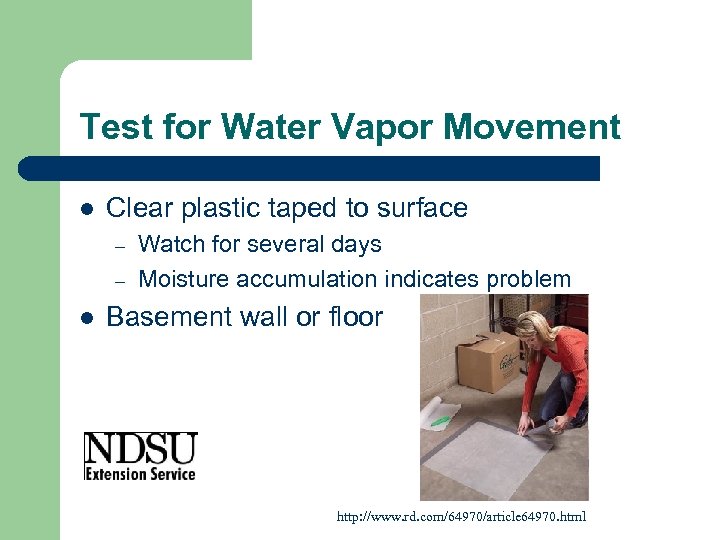 Test for Water Vapor Movement l Clear plastic taped to surface – – l Watch for several days Moisture accumulation indicates problem Basement wall or floor http: //www. rd. com/64970/article 64970. html
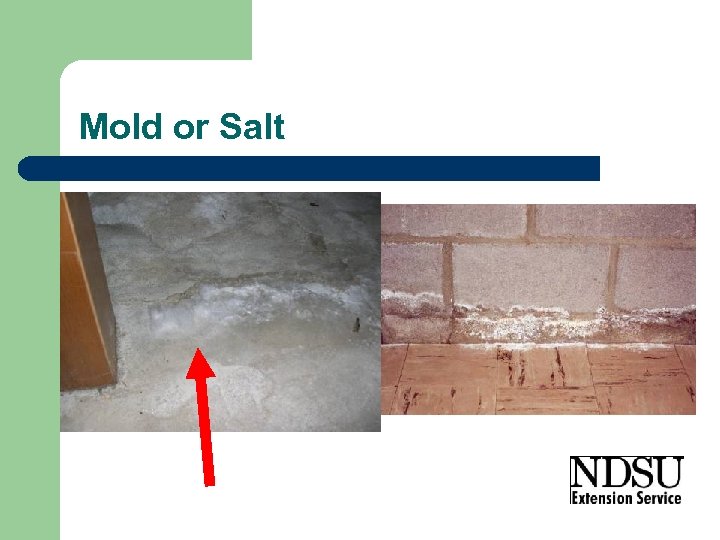 Mold or Salt
 Search for NDSU Flood Information http: //www. ag. ndsu. edu/flood