


 Скачать презентацию Flood Impact Emerald District Fitzroy Flood Forum Wednesday
a42d64fdae5c2926aaad117b2f4e1800.ppt
- Количество слайдов: 30
 Flood Impact Emerald District Fitzroy Flood Forum, Wednesday 6 August 2008 Bill Wilkinson Environmental Recovery Program Leader Seconded from Natural Resources and Water
 About this talk • • • The Event Key Streams that Flooded Impact Response Key Issues Lessons Learned
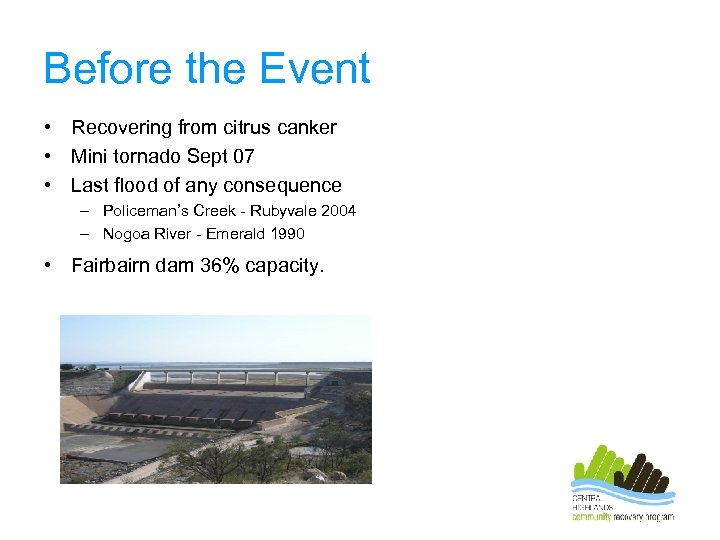 Before the Event • Recovering from citrus canker • Mini tornado Sept 07 • Last flood of any consequence – Policeman’s Creek - Rubyvale 2004 – Nogoa River - Emerald 1990 • Fairbairn dam 36% capacity.
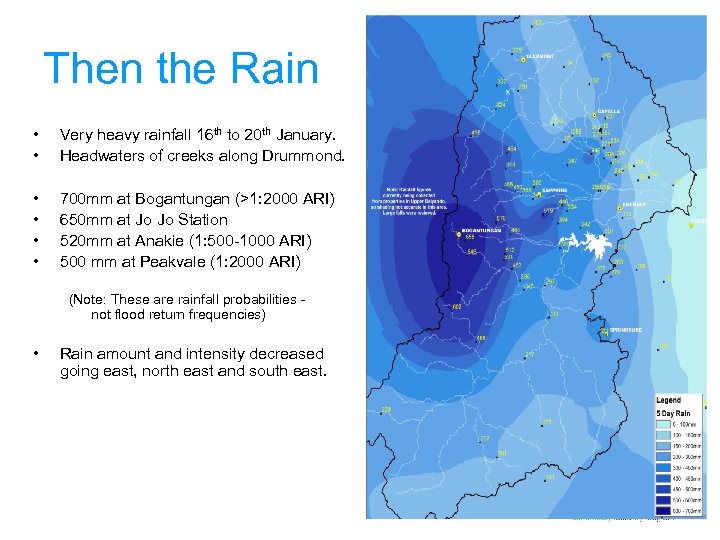 Then the Rain • • Very heavy rainfall 16 th to 20 th January. Headwaters of creeks along Drummond. • • 700 mm at Bogantungan (>1: 2000 ARI) 650 mm at Jo Jo Station 520 mm at Anakie (1: 500 -1000 ARI) 500 mm at Peakvale (1: 2000 ARI) (Note: These are rainfall probabilities not flood return frequencies) • Rain amount and intensity decreased going east, north east and south east.
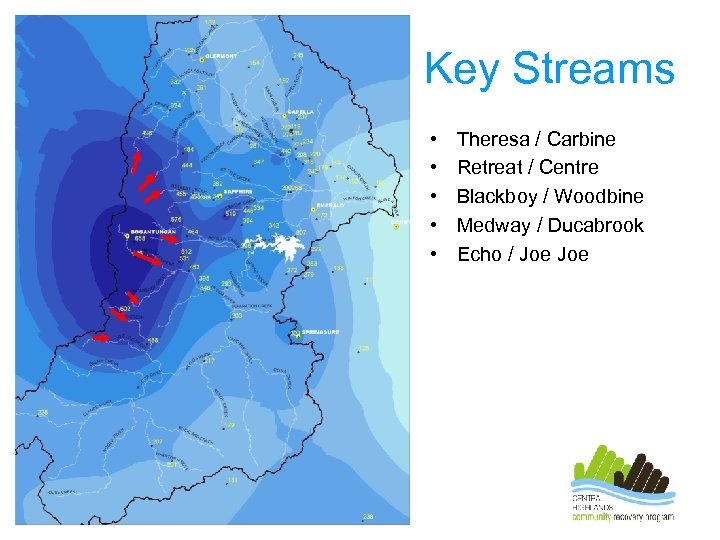 Key Streams • • • Theresa / Carbine Retreat / Centre Blackboy / Woodbine Medway / Ducabrook Echo / Joe
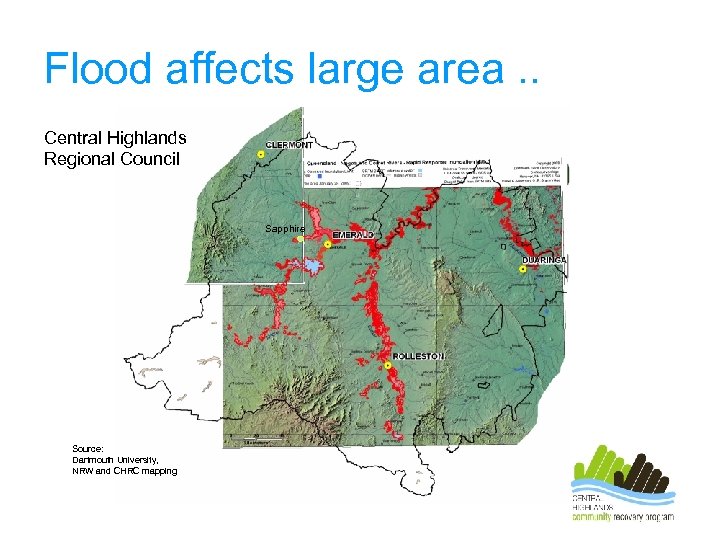 Flood affects large area. . Central Highlands Regional Council Sapphire Source: Dartmouth University, NRW and CHRC mapping
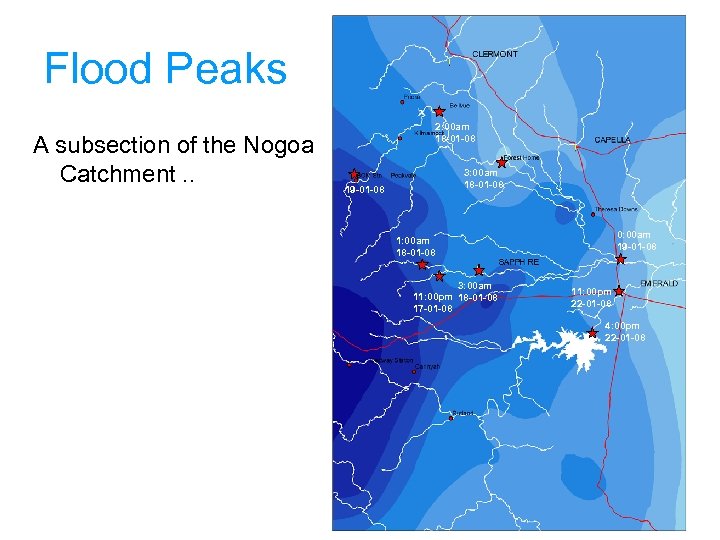 Flood Peaks A subsection of the Nogoa Catchment. . 2: 00 am 18 -01 -08 3: 00 am 18 -01 -08 19 -01 -08 0: 00 am 19 -01 -08 1: 00 am 18 -01 -08 3: 00 am 11: 00 pm 18 -01 -08 17 -01 -08 11: 00 pm 22 -01 -08 4: 00 pm 22 -01 -08
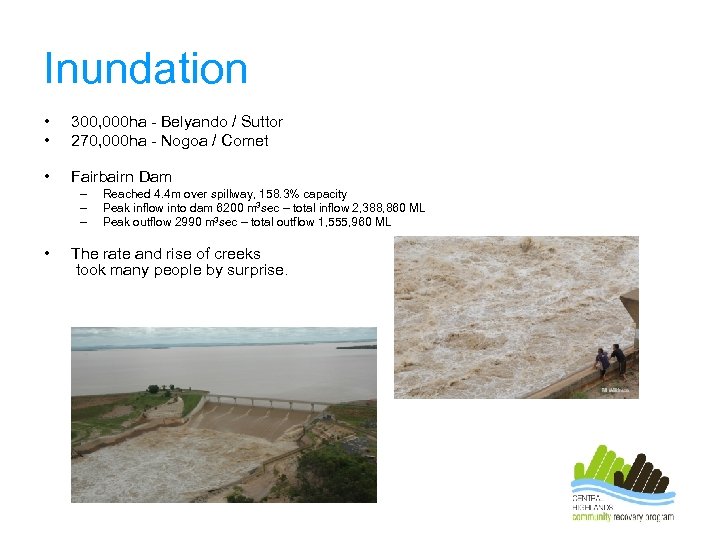 Inundation • • 300, 000 ha - Belyando / Suttor 270, 000 ha - Nogoa / Comet • Fairbairn Dam – – – • Reached 4. 4 m over spillway, 158. 3% capacity Peak inflow into dam 6200 m 3 sec – total inflow 2, 388, 860 ML Peak outflow 2990 m 3 sec – total outflow 1, 555, 960 ML The rate and rise of creeks took many people by surprise.
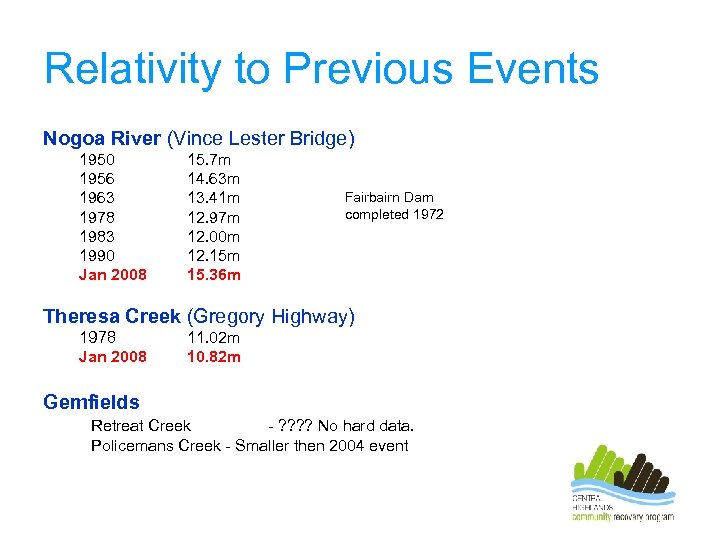 Relativity to Previous Events Nogoa River (Vince Lester Bridge) 1950 1956 1963 1978 1983 1990 Jan 2008 15. 7 m 14. 63 m 13. 41 m 12. 97 m 12. 00 m 12. 15 m 15. 36 m Fairbairn Dam completed 1972 Theresa Creek (Gregory Highway) 1978 Jan 2008 11. 02 m 10. 82 m Gemfields Retreat Creek - ? ? No hard data. Policemans Creek - Smaller then 2004 event
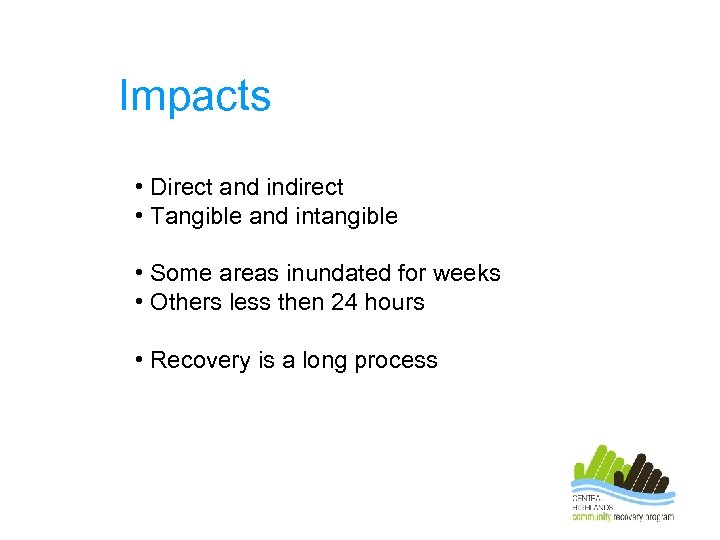 Impacts • Direct and indirect • Tangible and intangible • Some areas inundated for weeks • Others less then 24 hours • Recovery is a long process
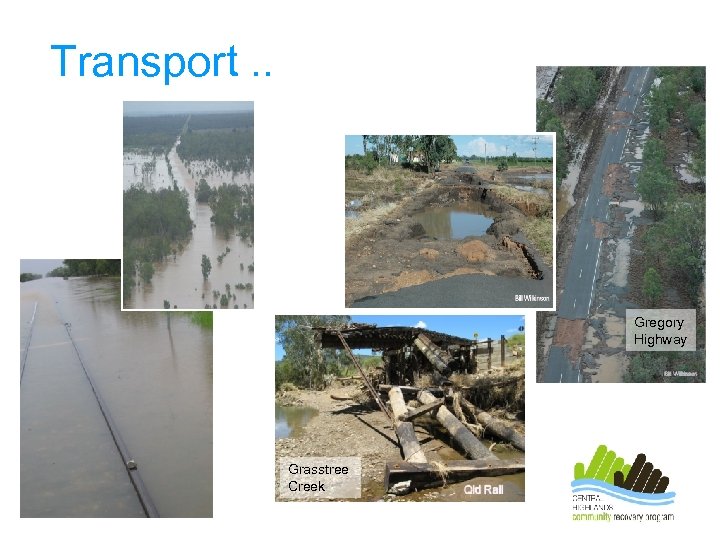 Transport. . Gregory Highway Grasstree Creek
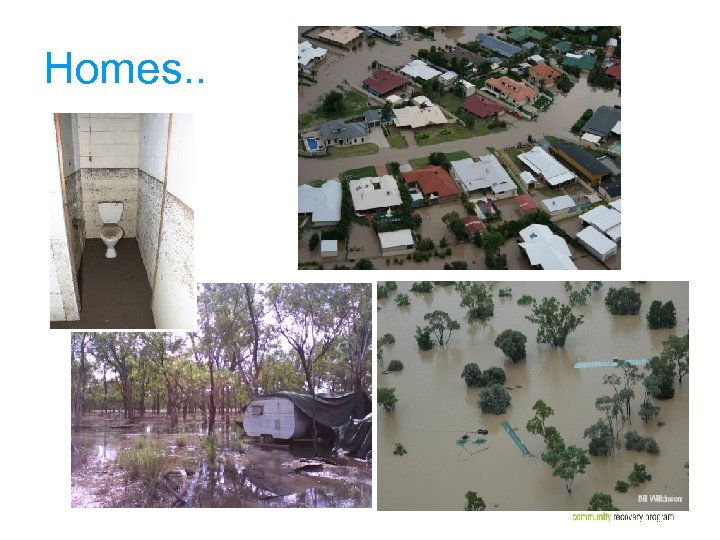 Homes. .
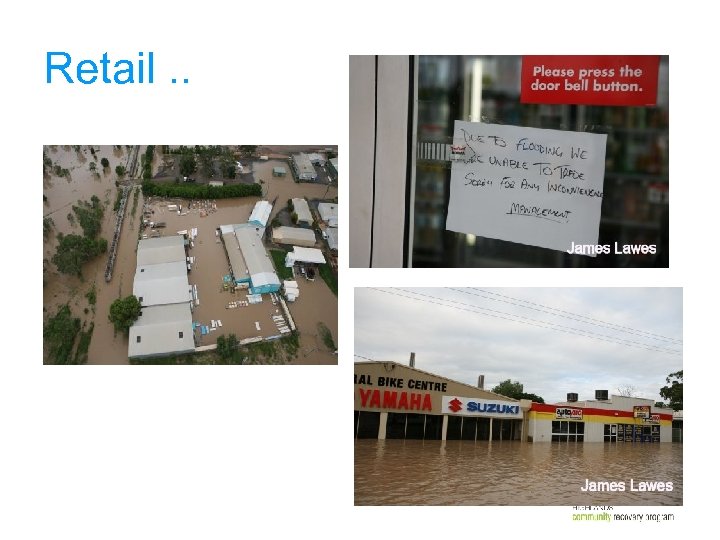 Retail. .
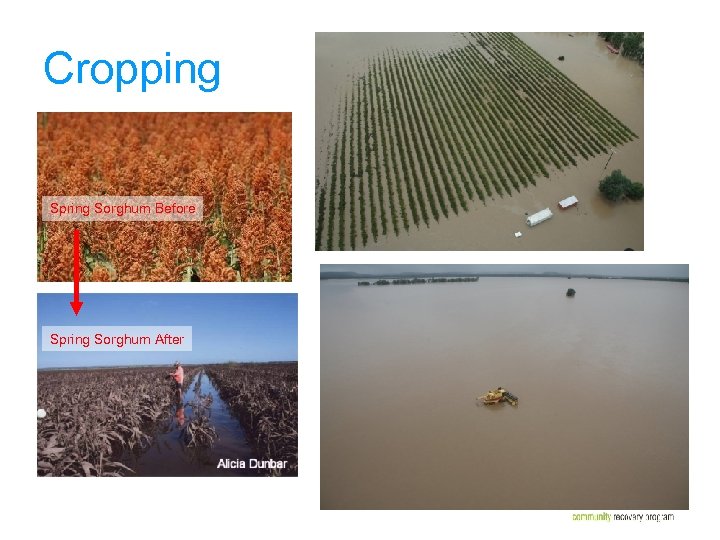 Cropping Spring Sorghum Before Spring Sorghum After
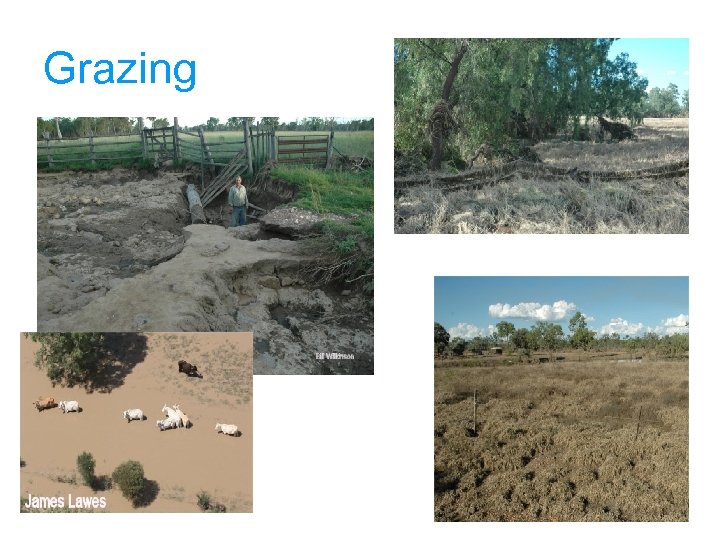 Grazing
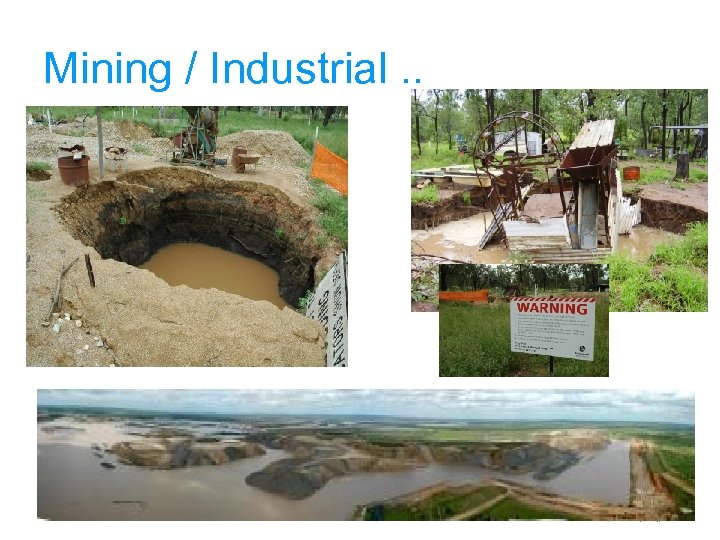 Mining / Industrial. .
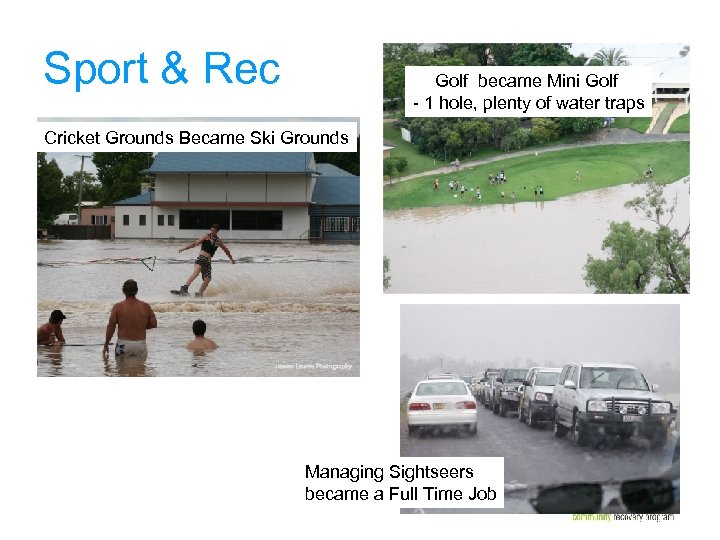 Sport & Rec Golf became Mini Golf - 1 hole, plenty of water traps Cricket Grounds Became Ski Grounds Managing Sightseers became a Full Time Job
 Impacts – 3, 160 residents registered for evacuation. – 166 homes, 73 units and 10 uncompleted buildings seriously damaged. – 80 homes with minor water damage. – Damage to 10 industrial sheds, 1 shopping centre, 1 day care centre, 1 big box retail and 1 not-forprofit agency. – Increase in Ross River Fever and Barmah virus
 Impacts Local Business: • • • Cleanup and repairs, Re-establishment, Relocation Depleted, Stressed, Tired workforce 30 -70% downturn in turnover Transport operators severely constrained by road restrictions Smaller communities – buy out of food and fuel
 Impacts Irrigation – 6 properties - total damage >$1 million – 10 properties between $250 K and $1 million Grazing – – Generally 20 – 40 km of major fence repair Road and water storage repairs Stock displacement and loss (high in Belyando) Pasture death and weed incursion.
 Impacts Coal Mining Sector • Roughly, we estimate the industry lost between $1. 5 -2 billion worth of production as a consequence of heavy rainfall and flooding that extended from Sonoma (Collinsville in the north) to Jeebroopilly (near Amberley). Qld Resources Council
 Pasture, Weeds. . • Up to 95% buffel death – if inundated >7 days • Yield decline - 2000 kg to 300 kgha • Slow recruitment of desirable species 8 -2 -08 • Incursion of Parthenium, Nogoora Burr, Parkinsonia, Harissia Cactus…Hymanachne? ? • 18 -4 -08 Native grasses on lighter country OK
 Response • Shire Council established the Central Highlands Community Recovery Group (see Kerry’s talk) • Approach very successful, a good model • High level of co-operation between Agencies, Industry, Private Sector and Community • Dedicated Recovery Team Economic recovery Infrastructure recovery Environmental recovery Social recovery
 Key Issues • • Flood warning and communications. Quantifying damage & recovery needs accurately. Measuring flood behaviour, timing and water levels. Coordination of aerial / imagery capture. Emergency rescue resources. Insurance and building repair timeframes. Roads and transport. The flood was big – affected a large area, significant cost to many individuals / businesses
 Some Positive Outcomes • • • Flood mapping and review of modelling Review of flood warning instruments & communications Radar station Community engagement and feedback process Increase in SES volunteer numbers Ongoing commitment by Council, Agencies and sectors to complete tasks and tools that will assist future flood preparedness
 Flood Inundation Mapping • Detailed inundation maps – Fairbairn Dam to Emerald township • High Tide Line Only – approx 350 km – – – • Nogoa Floodplain Nogoa at Rutland Retreat Creek at Sapphire Portion of Policeman’s Creek Other streams where not done because of time and previous floods were larger A number of high water elevations in AHDm – Nogoa Floodplain – Dam to Comet – Around Sapphire • Stream cross sections and gradients in critical areas • • All this data did not exist before. It has been provided to modellers.
 Not All Under Water At Same Time • The maps do not represent an instantaneous point in time. • The peak water level changes, as water moves down the catchment. • Each map represents the highest flood points that occurred over the duration of the whole event.
 Some Lessons • Many of us live on the floodplain – we have ‘forgotten’ flood cycles given the last 15 -20 years of drought cycles. • Integrity of civil infrastructure – levees, design and construction standards. • Catchment flood prediction models were very close to what occurred. Communications need attention. • Need to improve some gauging station gaps, communications and warnings out, and business and community preparedness.
 Lessons Learned ctd • Maps, data and disaster management tools be exchanged before next flood with emergency response groups. • State / local government standardise a radio TV tune like the Cyclone warning – for on the hour , every hour • Responsibility for flood warning and response, can’t rest with one or two organisations - requires broader partnerships, commitment and sharing skills and knowledge, established upfront. • Central Highlands Regional Council approach is an example of how things can and should work.
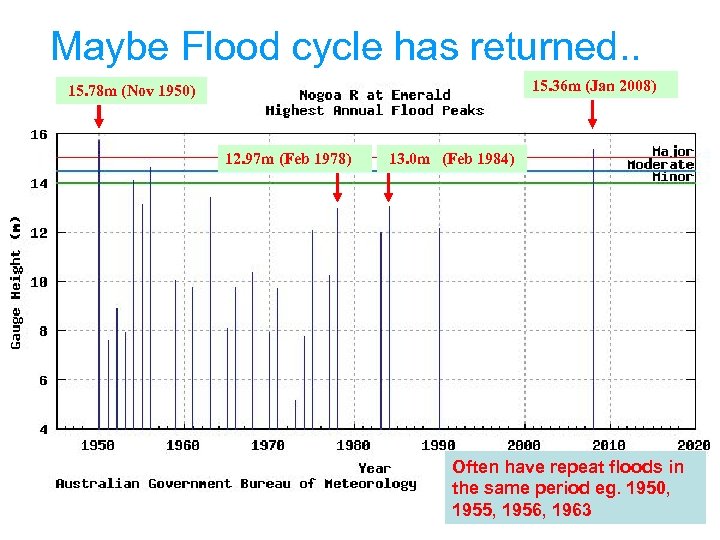 Maybe Flood cycle has returned. . 15. 36 m (Jan 2008) 15. 78 m (Nov 1950) 12. 97 m (Feb 1978) 13. 0 m (Feb 1984) Often have repeat floods in the same period eg. 1950, 1955, 1956, 1963