 Скачать презентацию Flexible Manufacturing Ashlee Choman Annalisa Scotto Sara Weron
2d05a7ff9c3f422c46249d4a11ba5640.ppt
- Количество слайдов: 28



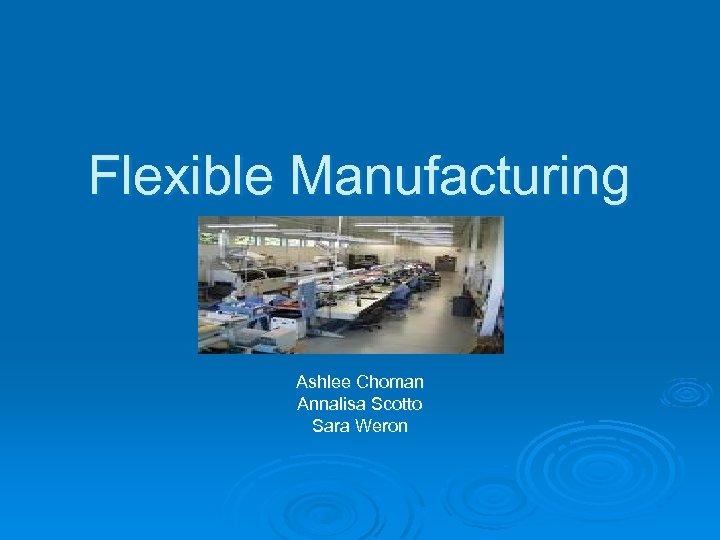
Flexible Manufacturing Ashlee Choman Annalisa Scotto Sara Weron
Operations Management and Flexible Manufacturing “A form of computer-integrated manufacturing used to make small to moderate-sized batches of parts. ” Ø According to MIT study: American companies spend twice as much on product innovation as they do on process innovation Ø Operations Management and Flexible Manufacturing Ø l Why do we need flexible manufacturing?
The Need for Flexibility Ø Cost savings Ø Efficiency Ø Mass production Ø Time Ø Flexibility today means quickness in delivery and high quality at reasonable prices.
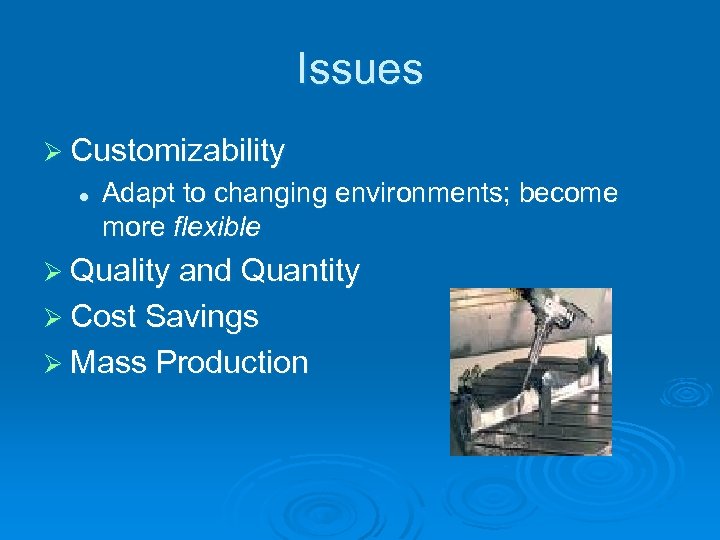
Issues Ø Customizability l Adapt to changing environments; become more flexible Ø Quality and Quantity Ø Cost Savings Ø Mass Production
Advantages Ø Faster, lower cost products Ø Lower direct labor costs Ø Consistent and better quality Ø Reduces errors and rejects = Higher Six Sigma
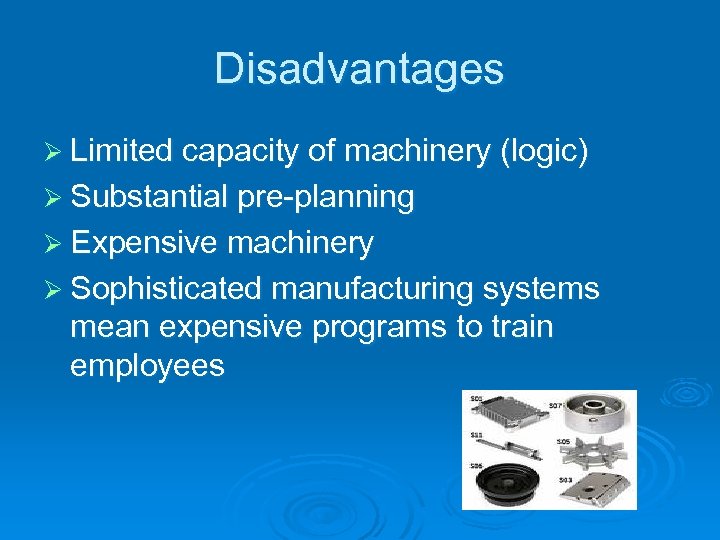
Disadvantages Ø Limited capacity of machinery (logic) Ø Substantial pre-planning Ø Expensive machinery Ø Sophisticated manufacturing systems mean expensive programs to train employees
Sustainable Competitive Advantage Ø Customizability- Companies have to adapt to the environment in which they operate to be more flexible in their operations and to satisfy different market segments l Thus the innovation of FMS became related to the effort of gaining a competitive advantage.
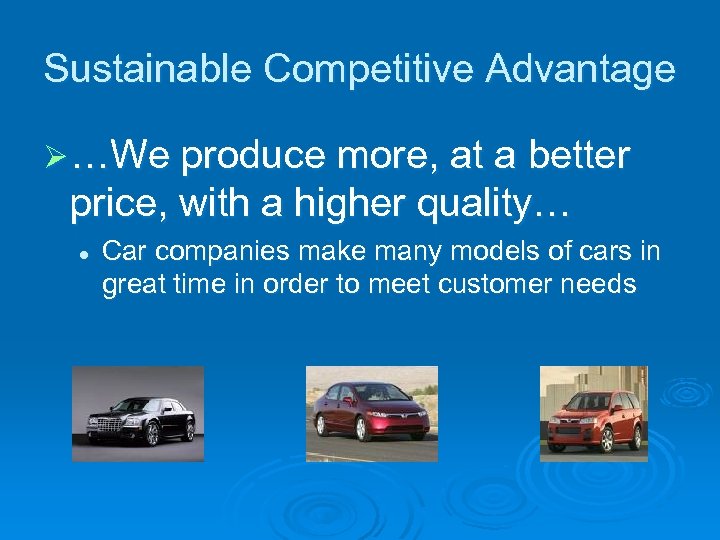
Sustainable Competitive Advantage Ø …We produce more, at a better price, with a higher quality… l Car companies make many models of cars in great time in order to meet customer needs
History of Flexible Manufacturing Ø In the beginning, there was not much competition and so FM systems were not needed. l “People can order any color of car as long as it is black. ” Henry Ford After WWII, market focused on consumer (not manufacturer) Ø The first FM system was patent in 1965 by Theo Williamson who made numerically controlled equipment Ø
History (Cont’d) Ø Change in manufacturing over time Ø 60’s- Efficiency in manufacturing Ø 70’s- Efficiency and quality Ø 80’s- Efficiency quality and flexibility Ø Due To: l l l Increased international competition The need to reduce manufacturing cycle time and Pressure to cut production costs
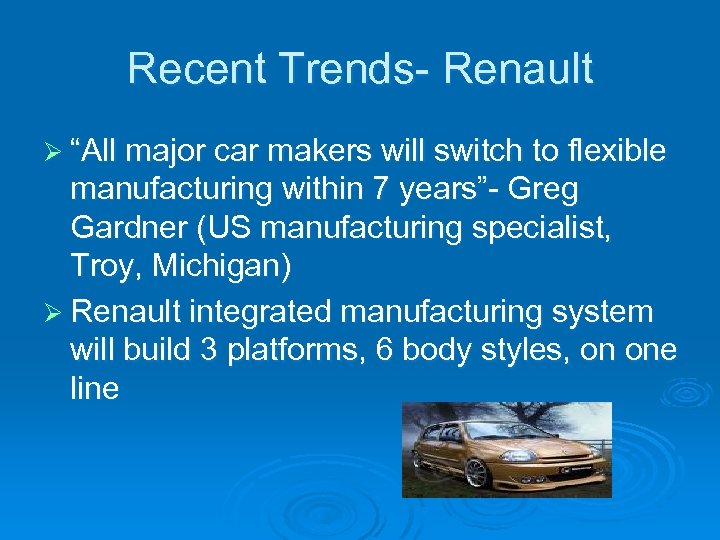
Recent Trends- Renault Ø “All major car makers will switch to flexible manufacturing within 7 years”- Greg Gardner (US manufacturing specialist, Troy, Michigan) Ø Renault integrated manufacturing system will build 3 platforms, 6 body styles, on one line
Recent Trends - Renault Ø Renault is the latest to choose flexibility l l RIMS aims at producing multiple models on one assembly line First RIMS will open in 2009 in India • Used by Nissan, Renault and Mahindra (Indian) l Renault CEO Carlos Ghosn says the RIMS will half R&D costs between 2006 and 2009 and increase sales from 2. 5 million to 3. 3 million in 2009
Recent Trends Ø Flexibility gives option to adjust to changing environment l l l Not a simple task Very costly One car per one plant systems does not cut costs if plants are being under utilized • i. e. -Car models are not as popular Ø The alternative to flexibility would be to increase manual labor and individualization while increasing time to market l Cheaper, but does not provide SCA
Recent Trends Ø In 2007, KUKA”Titan” became world’s strongest robot l l Power of mid-sized car Builds parts for automotive industry • i. e. - capable of moving whole cars l July 7, 2005 - joined forces with auto companies to develop new flexible manufacturing processes for aerospace industries www. kuka. com
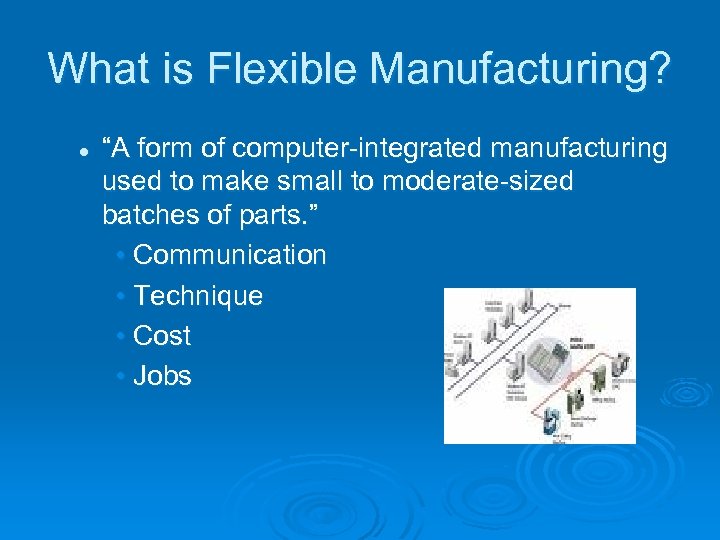
What is Flexible Manufacturing? l “A form of computer-integrated manufacturing used to make small to moderate-sized batches of parts. ” • Communication • Technique • Cost • Jobs
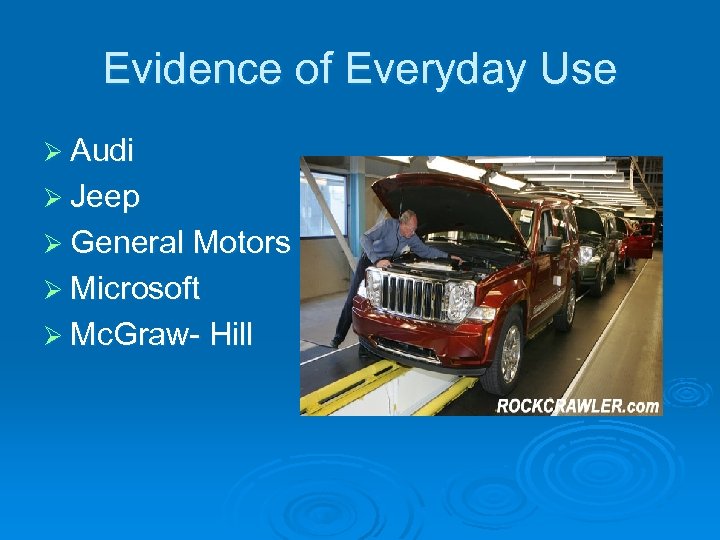
Evidence of Everyday Use Ø Audi Ø Jeep Ø General Motors Ø Microsoft Ø Mc. Graw- Hill
Why Choose Flexible Manufacturing? Ø Competitive Market l l Quick and Easy Expensive Initial Cost Low Cost to Change Design Keep Up With Competitors Ø What Makes This Approach Better? l l l Computer Does The Work User Friendly Cost Efficient
Discussion Of Flexible Manufacturing Ø Basic Mechanics l l Computer Designed Work No Need For New Equipment Ø Issues With Flexible Manufacturing l l l Costly Time and Complexity Not Guaranteed
ATI Industrial Automation Ø Leading engineering-based world developer of robotic accessories that include: l l l Ø Robotic tool changers Force/torque sensors Robotic collision sensors Robotic and CNC Deburring Tools Remote center compliance devices Robotic rotary joint http: //www. ati-ia. com/library/video_listing. aspx
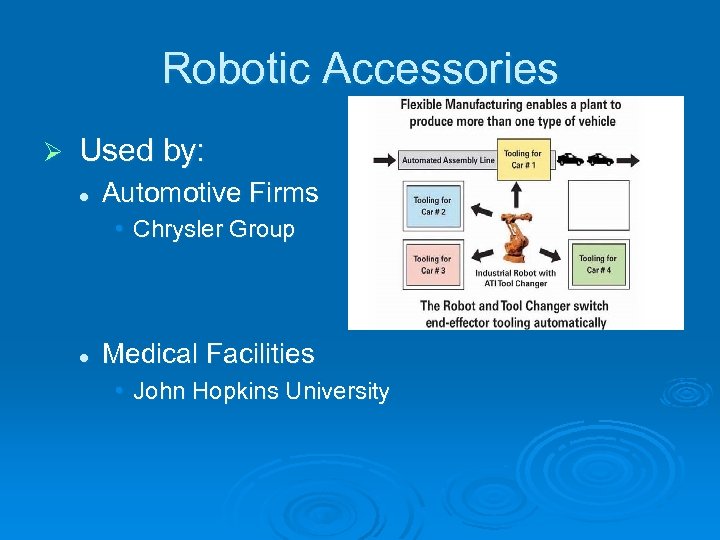
Robotic Accessories Ø Used by: l Automotive Firms • Chrysler Group l Medical Facilities • John Hopkins University
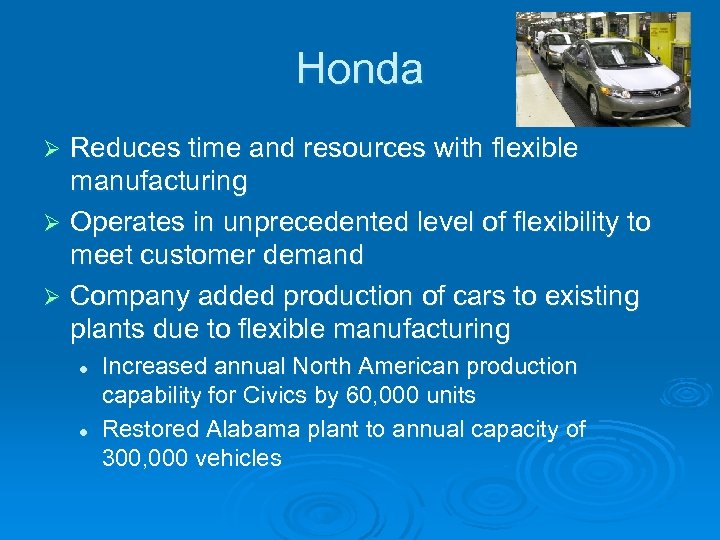
Honda Reduces time and resources with flexible manufacturing Ø Operates in unprecedented level of flexibility to meet customer demand Ø Company added production of cars to existing plants due to flexible manufacturing Ø l l Increased annual North American production capability for Civics by 60, 000 units Restored Alabama plant to annual capacity of 300, 000 vehicles
Flow Corporation Ø Waterjet Cuttin System l l l l Cuts greater variety of materials Setup and fixturing is complete in minutes Different jobs do not require different tooling Increases productivity Edge quality eliminates costly secondary finishing Raw material savings Compliments existing technology
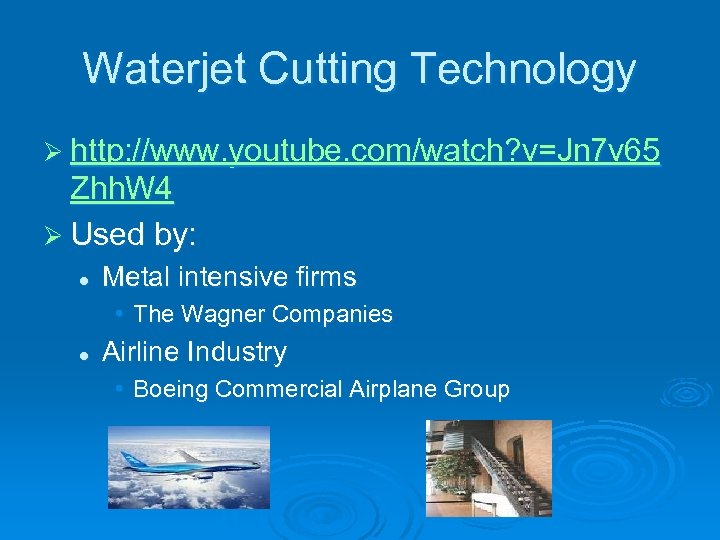
Waterjet Cutting Technology Ø http: //www. youtube. com/watch? v=Jn 7 v 65 Zhh. W 4 Ø Used by: l Metal intensive firms • The Wagner Companies l Airline Industry • Boeing Commercial Airplane Group
Orange County Choppers Ø Founded by metalworker Paul Teutul, Sr. Ø Designed custom choppers Ø Implemented Flow’s waterjet in 2003 Ø Priceless machine Ø Opened new design possibilities for OCC Ø Easy to use Ø Allows more bikes to be built in shorter period of time
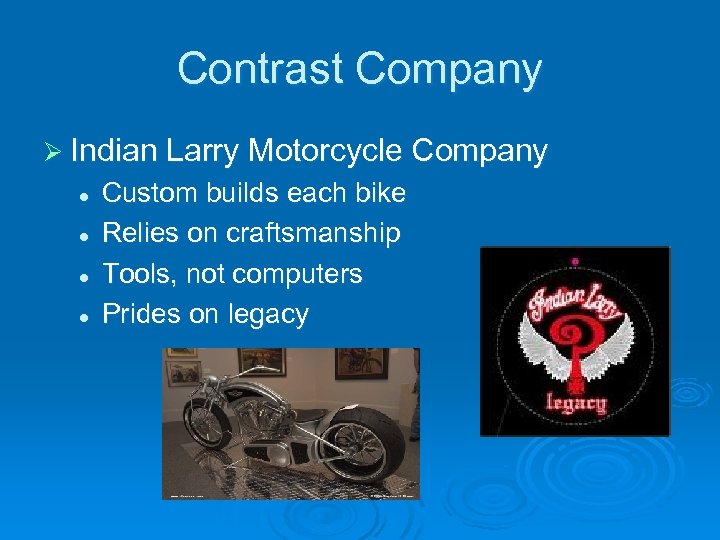
Contrast Company Ø Indian Larry Motorcycle Company l l Custom builds each bike Relies on craftsmanship Tools, not computers Prides on legacy
Conclusion Ø How is the new approach better? Ø How does it make it more competitive? Ø What’s the advantage? Ø What are the drawbacks? Ø Recommendations

Questions or Comments?
Sources Used Ø Ø Ø Ø Ø www. answers. com www. audi. com www. ati-ia. com www. flowcorp. com www. gm. com www. kuka. com www. jeep. com www. microsoft. com www. mcgraw-hill. com Ø Ø Ø www. uky. edu www. orangecountychoppers. co m www. search. eb. com www. wagnercompanies. com www. world. honda. com De Saint-Seine, Sylviane. Renault Plants Get Flexible. Automotive News Europe.
Скачать презентацию Flexible Manufacturing Ashlee Choman Annalisa Scotto Sara Weron
2d05a7ff9c3f422c46249d4a11ba5640.ppt