


 Скачать презентацию Fire Safety Academy Strategies Techniques for Working
ae7fd5746b7f37958f211d9f76597fcb.ppt
- Количество слайдов: 33
 Fire Safety Academy Strategies & Techniques for Working with Children and Parents in Firesetting Intervention Timothy Kopet, Ph. D March 2, 2011 Portland, Oregon
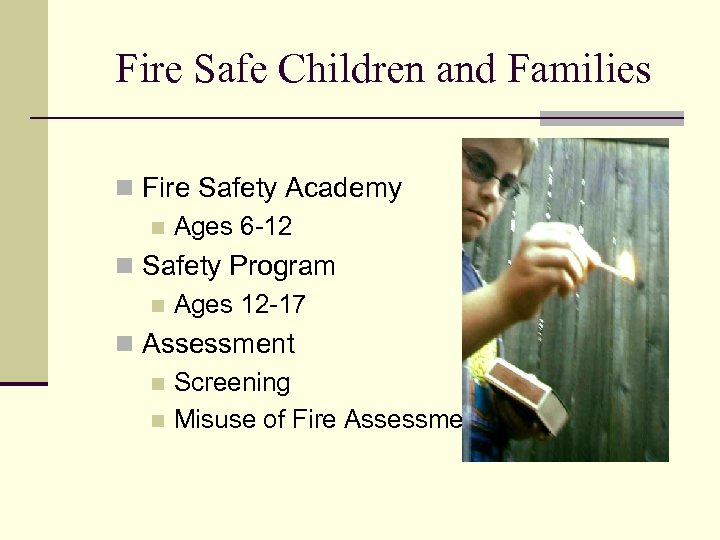 Fire Safe Children and Families n Fire Safety Academy n Ages 6 -12 n Safety Program n Ages 12 -17 n Assessment n Screening n Misuse of Fire Assessment
 Parent Awareness DVD n Introduction n This is a compilation of real video clips uploaded to You. Tube. n One effect of increasing technology in our society is that our kids have access and exposure to things they likely didn’t have in previous generations. n Over the past few years alone, the number of video clips uploaded to You. Tube has increased exponentially.
 Parent Awareness n. . Parenting Piece. VOB
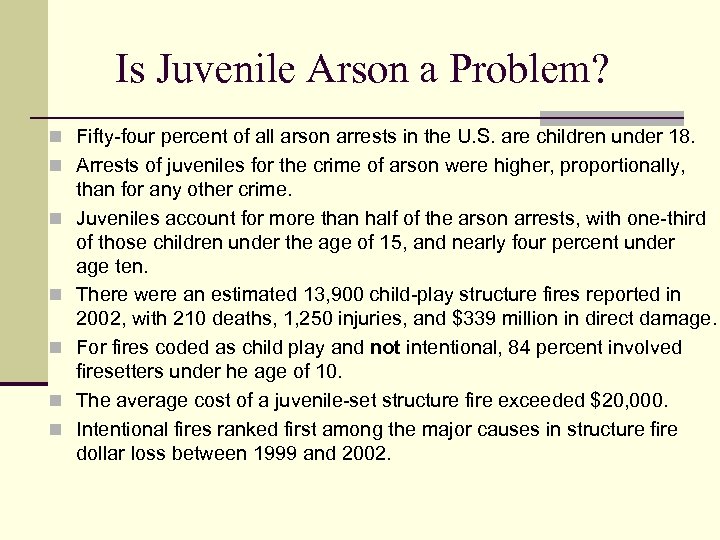 Is Juvenile Arson a Problem? n Fifty-four percent of all arson arrests in the U. S. are children under 18. n Arrests of juveniles for the crime of arson were higher, proportionally, n n n than for any other crime. Juveniles account for more than half of the arson arrests, with one-third of those children under the age of 15, and nearly four percent under age ten. There were an estimated 13, 900 child-play structure fires reported in 2002, with 210 deaths, 1, 250 injuries, and $339 million in direct damage. For fires coded as child play and not intentional, 84 percent involved firesetters under he age of 10. The average cost of a juvenile-set structure fire exceeded $20, 000. Intentional fires ranked first among the major causes in structure fire dollar loss between 1999 and 2002.
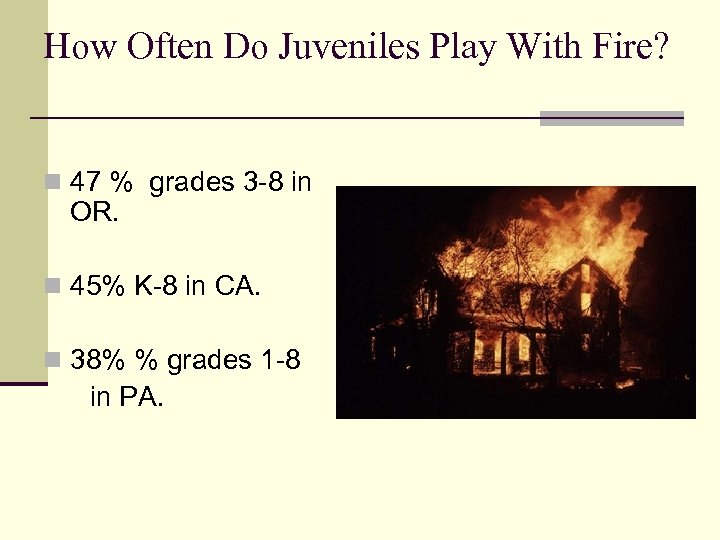 How Often Do Juveniles Play With Fire? n 47 % grades 3 -8 in OR. n 45% K-8 in CA. n 38% % grades 1 -8 in PA.
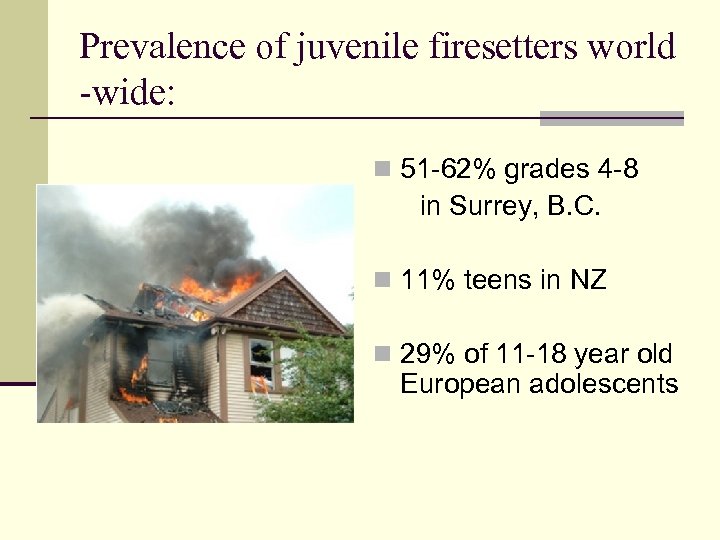 Prevalence of juvenile firesetters world -wide: n 51 -62% grades 4 -8 in Surrey, B. C. n 11% teens in NZ n 29% of 11 -18 year old European adolescents
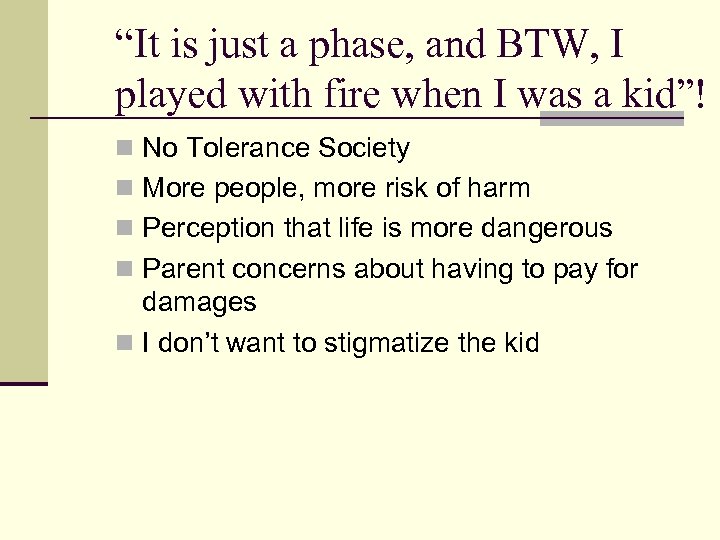 “It is just a phase, and BTW, I played with fire when I was a kid”! n No Tolerance Society n More people, more risk of harm n Perception that life is more dangerous n Parent concerns about having to pay for damages n I don’t want to stigmatize the kid
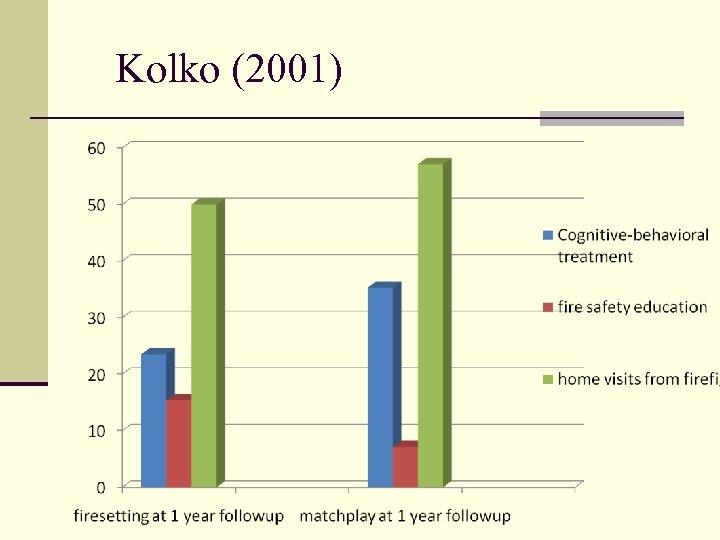 Kolko (2001)
 Fire. Safe Children and Families Recidivism Study n December 2006 -June 2008 n 123 youth between 6 and 17 years old n 7 did not complete the program n Utilized Juvenile Justice Database on: n Any kind of re-offense n Any kind of fire re-offense
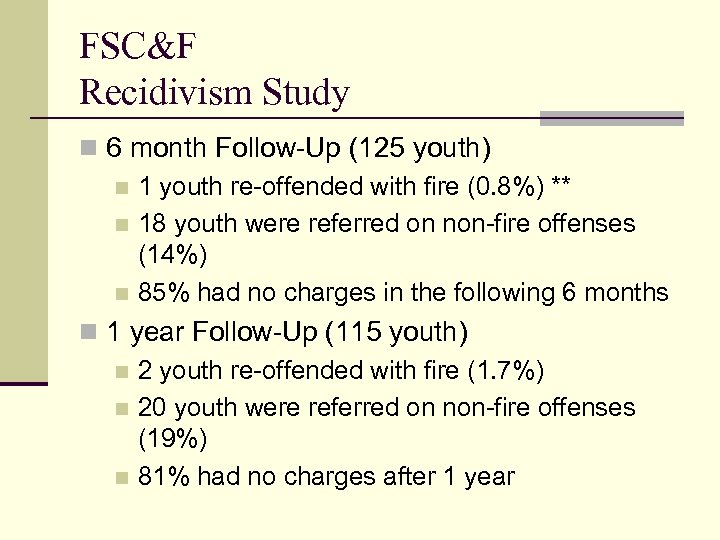 FSC&F Recidivism Study n 6 month Follow-Up (125 youth) n 1 youth re-offended with fire (0. 8%) ** n 18 youth were referred on non-fire offenses (14%) n 85% had no charges in the following 6 months n 1 year Follow-Up (115 youth) n 2 youth re-offended with fire (1. 7%) n 20 youth were referred on non-fire offenses (19%) n 81% had no charges after 1 year
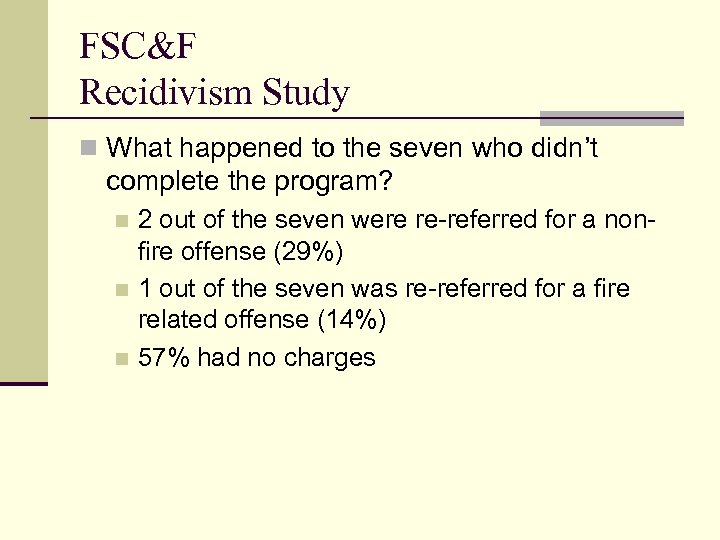 FSC&F Recidivism Study n What happened to the seven who didn’t complete the program? 2 out of the seven were re-referred for a nonfire offense (29%) n 1 out of the seven was re-referred for a fire related offense (14%) n 57% had no charges n
 General Program Guidelines Personnel n Coordinator n Family Involvement n Facilitators n Fire Personnel
 General Guidelines (Continued) n Family Involvement n Screening n Age Appropriateness n Siblings/ additional attendees n Group Dynamics n Parent Groups
 Spanish Speakers n Spanish speaking facilitator vs. translator
 Fire Safety Academy n Ages 6 -12 n 6 sessions of 1 ½ hours, n Facilitators n 2 facilitators and 1 fire educator n Must be screened prior to participation n We re-tooled the last revision to use the parents in a more collaborative role.
 Materials and Supplies n Youth Files n Parent Folders n Videos n Handouts n Snacks n Poster Paper n High Five/ Certificates
 Getting Started: Lesson 1 n Introductions, expectations, roles n Pretests n Parents view Parent Awareness n Discuss the Young Brain n Youth view Prepare, Practice, Prevent n Hear First Fire Story n Greg’s Story n Homework
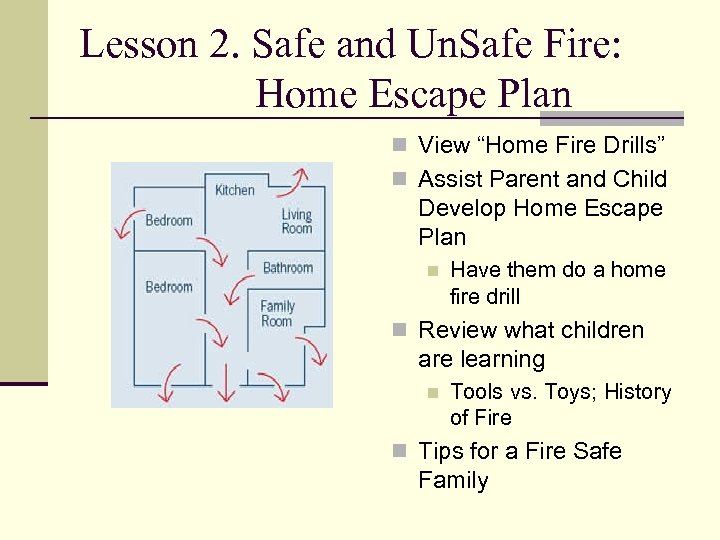 Lesson 2. Safe and Un. Safe Fire: Home Escape Plan n View “Home Fire Drills” n Assist Parent and Child Develop Home Escape Plan n Have them do a home fire drill n Review what children are learning n Tools vs. Toys; History of Fire n Tips for a Fire Safe Family
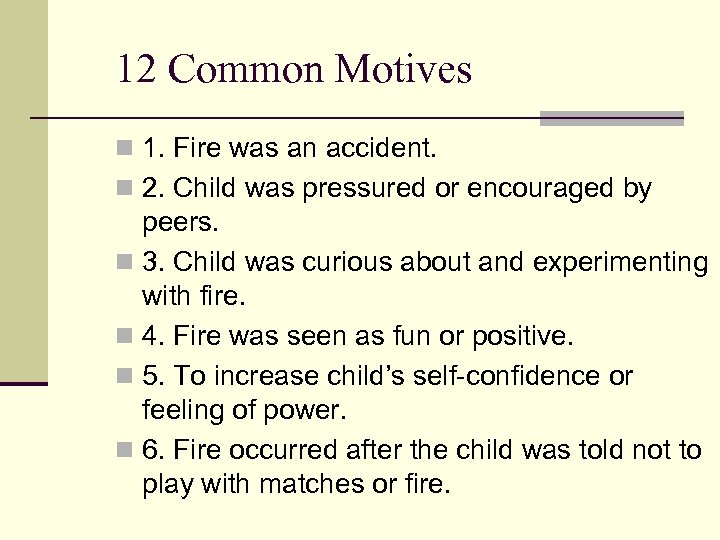 12 Common Motives n 1. Fire was an accident. n 2. Child was pressured or encouraged by peers. n 3. Child was curious about and experimenting with fire. n 4. Fire was seen as fun or positive. n 5. To increase child’s self-confidence or feeling of power. n 6. Fire occurred after the child was told not to play with matches or fire.
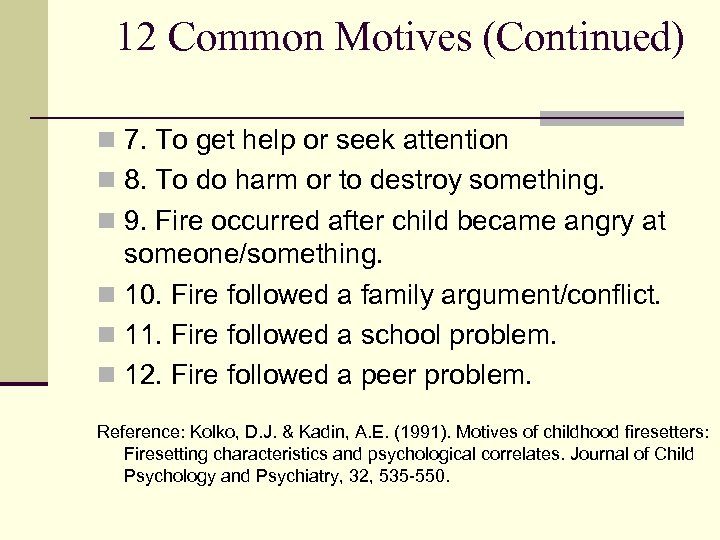 12 Common Motives (Continued) n 7. To get help or seek attention n 8. To do harm or to destroy something. n 9. Fire occurred after child became angry at someone/something. n 10. Fire followed a family argument/conflict. n 11. Fire followed a school problem. n 12. Fire followed a peer problem. Reference: Kolko, D. J. & Kadin, A. E. (1991). Motives of childhood firesetters: Firesetting characteristics and psychological correlates. Journal of Child Psychology and Psychiatry, 32, 535 -550.
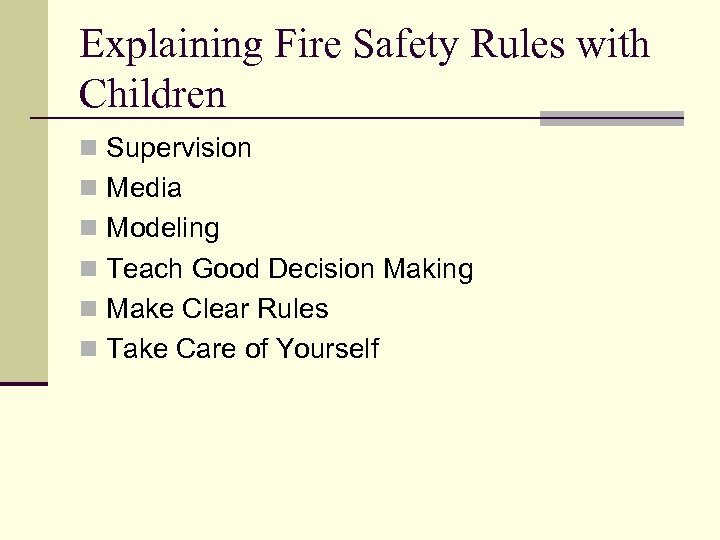 Explaining Fire Safety Rules with Children n Supervision n Media n Modeling n Teach Good Decision Making n Make Clear Rules n Take Care of Yourself
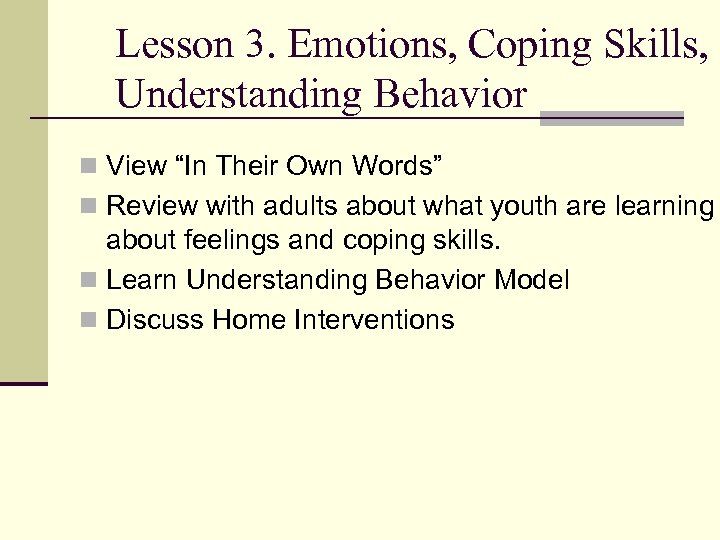 Lesson 3. Emotions, Coping Skills, Understanding Behavior n View “In Their Own Words” n Review with adults about what youth are learning about feelings and coping skills. n Learn Understanding Behavior Model n Discuss Home Interventions
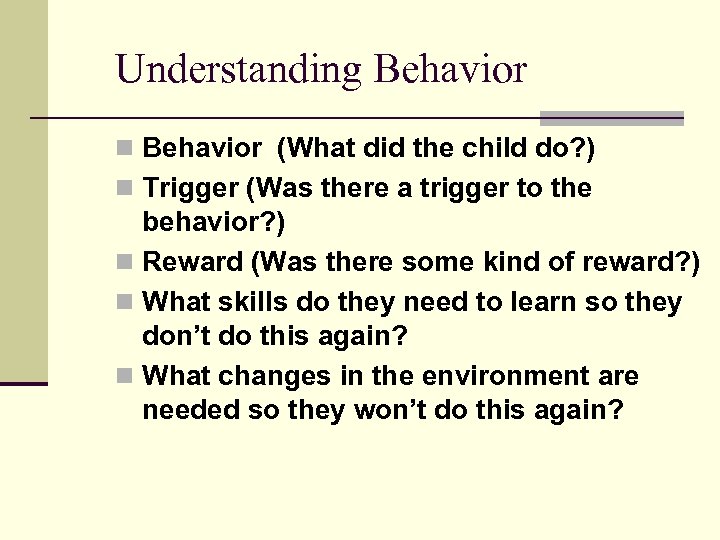 Understanding Behavior n Behavior (What did the child do? ) n Trigger (Was there a trigger to the behavior? ) n Reward (Was there some kind of reward? ) n What skills do they need to learn so they don’t do this again? n What changes in the environment are needed so they won’t do this again?
 Lesson 4. Responsibility and Consequences n View “Brian’s Story” n Parent Responsibility Booklet and the Law n Available for free download at: http: //www. oregon. gov/OSP/SFM/JFSI_Home. sh tml#Resources_for_Public n Behavioral Contracts n Effective Rewards and Consequences
 Lesson 5. Hazard House, Fire Extinguishers, & Basic Fire Safety n View “Fire Power” or “Flashover” n View Hazard House Presentation with Child n Fire Safety Presentation for Adults n Have Parent and Child view at home “Plan to Get Out Alive” video
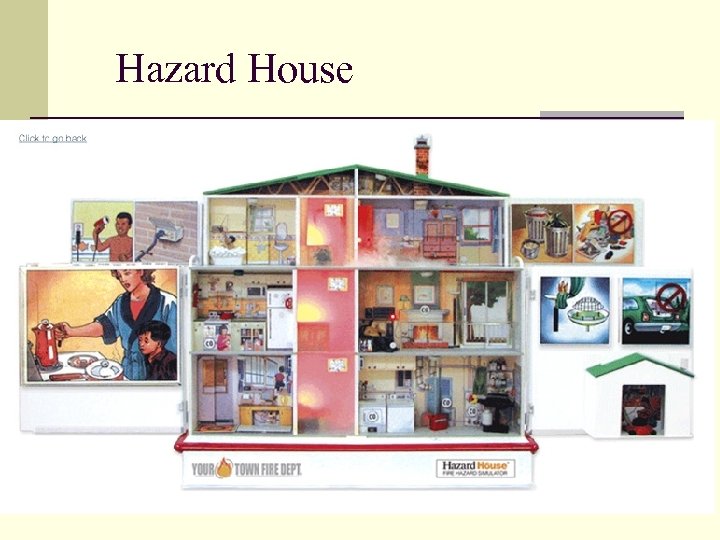 Hazard House
 Lesson 6. Graduation n Feedback about n n services (focus group) Post-tests and rating forms Have Children Present their Fire Safety Projects Parents and Children Take Oath High Five Game
 High Five Game n Two levels of play n Good individually and with groups or families n Available for free download at: http: //www. oregon. gov/OSP/SFM/JFSI_Home. sh tml#Resources_for_Public
 Things that Work n Multiple Sessions n Combination of Fire Safety and Skill Development n Using Parents as the Experts About their Child n Follow up for No-Shows n In Group, have time for discussion and support for each other, minimize lecture n Ask for feedback about whether their child is getting it.
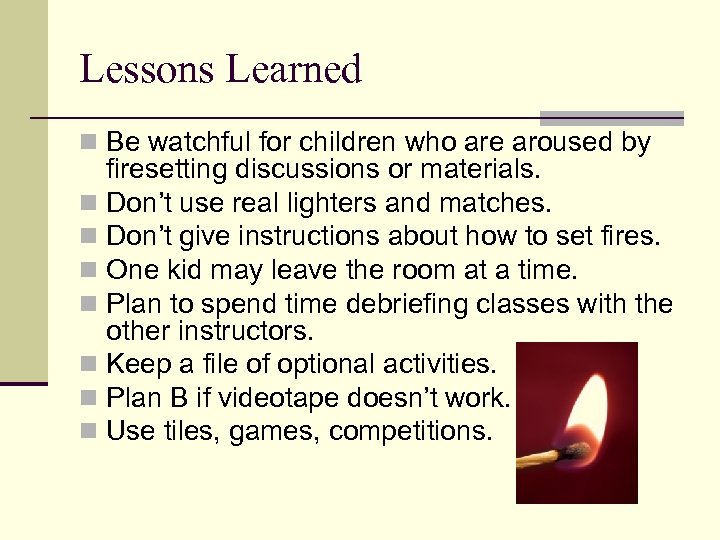 Lessons Learned n Be watchful for children who are aroused by firesetting discussions or materials. n Don’t use real lighters and matches. n Don’t give instructions about how to set fires. n One kid may leave the room at a time. n Plan to spend time debriefing classes with the other instructors. n Keep a file of optional activities. n Plan B if videotape doesn’t work. n Use tiles, games, competitions.
 Videos n Parent Awareness DVD n Prepare, Practice, Prevent n Brian’s Story n Look Hot, Stay Cool n Fire Power n In Their Own Words
 Thank You n Questions? : Timothy Kopet, Ph. D. Psychologist with Portland Public Schools tkopet 2@pps. k 12. or. us 503 916 -6336