


 Скачать презентацию FINDING YOUR WAY DESIGN THINKING AS AN APPROACH
4f14f6dc64c3e63682cf6a7453e11a8e.ppt
- Количество слайдов: 17
 FINDING YOUR WAY DESIGN THINKING AS AN APPROACH TO PROBLEM SOLVING SUSANNE BUCKLEY, REBECCA GOLDSWORTHY, MICHELLE HARRISON, KATE MASTERS, MEGAN O’BRIEN, POPPY PREZIOS, ELIZABETH QUILTY UNIVERSITY OF SYDNEY LIBRARY
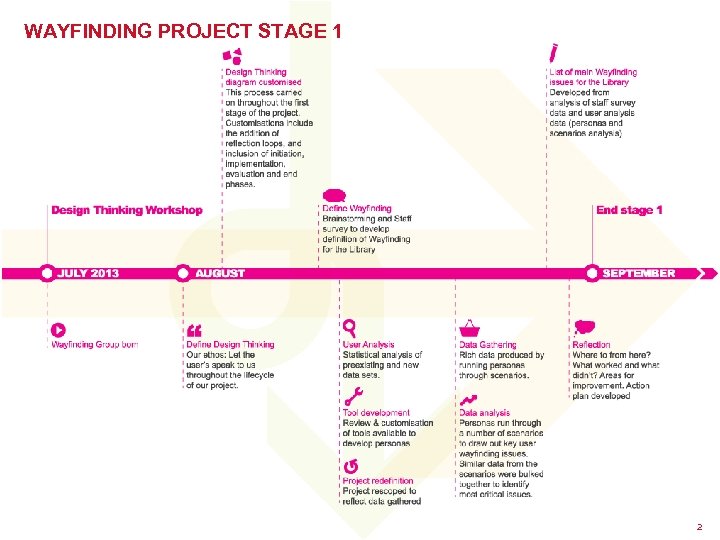 WAYFINDING PROJECT STAGE 1 2
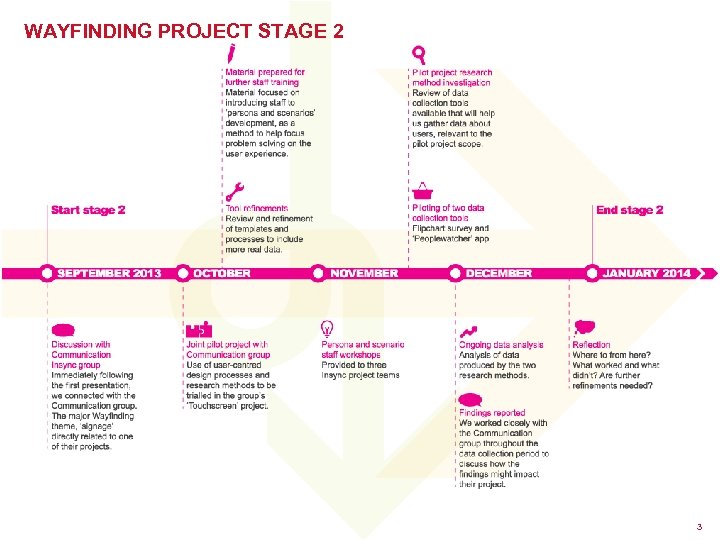 WAYFINDING PROJECT STAGE 2 3
 WHAT IS DESIGN THINKING? Design Thinking is a methodological framework for creative, innovative, usercentred problem-solving. Users are kept front and centre throughout the problem-solving process, and it is vital that we as creative problem solvers let the user’s speak to us throughout the lifecycle of a project. 4
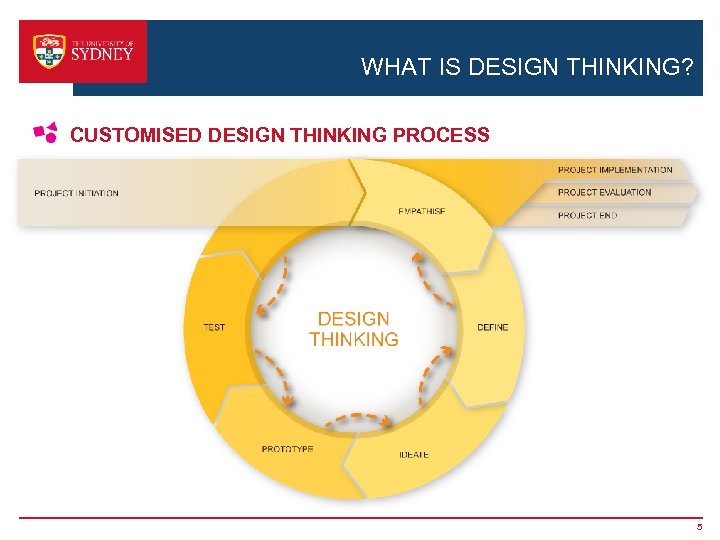 WHAT IS DESIGN THINKING? CUSTOMISED DESIGN THINKING PROCESS 5
 EMPATHISE TO DEFINE WAYFINDING DESIGN DEFINITION Is the way in which structural, environmental and graphical elements are employed to provide cues (information) to users that enables them to orient themselves, navigate their environment (virtual and physical) and successfully achieve their goals. Is an intuitive and logical schema that provides users with a pain-free experience, regardless of their situational expertise; they do not “have to think like web designers or architects”. Is “Clever direction” Will provide avenues for exploration and serendipity – providing direction not only when a destination is known, but when a destination is unknown. It is anticipatory and will enrich the user experience. 6
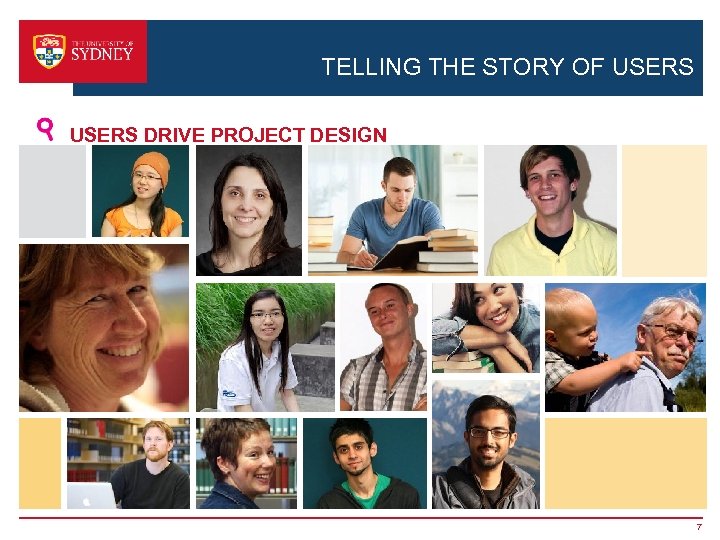 TELLING THE STORY OF USERS DRIVE PROJECT DESIGN 7
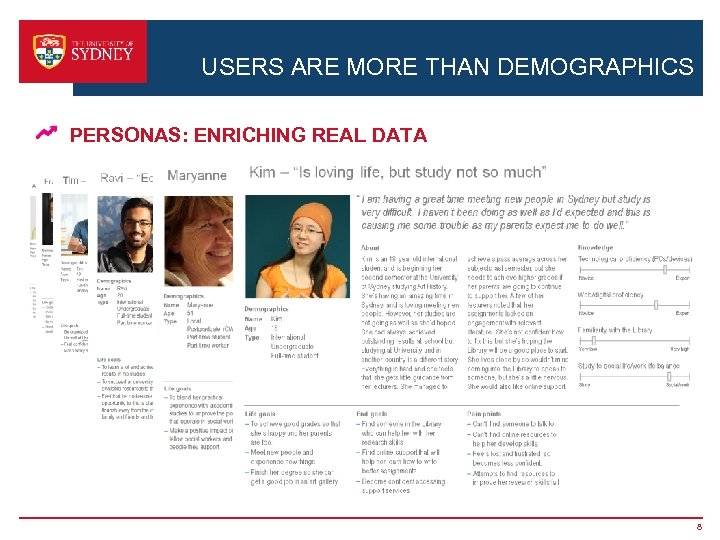 USERS ARE MORE THAN DEMOGRAPHICS PERSONAS: ENRICHING REAL DATA 8
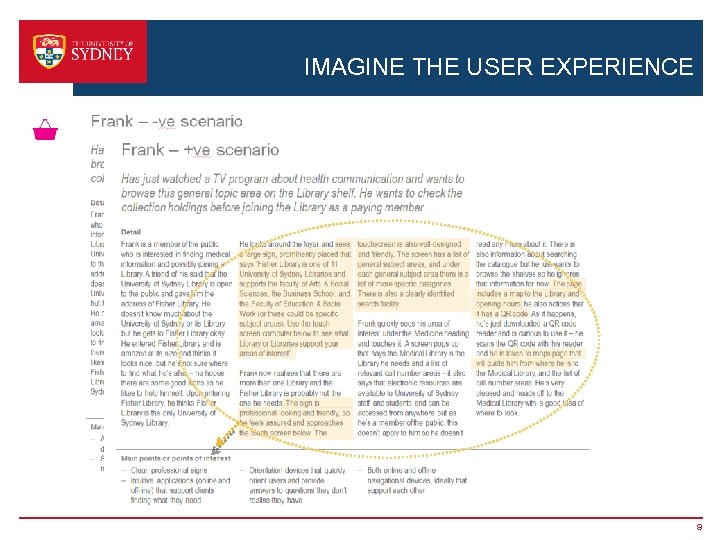 IMAGINE THE USER EXPERIENCE 9
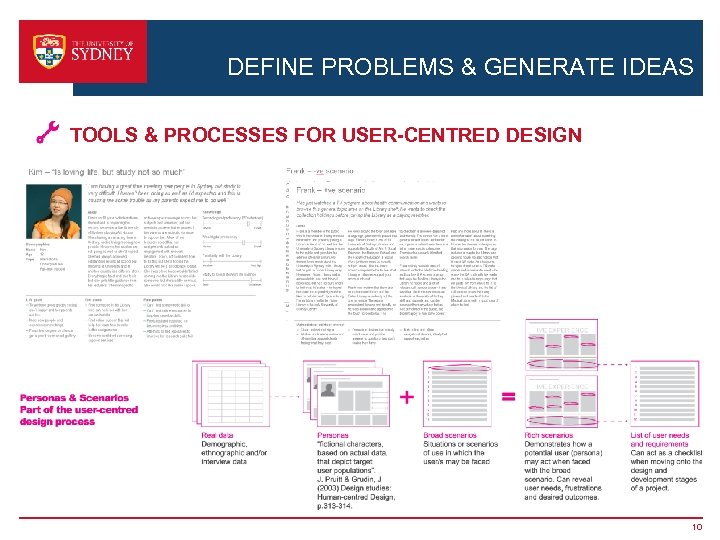 DEFINE PROBLEMS & GENERATE IDEAS TOOLS & PROCESSES FOR USER-CENTRED DESIGN 10
 OVERARCHING WAYFINDING THEME MAJOR THEME DRAWN FROM DATA ANALYSIS Wayfinding devices need to be placed where and when required to anticipate user needs. The potential to provide value -added services to standard solutions should be considered. All devices must adhere to readability and usability principles – height for disabilities, colour, language used (no jargon) etc. 11
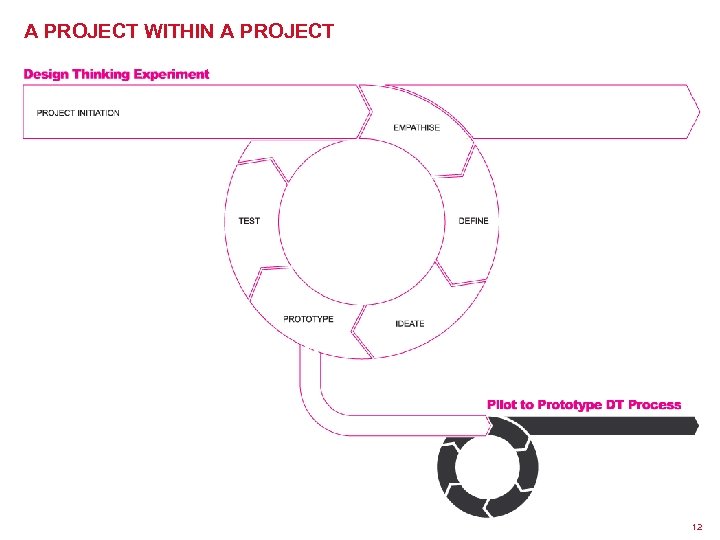 A PROJECT WITHIN A PROJECT 12
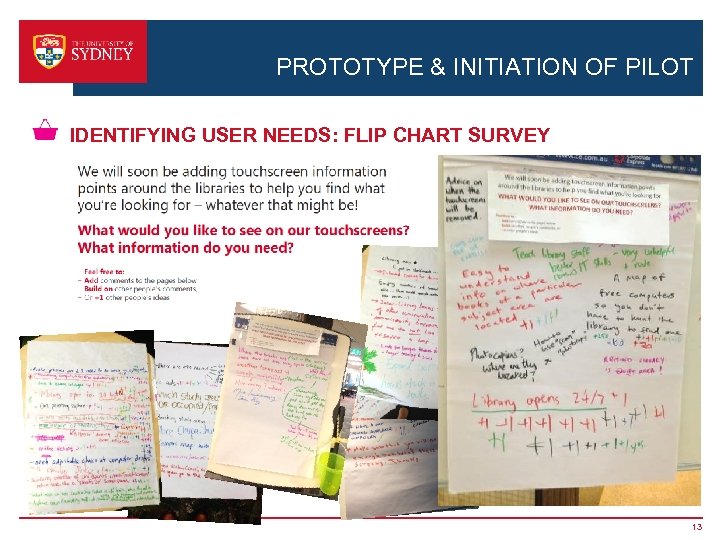 PROTOTYPE & INITIATION OF PILOT IDENTIFYING USER NEEDS: FLIP CHART SURVEY 13
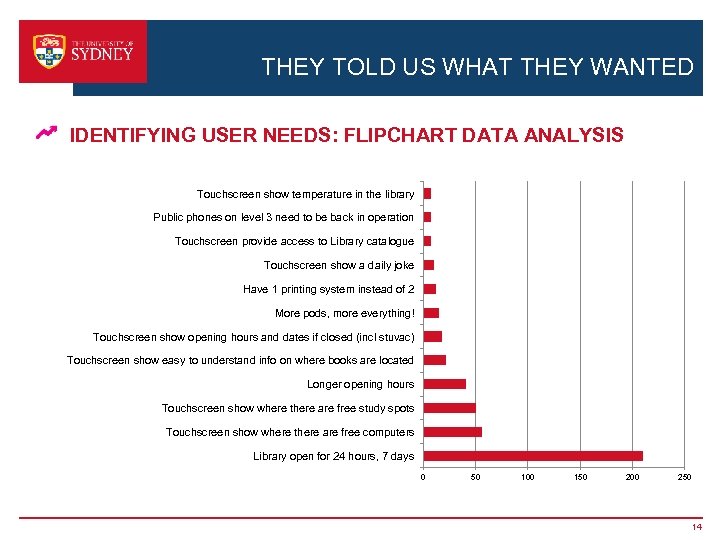 THEY TOLD US WHAT THEY WANTED IDENTIFYING USER NEEDS: FLIPCHART DATA ANALYSIS Touchscreen show temperature in the library Public phones on level 3 need to be back in operation Touchscreen provide access to Library catalogue Touchscreen show a daily joke Have 1 printing system instead of 2 More pods, more everything! Touchscreen show opening hours and dates if closed (incl stuvac) Touchscreen show easy to understand info on where books are located Longer opening hours Touchscreen show where there are free study spots Touchscreen show where there are free computers Library open for 24 hours, 7 days 0 50 100 150 200 250 14
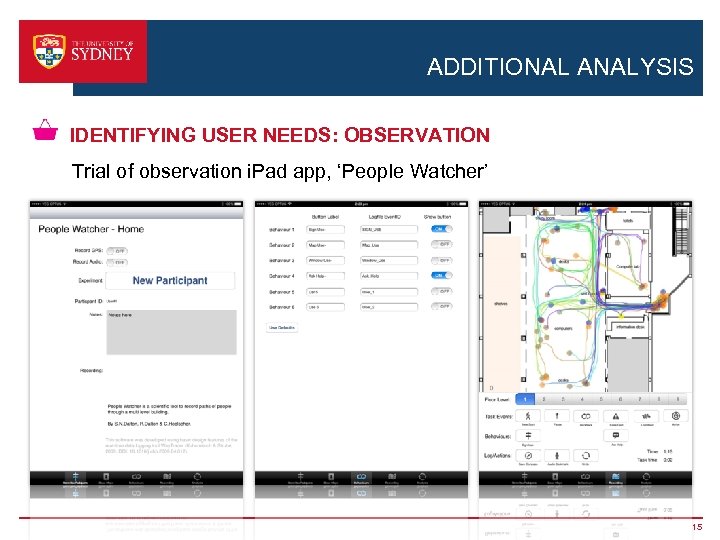 ADDITIONAL ANALYSIS IDENTIFYING USER NEEDS: OBSERVATION Trial of observation i. Pad app, ‘People Watcher’ 15
 REFLECTION WHAT WE LEARNT - DT needs to be run in conjunction with a project management framework - Involving stakeholders at the beginning of the project increases engagement and project buy-in - DT is a time intensive process - DT is a practice that requires reflection through all project phases - As users are the focus of DT, being open to having your ideas challenged is essential - Fiction can never replace real data or usability testing - Explaining DT to staff outside the project helped us refine our persona development processes, and further embed user-centred problem solving at an organisational level. 16
 REFLECTION BENEFITS OF USING DESIGN THINKING - The persona and scenario development process helped us not only identify potential negative user experiences or pain points, but it highlighted opportunities where we could modify our current services and enhance the user experience. - By keeping users at the heart of the design process we were presented with ideas we hadn’t conceived of and answers to questions we didn’t ask. 17