Скачать презентацию Finding Funding in Medical Research Dr Liesl Osman
3423e1b6a5ed39a0e5da9614d5c7920c.ppt
- Количество слайдов: 21
 Finding Funding in Medical Research Dr Liesl Osman NDM Research Facilitation http: //www. ndm. ox. ac. uk/page/research-facilitation NDM Research Facilitation Dr Catherine Moyes Dr Liesl Osman Ms Claudia Alen Amaro
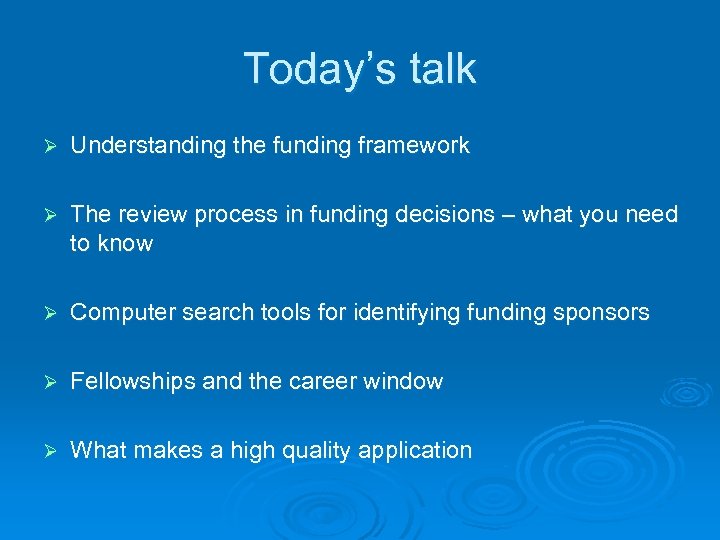 Today’s talk Ø Understanding the funding framework Ø The review process in funding decisions – what you need to know Ø Computer search tools for identifying funding sponsors Ø Fellowships and the career window Ø What makes a high quality application
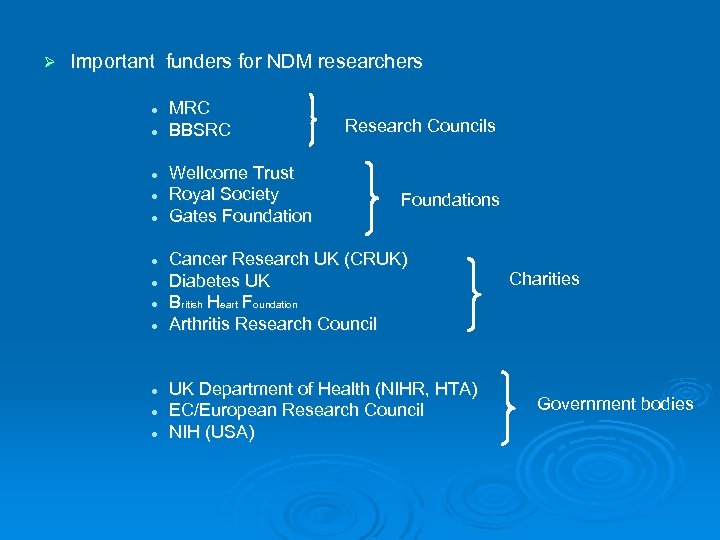 Ø Important funders for NDM researchers l l l MRC BBSRC Wellcome Trust Royal Society Gates Foundation Research Councils Foundations Cancer Research UK (CRUK) Diabetes UK British Heart Foundation Arthritis Research Council UK Department of Health (NIHR, HTA) EC/European Research Council NIH (USA) Charities Government bodies
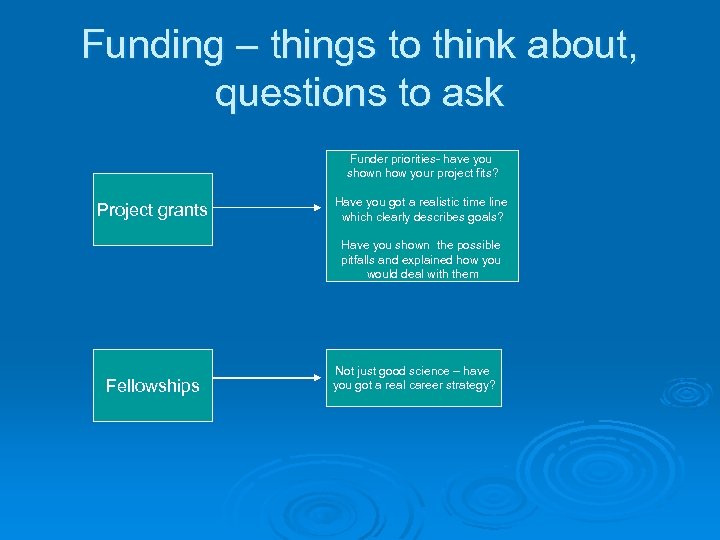 Funding – things to think about, questions to ask Funder priorities- have you shown how your project fits? Project grants Have you got a realistic time line which clearly describes goals? Have you shown the possible pitfalls and explained how you would deal with them Fellowships Not just good science – have you got a real career strategy?
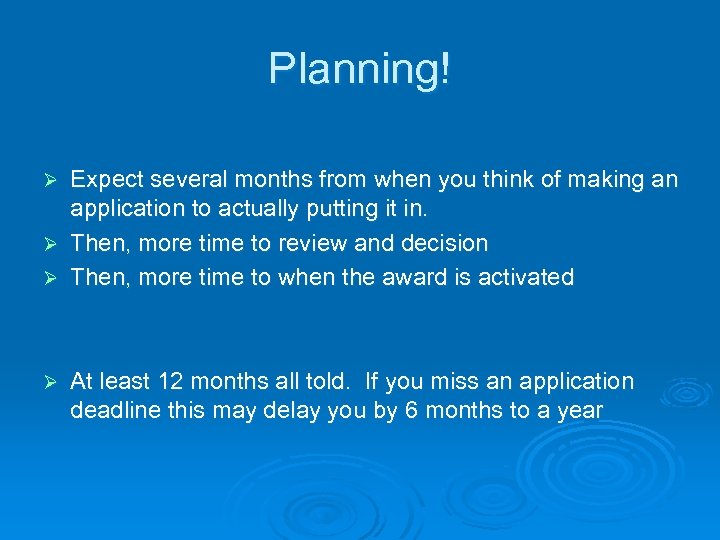 Planning! Expect several months from when you think of making an application to actually putting it in. Ø Then, more time to review and decision Ø Then, more time to when the award is activated Ø Ø At least 12 months all told. If you miss an application deadline this may delay you by 6 months to a year
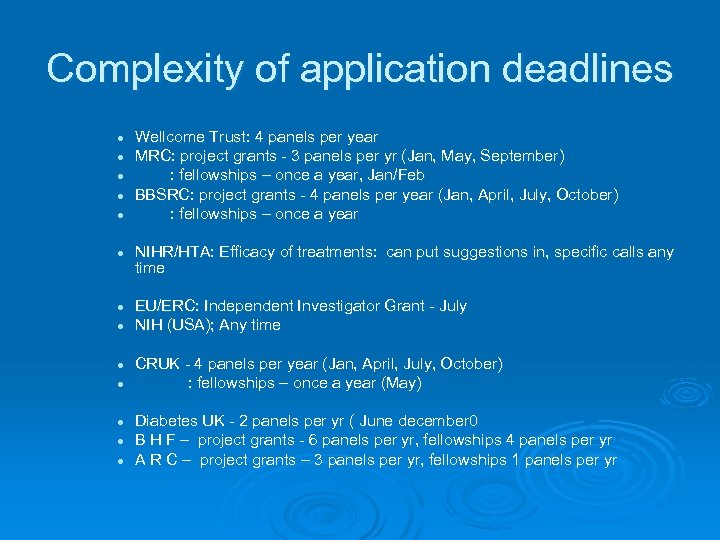 Complexity of application deadlines l l l l Wellcome Trust: 4 panels per year MRC: project grants - 3 panels per yr (Jan, May, September) : fellowships – once a year, Jan/Feb BBSRC: project grants - 4 panels per year (Jan, April, July, October) : fellowships – once a year NIHR/HTA: Efficacy of treatments: can put suggestions in, specific calls any time EU/ERC: Independent Investigator Grant - July NIH (USA); Any time CRUK - 4 panels per year (Jan, April, July, October) : fellowships – once a year (May) Diabetes UK - 2 panels per yr ( June december 0 B H F – project grants - 6 panels per yr, fellowships 4 panels per yr A R C – project grants – 3 panels per yr, fellowships 1 panels per yr
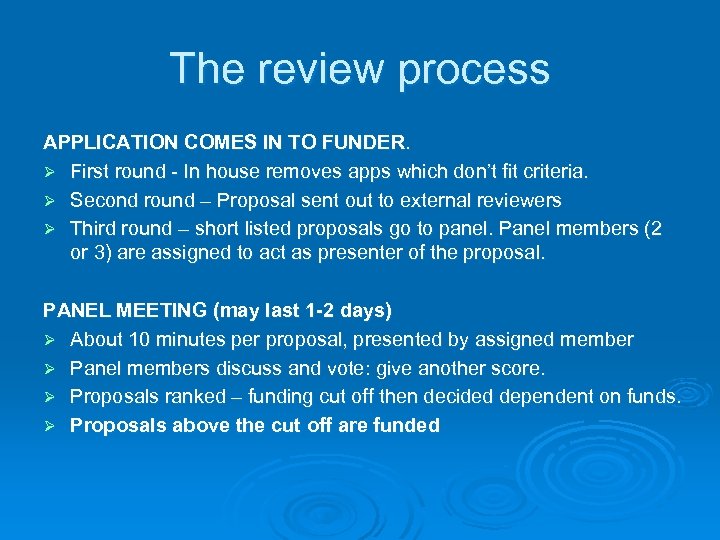 The review process APPLICATION COMES IN TO FUNDER. Ø First round - In house removes apps which don’t fit criteria. Ø Second round – Proposal sent out to external reviewers Ø Third round – short listed proposals go to panel. Panel members (2 or 3) are assigned to act as presenter of the proposal. PANEL MEETING (may last 1 -2 days) Ø About 10 minutes per proposal, presented by assigned member Ø Panel members discuss and vote: give another score. Ø Proposals ranked – funding cut off then decided dependent on funds. Ø Proposals above the cut off are funded
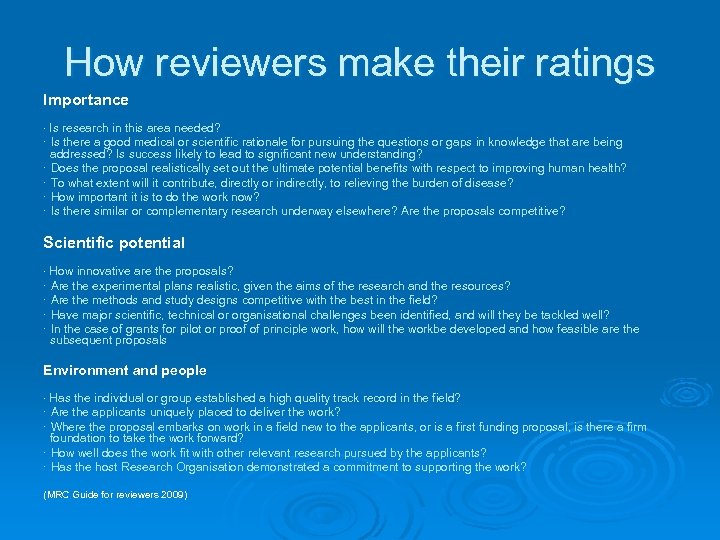 How reviewers make their ratings Importance · Is research in this area needed? · Is there a good medical or scientific rationale for pursuing the questions or gaps in knowledge that are being addressed? Is success likely to lead to significant new understanding? · Does the proposal realistically set out the ultimate potential benefits with respect to improving human health? · To what extent will it contribute, directly or indirectly, to relieving the burden of disease? · How important it is to do the work now? · Is there similar or complementary research underway elsewhere? Are the proposals competitive? Scientific potential · How innovative are the proposals? · Are the experimental plans realistic, given the aims of the research and the resources? · Are the methods and study designs competitive with the best in the field? · Have major scientific, technical or organisational challenges been identified, and will they be tackled well? · In the case of grants for pilot or proof of principle work, how will the workbe developed and how feasible are the subsequent proposals Environment and people · Has the individual or group established a high quality track record in the field? · Are the applicants uniquely placed to deliver the work? · Where the proposal embarks on work in a field new to the applicants, or is a first funding proposal, is there a firm foundation to take the work forward? · How well does the work fit with other relevant research pursued by the applicants? · Has the host Research Organisation demonstrated a commitment to supporting the work? (MRC Guide for reviewers 2009)
 Imagine you are a panel member! You will be reviewing dozens of applications Ø You will be mostly influenced by the reviewers’ judgements Ø But what will encourage you to give a little bit higher score for an application? Ø
 Application tips Ø Do your homework. Be prepared – it takes time to draw up a good application (i. e. 6 months). Ø There is a crucial window of opportunity for early and mid career fellowships – they all have restrictions on time since doctorate awarded, don’t miss your chance. • Early career – 3 to 6 years • Mid career - 3 to 8 years Ø If your career plans include going for a fellowship you MUST start thinking about this at 4 -5 years post doc
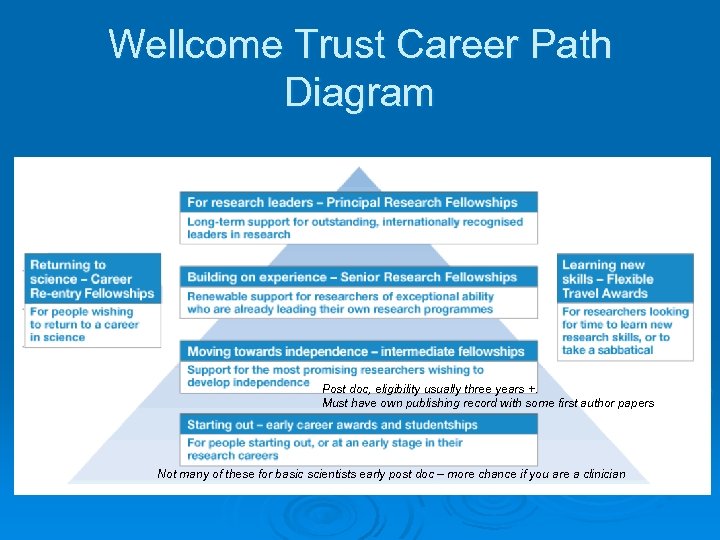 Wellcome Trust Career Path Diagram Post doc, eligibility usually three years +. Must have own publishing record with some first author papers Not many of these for basic scientists early post doc – more chance if you are a clinician
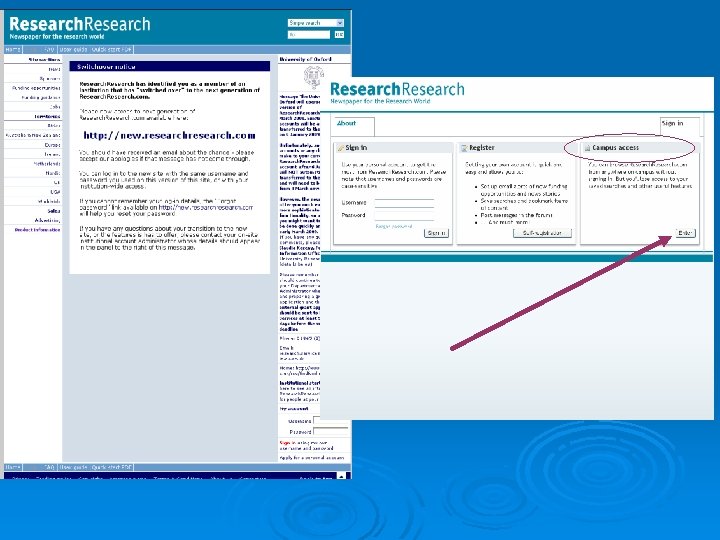
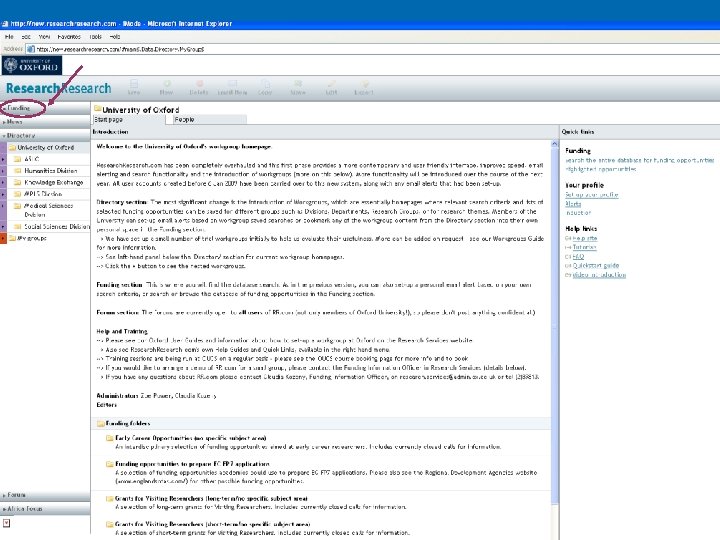
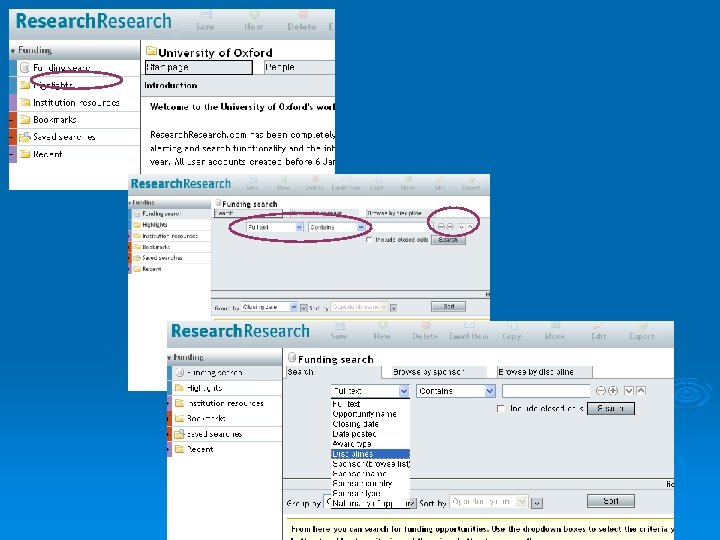
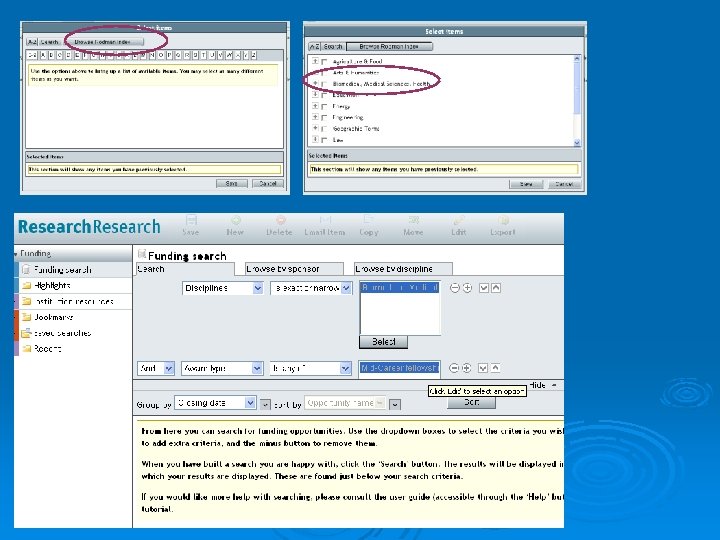
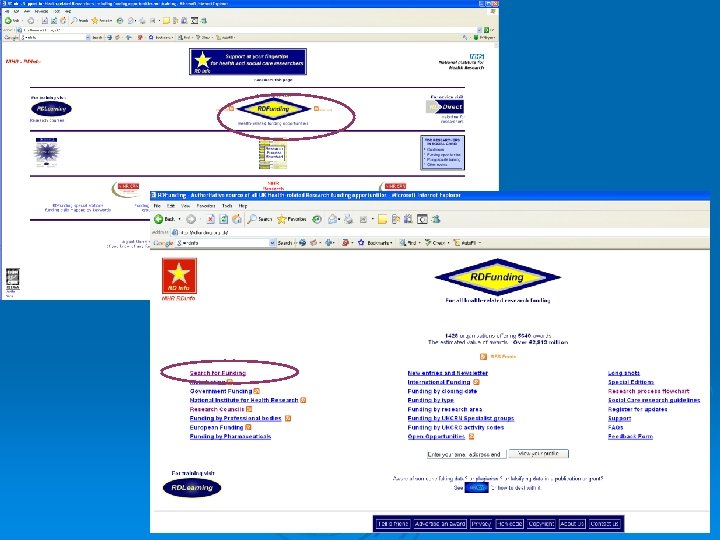
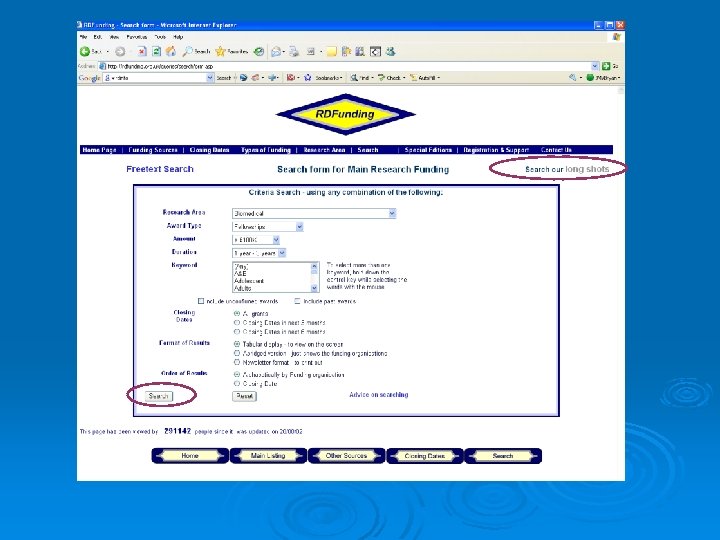
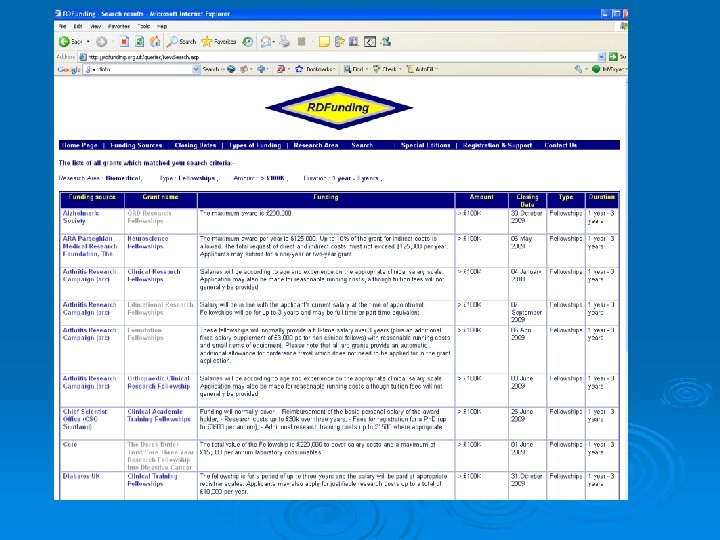
 Tools for finding funding Ø Researchresearch. com + Flexible, international - Not user friendly, complex, needs training Ø RDInfo + Easy to use - Limited flexibility
 Final digression Ø Funding myths “It’s not worth applying to the MRC/British Heart Foundation/Royal Society because l They don’t like funding Oxford l They are cutting back in funding l etc” Ø Reality: Average award rate for Oxford is comparable with other high quality research institutions – 25 -30%.
 What makes a high quality application? Ø You answer the requirements specified in the application form and guide. READ THE INSTRUCTIONS Ø You don’t assume that the panel knows the details of your research area. You do assume that they are highly experienced researchers who can spot waffle at 100 paces. Ø You don’t attempt to glide over obvious criticisms – you acknowledge these and answer them. Ø Think of your proposal as a story – make it interesting for the reader