


 Скачать презентацию Finding Customers and Forecasting Markets for New and
94e8aa409010c9efbe7209213fde7fa9.ppt
- Количество слайдов: 27
 Finding Customers and Forecasting Markets for New and Disruptive Technologies James F. Fee, Adhva. com 3 -20 -07 Adhva
 Basic Concepts • • • Where do products come from? What do I mean by competition? How groups of customers become markets Finding parallel universes Modeling markets that don’t exist Disruptive vs. new products/markets 3 -20 -07 Adhva
 Where do products come from? • Knock-off – copy an existing product or service – sell at a lower price to existing customers • Incrementally improve an existing product – this is what engineers are hired to do • Develop a product to address your own need – how many of you are there? • Develop or utilize a new material, compound or service that has unique characteristics – find a market & develop a product 3 -20 -07 Adhva
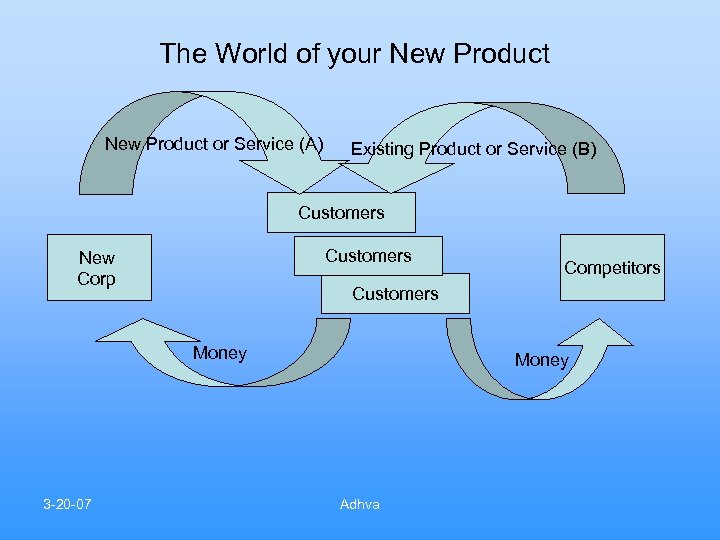 The World of your New Product or Service (A) Existing Product or Service (B) Customers New Corp Customers Money 3 -20 -07 Competitors Money Adhva
 Comparing A with B • A and B could be equivalent – Laptop Dell or HP • A and B are different but with same function – Transportation to work Car or Bicycle • A and B could be totally different – Entertainment Trip to Europe or Home Theater • However money is money – Competition is not for the product – it’s for the money 3 -20 -07 Adhva
 Key Takeaway • Your product and it’s benefits may be unique but there is always competition for the money • Please never say that there is no competition 3 -20 -07 Adhva
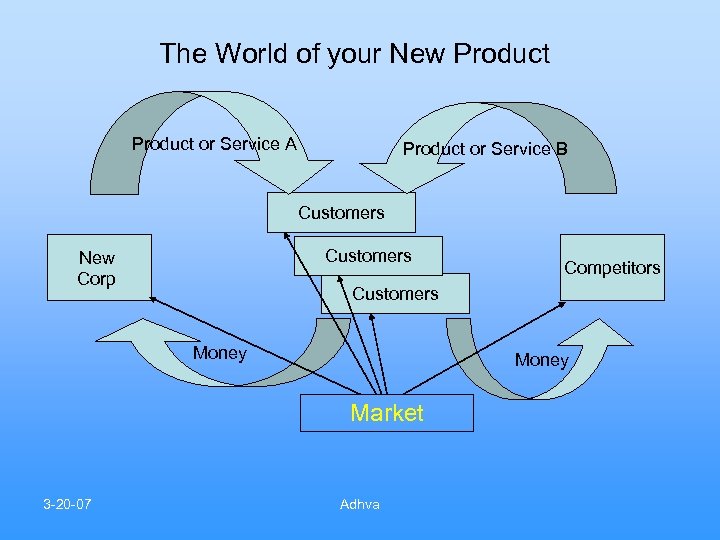 The World of your New Product or Service A Product or Service B Customers New Corp Customers Money Market 3 -20 -07 Competitors Adhva
 Customers and markets • Customers purchase products and services • Markets are collections of customers that have similar purchasing patterns • The same product may serve several very different markets 3 -20 -07 Adhva
 Markets are societies / cultures • Made up of companies and individuals – There are leaders, followers and experts – They have their own dress and jargon – Annual gathering rituals • Detroit Auto Show – NY Toy Fair • American Heart Association – CES @ Las Vegas – Distribution channels – Business practices (typical business models) – Trade associations 3 -20 -07 Adhva
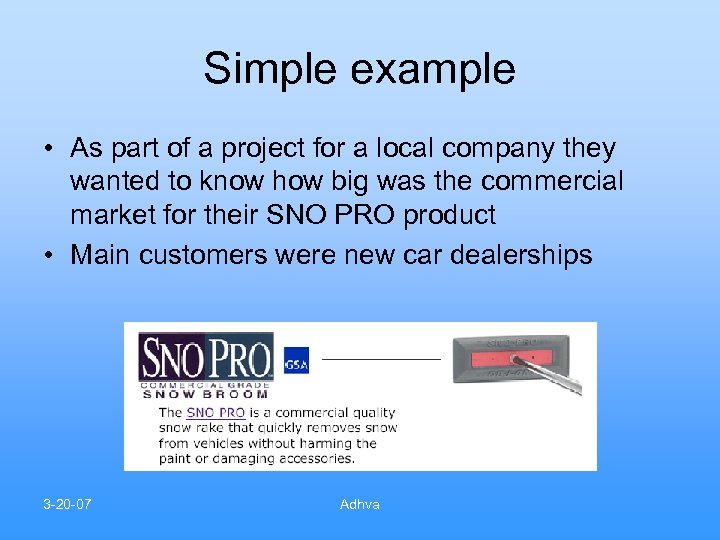 Simple example • As part of a project for a local company they wanted to know how big was the commercial market for their SNO PRO product • Main customers were new car dealerships 3 -20 -07 Adhva
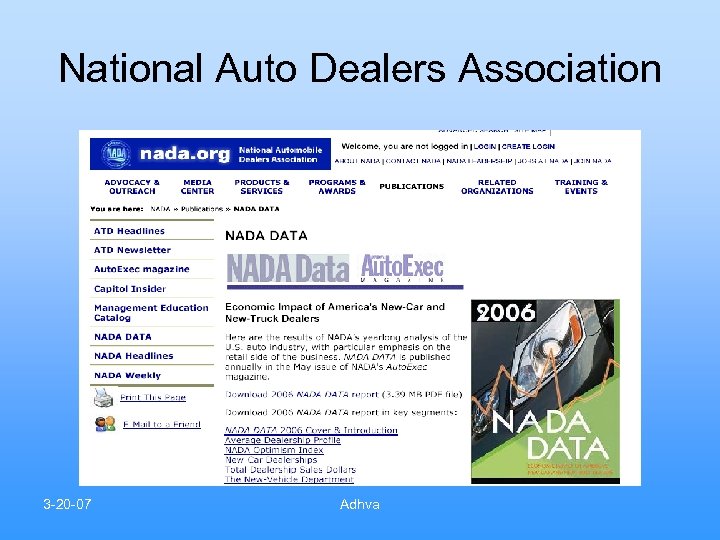 National Auto Dealers Association 3 -20 -07 Adhva
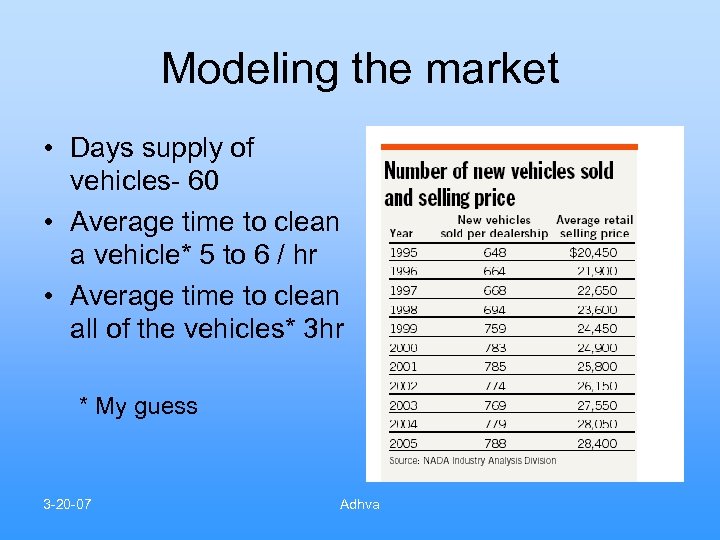 Modeling the market • Days supply of vehicles- 60 • Average time to clean a vehicle* 5 to 6 / hr • Average time to clean all of the vehicles* 3 hr * My guess 3 -20 -07 Adhva
 What do we need to know • How many SNO PROs customers? • How many are in snow areas? • How many SNO PROs per customer? – How many cars are on the lot – How long does it take to clean a car – How quick are all of the cars cleaned 3 -20 -07 Adhva
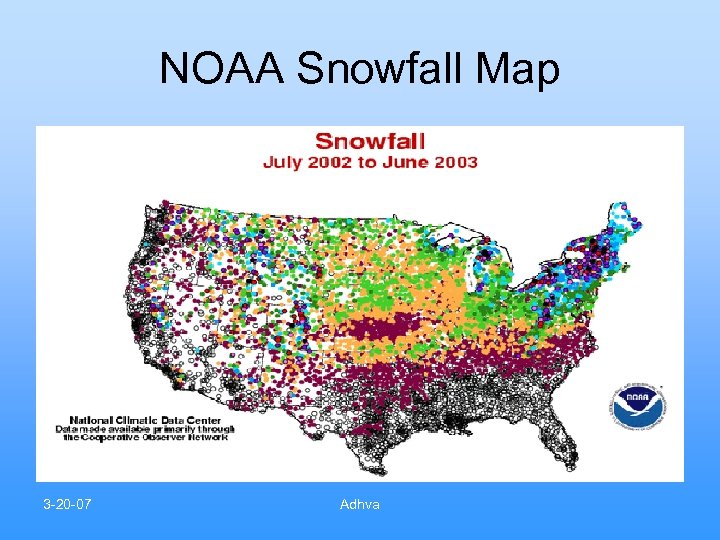 NOAA Snowfall Map 3 -20 -07 Adhva
 Most important step TEST your Model • I went to several dealerships • Talked to sales people – Who cleans the cars – they do – How long does it take them to do it – Estimate cars on the lot -etc. • Refine the model • Random data points improve your model 3 -20 -07 Adhva
 Conclusion • Model was reasonably close to the actual sales data. • Current channels were reaching the available market 3 -20 -07 Adhva
 Find the best fit customer / market / product • A business idea is like a jigsaw puzzle • You don’t know what you have until you put all of the pieces together – Customers – Markets – Competition 3 -20 -07 Adhva
 Where do products come from? • Knock-off – copy an existing product or service – sell at a lower price to existing customers • Incrementally improve an existing product – this is what engineers are hired to do • Develop a product to address your own need – how many of you are there? • Develop or utilize a new material, compound or service that has unique characteristics – find a market & develop a product 3 -20 -07 Adhva
 Do Your Homework • Learn about your – Customer – Market – Competition • Google is important but you must talk to people • The hardest part is not to sell but to listen 3 -20 -07 Adhva
 Which comes first? The customer or the market • You need both • If you have customers talk to them – Ask them what related products do the buy? – From whom? – What publications, trade shows etc. ? • If you don’t have customers then learn about the market • Create a customer profile 3 -20 -07 Adhva
 Creating a customer profile for your new product • • • Who needs it? Why do they need it? Who purchases it? What does it take to close the sale? Where do customers buy it? 3 -20 -07 Adhva
 Who needs it? • Everybody is not an answer • Bottoms up profile – You need to know your target customers better than your best friend. – Where do they live, how do they spend their money, what do they like and not like • Top down demographic info – X , Y generation – Dr. , Lawyer, Banker – what kind of Dr. 3 -20 -07 Adhva
 What does it take to close the first sale? • A laptop, cell phone and internet connection • Or $1 M for product development and a $100 K to launch a commercial product • Or $10 M for product development, $10 M for inventory and $10 M national media launch of a consumer product 3 -20 -07 Adhva
 Another Takeaway • Ideas are cheap and easy • The secret is to develop a mental screening process to quickly sort through ideas to find the good ones • The danger is that once you become emotionally involved in an idea, it is very hard to be rational 3 -20 -07 Adhva
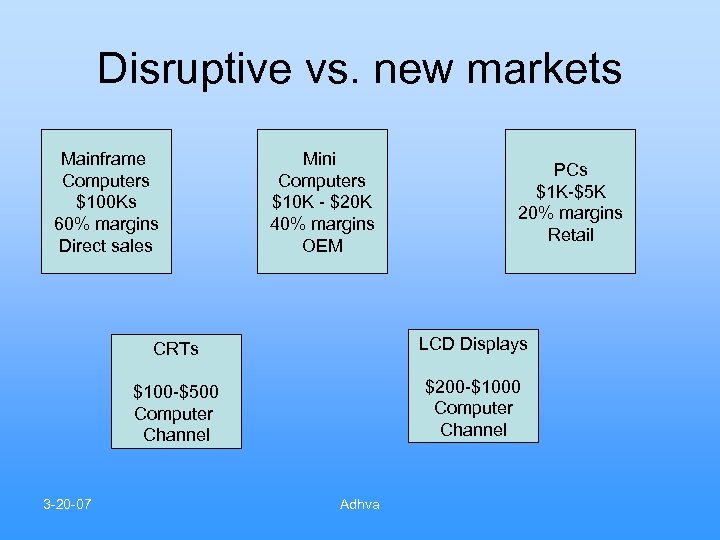 Disruptive vs. new markets Mainframe Computers $100 Ks 60% margins Direct sales Mini Computers $10 K - $20 K 40% margins OEM PCs $1 K-$5 K 20% margins Retail CRTs $100 -$500 Computer Channel 3 -20 -07 LCD Displays $200 -$1000 Computer Channel Adhva
 Let’s talk about some of your ideas 3 -20 -07 Adhva
 Finding Customers and Forecasting Markets for New and Disruptive Technologies James F. Fee, Adhva. com 3 -20 -07 Adhva