 Скачать презентацию Financing Education The World Bank Latin America and
557a3e9f4ab31c47c527c5c3a3a612f6.ppt
- Количество слайдов: 21



Financing Education The World Bank Latin America and the Caribbean Region 23 July 2003
Outline • Lending • Challenges/strategies • Future approach
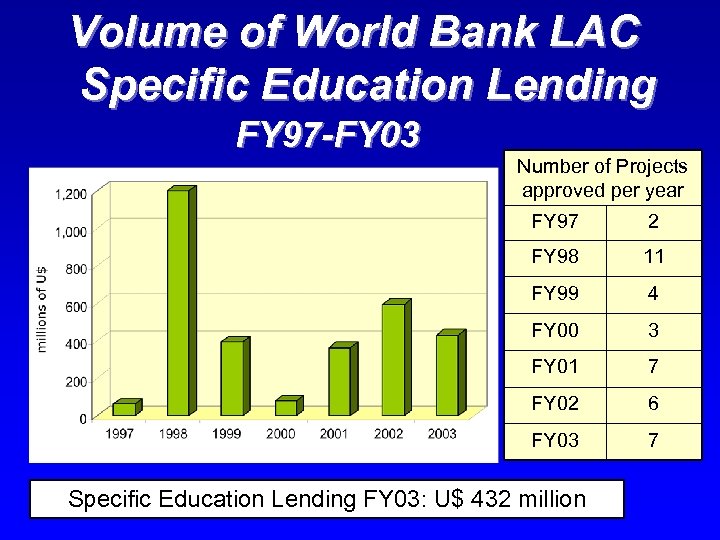
Volume of World Bank LAC Specific Education Lending FY 97 -FY 03 Number of Projects approved per year FY 97 2 FY 98 11 FY 99 4 FY 00 3 FY 01 7 FY 02 6 FY 03 7 Specific Education Lending FY 03: U$ 432 million
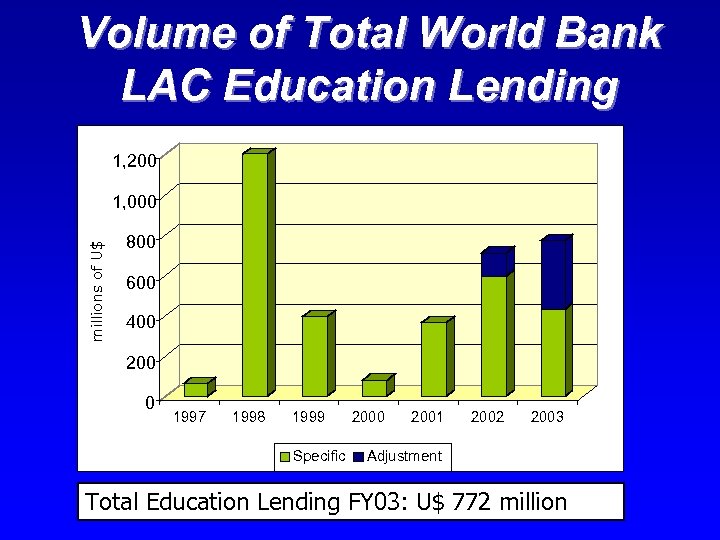
Volume of Total World Bank LAC Education Lending 1, 200 millions of U$ 1, 000 800 600 400 200 0 1997 1998 1999 Specific 2000 2001 2002 2003 Adjustment Total Education Lending FY 03: U$ 772 million
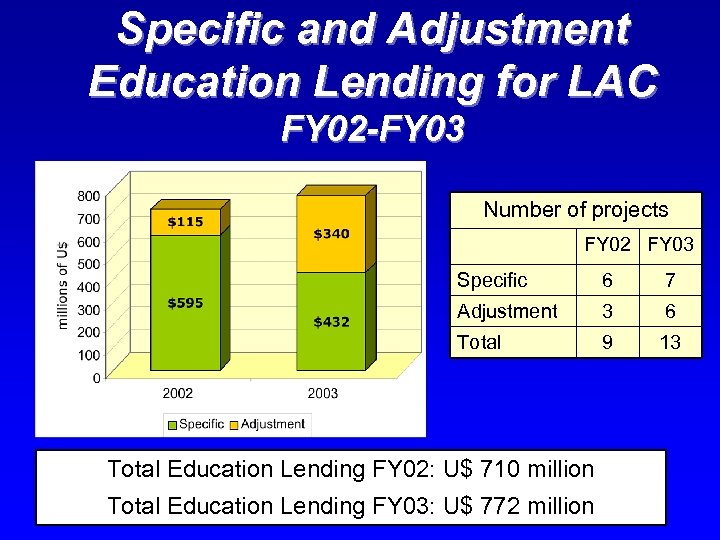
Specific and Adjustment Education Lending for LAC FY 02 -FY 03 Number of projects FY 02 FY 03 Specific 6 7 Adjustment 3 6 Total 9 13 Total Education Lending FY 02: U$ 710 million Total Education Lending FY 03: U$ 772 million
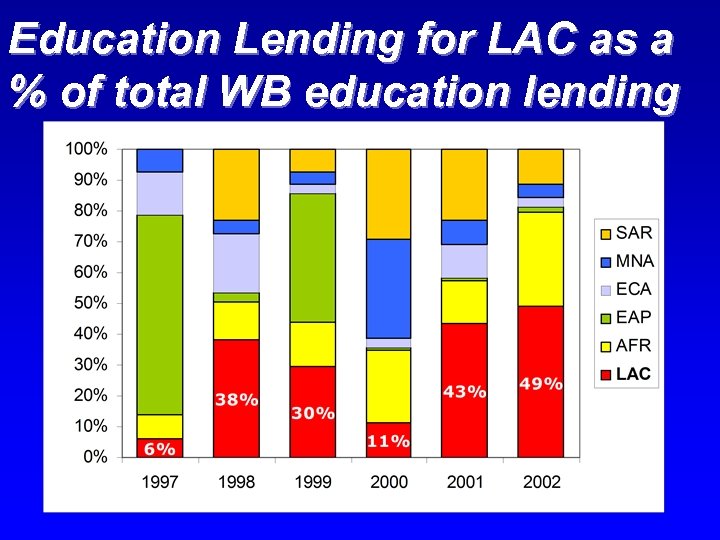
Education Lending for LAC as a % of total WB education lending
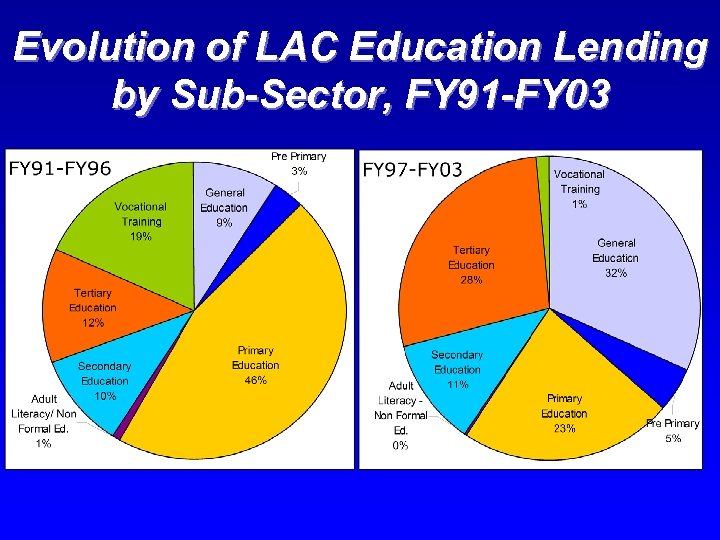
Evolution of LAC Education Lending by Sub-Sector, FY 91 -FY 03
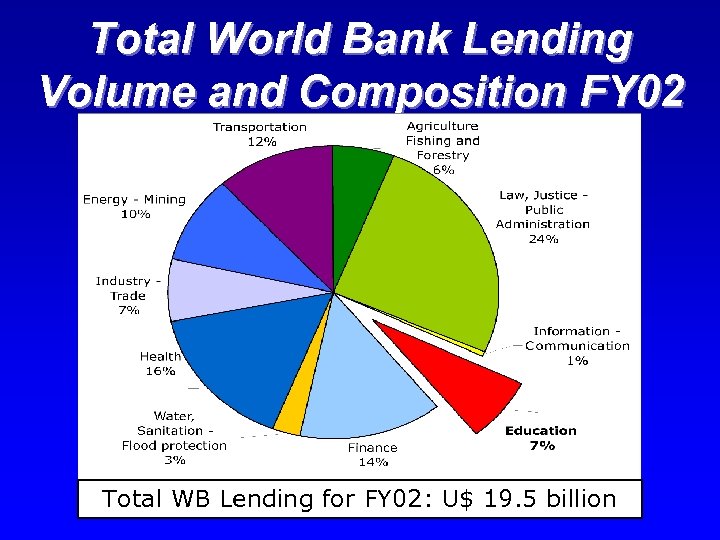
Total World Bank Lending Volume and Composition FY 02 Total WB Lending for FY 02: U$ 19. 5 billion
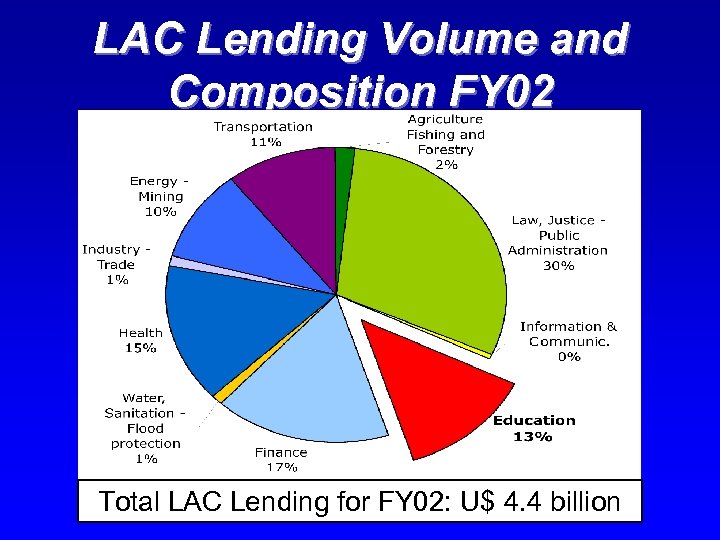
LAC Lending Volume and Composition FY 02 Total LAC Lending for FY 02: U$ 4. 4 billion
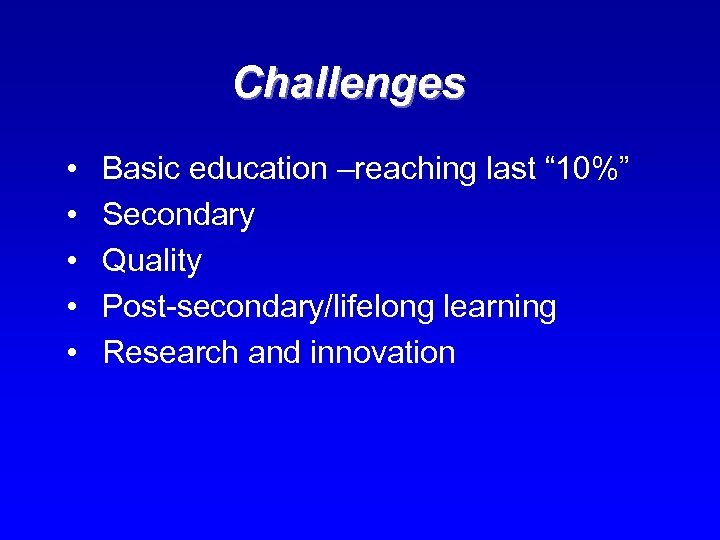
Challenges • • • Basic education –reaching last “ 10%” Secondary Quality Post-secondary/lifelong learning Research and innovation
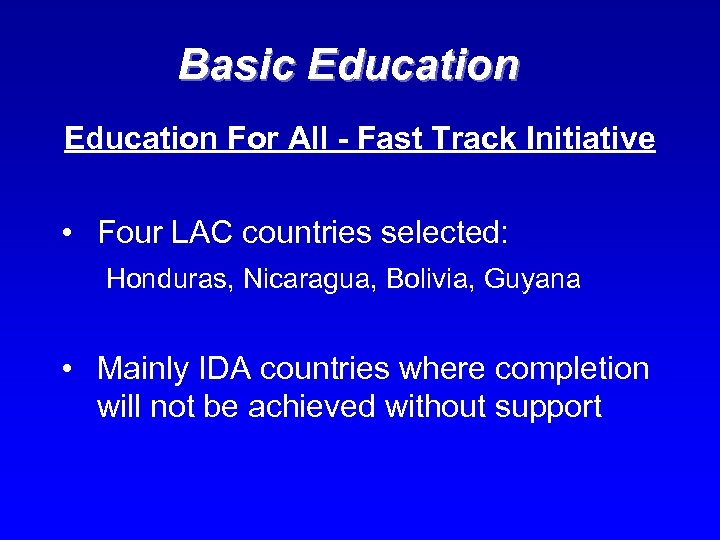
Basic Education For All - Fast Track Initiative • Four LAC countries selected: Honduras, Nicaragua, Bolivia, Guyana • Mainly IDA countries where completion will not be achieved without support
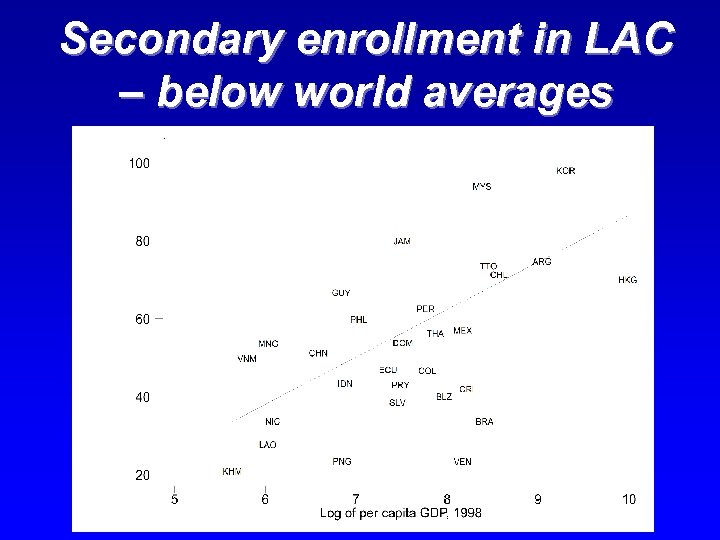
Secondary enrollment in LAC – below world averages
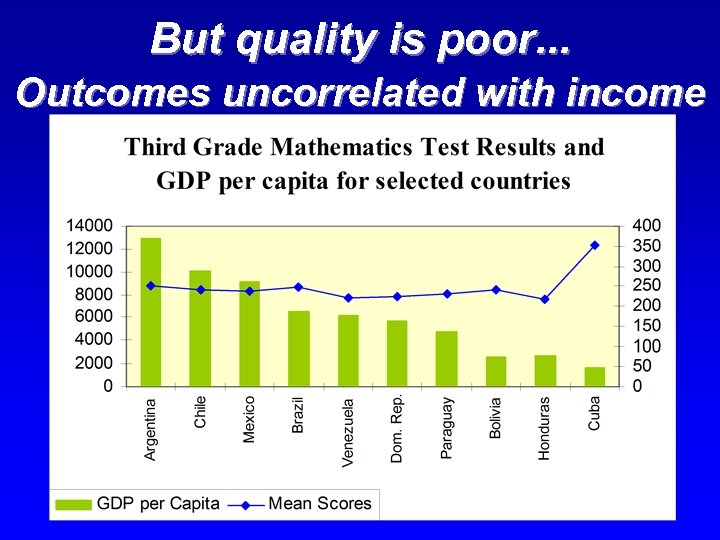
But quality is poor. . . Outcomes uncorrelated with income
Lifelong Learning/ Post - Secondary Chile • Reduce deficit of adults without complete basic or secondary education • Provision of adult education • Improve skill & productivity of labor force • Improve international competitiveness • Develop new modalities articulating adult education and training for workers in small and medium size enterprises
Innovative Delivery • • Utilizing the private sector Demand-side finance Student finance (higher education student loans) Lifelong learning
Utilizing the Private Sector • Trinidad & Tobago: Public-private partnerships in child care • Colombia: Private school vouchers for poor • Links between universities and private sector (Chile, Mexico, Brazil)
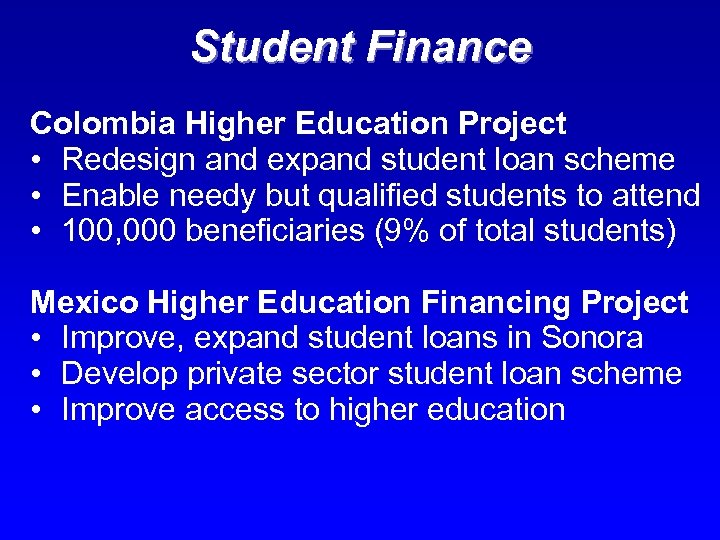
Student Finance Colombia Higher Education Project • Redesign and expand student loan scheme • Enable needy but qualified students to attend • 100, 000 beneficiaries (9% of total students) Mexico Higher Education Financing Project • Improve, expand student loans in Sonora • Develop private sector student loan scheme • Improve access to higher education
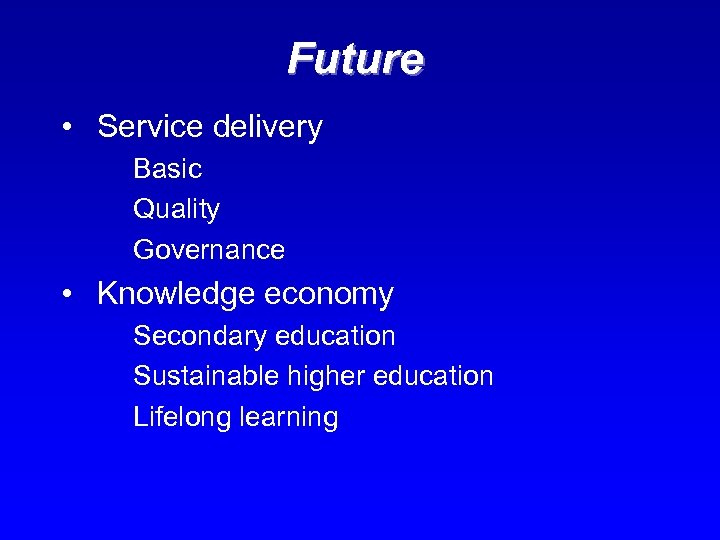
Future • Service delivery Basic Quality Governance • Knowledge economy Secondary education Sustainable higher education Lifelong learning
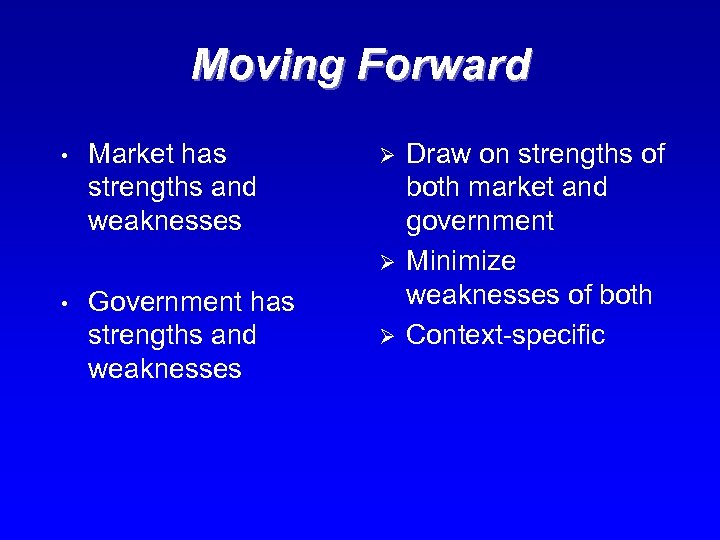
Moving Forward • Market has strengths and weaknesses Ø Ø • Government has strengths and weaknesses Ø Draw on strengths of both market and government Minimize weaknesses of both Context-specific
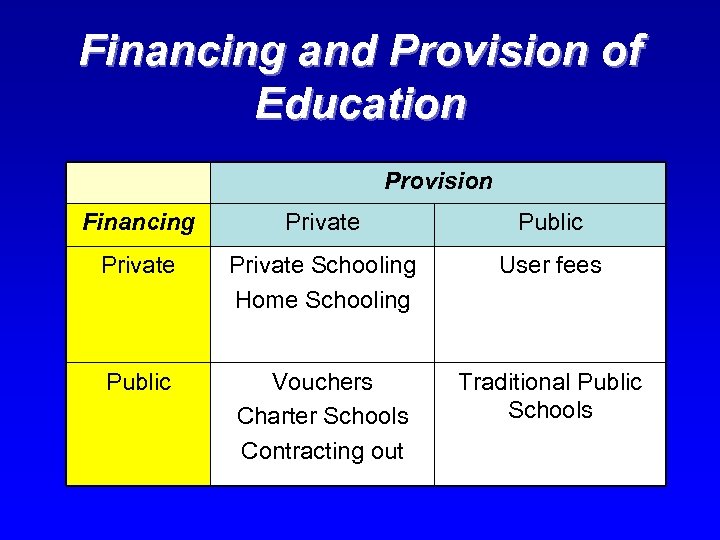
Financing and Provision of Education Provision Financing Private Public Private Schooling Home Schooling User fees Public Vouchers Charter Schools Contracting out Traditional Public Schools
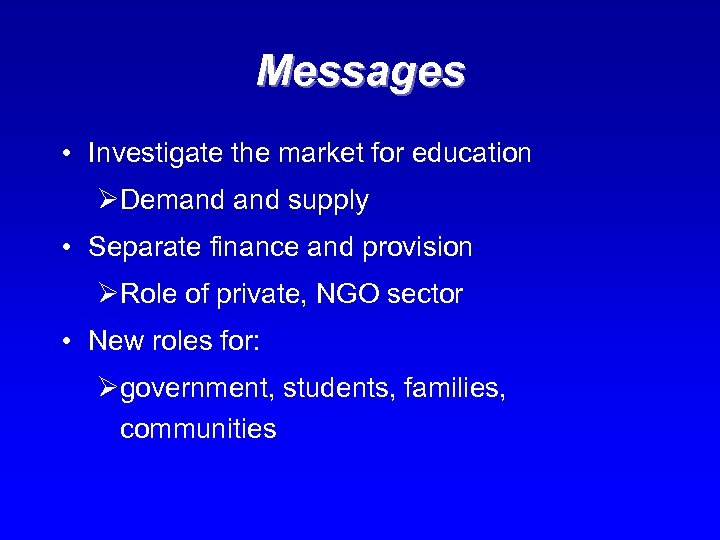
Messages • Investigate the market for education ØDemand supply • Separate finance and provision ØRole of private, NGO sector • New roles for: Øgovernment, students, families, communities
Скачать презентацию Financing Education The World Bank Latin America and
557a3e9f4ab31c47c527c5c3a3a612f6.ppt