


 Скачать презентацию Financing a Green Economy and the origins of
04773aeebd903634f76c16d1b6709528.ppt
- Количество слайдов: 44
 Financing a Green Economy …and the origins of Casino Economics and Fantasy Finance the Dangers of Finance the Importance of Finance & Information Financialization & the Casino Economy Regenerative Finance
 Dangers & Pitfalls Qualitative or regenerative development requires a focus on end-use and use-value an inversion of the relationship of means and ends typical of capitalism [same as with manufacturing] the mission comes first need to go beyond the industrial definition of wealth: money and material premised on the development of indicators of qualitative wealth
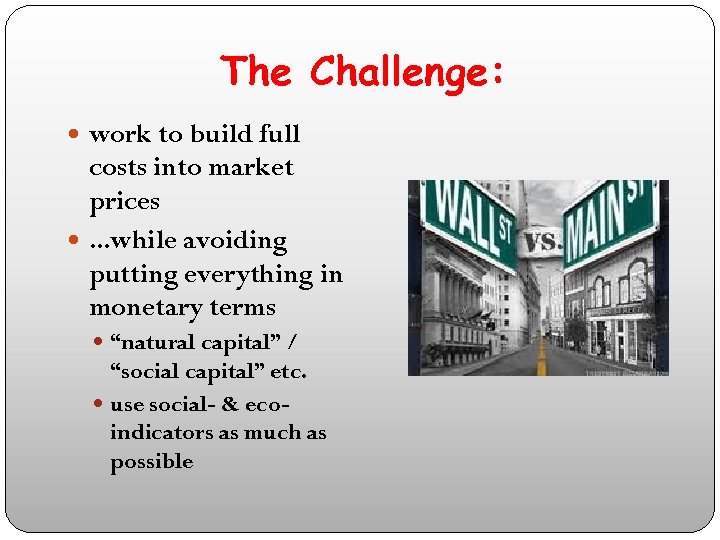 The Challenge: work to build full costs into market prices . . . while avoiding putting everything in monetary terms “natural capital” / “social capital” etc. use social- & ecoindicators as much as possible
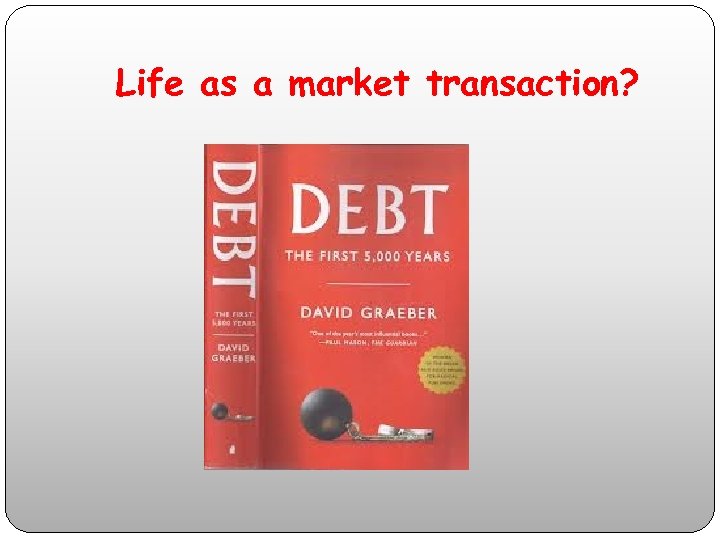 Life as a market transaction?
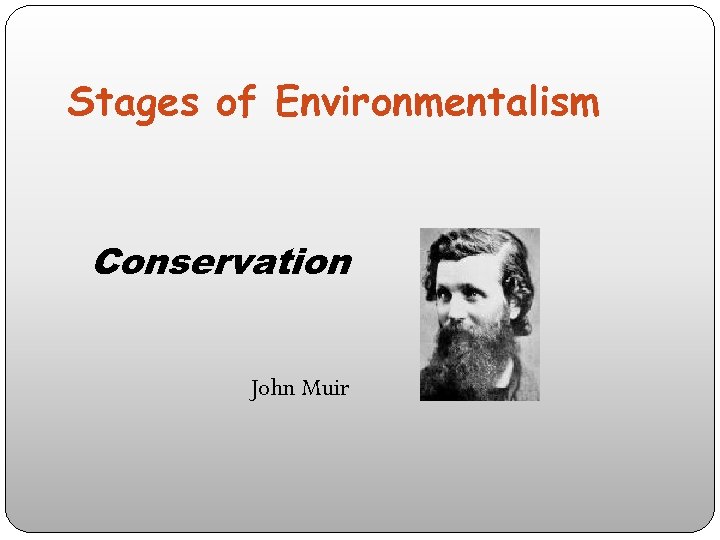 Stages of Environmentalism Conservation John Muir
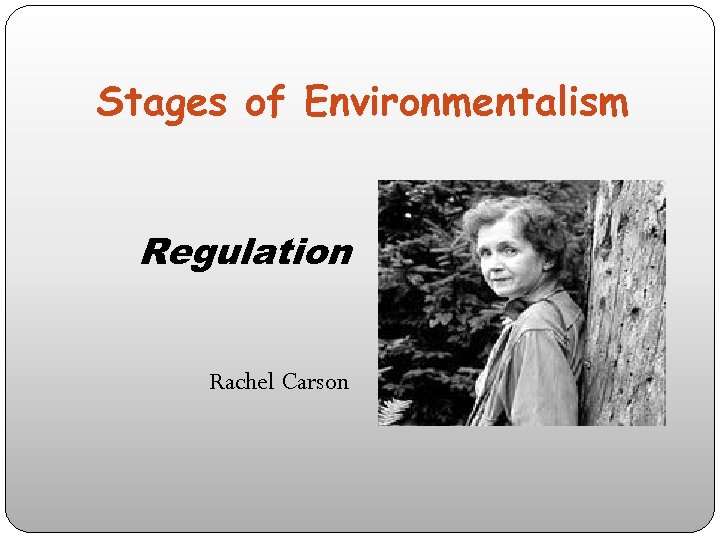 Stages of Environmentalism Regulation Rachel Carson
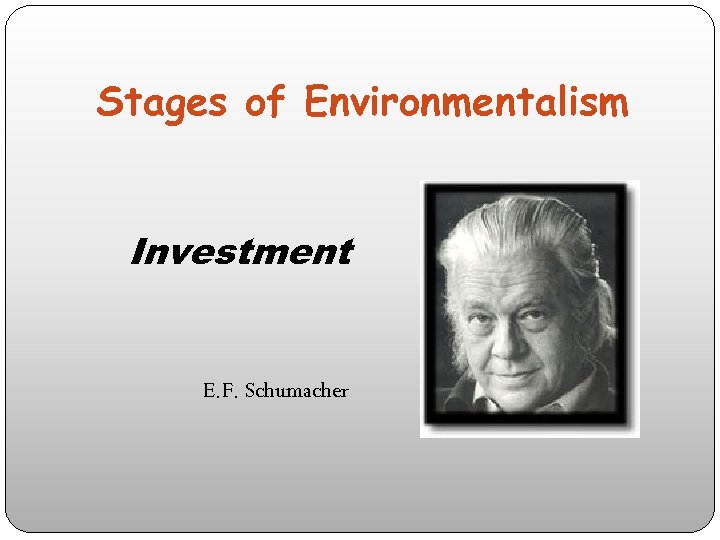 Stages of Environmentalism Investment E. F. Schumacher
 Finance as Regulation Preferential access to credit & investment capital: one of the most important elements of a postindustrial incentive/disincentive structure Crucial connection to emerging indicators of real wealth Need for an alternative financial system
 Investment: What would a green or knowledge-based economy look like? 1. Focus on Services (human & environmental need): nutrition, access, illumination, education, etc. 2. Organization in closed loops: the ecosystem model.
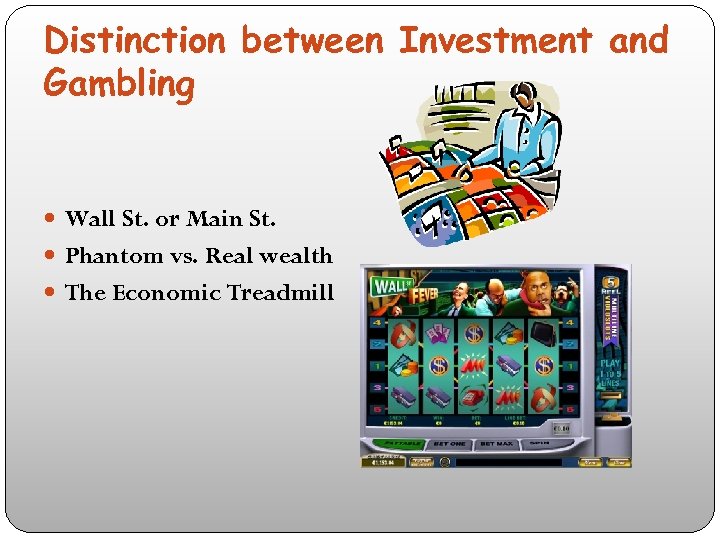 Distinction between Investment and Gambling Wall St. or Main St. Phantom vs. Real wealth The Economic Treadmill
 Some basic facts only about 1 percent of money on Wall St. goes to fund actual work or production. small business represents about 50% of N. American economy, but gets less than 1 percent of total investment in local independent business creates 2 -4 times as many jobs as investment in multinationals.
 Investment: 3 primary concerns limiting social & environmental destruction taking control over our earnings & savings financing regeneration despite Clean Tech, increasingly a small business/community concern community investment key a ‘values-driven’ business issue
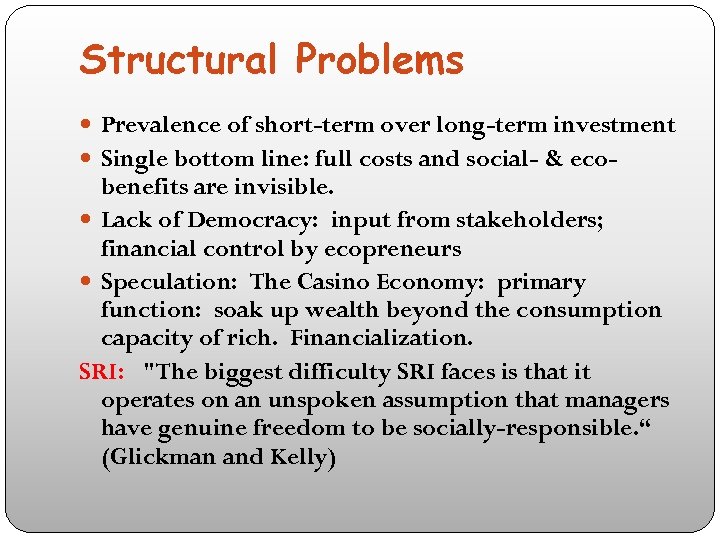 Structural Problems Prevalence of short-term over long-term investment Single bottom line: full costs and social- & eco- benefits are invisible. Lack of Democracy: input from stakeholders; financial control by ecopreneurs Speculation: The Casino Economy: primary function: soak up wealth beyond the consumption capacity of rich. Financialization. SRI: "The biggest difficulty SRI faces is that it operates on an unspoken assumption that managers have genuine freedom to be socially-responsible. “ (Glickman and Kelly)
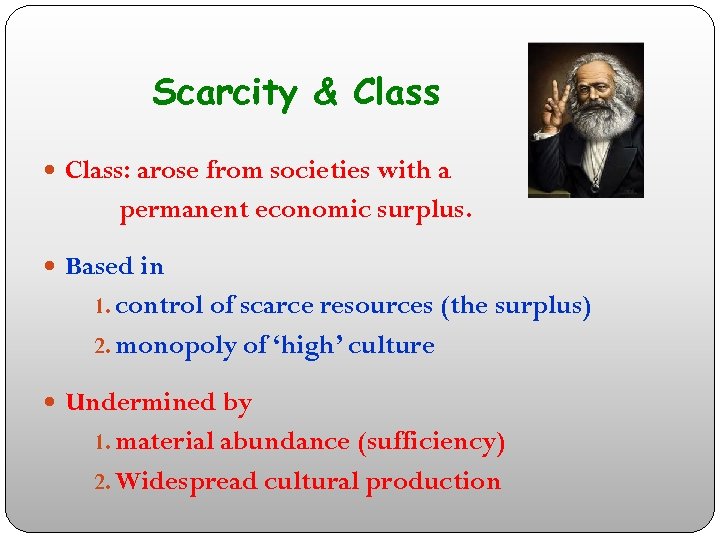 Scarcity & Class: arose from societies with a permanent economic surplus. Based in 1. control of scarce resources (the surplus) 2. monopoly of ‘high’ culture Undermined by 1. material abundance (sufficiency) 2. Widespread cultural production
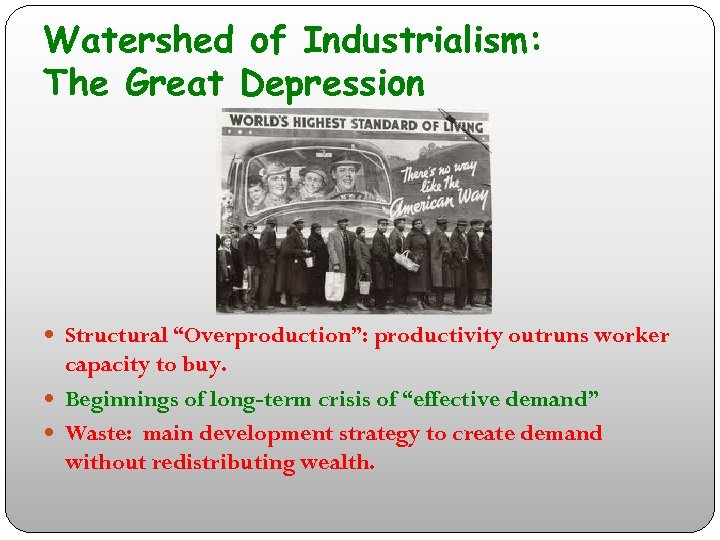 Watershed of Industrialism: The Great Depression Structural “Overproduction”: productivity outruns worker capacity to buy. Beginnings of long-term crisis of “effective demand” Waste: main development strategy to create demand without redistributing wealth.
 The Post WW II Waste Economy Permanent War Economy The Suburb Economy: Oil / Autos / Subdivisions
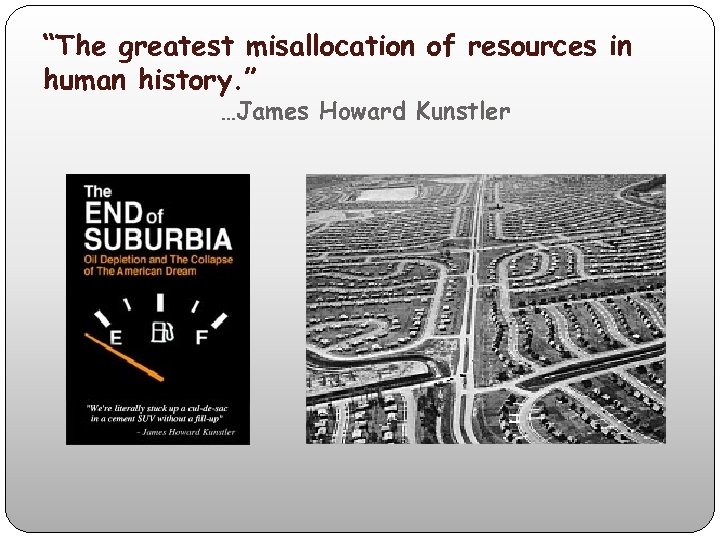 “The greatest misallocation of resources in human history. ” …James Howard Kunstler
 Keynesianism & the Crisis of Effective Demand Baran & Sweezy: crisis of profitable investment outlets for capitalism. Money: a tool of national economic planning. Strong domestic multipliers. The Paper Economy: growing disjunction between the real & financial economies Planned Inflation & Purchasing Power re-redistribution of income: offsetting wage hikes in the unionized sectors Debt & the Economic Treadmill: Work-and-spend
 1970 s: End of the Line for the Fordist Waste Solution saturation of markets social & environmental costs coming due: fiscal crisis of the state limits to inflationary strategy Vietnam war, decline of the dollar, German/Japanese competition OPEC & the energy crisis Petrodollars & Currency Crisis
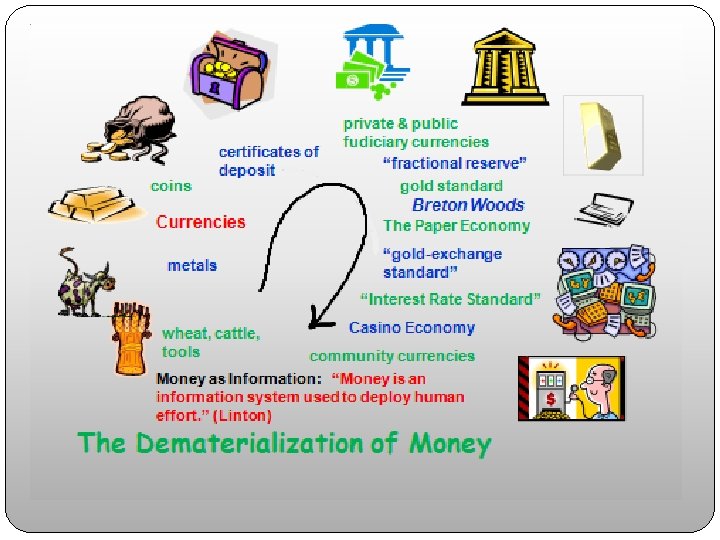
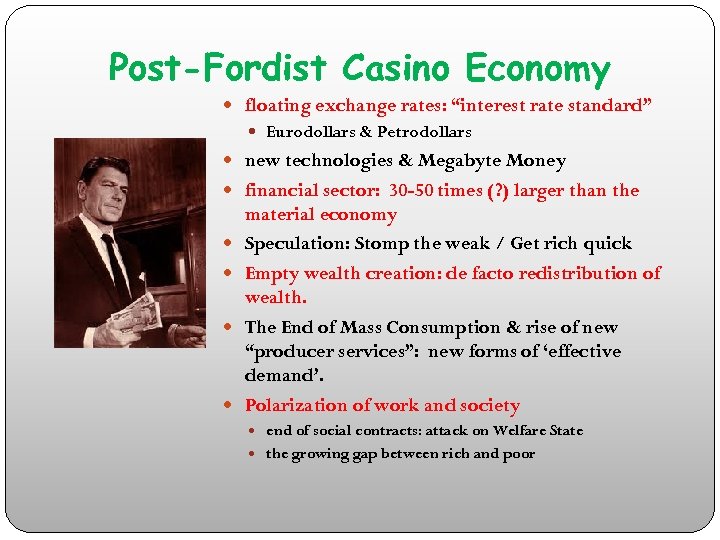 Post-Fordist Casino Economy floating exchange rates: “interest rate standard” Eurodollars & Petrodollars new technologies & Megabyte Money financial sector: 30 -50 times (? ) larger than the material economy Speculation: Stomp the weak / Get rich quick Empty wealth creation: de facto redistribution of wealth. The End of Mass Consumption & rise of new “producer services”: new forms of ‘effective demand’. Polarization of work and society end of social contracts: attack on Welfare State the growing gap between rich and poor
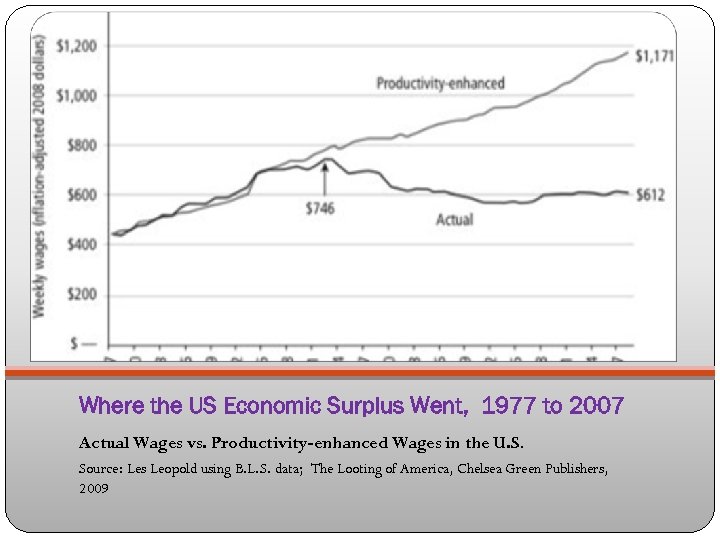 Where the US Economic Surplus Went, 1977 to 2007 Actual Wages vs. Productivity-enhanced Wages in the U. S. Source: Les Leopold using B. L. S. data; The Looting of America, Chelsea Green Publishers, 2009
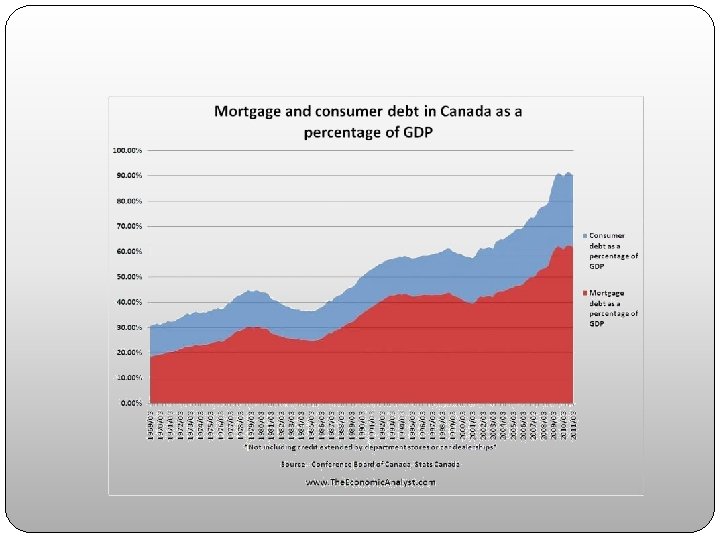
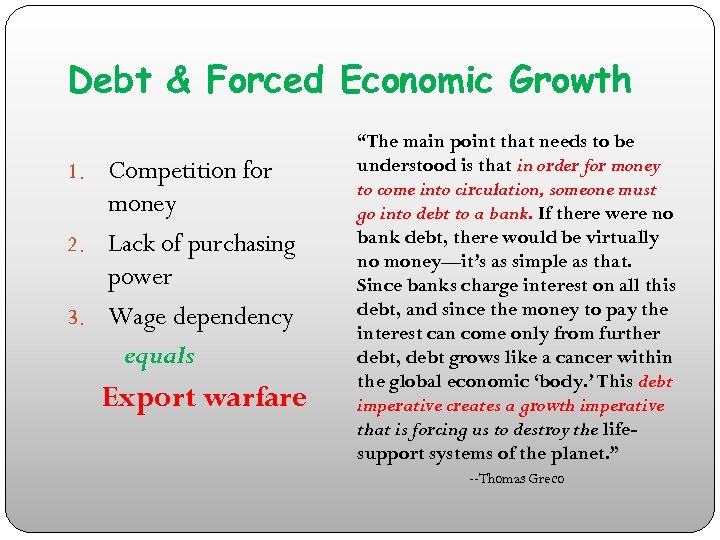 Debt & Forced Economic Growth 1. Competition for money 2. Lack of purchasing power 3. Wage dependency equals Export warfare “The main point that needs to be understood is that in order for money to come into circulation, someone must go into debt to a bank. If there were no bank debt, there would be virtually no money—it’s as simple as that. Since banks charge interest on all this debt, and since the money to pay the interest can come only from further debt, debt grows like a cancer within the global economic ‘body. ’ This debt imperative creates a growth imperative that is forcing us to destroy the lifesupport systems of the planet. ” --Thomas Greco
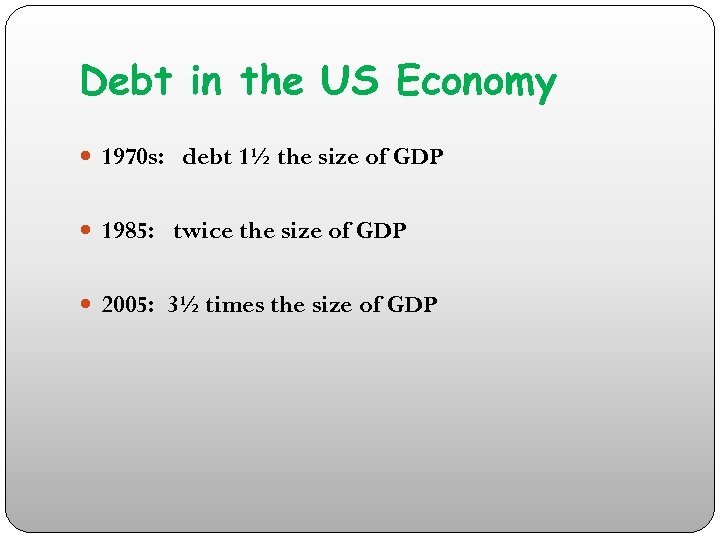 Debt in the US Economy 1970 s: debt 1½ the size of GDP 1985: twice the size of GDP 2005: 3½ times the size of GDP
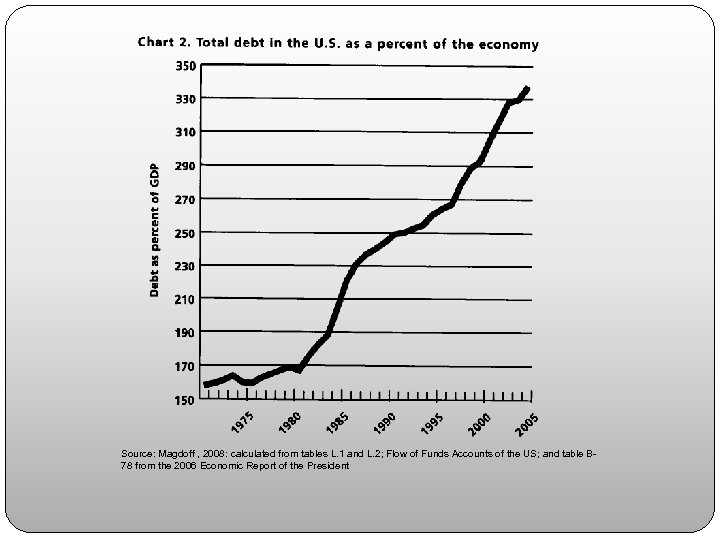 Source: Magdoff , 2008: calculated from tables L. 1 and L. 2; Flow of Funds Accounts of the US; and table B 78 from the 2006 Economic Report of the President
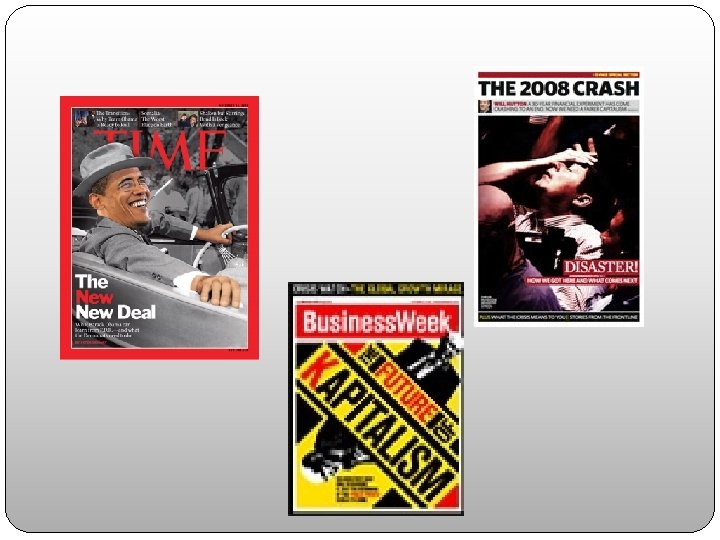
 The Global Casino: Hijacking the Information Revolution expansion of employment in speculative industry Wall St. : more advanced technologically than the military. Bubble Economies: last ‘frontiers’ for capitalist growth. -stock crash of 1987 -tech stock bubble of late 90 s -housing bubble of 2001 -07 Housing speculation: most destructive & exploitative of the poor & average people.
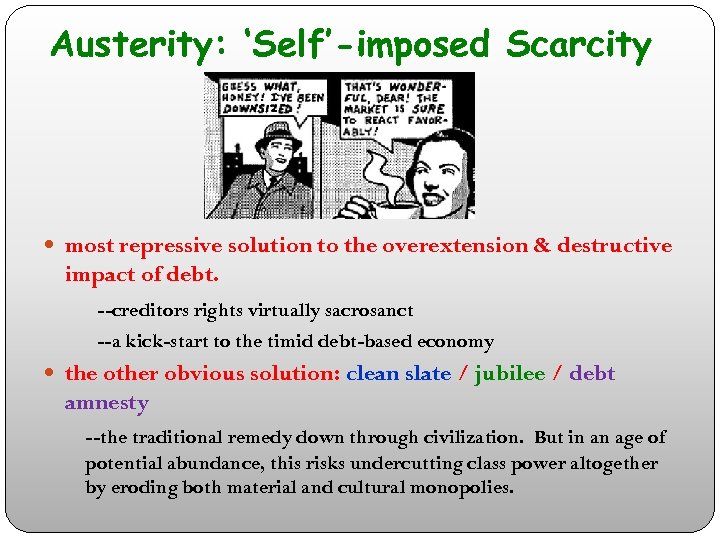 Austerity: ‘Self’-imposed Scarcity most repressive solution to the overextension & destructive impact of debt. --creditors rights virtually sacrosanct --a kick-start to the timid debt-based economy the other obvious solution: clean slate / jubilee / debt amnesty --the traditional remedy down through civilization. But in an age of potential abundance, this risks undercutting class power altogether by eroding both material and cultural monopolies.
 Security Deliberately undermined by capitalism to create scarcity conditions. “Security” : a euphemism for defense against Abundance. -- focus of contemporary capitalist “economic development” National Security State Incarceration Industry Financial Industry Info Technology Industry
 The Economy & Culture of Fear Mainstream politics and media today are mobilized for the creation of fear, based in both scarcity and personal insecurity. Reality TV competitions, extreme fighting, Tea Parties, racist fundamentalism, cultural scapegoating, etc. Question: should we be careful of adding more fear, however justifiable? (climate change, etc. )
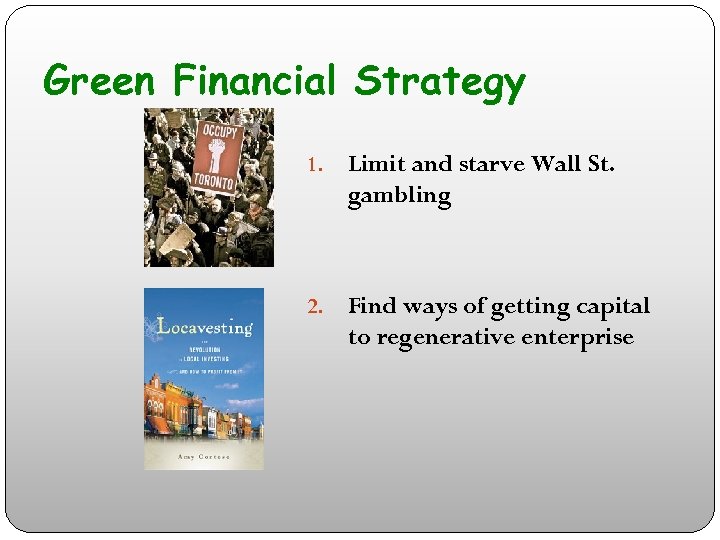 Green Financial Strategy 1. Limit and starve Wall St. gambling 2. Find ways of getting capital to regenerative enterprise
 A New Paradigm of Security: Meet Everyone’s Basic Needs Geared as much to unleashing individual and community creativity as protecting the vulnerable. Essential for empowering informal sector production & “self-provision” Essential for unleashing Mass Collaboration in the Network economy Supports imagination & innovation that transforms other sectors: e. g. community business. Eliminates fear on many levels. Deflates the coercive power of money—allows ethical values to factor into personal economic decisions.
 Ending the Coercive Power of Money Community Currencies especially account-money systems Basic Income Guarantees the more universal, the better Public Provision of Services health care, transport, housing, infrastructure
 Decommodifying Money diversification of forms of everyday exchange supporting the informational character of currencies. undercutting the scarcity-power of money. financial industry restructured as public utility and/or service industry. money directed to priority areas of green development transition: green Tobin tax new forms of remuneration direct consumption; basic incomes; account- money; free food, health care & housing gradually enlarging the sphere of gift relationships consistent with new productive forces based in mass collaboration
 Regenerative Finance Toolbox Cooperative investing Impact investment Local Stock Exchanges Crowdfunding Community investment & revolving loan funds Public banking
 Speculation & Mainstream SRI Is the stock market primarily concerned with investment? Role of share price in “performance” of investments How can qualitative factors be included in performance?
 Who Does Corporate SRI? Faith community, churches mutual ethical funds for individual retail investors Institutional investors (pension funds) interested in SD. Commercial banks concerned with social and enviro risk in project finance and lending
 How Much Is Happening? 350 firms in EU for retail investors; . 5% of total assets 3 -5% of institutional investors eco- and social banks & credit unions
 “Univeral” Investors & SRI “Fiduciary capitalism”: the power of institutional investors About 50% of US publicly-traded equity Relationship to externalities in the economy Convergence with SRI?
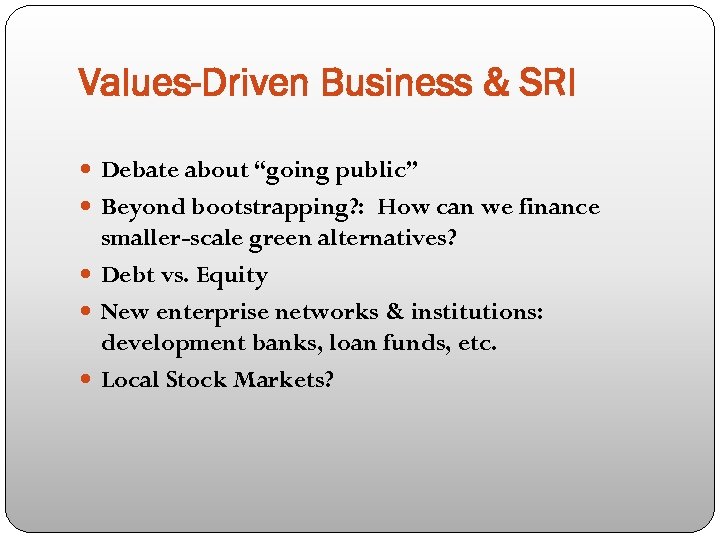 Values-Driven Business & SRI Debate about “going public” Beyond bootstrapping? : How can we finance smaller-scale green alternatives? Debt vs. Equity New enterprise networks & institutions: development banks, loan funds, etc. Local Stock Markets?
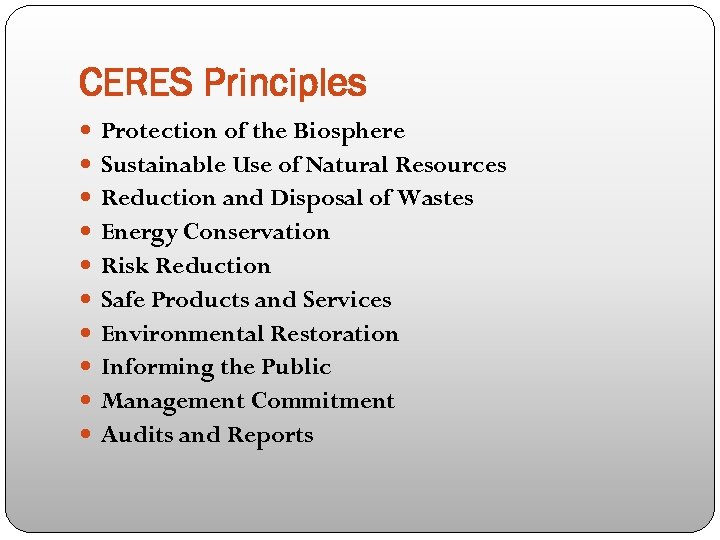 CERES Principles Protection of the Biosphere Sustainable Use of Natural Resources Reduction and Disposal of Wastes Energy Conservation Risk Reduction Safe Products and Services Environmental Restoration Informing the Public Management Commitment Audits and Reports
 NGOs & Profit A path for self-reliance? Dangers Hybrid networks and institutions?
 Other Resources Save Wall St. ? David Korten on NOW on PBS http: //www. pbs. org/now/shows/505/new-economy. html NOW on PBS: Help for Homeowners? The Foreclosure Mess