 Скачать презентацию Financial Stability 1 2004 Charts Chart 1 Banks 1
24b62890759072a39e8b87a6320009b6.ppt
- Количество слайдов: 71



Financial Stability 1/2004 Charts
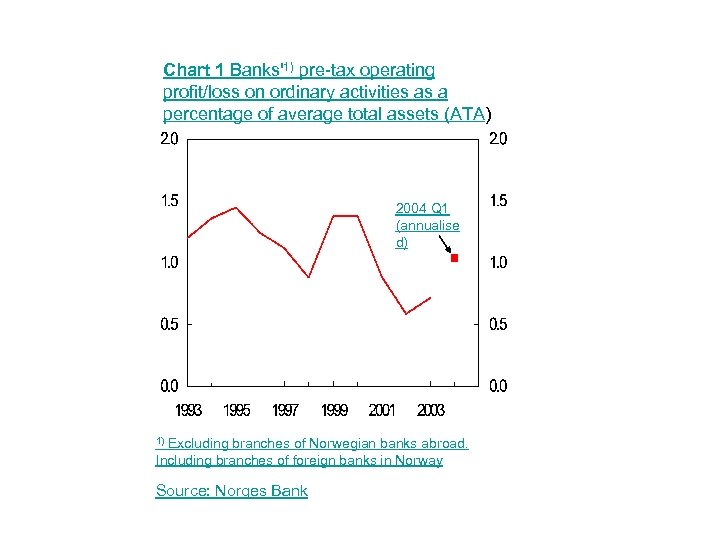
Chart 1 Banks'1) pre-tax operating profit/loss on ordinary activities as a percentage of average total assets (ATA) 2004 Q 1 (annualise d) Excluding branches of Norwegian banks abroad. Including branches of foreign banks in Norway 1) Source: Norges Bank
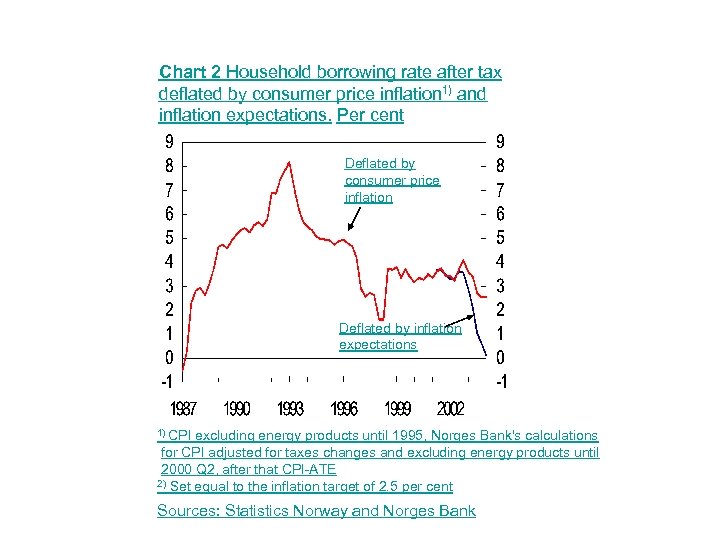
Chart 2 Household borrowing rate after tax deflated by consumer price inflation 1) and inflation expectations. Per cent Deflated by consumer price inflation Deflated by inflation expectations 1) CPI excluding energy products until 1995, Norges Bank's calculations for CPI adjusted for taxes changes and excluding energy products until 2000 Q 2, after that CPI-ATE 2) Set equal to the inflation target of 2. 5 per cent Sources: Statistics Norway and Norges Bank
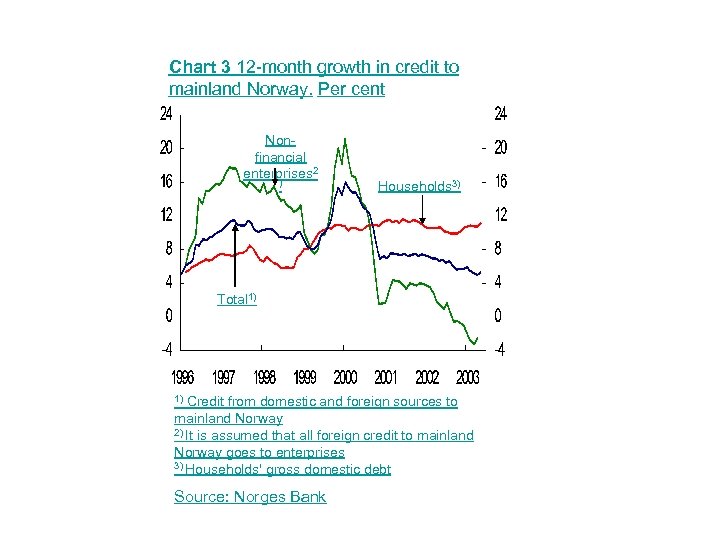
Chart 3 12 -month growth in credit to mainland Norway. Per cent Nonfinancial enterprises 2 ) Households 3) Total 1) Credit from domestic and foreign sources to mainland Norway 2) It is assumed that all foreign credit to mainland Norway goes to enterprises 3) Households' gross domestic debt 1) Source: Norges Bank
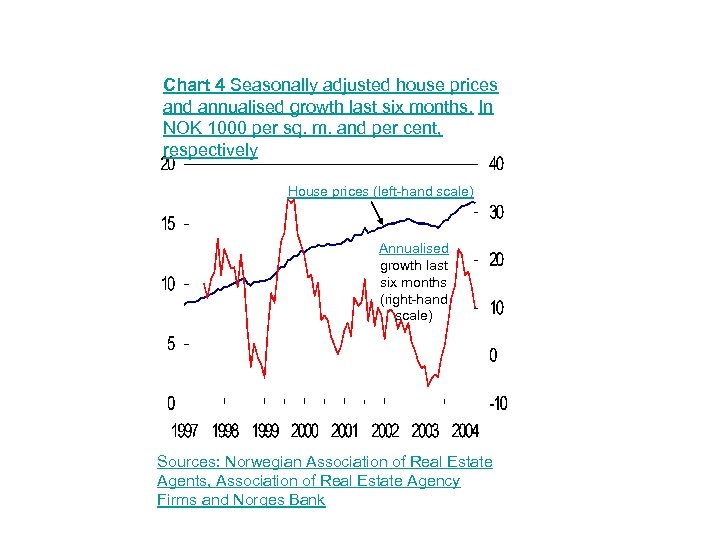
Chart 4 Seasonally adjusted house prices and annualised growth last six months. In NOK 1000 per sq. m. and per cent, respectively House prices (left-hand scale) Annualised growth last six months (right-hand scale) Sources: Norwegian Association of Real Estate Agents, Association of Real Estate Agency Firms and Norges Bank
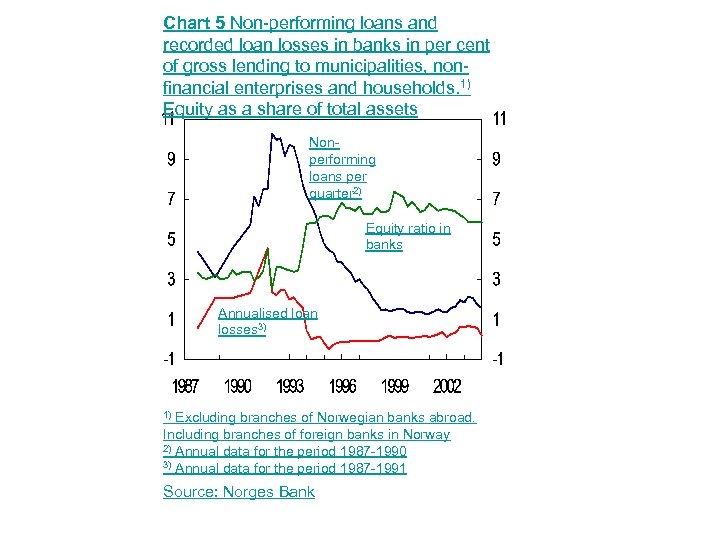
Chart 5 Non-performing loans and recorded loan losses in banks in per cent of gross lending to municipalities, nonfinancial enterprises and households. 1) Equity as a share of total assets Nonperforming loans per quarter 2) Equity ratio in banks Annualised loan losses 3) Excluding branches of Norwegian banks abroad. Including branches of foreign banks in Norway 2) Annual data for the period 1987 -1990 3) Annual data for the period 1987 -1991 1) Source: Norges Bank
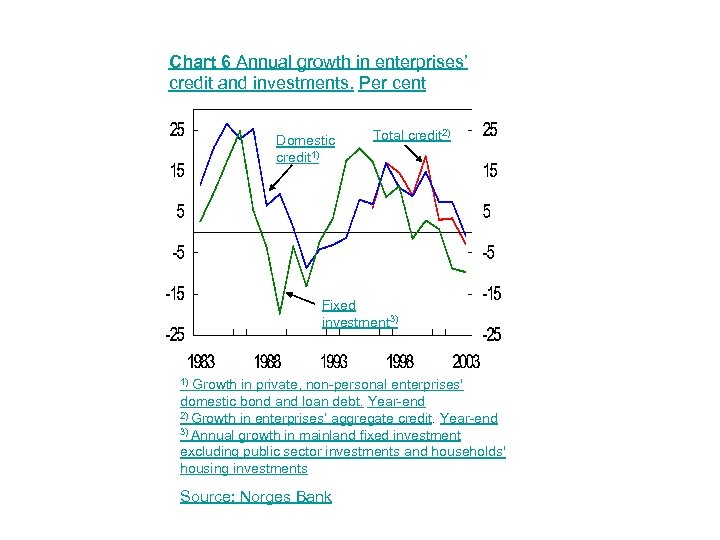
Chart 6 Annual growth in enterprises’ credit and investments. Per cent Domestic credit 1) Total credit 2) Fixed investment 3) Growth in private, non-personal enterprises' domestic bond and loan debt. Year-end 2) Growth in enterprises’ aggregate credit. Year-end 3) Annual growth in mainland fixed investment excluding public sector investments and households' housing investments 1) Source: Norges Bank
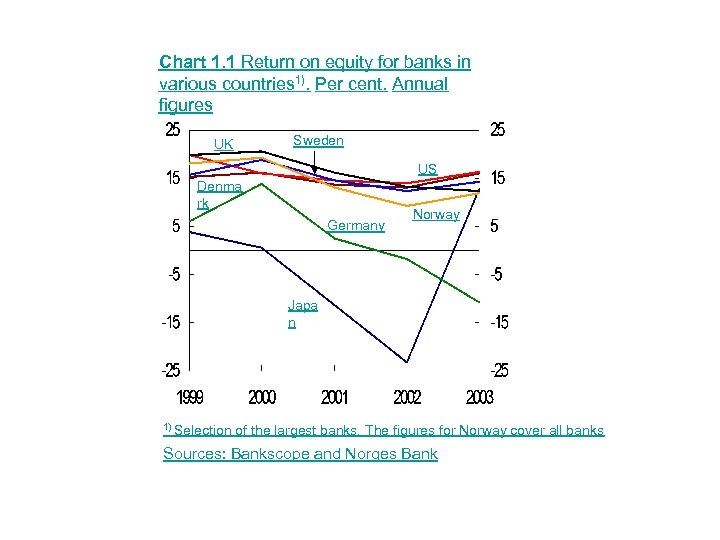
Chart 1. 1 Return on equity for banks in various countries 1). Per cent. Annual figures Sweden UK US Denma rk Germany Norway Japa n 1) Selection of the largest banks. The figures for Norway cover all banks Sources: Bankscope and Norges Bank
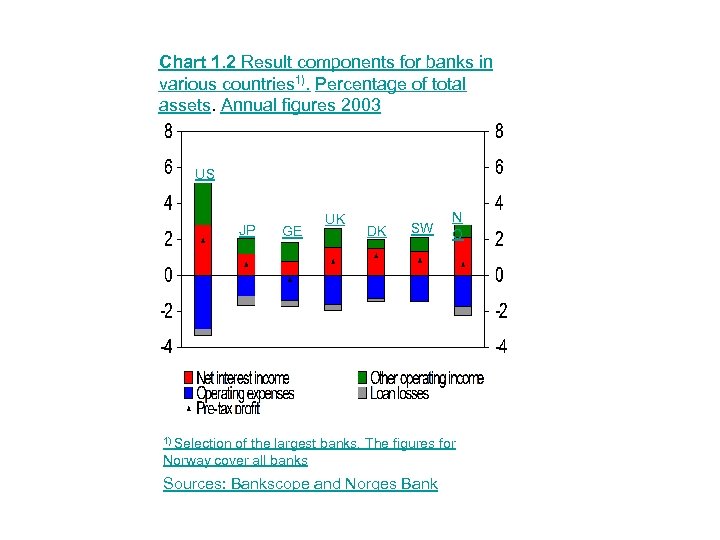
Chart 1. 2 Result components for banks in various countries 1). Percentage of total assets. Annual figures 2003 US JP GE UK DK SW 1) Selection N O of the largest banks. The figures for Norway cover all banks Sources: Bankscope and Norges Bank
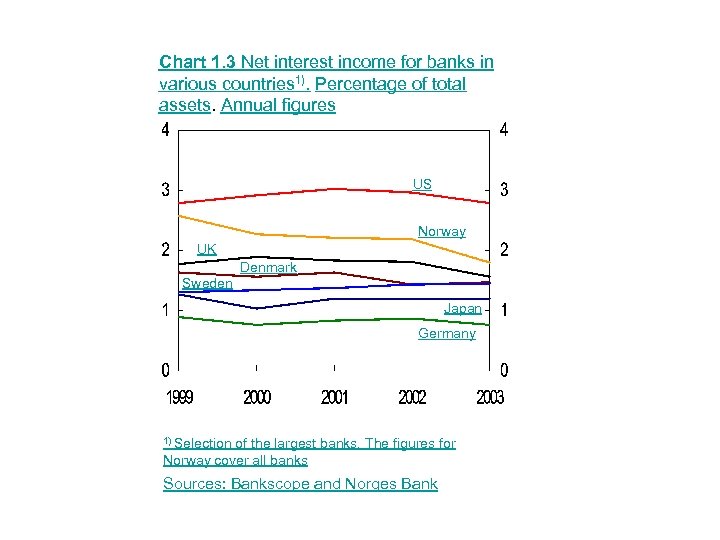
Chart 1. 3 Net interest income for banks in various countries 1). Percentage of total assets. Annual figures US Norway UK Denmark Sweden Japan Germany 1) Selection of the largest banks. The figures for Norway cover all banks Sources: Bankscope and Norges Bank
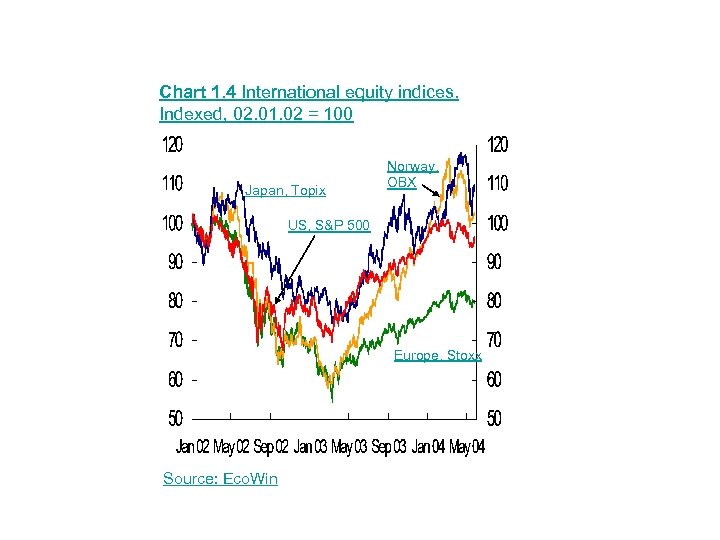
Chart 1. 4 International equity indices. Indexed, 02. 01. 02 = 100 Japan, Topix Norway, OBX US, S&P 500 Europe, Stoxx Source: Eco. Win
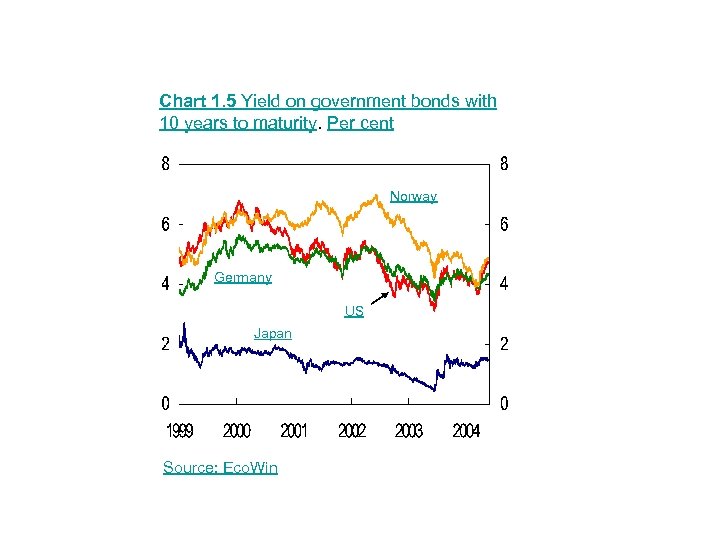
Chart 1. 5 Yield on government bonds with 10 years to maturity. Per cent Norway Germany US Japan Source: Eco. Win
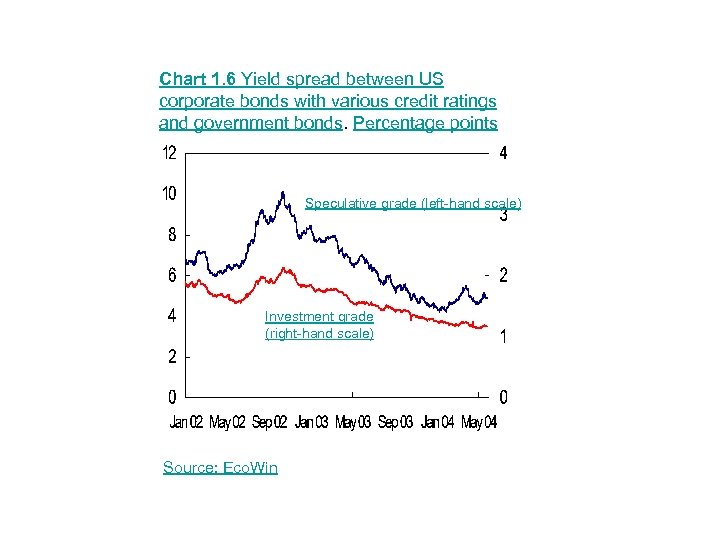
Chart 1. 6 Yield spread between US corporate bonds with various credit ratings and government bonds. Percentage points Speculative grade (left-hand scale) Investment grade (right-hand scale) Source: Eco. Win
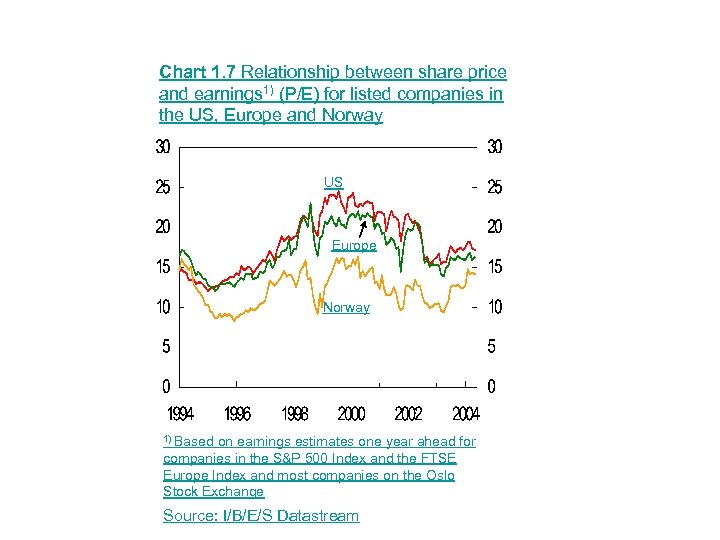
Chart 1. 7 Relationship between share price and earnings 1) (P/E) for listed companies in the US, Europe and Norway US Europe Norway 1) Based on earnings estimates one year ahead for companies in the S&P 500 Index and the FTSE Europe Index and most companies on the Oslo Stock Exchange Source: I/B/E/S Datastream
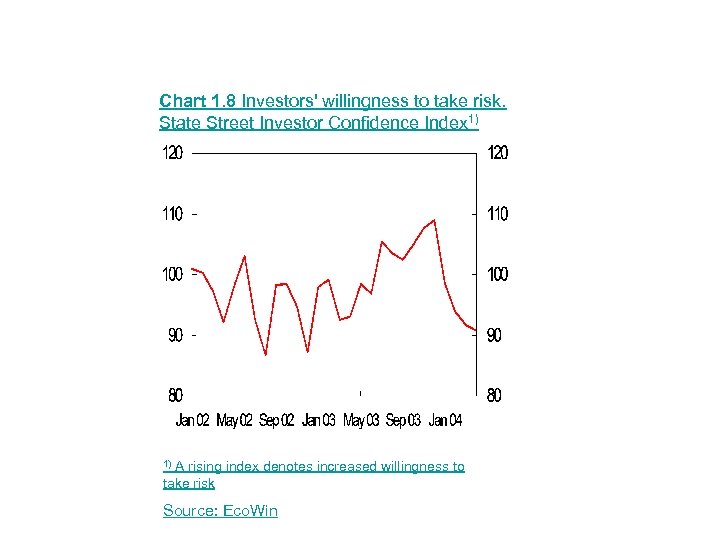
Chart 1. 8 Investors' willingness to take risk. State Street Investor Confidence Index 1) A rising index denotes increased willingness to take risk 1) Source: Eco. Win
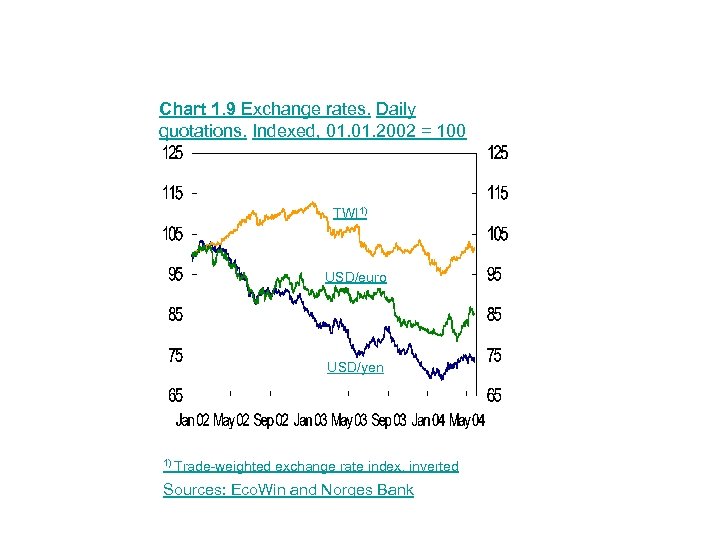
Chart 1. 9 Exchange rates. Daily quotations. Indexed, 01. 2002 = 100 TWI 1) USD/euro USD/yen 1) Trade-weighted exchange rate index, inverted Sources: Eco. Win and Norges Bank
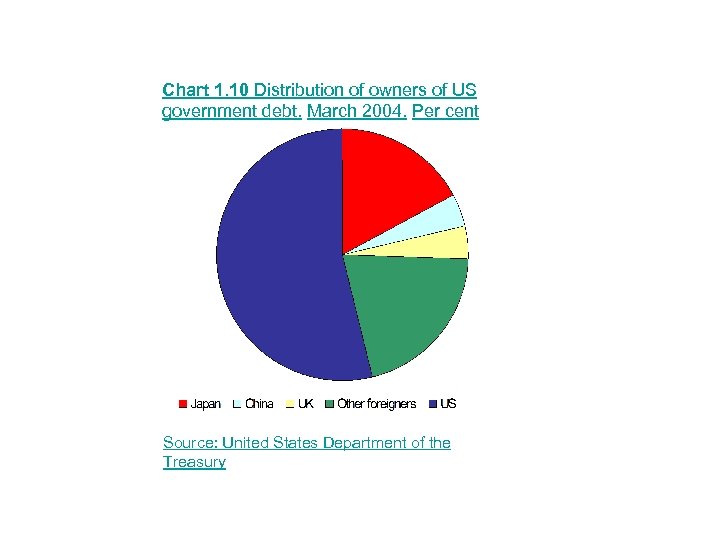
Chart 1. 10 Distribution of owners of US government debt. March 2004. Per cent Source: United States Department of the Treasury
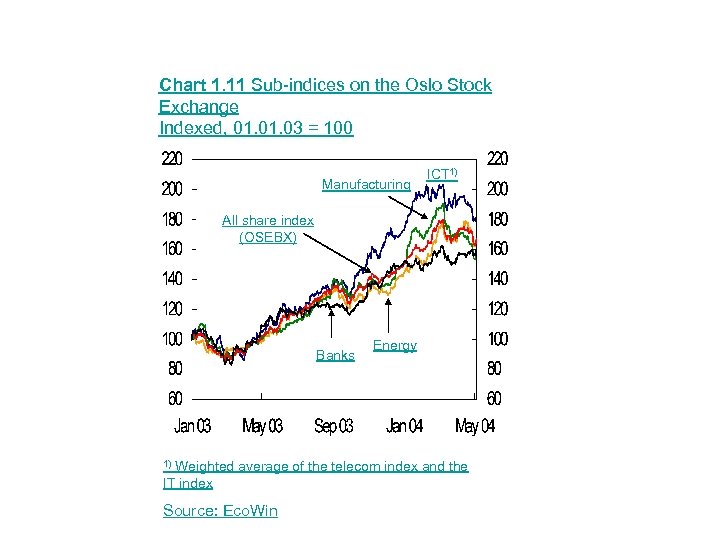
Chart 1. 11 Sub-indices on the Oslo Stock Exchange Indexed, 01. 03 = 100 Manufacturing ICT 1) All share index (OSEBX) Banks Energy Weighted average of the telecom index and the IT index 1) Source: Eco. Win
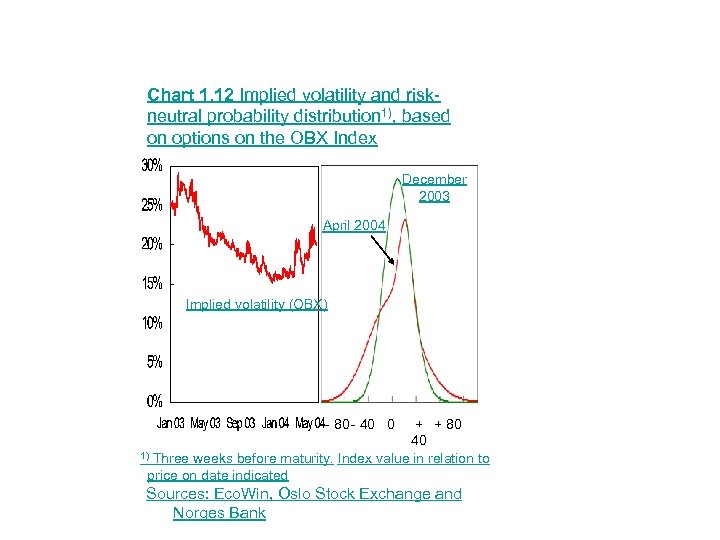
Chart 1. 12 Implied volatility and riskneutral probability distribution 1), based on options on the OBX Index December 2003 April 2004 Implied volatility (OBX) - 80 - 40 0 + + 80 40 1) Three weeks before maturity. Index value in relation to price on date indicated Sources: Eco. Win, Oslo Stock Exchange and Norges Bank
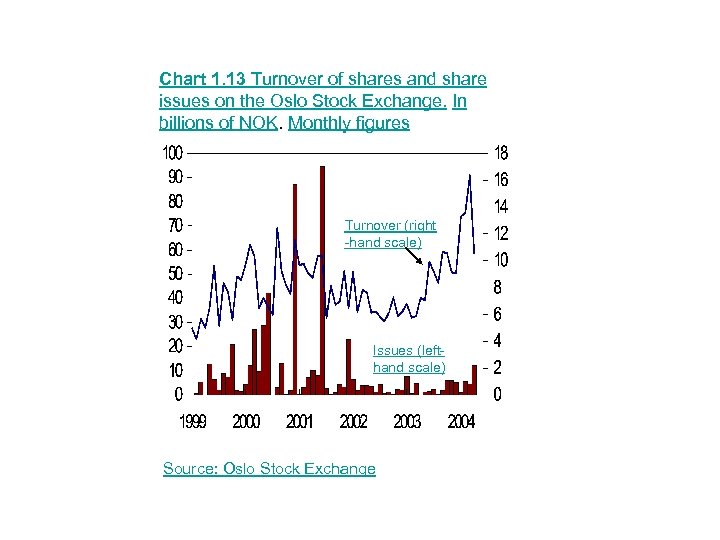
Chart 1. 13 Turnover of shares and share issues on the Oslo Stock Exchange. In billions of NOK. Monthly figures Turnover (right -hand scale) Issues (lefthand scale) Source: Oslo Stock Exchange
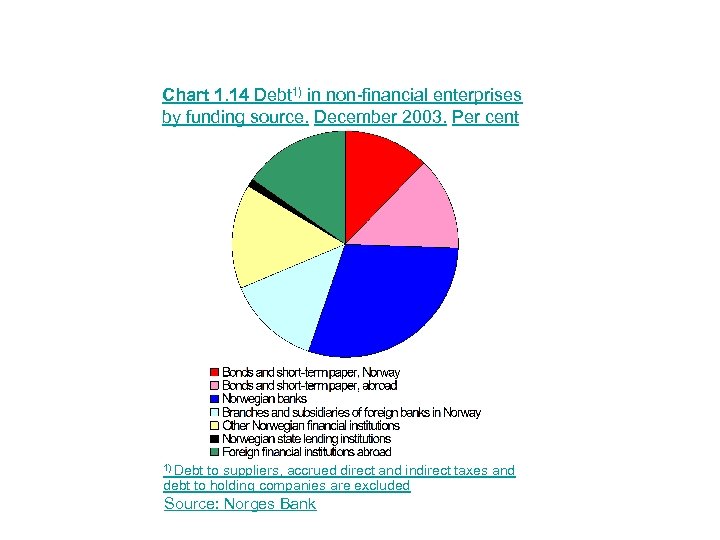
Chart 1. 14 Debt 1) in non-financial enterprises by funding source. December 2003. Per cent 1) Debt to suppliers, accrued direct and indirect taxes and debt to holding companies are excluded Source: Norges Bank
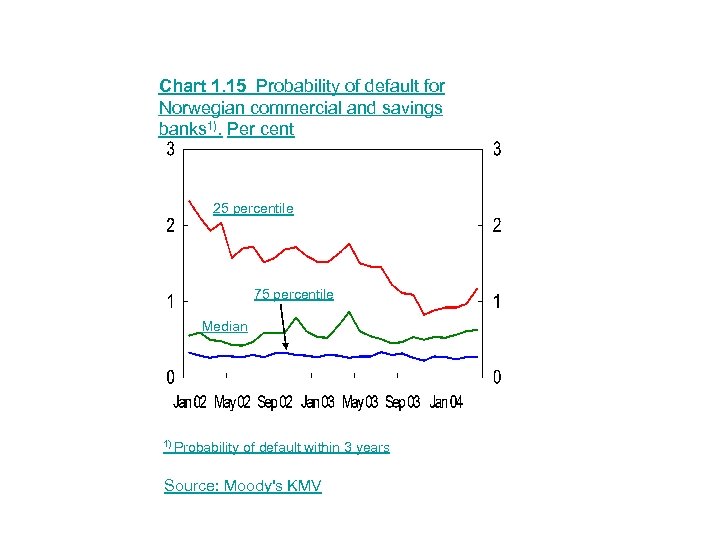
Chart 1. 15 Probability of default for Norwegian commercial and savings banks 1). Per cent 25 percentile 75 percentile Median 1) Probability of default within 3 years Source: Moody's KMV
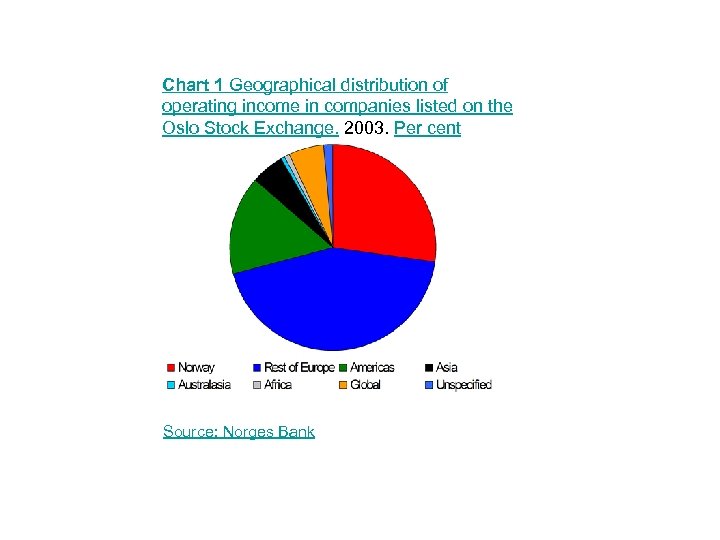
Chart 1 Geographical distribution of operating income in companies listed on the Oslo Stock Exchange. 2003. Per cent Source: Norges Bank
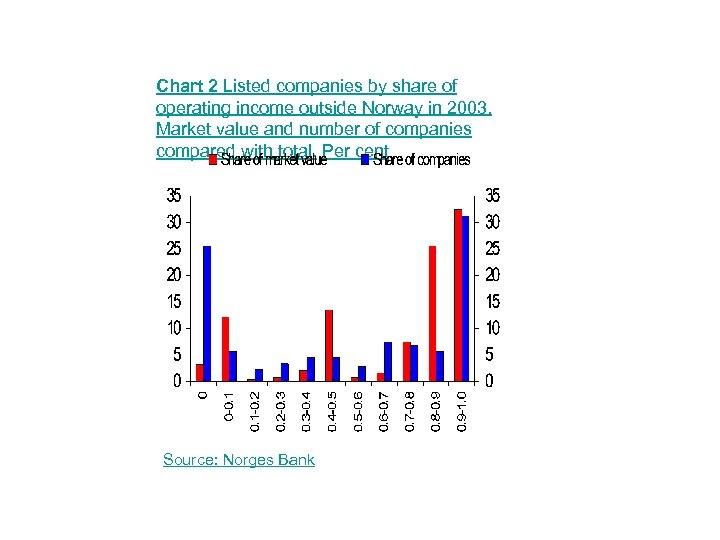
Chart 2 Listed companies by share of operating income outside Norway in 2003. Market value and number of companies compared with total. Per cent Source: Norges Bank
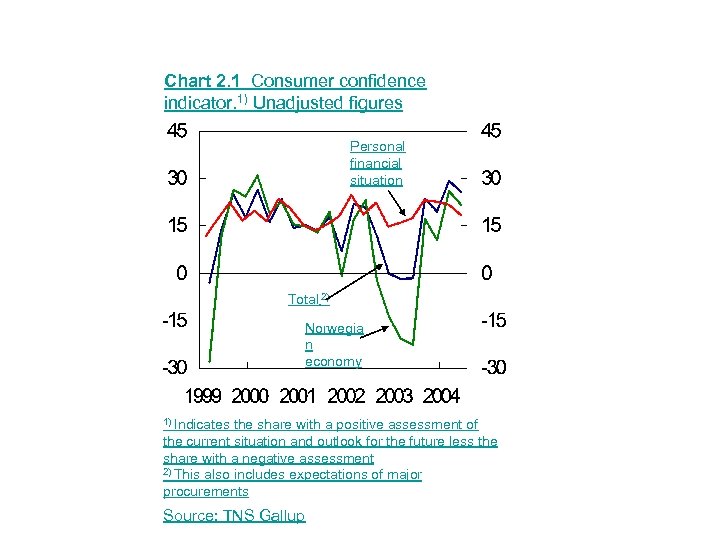
Chart 2. 1 Consumer confidence indicator. 1) Unadjusted figures Personal financial situation Total 2) Norwegia n economy 1) Indicates the share with a positive assessment of the current situation and outlook for the future less the share with a negative assessment 2) This also includes expectations of major procurements Source: TNS Gallup
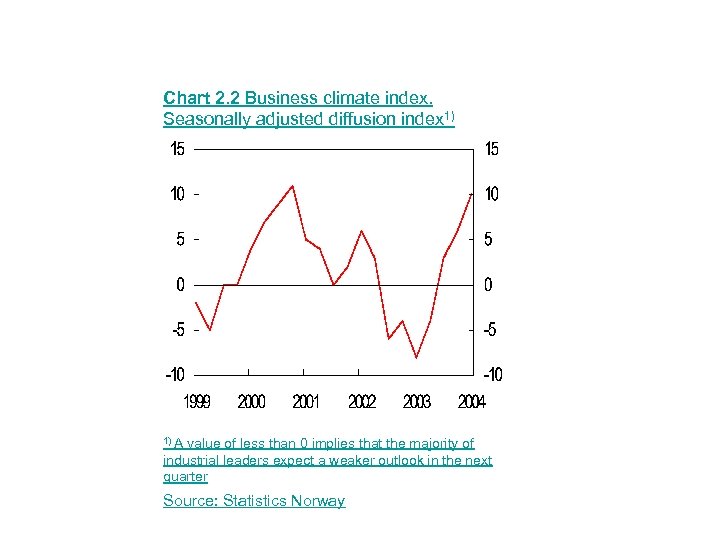
Chart 2. 2 Business climate index. Seasonally adjusted diffusion index 1) 1) A value of less than 0 implies that the majority of industrial leaders expect a weaker outlook in the next quarter Source: Statistics Norway
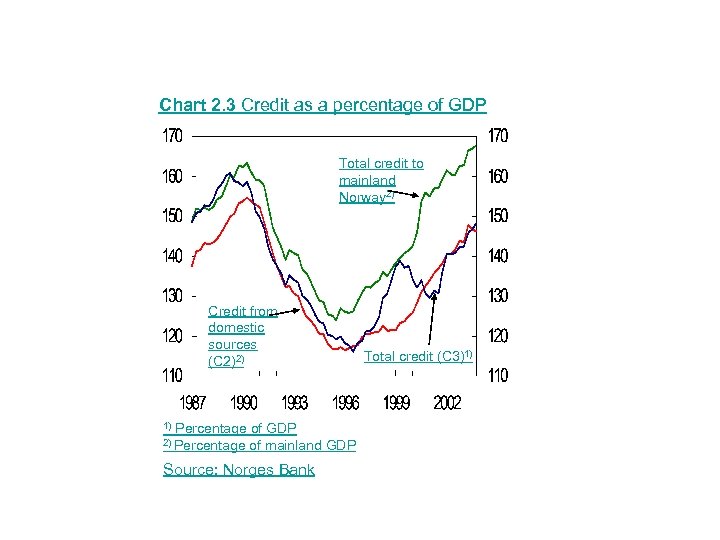
Chart 2. 3 Credit as a percentage of GDP Total credit to mainland Norway 2) Credit from domestic sources (C 2)2) 1) Percentage of GDP of mainland GDP 2) Percentage Source: Norges Bank Total credit (C 3)1)
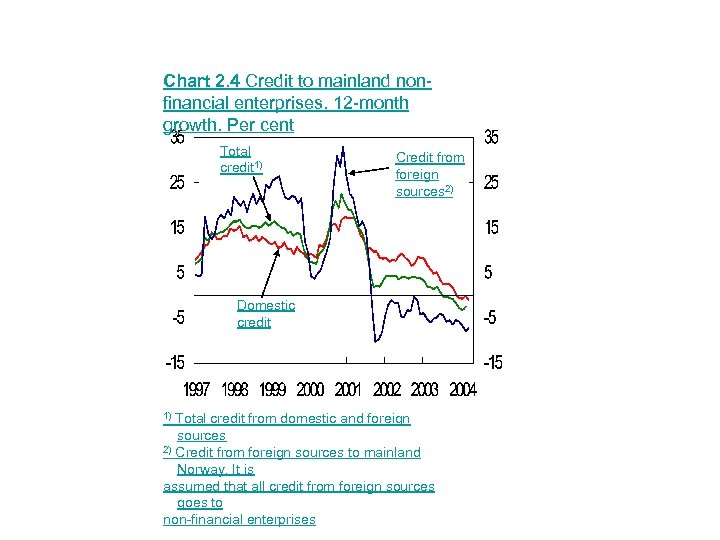
Chart 2. 4 Credit to mainland nonfinancial enterprises. 12 -month growth. Per cent Total credit 1) Credit from foreign sources 2) Domestic credit Total credit from domestic and foreign sources 2) Credit from foreign sources to mainland Norway. It is assumed that all credit from foreign sources goes to non-financial enterprises 1)
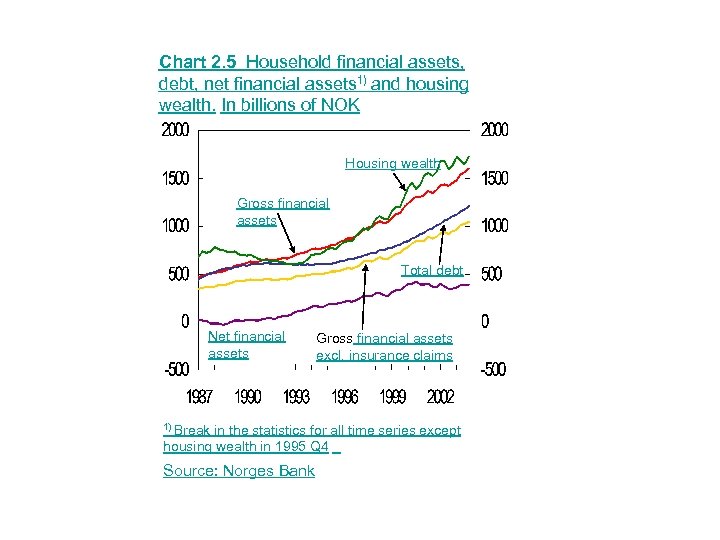
Chart 2. 5 Household financial assets, debt, net financial assets 1) and housing wealth. In billions of NOK Housing wealth Gross financial assets Total debt Net financial assets 1) Break Gross financial assets excl. insurance claims in the statistics for all time series except housing wealth in 1995 Q 4 Source: Norges Bank
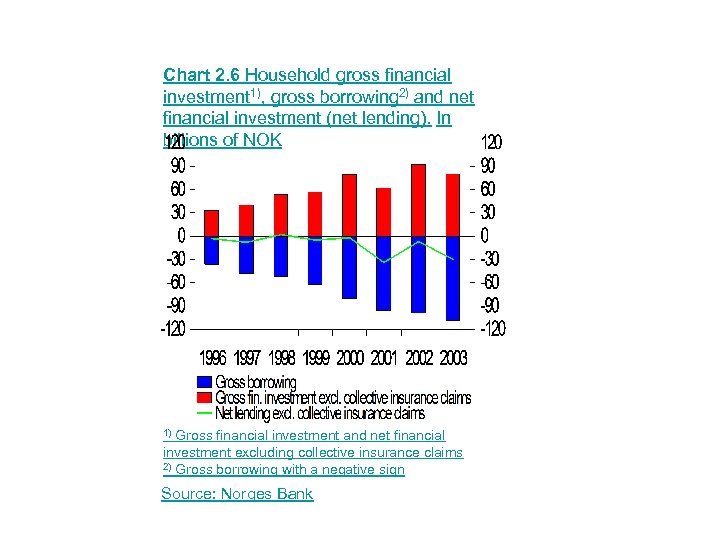
Chart 2. 6 Household gross financial investment 1), gross borrowing 2) and net financial investment (net lending). In billions of NOK Gross financial investment and net financial investment excluding collective insurance claims 2) Gross borrowing with a negative sign 1) Source: Norges Bank
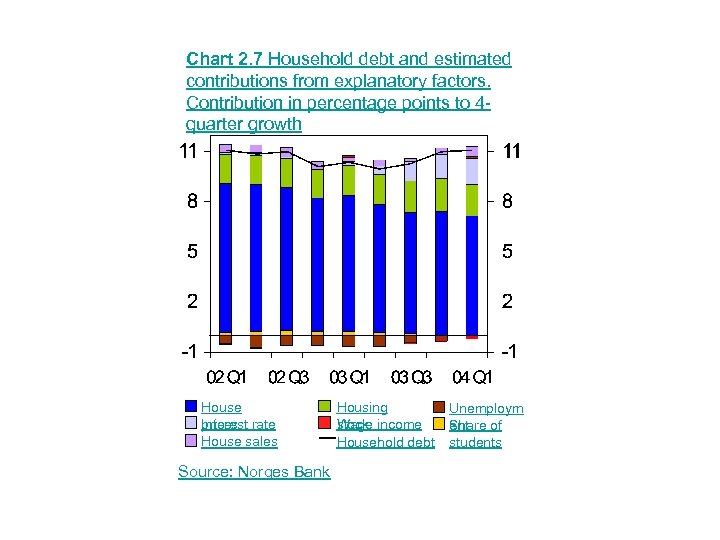
Chart 2. 7 Household debt and estimated contributions from explanatory factors. Contribution in percentage points to 4 quarter growth House Interest rate prices House sales Source: Norges Bank Housing Wage income stock Household debt Unemploym Share of ent students
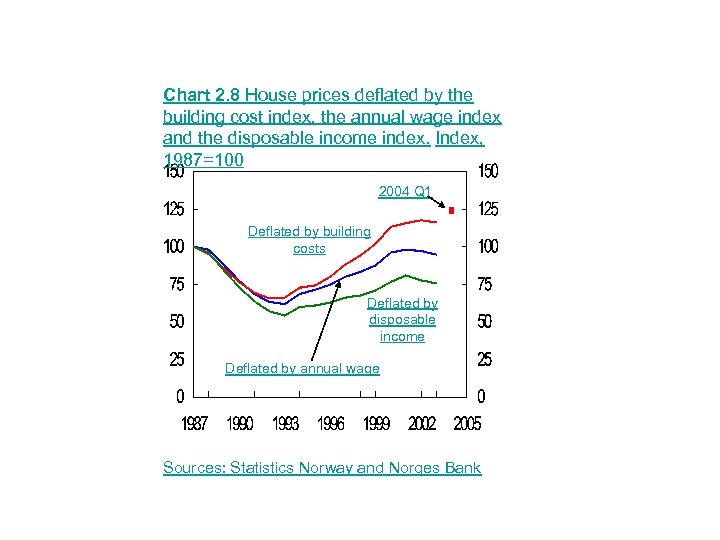
Chart 2. 8 House prices deflated by the building cost index, the annual wage index and the disposable income index. Index, 1987=100 2004 Q 1 Deflated by building costs Deflated by disposable income Deflated by annual wage Sources: Statistics Norway and Norges Bank
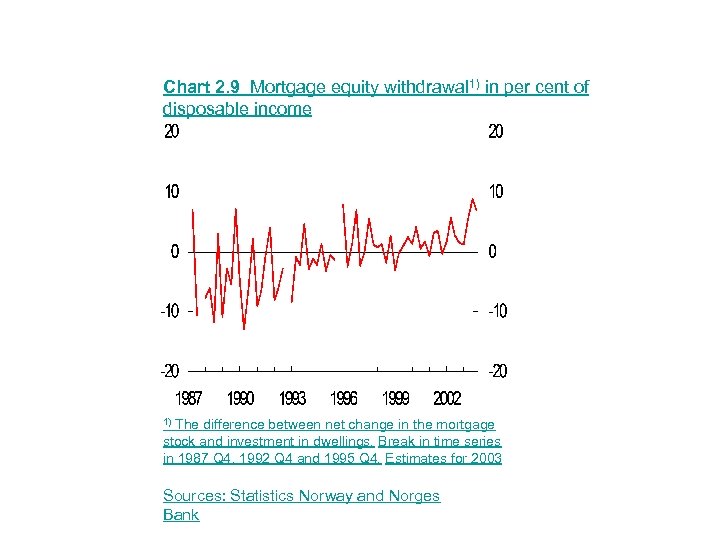
Chart 2. 9 Mortgage equity withdrawal 1) in per cent of disposable income The difference between net change in the mortgage stock and investment in dwellings. Break in time series in 1987 Q 4, 1992 Q 4 and 1995 Q 4. Estimates for 2003 1) Sources: Statistics Norway and Norges Bank
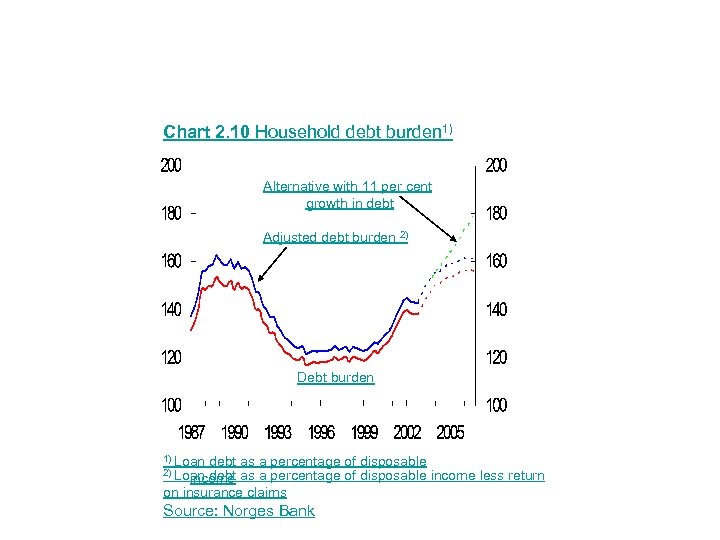
Chart 2. 10 Household debt burden 1) Alternative with 11 per cent growth in debt Adjusted debt burden 2) Debt burden 1) Loan debt as a percentage of disposable debt income as a percentage of disposable income less return on insurance claims 2) Loan Source: Norges Bank
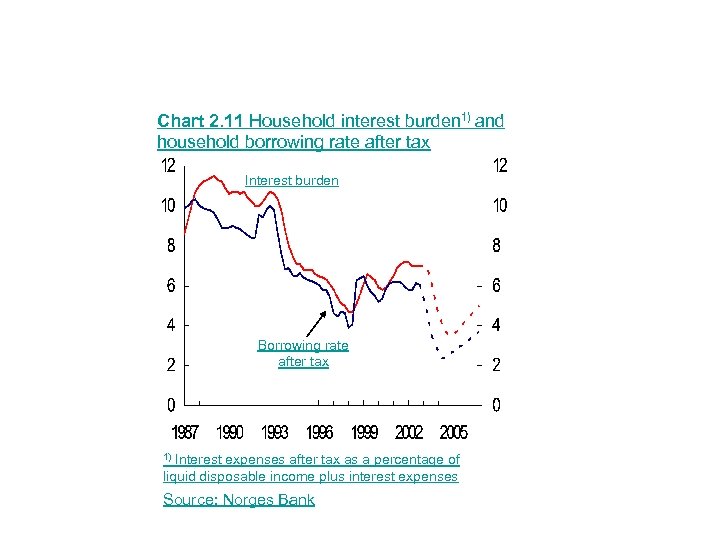
Chart 2. 11 Household interest burden 1) and household borrowing rate after tax Interest burden Borrowing rate after tax Interest expenses after tax as a percentage of liquid disposable income plus interest expenses 1) Source: Norges Bank
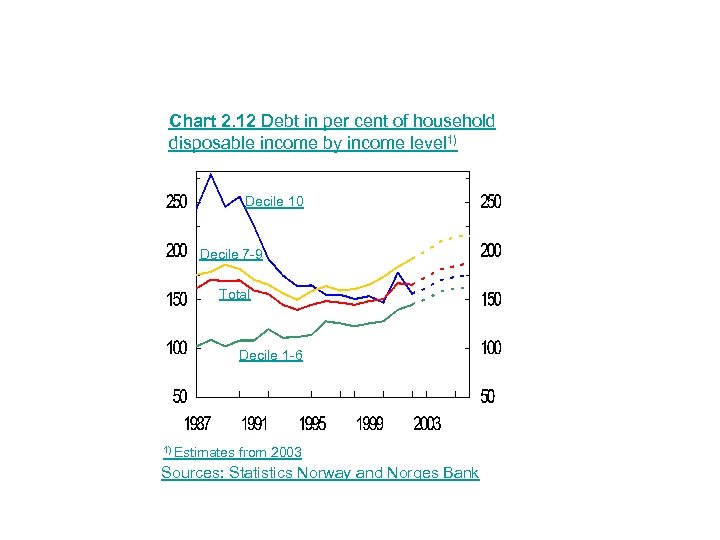
Chart 2. 12 Debt in per cent of household disposable income by income level 1) Decile 10 Decile 7 -9 Total Decile 1 -6 1) Estimates from 2003 Sources: Statistics Norway and Norges Bank
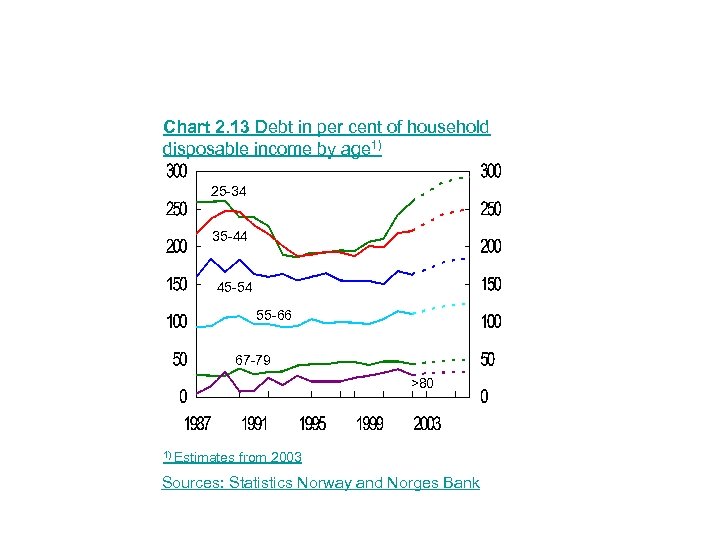
Chart 2. 13 Debt in per cent of household disposable income by age 1) 25 -34 35 -44 45 -54 55 -66 67 -79 >80 1) Estimates from 2003 Sources: Statistics Norway and Norges Bank
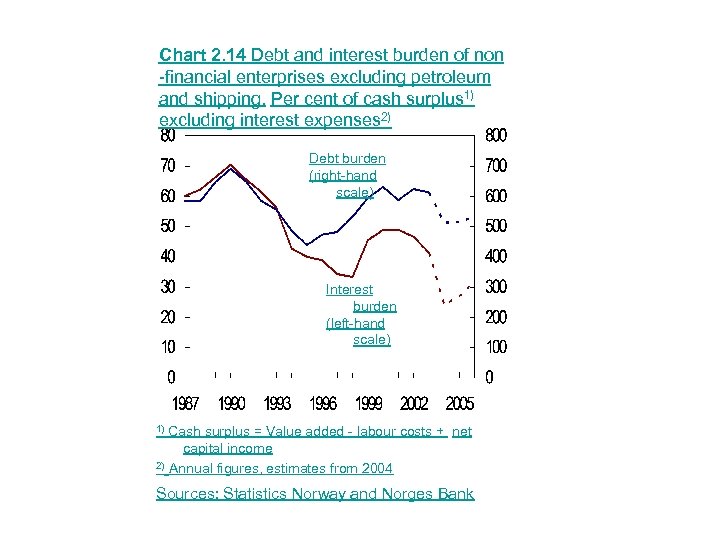
Chart 2. 14 Debt and interest burden of non -financial enterprises excluding petroleum and shipping. Per cent of cash surplus 1) excluding interest expenses 2) Debt burden (right-hand scale) Interest burden (left-hand scale) Cash surplus = Value added - labour costs + net capital income 2) Annual figures, estimates from 2004 1) Sources: Statistics Norway and Norges Bank
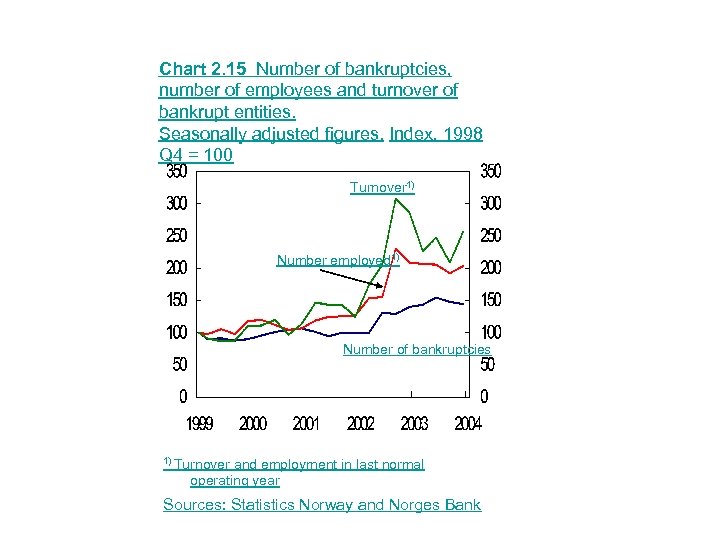
Chart 2. 15 Number of bankruptcies, number of employees and turnover of bankrupt entities. Seasonally adjusted figures. Index, 1998 Q 4 = 100 Turnover 1) Number employed 1) Number of bankruptcies 1) Turnover and employment in last normal operating year Sources: Statistics Norway and Norges Bank
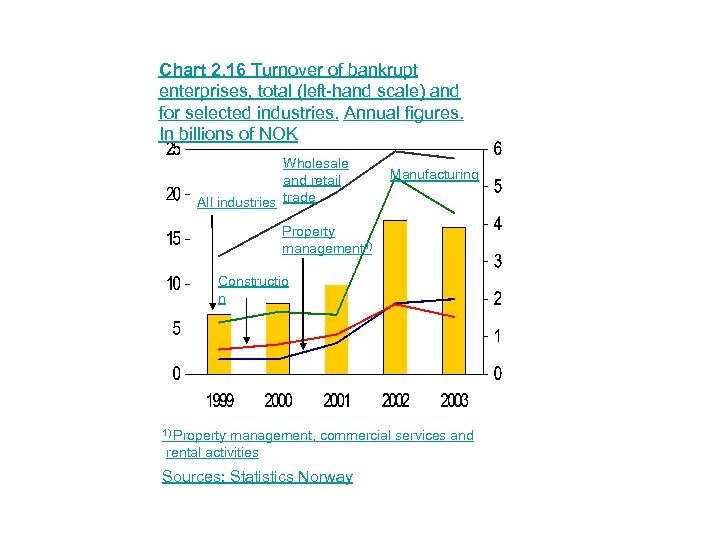
Chart 2. 16 Turnover of bankrupt enterprises, total (left-hand scale) and for selected industries. Annual figures. In billions of NOK Wholesale and retail All industries trade Manufacturing Property management 1) Constructio n 1) Property management, commercial services and rental activities Sources: Statistics Norway
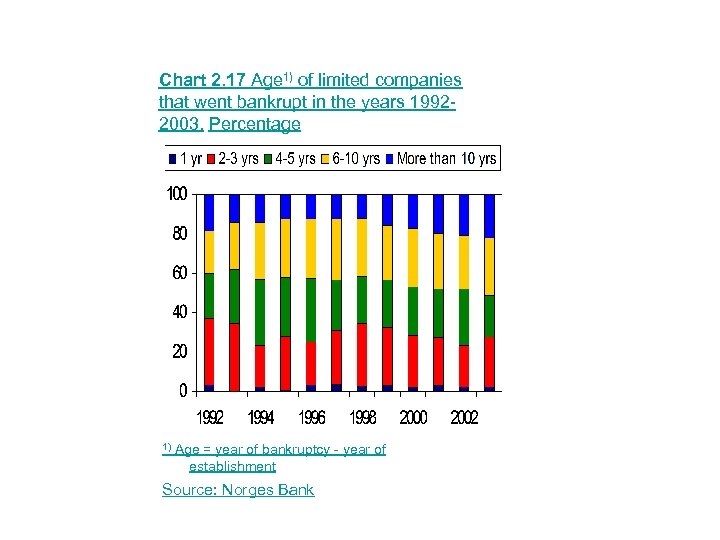
Chart 2. 17 Age 1) of limited companies that went bankrupt in the years 19922003. Percentage 1) Age = year of bankruptcy - year of establishment Source: Norges Bank
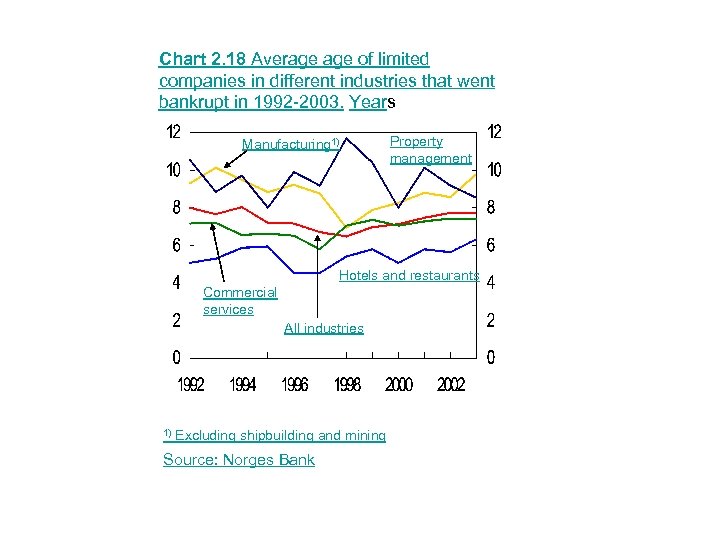
Chart 2. 18 Average of limited companies in different industries that went bankrupt in 1992 -2003. Years Manufacturing 1) Property management Hotels and restaurants Commercial services All industries 1) Excluding shipbuilding and mining Source: Norges Bank
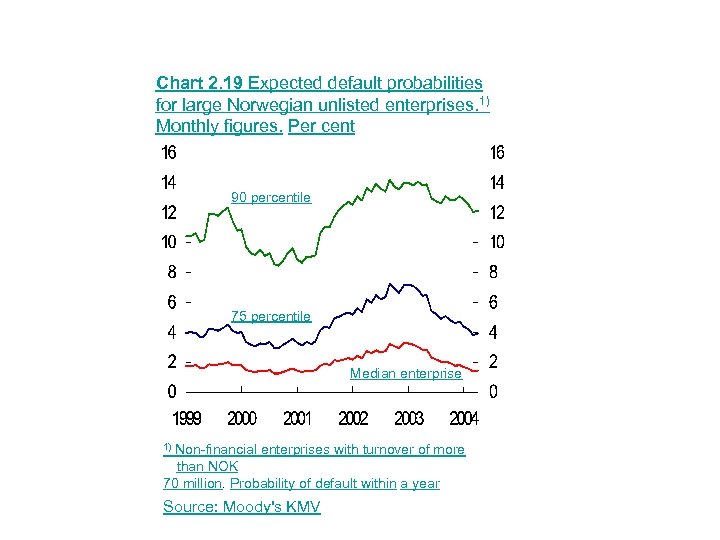
Chart 2. 19 Expected default probabilities for large Norwegian unlisted enterprises. 1) Monthly figures. Per cent 90 percentile 75 percentile Median enterprise Non-financial enterprises with turnover of more than NOK 70 million. Probability of default within a year 1) Source: Moody's KMV
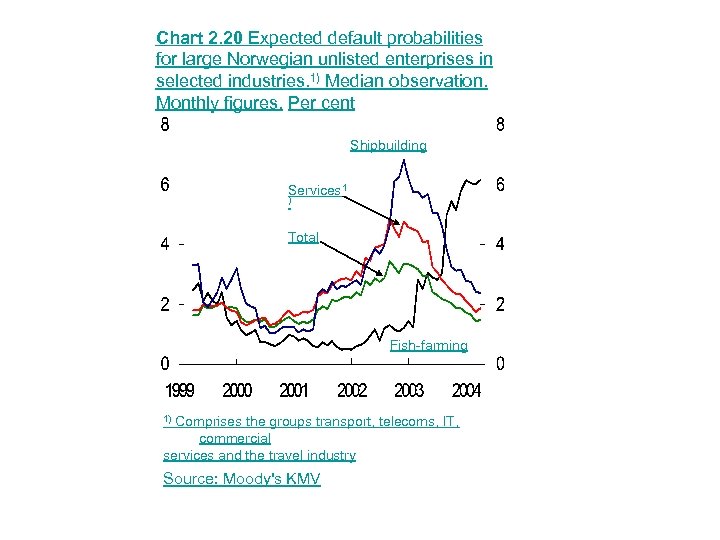
Chart 2. 20 Expected default probabilities for large Norwegian unlisted enterprises in selected industries. 1) Median observation. Monthly figures. Per cent Shipbuilding Services 1 ) Total Fish-farming Comprises the groups transport, telecoms, IT, commercial services and the travel industry 1) Source: Moody's KMV
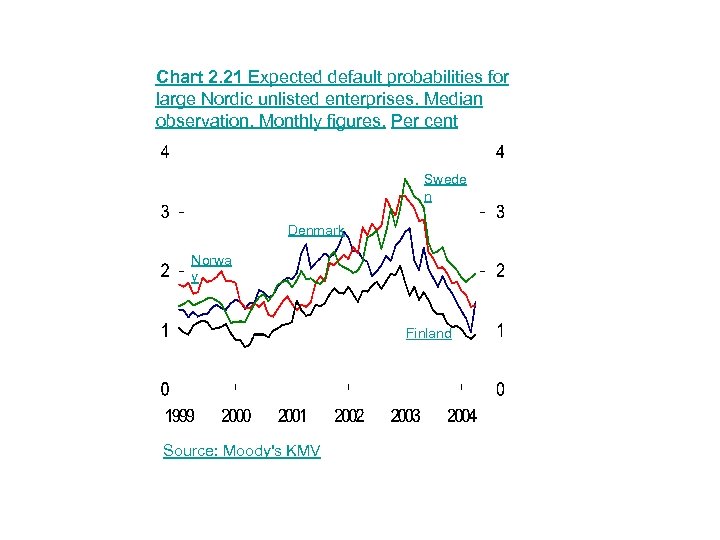
Chart 2. 21 Expected default probabilities for large Nordic unlisted enterprises. Median observation. Monthly figures. Per cent Swede n Denmark Norwa y Finland Source: Moody's KMV
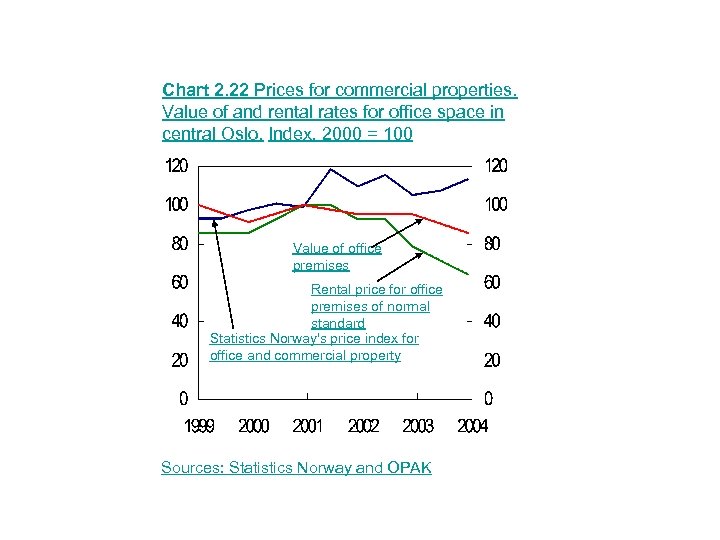
Chart 2. 22 Prices for commercial properties. Value of and rental rates for office space in central Oslo. Index, 2000 = 100 Value of office premises Rental price for office premises of normal standard Statistics Norway's price index for office and commercial property Sources: Statistics Norway and OPAK
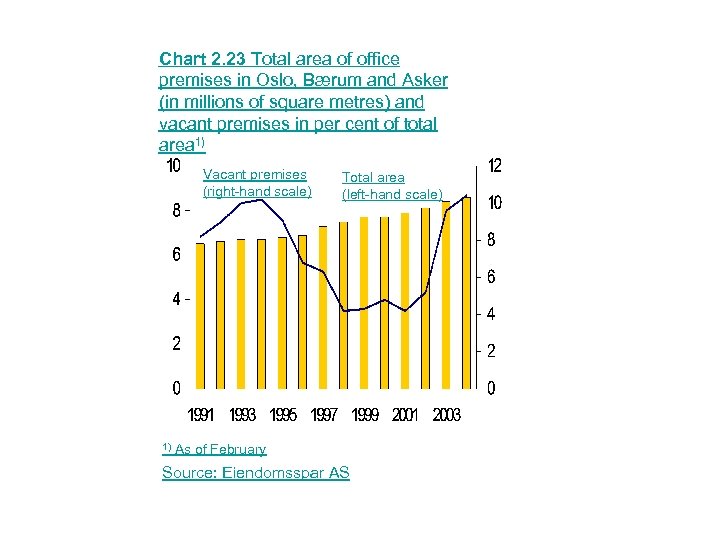
Chart 2. 23 Total area of office premises in Oslo, Bærum and Asker (in millions of square metres) and vacant premises in per cent of total area 1) Vacant premises (right-hand scale) 1) Total area (left-hand scale) As of February Source: Eiendomsspar AS
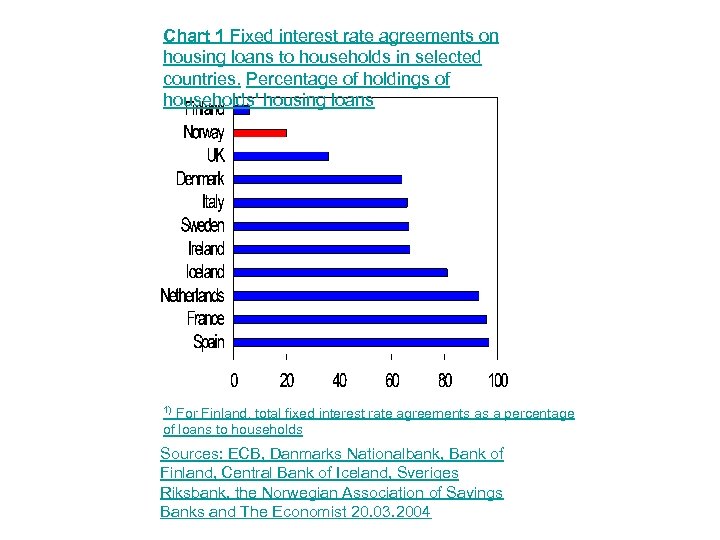
Chart 1 Fixed interest rate agreements on housing loans to households in selected countries. Percentage of holdings of households' housing loans For Finland, total fixed interest rate agreements as a percentage of loans to households 1) Sources: ECB, Danmarks Nationalbank, Bank of Finland, Central Bank of Iceland, Sveriges Riksbank, the Norwegian Association of Savings Banks and The Economist 20. 03. 2004
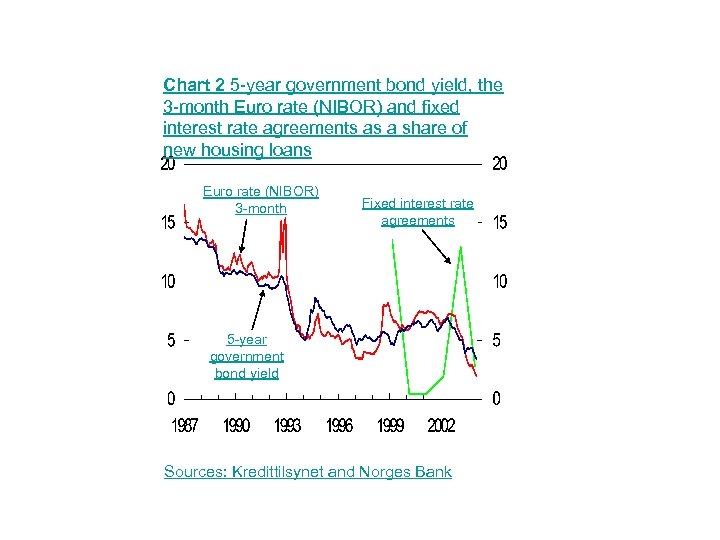
Chart 2 5 -year government bond yield, the 3 -month Euro rate (NIBOR) and fixed interest rate agreements as a share of new housing loans Euro rate (NIBOR) 3 -month Fixed interest rate agreements 5 -year government bond yield Sources: Kredittilsynet and Norges Bank
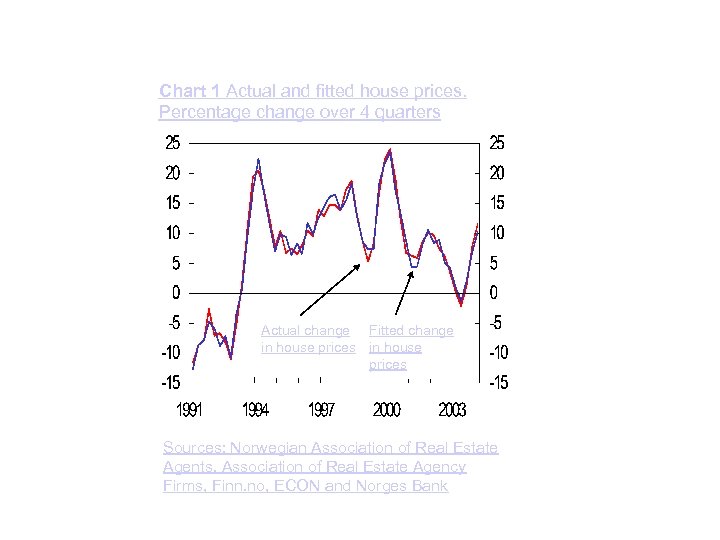
Chart 1 Actual and fitted house prices. Percentage change over 4 quarters Actual change Fitted change in house prices Sources: Norwegian Association of Real Estate Agents, Association of Real Estate Agency Firms, Finn. no, ECON and Norges Bank
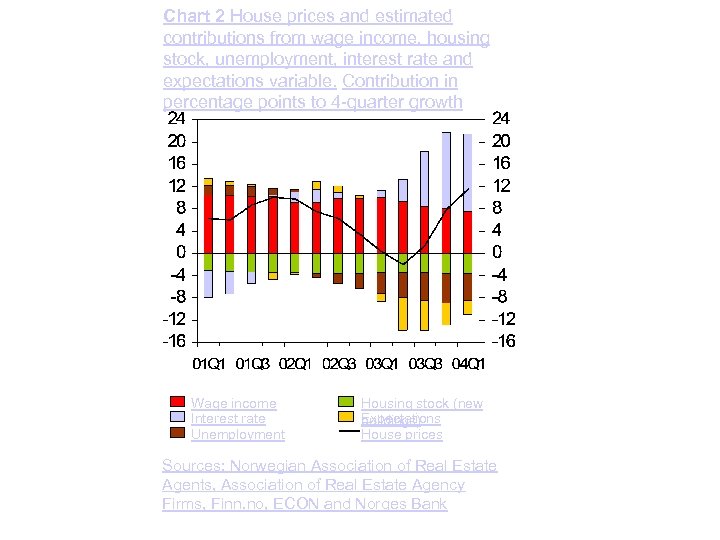
Chart 2 House prices and estimated contributions from wage income, housing stock, unemployment, interest rate and expectations variable. Contribution in percentage points to 4 -quarter growth Wage income Interest rate Unemployment Housing stock (new Expectations buildings) House prices Sources: Norwegian Association of Real Estate Agents, Association of Real Estate Agency Firms, Finn. no, ECON and Norges Bank
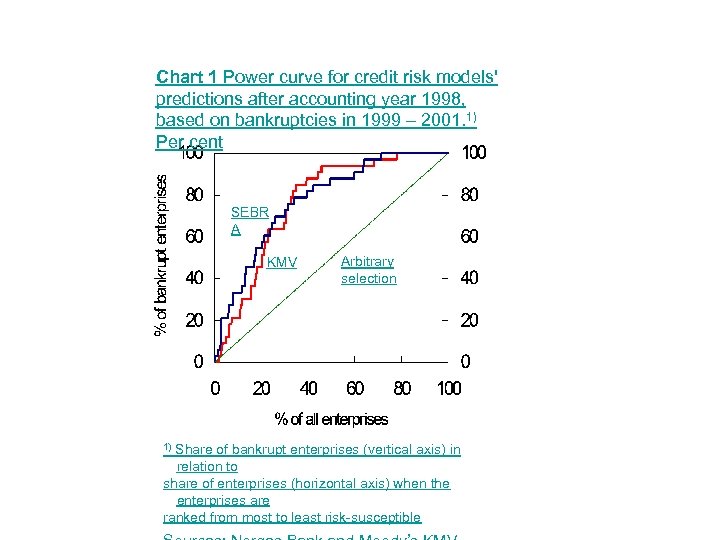
Chart 1 Power curve for credit risk models' predictions after accounting year 1998, based on bankruptcies in 1999 – 2001. 1) Per cent SEBR A KMV Arbitrary selection Share of bankrupt enterprises (vertical axis) in relation to share of enterprises (horizontal axis) when the enterprises are ranked from most to least risk-susceptible 1)
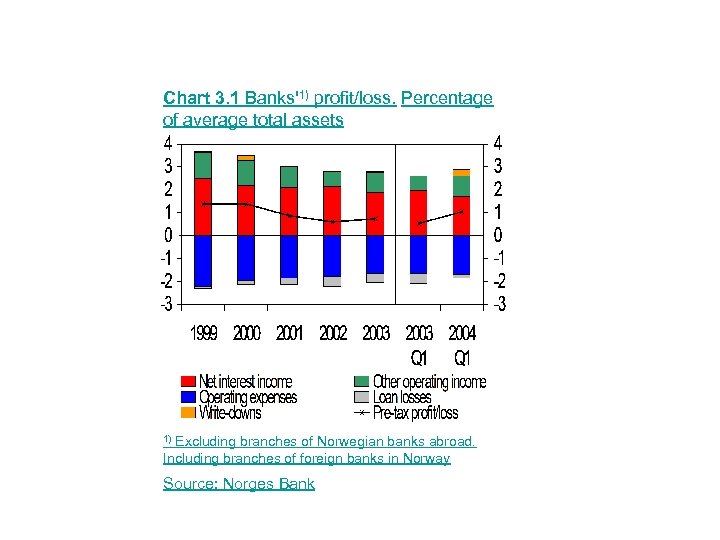
Chart 3. 1 Banks'1) profit/loss. Percentage of average total assets Excluding branches of Norwegian banks abroad. Including branches of foreign banks in Norway 1) Source: Norges Bank
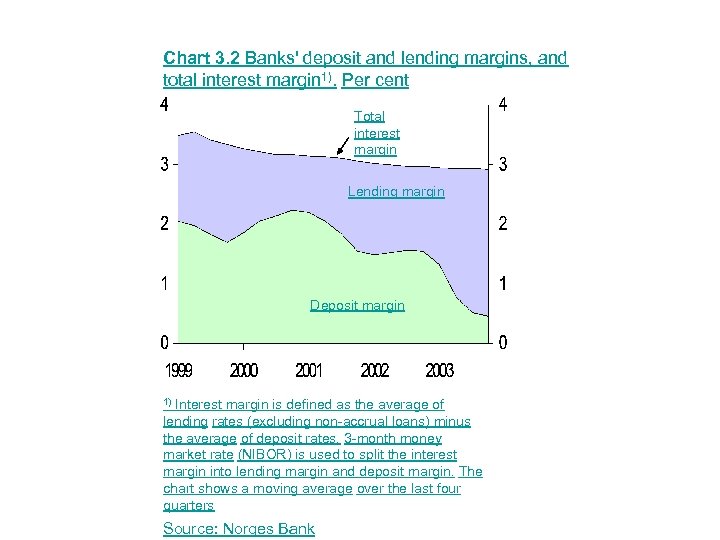
Chart 3. 2 Banks' deposit and lending margins, and total interest margin 1). Per cent Total interest margin Lending margin Deposit margin Interest margin is defined as the average of lending rates (excluding non-accrual loans) minus the average of deposit rates. 3 -month money market rate (NIBOR) is used to split the interest margin into lending margin and deposit margin. The chart shows a moving average over the last four quarters 1) Source: Norges Bank
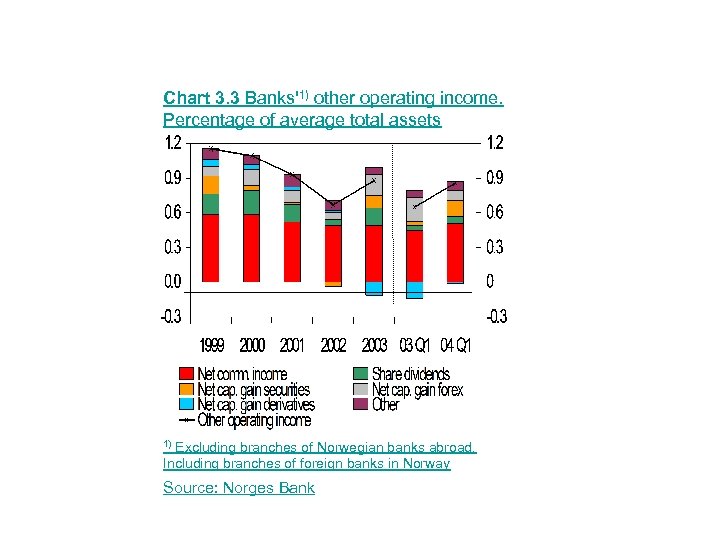
Chart 3. 3 Banks'1) other operating income. Percentage of average total assets Excluding branches of Norwegian banks abroad. Including branches of foreign banks in Norway 1) Source: Norges Bank
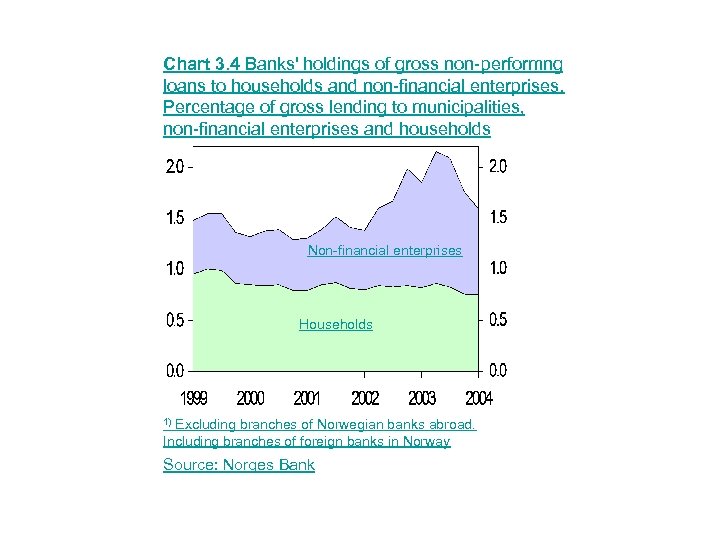
Chart 3. 4 Banks' holdings of gross non-performng loans to households and non-financial enterprises. Percentage of gross lending to municipalities, non-financial enterprises and households Non-financial enterprises Households Excluding branches of Norwegian banks abroad. Including branches of foreign banks in Norway 1) Source: Norges Bank
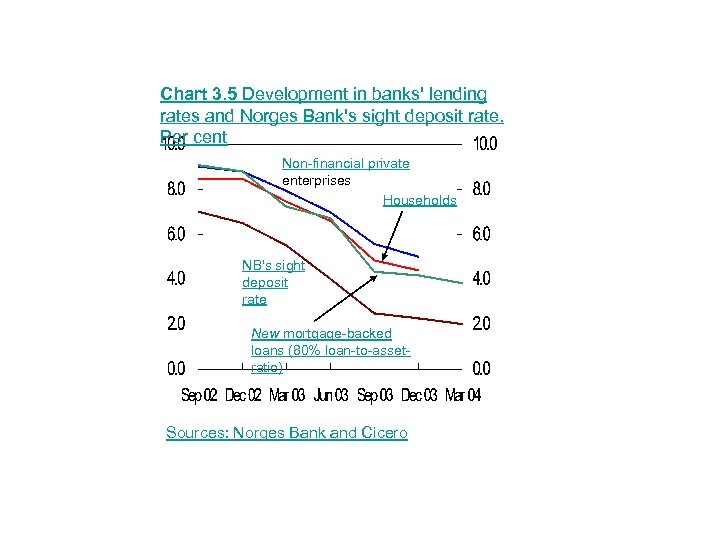
Chart 3. 5 Development in banks' lending rates and Norges Bank's sight deposit rate. Per cent Non-financial private enterprises Households NB's sight deposit rate New mortgage-backed loans (80% loan-to-assetratio) Sources: Norges Bank and Cicero
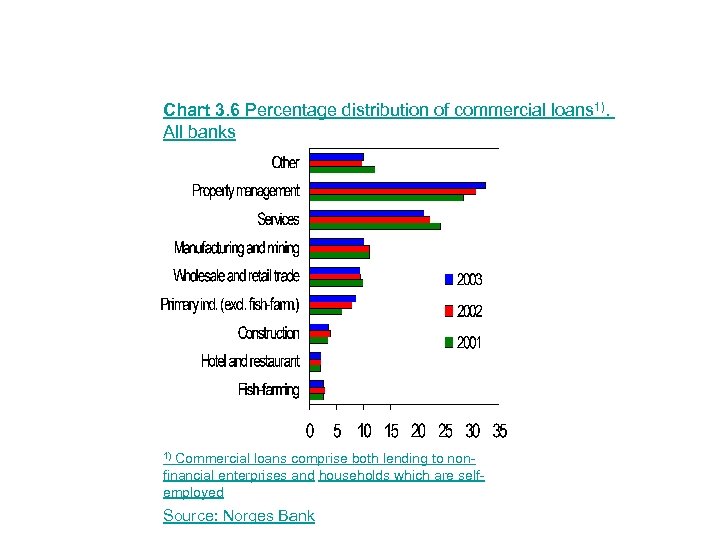
Chart 3. 6 Percentage distribution of commercial loans 1). All banks Commercial loans comprise both lending to nonfinancial enterprises and households which are selfemployed 1) Source: Norges Bank
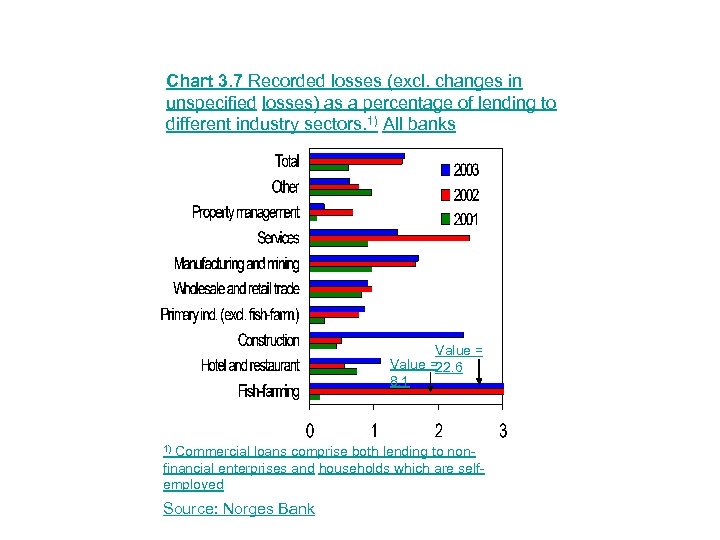
Chart 3. 7 Recorded losses (excl. changes in unspecified losses) as a percentage of lending to different industry sectors. 1) All banks Value =22. 6 8. 1 Commercial loans comprise both lending to nonfinancial enterprises and households which are selfemployed 1) Source: Norges Bank
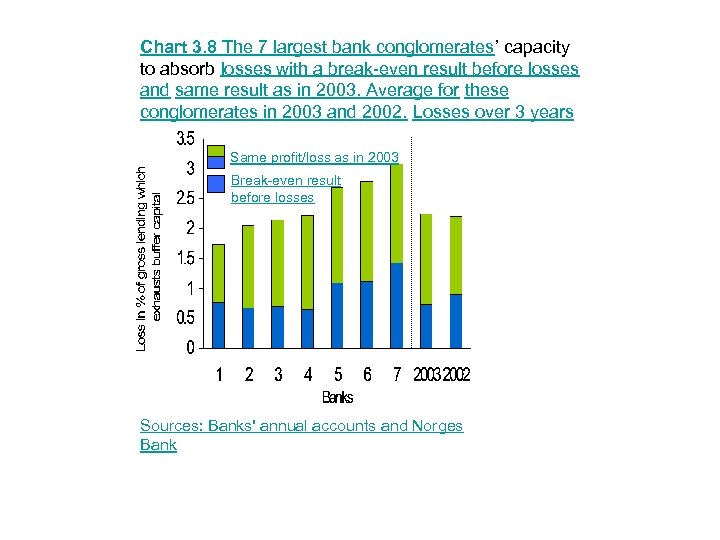
Chart 3. 8 The 7 largest bank conglomerates’ capacity to absorb losses with a break-even result before losses and same result as in 2003. Average for these conglomerates in 2003 and 2002. Losses over 3 years Same profit/loss as in 2003 Break-even result before losses Sources: Banks' annual accounts and Norges Bank
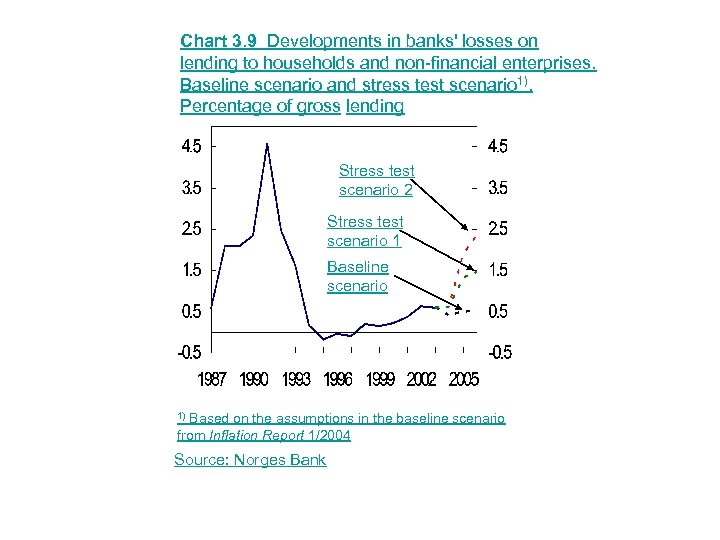
Chart 3. 9 Developments in banks' losses on lending to households and non-financial enterprises. Baseline scenario and stress test scenario 1). Percentage of gross lending Stress test scenario 2 Stress test scenario 1 Baseline scenario Based on the assumptions in the baseline scenario from Inflation Report 1/2004 1) Source: Norges Bank
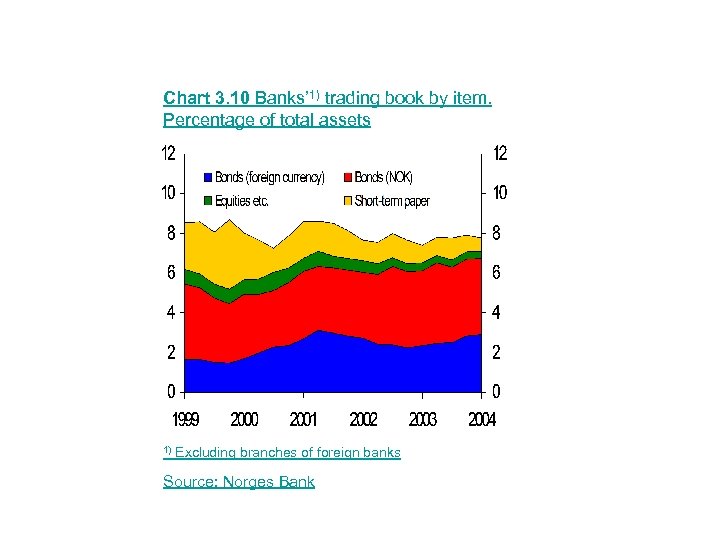
Chart 3. 10 Banks’ 1) trading book by item. Percentage of total assets 1) Excluding branches of foreign banks Source: Norges Bank
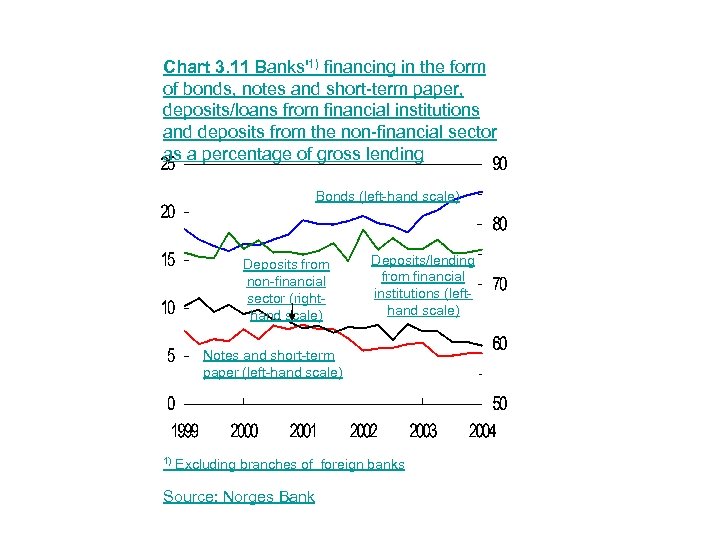
Chart 3. 11 Banks'1) financing in the form of bonds, notes and short-term paper, deposits/loans from financial institutions and deposits from the non-financial sector as a percentage of gross lending Bonds (left-hand scale) Deposits from non-financial sector (righthand scale) Deposits/lending from financial institutions (lefthand scale) Notes and short-term paper (left-hand scale) 1) Excluding branches of foreign banks Source: Norges Bank
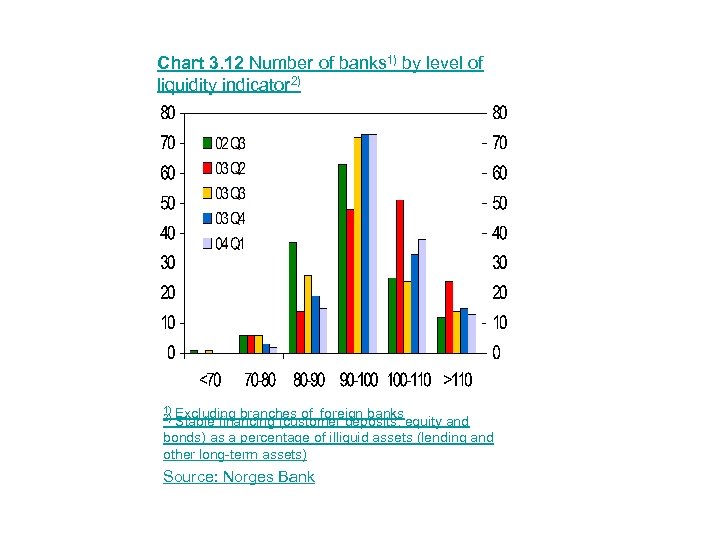
Chart 3. 12 Number of banks 1) by level of liquidity indicator 2) Excluding branches of foreign banks Stable financing (customer deposits, equity and bonds) as a percentage of illiquid assets (lending and other long-term assets) 1) 2) Source: Norges Bank
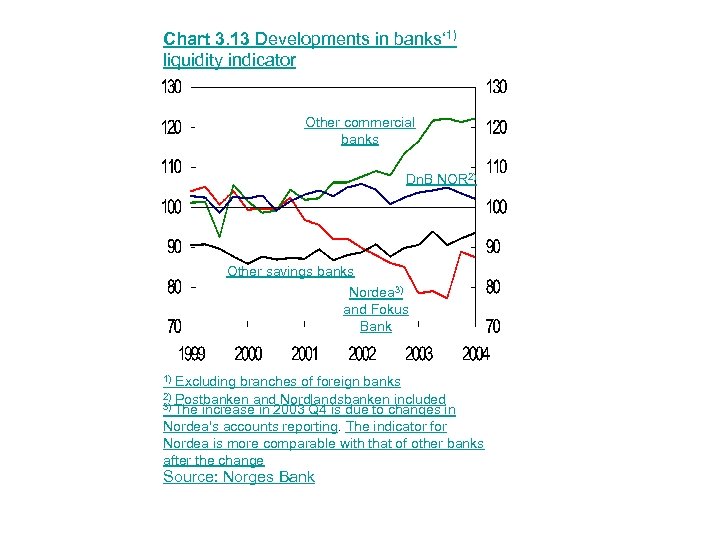
Chart 3. 13 Developments in banks‘ 1) liquidity indicator Other commercial banks Dn. B NOR 2) Other savings banks Nordea 3) and Fokus Bank 1) Excluding branches of foreign banks 2) Postbanken and Nordlandsbanken included 3) The increase in 2003 Q 4 is due to changes in Nordea's accounts reporting. The indicator for Nordea is more comparable with that of other banks after the change Source: Norges Bank
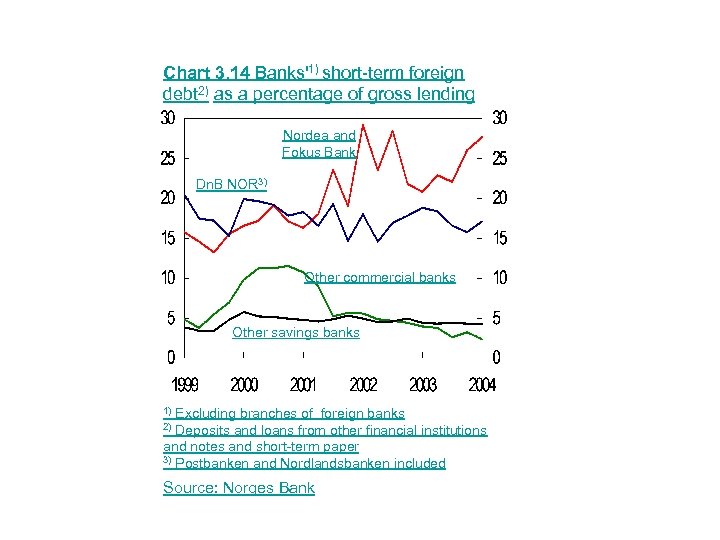
Chart 3. 14 Banks'1) short-term foreign debt 2) as a percentage of gross lending Nordea and Fokus Bank Dn. B NOR 3) Other commercial banks Other savings banks Excluding branches of foreign banks Deposits and loans from other financial institutions and notes and short-term paper 3) Postbanken and Nordlandsbanken included 1) 2) Source: Norges Bank
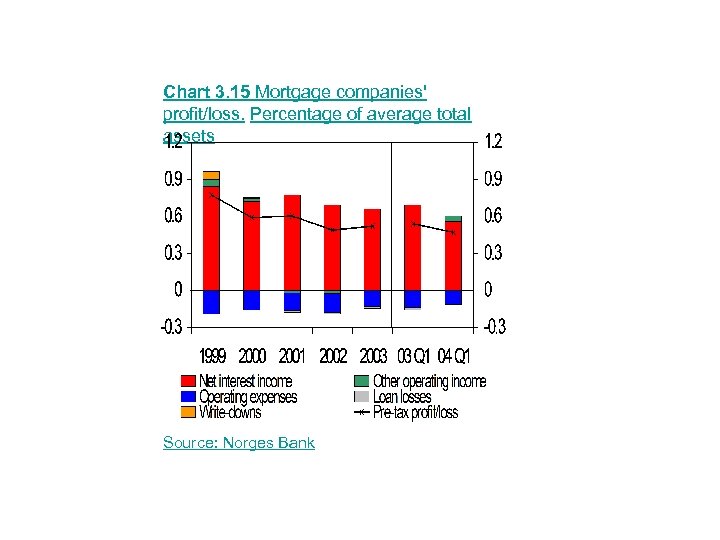
Chart 3. 15 Mortgage companies' profit/loss. Percentage of average total assets Source: Norges Bank
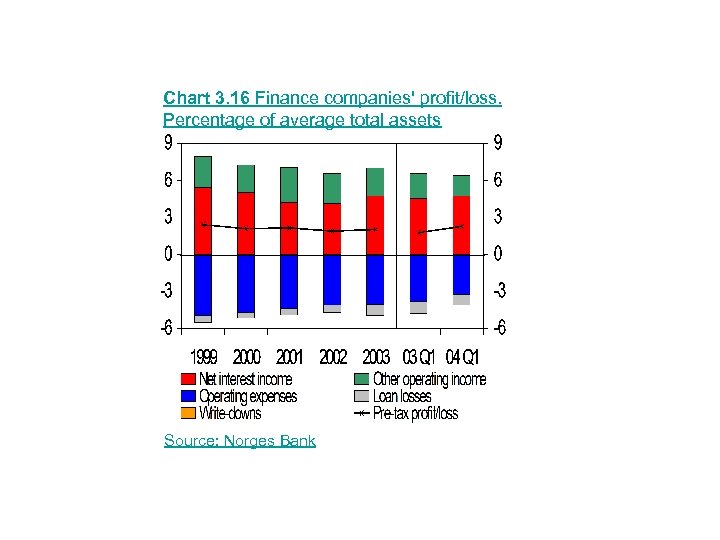
Chart 3. 16 Finance companies' profit/loss. Percentage of average total assets Source: Norges Bank
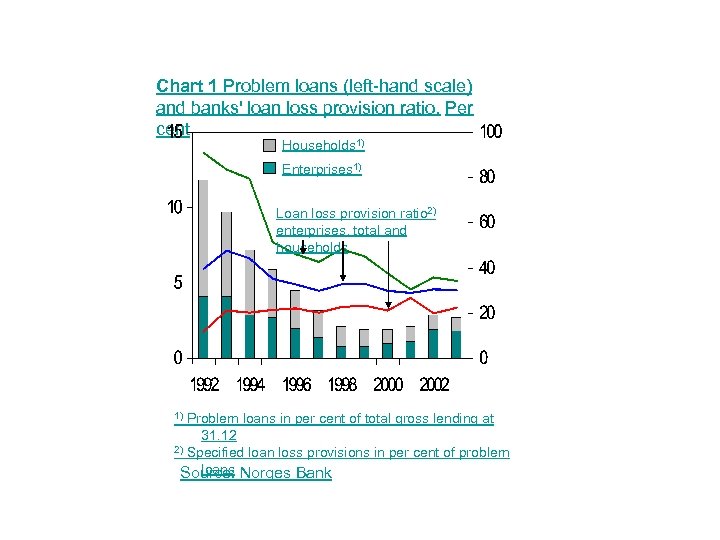
Chart 1 Problem loans (left-hand scale) and banks' loan loss provision ratio. Per cent Households 1) Enterprises 1) Loan loss provision ratio 2) enterprises, total and households Problem loans in per cent of total gross lending at 31. 12 2) Specified loan loss provisions in per cent of problem loans Source: Norges Bank 1)
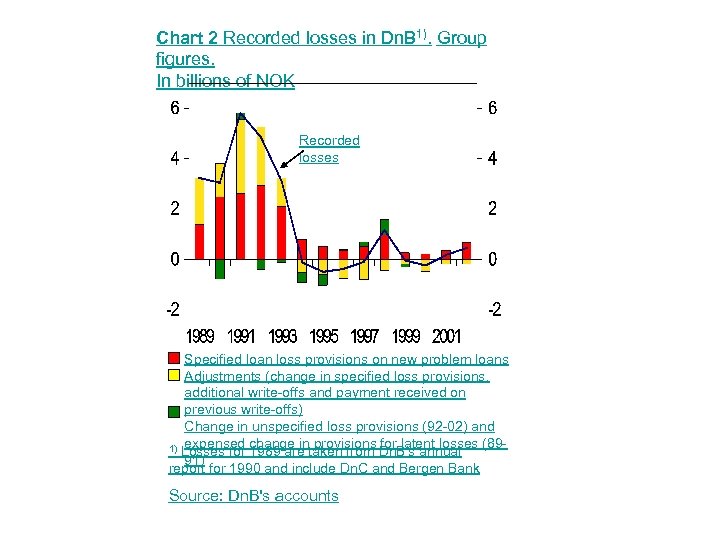
Chart 2 Recorded losses in Dn. B 1). Group figures. In billions of NOK Recorded losses Specified loan loss provisions on new problem loans Adjustments (change in specified loss provisions, additional write-offs and payment received on previous write-offs) Change in unspecified loss provisions (92 -02) and expensed provisions for latent losses (891) Losses for change intaken from Dn. B's annual 1989 are 91) report for 1990 and include Dn. C and Bergen Bank Source: Dn. B's accounts
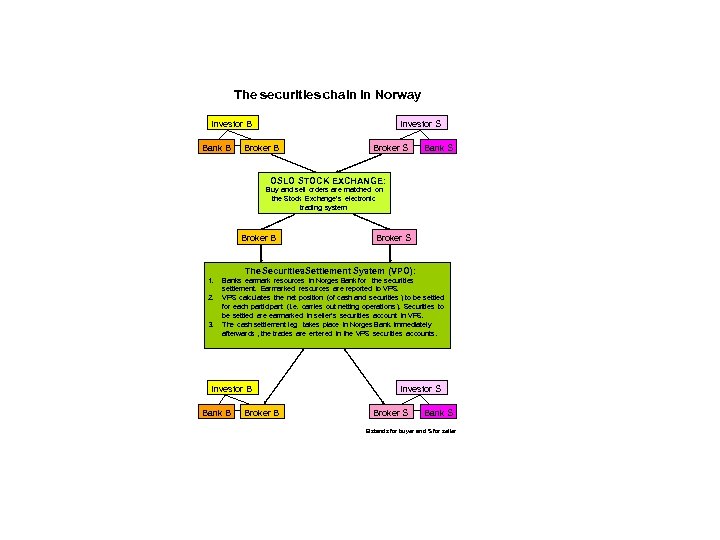
The securities chain in Norway Investor B Bank B Investor S Broker B Broker S Bank S OSLO STOCK EXCHANGE: Buy and sell orders are matched on the Stock Exchange’s electronic trading system Broker B Broker S The Securities. Settlement System (VPO): 1. 2. 3. Banks earmark resources in Norges Bank for the securities settlement. Earmarked resources are reported to VPS calculates the net position (of cash and securities ) to be settled for each participant (i. e. carries out netting operations ). Securities to be settled are earmarked in seller’s securities account in VPS. The cash settlement leg takes place in Norges Bank. Immediately afterwards , the trades are entered in the VPS securities accounts. Investor B Bank B Broker B Investor S Broker S Bank S B stands for buyer and S for seller
Скачать презентацию Financial Stability 1 2004 Charts Chart 1 Banks 1
24b62890759072a39e8b87a6320009b6.ppt