


 Скачать презентацию Field Trip Presentation SOLAPUR GROUP Group composition
58d226d4054529db34a20f15b7601a5f.ppt
- Количество слайдов: 22
 Field Trip Presentation SOLAPUR GROUP
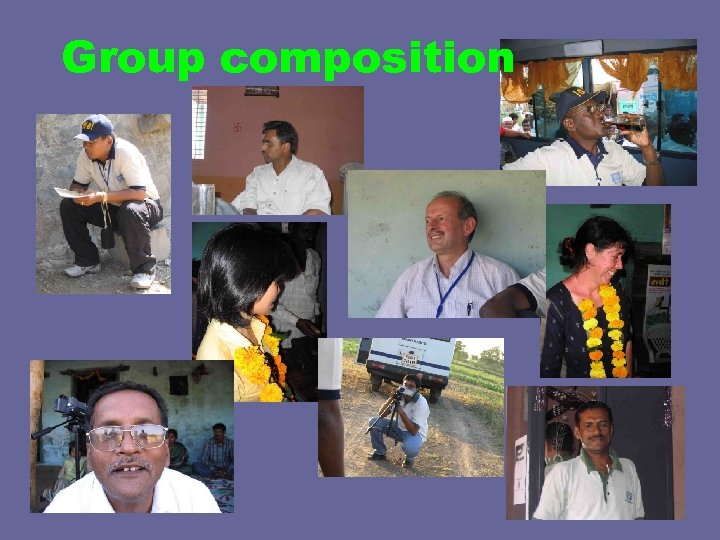 Group composition
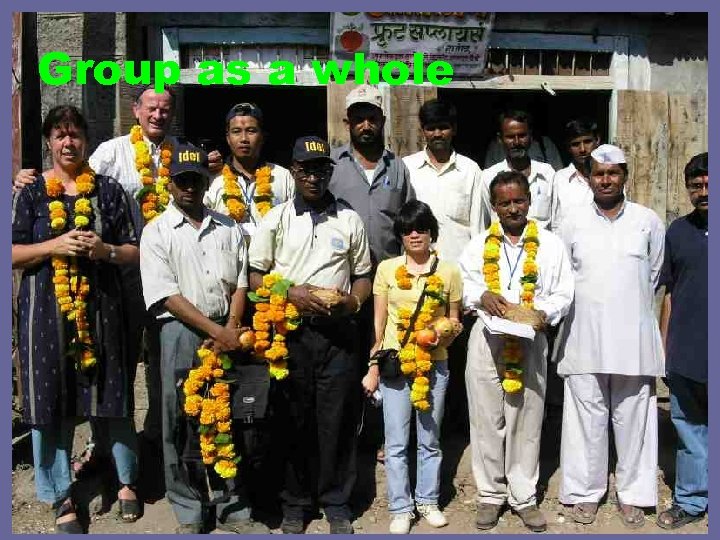 Group as a whole
 Solapur district at a glance • • • In the Decan Plateau District with 11 blocks (40 -110 villages) 4 th in size and 17 th in population 3. 2 mil in population, 2. 5 mil (rural) Average annual rainfall: 550 mm, highest 770 mm Soil type: thin soil layer, sloppy, undulating, poor water holding capacity In Sangola: 108 villages (42 dry), 125, 000 people Main crops: pomegranate, maize, sorghum, millet, grapes, sugar cane Water table: 200 -250 m, decreasing Average land holding size: 1. 5 ha/family
 Tipehali as an example • Tipehali: 3, 000 people (350 hhs), 30 landless • 4 shop owners, 5 in public admin
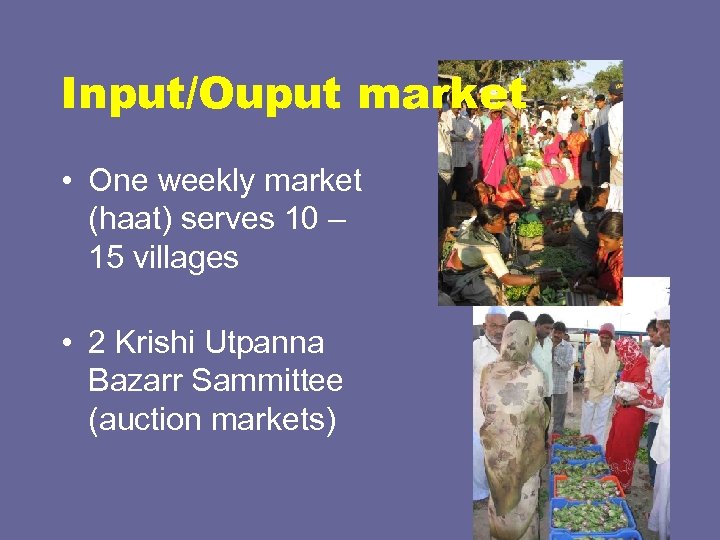 Input/Ouput market • One weekly market (haat) serves 10 – 15 villages • 2 Krishi Utpanna Bazarr Sammittee (auction markets)
 IDE Solapur • Started in 1997 • 5 -block coverage • 4 staff (IDE Solapur director and 3 support staff)
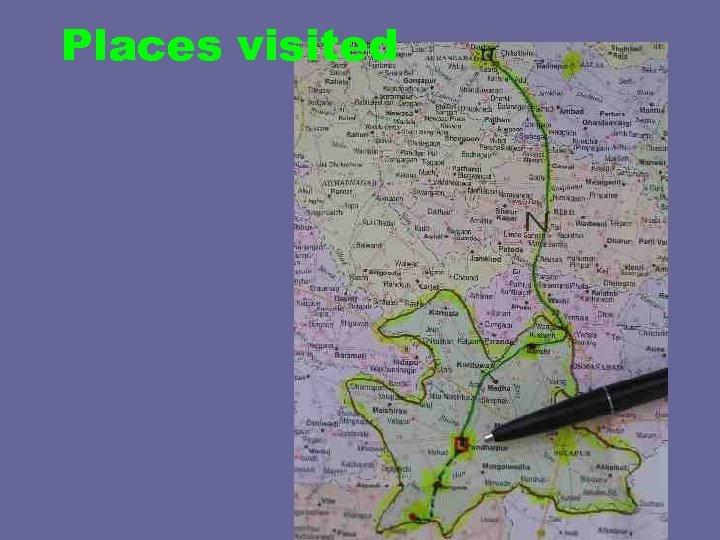 Places visited
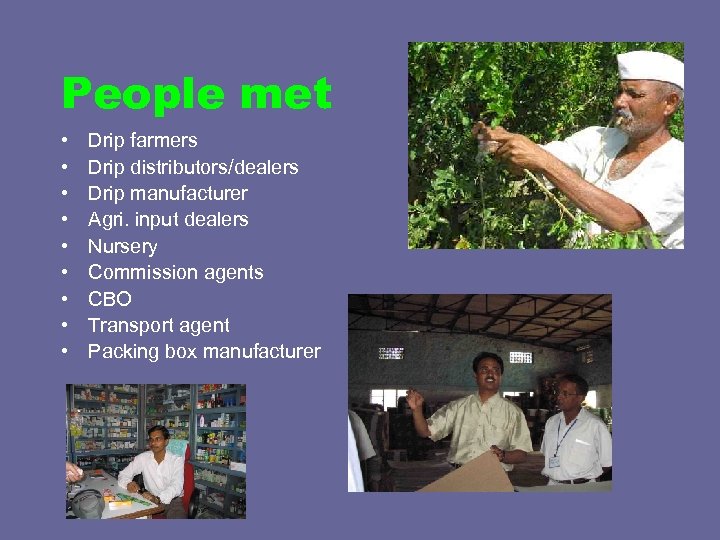 People met • • • Drip farmers Drip distributors/dealers Drip manufacturer Agri. input dealers Nursery Commission agents CBO Transport agent Packing box manufacturer
 Situation before IDE • Migration (whole family as sugar cane cutters, 80100 km away, 6 months/year, school opportunity limited/neglected, gross 10 K Rs/6 months) • Limited and uneven rainfall • Limited pomegranate cultivation (up to 1997), area increased by NGO/Gov’t projects - well deepening with introduction of ISI drip • Promotion of horticulture/pomegranate led to increased demand for water • Poor irrigation and drinking water shortage (tankers) • E. g: 1997 shortage of water no harvest of pomegranate (PG) • Supply chain (Sanga commission agents available etc. ) available without drip systems
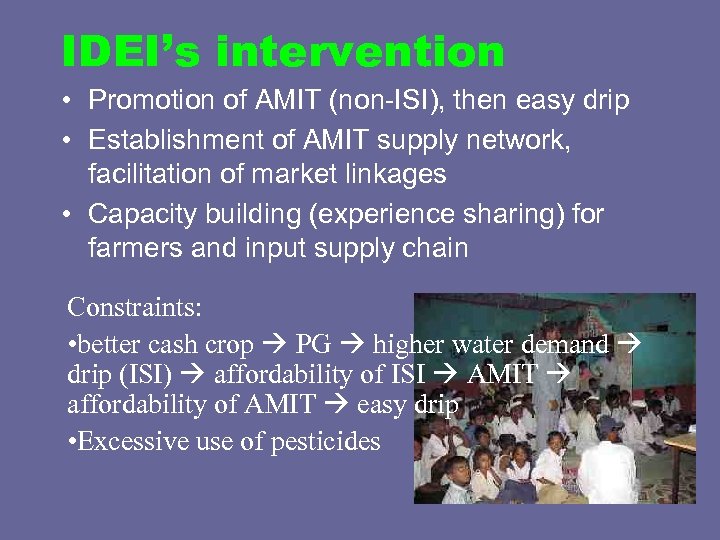 IDEI’s intervention • Promotion of AMIT (non-ISI), then easy drip • Establishment of AMIT supply network, facilitation of market linkages • Capacity building (experience sharing) for farmers and input supply chain Constraints: • better cash crop PG higher water demand drip (ISI) affordability of ISI AMIT affordability of AMIT easy drip • Excessive use of pesticides
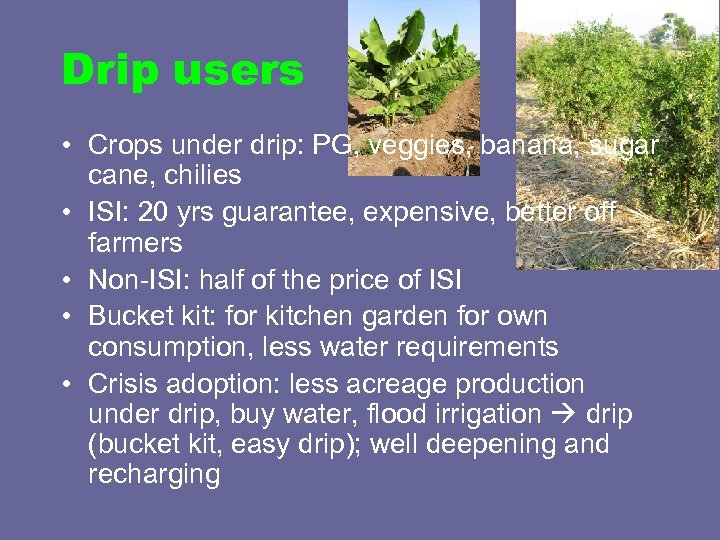 Drip users • Crops under drip: PG, veggies, banana, sugar cane, chilies • ISI: 20 yrs guarantee, expensive, better off farmers • Non-ISI: half of the price of ISI • Bucket kit: for kitchen garden for own consumption, less water requirements • Crisis adoption: less acreage production under drip, buy water, flood irrigation drip (bucket kit, easy drip); well deepening and recharging
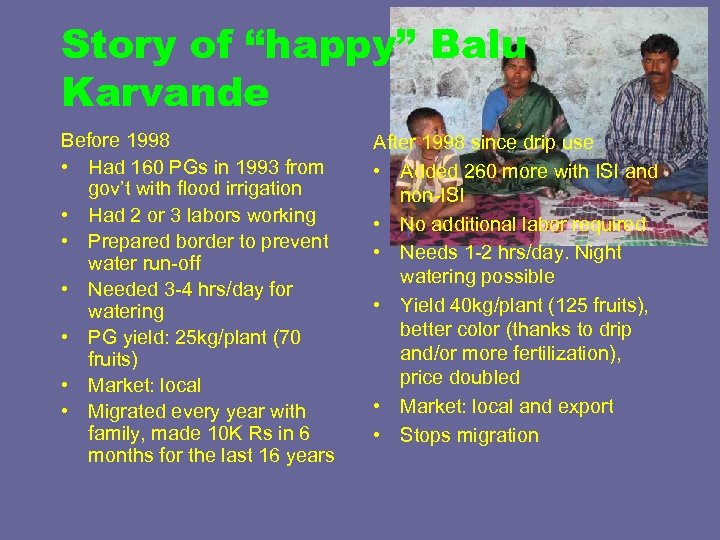 Story of “happy” Balu Karvande Before 1998 • Had 160 PGs in 1993 from gov’t with flood irrigation • Had 2 or 3 labors working • Prepared border to prevent water run-off • Needed 3 -4 hrs/day for watering • PG yield: 25 kg/plant (70 fruits) • Market: local • Migrated every year with family, made 10 K Rs in 6 months for the last 16 years After 1998 since drip use • Added 260 more with ISI and non-ISI • No additional labor required • Needs 1 -2 hrs/day. Night watering possible • Yield 40 kg/plant (125 fruits), better color (thanks to drip and/or more fertilization), price doubled • Market: local and export • Stops migration
 Story of “happy? ” Balu Karvande After 1998 • Paid 80% of his loan from the LNGO (Rs. 16 K) • Helped his brother with the wedding • Expanded PG areas up to 410 plants, bought more drip for watering • Upgraded house, deepened well ! Took risky decision: buy water for PG just to keep them alive till next year
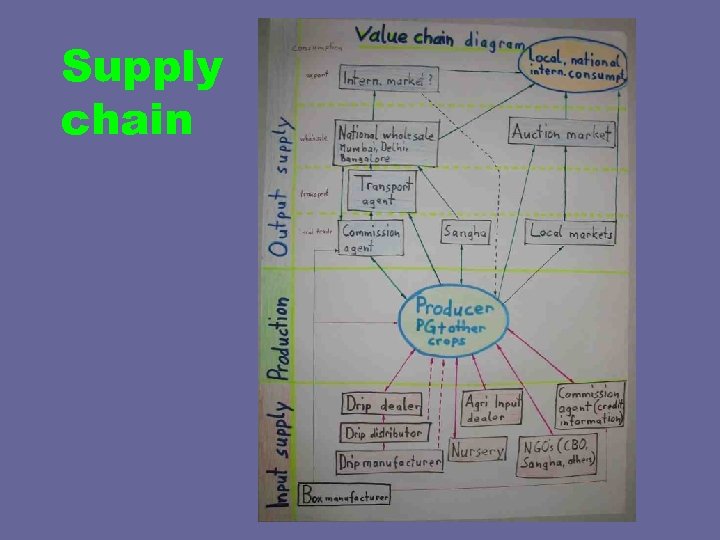 Supply chain
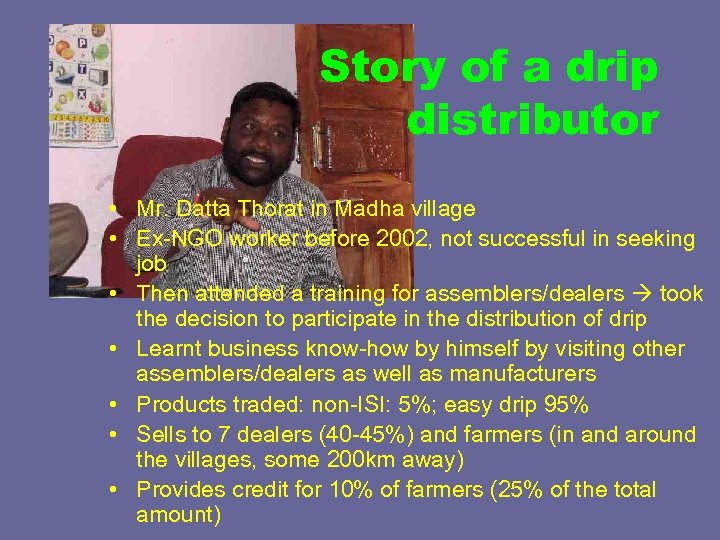 Story of a drip distributor • Mr. Datta Thorat in Madha village • Ex-NGO worker before 2002, not successful in seeking job • Then attended a training for assemblers/dealers took the decision to participate in the distribution of drip • Learnt business know-how by himself by visiting other assemblers/dealers as well as manufacturers • Products traded: non-ISI: 5%; easy drip 95% • Sells to 7 dealers (40 -45%) and farmers (in and around the villages, some 200 km away) • Provides credit for 10% of farmers (25% of the total amount)
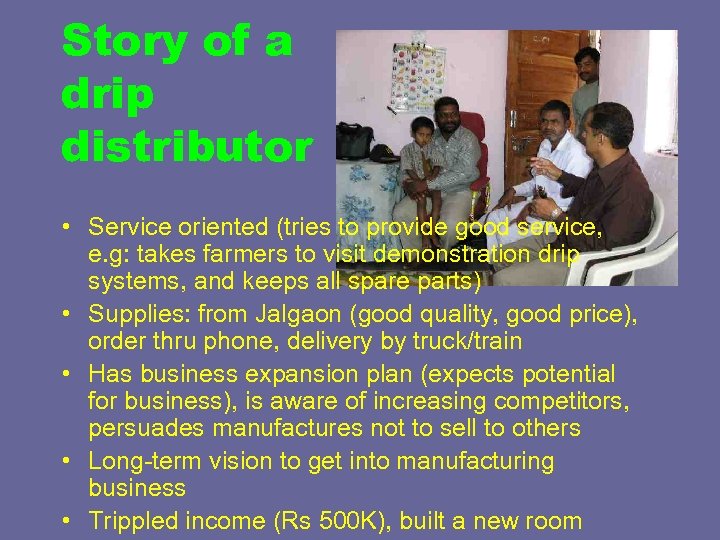 Story of a drip distributor • Service oriented (tries to provide good service, e. g: takes farmers to visit demonstration drip systems, and keeps all spare parts) • Supplies: from Jalgaon (good quality, good price), order thru phone, delivery by truck/train • Has business expansion plan (expects potential for business), is aware of increasing competitors, persuades manufactures not to sell to others • Long-term vision to get into manufacturing business • Trippled income (Rs 500 K), built a new room
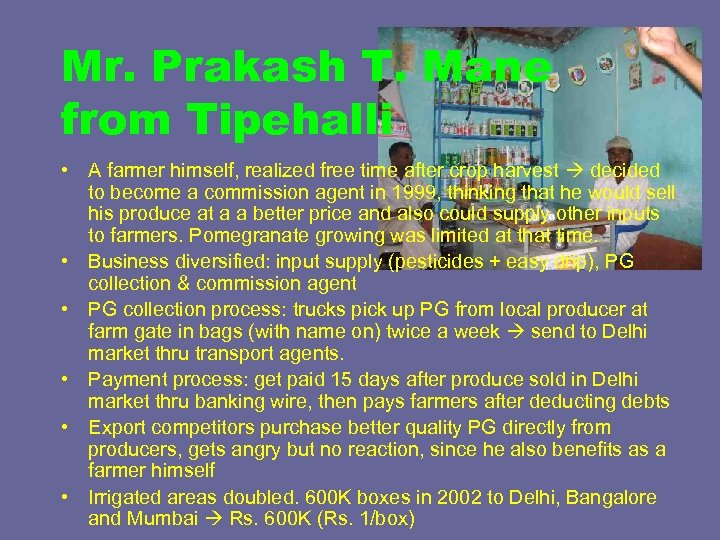 Mr. Prakash T. Mane from Tipehalli • A farmer himself, realized free time after crop harvest decided to become a commission agent in 1999, thinking that he would sell his produce at a a better price and also could supply other inputs to farmers. Pomegranate growing was limited at that time. • Business diversified: input supply (pesticides + easy drip), PG collection & commission agent • PG collection process: trucks pick up PG from local producer at farm gate in bags (with name on) twice a week send to Delhi market thru transport agents. • Payment process: get paid 15 days after produce sold in Delhi market thru banking wire, then pays farmers after deducting debts • Export competitors purchase better quality PG directly from producers, gets angry but no reaction, since he also benefits as a farmer himself • Irrigated areas doubled. 600 K boxes in 2002 to Delhi, Bangalore and Mumbai Rs. 600 K (Rs. 1/box)
 Support/facilitation role 1. Role of IDEI: • Promotion of drip (AMIT) • Capacity building for farmers and other market actors • Facilitation of market linkages • Networking among farmers and input/output providers 2. Infrastructure: roads, electricity, phone, banking system, industry (introduction of easy drip), education, commission agents, institution linkages, IDE, gov’t, CBO, haats, Krishi Utpanna bazarr samittees (auction market), transport, NGO support
 Insights/suggestions Insights: • basic infrastructure/facilities are very favorable; key roles of commission agents + auction • value of crops, increasing demand for crop, monopoly of crop (opportunities and risks) • biotechnology, vermicompost • present situation: farmers are under threats (weather condition: missing rainfall) • low international market potential for the future • win-win chain: every actor is a winner, but could be different this year due to water problem • positive role of IDE: impact on livelihood of farmers
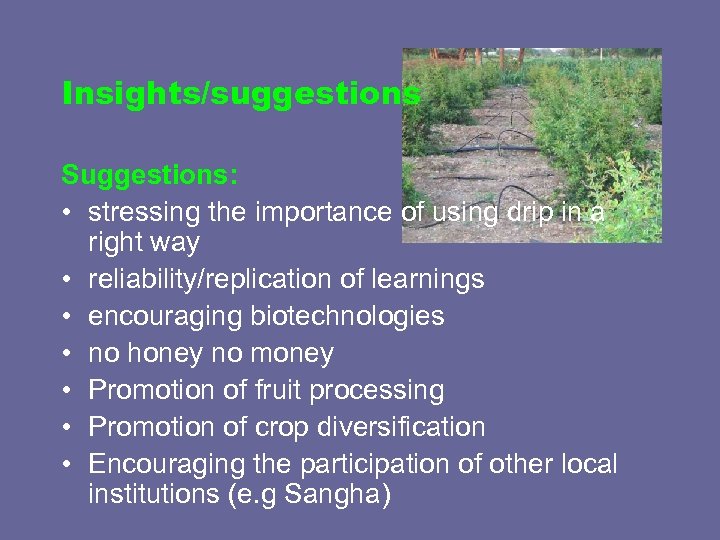 Insights/suggestions Suggestions: • stressing the importance of using drip in a right way • reliability/replication of learnings • encouraging biotechnologies • no honey no money • Promotion of fruit processing • Promotion of crop diversification • Encouraging the participation of other local institutions (e. g Sangha)
 Dhanyavad! Questions? Comments?